


Key takeaways
- Drip campaigns are automated, pre-written emails designed to build relationships with audiences over time.
- They are used in sales, marketing, onboarding, and retention strategies.
- Drip campaigns help maintain consistent visibility, behavior-based targeting, scalable personalization, automated nurturing, sustained engagement, reactive outreach, and long-cycle support.
- Behavioral email marketing is related to drip campaigns but focuses on messaging triggered by user actions.
- Drip campaigns can be time-based or behavior-based, with the latter being more personalized.
Drip campaigns are a staple of effective email marketing, helping you stay connected with customers over time. When done right, they feel natural, helpful, and perfectly timed.
In this article, we’ll remind you of what drip campaigns are and what makes them so important, as well as dissect 13 best drip email campaign examples from your favorite brands to inspire you.
What is a drip campaign?
A drip email campaign is a sequence of automated, pre-written emails. These emails are designed to build a relationship with your audience over time — whether your business is welcoming new subscribers, guiding users through onboarding, or re-engaging customers who’ve gone quiet.
Their main goal is to keep people engaged without you manually hitting send every time. The content and timing can be based on a fixed schedule (like three days after someone signs up), or on specific actions a person takes (like clicking a link or browsing a product page).
Drip campaigns are sometimes called lifecycle emails or autoresponders. You’ll often see them used in sales, marketing, onboarding, and retention strategies. A typical flow might look like: welcome > educate > convert > follow-up. Done well, drip campaigns save time, maintain consistency, and let you personalize at scale — which is hard to achieve with mass email blasts.
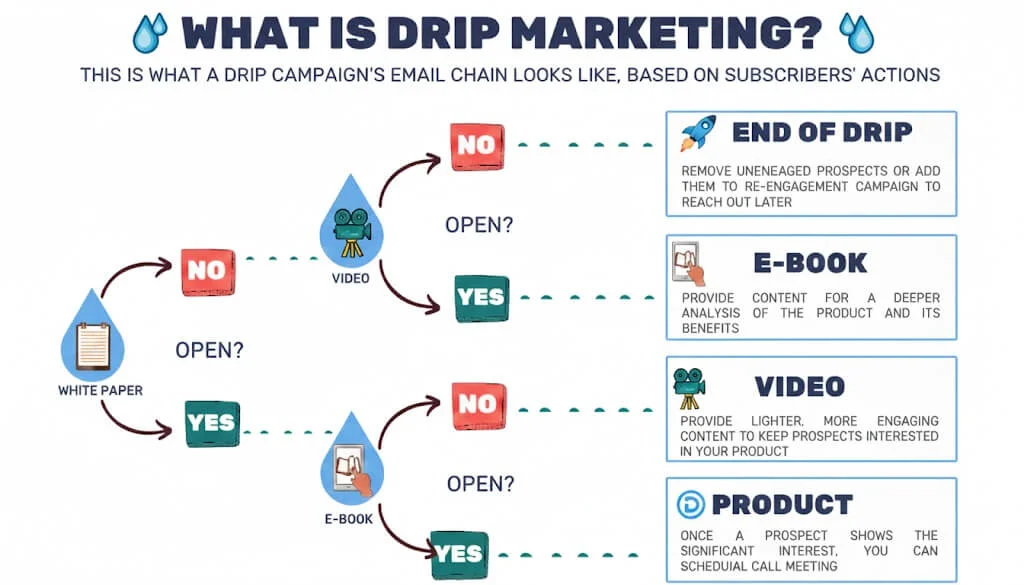
Here’s a quick visual diagram to help you understand what drip campaigns do:

Why are drip campaigns so important?
So, what makes drip campaigns so important for email marketing? A lot of things, actually:
- Consistent visibility. Drip campaigns help your business stay top-of-mind with leads without overwhelming their inbox with constant messages.
- Behavior-based targeting. They support segmentation and adapt messaging based on what users do and where they are in the lifecycle.
- Scalable personalization. They make it possible to deliver tailored communication to thousands of users without manual effort.
- Automated nurturing. By gradually building communications through pre-planned content, drip campaigns can improve conversion rates and return on investment over time.
- Sustained engagement. Drip emails keep users connected to your brand, which can help reduce churn and increase lifetime value.
- Reactive outreach. You can automatically trigger messages to re-engage users who haven’t interacted in a while.
- Long-cycle support. They’re especially useful for complex customer journeys, such as onboarding or high-ticket sales, where decisions aren’t made overnight.
How does behavioral marketing relate to drip campaigns?
Behavioral email marketing and drip campaigns are related, but not quite the same.
First of all, what is behavioral email? It’s exactly what it sounds like: it’s messaging triggered by what a user does (or doesn’t do).
Think: clicking a product, abandoning a cart, signing up but never logging in, or using a feature for the first time. These emails are automated reactive — they’re designed to respond in real time to how someone interacts with your product or site.
A drip campaign is simply a sequence of pre-written emails sent over time. As you already know, a sequence can be of two main types:
- Time-based: for example, send Email 1 three days after signup, send Email 2 seven days after signup, etc.
- Behavior-based: such as starting the sequence when someone activates a free trial, completes a purchase, or views a pricing page.
So yes — a drip campaign can absolutely be behavioral. In fact, many of the best-performing ones are. A user action (the trigger) kicks off a tailored email flow (the drip).
13 drip campaign examples for every case scenario
Here are tried-and-true drip campaign examples for just about every goal, audience, and use case.
Welcome email series
A welcome email is the first message a subscriber gets after signing up. It thanks them for joining, outlines what to expect, and offers a quick brand overview.
These emails often have one of the highest open rates.
A welcome series builds on this by spreading the intro across several emails. Instead of cramming everything into one, each message focuses on a key topic — like product benefits, getting started, or a limited-time offer.
Let’s check out these two emails from YNAB:
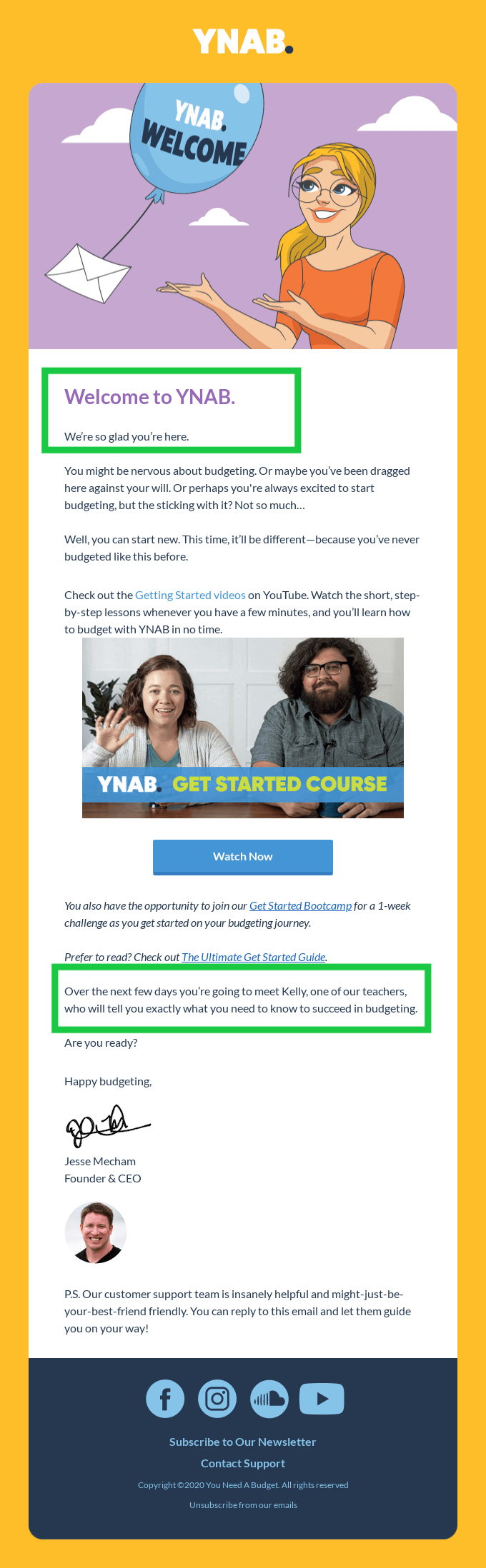
The first email (above) clearly serves as the introductory welcome email. It thanks the user for joining, explains what YNAB is, and offers helpful resources like videos and bootcamps. Classic welcome email example. It also tells the recipient to expect a follow-up email from Kelly.
And here it is:
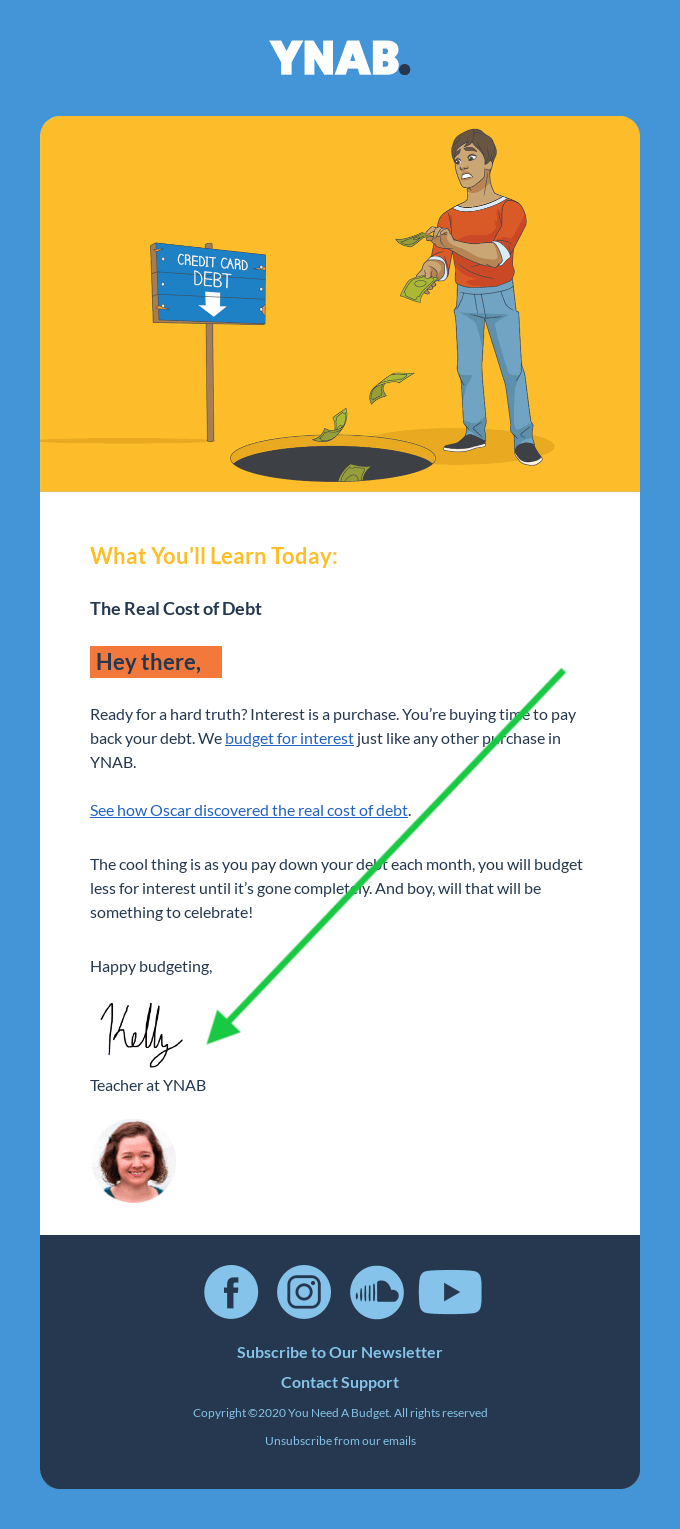
The second email builds on the welcome message by shifting into educational mode. It continues the onboarding journey with a focused lesson on budgeting in a friendly tone, signed off by the same teacher figure the first email had mentioned.
Onboarding campaign
An onboarding campaign is a drip sequence that helps new users learn how to use a product or service. Unlike a welcome series, it focuses on practical steps — like setting up an account, using key features, and avoiding common mistakes.
The goal is to reduce friction, answer common questions, and turn new signups into confident, active users. Great for SaaS email marketing, apps, and subscriptions.
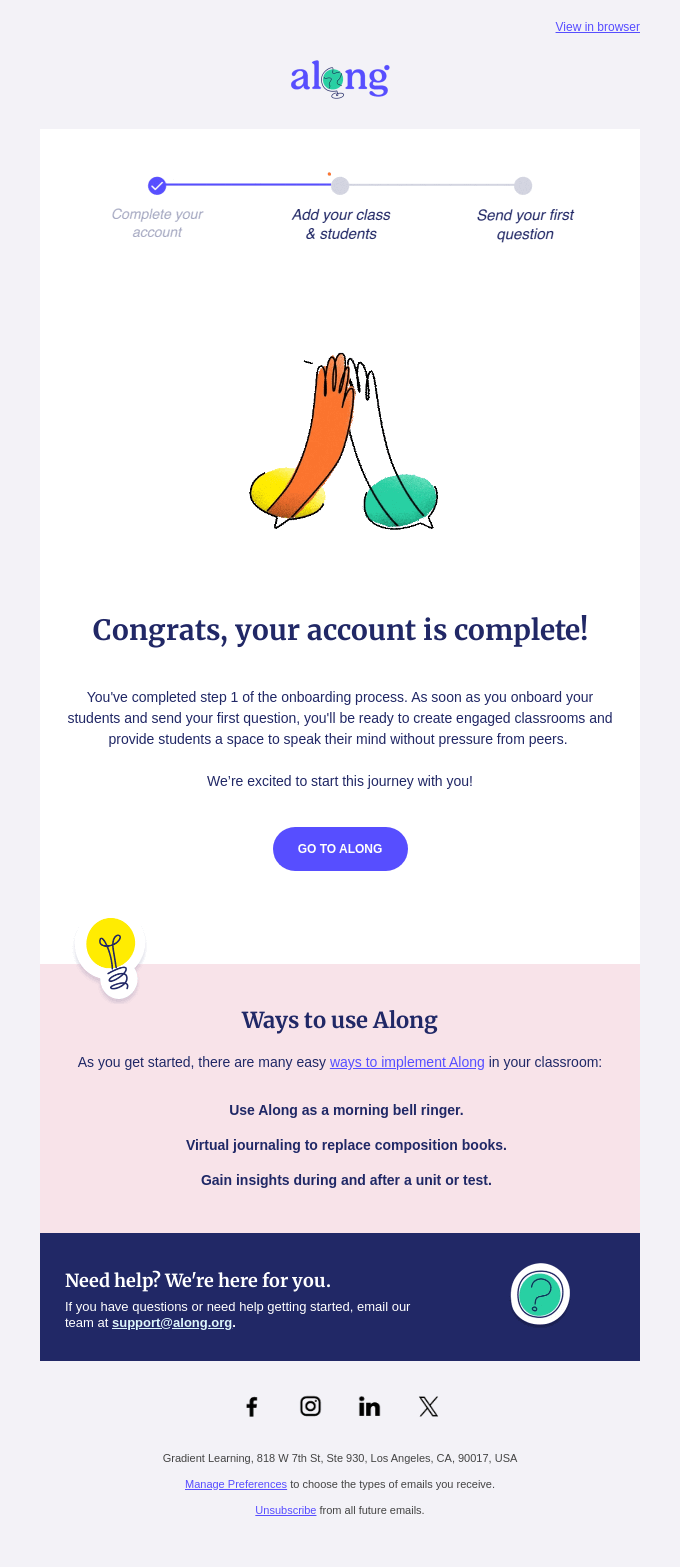
This is a classic first-step onboarding email: it confirms account setup and outlines what comes next in a clear, encouraging way. It sets the tone, removes uncertainty, and gives the user a small win (step 1 done!). The following emails are likely to guide the user to complete the next action, like adding students or sending their first question.
Re-engagement emails
Re-engagement emails target inactive subscribers with the goal of winning them back. They’re usually sent in a timed sequence and might highlight new features, offer a discount, or simply ask if the user still wants to stay subscribed.
These emails improve list hygiene and help boost retention.
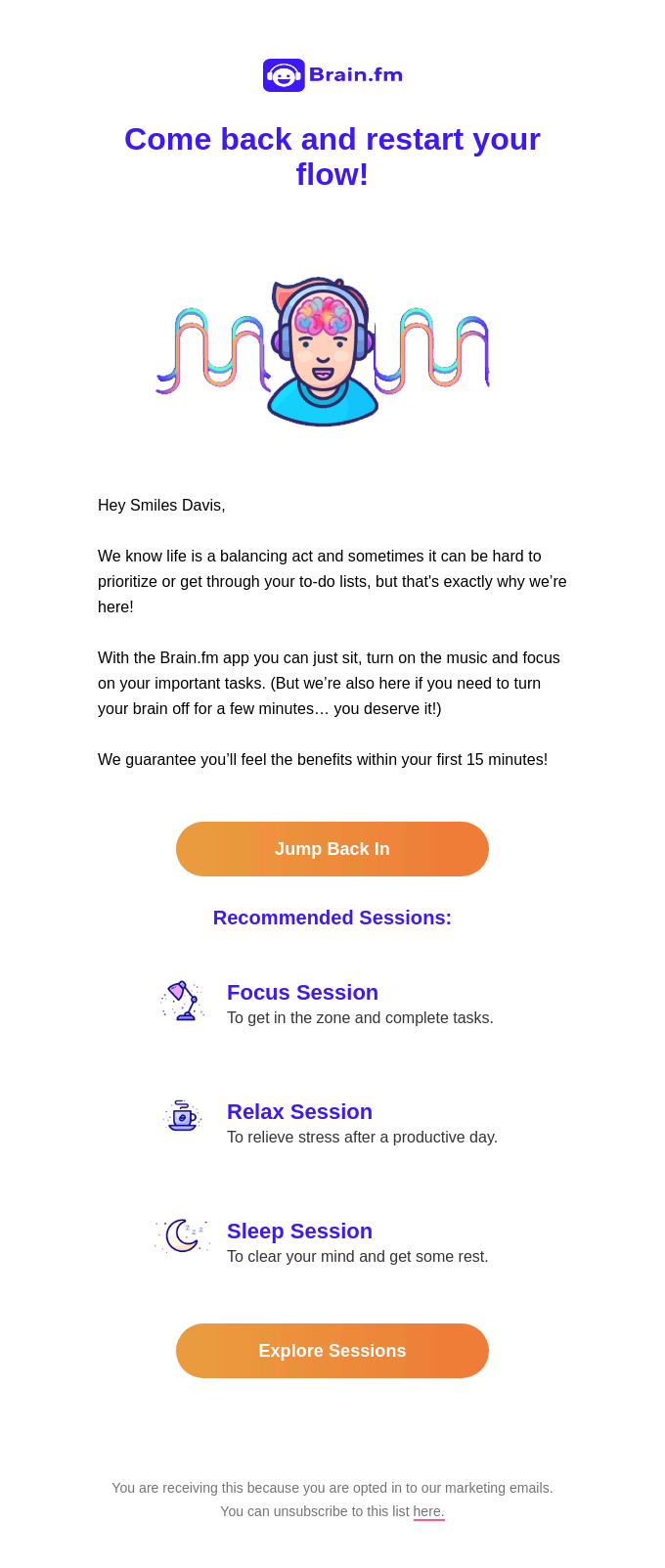
This re-engagement email emphasizes the product’s benefits and reduces friction by recommending concrete sessions for the user to listen to:
Customer retention campaign
Customer retention drip campaigns are about keeping people around after they’ve bought something or signed up.
Instead of disappearing after the first conversion, you keep showing up in their inbox with stuff that’s actually useful or nice to get — like tips on using what they bought, sneak peeks at new features, birthday discounts, or loyalty perks.
The goal is to remind them you exist and make them feel like they matter.
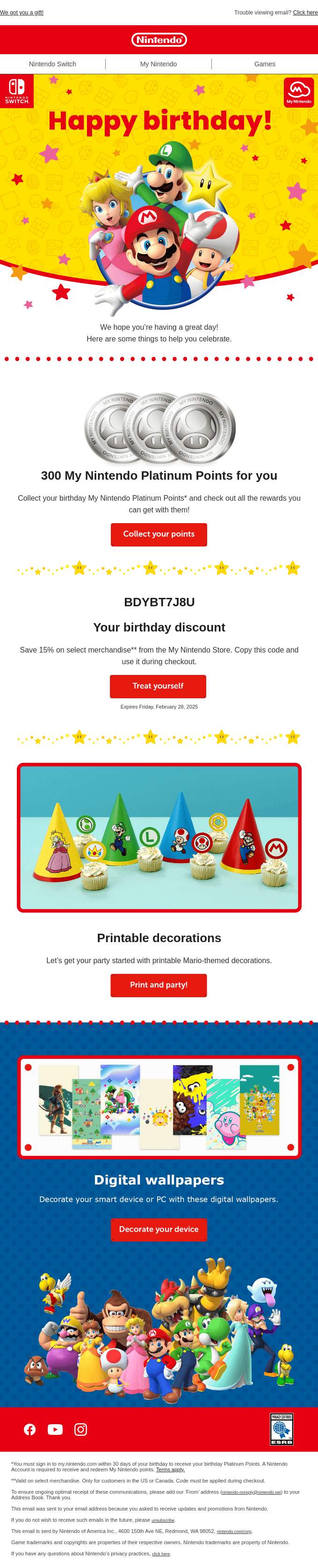
This birthday email from Nintendo builds loyalty with consistent, personalized communication and perks for using the shop:
Lead nurturing series
A lead nurturing series is a drip campaign aimed at turning curious leads into ready-to-buy customers.
Instead of pushing for the sale right away, these emails offer helpful content, build credibility, and guide people through the decision-making process. Think educational resources, answers to common objections, product comparisons, or real customer stories.
The goal is to build trust and move people closer to conversion, gently but intentionally.
For example, the email below focuses on helping the reader make an informed decision. Instead of pushing a sale, it compares two products side by side and explains the strengths of each. It’s guiding the potential user through the funnel by educating them, not rushing.

Cart abandonment emails
Abandoned cart emails are triggered when someone adds items to their cart but doesn’t check out.
They usually go out as a short drip sequence, starting within a few hours. The first email typically reminds the customer of what they left behind. If there’s still no action, later emails might add urgency — like low stock alerts or limited-time offers.
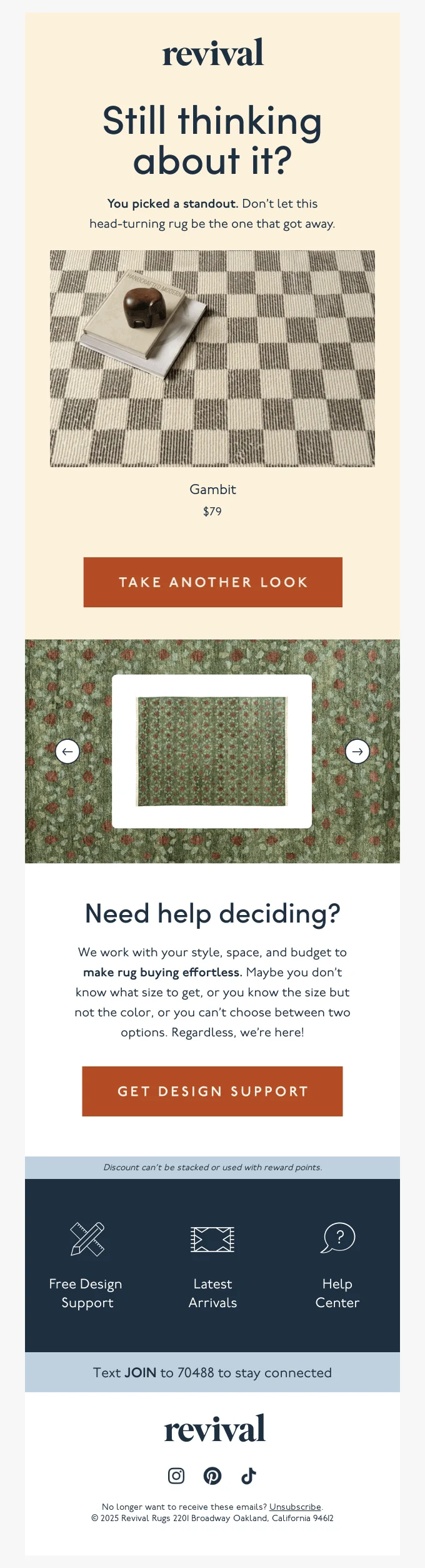
Here is a classic example with a prominent call-to-action button:
Browse abandonment emails
Browse abandonment emails are sent to people who looked at a product but didn’t add it to their cart.
Unlike cart abandonment emails, which target users with clear buying intent, these go out earlier in the funnel. They’re more casual — often just a reminder of what the person viewed, maybe with a few related suggestions.
The goal is to re-spark interest before it fades completely.
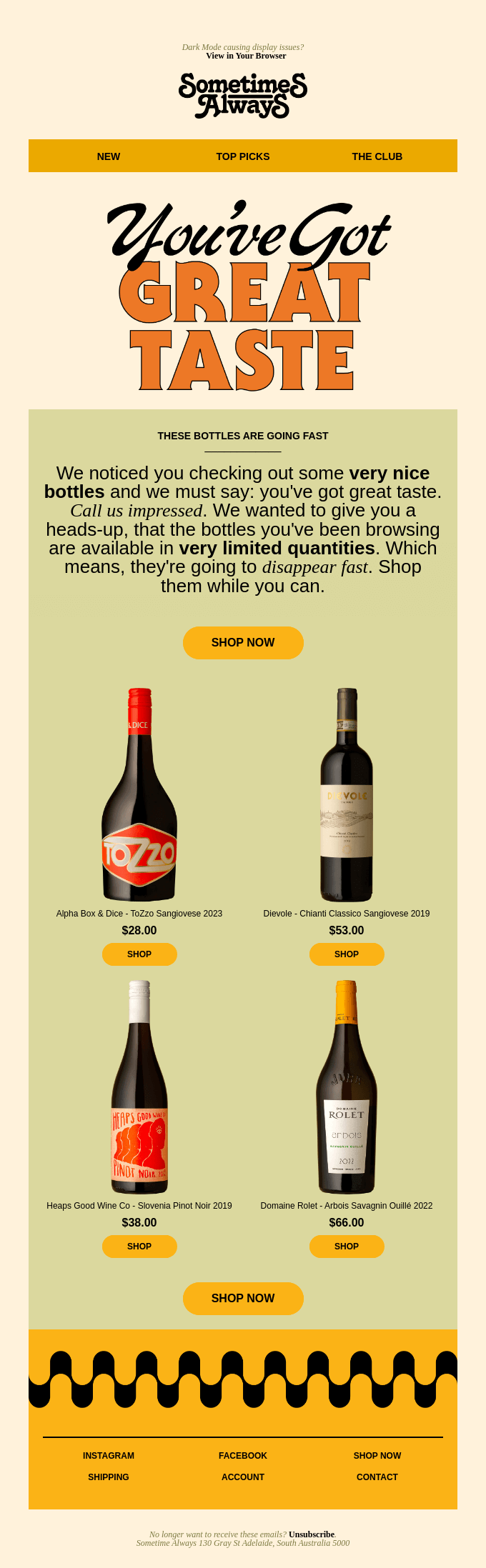
The email below shows all the product options the customer viewed and adds a dash of urgency with an emphasis on “very limited quantities” of the bottles:
Post-purchase email campaign
Post-purchase email campaigns are sent after a customer completes a transaction.
In a drip format, the sequence typically starts with an order confirmation and shipping update, then moves into thank-you messaging, product care tips, or setup guides. Later emails might ask for a review or suggest related products.
Here’s an example of this from my very own inbox. A few months ago, I bought a necklace for my friend as a birthday gift. This was the confirmation email:
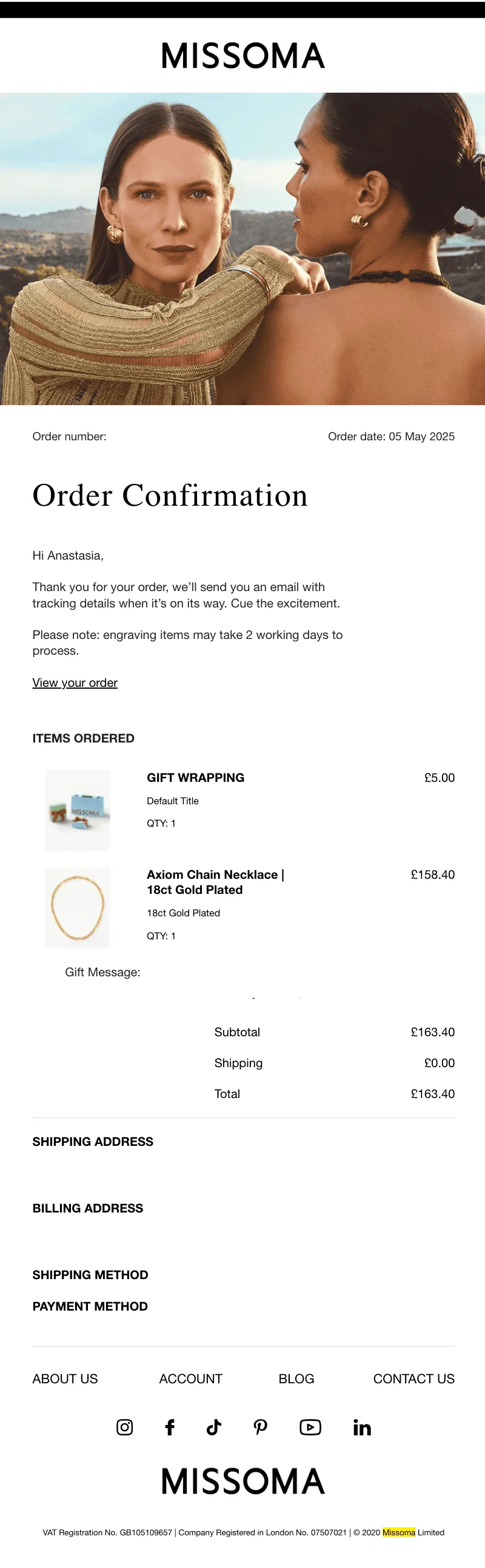
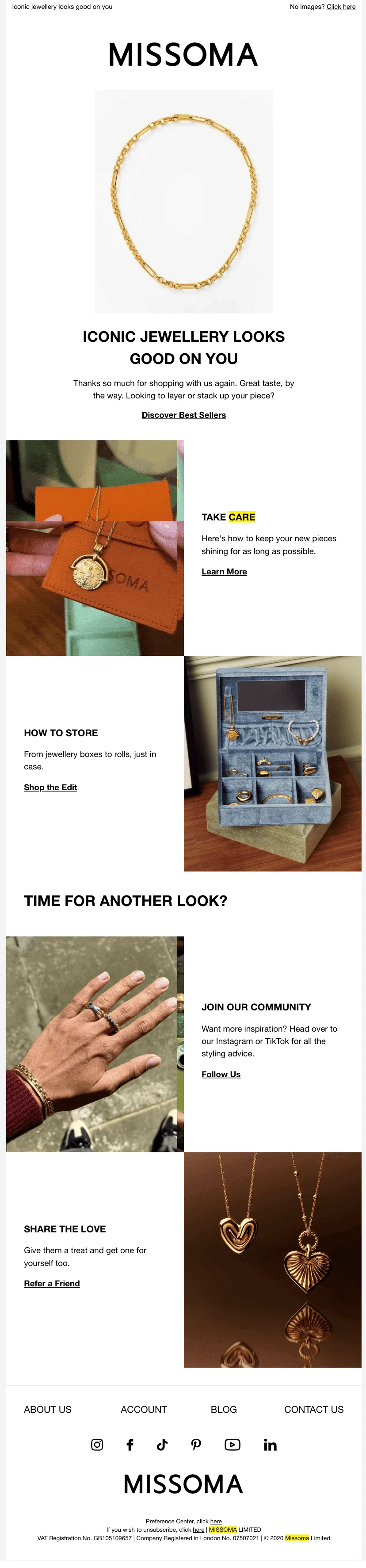
Later the same day, the brand sent me another message, thanking me for my purchase again and providing information on how to care for the necklace — this is a real-world example of a post-purchase sequence.
Confirmation email
A confirmation email is a transactional message sent right after a user takes action — whether it’s signing up, placing an order, booking a call, or downloading a resource. In a drip campaign, it serves as both a trust signal and a trigger for what comes next.
It’s often the first real touchpoint in the broader journey, so tone, branding, and clarity really count.
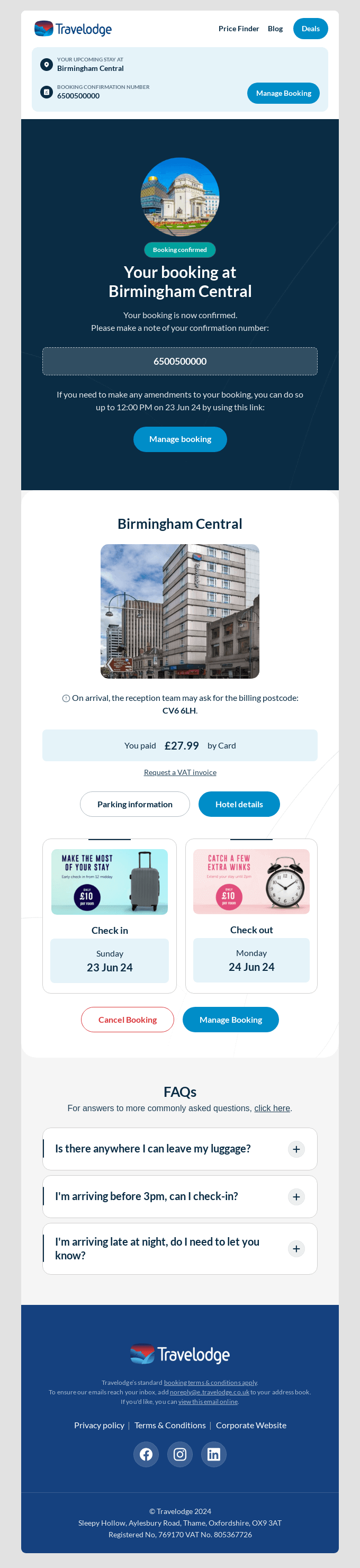
Let’s have a look at a confirmation email sequence from Travelodge. The first email confirms all the necessary info about the recipient’s booking in Birmingham.
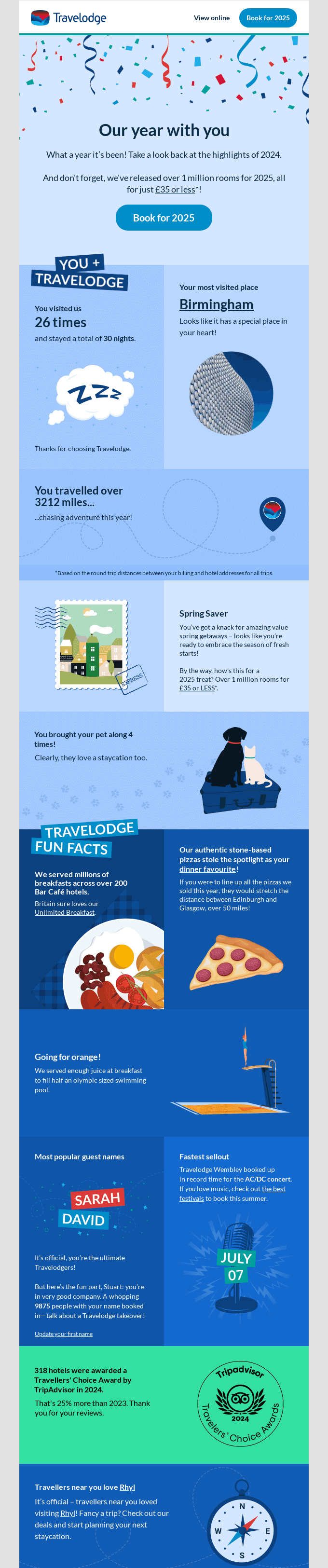
The second email is somewhat of a loyalty-focused follow-up. It builds on past bookings (including info about the recipient’s Birmingham stay) to drive continued engagement — a fun wrap-up with some personalized stats, paired with a CTA to “book for 2025.” It’s part of the same sequence, but with a long-tail intent.
Upselling sequence
An upselling sequence is a drip campaign designed to get customers to upgrade, buy a higher-tier product, or unlock premium features.
These emails usually come after a purchase or trial — timed to hit when users are seeing value but could benefit from more. The first email might suggest a more advanced version of what they bought, followed by messages that highlight benefits, offer discounts, or share testimonials.
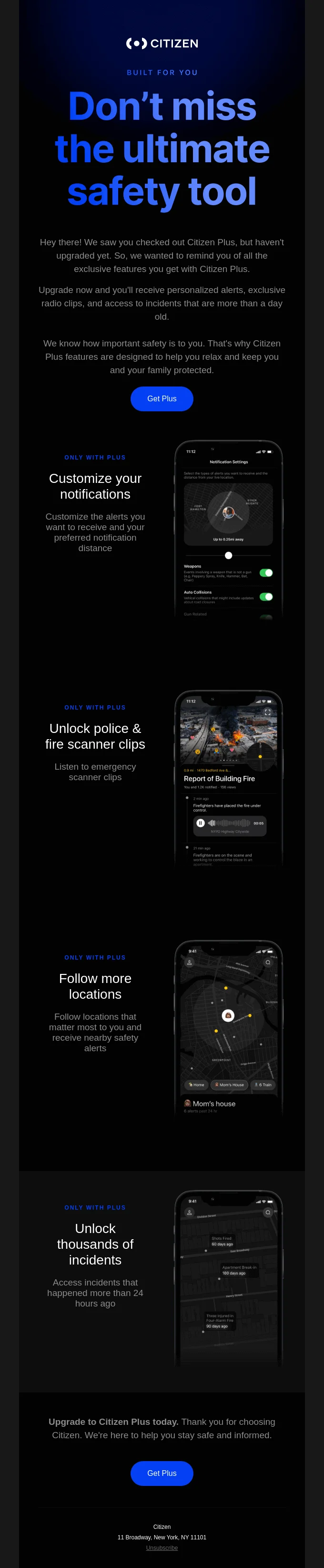
This is the first email in the sequence, thanking the recipient for joining Citizen and asking them to consider upgrading:

The second email in the sequence ramps up the urgency with a stronger emotional appeal, using FOMO-driven language to push hesitant users toward upgrading:
Cross-sell sequence
A cross-sell sequence is a drip campaign designed to recommend related products based on what a customer has already purchased. Think add-ons, accessories, or complementary items — not upgrades.
These emails typically go out shortly after the initial sale, while the buyer’s interest is still fresh. The goal is to increase average order value by showing customers what goes with what they already have.
Unlike upselling (which promotes a higher-tier or more expensive version of a product), cross-selling focuses on adjacent offerings — those that the user might genuinely find useful or enjoyable alongside their original purchase.
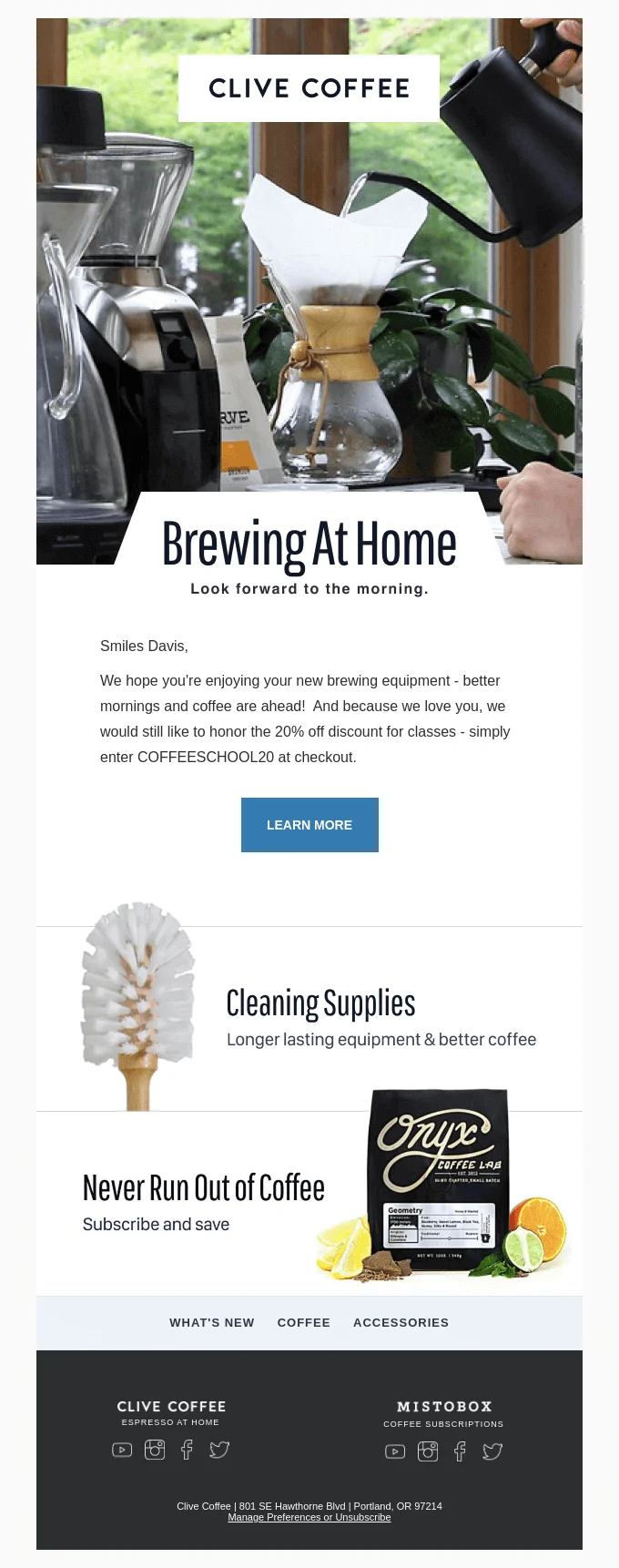
In the example below, the recipient bought coffee brewing equipment, and they’re now being offered a discount on cleaning supplies and coffee beans:
Personalized drip campaign
A personalized drip campaign adapts email content to each individual based on their behavior, preferences, or attributes.
Instead of sending the same sequence to everyone, it adjusts subject lines, messaging, timing, and product suggestions depending on what the user does or who they are. These campaigns rely on segmentation, dynamic content, or behavioral triggers to deliver emails that feel timely, relevant, and personal.
You might be wondering: isn’t that what we’ve already seen in some of the other examples? Not quite.
Think back to the post-purchase email I received with care tips for the necklace I bought. Even though it includes a photo of the exact necklace, that’s not personalization in the true sense — it’s just order data being automatically pulled into a standard email template. It reflects what I purchased, but it’s not adapting to me as a customer beyond that single transaction.
True personalization goes deeper. We have actually seen this just above — like the Travelodge “Your year with us” email. That message draws on a user’s full booking history, frequency of stays, favorite destinations, and travel habits.
Let’s have a look at another example — imagine you joined Strava to track your exercise habits. You might receive a welcome email like this:

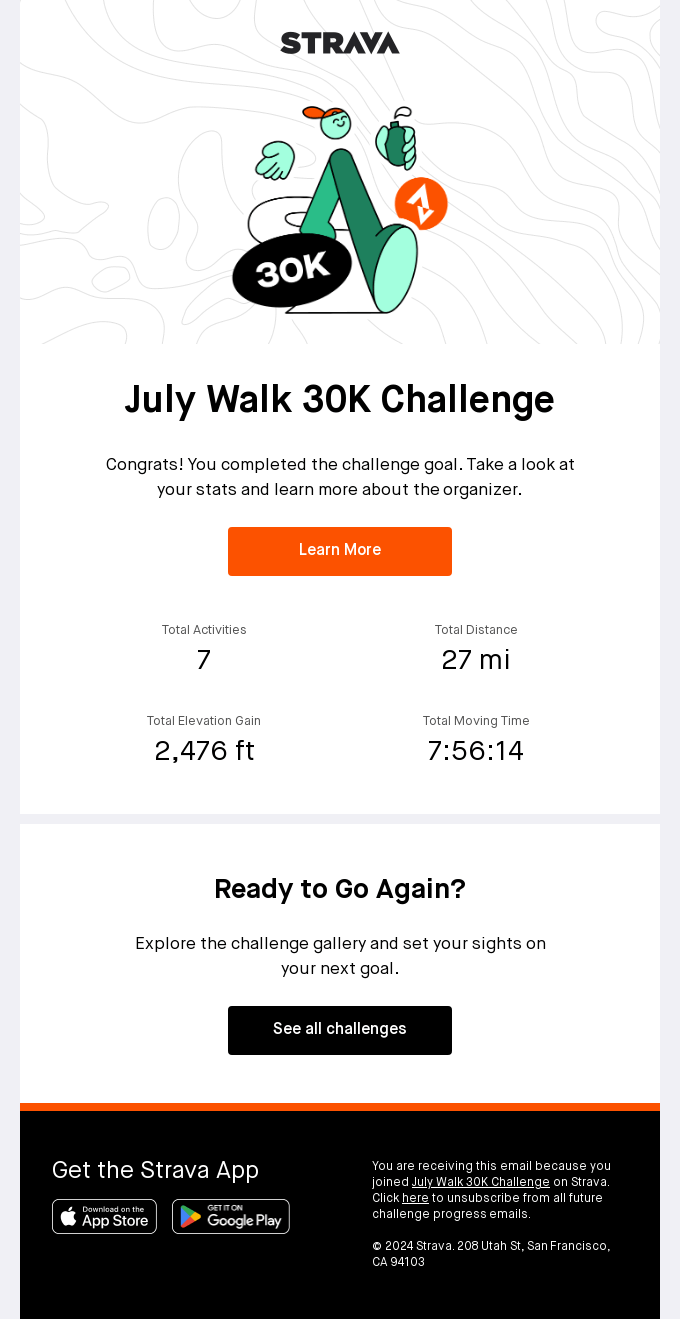
After completing Strava’s July challenge, you’ll receive an email that’s fully personalized based on your activity data — number of workouts, distance, elevation, and time. It reflects your individual stats, acknowledges your achievement, and encourages re-engagement.
Win-back and breakup emails
Win-back emails are a type of campaign that’s aimed at people who were once active, loyal, or paying and have since gone silent.
Unlike broader re-engagement emails, which might target anyone who’s stopped opening messages, win-backs focus on users who had a deeper relationship with the brand. They usually include time-sensitive offers, reminders of past purchases, or messaging that taps into loyalty or nostalgia — all with the goal of reviving the connection.
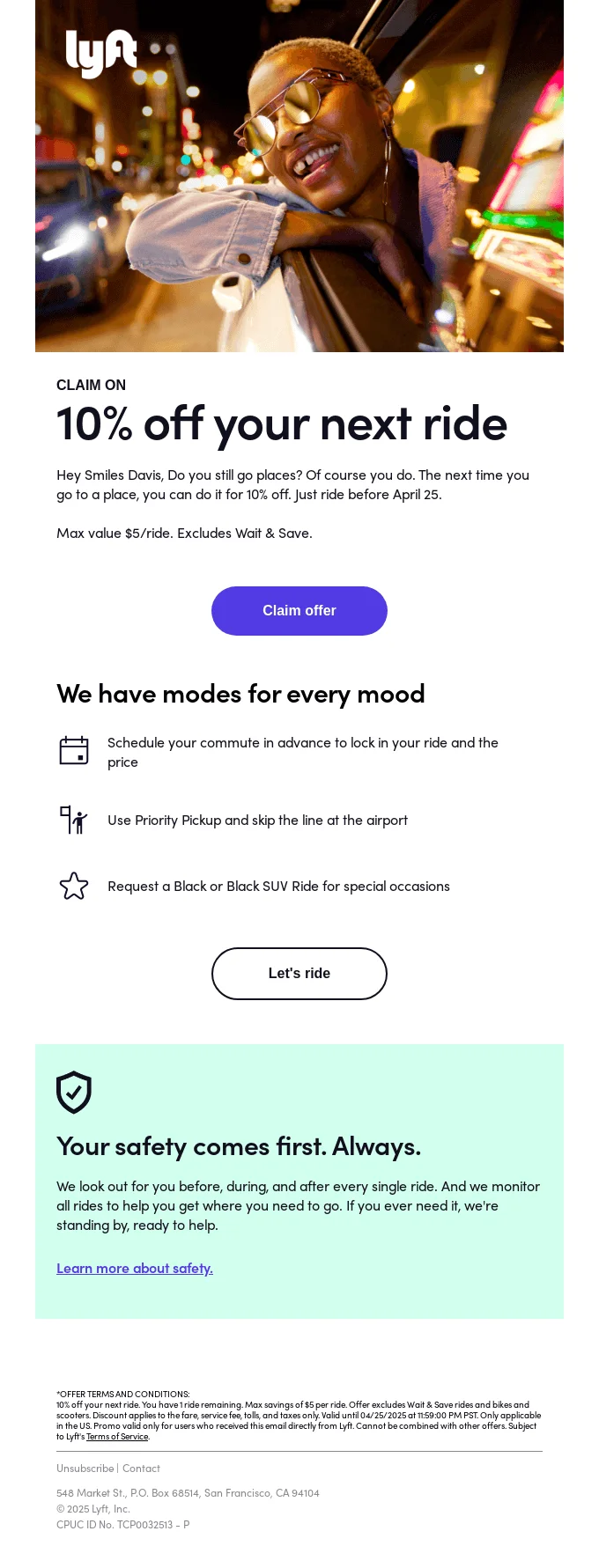
In this win-back email, Lyft offers a discount to entice the customer to use the app once again:
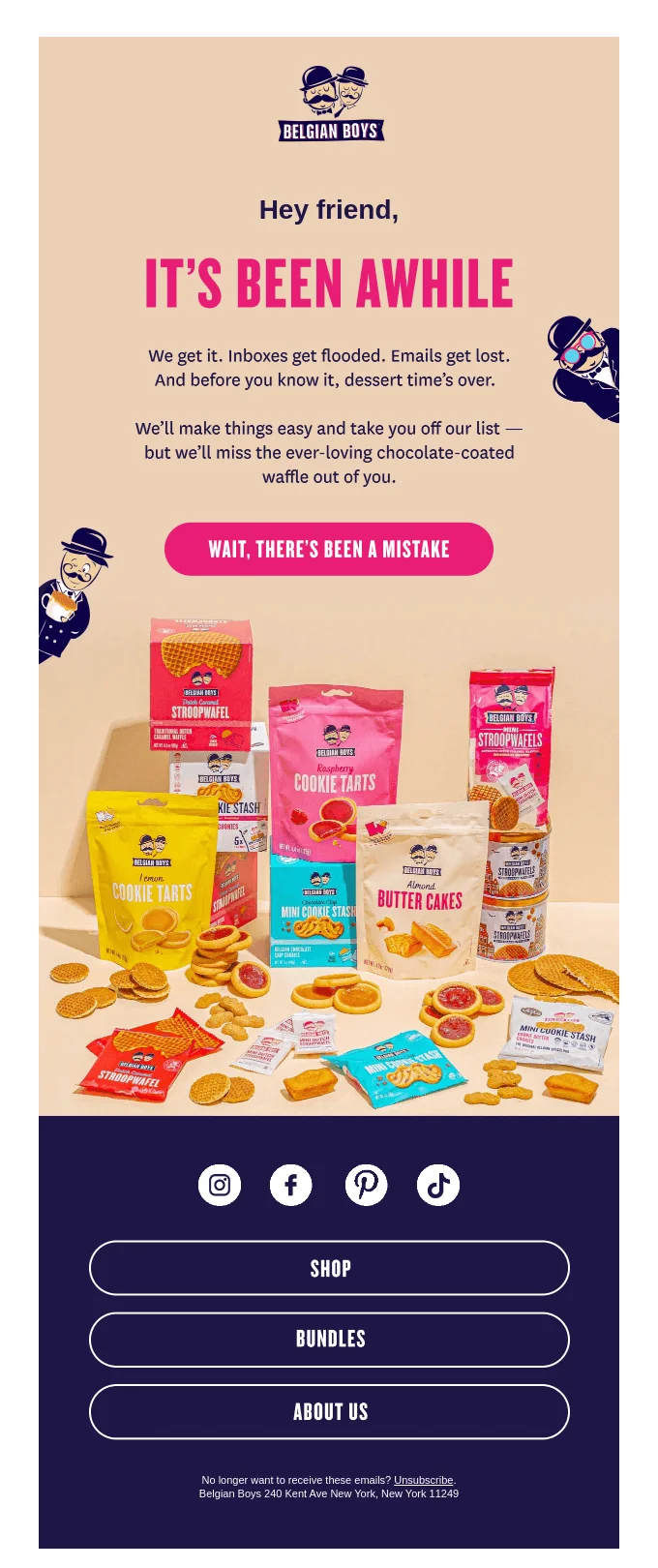
And when that doesn’t work? Some brands follow up with a breakup email: the last email in this sequence, and one last note to say goodbye (unless the user takes action).
These emails are often witty or emotional, and give the recipient a clear choice — stay or unsubscribe.
What makes a good drip campaign?
So, what are the necessary components of a functional drip campaign? Let’s explore.
Thought-through schedule
A well-structured drip email campaign follows a carefully planned schedule — not too rushed, not too spaced out. Each message builds on the last, allowing time for the subscriber to engage, absorb, and act before the next one arrives.
It’s difficult to say how long you should wait to send your next message — test a few different timings and delays and see what works best for your particular audience. The easiest way to determine this is through an A/B test in your email marketing platform, such as Selzy.
Tailoring to customer journey stages
One of the most effective ways to make your drip campaigns feel relevant is by mapping them to where someone is in their journey. This can be something like whether they’ve just discovered your brand, are thinking about buying, or have already made a purchase.
Segmentation can help you with this. Traditional segmentation involves splitting users into demographic subgroups, but here we’re going by user behavior. You might segment new subscribers who haven’t clicked anything yet (awareness), users who viewed a product but didn’t buy (consideration), or loyal customers who’ve made multiple purchases (retention).
Once you’ve defined these groups, you can send messages that speak to their specific needs, questions, or objections.
Templates for triggers
Trigger-based emails don’t mean you have to start from scratch. Whenever possible, reuse and adapt proven email templates — you’ll save time and keep your tone and branding consistent. Most behavioral drip campaigns rely on pre-written templates designed for common situations; you simply personalize the copy and adjust the timing to match your needs.
For example, with a sign-up trigger, you can build on a welcome email or short welcome series template. For a purchase trigger, you might adapt a thank-you message or product care guide template. For an inactivity trigger, you could customize a win-back or re-engagement email template to bring the customer back.
Clear subject lines
Even the best drip campaign won’t work if no one opens your emails. Subject lines matter a lot; often, they’re the first thing your recipient sees in their inbox. They should be clear, relevant, and directly tied to the content of the email.
Final thoughts
Drip campaigns aren’t just about automation — they’re about sending the right message at the right time.
When done thoughtfully, they can guide subscribers through their journey in a way that feels personal, helpful, and natural. We hope these tips inspire your business to build your best drip campaign yet!
 New and noteworthy on our blog