


Key takeaways
- SendPulse is an all-in-one marketing automation platform with a wide range of plans and features.
- Users may seek alternatives due to issues like a cluttered interface, steep learning curve, limited customization, and lack of specialization.
- Selzy offers email marketing, automation, and omnichannel tools with a free plan and a focus on simplicity.
- Brevo is ideal for multichannel marketing with email, SMS, and CRM features.
- GetResponse is recommended for marketing funnels and webinars, catering to creators and online businesses.
If you’re looking for SendPulse alternatives, you’re not alone. Many businesses get frustrated by automation and scaling limitations, pricing complexity and other issues and start comparing different email marketing platforms to find the right mix of features, pricing, and automation tools.
In this article, we’ll cover why people might choose to switch from Sendpulse, what other options exist on the market, and how to pick the one that’s right for you.
A quick overview of SendPulse
SendPulse (G2 rating: 4.6) is an all-in-one marketing automation platform. Designed for SMBs and general business use, it combines email marketing, chatbots, CRM, a website builder, and lead-capture tools. It’s not niche-specific, though — professionals across many industries use SendPulse.
In terms of pricing and features, SendPulse offers a wide range of plans for each feature, including email, CRM, bots, and so on. For example, for email, the free plan for email marketing covers up to 15,000 emails per month, templates, drag-and-drop builder, contact import, subscription forms, basic automation, and basic analytics.
However, SendPulse also offers a plan builder, so if you need to combine features from different bundles, you can create a plan tailored to your specific needs.
SendPulse’s benefits include its multichannel coverage and a built-in CRM system. It’s known for being beginner-friendly and offers a generous free tier.
Why look for SendPulse alternatives
SendPulse is a popular marketing platform with a wide range of tools. However, some users report limitations that may make them consider other solutions.
Common downsides mentioned in user reviews include:
- Cluttered interface. Some users say the dashboard can feel busy and difficult to navigate, especially for beginners.
- Steep learning curve. Setting up automation and chatbots can take time to understand.
- Limited customization options. Users sometimes report restrictions when working with templates, segmentation, or campaign analytics.
- Not deeply specialized. SendPulse offers many features across different channels, but some users prefer tools that focus more deeply on one area, such as advanced automation or analytics.
10 best SendPulse alternatives
Let’s take a quick look at some of the most popular SendPulse alternatives and what they offer. We’ll cover each of them in detail.
| Tool | Best for | Free plan | Starting price | Key strength |
| Selzy | Simple email + omnichannel | 1,000 emails/month | $5.25/mo | Easy-to-use email platform with automation and omnichannel |
| Brevo | Multichannel marketing | 300 emails/day | $9/mo | Email + SMS + WhatsApp + CRM in one tool |
| GetResponse | Funnels & webinars | No free plan | $15.58/mo | Built-in funnels and webinar tools |
| ActiveCampaign | Advanced automation | No free plan | $15/mo | Deep automation and CRM workflows |
| Mailchimp | Beginners & brand tools | 500 emails/month | $13/mo | Strong templates and integrations |
| Sender | Budget email marketing | 15,000 emails/month | $7/mo | Generous free plan for growing lists |
| MailerLite | Creators & bloggers | 2,000 emails/month | $9/mo | Clean UI + blogging tools |
| HubSpot | CRM-driven marketing | Yes | $9/mo | Full CRM + marketing ecosystem |
| EngageBay | SMB CRM | Yes | $12.74/mo | Affordable all-in-one CRM |
| Omnisend | Ecommerce | Yes | $16/mo | Pre-built ecommerce automation |
1. Selzy — Best for email campaigns and growing teams
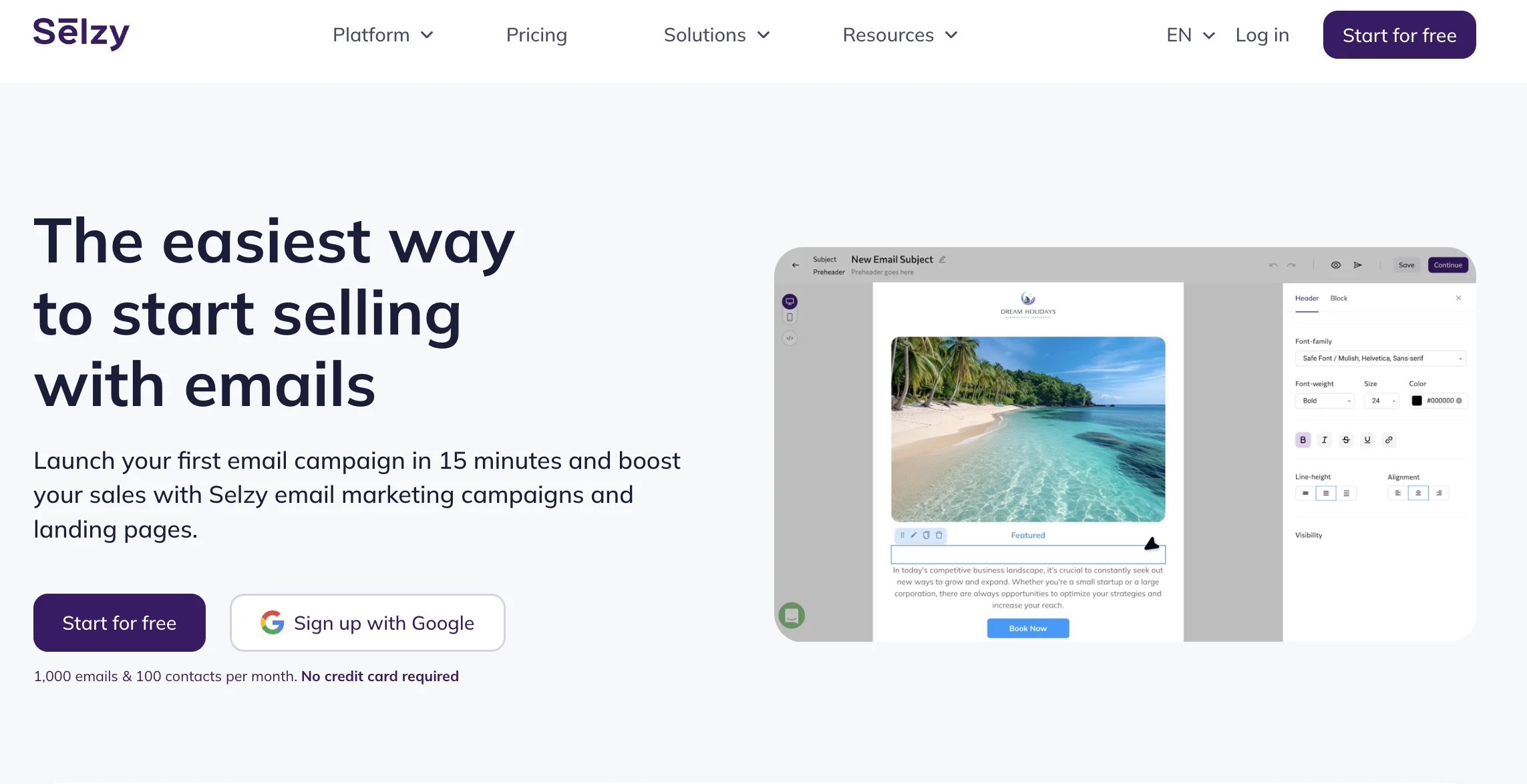
Best for: small businesses, startups, SaaS, and e-commerce companies that want marketing campaigns and omnichannel functionality in one tool, without developer complexity
G2 rating: 4.7/5
Selzy is primarily an email marketing platform, but now it’s also automation-centric and supports omnichannel scenarios. It’s beginner-friendly, straightforward, and you don’t need to know how to code to get started with Selzy.
Selzy’s features include email campaigns, segmentation, A/B testing, and a drag-and-drop builder with AI features. There are also triggered and bulk campaigns, behavioral-based automation, and analytics. On top of that, Selzy has lots of integrations with popular CRM systems, website builders, a brand-new landing page builder, and other tools.
Selzy’s pricing starts with a free plan where you get to send up to 1,000 emails a month to 100 contacts. The next paid tier, Lite, starts at $5.25/month (if billed yearly), and includes more features. Not ready to commit to a paid plan? Take it for a test drive with a 14-day free trial, which allows sending up to 10,000 emails to 2,000 contacts.
Selzy is a little more specialised and email-focused than SendPulse, offering fewer features that aren’t related to email marketing, such as sales pipeline tools or a CRM.

2. Brevo — Best for multichannel marketing in one platform
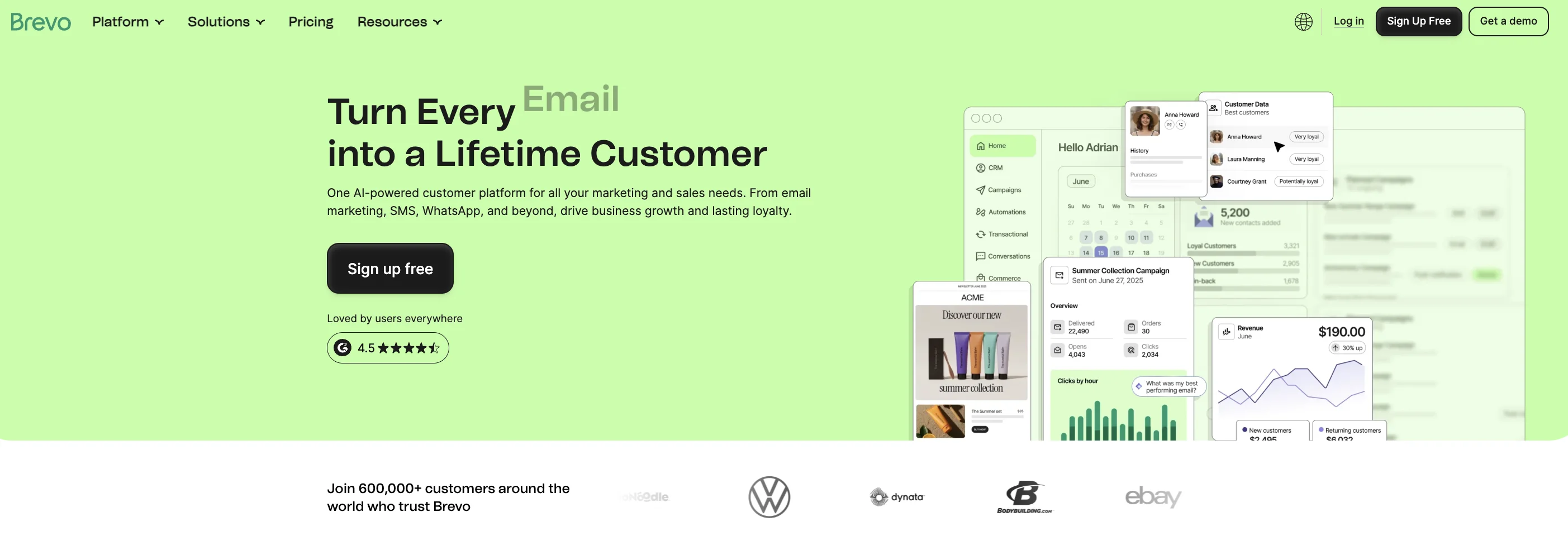
Best for: businesses that want email, SMS, and transactional messaging in one platform, with strong multichannel marketing capabilities
G2 rating: 4.5/5
Like Selzy, Brevo is a marketing-first platform with a focus on multichannel. It’s email-first, but has other marketing features, including CRM. Its core capabilities include email campaigns, automation across email, SMS, and WhatsApp, as well as segmentation and personalization.
Like SendPulse, Brevo features a built-in CRM. There are also analytics, real-time deliverability tools, and optional add-ons.
Brevo has a pretty generous free plan, allowing you unlimited contacts, and up to 300 emails a day. There are also automation features. The Starter plan, which costs $9 a month, has higher monthly sending limits based on volume.
How does it compare? Brevo has better deliverability, according to tests run by EmailDeliverabilityReport and reportedly a better CRM than SendPulse. SendPulse offers a slightly broader list of communications channels, including Viber and Facebook Messenger.
3. GetResponse — Best for marketing funnels and webinars
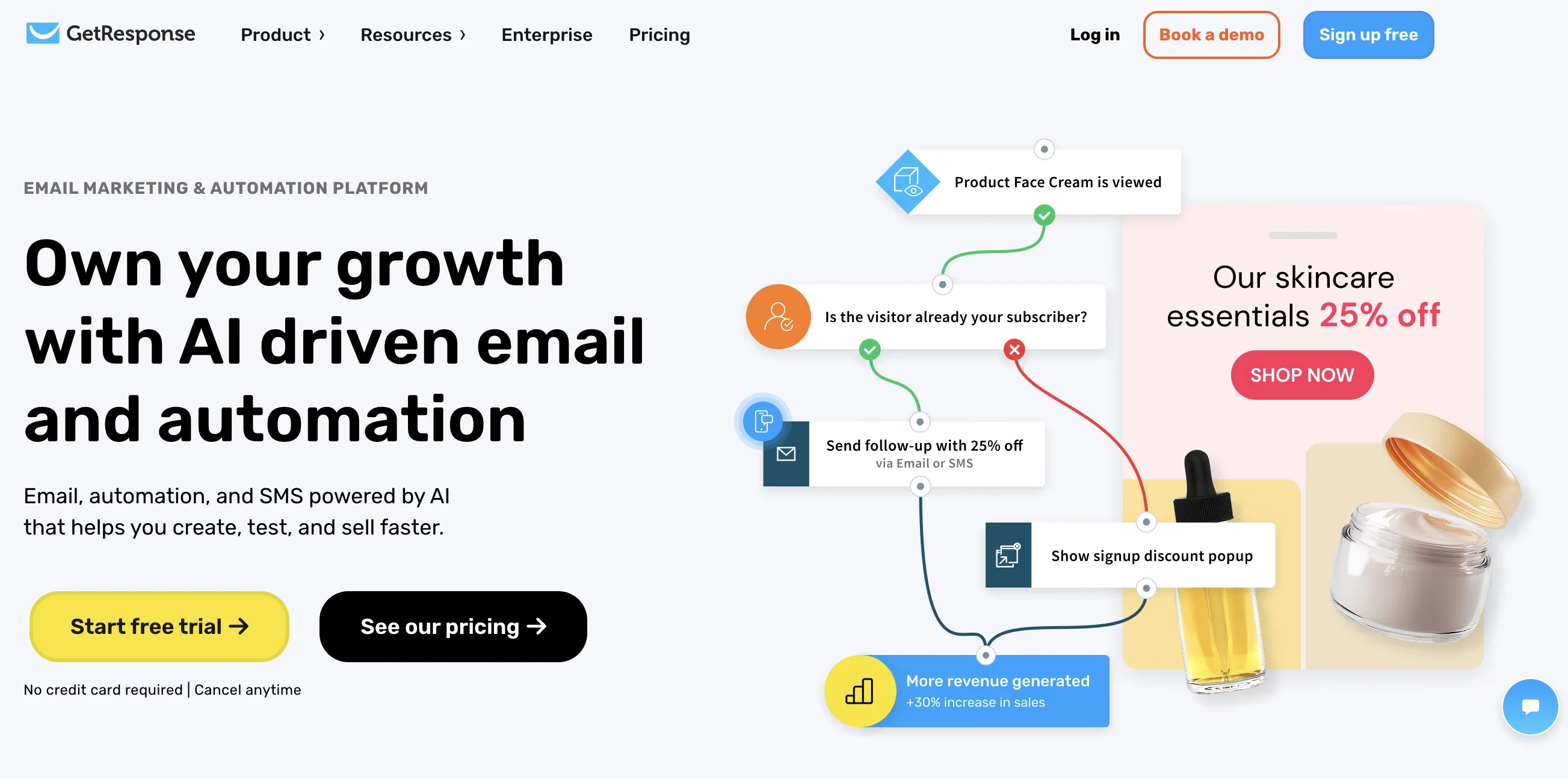
Best for: marketers, e-commerce brands, and course creators that want email marketing combined with landing pages, funnels, and webinar tools
G2 rating: 4.3/5
GetResponse stands out among SendPulse alternatives because it has email at the core, but it also provides an extra focus on lead generation and funnels. This is what makes it especially popular with creators and online businesses.
In terms of features, GetResponse offers email campaigns, AI tools, marketing automation workflows, and a website builder. It also has dedicated e-commerce functionality, plus funnels and live webinars.
There’s no free plan on GetResponse, but there’s a free trial, instead. Prices depend on how many contacts you have. Starter plan, which will set you back $15.58 a month when billed annually, allows unlimited monthly sends and features AI-powered content tools, welcome email series, one custom automation workflow, etc.
SendPulse just doesn’t have that e-commerce functionality that GetResponse is known for, so if you’re running an online business, this is something to consider. On the other hand, GetResponse doesn’t really have a built-in CRM system.
4. ActiveCampaign — Best for advanced automation
Best for: teams that need advanced automation, behavior-based segmentation, and CRM-driven customer journeys
G2 rating: 4.5/5
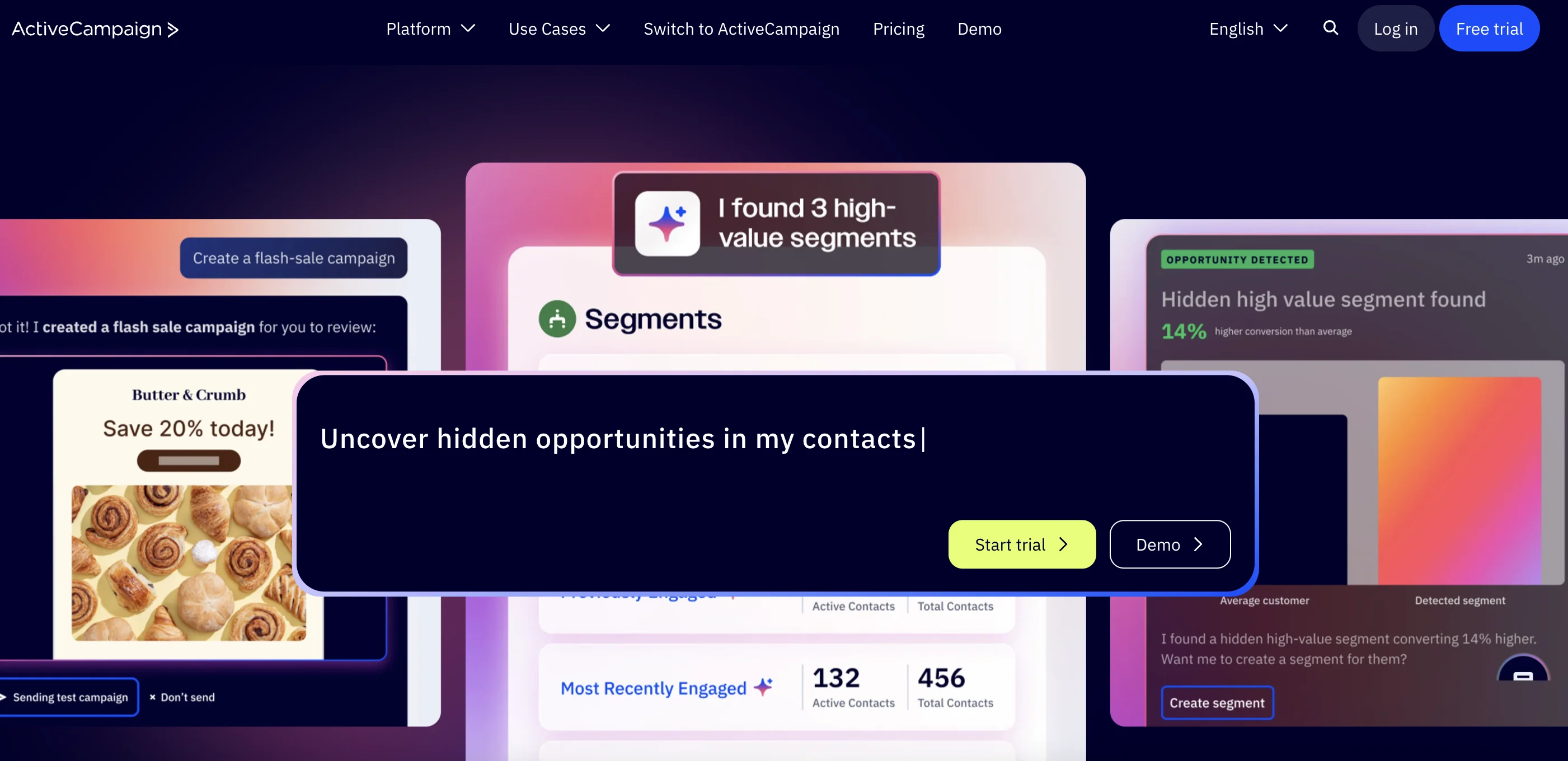
ActiveCampaign is designed for advanced marketers. It’s automation-first and built to scale, with a strong focus on behavior-based targeting.
Aside from email marketing features, ActiveCampaign boasts advanced automation workflows, behavior triggers, customer journey builder, segmentation, personalisation, and other functions. It also has a built-in CRM with sales automation.
ActiveCampaign doesn’t offer a free plan, but there is a free trial. There are three pricing plans: email, WhatsApp, and email+WhatsApp. The email plan costs $15 a month for 1,000 contacts. You get unlimited sending, limited automation, some segmentation features, CRM and website builder. The Email+WhatsApp plan is much more expensive ($122/month) and features cross-channel automation.
SendPulse is more beginner-friendly than ActiveCampaign and has more broader features, such as a course builder. ActiveCampaign, on the other hand, has much more advanced automation and behavior features. Its CRM is geared towards sales.
5. Mailchimp — Best for brand recognition
Best for: small businesses and creators that want an easy-to-use email marketing platform with strong templates, brand tools, and integrations
G2 rating: 4.4/5
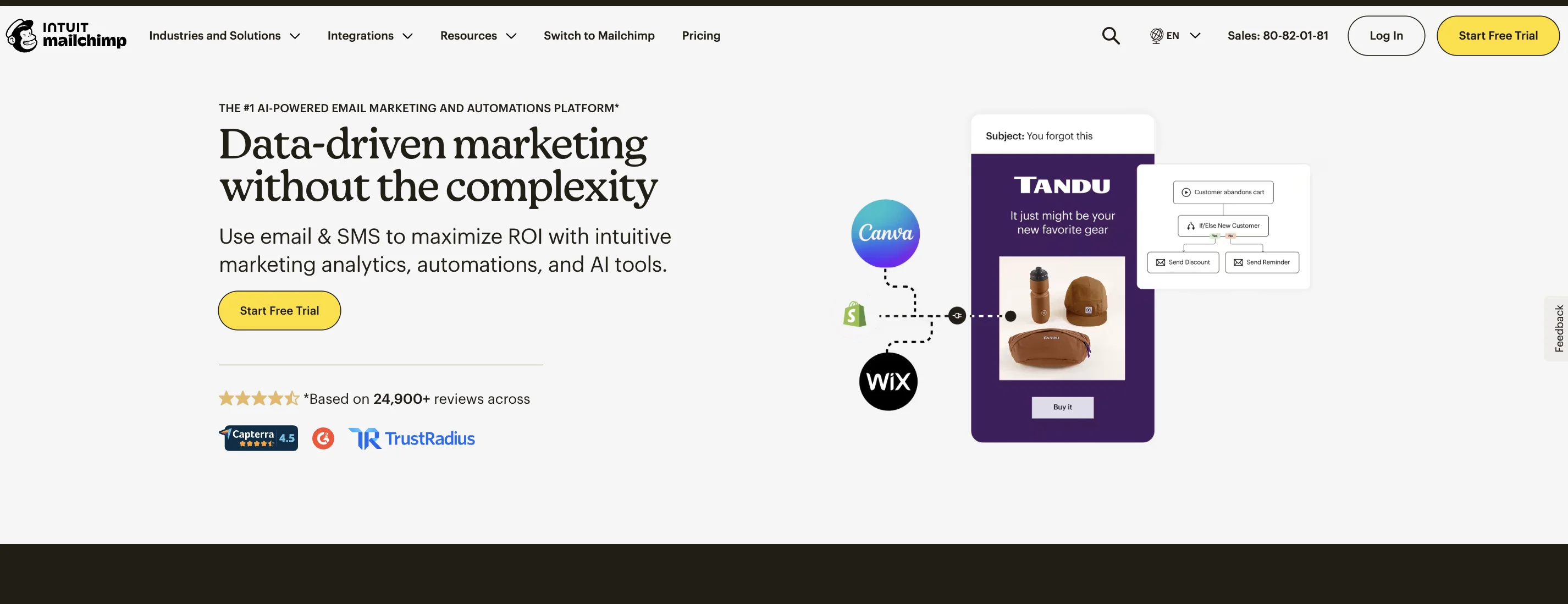
Mailchimp is one of the most widely used email service platforms in the world. While it’s email-first, it also has many other features. It’s beginner-friendly and especially popular with small businesses and creators.
Mailchimp offers a drag-and-drop email builder with templates, basic automation, AI writing tools, segmentation, SMS and social integrations, a landing page builder, basic CRM, and e-commerce automations. There are also separate add-ons for transactional sending and website building.
The platform doesn’t offer a free plan, but there is a free trial. The pricing is contact-based. Paid plans start with Essentials at about $13/month for 500 contacts.
Mailchimp is definitely more well-known than SendPulse. It’s more specialised, with a focus on emails, and has fewer niche channels. Its CRM is also lighter than SendPulse’s.
6. Sender — Best for budget-friendly email marketing
Best for: small businesses and startups looking for affordable email marketing
G2 rating: 4.7/5
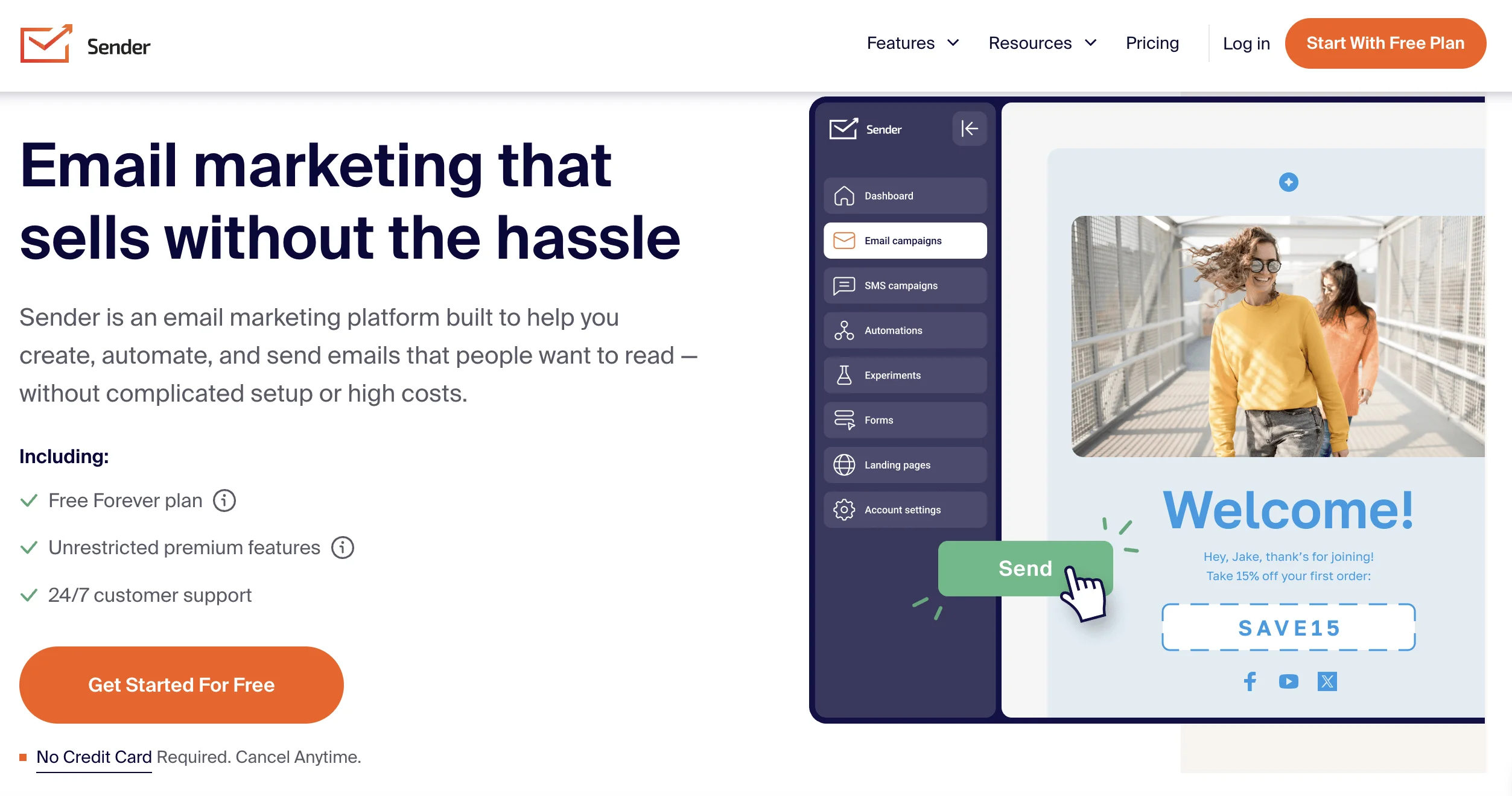
Sender is an email-first platform that focuses on simplicity and affordability. It’s also beginner- and small business-friendly, and has a strong emphasis on its free plan.
Sender offers email campaigns, email builder, templates, segmentation, personalization, A/B testing. There’s also multichannel automation (email and SMS) as well as transactional sending. While there is no meaningful CRM, it does have functionality for landing pages, signup forms and pop-ups.
Sender prides itself on its free plan, which includes 1 seat, up to 2,500 subscribers and 15,000 emails per month. Core features like newsletters, automation, landing pages, popups, and transactional emails are included. More features, including SMS, available on the Standard plan which is $7 a month when billed annually.
Compared to SendPulse, Sender has fewer channels, no CRM, it’s generally simpler and budget-oriented.
7. MailerLite — Best for clean design and blogging tools
Best for: beginners, digital creators, and small businesses that want a clean, easy-to-use email marketing platform
G2 rating: 4.6/5
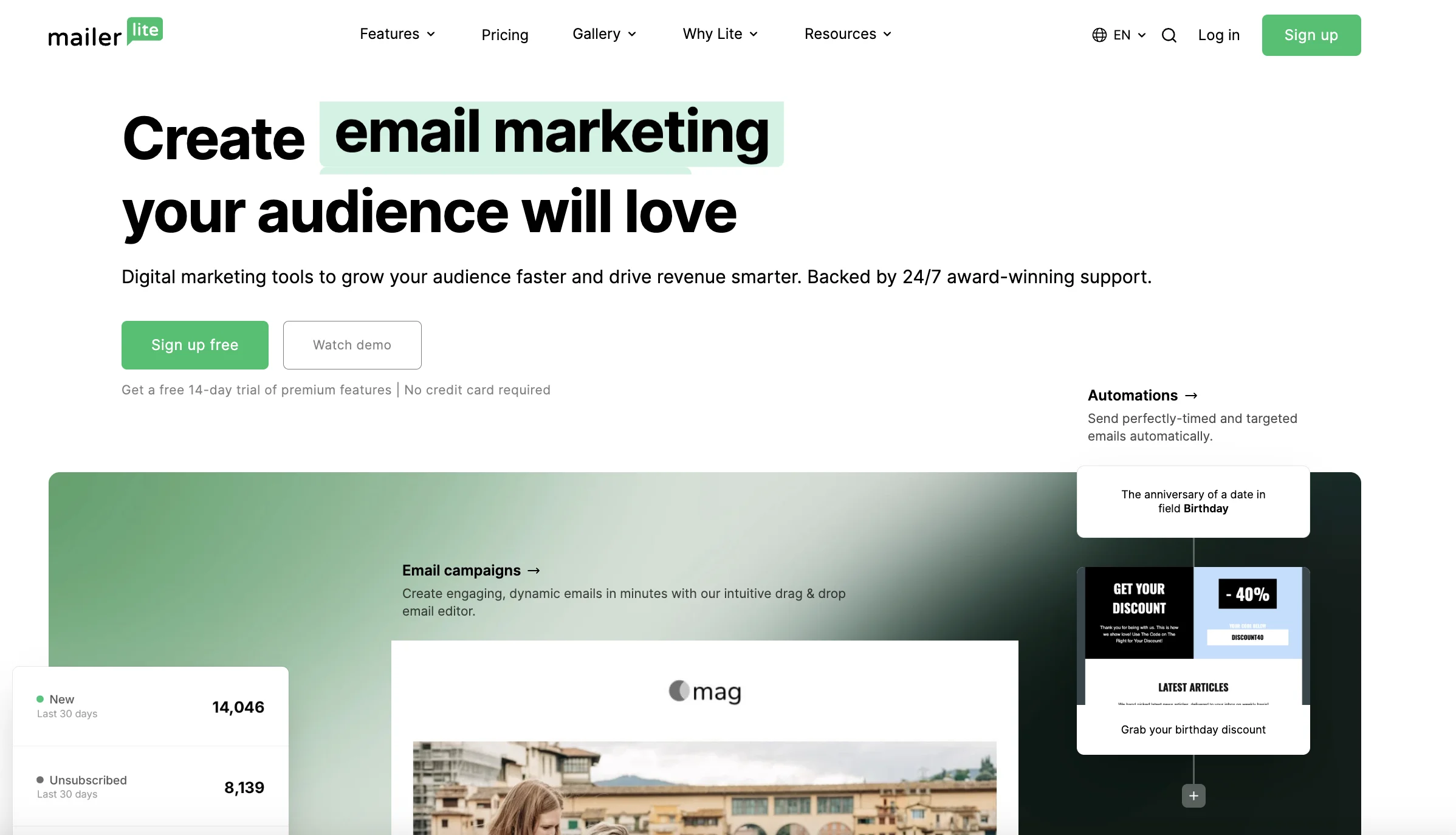
MailerLite is known for its clean interface, built-in website and blogging tools, and straightforward automation builder. It’s especially strong for creators, small businesses, and bloggers since it has blog-focused features. You can also use it to sell digital products and paid newsletters.
Its features include a drag-and-drop editor, automation builder, landing pages and pop-ups, dynamic segmentation, A/B testing, AI tools, and transactional sending (as a separate add-on). It doesn’t really have a CRM system or multichannel capabilities. The one important thing to note about MailerLite is that all new accounts must be approved first, which means your first campaign may be delayed.
Now, onto prices. MailerLite offers a free plan, plus free trials for other plans. The free plan allows you to send up to 2,000 emails/month. A growing business plan costs $9/month (billed annually for 500 subscribers).
MailerLite has a cleaner design than SendPulse, as well as blogging tools. Sendpulse has more complex automation, CRM, and multichannel features.
8. HubSpot — Best for integrated CRM and marketing suites
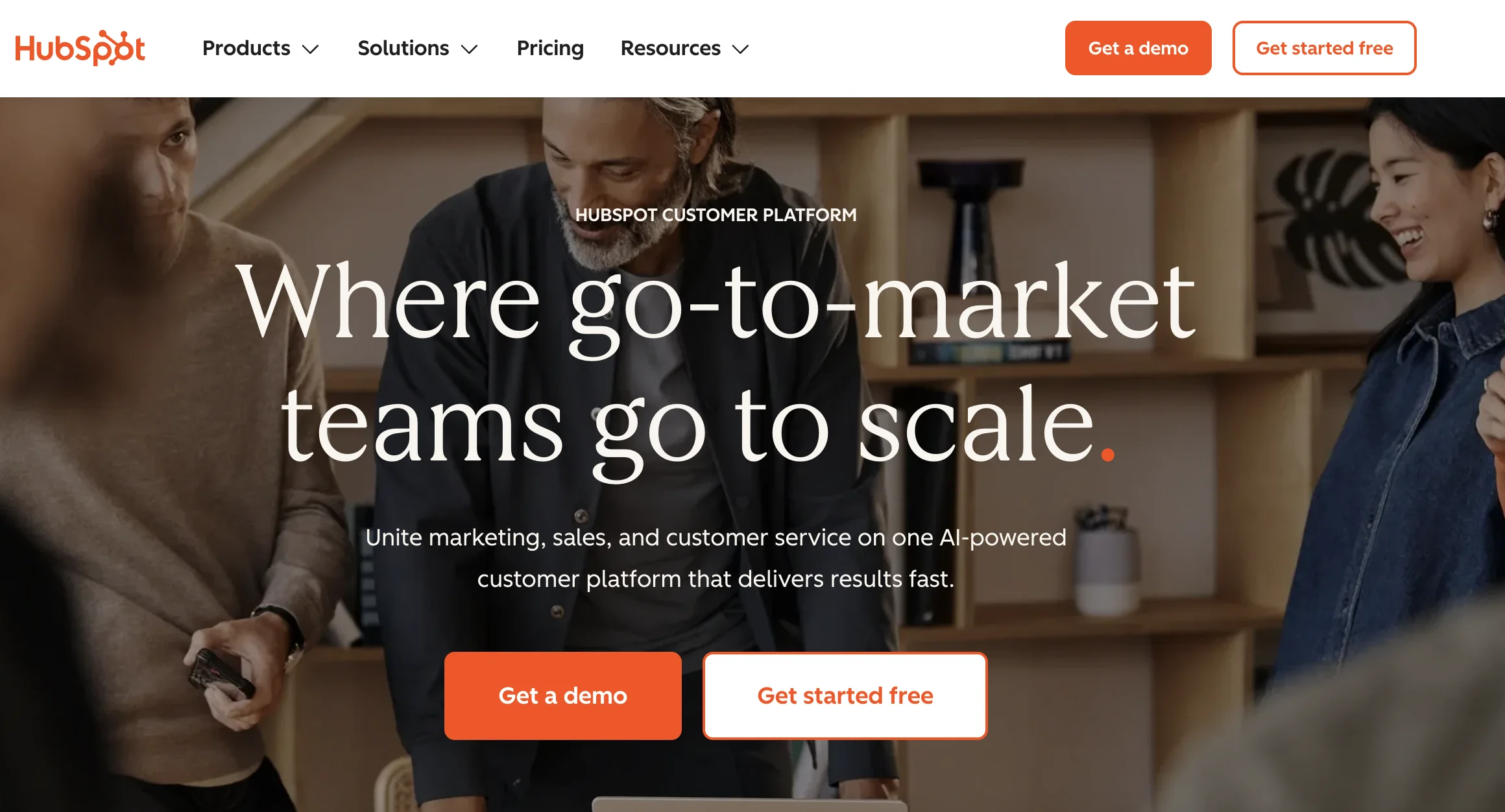
Best for: growing companies that want marketing, sales, and customer service tools built around a powerful CRM ecosystem
G2 rating: 4.4/5
HubSpot is a CRM-centric marketing platform designed for companies that want email marketing, sales automation, and customer data management in one integrated system. It offers a plethora of features that are split into different hubs: Marketing, Sales, Service, Content, and Operations. This division can make things a little complex: if you need an advanced tool from another hub, you have to upgrade the whole hub. No picking and choosing!
HubSpot is famous for its CRM. But it also includes email marketing, social media tools, ads, advanced automation, pipeline features, reporting, content management and website building. Everything is tightly integrated and scalable. The big downside is that pricing can escalate quickly, and all these features may be an overkill for people who are just starting out.
There are free plans for all of HubSpot’s hubs. If you’re on any of the paid plans, you get access to free features from other hubs. The increase in price between paid plans is huge: for example, for marketing, the Starter plan is $9/month when you pay annually. The next paid plan is a whopping $800 monthly!
SendPulse is more email-forward and channel-first than HubSpot. Its CRM is much lighter, and overall, it’s more beginner-friendly. Unlike HubSpot, SendPulse also features a plan builder, so you can only pay for the tools you’re actually using.
9. EngageBay — Best for affordable CRM and sales alignment
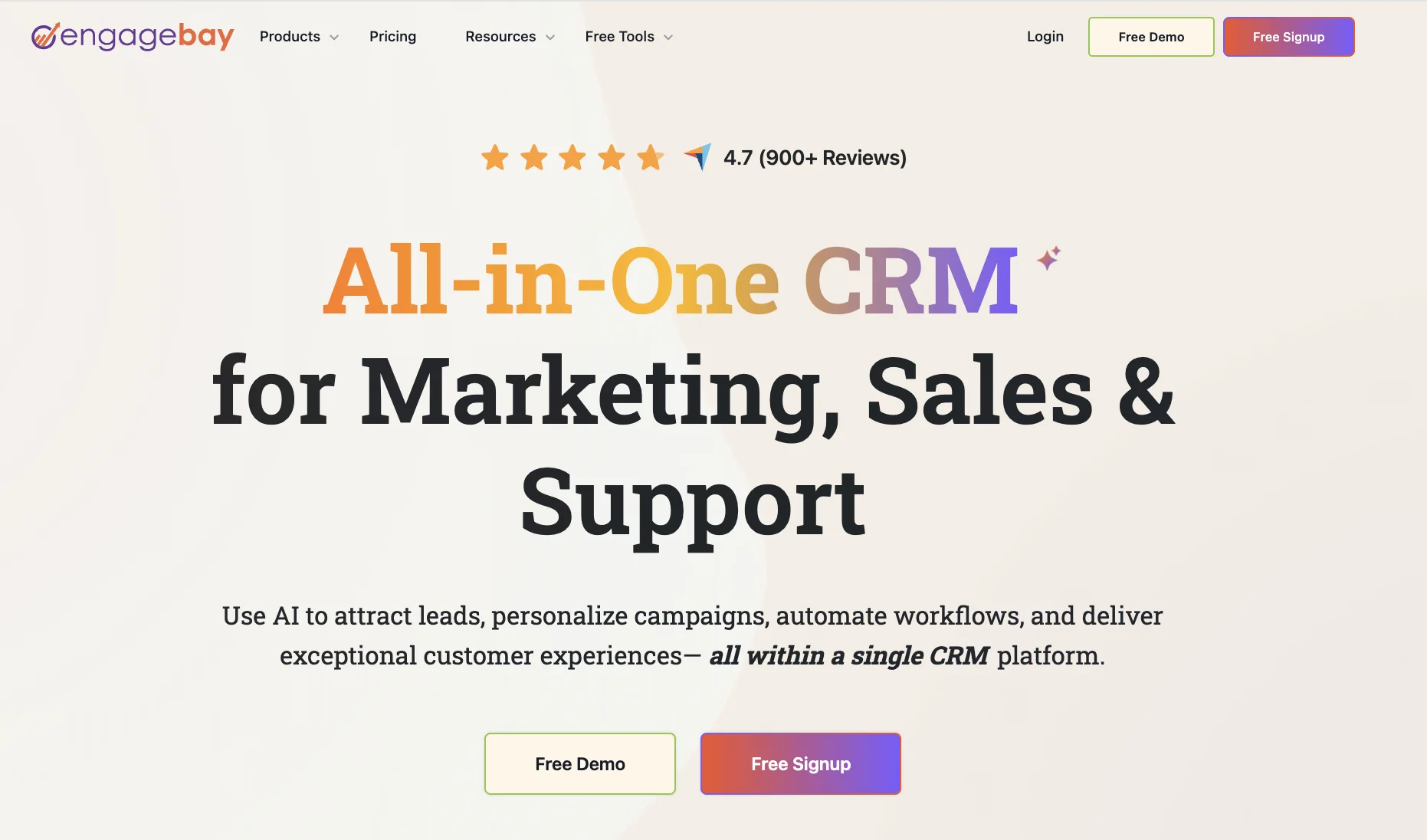
Best for: small businesses that want an all-in-one platform combining email marketing, CRM, sales automation, and customer support tools
G2 rating: 4.6/5
EngageBay is a CRM-focused SendPulse alternative that combines marketing automation, email campaigns, sales pipelines, and customer support tools in one platform. It’s similar to HubSpot in that it also organizes its tools into functional modules, but EngageBay also offers a plan that includes features from all modules. Broadly speaking, it’s CRM-centric and cheaper than its competitors.
Aside from its CRM capabilities, EngageBay also offers email campaigns, automations, landing page builder, SMS, push notifications, and deal tracking. Speaking of downsides, it has fewer integrations than its competitors and its interface has drawn complaints from users.
In terms of pricing, there are free plans for every module, including all-in-one. It includes up to 250 contacts, email marketing, autoresponders, broadcasts, sequences, landing pages, CRM, helpdesk, and live chat. As far as paid plans are concerned, the best deal is to pay biennially, which can be too long of a commitment for some users. The first paid tier is the Basic plan, which starts at $12.74 per user per month. It increases the contact limit and adds features such as email templates, web pop-ups, landing pages, lead scoring, SMS marketing, social media tools, and third-party integrations.
The main difference between EngageBay and SendPulse is that the former is CRM-centric and the latter is channel-centric. SendPulse also has fewer sales features.
10. Omnisend — Best for ecommerce-focused automation
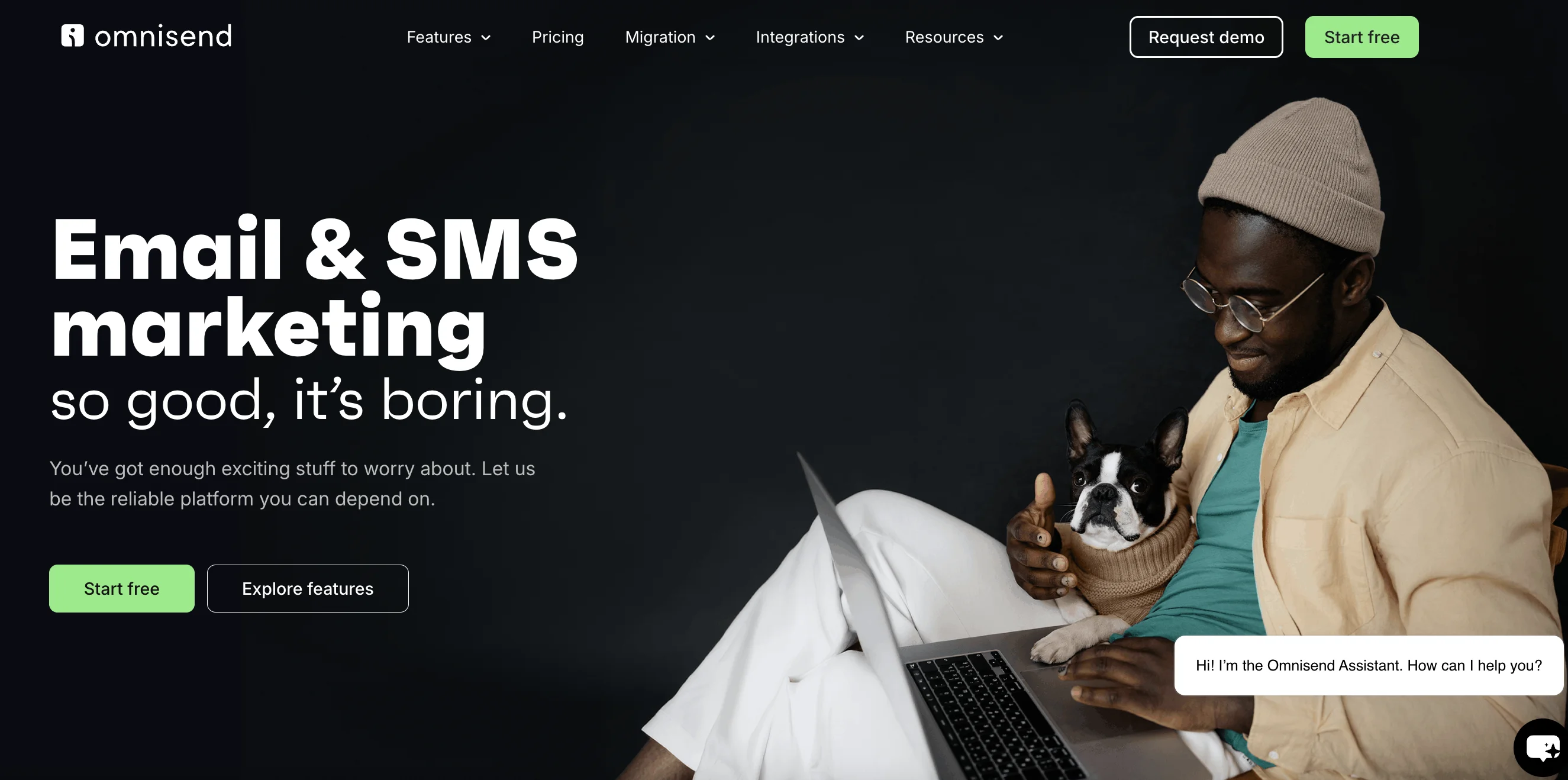
Best for: e-commerce businesses that want email, SMS, and automation workflows designed specifically for online stores
G2 rating: 4.6/5
Omnisend is built specifically for e-commerce brands, offering pre-built automation workflows like abandoned cart recovery, product recommendations, and post-purchase campaigns. It focuses on email and SMS, with a strong emphasis on Shopify.
Core features include email marketing and automation, SMS, e-commerce workflows, scheduling, segmentation, A/B testing and so on. It really shines when it comes to e-commerce automation. However, it offers fewer integrations than its competitors and the learning curve can be steep.
Omnisend’s free plan is unusual: it offers full access to the platform’s core features — email and SMS automation, pre-built e-commerce workflows, A/B testing, segmentation, scheduling, analytics, and reporting. The cheapest paid plan, Standard, is $16/month and has all the same features but with a higher sending capacity.
SendPulse and Omnisend are quite different. Omnisend has a very strong e-commerce focus with pre-built workflows for online stores, plus Shopify positioning. SendPulse, on the other hand, has a CRM and more channels.
How to choose the right SendPulse alternative
When trying to decide what platform is right for you, first think about what tools you’re using. Any email marketing platform you choose should integrate smoothly with your existing stack.
Next, think about your goals and level of experience.
- Selzy or Mailerlite are a good choice if you’re just getting started: they’re beginner-friendly and easy to set up and manage.
- If you’re budget-conscious, check out Sender or EngageBay for solid functionality at a lower price point.
- Omnisend or GetResponse are perfect for those in e-commerce.
- If you’re after advanced automation and behavior-based campaigns, ActiveCampaign or HubSpot could be right for you.
- Brevo and Mailchimp sit somewhere in the middle, offering a balanced set of features.
FAQ about SendPulse alternatives
What is SendPulse?
SendPulse is an all-in-one marketing platform that brings together email marketing, chatbots, CRM, website builder, and lead capture tools.
Why look for alternatives to SendPulse?
SendPulse offers a lot of features, but none of them are specialized. This means that if you’re in the market for comprehensive automation features, for example, you may need to look for another platform with a focus on that.
Are there free alternatives to Sendpulse?
Sure! Many of the platforms on our list, including Selzy, have free plans. Those who don’t, usually offer free trials so that you can test them out before committing financially.

 New and noteworthy on our blog
