


Key takeaways
- Email retargeting is a valuable strategy to engage hesitant prospects and boost conversions.
- Key concepts include behavioral marketing, segmentation, and personalization for effective retargeting campaigns.
- Examples of retargeting emails include browse abandonment, cart abandonment, back-in-stock, cross-sell, upsell, and re-engagement emails.
- Best practices for retargeting emails involve personalization, offering discounts, creating urgency, and showcasing product value.
Have you ever thought that people who didn’t convert the first time they encountered your brand were a lost cause? Fortunately for email marketers, this is not true.
Email retargeting is a great strategy you can use to reach out to hesitant prospects and help them make up their minds. In this article, we’ll explore this concept in more detail, show off examples of retargeting emails, and help you implement this approach into your strategy.
What is email retargeting?
Email retargeting is a tactic of reaching out to leads who haven’t completed the desired action on the first try. The action here can refer to purchasing a product, signing up for your marketing communications, etc.
Email retargeting is also used to re-engage inactive subscribers, cross-sell, and upsell customers.
Email retargeting is essentially a second-chance strategy. You once again approach the same people, but with a more personalized and targeted offer that directly corresponds to the customers’ actions and personal information (if you have any). It’s important to note that retargeting is not about repeating the same message; it’s about building upon the information you received on your first try with the customer.
This tactic is built on several key concepts:
- Behavioral marketing. The most important information for successful retargeting is the customer’s behavior: did they browse your website? Put a product in their cart, but haven’t gone through with the purchase? Using this information, you can then send retargeting emails in response to subscribers’ actions.
- Segmentation. Retargeting is about relevant content and reaching out to customers at exactly the right moment, but you can group together those who are at a similar point in their customer journeys.
- Personalization. In order to work, your retargeting campaigns need to be specific to each customer and relevant to them personally.
6 retargeting email examples & best practices
Want to learn more? Let’s check out some common retargeting examples and find out what makes them effective.
Browse abandonment email
Browse abandonment emails are targeted at customers who viewed your website but haven’t put anything in their carts and haven’t converted.
What to include in your emails for a higher chance of conversion:
- Images of products and services the customer viewed
- Prominent call-to-action buttons
- Discount code
- Buying guide to help the customer make an informed purchase decision
- Reviews from buyers as a form of social proof
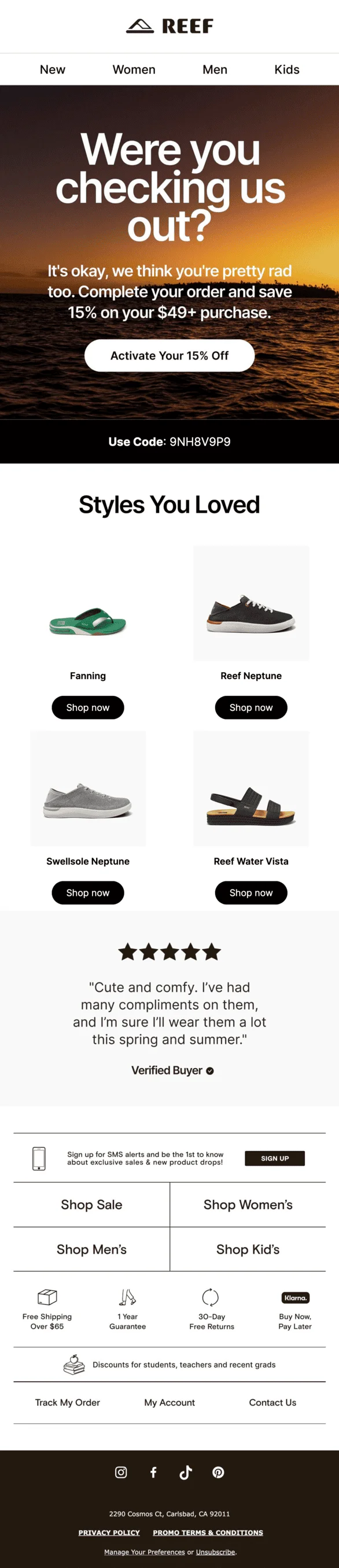
REEF uses several tactics at once with the promo code and customer comments. There are also multiple CTA buttons, with the first one being right on the banner.
Cart abandonment email
Abandoned cart emails target prospects who put a product in their carts but haven’t checked out.
Besides showing the product and including well-worded CTAs, best practices for this retargeting email type are:
- Offering a discount
- Tapping into FOMO, scarcity, and urgency to drive immediate action
- Reinstating your product’s unique value proposition
- Mentioning free returns and free shipping
- Offering alternative product options
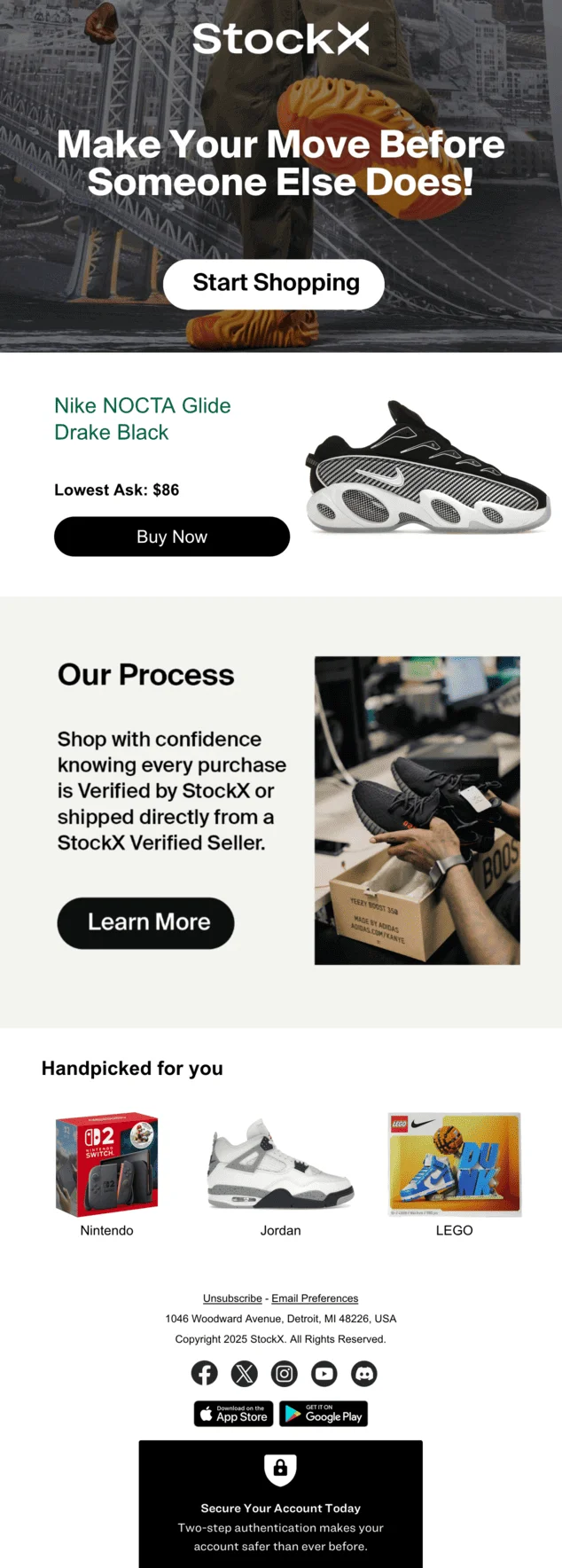
This StockX email emphasizes the limited product quantities, provides more context to hesitant customers, and also showcases other interesting offers to influence decision-making:
Back-in-stock email
Back-in-stock emails (also known as replenishment emails) target customers who wanted to purchase a product that sold out. This campaign notifies them that the item they were looking for is available once more.
If you want to enhance your campaign, consider adding these elements:
- Customer requests for the restock if there was a public outcry
- Product’s selling qualities
- Reviews
- Scarcity and urgency messaging
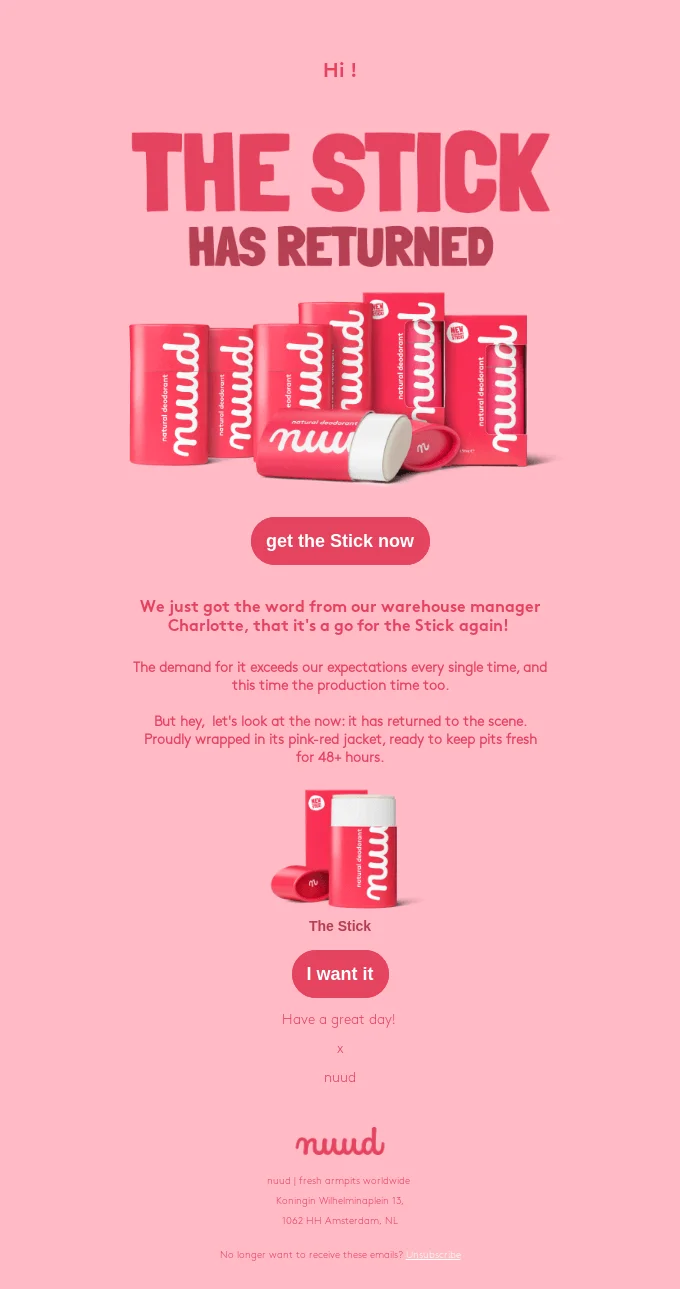
This email follows the best practices and also has a nice tone of voice. The campaign mentions the warehouse manager by name to humanize the brand and emphasizes its small business nature.
Cross-sell email
Cross-sell emails target customers who purchased something but might benefit from complementary products or services.
There are no universal recipes here, but the most important factor is personalization. The recommendations you send should be directly related to what the customer purchased. If you need some inspiration on personalization vs individualization, the topic.
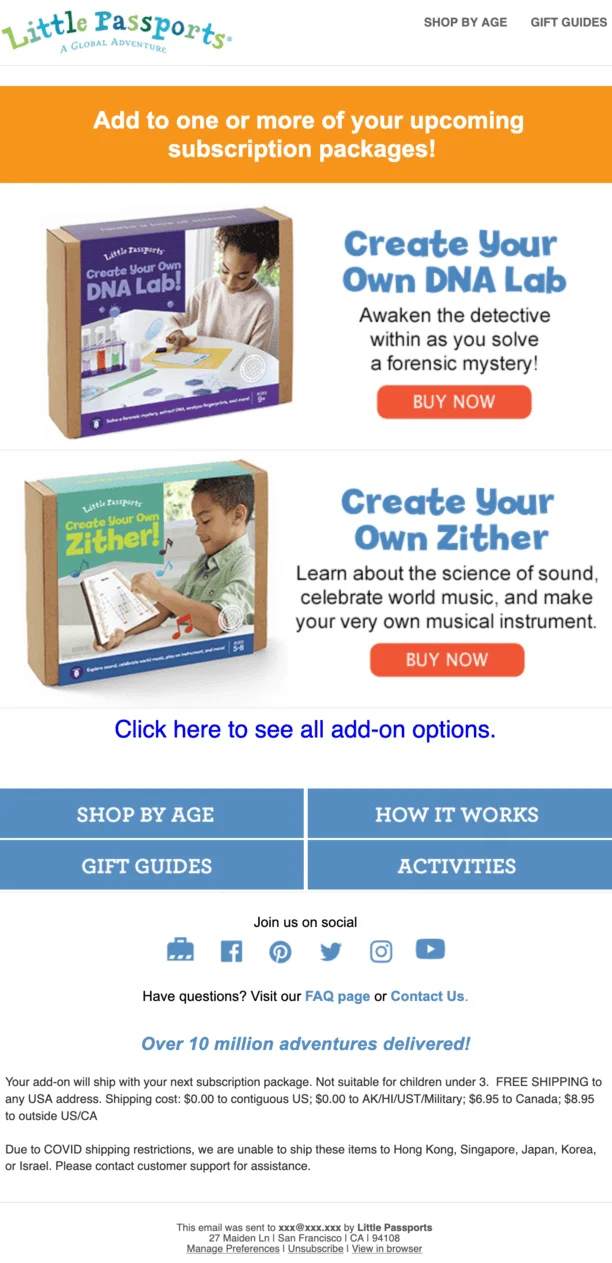
In this email, Little Passports promotes the add-ons customers can purchase in addition to their subscriptions. It only shows two options, so there’s little chance of choice paralysis. Plus, there’s a CTA to see everything on offer if the highlighted positions aren’t convincing.
Upsell email
Upsell emails target customers who purchased a product or service but might benefit from an upgrade or a higher-priced product option.
The email marketing best practices you need to follow for this retargeting campaign are outlining the benefits of the more expensive option and making it easy to upgrade. If you have enough data, use segmentation for targeted offers that address specific customer needs and pain points.
In this campaign, Restream used a countdown timer and a discount to convince subscribers to take the next step:

Re-engagement email
Re-engagement emails (also called win-back emails) target dormant subscribers in an effort to make them active once again.
As these campaigns aim to engage inactive customers, their main asset should be an attractive deal, something they can’t afford to miss. You also need to remind people why they have subscribed in the first place and show that there’s more for them if they keep opening your emails.
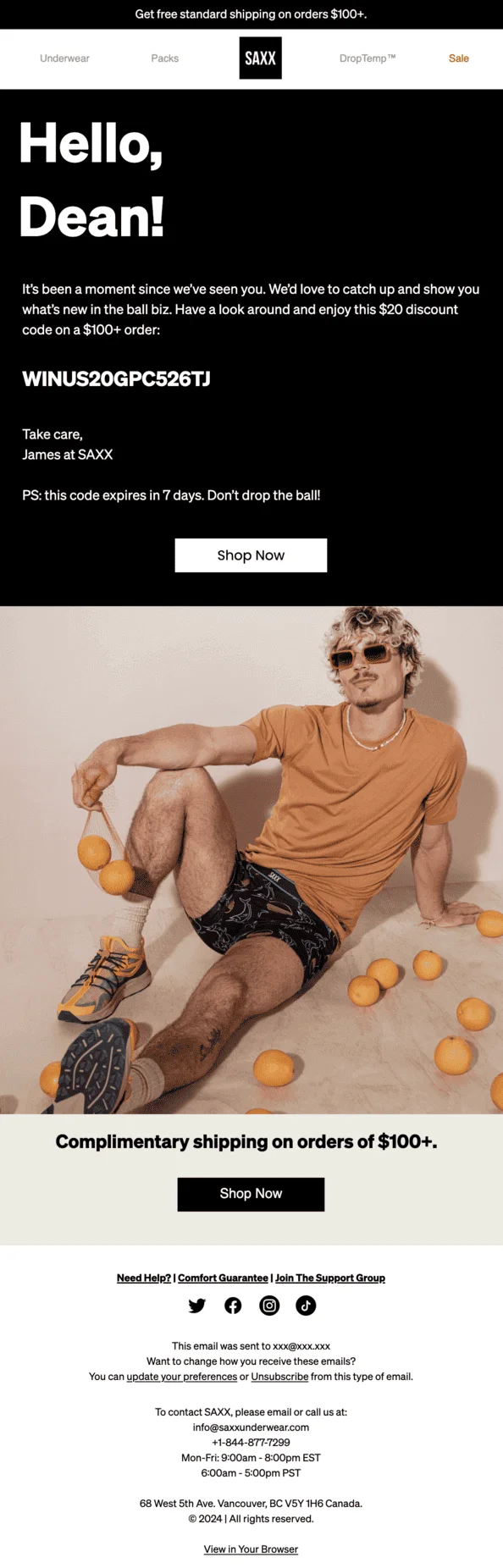
The email below is a very effective example of this strategy with several great elements on display: a discount, a personalized introduction, a sign-off from a brand representative, and a short expiration window.
How to get started with email retargeting
You’ve seen what retargeting emails look like and what each type needs to bring more sales and push subscribers toward conversion. Now, let’s get to the bottom of what to do to make this strategy work.
Here are some quick technical considerations:
- You need a good email marketing automation platform that allows for accurate data tracking and also integrates with your customer relationship management software, e-commerce store, etc.
- You might also need to learn about tracking pixels, website cookies, and UTMs for proper attribution and better analytics.
If you’re focused on email marketing for a small business, don’t start implementing all of the retargeting email types at once. Assess your resources and whether you might need to switch to a different email service provider or add to your technical stack. After that, take a look at your customer base and prioritize those strategies that will be the most impactful for your business. For example, abandoned cart emails are typically considered to be one of the best campaign types in terms of revenue.

Build your email list and gather customer info
To implement a retargeting strategy, you first need people in your database. Use forms or social media to build your email list. When collecting the data, ask for important details like names and birthdays, depending on the segmentation parameters you plan to use. After that, make sure you collect the behavioral, purchase, and engagement data.
Segment your audience
Segment your customers based on when they made their purchases, what they purchased, their subscription date, website activity and email engagement, etc. If you need, explore more product-specific segmentation ideas.
Plan your email sequences
Create automation scenarios and time the initial campaigns and the follow-ups according to your strategy.
For example, for a cart abandonment sequence, you may send the first email after 24 hours, and the next one in 3 days. That said, consider the overall email frequency to avoid marketing fatigue, which can lead to unsubscribes.
Create email content
Once you map out the customer journey, prepare content for each email. Make sure it is personal, relevant, specific, and timely.
On the email design side, follow the accessibility guidelines and don’t forget about those who engage with your emails on mobile.
A/B test
Your work isn’t done even after you activate the sequences. To continue to improve upon your results, you need to iterate.
A/B testing helps to see which subject line, content, or offer variations perform best with your audience. Its goal is to make sure you get the most out of every campaign, every time.
Analyze the results and optimize
Set a timeframe to get the results of each email sequence’s performance, gather the data, and analyze it. Pay attention to metrics like conversion rate, revenue per email, and other business-specific KPIs. If the results miss the mark, think of the meaningful changes you can make to see a turn for the better.
Final thoughts
Email retargeting is a great strategy to get more revenue out of your existing customer base. If you already use a good marketing automation platform, you just need to create new sequences and set up data transfers between platforms to start seeing the first results!

 New and noteworthy on our blog