



Key takeaways
- Social proof in email marketing uses reviews, results, customer numbers, awards, expert opinions, and other credible evidence to reduce uncertainty.
- Social proof helps make unfamiliar offers feel less risky by showing that relevant customers, specialists, publications, or communities trust the brand or achieved useful results.
- Social proof can support various campaign types, and the best form depends on what the recipient needs to believe before taking the next step.
- Credibility, relevance, and risk reduction are essential factors in the effectiveness of social proof.
Social proof in email marketing uses reviews, results, customer numbers, awards, expert opinions, and other credible evidence to reduce uncertainty. This guide explains which proof to choose, where to place it, and how real email examples turn a claim into a reason to trust it.
What is social proof in email marketing?
Social proof is the evidence people use when they cannot evaluate a choice from first-hand experience. In an inbox, it helps an unfamiliar offer feel less risky by showing that relevant customers, specialists, publications, or communities already trust the brand or achieved a useful result.
Social proof in email marketing is evidence that other customers, experts, publications, or communities already trust a brand or have achieved a relevant result with it. In an email, that evidence can appear as a review, testimonial, rating, customer count, result, award, media logo, expert quote, or user-generated content.
Social proof can support many campaign types, including welcome emails, product launches, abandoned-cart messages, onboarding, retention campaigns, event invitations, and newsletters. The best form depends on what the recipient needs to believe before taking the next step.
Why is social proof important?
A recipient usually makes three quick judgments: Is this sender credible? Does the offer work for people like me? Is clicking, replying, or buying worth the risk? Relevant proof can help answer those questions, but it does not automatically increase conversions. Its effect depends on specificity, recency, source quality, audience fit, and placement.
- Credibility: recognizable customers, certifications, awards, and independent media can show that the business is established.
- Relevance: a story from a customer with a similar goal helps the reader imagine the product in their own context.
- Risk reduction: reviews, ratings, adoption numbers, and concrete outcomes add evidence near a decision.
Strong proof supports a precise claim. Weak proof is vague, outdated, unattributed, or disconnected from the offer. A wall of logos may look impressive, for example, but it says little unless the reader understands what those companies used and why that matters.
How to collect social proof for email campaigns
Collecting proof works best as an ongoing system rather than a search that begins when a campaign is due. Start with the decision your email must support, then gather evidence that answers that concern.
- Choose the proof you need. Decide whether the campaign needs trust, feature validation, outcome evidence, reassurance, or momentum.
- Ask at the right moment. Request feedback after a successful purchase, support resolution, milestone, renewal, event, or measurable result.
- Use several channels. Post-purchase emails, NPS or satisfaction surveys, support conversations, social listening, review platforms, and interviews reveal different kinds of evidence.
- Capture context. Store the customer’s segment, use case, product, result, source, and date. A specific quote is more reusable than isolated praise.
- Obtain permission. Confirm what may be quoted, whether the name, role, company, image, or logo may appear, and where the material can be used.
- Keep an approved library. Tag proof by audience, funnel stage, campaign type, date, and approval status so marketers do not reuse an expired or unverified asset.
Case studies provide the deepest evidence because they connect a problem, action, and outcome. Short reviews work well when readers need quick reassurance. Social posts and user-generated content can add immediacy, but verify the account and preserve the original meaning before quoting it.
Never improve a quote by changing its substance or present an incentive-driven review as spontaneous. If a material relationship exists, use the disclosures required for the market and channel.
How to choose the right type of social proof
Begin with the recipient’s main question, then choose the smallest proof element that answers it. The following framework keeps the evidence connected to the campaign goal.
| Campaign goal | Useful proof | Best placement |
| Build initial trust | Rating, customer count, recognizable customer, certification | Header, hero, or first claim |
| Prove a feature or outcome | Result-based testimonial, case-study metric, demonstration | Beside the feature or benefit |
| Reduce purchase anxiety | Recent review, adoption number, return or support evidence | Near the primary CTA |
| Re-engage inactive subscribers | Recent customer story, new review, community activity | Main email body |
| Promote an event or launch | Registrations, waitlist size, speaker credential, media mention | Preheader and supporting body block |
Match the source to the reader. A technical buyer may value a specialist’s assessment, while a first-time consumer may respond better to a recent review from someone with a similar need. If the proof requires a paragraph of explanation before it makes sense, it may be too broad for the email.
1. Customer reviews and ratings
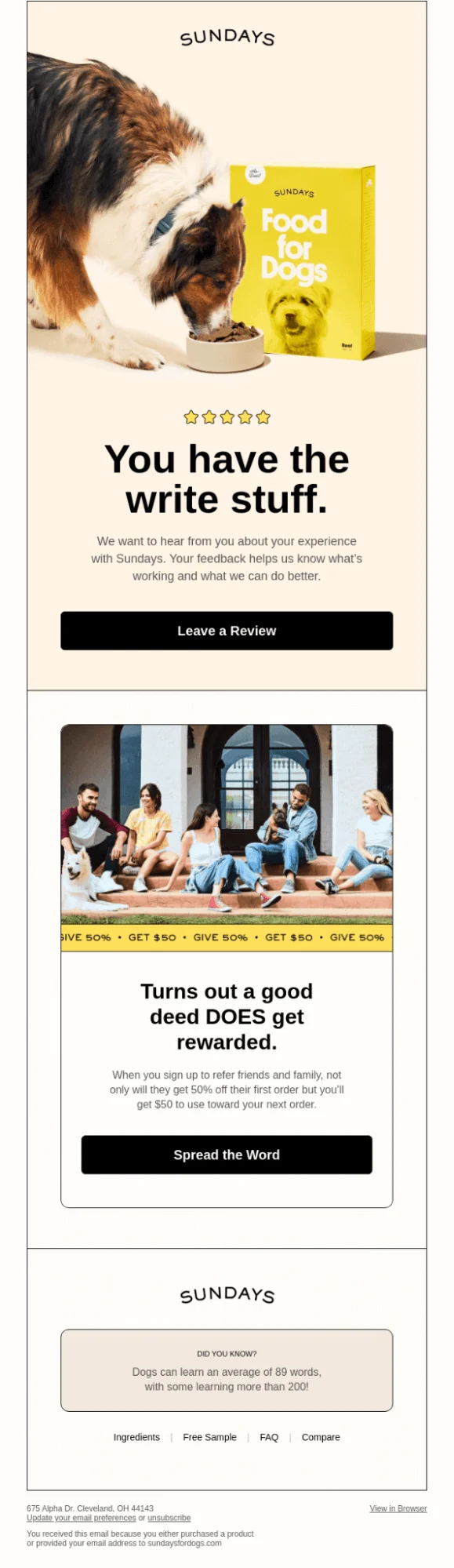
Reviews are compact signals that work well in ecommerce, product recommendations, onboarding, renewal, and win-back campaigns. The strongest selections describe a situation or outcome instead of saying only that the product is great.
Why it works: the recipient sees an independent voice at the moment they are evaluating a claim. A rating becomes more useful when it includes the review count, date, product, and a short relevant excerpt.
Best placement: beside the featured product or immediately before the CTA. Use one or two readable reviews rather than a dense carousel that becomes tiny on mobile.
Watch out: do not cherry-pick a quotation that changes the review’s meaning. Keep the source attributable and refresh old reviews when the market, product, or customer expectation has changed.


2. Result-based testimonials and case studies
A result-based testimonial connects a customer’s starting point, action, and outcome. It is stronger than broad praise because the reader can judge whether the situation resembles their own.
Why it works: it turns a benefit into evidence. A short email can name the customer type, the challenge, and one verified result, then link to the full case study for methodology and context.
Best placement: after the email introduces the problem and benefit, before the main CTA. In a longer nurture sequence, dedicate one message to the story and use later messages to reinforce one specific result.
Watch out: distinguish correlation from causation and do not imply that every customer will reproduce the same result. Include the time frame and conditions when they are necessary to interpret a metric.
3. Customer, subscriber, or usage numbers
Numbers communicate adoption quickly: customers served, active users, reviews collected, messages sent, community members, or event registrations. They work best when the unit and time frame are immediately clear.
Why it works: visible participation makes an unfamiliar choice feel established. A precise number can support credibility without requiring a long quote.
Best placement: in the hero, next to a product claim, or near a registration CTA. Use the number that answers the reader’s concern rather than the largest number available.
Watch out: avoid vanity metrics. “Millions of interactions” is less persuasive than a current number tied to customers, outcomes, or a clearly defined activity. Date fast-changing figures and update them regularly.

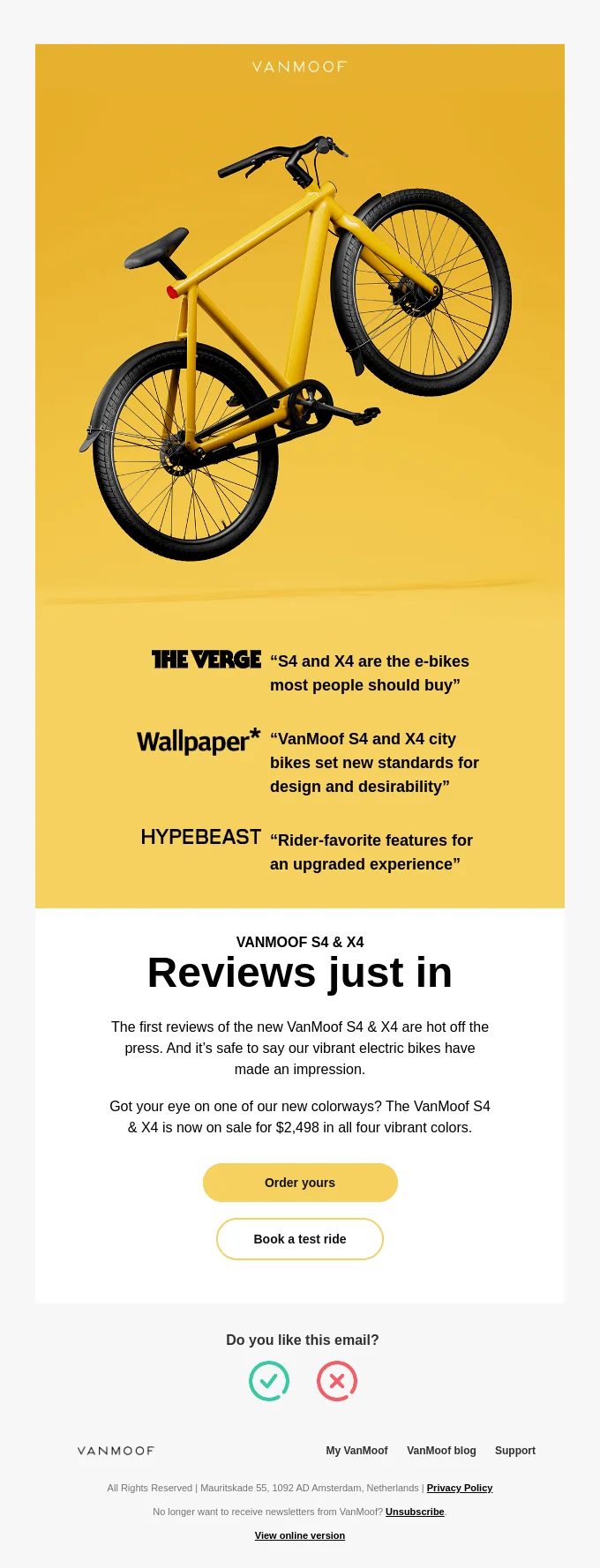
4. Recognizable customers, partners, and collaborations
A relevant customer or partner name can provide credibility when the audience understands the relationship. A collaboration is not proof by itself; explain whether the organization uses the product, co-created a resource, sponsored an event, or supplied an integration.
Why it works: familiarity transfers some trust and helps the recipient locate the offer within an established ecosystem.
Best placement: a small logo row below the main value proposition or a short collaboration story in the body. Add context such as “used by,” “integrates with,” or “created with.”
Watch out: obtain permission to use logos and avoid language that implies endorsement when there is only a commercial or technical relationship.

5. Media mentions
Independent coverage can show that a company, product, study, or idea has attracted outside attention. The publication should be recognizable or relevant to the recipient’s industry.
Why it works: the evidence comes from outside the brand. A short excerpt or accurate paraphrase can support credibility without turning the email into a press-release recap.
Best placement: below the opening claim, in a launch email, or beside a link to the reported story. Explain what was covered rather than presenting a logo alone.
Watch out: do not convert neutral coverage into an endorsement. Quote accurately, link to the original item when appropriate, and make the publication date visible if recency matters.

6. Awards, certifications, and independent recognition
Awards and certifications can reduce uncertainty when the granting organization, criteria, and year are meaningful to the reader. They are especially useful in regulated, security-sensitive, or high-consideration decisions.
Why it works: an external body has evaluated the company or product against stated requirements or peers.
Best placement: near the claim the recognition supports, in the footer trust area, or next to a CTA that asks for a significant commitment.
Watch out: name the issuer and year. Remove expired badges, pay-to-participate awards that could mislead readers, and seals that have no connection to the decision in the email.

7. Expert and influencer endorsements
An expert quote can explain why a method, product category, or specific feature matters. An influencer can demonstrate use for an audience that trusts their taste or experience. The endorser’s relevance matters more than follower count.
Why it works: the source supplies specialist knowledge or established audience trust. The quote is most persuasive when it is concrete and connected to the email’s claim.
Best placement: beside an educational point, product demonstration, launch, or invitation. Briefly identify the person’s expertise so the reader does not need prior knowledge.
Watch out: disclose paid or material relationships as required. Do not edit the quote into a broader promise or use an image that suggests an endorsement the person did not give.

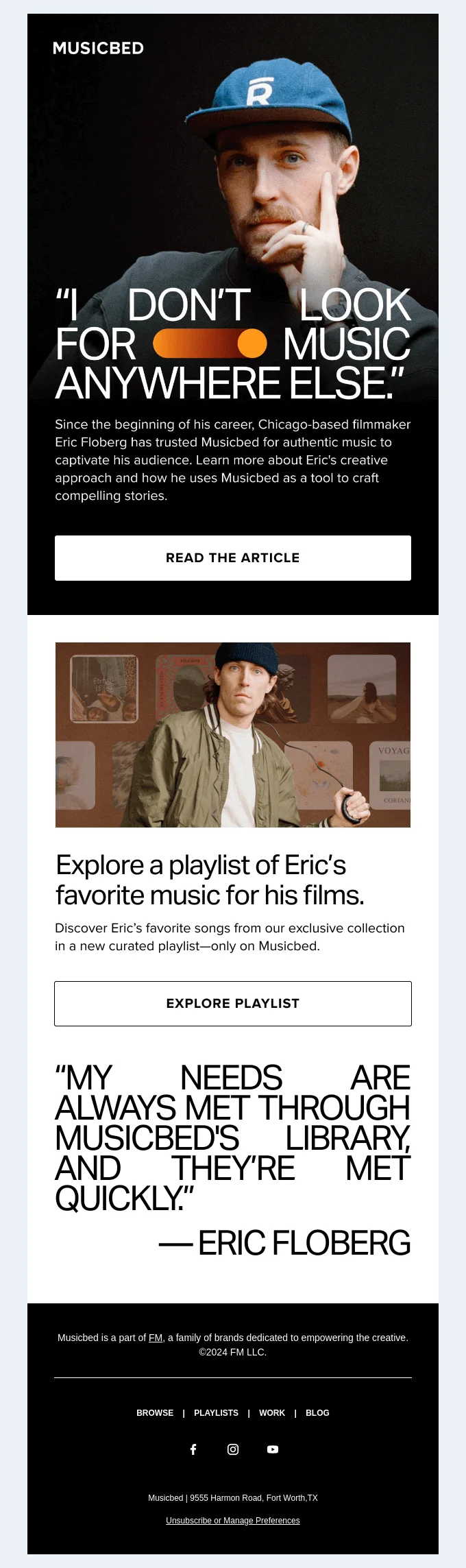
8. User-generated content and community activity
Photos, posts, challenge entries, discussion highlights, and community milestones can demonstrate how people use a product in everyday settings. This evidence is often more vivid than a polished brand claim.
Why it works: the recipient sees participation and authentic variation rather than one official presentation. It can also reward contributors and encourage others to join.
Best placement: community newsletters, launch recaps, event follow-ups, retention campaigns, and seasonal product emails. Provide a short caption so the content supports the message rather than appearing as decoration.
Watch out: ask permission, credit the creator, protect personal information, and moderate sensitive or misleading material. Never assume that a public post automatically grants unrestricted marketing rights.


Best practices for using social proof in emails
- Put proof next to the claim it supports. Do not make readers remember a benefit from the top of the email and search for evidence near the footer.
- Prefer specific and attributable evidence. Name the source, context, result, and date when they help the reader evaluate it.
- Match proof to the segment. A small business, enterprise buyer, new subscriber, and returning customer may need different reassurance.
- Use recent material. Old recognition can remain useful, but an outdated review or usage count may suggest that the brand has lost momentum.
- Quote accurately and obtain permission. Keep an approval record for names, roles, companies, logos, photos, and measurable results.
- Design for mobile. Reviews, logos, and quote cards must remain readable without zooming. Use meaningful alt text and avoid embedding critical copy only in an image.
- Support one primary CTA. One strong proof point near the action usually works better than a collage of unrelated signals.
- Test the proof, not only its presence. Compare source type, position, length, and relevance while keeping the rest of the email stable enough to interpret the result.
Social proof should help the recipient make a better-informed choice. If the evidence exaggerates the offer, hides important context, or borrows authority without permission, it undermines the trust it was meant to create.
Match proof to the campaign type
In a welcome series, the reader is still learning what the brand does and whether it belongs in their routine. Use a compact signal such as a current customer count, an average rating with the number of reviews, or one testimonial that describes the first useful outcome. Place it after the introduction to the product, not before the reader understands the offer.
Product and ecommerce emails need evidence tied to the item on screen. A review about shipping speed does not validate a claim about product durability, and a company-wide rating may not answer a concern about a particular model. Select an excerpt that names the feature, fit, result, or use case the email highlights. Near checkout-oriented CTAs, recent reviews and clear adoption numbers often provide more reassurance than an award with no product context.
For B2B nurture, use proof to advance one belief at a time. An early message can establish relevance with a peer-company example. A middle message can show a workflow or measured result. A later message can address implementation risk with an onboarding quote, integration example, or support credential. Repeating the same logo row in every message adds less value than a sequence of evidence matched to the buyer’s next question.
Event and launch emails benefit from momentum signals such as registrations, waitlist size, returning speakers, or coverage from a relevant publication. Be precise about what the number represents. “2,000 people registered” is different from “2,000 people attended last year,” and the distinction affects the reader’s decision.
Write context around the evidence
Do not drop a quotation into an email and expect the recipient to infer its meaning. Introduce the problem or goal in one sentence, show the proof, and connect it to the next step. For example: “Small support teams told us weekly reporting took hours. After switching to the new dashboard, Acme’s team reduced its reporting process from three hours to forty minutes. See how the workflow is organized.” The surrounding copy makes clear which claim the result supports.
Keep attribution readable. A person’s name, role, company, date, or verified-customer label can help, depending on the source and permission. If privacy requires anonymity, provide useful context such as industry, role, or company size instead of presenting an unexplained quotation from “a happy customer.”
Numbers also need a denominator or baseline. “Conversions increased 25%” may mean very different things depending on the period, sample, channel, and starting point. An email does not need a research appendix, but it should include enough context to avoid a misleading impression and link to a fuller case study when the details matter.
Measure whether the proof helps
Define the behavior the evidence is meant to influence before testing it. A trust signal near a product CTA may affect click-through rate or purchase conversion; a case-study result in a sales email may affect replies or booked calls; a review in onboarding may affect feature adoption. Open rate alone usually cannot show whether body-level social proof worked.
Test one meaningful variable at a time: proof type, source relevance, position, amount of context, or visual treatment. Keep the offer, audience, and CTA stable enough to interpret the result. A test between a testimonial email and a completely different promotion cannot isolate the effect of the testimonial.
Review qualitative signals as well. Replies, support questions, sales-call objections, and survey comments can reveal whether the proof answered the intended concern or created a new one. If readers question a number, source, or claim, improve the context instead of simply making the badge larger.
Finally, maintain a review date for every reusable proof asset. Customer roles change, logos are rebranded, certifications expire, and product results may refer to an old version. A quarterly or campaign-level audit helps keep the evidence accurate and prevents approved material from becoming misleading through age.
Conclusion
Effective social proof follows a simple rule: choose evidence that matches the recipient’s concern, provide enough context to make it credible, and place it beside the claim or action it supports. A recent review can reduce purchase anxiety, a case-study result can validate an outcome, and a relevant expert or publication can establish authority.
Start with one important decision in the email and one proof point that helps the reader make it. Then use Selzy to build, segment, and test the campaign so the evidence remains clear on every screen.
FAQ
What is social proof in email marketing?
Social proof in email marketing is evidence that other customers, experts, publications, or communities already trust a brand or have achieved a relevant result with it. In an email, it helps reduce uncertainty by making an unfamiliar offer feel less risky and more credible.
What are examples of social proof in an email?
Examples include reviews, testimonials, ratings, customer counts, results, awards, media logos, expert quotes, and user-generated content. The best example depends on what the reader needs to believe before taking the next step, such as trust, relevance, or reassurance.
Where should social proof appear in an email?
Social proof should appear near the decision it supports, such as close to the call to action, product claim, or offer being evaluated. Placement matters because proof is most effective when it directly answers the reader's immediate concern or risk.
How do you collect customer testimonials for email campaigns?
Collect testimonials as part of an ongoing process, not only when a campaign is due. Ask after successful purchases, support resolutions, milestones, renewals, or measurable results, and store context like the customer segment, use case, result, source, date, and approval status.
How much social proof should one email include?
Use enough proof to support the specific claim, but not so much that it becomes a vague wall of evidence. Strong social proof is specific, recent, relevant to the audience, and tied clearly to the offer, while too much unrelated proof can dilute the message.
 New and noteworthy on our blog

8 social proof email examples and how to use them
The examples below show different evidence types. For every one, look beyond the screenshot: identify the decision it supports, the context that makes it credible, and the point in the email where it appears.