Subscribe to the FWD: by Selzy email marketing digest and get actionable tips, trends, and 21 growth ideas to try today.
Key takeaways
Behavioral marketing automation uses customer behavior data for personalized communication.
It focuses on real-time actions like clicks, cart abandonment, and email opens.
Behavioral automation is more dynamic, adaptable, and individualized compared to traditional automation.
In 2025, personalization is crucial due to crowded inboxes and short attention spans.
Behavioral automation leads to higher engagement, conversion, loyalty, smarter workflows, and real-time insights.
Everyone’s inbox is full, attention spans are short, and generic emails just don’t cut it anymore. If you want to stand out (and actually convert), you need to send the right message at the right time — automatically.
In this article, we’ll cover what behavioral marketing automation is, why it’s so relevant in 2025, and its key benefits, as well as examine some real-life examples from well-known brands. We’ll also guide you through getting started with behavioral automation using Selzy.
What is behavioral marketing automation?
Behavioral marketing automation is an engagement tactic that uses customer behavior data for more personalized and targeted communication.
At its core, behavioral marketing automation is about meeting your customer where they are in their journey — not where you think they are. Instead of relying on static segments like “female, 25–34, interested in fitness,” it reacts to what people are actually doing in real time.
Think of it as a smart system that personalizes both timing and content based on where someone is in their customer journey.
This type of automation is powered by behavioral triggers. These include clicks, time spent on a page, cart abandonment, and email opens, among others.
Behavioral marketing automation usually entails integrations between the business tools you’re using so that they all “talk” to each other — this includes your email service provider (ESP) like Selzy, your CRM, your web tracking platform, and whatever else you may be using.
The result: you send fewer generic messages and more of the kind that actually move people to act.
How is behavioral marketing automation different from traditional marketing automation?
If you’re feeling a little unsure about how this differs from traditional automation (and we don’t blame you — it’s confusing!), check out some of the core differences below.
Quality
Traditional automation
Behavioral automation
Trigger type
Time-based, rule-based
Action-based (i.e., clicks, views, etc.)
Customer journey
Fixed, linear
Dynamic, adaptable
Personalization
Segment-wide, one-size-fits-all
Individualized
Timing
Pre-scheduled (i.e., send email 3 days after signup)
Sent at the right moment, based on user actions
Tone
Broad, broadcast-style
Timely, relevant, personal
Setup
Relies on predefined rules and segments
Uses real-time data and behavioral triggers
Adaptability
Harder to change once launched
Naturally responsive to changing user behavior
Why behavioral marketing automation matters in 2025?
In 2025, personalization isn’t an optional feature — it’s the baseline. Your audience is dealing with crowded inboxes, endless content, and shorter attention spans than ever. If your message doesn’t feel relevant right now, it’s getting ignored.
According to McKinsey, 71% of consumers expect companies to deliver personalized experiences, and 76% feel frustrated when that doesn’t happen.
Behavioral data — the likes of browsing history or time spent on certain products — is one of the best ways to understand what someone really wants. Your business probably already collects a wealth of data about your customers; you need only to start using it.
That’s where behavioral automation comes in. It helps you deliver the right content at the right time without manually tracking every user. Also, it lets you scale personalization without burning out your whole marketing team.
And the tools to do this are only getting better. Today’s platforms (like Klaviyo, Mailchimp, and yes, Selzy) make it easy to build behavior-based scenarios, even for small businesses. AI and automation do the heavy lifting for you.
Key benefits of behavior-based automation
There are plenty of reasons to use behavior-based automation — here are some of the biggest ones:
Higher engagement. Messages go out when users actually care, not just when your schedule says so.
Higher conversion. Targeted, relevant content means more clicks, more sales, less wasted effort, and sometimes even a higher ROI.
Stronger loyalty. When it feels like a brand gets you, you’re more likely to stick around.
Smarter workflows. Automation saves time and reduces manual mistakes or dead-end campaigns.
Real-time insights. You don’t just guess what works — the data shows you, and you can adapt fast.
Core components of a behavioral marketing automation system
You don’t need to set everything up on day one — but it helps to know what the building blocks are.
Behavior-tracking tools. These capture what users do in real time: clicks, pageviews, session length, and more. This is the raw data that powers everything else. (Google Analytics 4, Mixpanel, Hotjar, Segment)
Segmentation engines. Instead of grouping users by age or location, you can group them by what they’ve done — like “browsed twice but didn’t buy” or “added to cart but never checked out.” (Selzy, Klaviyo, Customer.io, HubSpot)
Automated workflow builders. These let you set up scenarios based on user behavior. For example: if someone opens an email and clicks the product, send a follow-up offer two days later. (Selzy, ActiveCampaign, Mailchimp Customer Journeys, GetResponse)
Personalization tools. Use real-time behavior to tailor your content: show product recommendations, change subject lines, or tweak copy based on what someone has interacted with. (Nosto, Dynamic Yield, Mutiny, Selzy)
Analytics and optimization dashboards. Track the full performance of your behavior-based scenarios — not just open and click rates, but deeper insights like where users drop off or what actually leads to conversions. (Your ESP’s built-in reporting tools, Google Looker Studio, Heap, Woopra)
Free tool for your behavioral automation
With Selzy, you can send marketing and transactional messages in one place. It’s intuitive, user-friendly, and reliable. Plus, you’ll get access to our 24/7 human support team ready to help you get started!
5 real-life examples of behavioral marketing automation
Once your tools are in place, it’s time to put them to work. Here are a few simple ideas where you could use behavior-based automation:
Celebrate user milestones
When someone hits a goal — like sending their first campaign or reaching 1,000 subscribers — trigger a congratulatory email. It’s a small moment that builds trust, makes users feel seen, and encourages the next step.
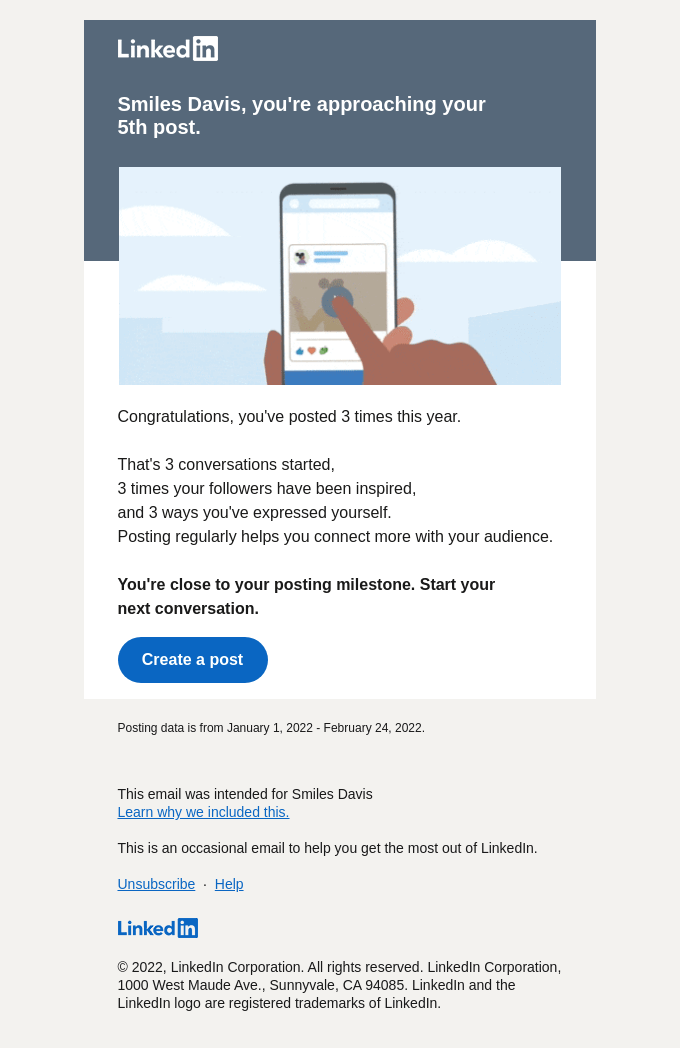
LinkedIn sends a milestone email when you’re approaching your 5th post, making it feel like a moment worth celebrating:
Source: Really Good Emails
Send relevant emails based on what users do
Instead of sending the same message to everyone, set up automated emails that respond to specific actions, like visiting a pricing page, abandoning a feature, or clicking a product but not buying. It makes your emails feel timely, not random.
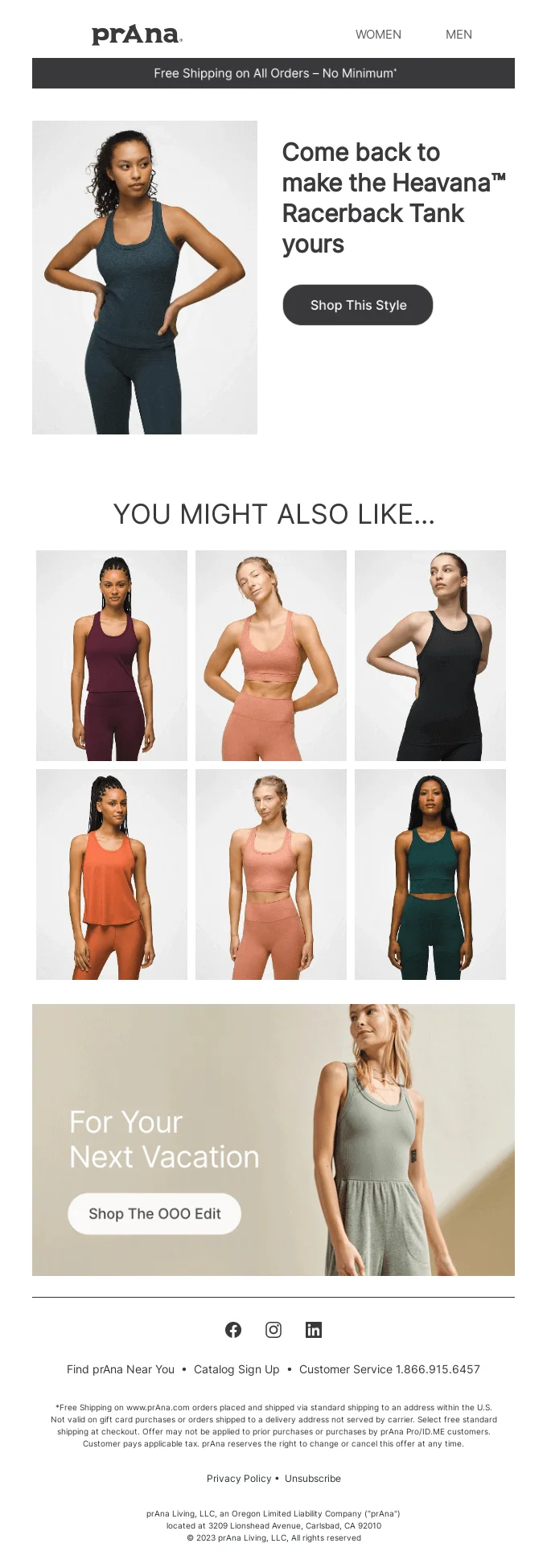
For example, prAna sends a reminder email featuring the exact item a user looked at, along with similar styles to re-spark interest:
Win back disengaged users with retention scenarios
Set up a sequence for users who haven’t logged in or taken action in a while. Whether it’s a reminder, a discount, or just a friendly check-in, emails like this can help bring inactive users back.
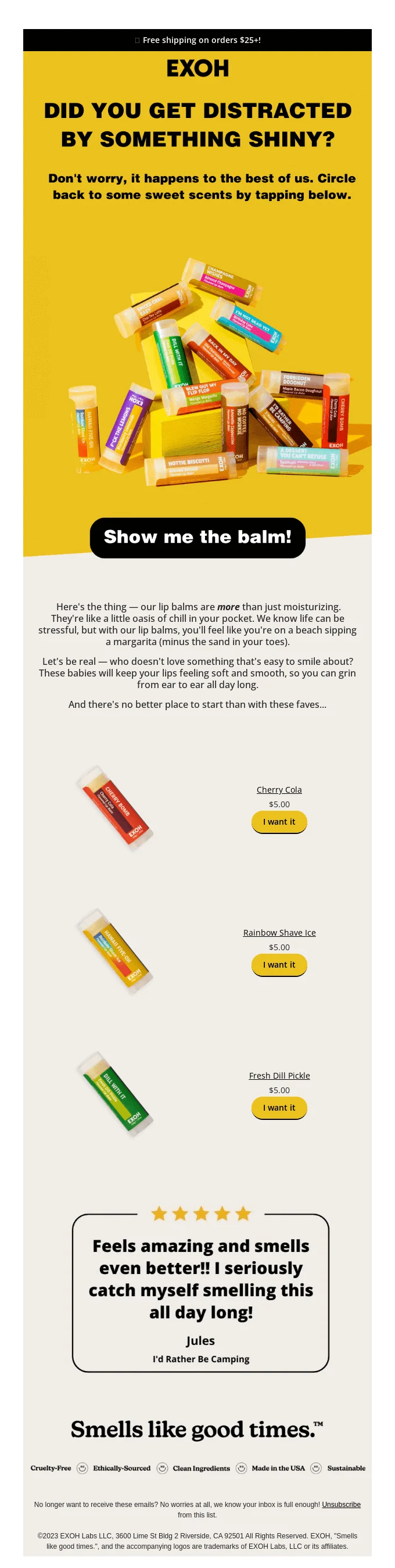
This fun re-engagement email from EXOH wins the customers back with humor, a reminder of what they loved, and an easy way to jump back in:
Source: Really Good Emails
Offer upgrades based on usage patterns
If someone’s consistently using advanced features, browsing your pricing page, or hitting account limits, that’s your cue for an upsell.
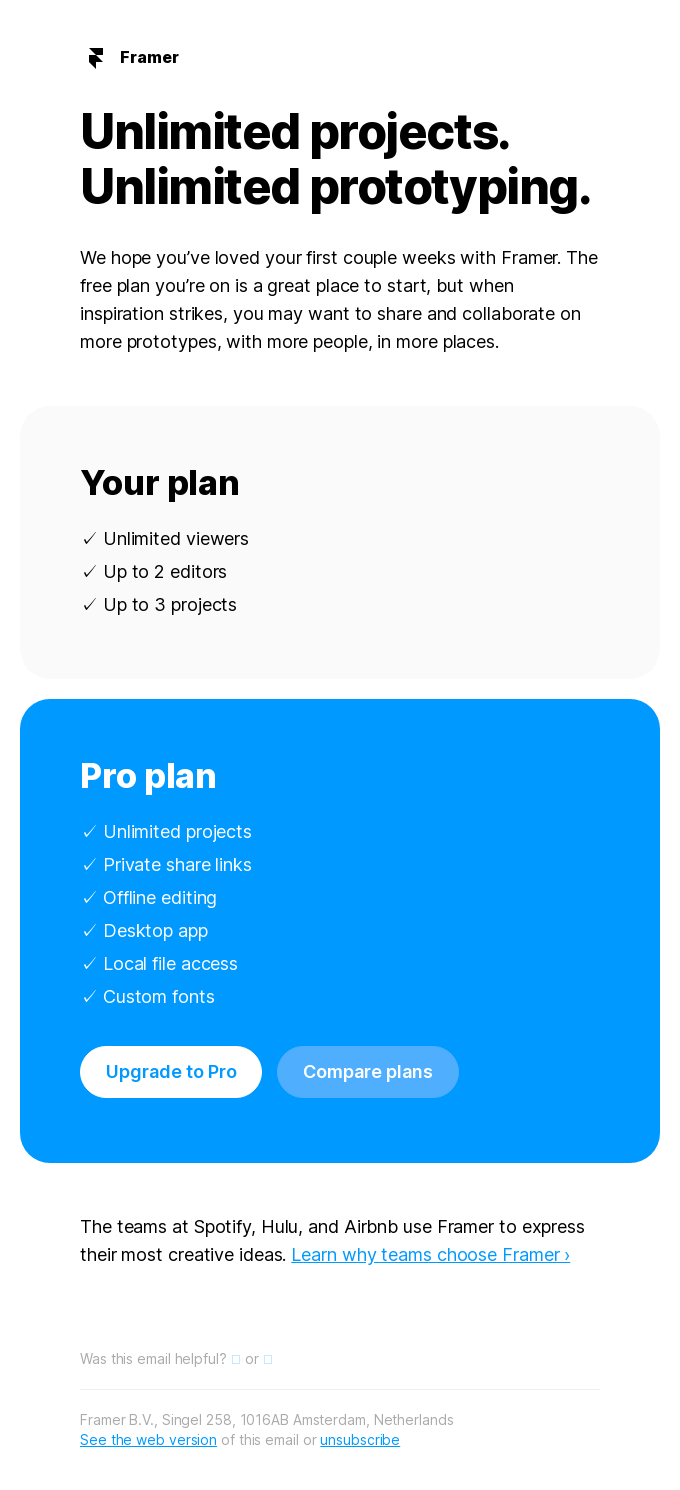
This Framer email shows what the user currently has and what they’re missing, nudging them toward the Pro plan in a way that feels helpful, not pushy:
Source: Really Good Emails
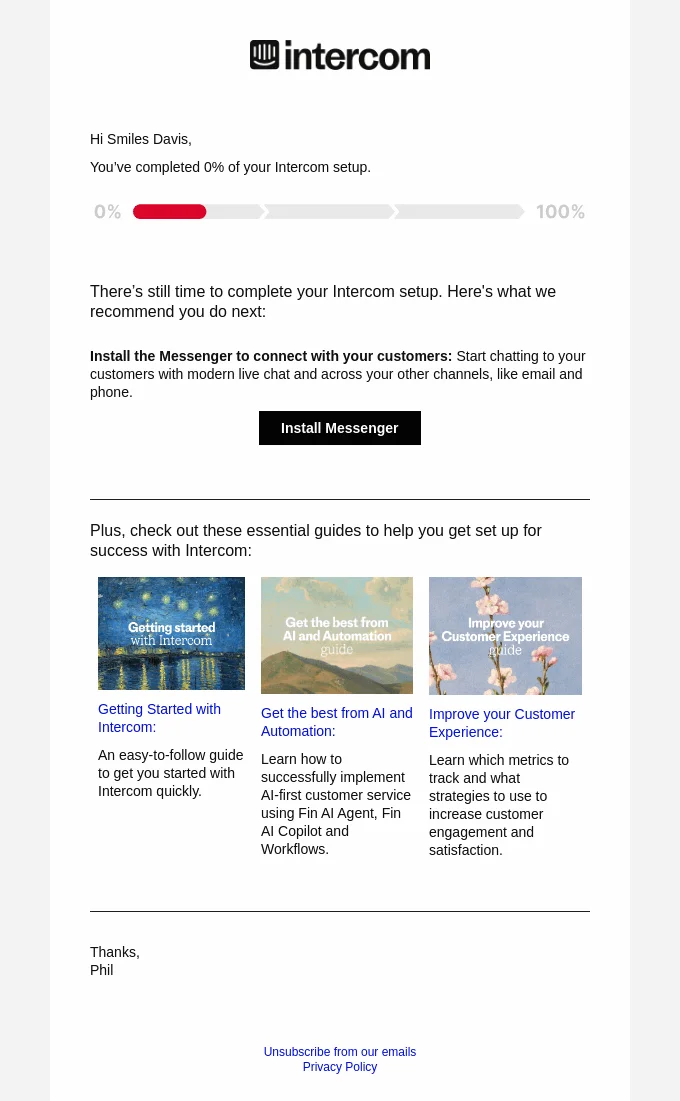
Follow up when someone leaves something unfinished
If a user starts an action — like beginning a product tour, starting a campaign, or onboarding — but doesn’t complete it, you can follow up with a well-timed message.
This Intercom email shows exactly what’s incomplete and guides the user toward their next step:
Source: Really Good Emails
Building a winning behavioral automation strategy with Selzy: 5 easy steps
Building a behavioral automation system isn’t about throwing tech at your audience — it’s about being intentional. The best strategies combine clear goals, real customer behavior, and smart testing.
The following section will guide you through establishing a behavioral marketing strategy if you’re using Selzy as your ESP. If you’re not, however, we recommend that you read it, anyway — it might be similar to the platform you’re using!
Set clear goals and map buyer journeys
Start with the outcome in mind: more sales? Better retention? Fewer drop-offs? Then, map what your ideal customer does at each stage and where automation can step in.
Collect and analyze behavioral data
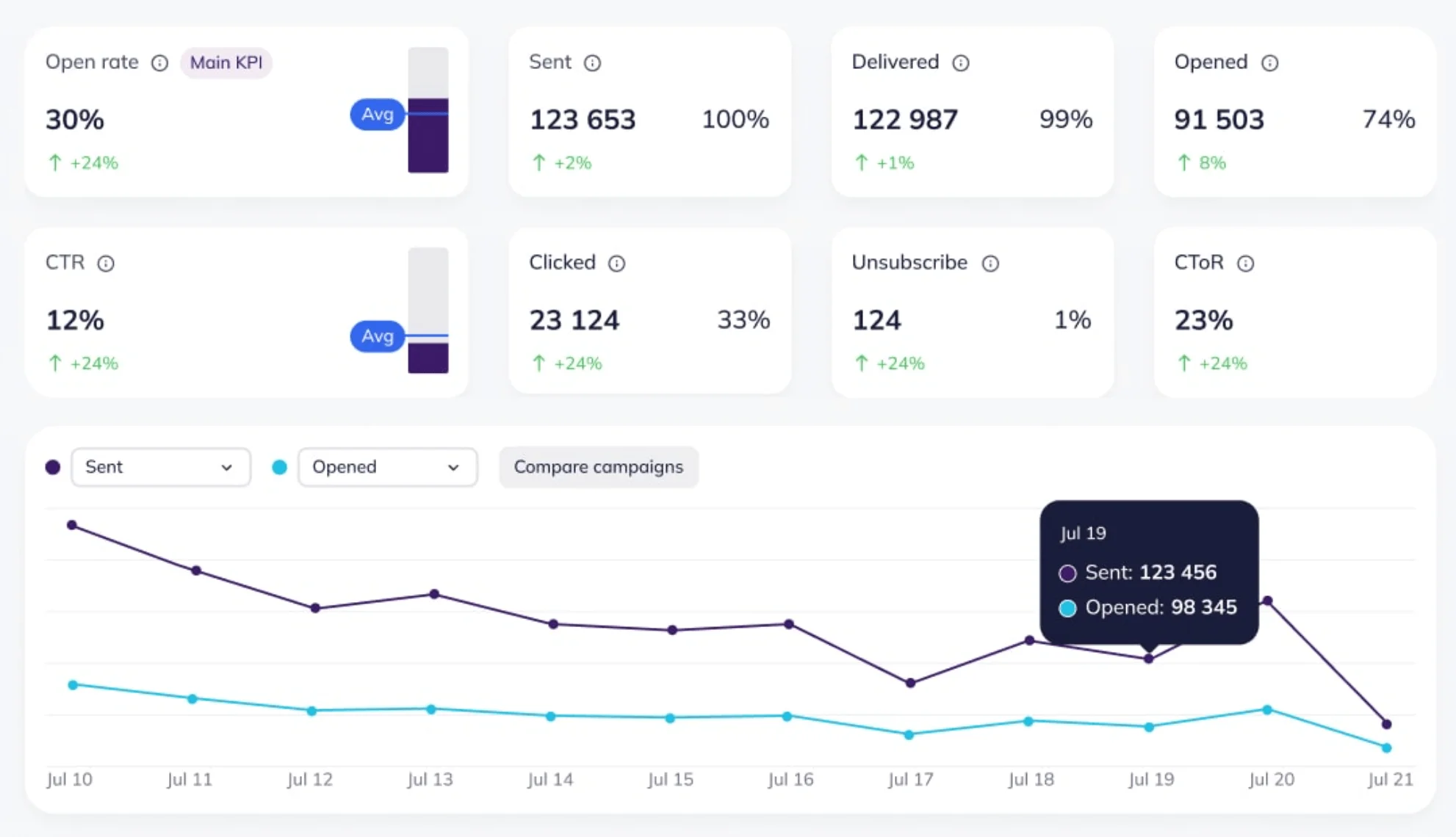
Use tools like your ESP (yep, Selzy does this) and web analytics to capture actual behavior — not just email opens, but clicks, scrolls, purchases, or exits. Selzy tracks user actions across your emails and automations, so you can see who’s interested, who’s hesitating, and what content actually drives action.
Source: Selzy
With live reports and visual graphs, you can spot trends at a glance — like which subject lines perform better, when engagement dips, or what kind of content leads to action. This data lays the groundwork for smarter segmentation, testing, and personalization later on.
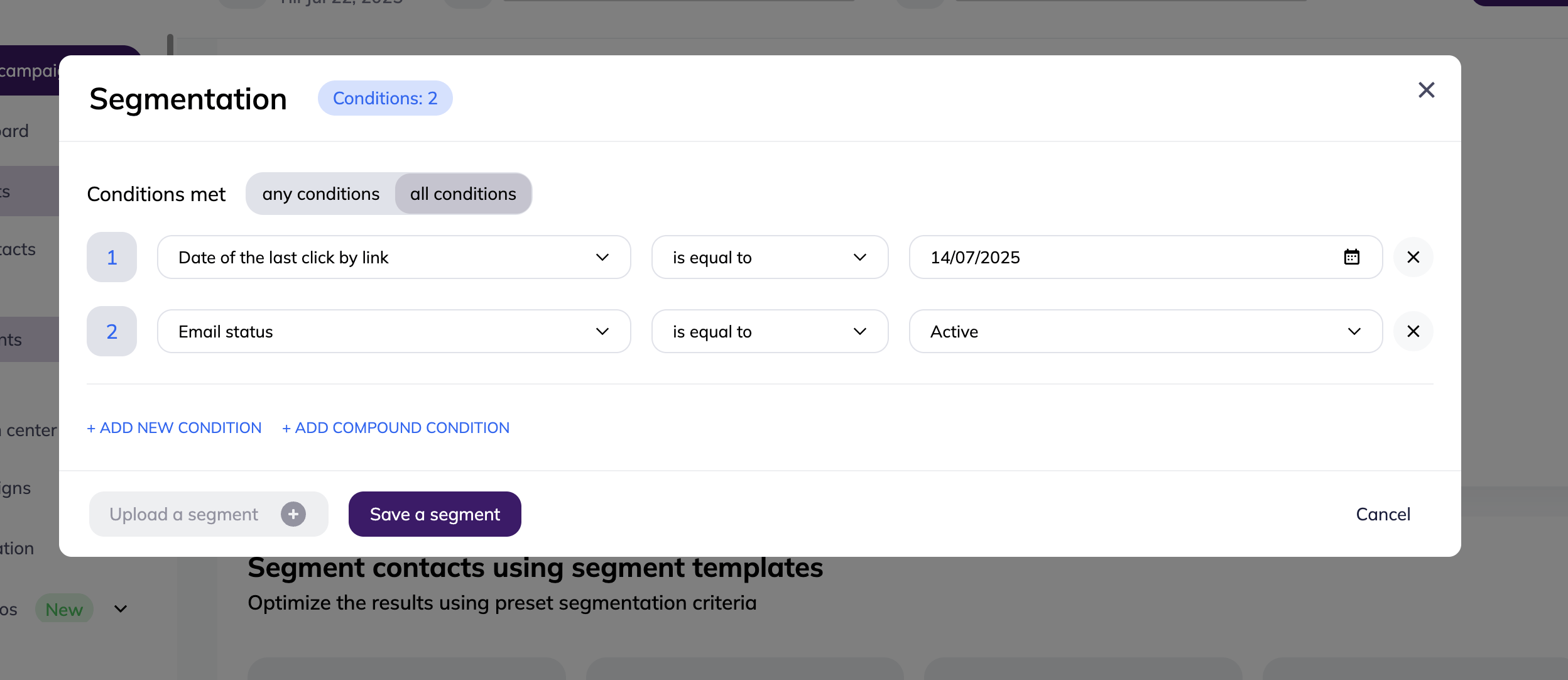
Segment your audience intelligently
Use the information you learned earlier to segment your audience. For behavioral emails, something like “added to cart twice but didn’t buy” is far more actionable than “female, 25–34.”
Source: Selzy
In this example, we’re building a segment of users who clicked a link on July 14, 2025, and whose email status is still active. This could be useful for following up with recent engagers or re-targeting users who showed interest on a specific campaign date.
Design automated, behavior-triggered campaigns
In Selzy, you can build automation scenarios that respond to real customer actions — like abandoning a cart, signing up for a newsletter, or making a purchase. These aren’t just one-off emails — they’re entire sequences triggered by API events from your site, app, or store. You can also go beyond email and use chatbots for a truly omnichannel approach.
You set it all up using Selzy’s omnichannel automation scenario builder. The key block is the API trigger, which kicks off the campaign when specific data is received (like someone placing an order or signing up).
Once the data is in, you can personalize messages using Liquid, a templating language that lets you dynamically insert names, product links, delivery dates, etc.
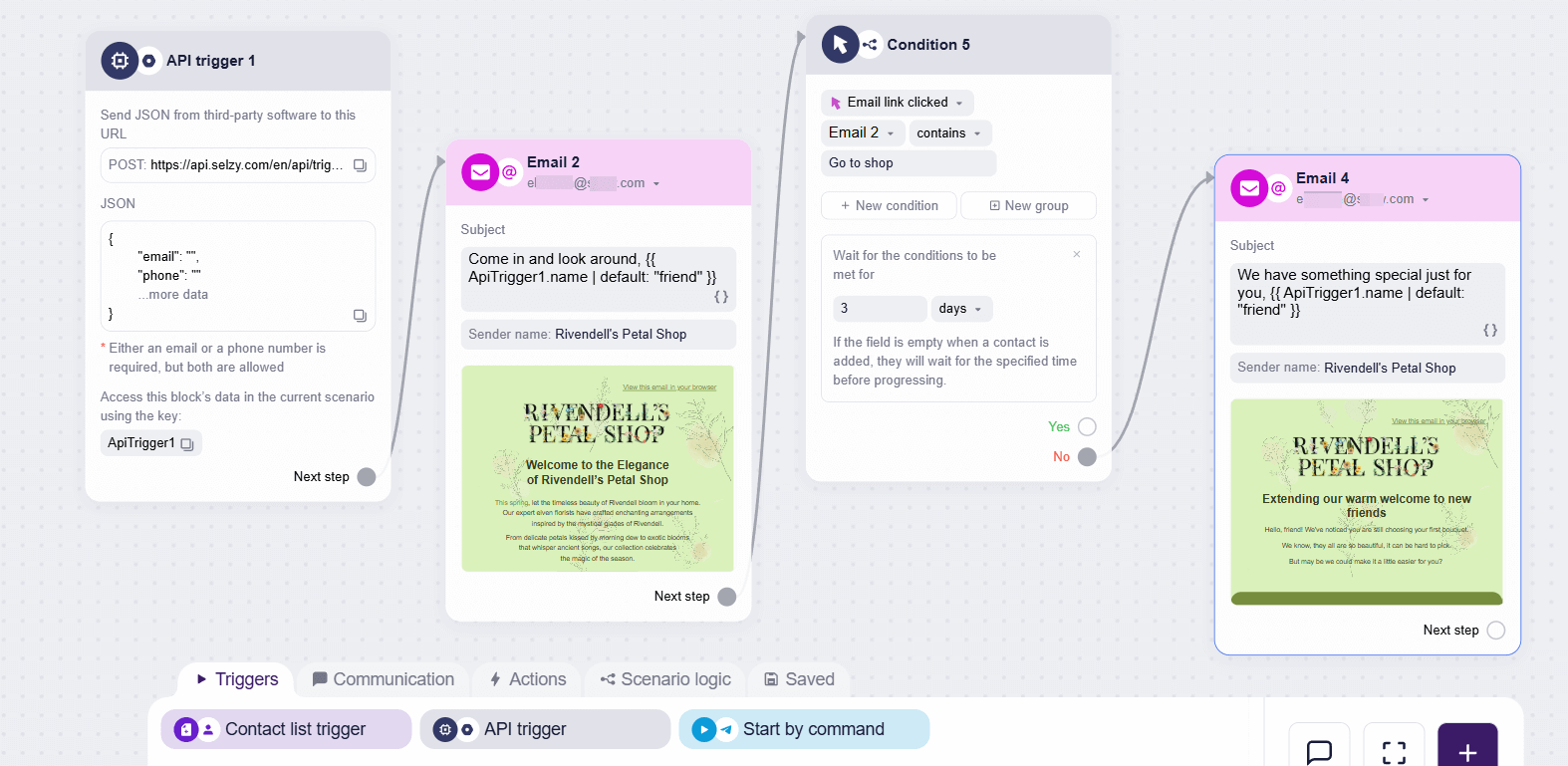
Here’s a simple example:
Source: Selzy
In this automation, the scenario starts when a user’s data is sent to Selzy via API — for example, after signing up in a third-party app or store. The first email goes out with a warm welcome and a personal touch using their name (inserted dynamically with Liquid).
Then the system waits to see if the person clicks a specific link in that first email. If they don’t, nothing happens. But if they do click, a follow-up email is triggered three days later — this time offering something extra to keep them interested and help them take the next step.
A/B test, iterate, and optimize
Nothing about effective email marketing is truly “set it and forget it.” This includes behavioral emails and automation, of course.
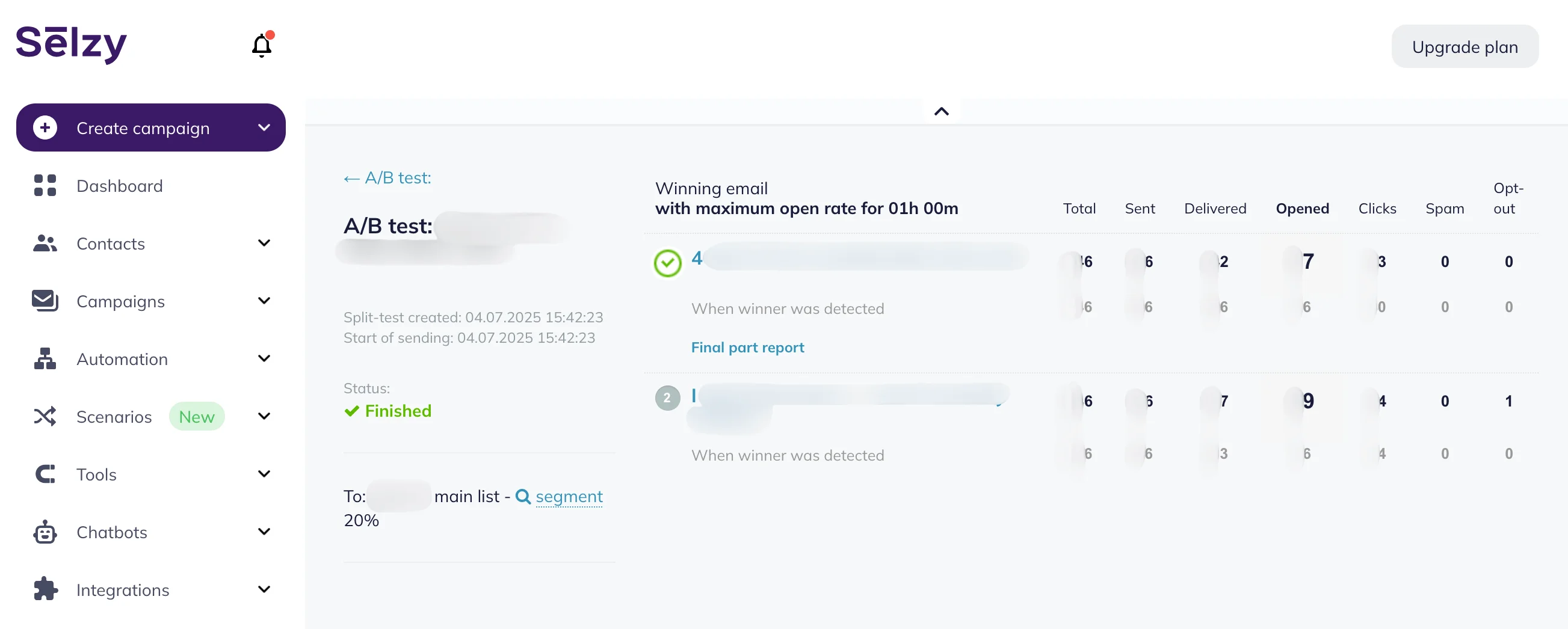
Test different subject lines, sending times, message formats, and calls-to-action with A/B testing.
In Selzy, you can compare key metrics like open rates, clicks, and conversions across campaigns or variants, all visualized in one place.
Source: Selzy
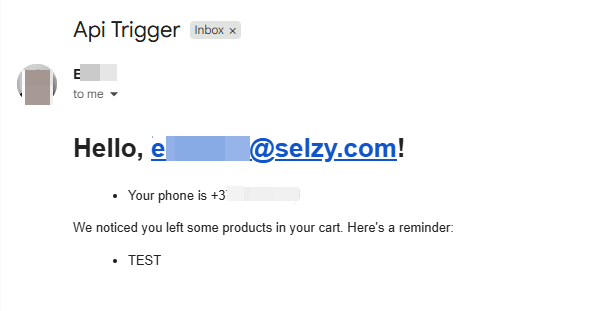
But did you know that if you’re using API triggers in your automation, you can also test how everything works before it goes live? Tools like Postman let you simulate the trigger and see exactly what your subscribers would receive — no need to wait for real user actions. It’s a simple way to catch issues early and make sure everything’s running smoothly.
Source: Selzy
The image above is a successful test in action. After triggering the scenario via Postman, Selzy sends a fully rendered email with the correct user data. This confirms that the API trigger, variables, and email content are all working as expected.
Free tool for your behavioral automation
With Selzy, you can send marketing and transactional messages in one place. It’s intuitive, user-friendly, and reliable. Plus, you’ll get access to our 24/7 human support team ready to help you get started!
Here’s where other people go wrong — but you don’t have to!
Over-automation without personal touch
Just because it’s automated doesn’t mean it should feel robotic. If your emails read like they were spat out by a machine, people will treat them like spam.
Use personalization tokens (even just a first name helps), natural language, and thoughtful timing. Make it feel like there’s a real person behind the message — someone who actually sees and understands the customer.
Poor data hygiene
Bad data doesn’t just hurt your deliverability — it breaks your automations.
If contact info is outdated, if behavior tracking is off, if segments include the wrong people, your messages won’t land at the right time or with the right people. Clean your lists, fix duplicates, and make sure your tracking setup actually reflects user behavior.
Bonus: most ESPs charge by contact, so tidying up can also save you money.
Ignoring consent and compliance rules
GDPR, CAN-SPAM, and similar laws aren’t suggestions — they’re requirements.
Always get explicit opt-ins, make it easy to unsubscribe, and don’t use behavioral triggers (like cart reminders or page views) unless you’ve got proper consent. It’s not just about legality — it’s about trust. Skipping this step risks both fines and your reputation.
Lack of cross-channel integration
If your email, SMS, ads, and website aren’t aligned, customers end up confused — or worse, annoyed. A promo in their inbox shouldn’t contradict what they see on your homepage.
Use tools or APIs that connect your channels, so your messaging feels consistent and intentional. This is what an omnichannel customer experience is all about.
Conclusion
Behavioral automation isn’t about building a complicated machine — it’s about building relationships at scale. Start with clean data, clear goals, and real empathy for your users. Kick off your first behavioral automation with Selzy! Start for free.
Anastasia is a bilingual writer and former breaking news editor with a background in mathematics. She specializes in digital content and copywriting for SaaS companies, with a focus on making complex ideas clear and accessible. Her interests include fashion, travel, art, and trying to learn everything at once.
Others just make a list of ways. We actually explain how to make the most of each way.
Subscribe to the FWD: by Selzy email marketing digest and get 21 ways to grow your email list with explanations and examples.
Based on research and 10+ years experience.
Thank you!
Check your email — the guide is on it’s way to your inbox.






 New and noteworthy on our blog