


Key takeaways
- Product launch emails are crucial for informing and exciting your audience about new products, services, features, or updates.
- Different types of product launch emails include teasers, early access emails, launch emails, feature spotlights, product updates, and discount emails.
- Steps to write a successful product launch email include identifying the target audience, determining their need for the product, composing an engaging subject line, personalizing the email, adding a product description focused on benefits, including a clear call to action, and tracking results.
Launching a new product? Don’t just drop it on your website. Email is one of the best ways to inform your audience about it.
In this article, we’ll break down what makes a great product launch email, show real examples from brands that nailed it, and give you simple tips (and tools) to write your own.
What is a product launch email?
First of all, what is a product launch email?
A product launch email is a message that announces something new to your audience — this can be a product, service, feature, or update. The main aim of an email like that is to build awareness, generate excitement, and encourage action (clicks, sign-ups, or purchases).
Often, product launch emails are part of a larger marketing campaign that also includes social media posts, website updates, and ads.
Launch emails typically go to people who already know your brand, like your existing subscribers or customers on your waitlist.
The tone of the email should be celebratory, confident, and focused on benefits, not just on specs.
Types of product launch emails
There are several different types of product launch emails:
- Teaser. Sent before the launch to build curiosity and excitement. Keeps details vague to spark interest and anticipation.
- Early access email. Targets selected groups, like loyal customers or waitlists. Creates exclusivity and encourages engagement.
- Launch email. The main “It’s here!” message. Includes a clear subject line, product visuals, and a strong call-to-action (CTA).
- Feature spotlight. Sent after the launch to explain what’s new and why it matters. Especially common for SaaS companies, it focuses on education and the benefits of the new feature.
- Product update. Used for smaller or incremental releases rather than full launches. Shows ongoing innovation and helps maintain customer trust.
- Discount email. Highlights a limited-time launch offer (for example, “10% off this week”). CTA-driven, an example of FOMO marketing.
How to write a successful product launch email
Now that we’ve covered the various types of product launch emails, let’s have a look at how you can get started with creating your own. Here’s a step-by-step guide you can follow.
1. Identify your target audience
Launch emails work best when they speak to a specific audience rather than everyone at once. This is where segmentation, which is subdividing subscribers into smaller groups, comes in.
Here are some common examples of segments for when you’re planning a launch:
- Existing customers. They already trust your brand and are likely to buy again.
- Leads and prospects. They may need more education and convincing.
- Press or partners. They care more about your story, mission, and impact. New to this? Check out how PR and email marketing work together.
Understanding these different groups helps you tailor your message, tone, and offer to what each group values most. If your product appeals to several audiences, create different versions of the email and personalize accordingly (more on this later!).
2. Determine their “need” for your product
Think about what’s missing or frustrating for your audience.
For example, imagine you’re running email marketing for an electronics store. Customers often complain that their phone chargers break easily. In your launch email, highlight how your new product solves that exact issue.
We mentioned addressing different segments earlier on, and these groups may have different needs, so adjust your message accordingly.
3. Compose an email subject line
Your subject line is often the first thing your recipients see, and it can determine whether or not they open the email.
Keep it short and clear (ideally under 50 characters so it fits on mobile) and use action-oriented language that sparks curiosity or excitement.
You don’t want to sound overly salesy or spammy in your subject line, so use emojis, caps and exclamation marks sparingly. Try to focus on what’s new or valuable about your product. Pair your subject line with preview text that complements it and gives subscribers another reason to open your email. Don’t forget to make sure the tone matches your brand voice!
4. Personalize the email
These days, personalization goes beyond “Hi, [first name!],” it’s about making each message feel relevant to the recipient.
Use data from your customer relationship management system (CRM) and your email service provider (ESP): focus on what you know about your audience, like their past behavior, interests, or relationship with your brand. For example, put an emphasis on improvements or upgrades when reaching out to existing customers. For new leads, highlight how your product solves their pain points.
Adjust the tone of your email, the benefits you’re listing, and your CTAs. “See what’s new” might work for loyal users, while “Meet your next essential tool” could appeal to prospects.
Lastly, make sure you take advantage of dynamic content. It’s a feature in many ESPs that automatically changes parts of the email based on who’s viewing it. You can show different images, product versions, or prices to different audience segments.

5. Add a product description focused on benefits
People skim, so make it clear, concise, and focused on what’s in it for them. Don’t overload readers with specs or technical jargon, instead, focus on what the product does for the user.
Let’s think back to the example we used earlier: the electronics store. Instead of saying “Our new charger has reinforced nylon braiding”, try “A charger that doesn’t fray, tangle, or quit after a week”.
Think of the “feature — benefit — outcome” formula when composing your email to demonstrate the real value. Add visuals (images, GIFs, or short clips) to make it more engaging.
6. Add a call to action
Even though there are different types of product launch emails, every one of them needs a CTA, and there are certain golden rules that apply to them all.
For example, try not to overwhelm your reader with too many choices; one main action per email usually works best. Use strong, active verbs and make sure the button stands out visually. Keep it short, clear, and connected to your goal, whether that’s clicks, sign-ups, or purchases.
For example, “Shop now,” “Try it free,” “See what’s new,” “Get started.”
In terms of email design, you can make your CTAs stand out even more by using a contrasting button color, enough white space, and clear placement.
7. Track your results
Once you’ve sent your campaign, you still have some more work to do. Use your email analytics to see how it performed. This can help you understand what worked and what to improve next time.
Some of the key metrics to keep an eye on include:
- Open rate. Shows you how engaging your subject line (and preview text, if you included it) was.
- Click-through rate (CTR). Whether your message and CTA inspired action.
- Conversion rate. How many readers actually did what you wanted (purchased, signed up, etc.).
- Unsubscribe rate. A signal that your content or frequency may need adjusting.
Another useful feature most ESPs have is A/B testing, so use it to experiment. This basically entails sending two slightly different versions of your email (for example, different subject lines or images) to see which one performs better.
15 great product launch email examples
Here are some examples from real-life brands:
1. Grammarly

Why it works:
- Clarity. This email from Grammarly shows what’s new (the desktop app) right away.
- Focus on benefits. The message focuses on how it helps users (“helps your writing shine”).
- Polish. Clean layout and a clear, prominent CTA make it easy to act.
2. GoPro
Why it works:
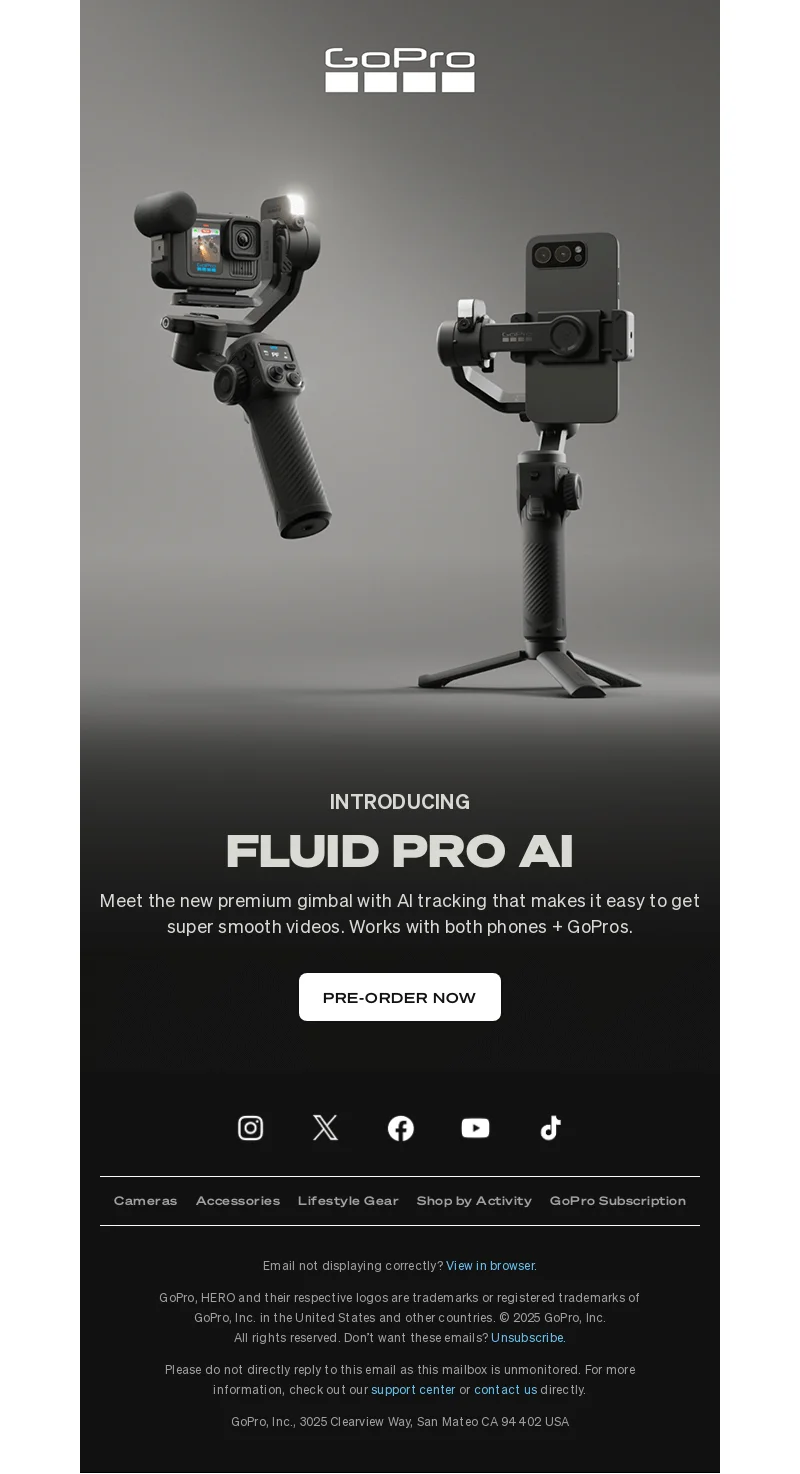
- Directness. This product announcement email introduces GoPro’s new Fluid Pro AI gimbal in one line.
- User focus. The short description highlights ease of use and AI tracking rather than specs, showing what users get (smoother videos).
- Simplicity. Clean layout, high-contrast visuals, and a single “Pre-order Now” CTA.
3. Solstice
Why it works:
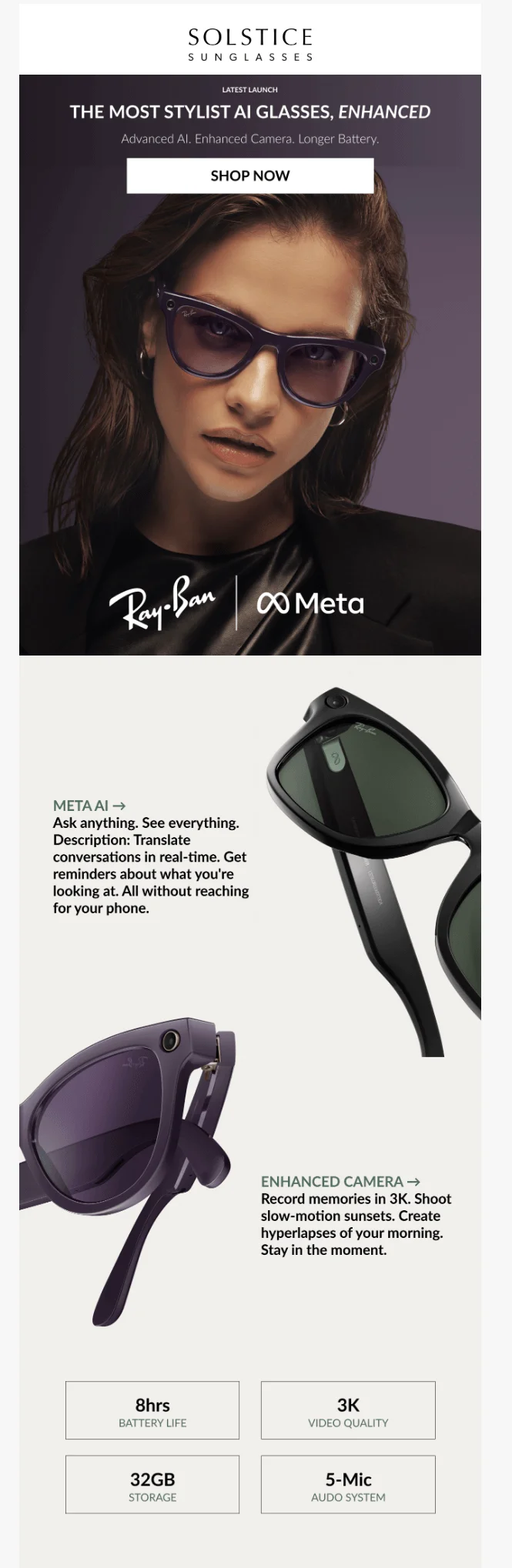
- Brand strength . This collaboration between Ray-Ban and Meta is instantly recognisable, and grabs attention as well as building credibility.
- Balanced layout. Strong visuals, concise benefit-led text, and a clean “Shop Now” CTA make the email both stylish and easy to scan.
- Clear message. The copy highlights the product’s technical strengths (AI, camera, battery life) in a confident, informative way without sounding overly promotional.
4. Burberry
Why it works:
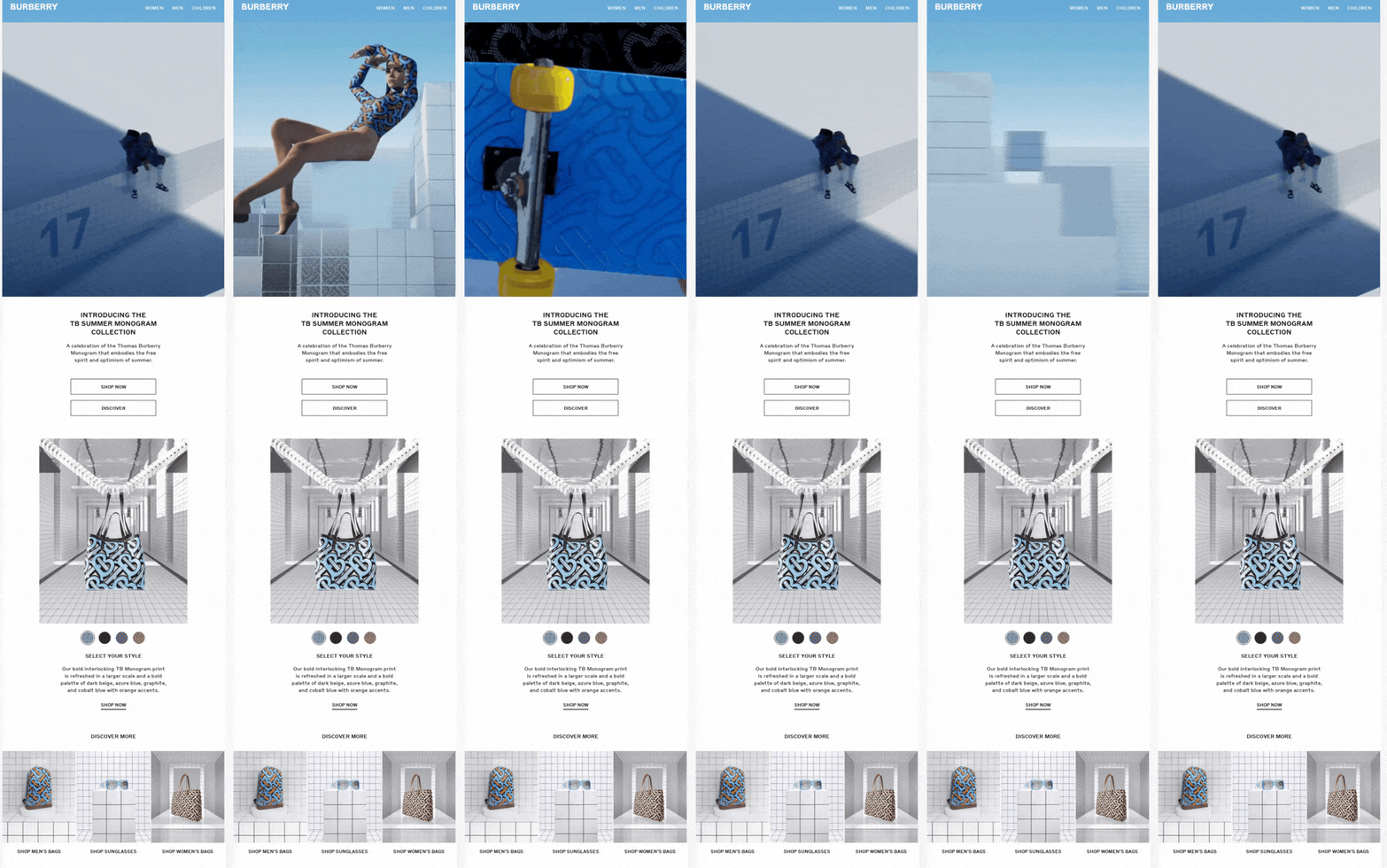
- Editorial tone. The email feels like a fashion magazine spread, which is aspirational and on-brand for Burberry.
- Emotional storytelling. The copy (“free spirit and optimism of summer”) adds feeling, making it about lifestyle, not just products.
- Visual consistency. The imagery, layout, and typography all align around one aesthetic.
5. Allbirds
Why it works:
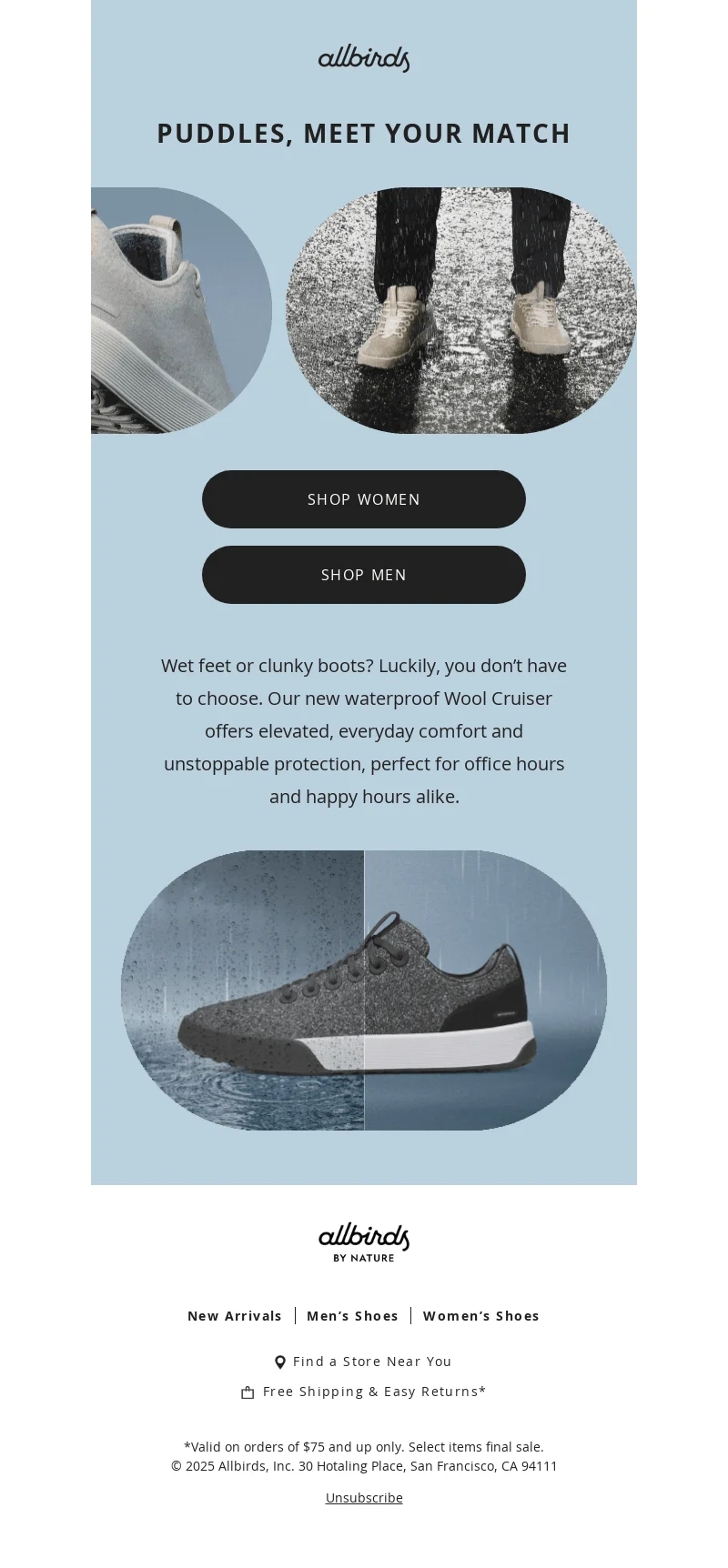
- Catchy headline. “Puddles, meet your match” introduces the benefits of the product in a fun way.
- Visual storytelling. The rain imagery and shoe close-ups clearly communicate function.
- Clean design. Two tailored CTAs (“Shop Women”/“Shop Men”) feel personal yet minimal.
6. Ugmonk
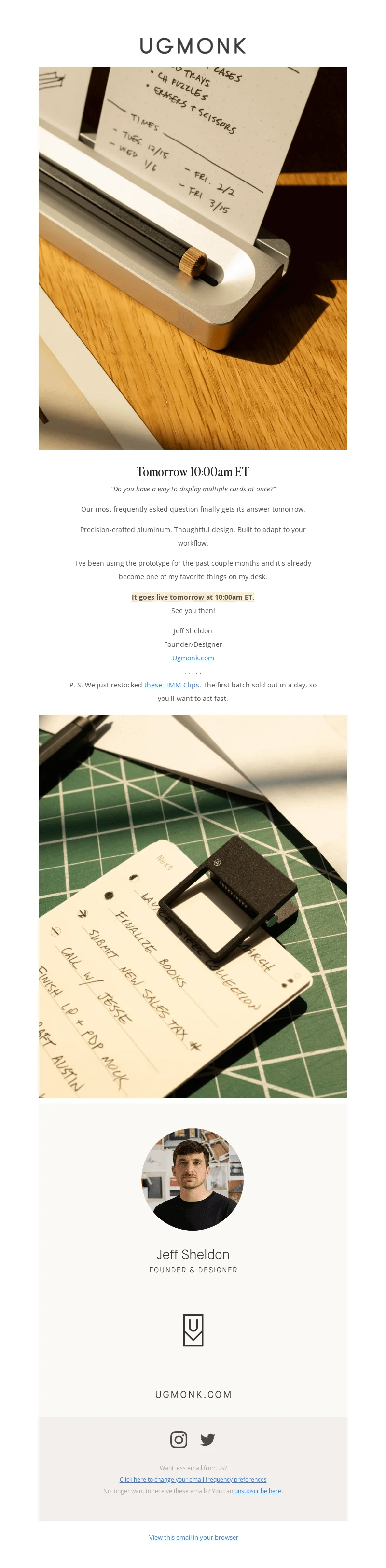
Why it works:
- Clear timing. This is a pre-launch email, and the headline “Tomorrow 10:00am ET” emphasizes urgency.
- Authentic vibe. Written by the founder in a conversational tone, it feels human and trustworthy.
- Product relevance. The email claims that the new product is an answer to the “most frequently asked question” and states that the founder is using it himself.
7. Burrow
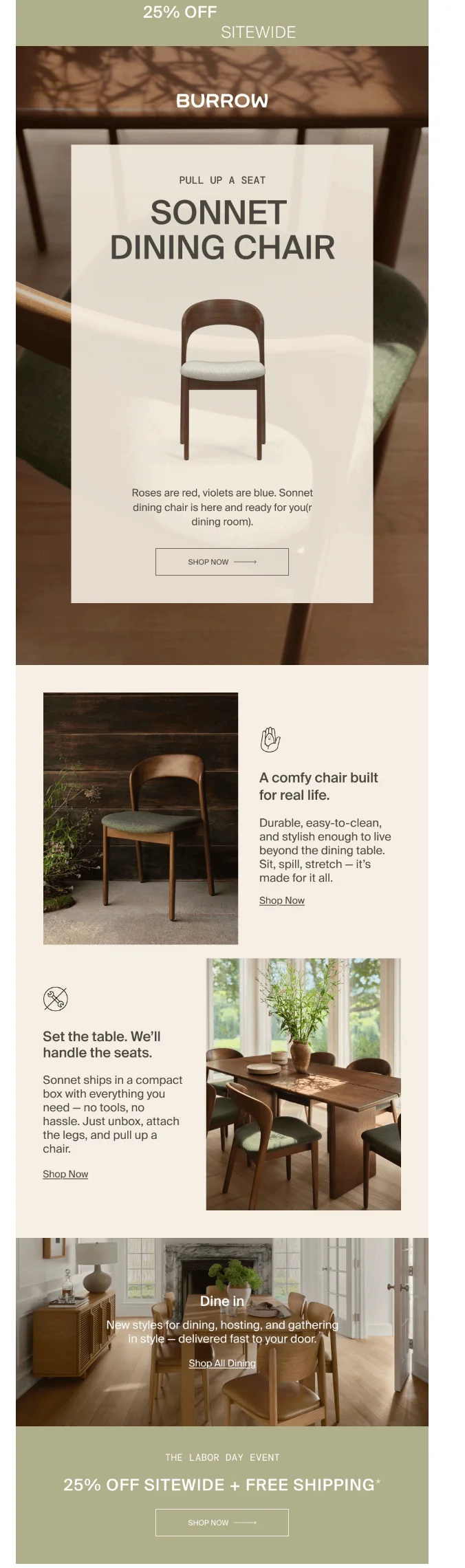
Why it works:
- Inviting language. The conversational headline (“Pull up a seat”) draws the subscriber in and matches the brand’s homely tone.
- Cohesive design. Warm color palette, natural light, and lifestyle imagery create a consistent, aspirational aesthetic.
- Structured flow. Each section highlights one key benefit, like comfort, simplicity, or versatility, leading smoothly towards the CTA.
8. Samsung
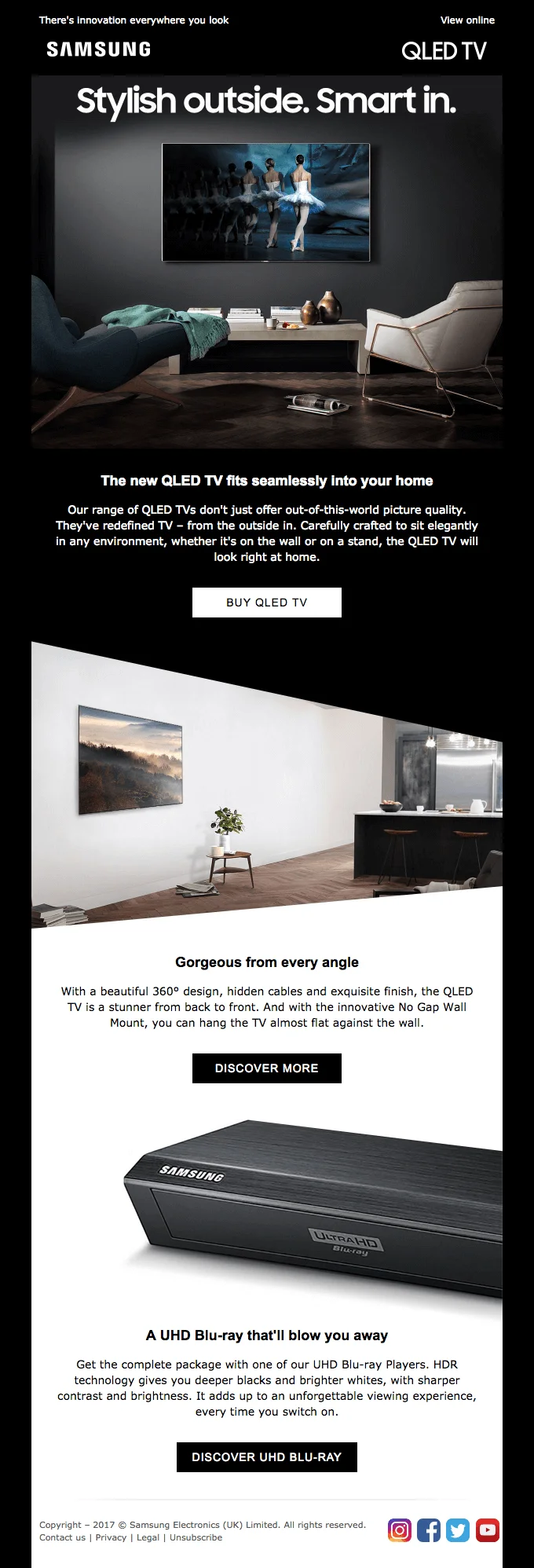
Why it works:
- Impactful headline. The headline (“Stylish outside. Smart in.”) communicates design and innovation in a concise, memorable way.
- Immersive visuals. Real-life settings show how the product fits into a modern home.
- User-focused messaging. The copy highlights the experience (“fits seamlessly into your home”) rather than technical specs.
Bonus: in the same email, Samsung cross-promotes its UHD Blu-ray player, potentially boosting the basket value without overshadowing the main product.
9. Asana

Why it works:
- Action-driven headline. “Automate, scale, and report” uses strong verbs that convey purpose and value.
- Clear message. The subheading and short paragraph clearly explain that this email introduces new features and integrations.
- User benefit focus. The copy highlights how these updates help teams work more efficiently.
10. Apple
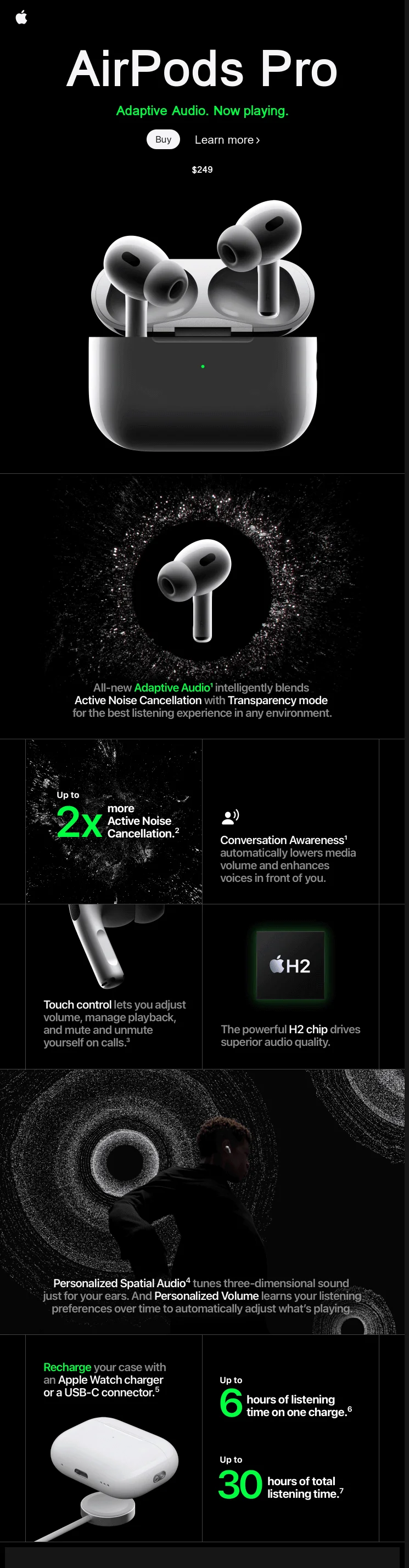
Why it works:
- Clarity and structure. Each feature is given its own visual space.
- Minimalist copy. Short, precise sentences communicate value without unnecessary detail.
- Design-led storytelling. The visuals do most of the talking.
11. Huckberry
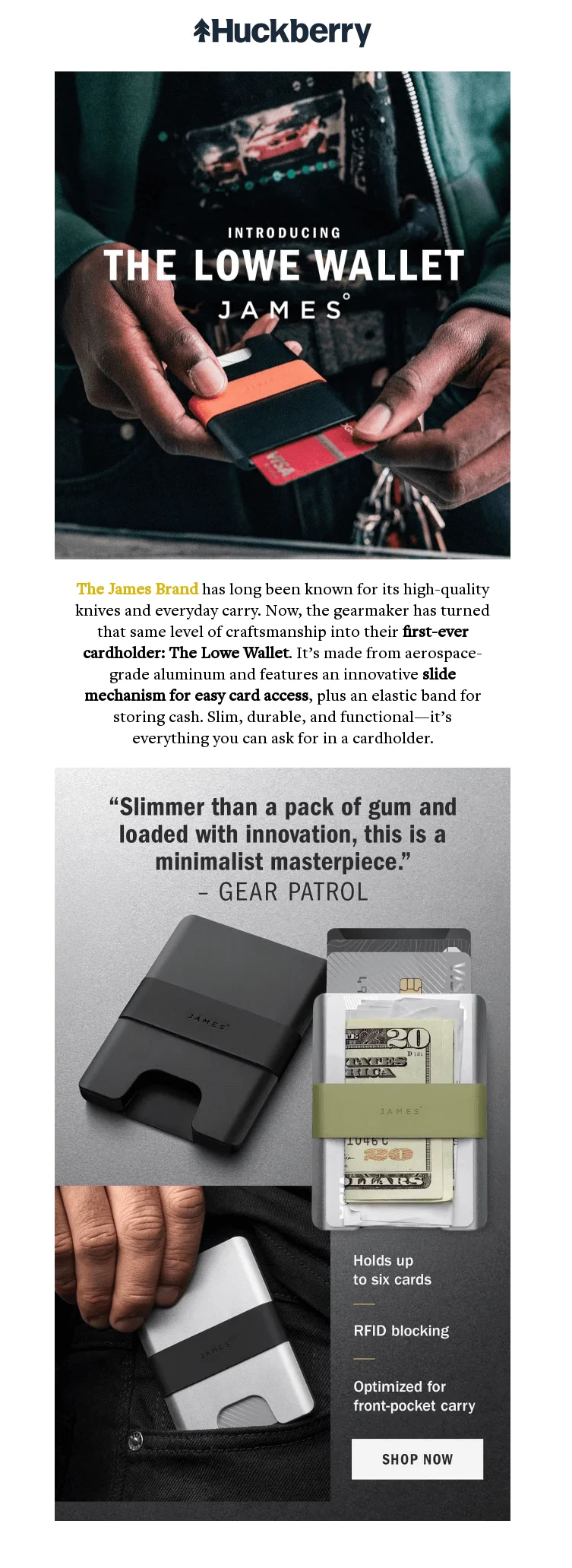
Why it works:
- Dual-brand storytelling. Opens by framing the collaboration, giving The James Brand’s craftsmanship and Huckberry’s curation equal weight.
- Balanced copy. Combines product details (materials, mechanism, usability) with lifestyle appeal. Doesn’t sound too technical.
- Social proof. The Gear Patrol quote reinforces credibility.
12. Fenty Beauty

Why it works:
- Benefit-first approach. Opens with the result (“superfine blurring”) instead of the product name.
- Visual proof. Close-up images and diverse faces build trust and highlight inclusivity while showing real product results.
- Concise and confident copy. Each section reinforces a benefit, from ingredients to wearability.
13. Specialized
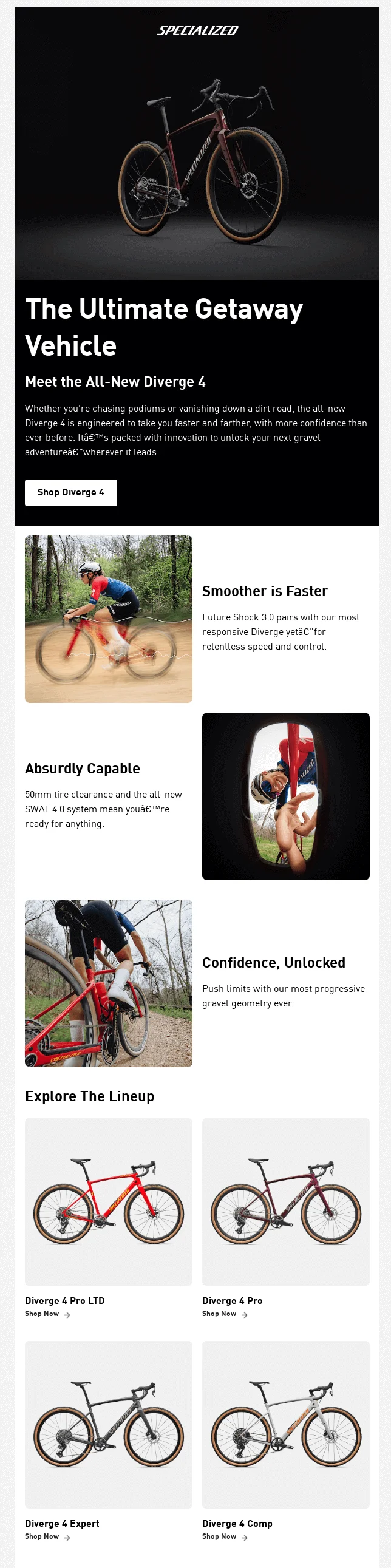
Why it works:
- Bold positioning. The headline “The Ultimate Getaway Vehicle” is memorable and perfectly aligned with the brand’s adventurous tone.
- Balanced storytelling. Mixes aspirational imagery with technical benefits, showing both performance and lifestyle.
- Clear product navigation. Instead of overwhelming readers with too many buttons, this email neatly showcases different bike models within the same product line. Each image acts as a natural entry point, letting users explore variations without clutter or confusion.
14. Duolingo
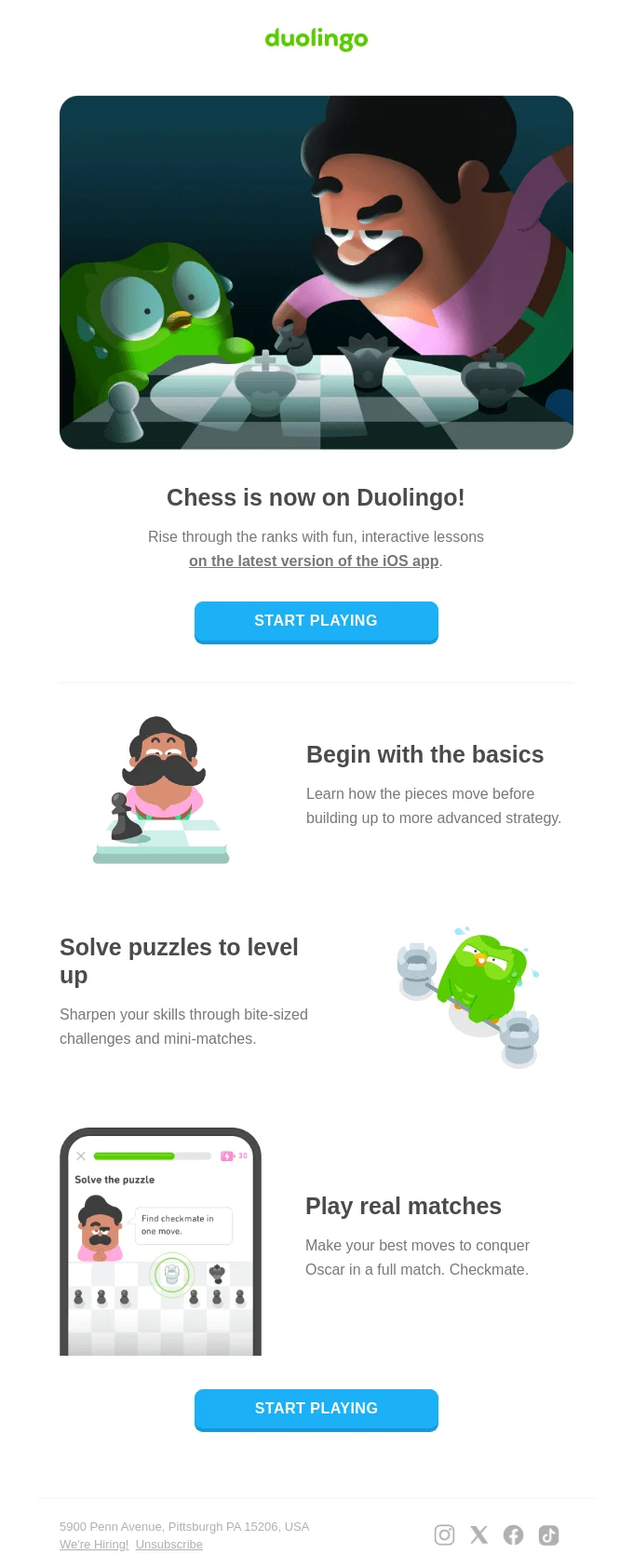
Why it works:
- Instant clarity. The headline “Chess is now on Duolingo!” communicates the update immediately. There’s no extra reading required for the recipient.
- Reinforced action. Seeing the same “Start playing” button pop up throughout the email feels intuitive.
- Consistent brand world. Familiar characters, bright visuals, and playful tone are all in line with Duolingo’s image.
15. Freaks of Nature
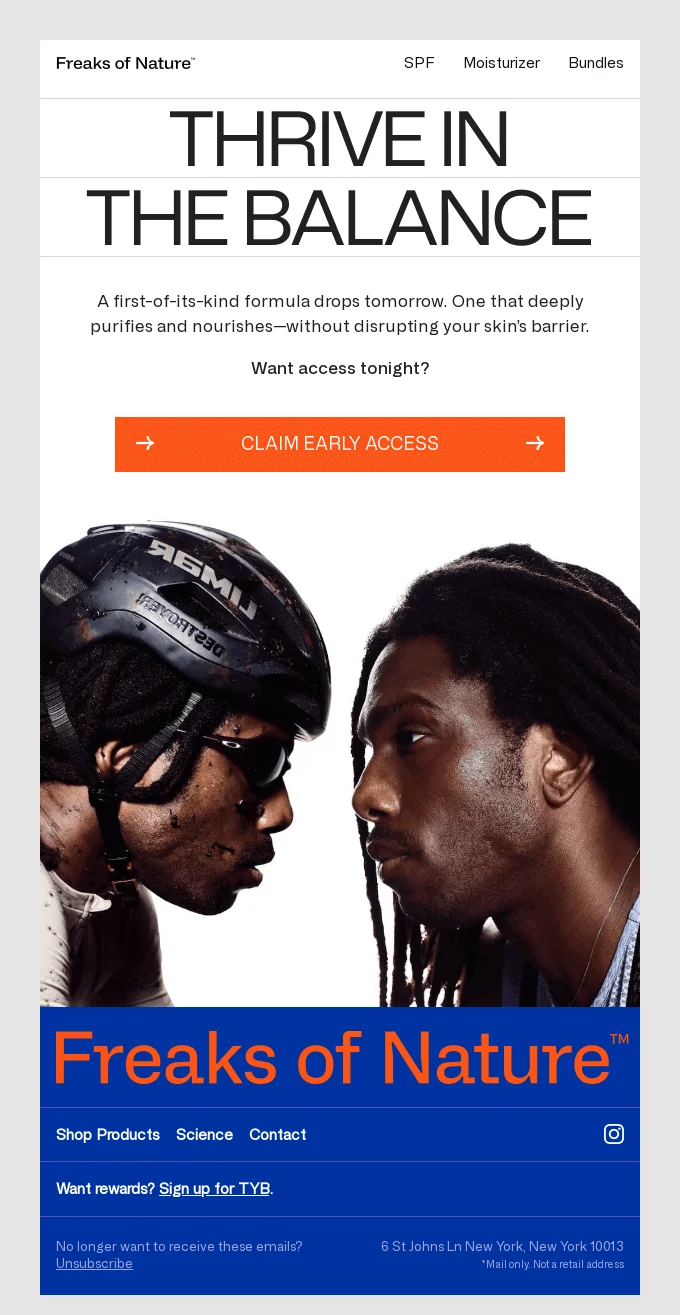
Why it works:
- Sense of exclusivity. Since this is an early access email, the copy makes subscribers feel like insiders. The language builds urgency (“drops tomorrow”).
- Confident tone. The copy keeps things short and composed, focusing on feeling rather than features, which is perfect for an early access email.
- High-impact design. One bold CTA and a striking color contrast keep the reader’s focus where it matters.
How Selzy can help you write an effective product launch email
If you’re wondering how you can build an email like the ones above, the answer is simple: you need an ESP (email service provider).
Selzy is an ESP too, and it makes email marketing for beginners easy. Selzy gives you everything you need to create, launch, and track an effective product email campaign. You can use its drag-and-drop email builder (no coding required) and even try the AI assistant to generate content, subject lines, or layouts in seconds.
Don’t feel like starting from scratch? Selzy also offers a full library of ready-to-use email templates. Whether you’re announcing a product, running a promo, or sharing company news, you’ll find a design that fits in Selzy’s product email template library. All templates are fully customizable.
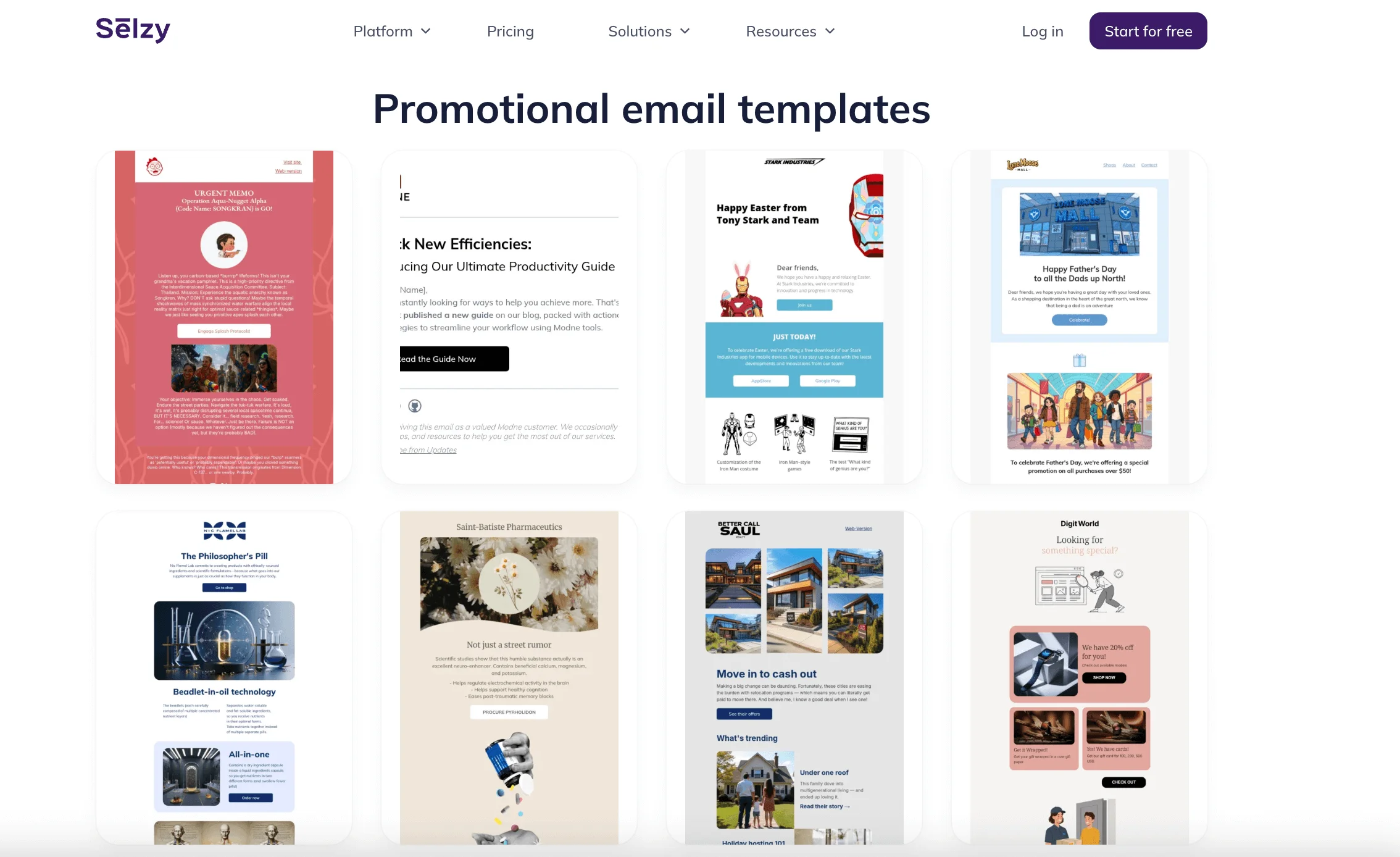
To make sure your launch email lands in the right inboxes, use Selzy’s personalization and segmentation tools.
Before sending, test your versions with A/B testing to see which subject line or CTA performs better, then track open and click rates with built-in analytics to understand what worked and what didn’t.
Frequently asked questions
Should I send more than one launch email?
Yes, most successful campaigns are a sequence: a teaser, the main launch email, and a reminder or follow-up. Just make sure each one adds value. Most ESPs, including Selzy, allow you to automate email sequences so you can schedule everything in advance while staying consistent.
What’s the biggest mistake to avoid with product launch emails?
You don’t want to say too much in a single email. Readers should understand your key message in seconds, and long copy can make them zone out. Focus on one product and one idea. If you have more details, link out to a landing page instead.
What if my first launch email doesn’t perform well?
These things happen even to the best of us. Look at the analytics dashboard of your ESP, run an A/B test, tweak one element, and learn from it. Launch emails improve with iteration.
 New and noteworthy on our blog
