


Key takeaways
- Pet care email marketing helps build trusting relationships with customers, create personalized experiences, and promote products at the right time.
- Steps to create an email marketing strategy for pet brands include identifying the target audience, creating buyer personas, and organically expanding the mailing list.
- Select an email service provider with essential features like automation workflows, segmentation, and analytics.
- Segment the subscriber base based on characteristics like pet type, health needs, and purchase history for relevant content delivery.
Owning a pet brand, you know how important marketing is. Emails are an essential part of any successful marketing strategy, since they allow you to connect directly with your customers — plus they are also very cost-effective. Pet care emails may bring various benefits to your business and help you build trusting relations with your subscribers.
In this article, you’ll find some of the best pet care email examples and useful tips on how to create an email marketing strategy that would work in your industry. Keep reading to gain some ideas and inspiration.
The advantages of pet care email marketing
Pet care is a competitive industry, so you should plan and execute your marketing campaigns really well to keep pace with your competitors.
Pet care email marketing is a powerful tool for reaching your customers that can bring your company the following benefits:
- Pet care email marketing can help you build trusting relations with your customers. Taking care of pets is a great responsibility. You can’t feed your furry friends with food from an untrusted source or use other unreliable products. So, it is important to show your audience that they can trust your brand. By sending regular emails to your customers, you can prove that your brand is trustworthy and encourage people to purchase from you.
- Pet care email marketing allows you to create personalized experiences. You can create different versions of your emails to match different customers’ needs. For example, you may segment your audience depending on the type of pet they have, so that each group will receive emails with specific and relevant content. This approach can make your marketing efforts more effective and help increase sales.
- With a pet care email marketing strategy, you will never miss the right time to promote your products. Email campaigns are a great way to reach your customers during a specific time, such as special events, seasonal holidays, or other special dates. You can send targeted email campaigns on pets’ birthdays or relevant holidays, such as International Cat Day or National Puppy Day to keep your readers engaged and increase conversion rates.
How to create an email marketing strategy for pet brands
Creating an email marketing strategy might be both challenging and exciting. Follow the steps below to make the best out of your experience with the process.
Identify your target audience
The first step is to identify who your customers are. To do so, follow these steps:
- Analyze your products and how your customers can benefit from them.
- The next step is to analyze your competitors and what audience they target.
- Then, you should also identify what makes you different from them. Are you the only official reseller of a particular brand’s dog food? Or maybe you offer an exclusive nutrition plan with every order?
You may also use surveys to identify your customers’ preferences and use the results to create more relevant email marketing content for your subscribers, encouraging more people to purchase from you.
Create your buyer personas
After identifying your target audience, you can proceed to shape your buyer persona aka marketing persona. This is a more detailed description of your customer, including such aspects as their age, gender, purchasing history, interests, and other relevant information.
Although these details will vary from one customer to another, you can still identify similar traits your audience shares. This step will help you understand and meet your customers’ needs and offer them products they would want to purchase. If your brand offers several different products or your audience is very large, you might want to create a marketing persona for each buyer segment.
Organically expand your mailing list
Buying email lists is an unsafe practice — moreover, sending emails to people who haven’t consented to receiving them is illegal in many countries. Luckily, you don’t need to buy contacts to expand your email base. Instead, try to attract subscribers organically.
To do so, you can offer something valuable for subscribing to your newsletter. It might be gifts, coupons, promo codes, useful content, or anything else that can show your value to the customers. You can also offer a reward program to your existing customers to encourage them to spread a word about your brand.
Want to learn more about how to expand your mailing list? Subscribe to our blog digest and get our detailed guide on email list building for free — plus lots of actionable tips on email marketing in your inbox every couple of weeks.

Select an email service provider
Email service providers are tools that help you manage your email marketing campaigns. There are many ESPs on the market, varying by features and prices. We recommend looking for a service that provides automation workflows, integrations, segmentation, personalization, A/B testing, analytics, and other useful features to make the best out of your experience with email marketing.
You can even find a platform with a free plan or a free trial to test the waters and decide if it’s a good fit for your company. For example, Selzy’s free plan offers a 14-day trial so you can test its core email marketing workflow before choosing a paid plan. It also gives access to all essential email marketing features such as personalization, automation, email builder and templates, analytics, and more.
Segment your subscriber base
After you’ve created your buyer persona(s), you can segment your contact list based on your subscribers’ characteristics. Since your company is a pet care brand, you can segment your list based on pet type to ensure that you always deliver relevant content to all your subscriber groups. This way, you can ensure that dog owners won’t receive any cat-related newsletters and vice versa.
Other characteristics to consider are the pets’ health needs, location, stage of the customer journey, etc. By segmenting emails based on these factors, you can offer the most relevant products to your customers at the right time.
Useful pet-care segments can include species, size or life stage where relevant, dietary or health needs explicitly shared by the customer, product category, purchase history, replenishment interval, service location, lifecycle stage, and stated content preferences. Collect only the data needed for the promised experience and avoid inferring sensitive health details unnecessarily.
Identify the types of emails to send
There are many different email types, such as welcome emails, newsletters, transactional emails, special offer emails, etc., and each type serves its own purpose. With an email service provider, you can make the most of every type you use and find out the kind of content your subscribers prefer.
Also, keep in mind that sending emails too often may lead to higher unsubscribe rates because customers don’t normally enjoy receiving too many promotional emails. However, they may not be as engaged if you send too few. So, make sure you identify what types of emails you should send and how often, and determine the right time to send them to achieve the best possible result.
Evaluate the effectiveness of your campaigns
Another important point to keep in mind is the performance of your email campaigns. After sending each campaign, evaluate the results. The main metrics to track are open rates, click-through rates, conversion rates, and engagement rates. ESPs offer comprehensive reporting and analytics, so you won’t have trouble collecting the necessary data if you use professional software. Assessing the performance of your campaigns regularly will help you create cost-effective email marketing strategies and boost their effectiveness.
Pet care email automation and lifecycle campaigns
Pet businesses can make campaigns more useful by connecting messages to a customer or pet lifecycle moment instead of relying only on promotions. Choose scenarios that fit the service, consent, available data, and the professional responsibilities of the business.
- Welcome and onboarding: deliver the signup promise, introduce the sender, and ask for relevant preferences.
- Post-purchase education: explain storage, product use, transitions, care routines, or next steps without making unsupported health claims.
- Replenishment: estimate when food, litter, supplements, or other repeat products may run low, then let customers adjust timing.
- Appointment and vaccination reminders: use these only when the business provides the service and has accurate customer records.
- Pet birthdays or adoption anniversaries: celebrate dates customers voluntarily shared and pair them with useful content or an optional offer.
- Seasonal safety: prepare audiences for heat, cold, fireworks, travel, parasites, or holiday routines with expert-reviewed advice.
- Abandoned cart and browse follow-up: remind interested shoppers while respecting consent and frequency limits.
- Review, feedback, and re-engagement: ask about the experience, learn preferences, and reduce frequency for inactive subscribers.
Coordinate automations so messages do not collide. Add suppression rules, frequency caps, accessible templates, clear sender identity, and a working unsubscribe option. Measure each workflow by its purpose: purchases or bookings, repeat purchase, useful clicks, complaints, opt-outs, and performance by pet or lifecycle segment.
7 tips on writing a creative email newsletter on pet care
After you are done with preparations, it is time to create an effective email for your campaign. Below, we’ve gathered some tips for making a creative email newsletter on pet care.
Come up with eye-catching subject lines
What is the first thing you see after opening your inbox? Right, it is the subject line of an email. This is why it is highly important to make it catchy and engaging. Here are some tried and true tips:
- Briefly state what the email is about. Present your email’s value and how the recipient can benefit from it.
- Include personalization elements. Seeing their name or interests mentioned in the subject line can spark your subscribers’ interest and make them want to open an email.
- Make it short and clear. Front-load the main value and test how the subject line displays across the inboxes and devices your audience uses. You can also formulate it as a call to action to encourage the recipients to click on it and open your email.
- Create a sense of urgency. Including words like, “exclusive”, “time-limited”, or “special offer” can encourage your subscribers to take the desired action.
Read catchy email subject lines tips for more advice.
Create appealing design
Another element that can catch your customers’ attention is your email’s design. Here are some points to consider while crafting an email:
- Stick to your brand’s aesthetics and colors.
- Make your email’s layout convenient and easy to follow.
- Include some high-quality visual elements, such as images and shoppable videos.
- Include eye-catching CTA buttons.
- Make sure your design is responsive and displays correctly on all device types.
Add interactive segments
Simply put, interactive elements in emails are anything that makes subscribers do something — tap, swipe, play, etc. For a pet care company campaign, try quizzes on pet breeds, care routines, or other similar specifics; include videos, games, rollover images; add a survey about pets and their preferences.
Sounds complex, so why do it? Interactivity can support engagement when it serves a clear purpose, works in the recipient’s email client, and includes an accessible fallback.
Make different emails for different segments
Every subscriber and subscriber group has some unique characteristics, so work on personalizing your emails to fit them. Consider your customers’ purchase history, survey data, and other information to create relevant content that will resonate with them. For example, you can offer discounts on particular products or give them exclusive promo codes based on their browsing and purchasing history. To take your email personalization even further, use transactional emails and merge tags.
Feature expert insights
Pet owners love learning more about their pets, their behaviors, and preferences. So, in your newsletters, you can include some educational information and expert insights. You may collaborate with veterinary professionals to make educational content more trustworthy. Have qualified experts review medical, nutrition, dosage, or safety claims before publication.

The best examples of pet care emails from popular brands
Ready for some inspiration for your pet care email marketing campaigns? Here are the best examples from popular brands.
Homes Alive Pets
Subject: Hey Smiles Davis, did you forget something?
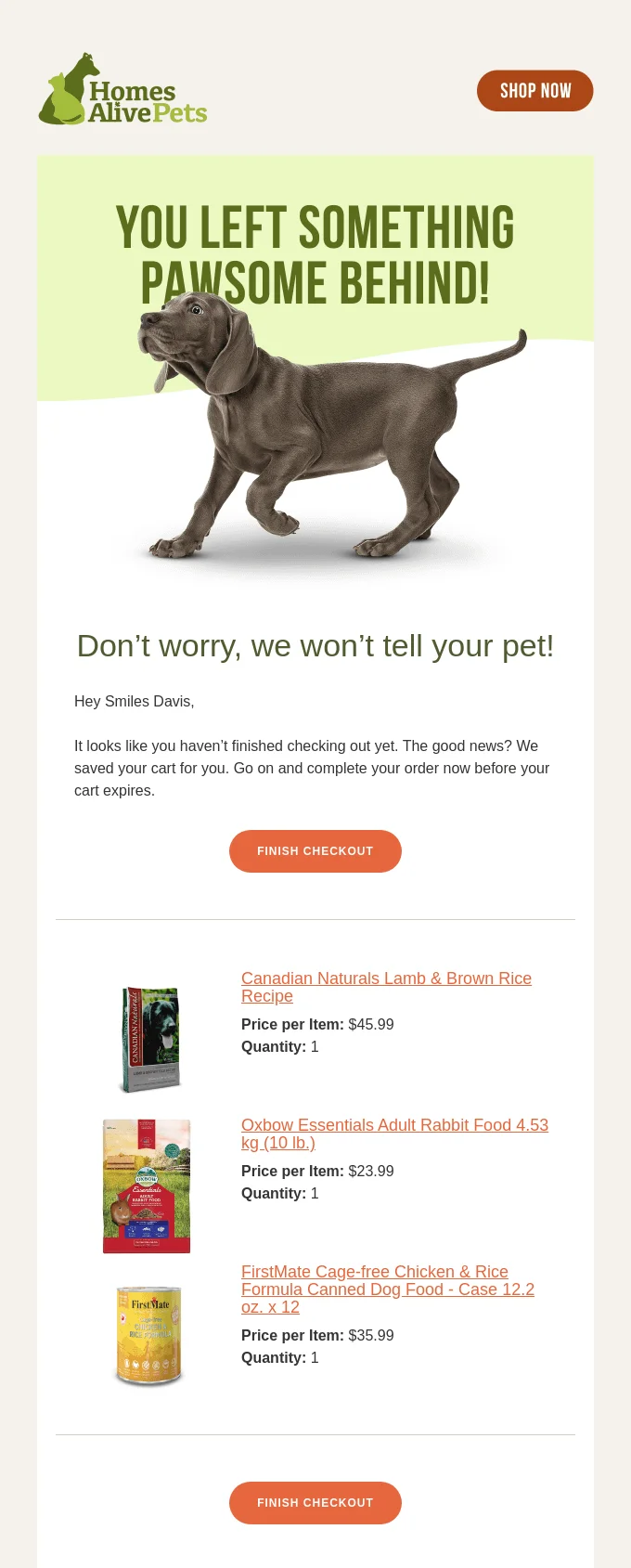
This email by Homes Alive Pets is an abandoned cart email. The purpose of such emails is to remind customers about their incomplete purchases and encourage them to come back and complete the order.
This particular email features a personalized subject line (“Hey Smiles Davis, did you forget something?”) that appeals to the customers’ FOMO and anxiety, suggesting they might have forgotten something. Such lines are typical for this type of email, and they usually work well too.
The company also made a good move by using relevant wordplay and referring to the customer’s own pet in the heading (“Don’t worry, we won’t tell your pet!”) in the email. The brand also made sure to personalize the email and include a clear call-to-action designed as colored buttons, making it easier for the recipient to engage with the email.
Petco
Subject: Dean, here’s 10% off your first purchase for your pet.
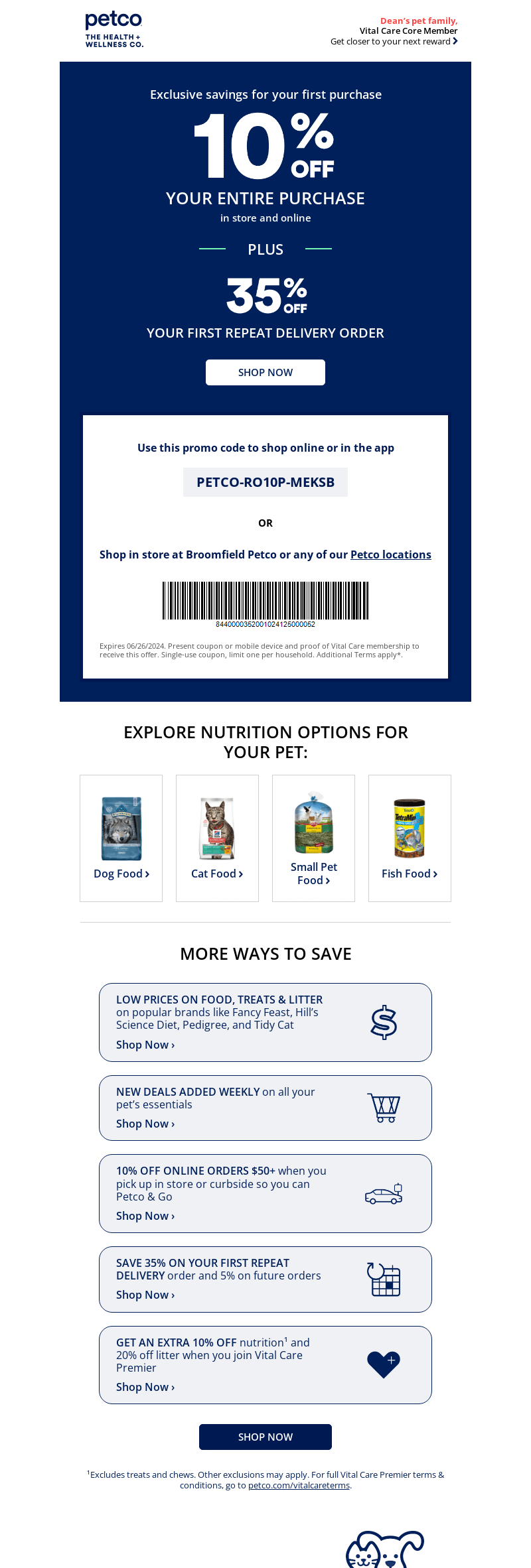
This example from Petco is a simple yet effective email offering a discount for the first order and the first repeat delivery order. Rather than adding too many unnecessary details, the email is precise and straight to the point. It also features a “More Ways to Save” section where they list other benefits for their customers, making the brand’s offers more desirable.
Rover
Subject: 👻 Halloween toys your dog will love 🎃
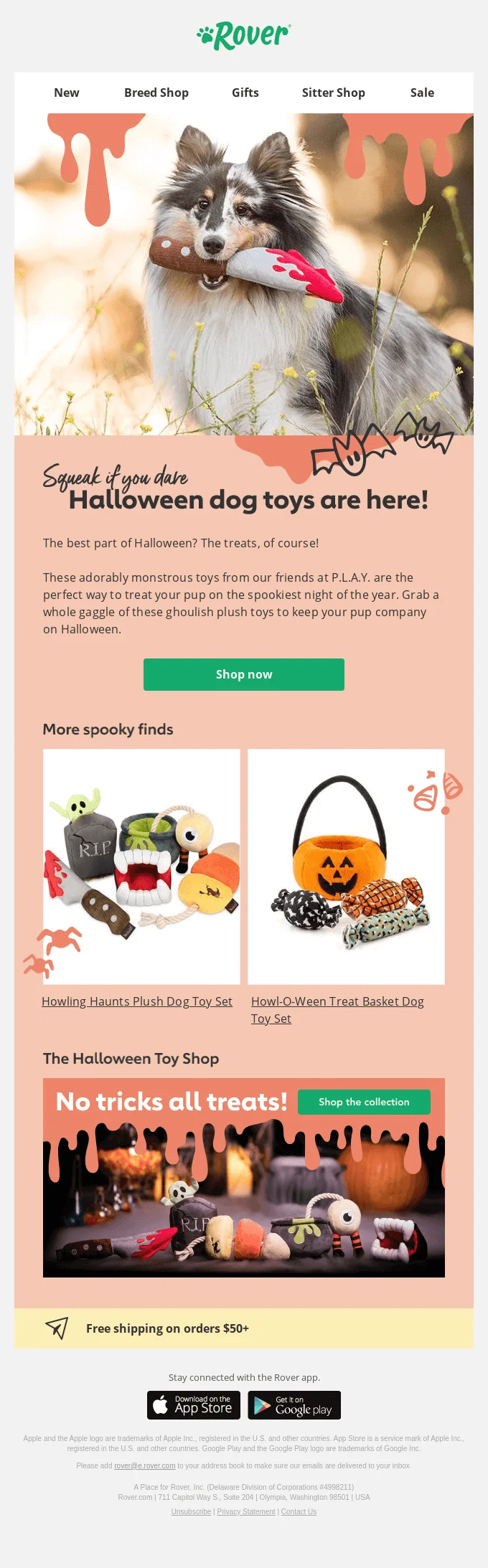
Rover decided not to miss the opportunity and launched some Halloween products to celebrate the holiday. The email’s design matches the holiday aesthetics, and it also features some images and CTA buttons, making it engaging and eye-catching.
BarkBox
Subject: BarkBox ✅ Birthday BarkBox? ✅
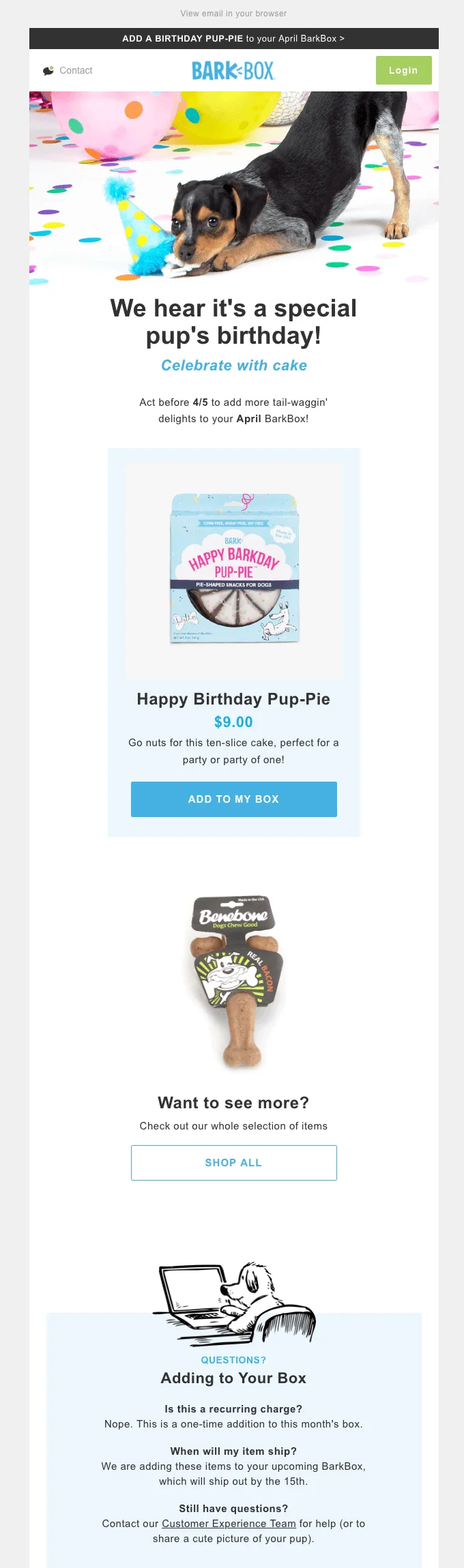
This personalized email by BarkBox offers a dog cake to the recipient whose dog is having a birthday soon. Besides the fact that the company “remembered” the dog’s birthday, the email works due to its clean layout and convenient CTA buttons. Not only that, but it also features some frequently asked questions and contact information in case the recipient has questions to ask.
Petplan
Subject: Get your paws on Black Friday savings from Petplan
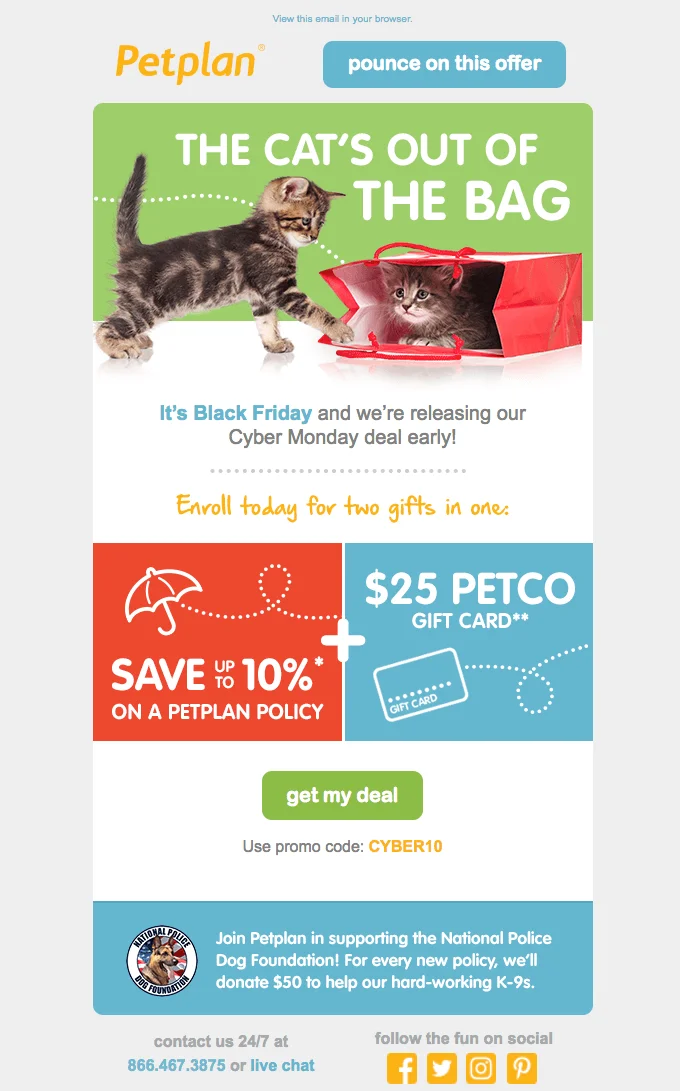
In their Black Friday email, Petplan is offering special gifts. The email also uses a fitting wordplay and a CTA button. A simple yet bright design and a convenient layout make it even easier to engage with.
Banfield Pet Hospital
Subject: Welcome to Banfield: your pet’s health care resource!
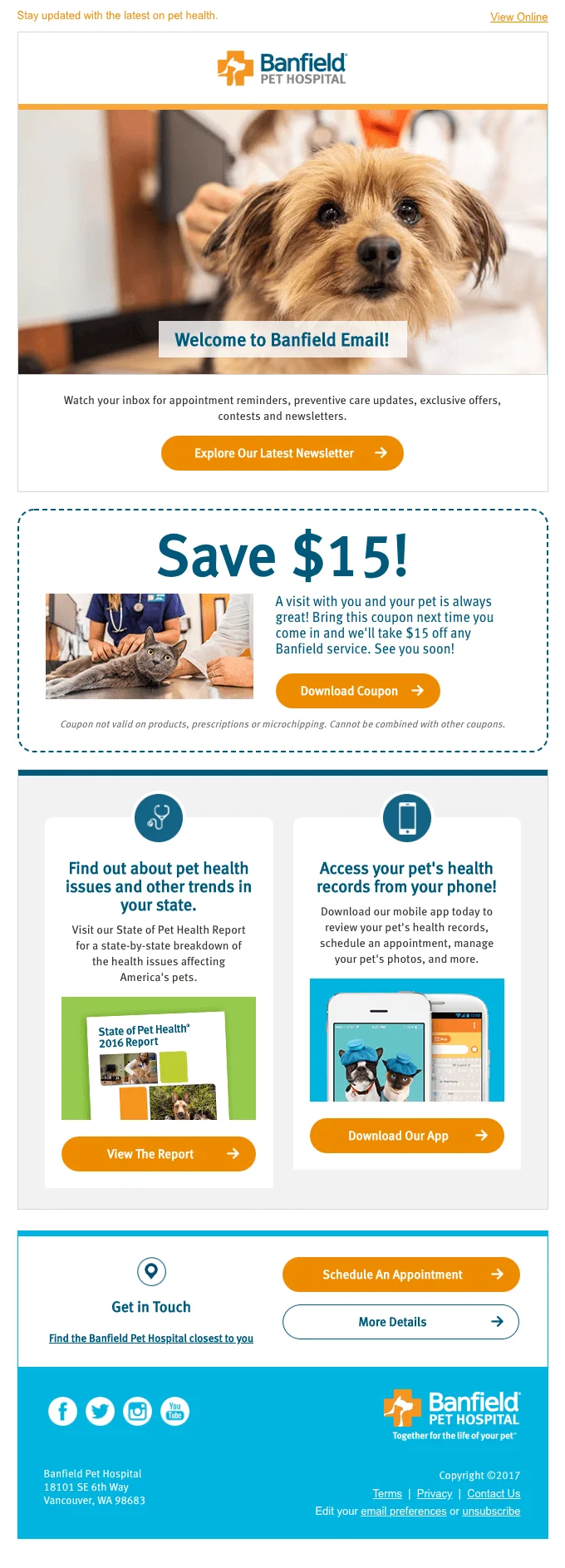
Banfield Pet Hospital is a veterinary clinic. In this welcome email, the company briefly states what messages the recipient can expect from it. The email also offers a coupon, which highlights the newsletters’ value and other information that might be useful to the subscribers. Each block features a CTA button, making it easy to navigate and engage with.
Scratch
Subject: There’s a reason dog food is always on sale
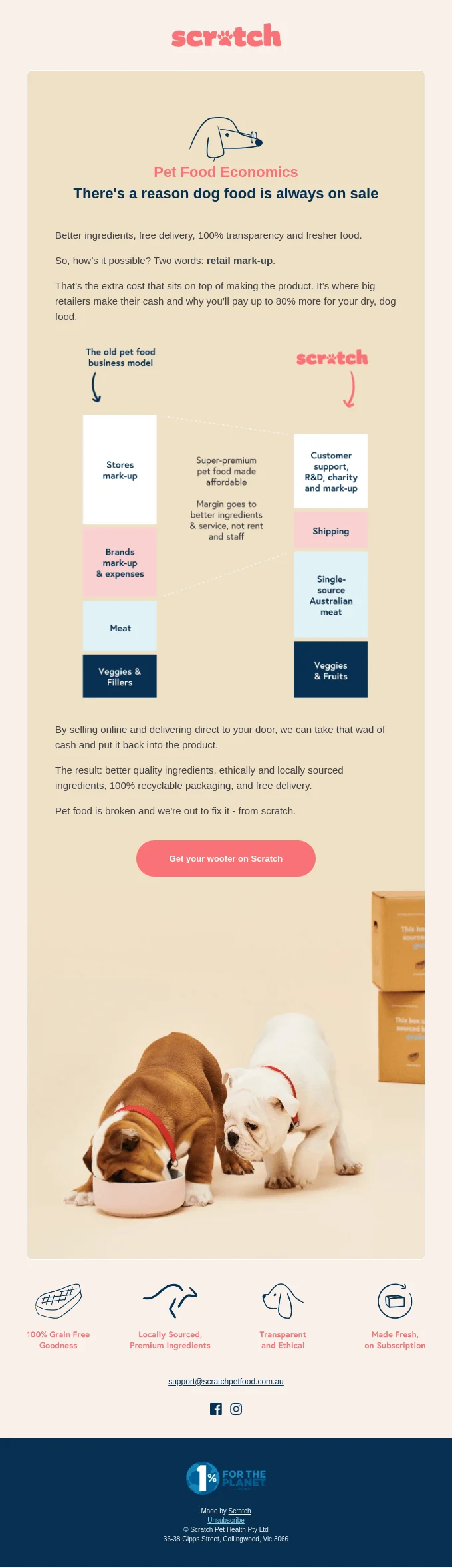
Scratch is an Australian dog food brand. In its email, the company explains how it keeps its products affordable while using high-quality ingredients. Although being information-heavy, this email is effective at building trusting relationships with the customers. The content is easy to follow, great for dispelling doubts, and leaves a good impression about the brand’s product.
Smalls
Subject: Cute cats love Smalls

Smalls is a cat food brand. In this email, it is sharing some of their customers’ stories and their experiences with the brand. Although the email features a lot of information too, it has a convenient layout that makes it easy to follow along. The brand’s customers are likely to trust the company more after reading these testimonials, and receiving a discount at the same time is a nice little detail that will warm them toward the brand even more.
Troo Health Care
Subject: Smiles Davis how are you treating yours on International Dog Day?
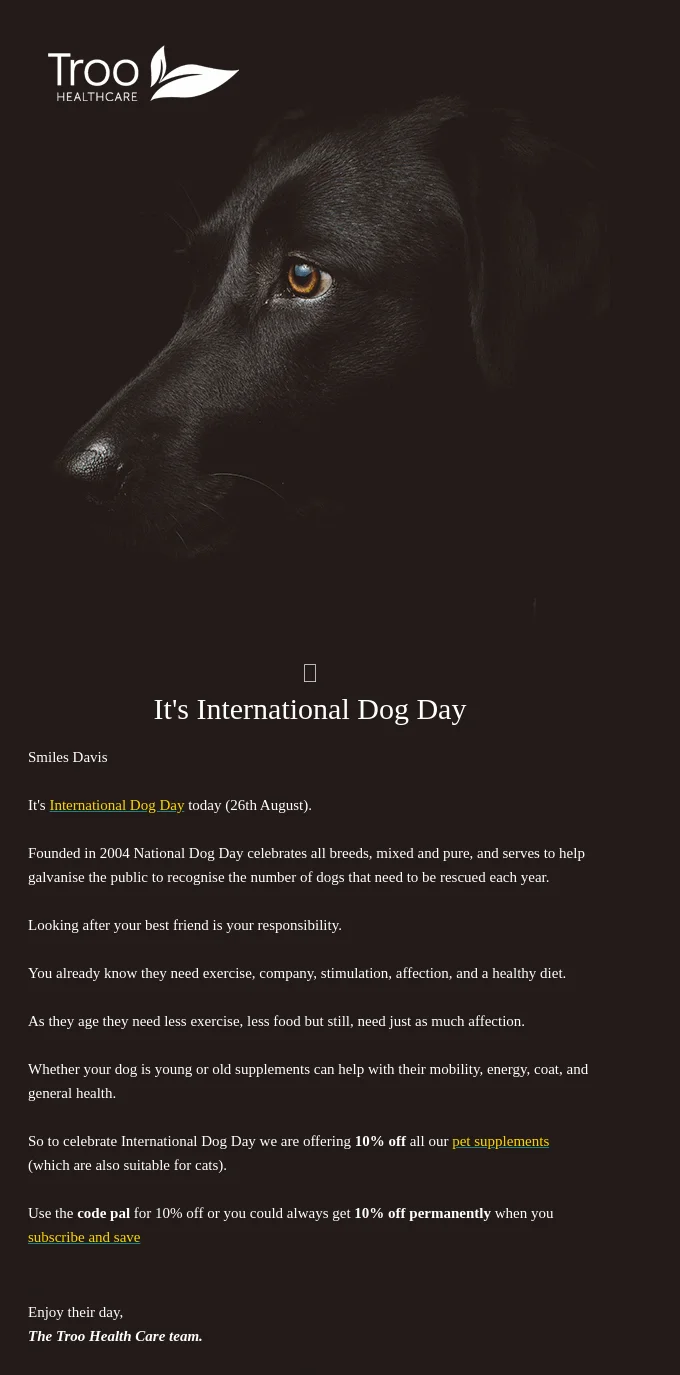
Troo Health Care is a company specializing in health and dietary supplements. The company also offers a selection of pet supplements, so it decided to launch an email campaign for International Dog Day. In this email, the brand explains the importance of keeping pets healthy and offers 10% off for their pet supplements. The email is quite simple, yet it effectively highlights the importance of pet supplements and uses clickable calls to action.
PetPlate
Subject: Hello to June’s Pup of the Month! 🏖️
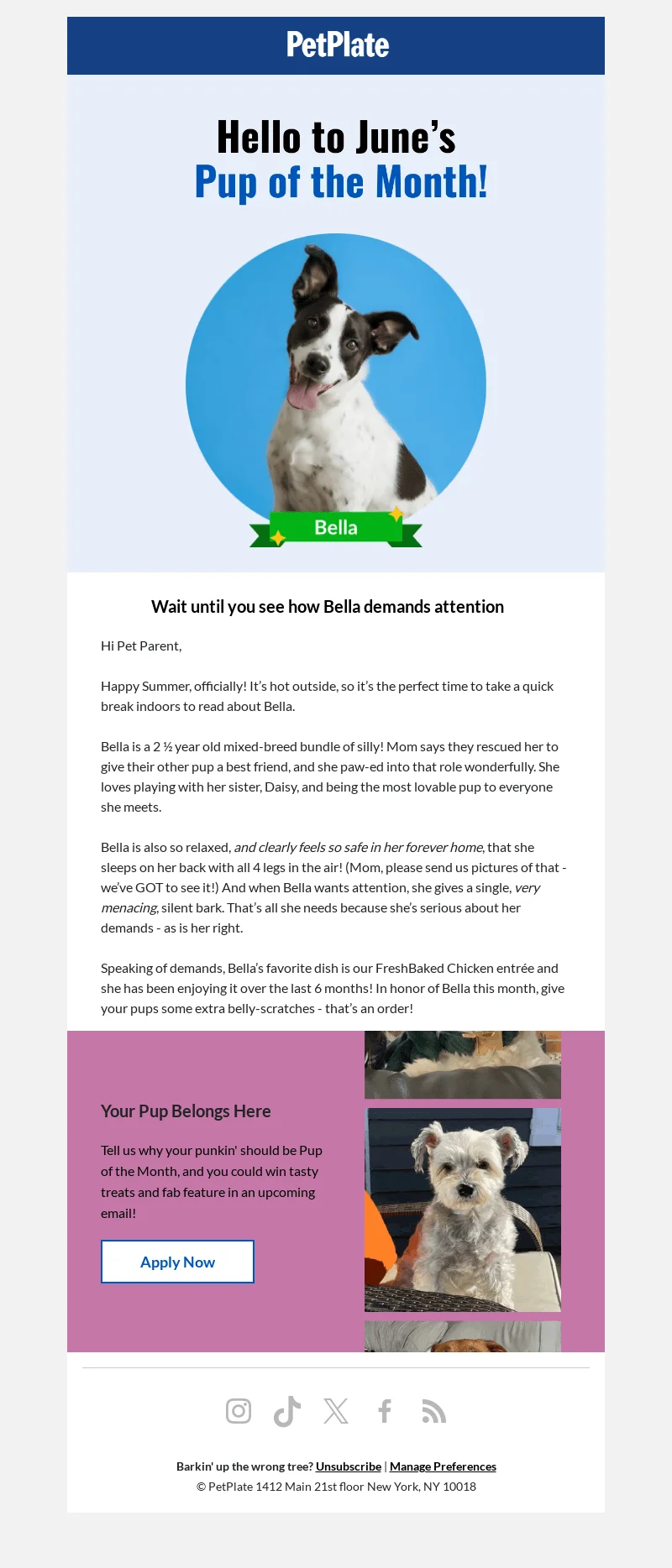
PetPlates’ email features information about a contest among the brand’s customers, “Pup of the Month” and invites subscribers to enter to compete for the prize (gifts from the brand and a feature in its newsletter). In this email, the company announces June’s winner and shares some facts about the puppy. What makes this email stand out among other pet marketing emails is its format and engagement potential. Many pup owners would want to share some facts about their furry friends with others, and the brand provides this opportunity along with other benefits.
Conclusion
Pet care email marketing is a great way to promote your pet-related product or service. To create a good pet care email you need to:
- Understand your target audience and create relevant buyer personas.
- Expand your mailing list organically.
- Use an ESP if needed.
- Divide your subscriber base into segments.
- Create emails that resonate.
- Analyze the results and make corrections when necessary.
Follow our tips and get inspired by examples in this article to enhance your pet care brand’s email marketing campaigns. Good luck!
FAQ
What emails should a pet care business send?
A pet care business should send emails that build trust, match customer needs, and promote products at the right moments. Useful examples include personalized product updates, seasonal or holiday campaigns, and messages tied to pets’ birthdays or relevant observances like International Cat Day or National Puppy Day.
How can pet brands segment their email list?
Pet brands can segment their list by the type of pet customers have, so each group receives content that is more relevant to them. You can also use surveys to learn customer preferences and build more targeted email content from those results.
What pet care emails can be automated?
The content explains that email campaigns are especially useful for reaching customers at specific times, such as special events, seasonal holidays, and other important dates. That makes time-based campaigns, like birthday or holiday emails, good candidates for automation if they need to go out on a set schedule.
How often should a pet care business send marketing emails?
The provided content does not specify a universal sending frequency. It does emphasize sending regular emails and using targeted campaigns at relevant times, so the best cadence depends on your audience, your products, and the occasions you want to address.
What makes a pet care email effective?
An effective pet care email is relevant, personalized, and timed to the customer’s interests or key dates. It should help establish trust, reflect your brand’s differences, and speak to the specific needs of pet owners so the message feels useful rather than generic.
 New and noteworthy on our blog
