


Key takeaways
- International email marketing requires careful planning to consider language, local context, time zones, deliverability, and regional privacy laws.
- Challenges include varying deliverability based on regions, language complexities, and differing regional laws on marketing and spam.
- Strategies for successful campaigns involve language control, context awareness, visual content focus, mobile optimization, sending time considerations, audience segmentation, and email metrics monitoring.
In a globalized world, even small companies can have clients overseas. International email marketing helps you reach those customers with campaigns that account for language, local context, time zones, deliverability, and regional privacy laws.
Email marketing is one of the most reliable ways to reach a global audience, but international campaigns need more planning than a domestic send. You need to consider consent rules, unsubscribe requirements, spam complaints, cultural differences, mobile readability, and how each region responds to your message.
Let’s check the best tips for creating email marketing campaigns for an international audience.
Main challenges of international email marketing
There are challenges and opportunities when dealing with international email marketing. Let’s focus on the main issues first.
Deliverability may vary
Email deliverability depends on the region, both the sender and the recipient. Email filters may be stronger in countries where spam is more abundant (like Brazil and India, for example). Some parameters, like sender reputation, will still be a strong indicator for the inbox service providers (ISPs) if the email is considered spam, but the filters for content (like spammy words) will be different for each language.
Language is tricky
Even though English is the most spoken language globally, according to Statista, only a share of the world’s population can understand it well enough for marketing messages. The percentage is different if you consider education level or job types (most tech-related people and highly-educated executives will be able to read in English, for example). You need to take that into account to decide if you want to send your emails in English or in the customer’s language, and how that translation will happen. Multilingual email marketing may be more costly and take up more time.
Regional laws are different for marketing and spam-related activities
We’ll dive deeper into this topic, but some common email marketing practices that are accepted in the United States may not work under GDPR in Europe, for example. The good news is that most regulations share a few practical expectations: collect consent where required, identify the sender clearly, protect subscriber data, and make unsubscribing simple.
Best strategies for a successful international email marketing campaign
Now that we have reviewed the problems, let’s see how to make the best campaign if you’re targeting an international audience.
Language control
The first factor to consider for international email marketing is language. When to write in English, and when to go for email localization?
Consider whether your audience speaks English fluently or not. For example, if your website and sign-up form are only in English, chances are that you don’t need to translate every email. This is mostly valid for small companies with international clients.
If you have a big presence in specific countries, you can translate to that language or create email marketing content specific to that country. This is usually done by hiring a native translator, who will guarantee that the message works in the appropriate context.
The other option is to translate automatically. In recent years, large language models have improved automatic translation and can help marketers prepare first drafts much faster. That said, AI translation still needs review.
A good automatic translator can get most of the job done, but the part it gets wrong is often the part that matters most in marketing copy: puns, neologisms, local references, product names, or brand voice.
The other side of the coin is that, with customers in many countries, it’s not viable to hire a translator for each one. That’s when automatic tools can help.

Since there is no way to know which language the customer prefers for email marketing messages, the best practice is to just ask. You can write the welcome email in both languages and allow the customer to state their preference. You should also indicate whether the translation is automatic or not.
If the future of email marketing is hyper-personalization, this is a great way to make your clients feel that the content is tailor-made for them.


Careful work with context
Words can have a distinct impact on different people. For example, if in the United States, marketing is expected to be a little aggressive, in other cultures, this can be off-putting or sound desperate.
It is also relevant to know the context of the message, especially around holidays, since they’re region-specific. For example, Thanksgiving is an American-only celebration. Remember to always use targeted email marketing!
Focusing on visual content
When creating for a global audience, try to invest in great images and let them do the talking. That’s the approach by brands like Apple and Sony: a great image and only a few words on a tagline to convince the audience.
There’s not much risk in investing in great visual content for an international audience, with one caveat: if you’re featuring culture other than your own, check with a native translator or sensitivity expert to see if using that image is appropriate for the brand in that context.
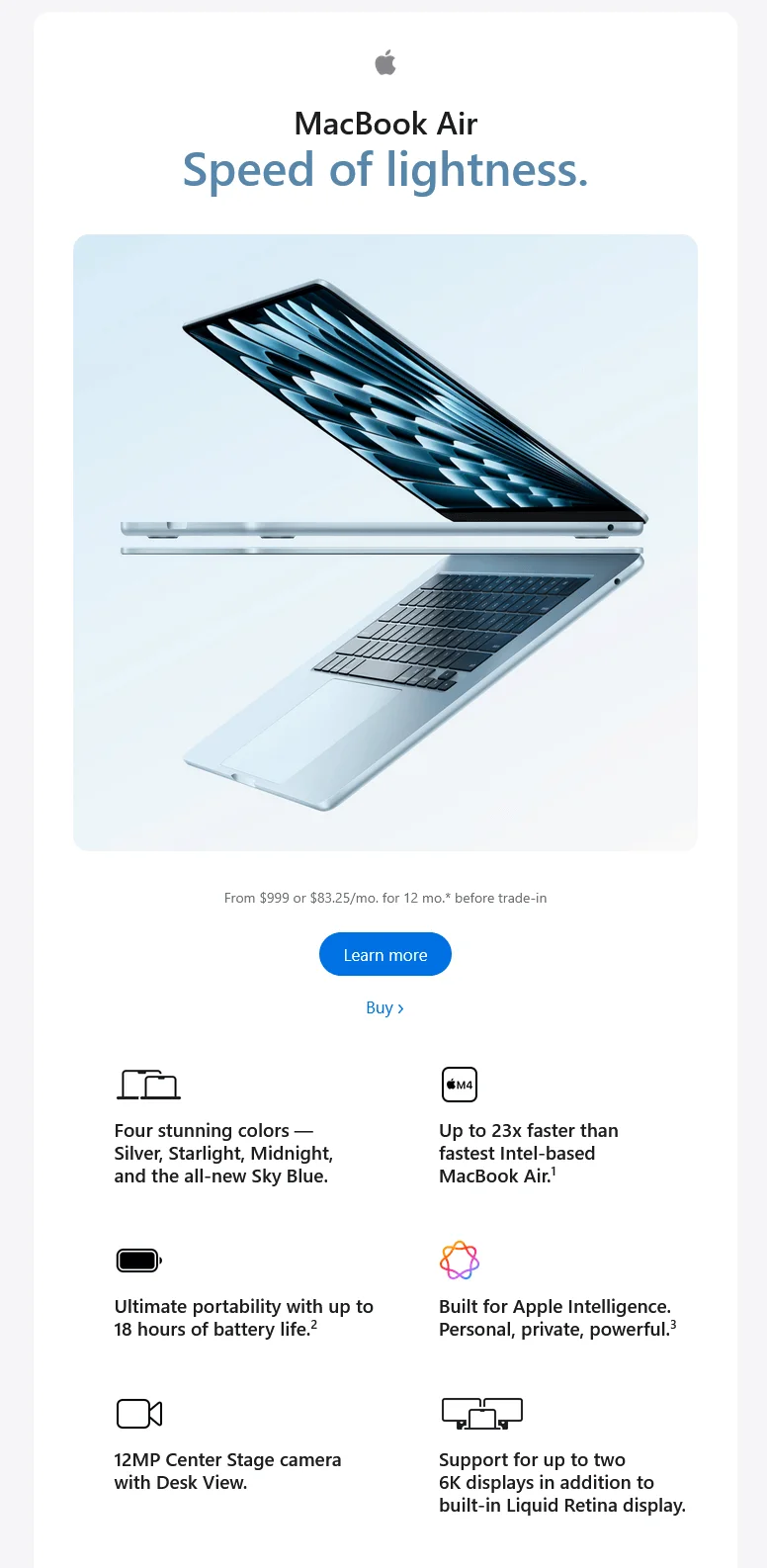
Image considerations
Every marketer wants to create an image that grabs the audience’s attention and makes the email stand out. The problem is that customers may have a different attitude to the image depending on their location.
For example, an American audience may be familiar (and even bored) with types of images that can capture the attention of someone in Europe, and vice versa.
When choosing images to illustrate international email marketing campaigns, find something closely aligned with your brand and values and opt for something universally appealing, because it’s really hard to know how it will land.
Mobile-optimized email templates
Mobile usage changes by region, but it is now a global default for many subscribers. According to StatCounter, mobile devices generate the majority of worldwide internet traffic, so international campaigns should be easy to read and click on small screens.
We recommend optimizing your templates for smaller devices, but when your audience is international, mobile email marketing is a priority factor for legibility and conversions!
The easiest approach here is to use responsive email templates that adapt to your subscribers’ devices for an optimal experience, no matter the platform.
Sending time
Usually, you don’t need to worry too much about the time an email is sent. Even if it arrives at 3 am, it will just wait in the inbox. (Yes, email timing can affect the open rates, and scheduling by timezone can help offset that.)
That said, pay attention to limited-time offers and phrases like “Just today until midnight” that can generate frustration for international readers.
Segmenting your audience
If your international customers are concentrated in specific countries, segment the audience by region and send special region-exclusive offers and content relevant to that audience. That way, you can work on language, specific offers, and timing.
By the way, did you know that advanced segmentation is one of the biggest email marketing trends?
Email metrics monitoring
Continuously check email analytics and follow the health factors of the email marketing system: delivery rates, open rates, and click-through rates are the most important ones.
When numbers start to go down, consider if this effect is region-specific, which may indicate a problem with a local ISP, country regulation, or even a regional culture less tolerant to too-promotional emails.
It’s tough to get right at first. Focus on constant optimization to understand the ways of the audience and how each country reacts to different messaging.


International campaign checklist
Before you launch an international email campaign, check the operational details that usually cause problems:
- Store each subscriber’s country, language preference, and consent source where possible.
- Segment campaigns by region, language, lifecycle stage, and major local holidays.
- Use localized subject lines, currency, dates, and examples when a market is important enough to justify it.
- Test every template on mobile devices and keep calls to action easy to tap.
- Schedule time-sensitive offers by timezone and avoid unclear deadlines like “midnight” without a region.
- Review unsubscribe, sender identity, and consent requirements for the countries you target.
- Track deliverability, opens, clicks, complaints, and unsubscribes by country so local problems do not get hidden in global averages.
Attention to laws
Sometimes, it’s hard enough to understand the CAN-SPAM Act that governs US email marketing. Now try one of these for each country you’re sending email to. Sending international email marketing campaigns can become a regulatory challenge, so consider legal requirements during campaign development.
Good practices will help: use double opt-in where it fits your audience and compliance needs, choose a reliable email marketing provider with a global presence, and always make it easy and simple to unsubscribe. We’ll get into specific laws just below.
International email marketing laws and regulatory issues
Let’s get an overview of some regional laws and regulations that affect email marketing and digital communication. This is not legal advice, and requirements can change, so confirm the rules for the countries where you actively collect subscribers or send campaigns.
US CAN-SPAM Act
Every email and electronic message that intends to promote or advertise a company or a product has been subject to the CAN-SPAM Act since 2003.
Its most important rules are:
- Do not use false or misleading sender information and subject lines.
- The email must contain a physical address; it can be a post office box.
- Unsubscribing must be easy, and the link must be clear in the message.
- Both the company whose product is promoted and the company responsible for the email marketing campaigns are responsible for breaches.
- The penalties for each illicit email can reach $53,088.
UK and European Union GDPR
The UK and European Union are protected by the General Data Protection Regulation (GDPR), which mainly covers how consumer data is managed by electronic systems and companies.
It applies to companies from outside the EU when offering services or goods to the region, and is developed around lawful processing, transparency, and user rights. Consent is one common basis for email marketing, but companies should verify which legal basis applies to their specific campaign.
The main points for email marketing are:
- All data submitted in forms (like name and email) is protected by GDPR. It is the company’s responsibility to protect this data.
- New subscribers must be gained legally, and marketers need a valid legal basis for storing and using their data.
- A clear opt-out must be included in every email. The process must be simple and easy.
- If requested, all data from the customer must be deleted from the servers unless another legal obligation requires retention.
Fines for breaches vary by gravity, nature, and intention, and can reach €20 million (more than $22 million) or 4% of worldwide annual revenue.
Chinese legislation
In China, the email marketing legislation has been under “Measures for the Administration of Internet Electronic Mail Services” since 2006. Its rules are stricter than others and apply even to tourists visiting the country:
- Opt-in (permission) data must be not just collected, but also stored for verification.
- Any kind of promotional email or email including advertisement must include the word “Ad” in the subject line.
- No message can contain any of the banned words by the government.
The fines can go up to $1,500 per violation, but are rarely imposed against outside companies. The most probable outcome is the email being filtered out by the country’s firewall.
Brazilian legislation
Brazil passed a law called “Lei Geral de Proteção de Dados Pessoais (LGPD)” in 2018, which is closely related to Europe’s General Data Protection Regulation. It gives people rights over their personal data and applies to many companies that process data in Brazil or offer services to people in Brazil.
The main points are:
- Opt-in and clear opt-outs are necessary for many email marketing programs.
- Both the company whose product is being advertised and the technical company backing the system are responsible for the protection of customer data.
Explore our feature on email marketing in Brazil and the LATAM countries to learn more.
Indian legislation
India’s Digital Personal Data Protection Act (DPDP) was passed in 2023. Like GDPR-style laws, it focuses on personal data, notice, consent, user rights, and responsible data handling.
Its main points for marketers are:
- Consent (opt-in) is necessary for many uses of personal data in marketing.
- A clear and easy opt-out should be offered in every marketing email.
- Organizations must store personal data responsibly. Users must have access to information and be able to control and correct it.
Conclusion
International email marketing is a great way for companies of different sizes to reach customers around the world. The process is straightforward when you combine good email fundamentals with local knowledge: clear consent, strong deliverability, useful segmentation, mobile-ready templates, and copy that respects the reader’s language and context.
- Choose a reliable email service provider. Some countries are stricter with how customer data is managed and processed. Also, different regions filter spam using distinct criteria.
- Check the law for each priority market. GDPR is a useful high-standard reference, but it does not automatically cover every local requirement. Review the rules for countries where you collect subscribers or have a large audience.
- Consider the language. Does the client prefer to receive your communication in English, or translated? The answer will differ for market segments and profiles.
- Aim for the long term: learn and optimize. International email marketing performs differently depending on the region that matters most to the business. Follow good practices, monitor results over time, and adjust your campaigns based on real opens, clicks, complaints, and conversions. This way, you’re set up for the long run.
FAQ
What is international email marketing?
International email marketing is the practice of sending campaigns to customers in different countries while accounting for language, local context, time zones, deliverability, and regional privacy laws. It helps small and large companies reach overseas audiences more effectively than a domestic-only send.
How should campaigns be localized for different countries?
Localize by matching the message to the audience’s language, country, and context. If you have strong presence in a specific market, consider country-specific content or a native translator to make sure the copy fits local usage, references, and brand voice.
Which email laws matter for international campaigns?
International campaigns need to follow regional marketing and spam rules, which can differ from place to place. Common expectations include collecting consent where required, clearly identifying the sender, protecting subscriber data, and making unsubscribing simple.
Should you use one language or multiple languages in international email marketing?
It depends on how fluently your audience reads English and how widely you are spread across countries. If your website and sign-up flow are only in English, you may not need to translate every email, but larger or more country-focused efforts often benefit from localized messaging.
How do time zones affect international email marketing?
Time zones matter because international audiences may receive emails at very different local times, which can affect engagement. Planning sends around the recipient’s region helps campaigns feel more relevant and can improve how the message performs.
 New and noteworthy on our blog