


Key takeaways
- A sales funnel is a framework that maps the customer journey with strategies and channels for each stage to understand customer drop-off points and improve.
- To build a sales funnel, follow six steps: research audience, attract attention, capture leads, nurture trust, convert, and retain customers.
- Different types of sales funnels include the 3-stage funnel, AIDA model (4 stages), and 5-stage funnel.
- Sales funnels matter for businesses as they offer a holistic approach, help understand customer needs, increase sales, and provide optimization opportunities.
A sales funnel is a framework that maps the customer journey along with strategies and channels for each stage. You can use it to understand where your customers drop off and what to do to improve the situation.
In this article, we’ll explain the funnel stages and the content types to use for each, show successful examples (for both B2C and B2B), and guide you on how to create a sales funnel for your business. We designed it for small and mid-size businesses, e-commerce brands, and marketers who want a practical and scalable sales funnel.
TL;DR: How to build a sales funnel
To create a sales funnel, follow these six steps:
- Research your audience – understand who you’re targeting and what they need.
- Attract attention – reach them with relevant, value-driven messaging.
- Capture leads – convert visitors with a clear offer and landing page.
- Nurture trust – educate and engage leads with email and targeted content.
- Convert – remove friction and make it easy to buy.
- Retain customers – follow up to drive repeat purchases and loyalty.
Below, we’ll break down each stage, the best content to use, and how to build this funnel step by step for B2C and B2B businesses.
What is a sales funnel?
The sales funnel (also known as the marketing funnel) is a framework that explains the customer journey from discovering a brand to purchase.
It outlines the key steps of the process, as well as the strategies and channels to use at each stage.
Just as a funnel in real life starts wide and gets narrower closer to the bottom, the number of people at the beginning is greater than at the end. Not every prospect you start with becomes a customer; it’s the conversion rate that matters.
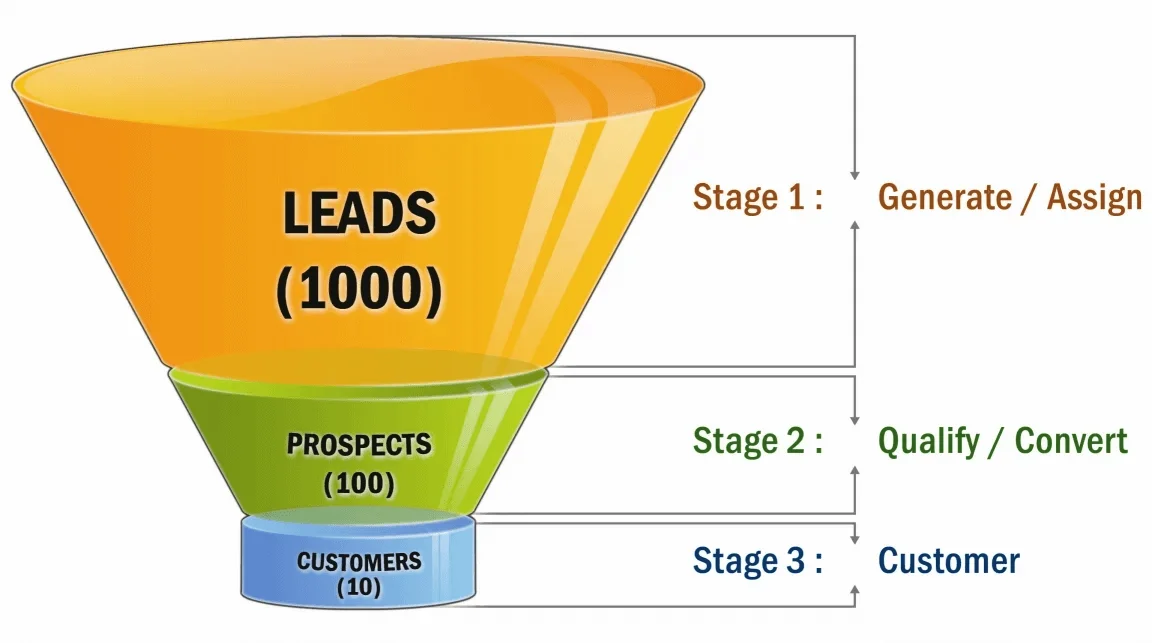
There are numerous types of sales funnels, ranging from simple to complex. Different businesses and marketing teams may prefer one over the other, depending on their goals and needs.
Here are some of the most popular types of sales funnels:
- 3-stage funnel: top of the funnel (ToFu), middle of the funnel (MoFu), bottom of the funnel (BoFu).
This is the simplest possible visualization that helps to see the customer journey in broad strokes. It starts with your target audience that is yet to discover or has only just discovered your product. Next, potential customers are exploring your offerings and considering them. At the final stage, you get new and existing customers.
- AIDA model (4 stages): awareness, interest, desire, action.
A classic concept that focuses on the customer behavior from introduction to the brand to a sale.
- 5-stage funnel: awareness, interest, consideration, decision, retention.
An extended version of the previous model, it addresses potential hesitations and extends beyond purchase to focus on building lasting customer relationships. In this article, we’ll be using this sales funnel modification.
Why sales funnels matter for businesses
Building a sales funnel is a great way to streamline your customer journey and marketing. Visualizing your whole customer journey and focusing on the wants and needs of your audience make your efforts, from lead generation to retention, more targeted.
Sales funnels offer many advantages:
- Holistic and strategic approach. With a sales funnel, you can explore all the benefits of omnichannel marketing, choosing the right channels at every point of the journey.
For example, you might find that you have good awareness-stage messaging on social media but lack campaigns that address concerns during the consideration stage. As a result, you may decide to invest in email marketing campaigns or a blog.
- Understanding and addressing customers’ needs. Seeing where your customers are in their journey and what they need helps you create targeted messages that will hit them at just the right moment.
For example, sending a browse abandonment email at the decision stage can be just a simple nudge to help hesitant leads convert. Or, you might switch between inbound and outbound email marketing depending on the funnel stage.
- Sales increase. When you address your customers’ needs and nurture them, they will be more likely to convert, resulting in more sales. This starts from the very first touchpoint and effective onboarding.
For example, welcome emails have a conversion rate of 2.91%, according to Omnisend’s 2025 e-commerce marketing report.
- Optimization opportunities. Having a sales funnel with key stages and content types mapped out, you can easily see where the prospects fall off and tweak your approach. Plus, you can periodically switch up your content and see the ripple effect it provides
For example, if you see that you have a low conversion rate from informed potential customers to buyers, you may add additional messaging for the consideration stage, like educational content or product comparisons.
Key sales funnel stages and content types
For this article, we’ve chosen a 5-stage model that can help you not only attract potential customers but also make them into brand advocates who will stay with you past the first purchase.
-
Awareness — attracting new leads
This is a lead generation stage, when you have the largest number of potential customers. Your target audience has just discovered your brand, but they are unfamiliar with the product selection and aren’t yet ready to buy.
Your goal here is to persuade them to follow your brand, catch their attention, and ensure sustained engagement. Create educational, informational, and entertaining content and don’t be too salesy.
Channels and content types to use:
- Social media posts, especially videos.
- SEO-optimized blog posts on broad topics.
- Paid advertising.
- Influencer collaborations.
- Podcasts.
Luggage and travel accessories brand Away partnered with the TikToker Jake Shane for his popular Nyming (creating shorthand for common phrases) series. The video isn’t focused on product promotion per se, although it features several suitcases. It captures attention with the fun and familiar premise and makes the blogger’s audience curious about Away, raising brand awareness.
@octopusslover8 LGA (let's get @away) #awaypartner ♬ original sound - Jake Shane
-
Interest — engaging and educating
At this point, the potential customers are aware of your brand, and you need to keep them engaged while also providing helpful information. They’re actively researching your company but aren’t ready to buy anything yet.
Position your company as an expert in the field and help your target audience learn more with brand-focused and educational content.
Channels and content types to use:
- Educational SEO-optimized blog posts.
- E-books, checklists, whitepapers.
- Reports for B2B customers.
- Webinars.
- Helpful quizzes.
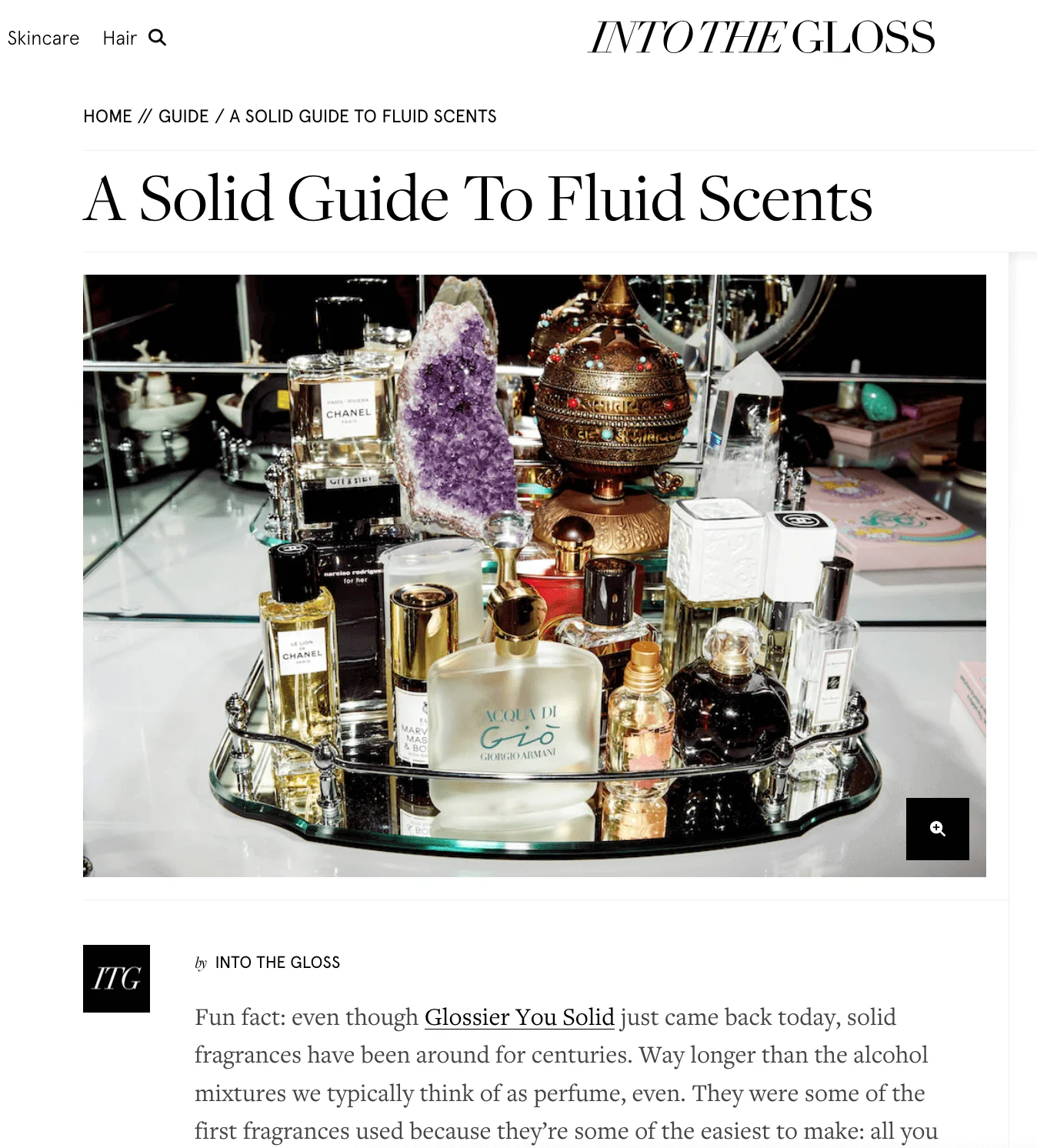
Makeup brand Glossier was created by the team behind the Into The Gloss beauty website. The site continues to attract readers while supporting the brand’s reputation.
For example, this guide on different fragrance formats educates the audience and subtly mentions a new Glossier product right at the beginning.
-
Consideration — nurturing and overcoming objections
At this stage of the funnel, prospects are actively considering a purchase.
Your goal is to address their objections and persuade them to buy from you specifically. Focus on your product: hone in on your unique value proposition, highlight what makes it better than competitors.
Channels and content types to use:
- Product demos.
- Unboxing videos.
- Case studies.
- Product comparisons.
- Social proof (reviews and testimonials, media mentions, celebrity endorsements, user-generated content, etc.).
- FAQs.
- Free trials.
Here’s a great email marketing campaign example from the dental care brand Bite.
Customers in the decision-making process get several news outlet articles promoting the product as well as real people’s reviews. This is a strong approach you can adapt for your own funnel.

-
Decision — closing the sale
This is the culmination of your prospects’ journey through the funnel.
At this point, the focus is not on marketing content or product information, but on the checkout process. Make every step of the way straightforward, polish your CTAs, pay close attention to the customer experience, and ensure that support is easily available if needed.
Channels and content types to use:
- Discounts and bundle offers via various channels.
- Abandoned cart and other behavior automation emails.
- Order confirmation emails and SMS.
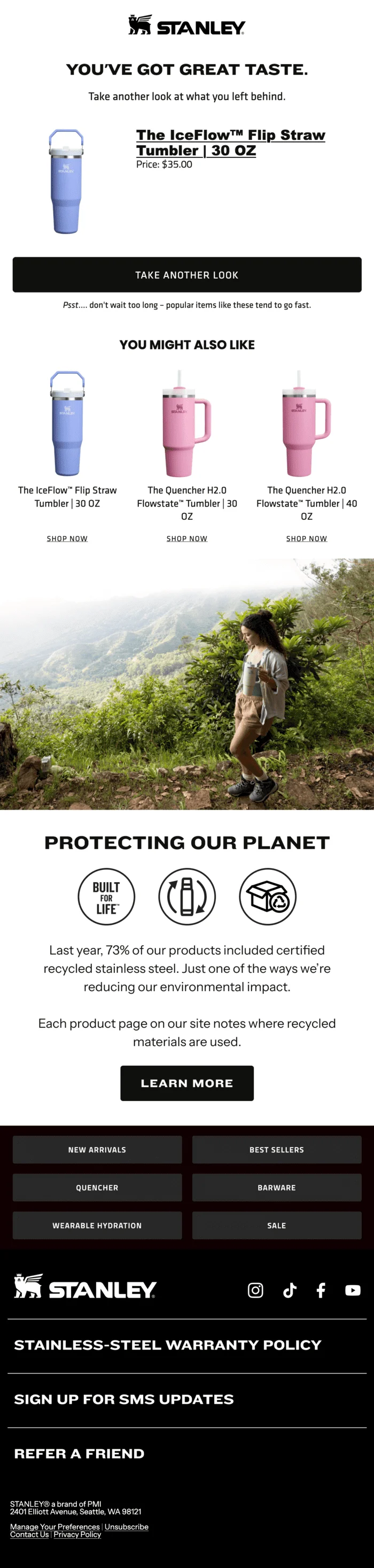
In this classic abandoned cart email, Stanley shows the product that the customer wanted to buy alongside other options, and a big CTA button to finish the checkout.
-
Retention — turning customers into repeat buyers
While it’s tempting to stop your efforts after a purchase, a successful sales strategy should extend to retention.
You need to continue building relationships with your first-time buyers to make them into repeat customers and even VIPs, over time.
With repeat customers, you don’t need to spend money on acquisition efforts, and the bigger the number of your loyal fans, the stronger and healthier your brand is.
What’s interesting is that the more customers buy from your brand, the likelier they are to continue doing so. According to Smile.io data, 27% of first-time buyers will make another purchase. But for those who made 3 purchases, the number increases to 62%!
Focus your digital marketing efforts on building loyalty and offering perks for staying with your brand. Make your customers feel valuable, personalize their experience, and show that their continuous engagement pays off.
Channels and content types to use:
- Loyalty program emails and SMS.
- Birthday emails.
- Personalized product recommendations and deals.
- Regular updates via preferred channels (social media, email, SMS).
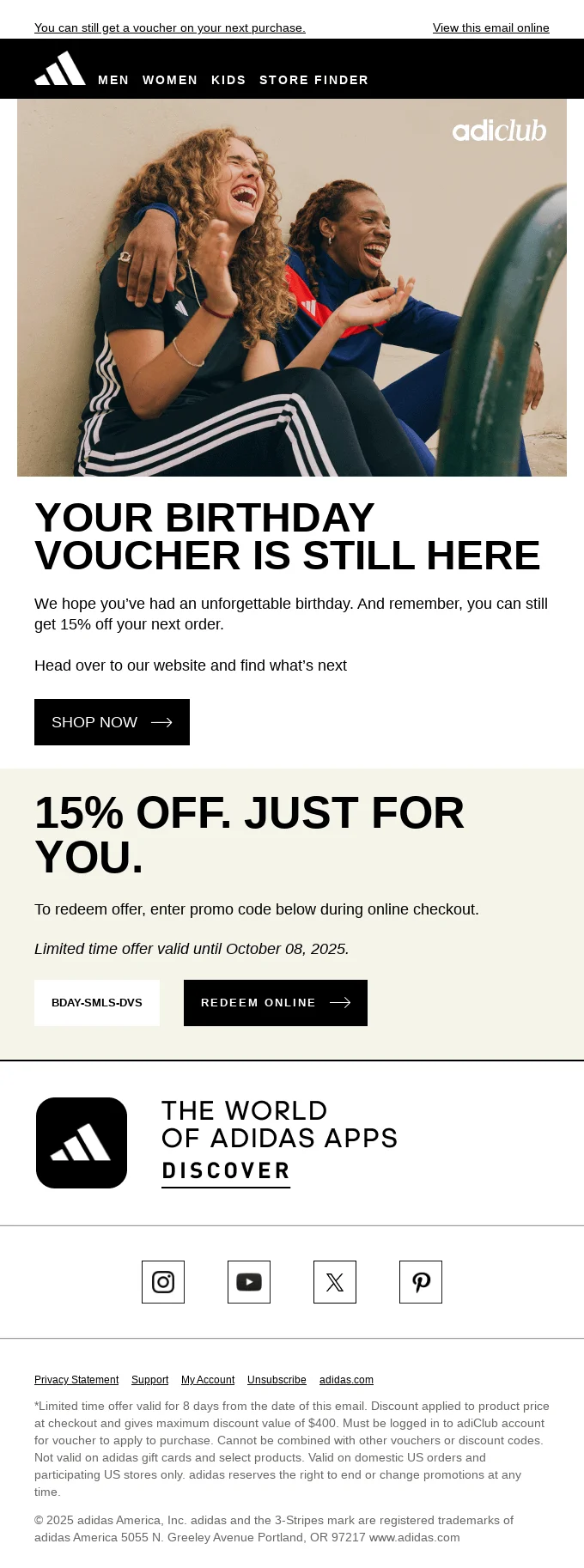
Adidas sent a birthday email with a reminder to use the 15% discount.
Note that the code is personalized and memorable. This marketing campaign not only shows customer appreciation but also rewards them for sharing personal information.

How to build a sales funnel from scratch
Let’s now focus on the practicalities of creating a sales funnel.
We’ll cover important steps that apply to any business, so you can get the gist of the process and adapt it according to your needs.
Step 1: Research and understand your audience
Before you choose marketing channels and prepare your messaging, conduct audience research. Create a portrait of your ideal customer, paying attention to demographics and preferred channels.
- What is the age, gender, and location of your target customer?
- For B2B businesses, what is their industry, position in the company, and tech stack?
- What is your customer’s need or pain point that your product can address?
- What channels do they prefer to get promotional information, transaction details, etc.?
If you already have an established customer base, run a survey to learn more about them and their preferences. Consider contacting your most valuable customers and those who have been with your brand for a long time.
If you’re just starting out, you may also hire someone to conduct target audience and market research for you.
Step 2: Capture attention with the right offer
Once you have a good understanding of your ideal customer, find out what they value and need most out of a product or service you offer.
For example, if you’re marketing a car to families, you might discover that they value safety more than affordability. This can lead you to focus on demonstrating compliance with various regulations and reliability to impress potential customers.
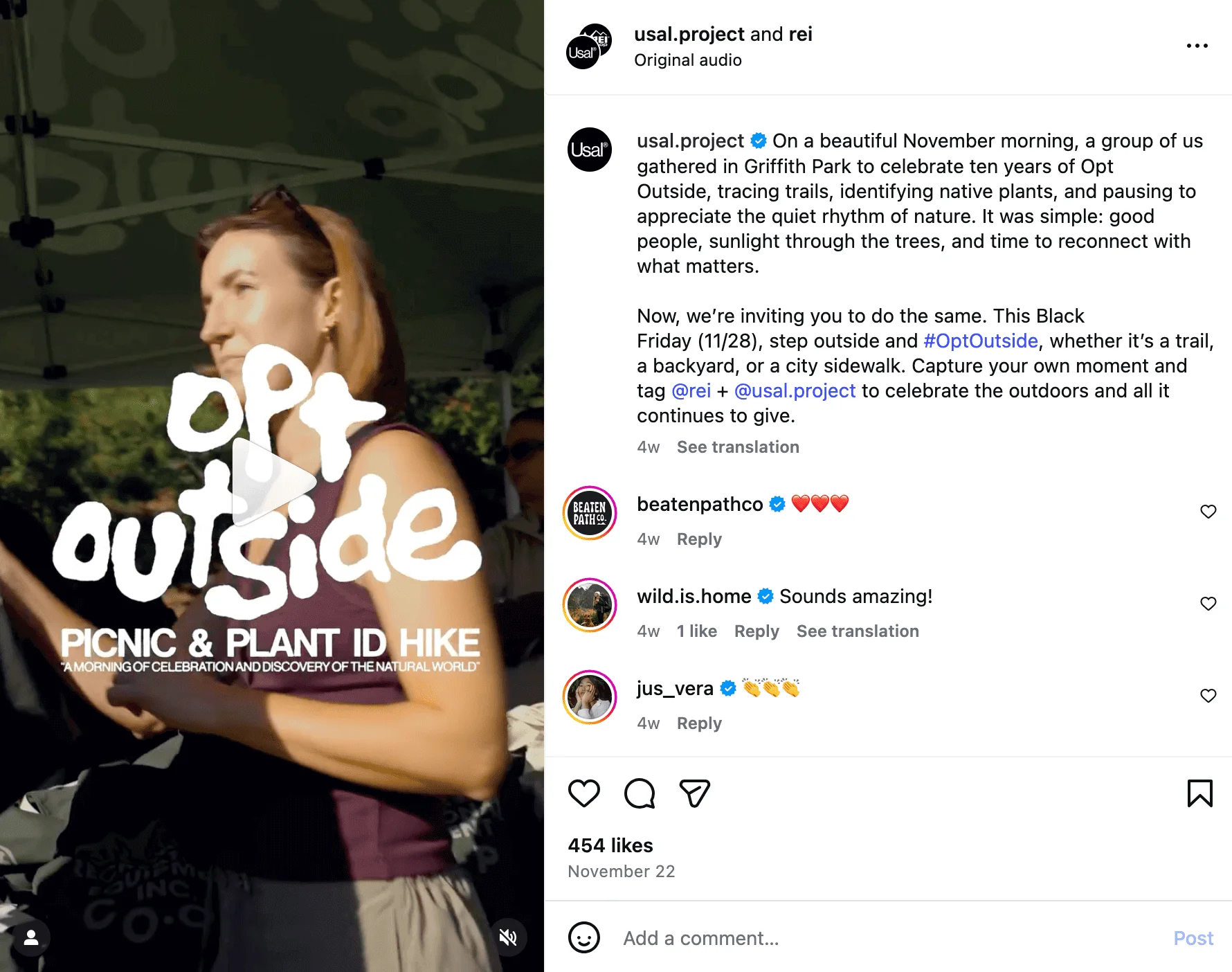
Speak the language of your customers and use their preferred channels — this will help you connect with them and bring them to conversion. Sometimes, you may even opt out of big sales events to stand out and build a strong customer relationship. For example, the outdoor gear and apparel brand REI closes its stores on Black Friday as a way to promote spending time outside.
This unique Black Friday strategy may not bring sales, but instead creates a positive brand image, which is important to those passionate about workers’ rights and limiting their consumption. With a catchy #OptOutside, REI also encourages customers to create their own content and share it on social media.
Step 3: Build a high-converting landing page
Your landing page is the destination you lead your prospects to with your communications. It should clearly communicate information about your company and product.
To market what you are selling, provide a clear value proposition and social proof, highlight the benefits, and don’t forget about CTAs leading your customers to the next stage of the funnel.
Make sure to optimize your landing page so that it’s easy to find in search results. Use SEO and email marketing together to turn organic website visitors into subscribers.
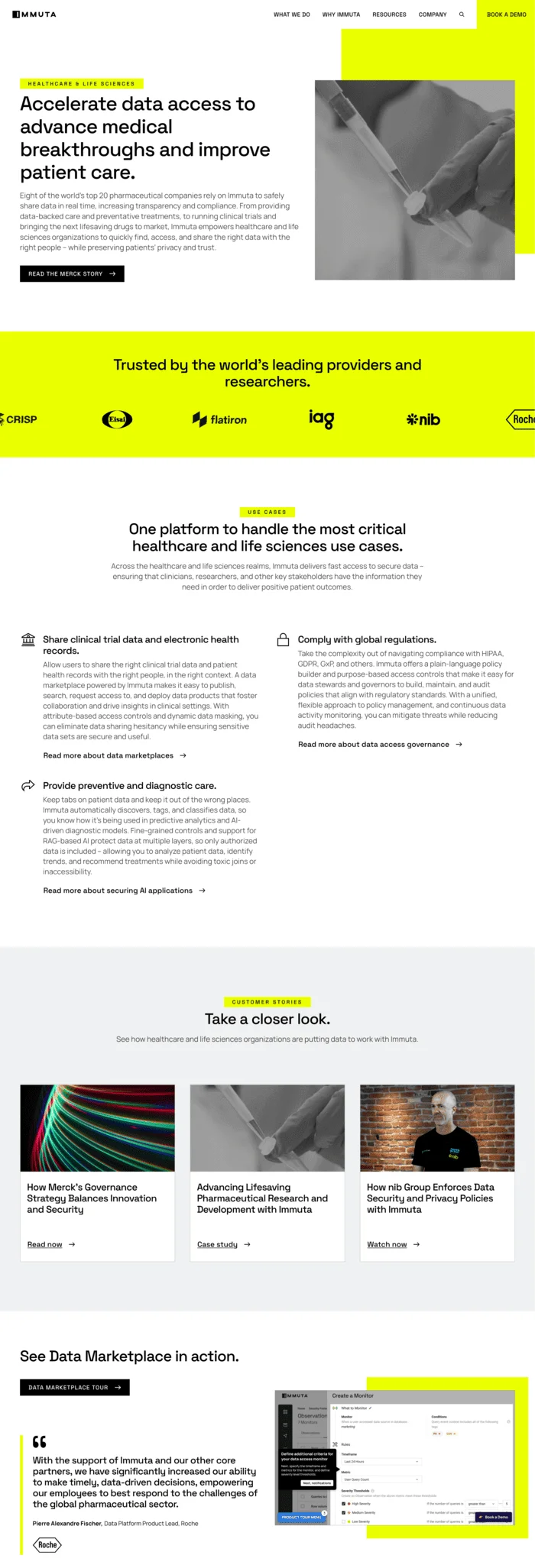
Data security and software company Immuta has several landing pages for different industries. Each page is tailored to the needs of that specific audience, with relevant customer stories and use cases. Immuta also showcases the logos of the client companies and includes a platform tour to make the introduction as thorough as possible.
Step 4: Nurture leads with email marketing
Email marketing is one of the best channels to educate your potential customers, introduce them to your company and products, and convince them to choose you when they want to make a purchase.
Use drip sequences, behavioral automation, like welcome and onboarding emails, and personalized offers to compel your subscribers. If you need more ideas, email marketing funnels.
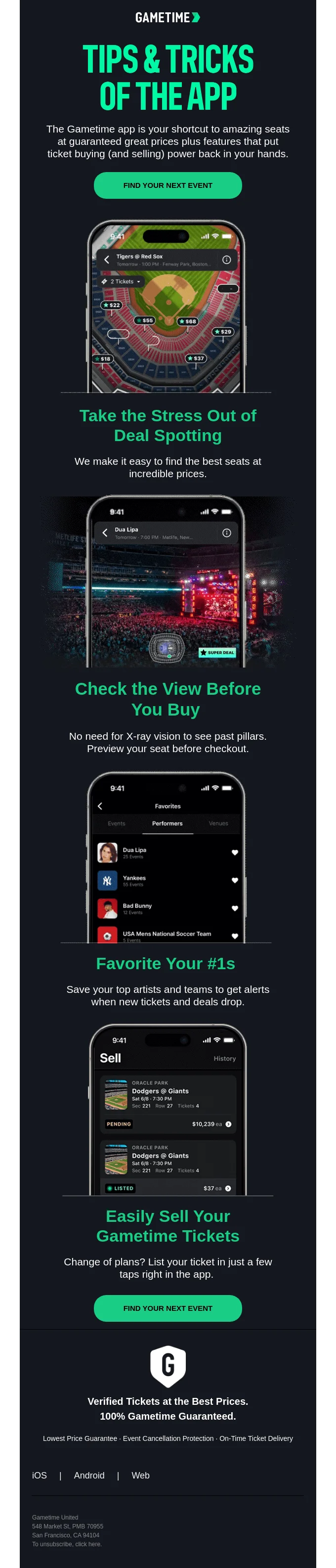
In one of its initial emails to new subscribers, the ticket app Gametime provides a platform overview to make sure that when action time comes, the prospects won’t be intimidated.
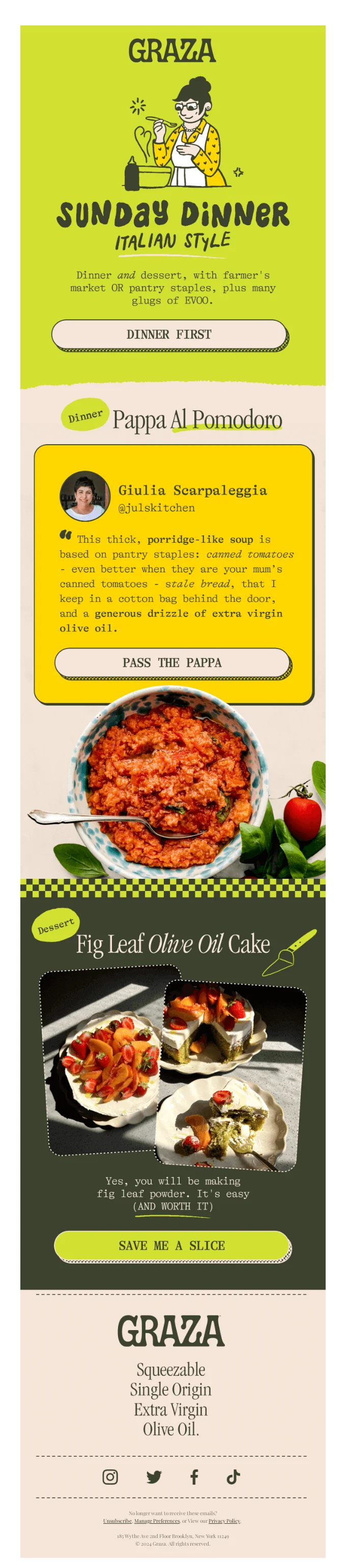
For another example, olive oil seller Graza sent a helpful recipe email to maintain engagement and give an idea of how to use their product.
Step 5: Close the sale
When your prospective customers are sufficiently prepared, run an omnichannel promo campaign with enticing efforts and CTAs. If you’ve laid the groundwork well, you’ll increase the likelihood they purchase.
Make sure the checkout process is easy and frictionless and provide the necessary order information (confirmations, delivery information, etc.) right away.
Here’s a good email promo example from FlavCity, a vitamins and supplements brand.
There’s a sale deadline reminder at the top, clear and contrasting CTA buttons, and product recommendations with both their original and discounted prices. It’s an effective campaign that funnels subscribers right into becoming paying customers.

Step 6: Follow up and retain customers
Many sales funnels omit this stage, but it’s important to keep engaging with the customers after they have made a purchase.
Send surveys and ask for reviews, provide tips on how to best use the products, run upsell and cross-sell campaigns, and update the customer on their loyalty program status.
At this point, you also have more customer information, so you can make your outreach more personalized. Reference past purchases and share relevant product recommendations and announcements.
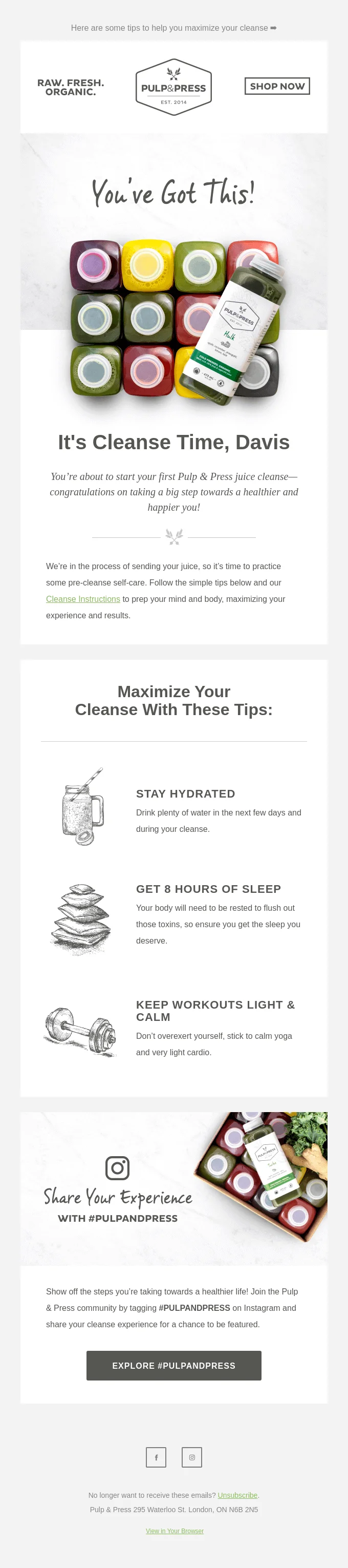
For example, the Pulp & Press wellness drink company sent an email full of cleanse recommendations to help customers get the most out of their recently purchased juices.
How to optimize and improve your sales funnel
You’ve built your first sales funnel, now what? You first need to let it work for some time and analyze your results. When you’re ready, follow the tips below to make it more effective.
Data analysis and A/B testing
One of the biggest mistakes you can make when it comes to sales funnels is ignoring your performance results.
Regularly review analytics to assess your results and see where you might be losing prospects. Pay attention to these three metrics:
- CAC (customer acquisition cost) — measures how much you spend on getting a new customer. For a business to be healthy and profitable, this number shouldn’t be too high. If it has increased over a certain period as compared to the previous one, look into your costs and messaging.
- CLV or LTV (customer lifetime value) — measures how much money a customer brings you over the course of your relationship. Compare CAC and LTV and check the ratio. Ideally, your LTV should be 3 times higher than CAC.
- Conversion rate — one of the most important funnel KPIs. It measures the percentage of people who completed the target action and shows how effective each of your campaigns is.
Compare these metrics to your previous results and industry benchmarks and decide whether you need to make changes.
If you decide to switch up something in your strategy or messaging, form a hypothesis about customer behavior or messaging and run A/B tests to see which of the two competing options your customers prefer.
For example, you may test which performs better, a discount in percentage or in dollar amount.
Refining messaging and offers
Never stop improving upon your product and messaging. There are always opportunities to make an offer more compelling.
For example, over time, you may amass enough product reviews to run a social proof campaign or create persuasive case studies for different industries.
Pay attention to trends and your competitors, listen to your customers, and incorporate their feedback to get better results.
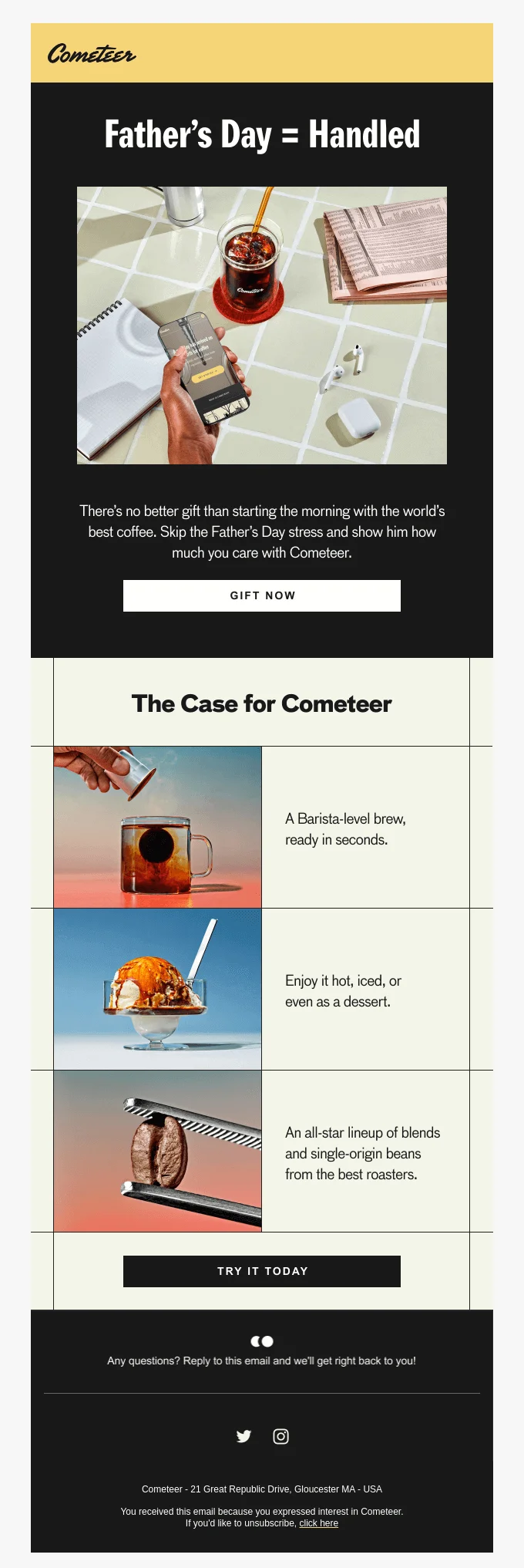
Let’s take a look at these two Father’s Day emails from Cometeer, a coffee company. The first version is simplistic: there’s no discount, and the product benefits are general and don’t correspond to the occasion.
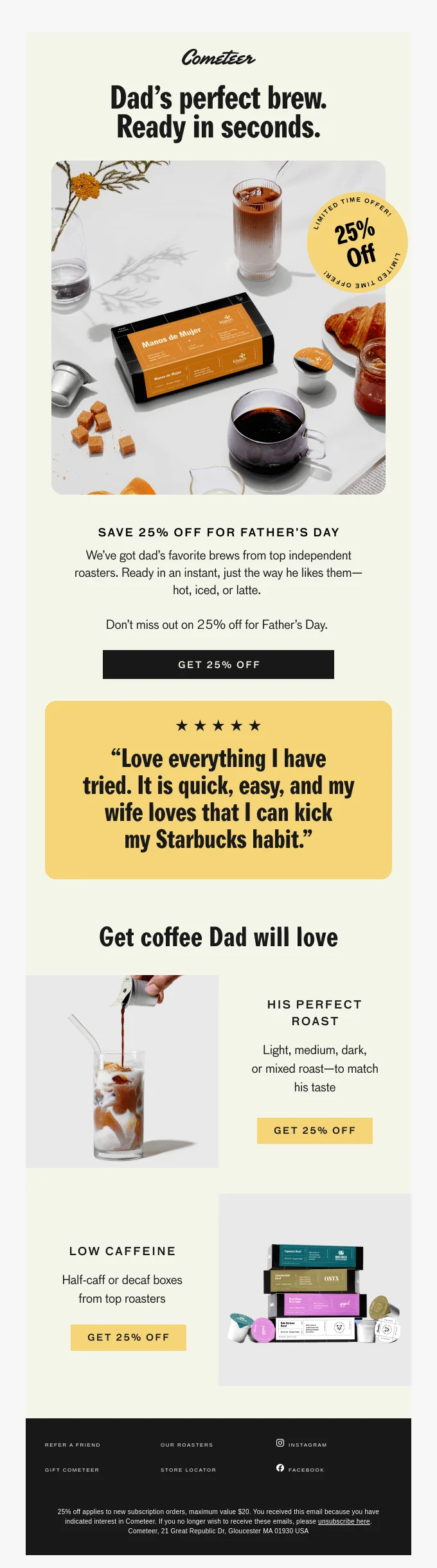
Next year, the company improved the offer. There’s now a discount code, social proof, and product feature highlights catered specifically to fathers.
Personalization at each stage
Personalization is key when it comes to good customer experience and lasting relationships. According to EmailTooltester’s data, personalized emails have 14% higher click-through rates and 10% higher conversions.
Integrate your CMS and CRM software with your marketing platform of choice, so that they can freely share customer information and update it when needed. Make your offers relevant and targeted by incorporating purchase history, preferences, demographics, and other customer data in your communications.
B2C vs B2B sales funnels
Sales funnels differ depending on the business type. B2C companies target individual consumers who typically make decisions based on their own desires and preferences. B2B companies, on the other hand, are selling to other businesses, so instead of a single person, they need to convince several stakeholders.
Let’s compare and contrast B2B and B2C sales funnels, so you can learn what to focus on in your strategy:
| Business type | Sales cycle length | Average number of touchpoints | Unique aspects | Content types |
| B2C | Shorter sales cycles | Fewer touchpoints required to close a sale | Emotional triggers, importance of convenience and speed, emphasis on visual content | Social media posts and videos, contests, welcome discounts, reviews and testimonials |
| B2B | Longer sales cycles | More touchpoints required to close a sale | Practical, informational, benefits-focused content, multiple decision-makers, need for customer support | Webinars, e-books, case studies, demos, live chat, free trials |
FAQ
What is a sales funnel?
A sales funnel is a visualisation of a customer journey from discovering your brand to making a purchase and staying with your brand. A typical sales funnel consists of 5 stages: awareness, interest, consideration, decision, and retention.
Who needs a sales funnel?
Every business, whether B2B or B2C, needs to have a sales funnel. It helps to assess the effectiveness of your strategy, find the best communication channels, and create messaging that reflects customers’ needs at every point of their journey.
How do I create a sales funnel?
To create a sales funnel, research your target audience to create a comprehensive portrait, including their demographics and pain points. Next, come up with an enticing offer and promote it. Create a landing page with all the necessary information about your company and product, nurture leads with email marketing, and close the sale when your customers are ready to convert. Make the checkout process user-friendly and follow up afterwards. Periodically contact your customers to maintain engagement and turn them into repeat buyers.
 New and noteworthy on our blog