



Key takeaways
- Church marketing involves using digital strategies to promote a church's mission, engage with current members, and attract new ones.
- Churches need a strong digital presence to be noticed, as most people discover churches online before attending in person.
- To reach potential members, churches should follow the AIDA model: Awareness, Interest, Desire, and Action.
- A complete church marketing strategy includes positioning core values, targeting specific audiences, and utilizing digital marketing channels like websites, social media, email, and digital ads.
Simply opening doors and welcoming new members is not enough: they have to know your values, mission, and, more importantly, that you actually exist. That’s what church marketing is for: using digital marketing to reach new people, engage with your current members, and build a wider sense of community.
In this article, we’ll explain more about church digital marketing, why it is vital, and help you build a plan to improve your church’s visibility and outreach.
What is church marketing and why is it important?
Church digital marketing is a holistic, strategic communication effort aimed at promoting the mission of a church, reaching new members, engaging with current ones, and spreading the news about community events (online and in-church).
According to data from the Hartford Institute for Religion Research and the US 2000 Census, there are roughly 370,000 congregations in the USA alone, and that means being noticed is harder than ever.
Most people discover churches online before attending in person. That means your church needs a strong digital presence, especially in local search results like “churches near me” or “churches in [city]”. A well-optimized website and an updated Google Business Profile can significantly improve local visibility.
Understanding how to reach more potential members
To get new members, it’s important to understand the concept of a digital marketing funnel, as the next steps will follow the AIDA model: Awareness, Interest, Desire, and Action.
- To keep it simple, you start by building awareness of your church through content, websites, social media, and more.
- The second step is to generate interest, which, in the case of a church, could be sermon bites, community-driven content, or prayer requests.
- You can create desire by highlighting the impact of your church on members of your community.
- Finally, we move into action: this is where you convert. A common example is scheduling a visit and engaging more directly, personally inviting new members to attend your church.
A complete church marketing strategy
1. Position your brand and show your core values
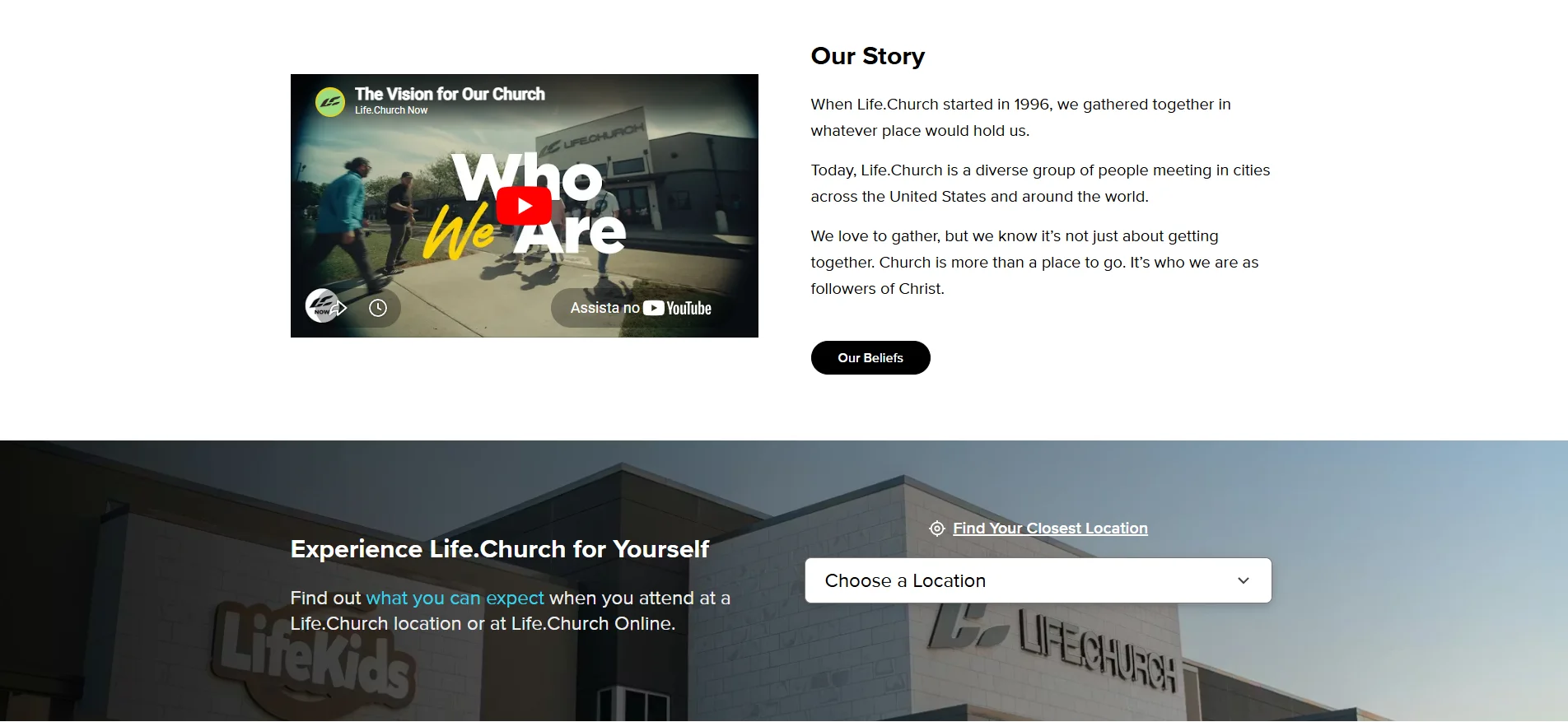
What are the beliefs and core values of your church, and how do you apply them in the real world? You can write something beautiful, but you are not going to stand out if visitors can’t see the purpose and intent.
The key here is to establish a connection between your core values, how they can bring positive change within a community, and then show proof of that. There are many ways to go about it, and we advise not sticking to plain text. Institutional videos featuring your local leaders, social proof from members of the community, and a well-made “our values/our church” page go a long way.
2. Find and target your audience
The idea of a church is to embrace a wide and diverse public. Churches are meant to be inclusive places, after all.
Taking the example of Life.Church once more, their values page shows they are open to people with less conservative points of view, too:
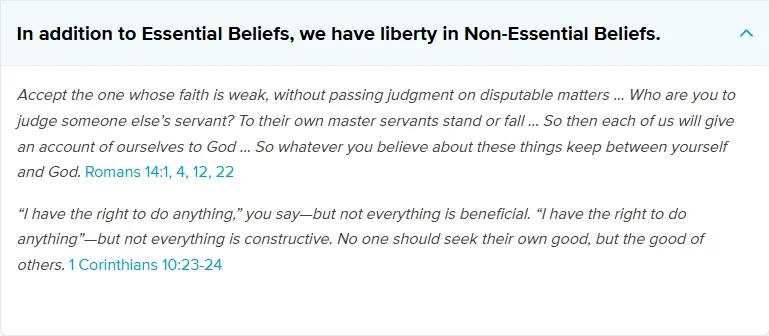
The way you portray yourself and talk about your values dictates the interest you generate – and the members you get.
Aside from the beliefs, you can take another direction and try to address different demographics. Elevation Church, for instance, tries to cater to young adults:
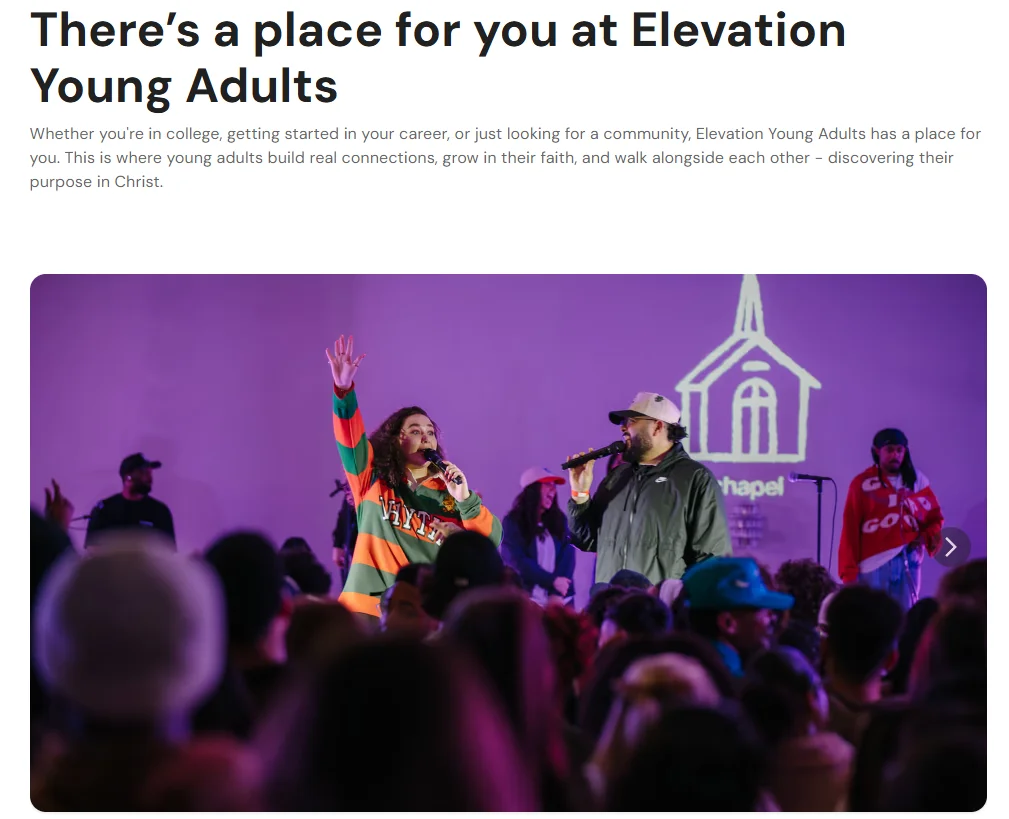
These are just some examples of what you should do: figure out your audience and how to make your church appealing to them, and then use your website and other media to show that.
3. Explore the core digital marketing channels for churches
Relying on word-of-mouth and people stumbling across your church is not a recipe for success. What you need is a well-built digital marketing network, including:
- A well-built website.
- Social media channels.
- Email marketing (for newsletters, invitations, reminders).
- Digital ads.
The website is often the central hub of a church’s digital presence – that’s where newcomers find essential information about you, and that’s where all the other media channels lead to.
Make the site visually appealing, but also easy to navigate: a homepage with images, useful links (quick onboarding, “find a location”, values), and a clear menu at the top. Many churches also use a visible “Plan your visit” button on the homepage to help newcomers take the next step.
Your website should also be optimized for local discovery. Include your church’s location, service times, contact information, and location pages throughout the site. This helps both visitors and search engines understand where your church operates and improves your chances of appearing in local searches.
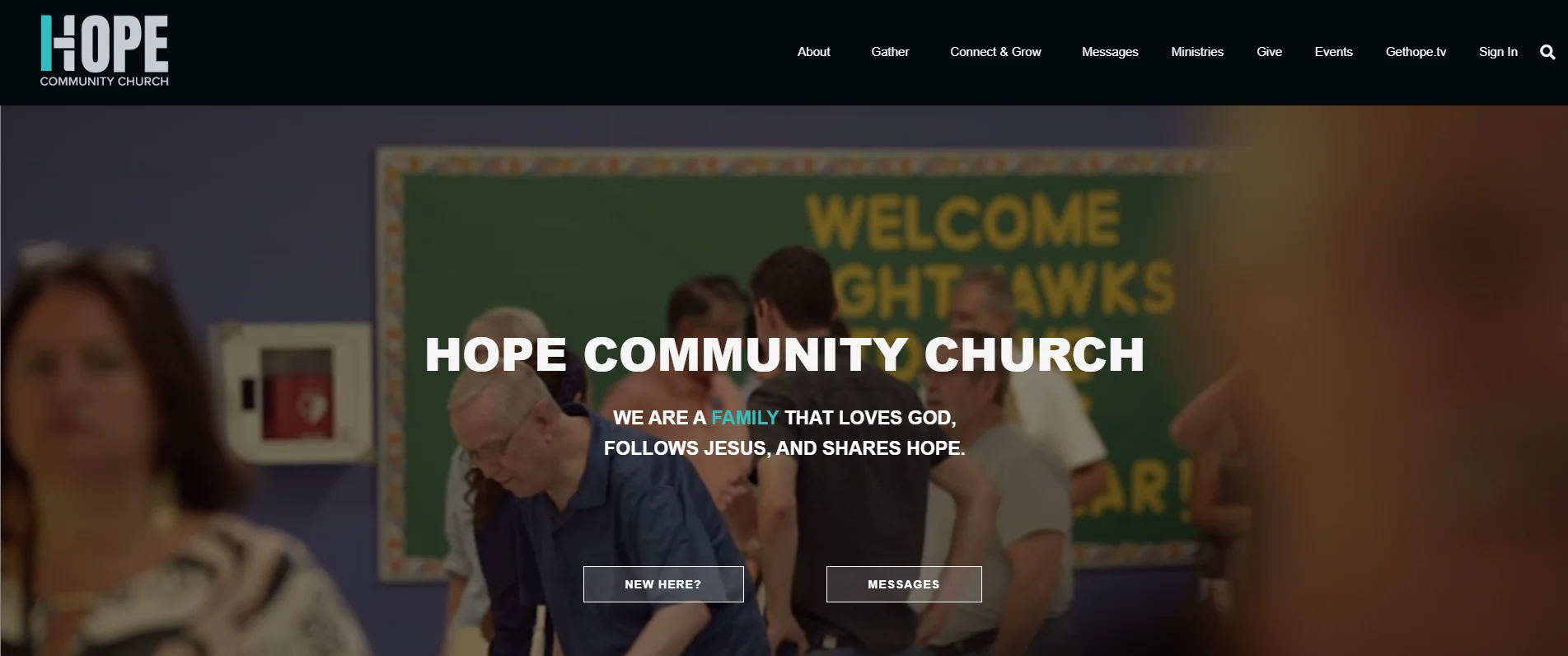
Among the essential sections, there is an “about” page, free content (sermons, videos and more), information about community work, ways to connect with a group near you, events, and locations. A mix of your own words and the religious foundations of what you preach is a good formula, and a very popular pattern that churches follow on their pages.
Your “about” page should also bring messages from your church’s leaders and from members of the community, plus an easy way to contact. Include clear CTA buttons throughout the website, such as “Plan your visit”, “Watch online”, “Join a group”, or “Request prayer”.

Important website best practices include:
- Consistent church name, address, and phone number across your website and online listings.
- Clear service times and location information.
- Mobile-friendly navigation.
- Easy-to-find contact and “Plan your visit” pages.
Social media channels (Instagram, TikTok, Facebook, WhatsApp communities) can boost the sense of community with:
- Event calendars.
- Interactive activities such as prayer groups.
- Community videos and social proof.
- Viral posts and messages.
- Local charity groups or discussion groups for different segments (on WhatsApp or other messaging apps).
There are plenty of possibilities for email marketing as well:
- Welcome emails
- Seasonal campaigns
- Free content (newsletters)
- Premium content (paid newsletters, TV channels, videos, and more)
- Marketing automation for donations or purchases (when someone subscribes to a paid service)
Finally, well-targeted digital ad campaigns can help drive traffic up.
Think of your core beliefs, target audience, and how to address the public and generate more interest. Ideally, you want to have ads on websites, social media, and channels that converge with your target audience for better results.
4. Develop a content strategy
A huge part of generating interest in your church comes from content. Common and successful trends involve:
- Daily sermons (and access to past sermons).
- Testimonials from members.
- Community stories.
- Diverse video content – snippets from ceremonies, charity actions, events, and more.
- Positive messaging from your leaders.
- Newsletters (email marketing, Substack subscriptions for premium content).
Whatever route you take, make most of your content easily available and avoid paywalls. Here is a good example of a sermon page:
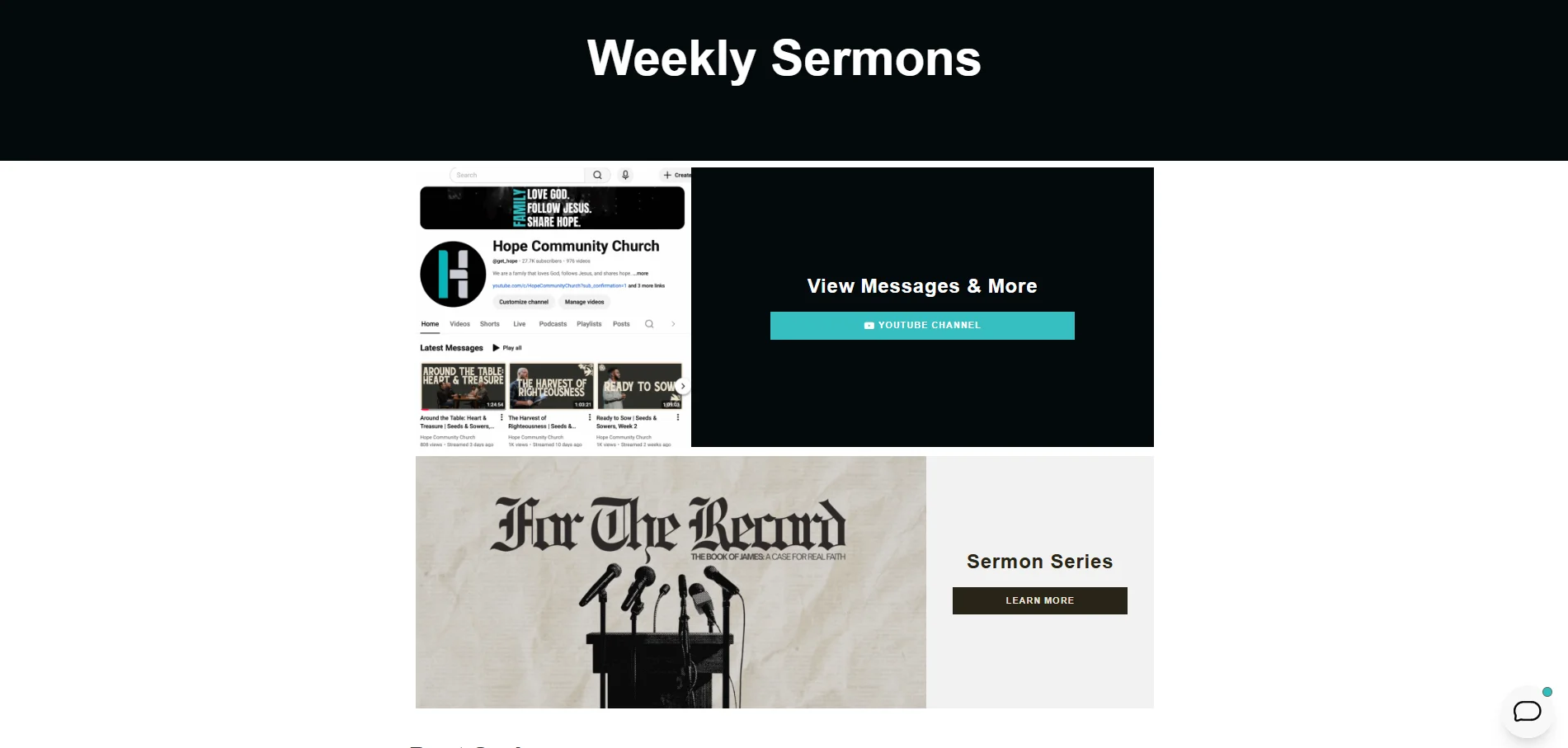
By delivering good quality content and connecting with your audience, you are more likely to reach new members – especially if you couple that with other conversion tactics, such as well-placed CTA buttons.
5. Use engagement tactics

While generating interest will bring more people, engagement is what will keep them in your church.
Prayer requests are a very good way to get started. Churches often use simple website forms or Instagram/Facebook posts to encourage members and visitors to share prayer requests publicly or privately.
Effective church engagement tactics include:
- Prayer request posts and forms.
- Live-streamed services.
- Q&A sessions for newcomers.
- Community events and discussion groups.
Another common tactic is to live-stream your services for free. Not everybody can drive somewhere and attend a service. Doing it from the comfort of their homes is a great option – especially for curious website visitors.
Finally, live and in-person events offer an opportunity for people to gather. Your church can encourage the introduction of newcomers by asking current members to bring a person from outside to such events, for example.
6. Improve your conversion
After raising awareness, generating interest and desire, you want to make sure that people actually become members. The most effective ways of doing that, given you have followed the strategies here, are:
- Well-placed “Plan your visit” CTA buttons (about us section, content section, social media main page).
- Join a group or “Gather” CTA buttons.
- Event invitations via email marketing.
- Newsletters with CTAs to schedule visits.
- Substack subscriptions.
- Other service subscriptions – some churches have an online TV channel or offer paid content, such as online sermons, and live-streams, among others.
- “Find a location” search functionality on the main page or in strategic pages, such as the “About us” section.
Follow-up emails are especially important after someone subscribes to your newsletter, downloads content, fills out a prayer request, or schedules a visit. Automated welcome emails and reminders help maintain engagement and encourage return visits.
7. Build a community
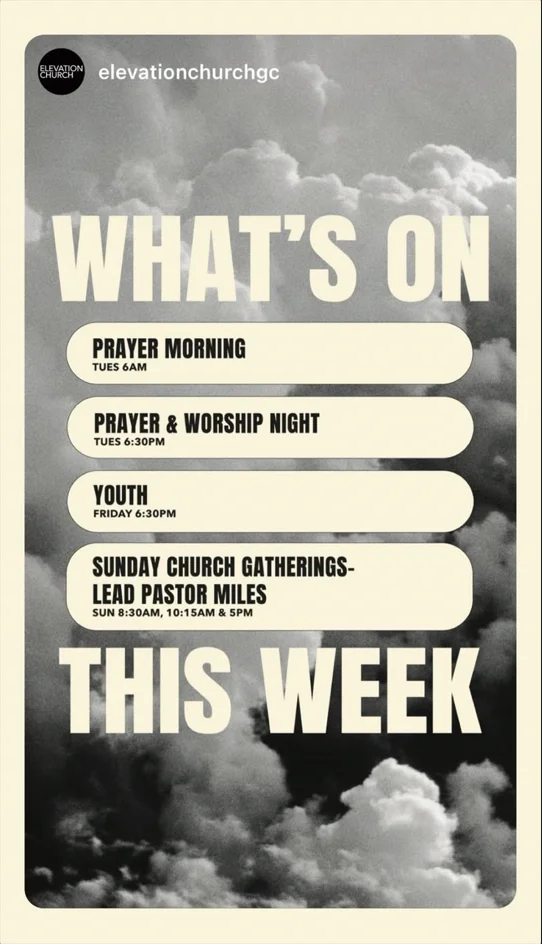
Data from a study by the Pew Research Center back in 2018 shows that being part of a community of faith is very important to 57% of respondents. Another 2025 study by Barna points out that young adults attend church services 1.9 weekends per month – more than every other generation. In the age of social media, people want to be closer to God, but even more so to each other.
Here are some ideas on how to build a community:
- Host regular events, especially demographic-centered or thematic ones (services included).
- Create discussion groups using messaging apps (these could be thematic or demographic-centered as well).
- Demonstrate the impact of your church in the community.
The last one is extremely important, as it will help your faithful and visitors see the point behind it all.
A church without an active community will wither. Thriving communities are more likely to attract new members, as they provide a greater sense of stability and security.
Church marketing best practices
Set clear goals
They should be:
- Specific: understand what you want, and why you want it.
- Measurable: it can’t be something intangible.
- Achievable: setting yourself up for success with something realistic.
- Relevant: set goals that will actually make a difference.
- Time-bound: set a realistic deadline and create a sense of urgency.
Let’s say you want to improve your online presence. That’s too broad. How about increasing your current website traffic by 30% within a year? It is tangible, achievable, and it has a shorter but manageable deadline.
Other examples of SMART goals: create at least five active groups within a month or two, grow your social media followers by 20% each four months, and achieve a minimum of X viewers per live-streaming (depending on your total number of members, you can set a percentage) by a set date.
Find a marketing automation tool
Omnichannel marketing is the way to go, and you need a good tool to help you manage your contact base and members.
Imagine having to send event reminders, RSVP confirmations, or welcome emails manually – you don’t have to. That’s what marketing automation tools are for, and they can help you build relationships through automated responses, campaigns, and chatbots, while also providing you with analytics to improve your decision-making.

Automation will save you time and help your team focus on higher-value community work instead. You can check our list of the best 25 marketing tools for small businesses and find one that suits your church.
Optimize for mobile

It’s no surprise that most content is viewed on mobile devices, four times more than on desktop, so your content should be optimized with that in mind. Here are a few tips on how to do so:
- A dedicated mobile version of your website.
- Videos with an adequate screen aspect ratio (16:9) for cell phones.
- Concise email subject lines (most mobile devices show 30-40 characters before the subject line gets cut).
- Easily scrollable email messages (you want downscrolling, not sidescrolling).
- Adequate font size for mobile devices.
However, do not neglect desktop users. According to Semrush’s Mobile Usage v Desktop 2025 Trends research, desktop users browse an average of four pages per visit – double the amount of mobile users – and spend an average of nearly 17 minutes on a page, which is more than mobile. Your church will probably be discovered on mobile and explored on a desktop.
Understand your KPIs and adapt your strategies
Monitoring the health of your church is essential. Here are some Key Performance Indicators (KPIs) any starting church should pay attention to:
- Service attendance (in-person and online)
- Volunteer ratio and small group participants (to boost the sense of community)
- New member 30 and 60-day return rates (are newcomers coming back, or did they quit after their first visit?)
- Event attendance
- Donation per member rates (tithing)
- First-timer attendance ratio per service (according to Holy Insights, the resource for church analytics, around 5% is healthy, and anything above that is exceptional)
At first, focus on average weekend attendance, donation ratio, and first-timer attendance/return ratio for starters. As your church grows, you will have to take care of the next generation ratio and other metrics, such as a wider online presence. Growth is important, but you have to be able to keep things running smoothly before taking extra big steps.
FAQ about church digital marketing
What are the best platforms for church marketing?
For social media, Instagram and Facebook are the most popular choices, as most of your demographic will be there. Think of your website as a central hub, though. Your social media and ads should point there.
How much should a church spend on ads?
The answer depends on what kind of ads (paid promotions on social media, TV/radio/digital ads) and the expected reach. Around 10-15% of your total revenue (or even less, depending on the size of your church) is a responsible number for sustainable growth.
How to attract new visitors online?
Go for a mix of the tactics we brought here. To summarize it all:
- Offer good quality content for free via social media pages.
- Use digital ads and your social media pages to attract new visitors to your website.
- Take care of both your website SEO and local SEO. Your church should appear in searches like “church near me” or “churches in [city]”. Keeping your website updated and optimizing your Google Business Profile can help improve visibility.
What content works best for churches?
Inspiring storytelling, sermons, prayer requests, Q&A sessions, charity drives, and short video clips of longer sermons are among the best-performing content online.
How to measure success?
There are many relevant KPIs, but if you are just getting started, focus on average weekend attendance, donations, number of first-timers, and first-timer retention. As your church grows, things such as the number of participants in small groups, bigger event attendances, measurable community impact, and the number of young adult attendees become more important.
 New and noteworthy on our blog
