


Key takeaways
- Church marketing is about communicating what a church offers and how people can join, not about selling things.
- Churches need intentional marketing efforts due to declining regular attendance across faiths.
- Online presence is crucial, with over 80% of people visiting a church's website before attending in person.
- Marketing strategies include reaching new people through online searches and staying in touch with existing members.
Reaching people today looks different from what it did even a few years ago. Churches need simple, practical ways to stay visible and connected with their communities.
In this article, we’ll cover what church marketing strategies are, how to implement them mindfully, how to build a basic marketing plan, as well as attracting (and keeping!) new audiences.
What is church marketing (and why it’s not what it sounds like)
Church marketing is about how a church communicates what it is, what it offers, and how people can join.
In general, the main purpose of church marketing is to help people find your church and understand what it offers. It’s not about selling things, but rather about communicating and inviting people.
Almost every church now markets itself through the internet, ads, or even word of mouth. However, it’s important to do it intentionally.
Here’s an example of a newsletter from Elevation Church:

Common concerns and why they’re valid
Many churches feel uncomfortable with the idea of marketing, and that’s totally normal and understandable.
Many are concerned that marketing feels inauthentic, and they’re afraid their church will turn into a brand. Marketing also has strong associations with business and sales, which may lead to concerns about “selling faith”.
Other common anxieties include not having the time or the resources for marketing, and believing that growth should happen naturally. These concerns don’t mean church marketing itself is wrong, but that it needs to be done simply and honestly.
Why church marketing matters
People don’t just show up at churches anymore automatically. According to Gallup, nearly all faiths are reporting a decline in regular attendance. This means that churches now need to be intentional about visibility. This doesn’t mean that you have to have a complex strategy in place, but you should at least have some online presence.
According to multiple sources online, including The Lead Pastor, more than 80% of people visit a church’s website before deciding to attend in person. So, don’t limit yourself! Here are some practical ways churches can use marketing.
Reaching new people
As we already established, most people won’t just stumble into your church, but the ubiquity of the internet means you can reach new audiences online very easily.
What this means in practice is showing up in local online searches (such as when people search “church near me”), having clear and up-to-date info, and making it easy to understand what your church is all about.
For example, imagine if there are two churches in your area. One has an easy-to-understand website and information and the other one doesn’t. You can guess which one a potential visitor is more likely to attend.
Staying in touch with existing members
Communication is also important when you’re trying to stay in touch with your existing members; it’s not all about finding new ones. If your communication is inconsistent, people might miss updates. And you can’t just rely on in-person announcements because people may miss services or forget what you said.
Staying in touch may include things like events and schedule changes, volunteer opportunities, community notes and so on.
How to build a basic church marketing plan
Here’s how to get started with marketing your church.
1. Clarify what makes your church distinct
Before you do anything, focus on what your church actually is. This can help you shape how you communicate and who you attract. Different churches serve different communities and clarity makes communication more focused and personal.
For example, is your church more focused on small, tight-knit communities or do you have a large congregation? Are your services more traditional or more contemporary? Are you more family-oriented or are you trying to attract single young people?
No need for advanced marketing expertise, but having a clear understanding will help you set the right goals.
2. Set clear goals
You don’t need many goals; a couple will suffice. Without any goals at all, your marketing may feel random and perfunctory. Don’t overexert yourself by trying to do everything at once, because then nothing will work well.
In general, setting specific goals is better than vague ones. Here are a few examples of simple marketing goals for churches: attracting more first-time visitors, increasing attendance, improving communication with existing members, recruiting volunteers, and increasing donations.
Pick your goal and structure your actions around it.
3. Understand your audience
Most churches have a mix of groups: existing members, people exploring faith, families with children, younger adults, older community members. Different groups need different communication — what works for existing members might not work for new attendees.
Here are a few examples of different audience segments and their needs:
- New visitors need clear info on what to expect.
- Families need info about children’s activities.
- Older members may rely on simple communication.
- Young adults are likely to use social media.
You don’t need to cater to every single category. Pick two or three that are a priority to you at this time, and tailor your comms slightly for each. The better you understand each group, the more relevant your communication will be.
4. Create a simple seasonal plan
Churches already run on natural cycles: weekly services, major holidays, and so on, which gives you an advantage when it comes to planning things. Scheduling around these cycles will make marketing easier for you and more consistent for the audience.
Broadly speaking, there are two categories here: regular updates (for example, weekly service reminders) and big seasonal campaigns (think Christmas, Easter, back-to-school and so on). We’ll include an example of a campaign later on in this article.
Again, it doesn’t have to be super complicated, and planning a few months in advance is more than enough. Remember, a simple calendar is key to less stress!
5. Decide between free and paid marketing
Most churches can cover the basics without spending any money. Much of the marketing can be done for free, including emails and newsletters, social media, events, and getting started with Google.
With marketing, consistency matters more than budget, and just because something is free, it doesn’t mean it’s going to be ineffective. Another thing to bear in mind is that churches often have access to volunteers.

Paid only works after the basics are in place and your message is working organically. Here are a few options to consider:
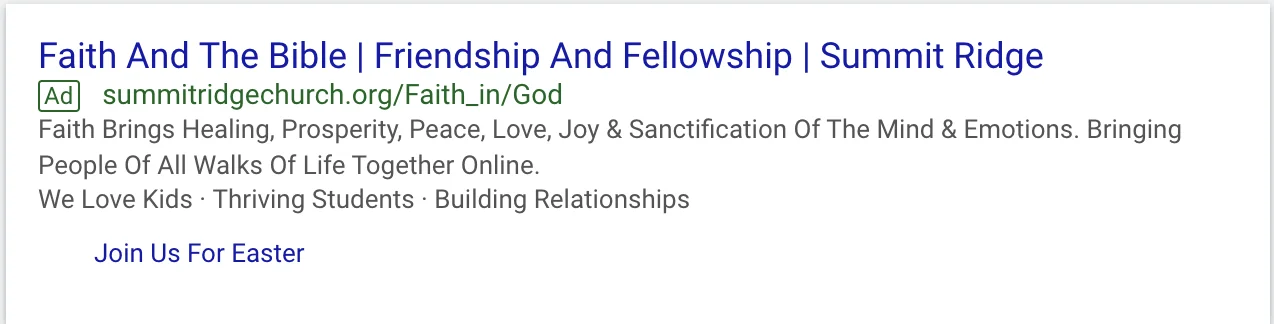
- Google Ads: look into Google Ads grants (Google’s program for non-profits) to promote your church in local search results, especially for events and services.
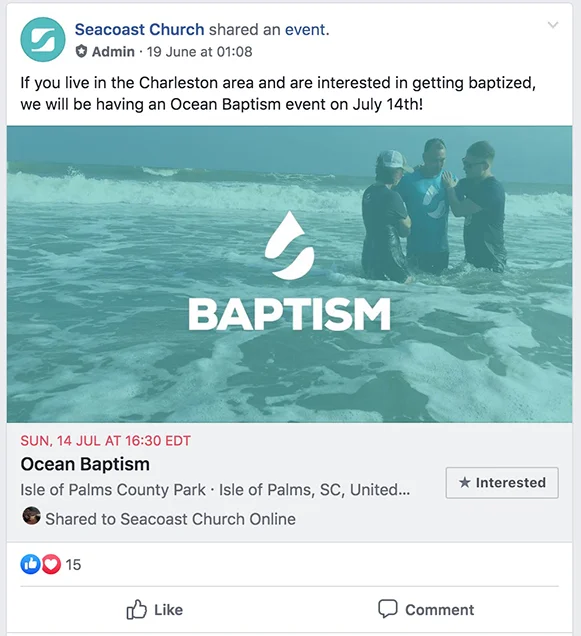
- Social ads (Facebook/Instagram): useful for promoting specific events or reaching people in your area with simple, targeted campaigns.
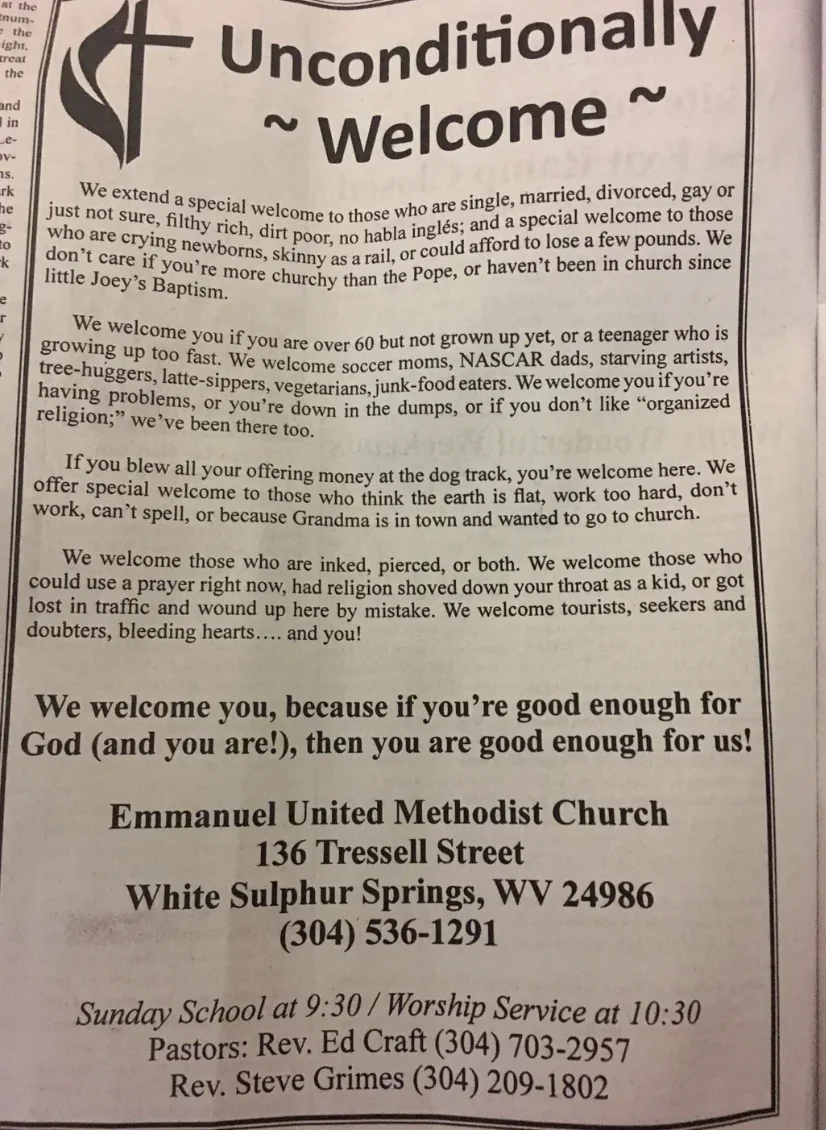
- Local print ads (newspapers, flyers, signs): still effective for reaching nearby communities and reinforcing your presence offline.
Core marketing channels every church could use
This section will cover the most important channels each church can use. All of them are easy to get started with.
TL;DR
If you’re just getting started, focus on the essentials first.
Your website and map listings help new visitors find you and get the information they need, while email is best for staying in touch with people who already know your church.
Social media can help with visibility, but it works best as a supporting channel rather than the main one.
Website and search
We’ve already seen stats proving that having a website is absolutely essential for any church in this day and age. It’s often the first place people look!
Here’s an example of how churches use websites to share information online:
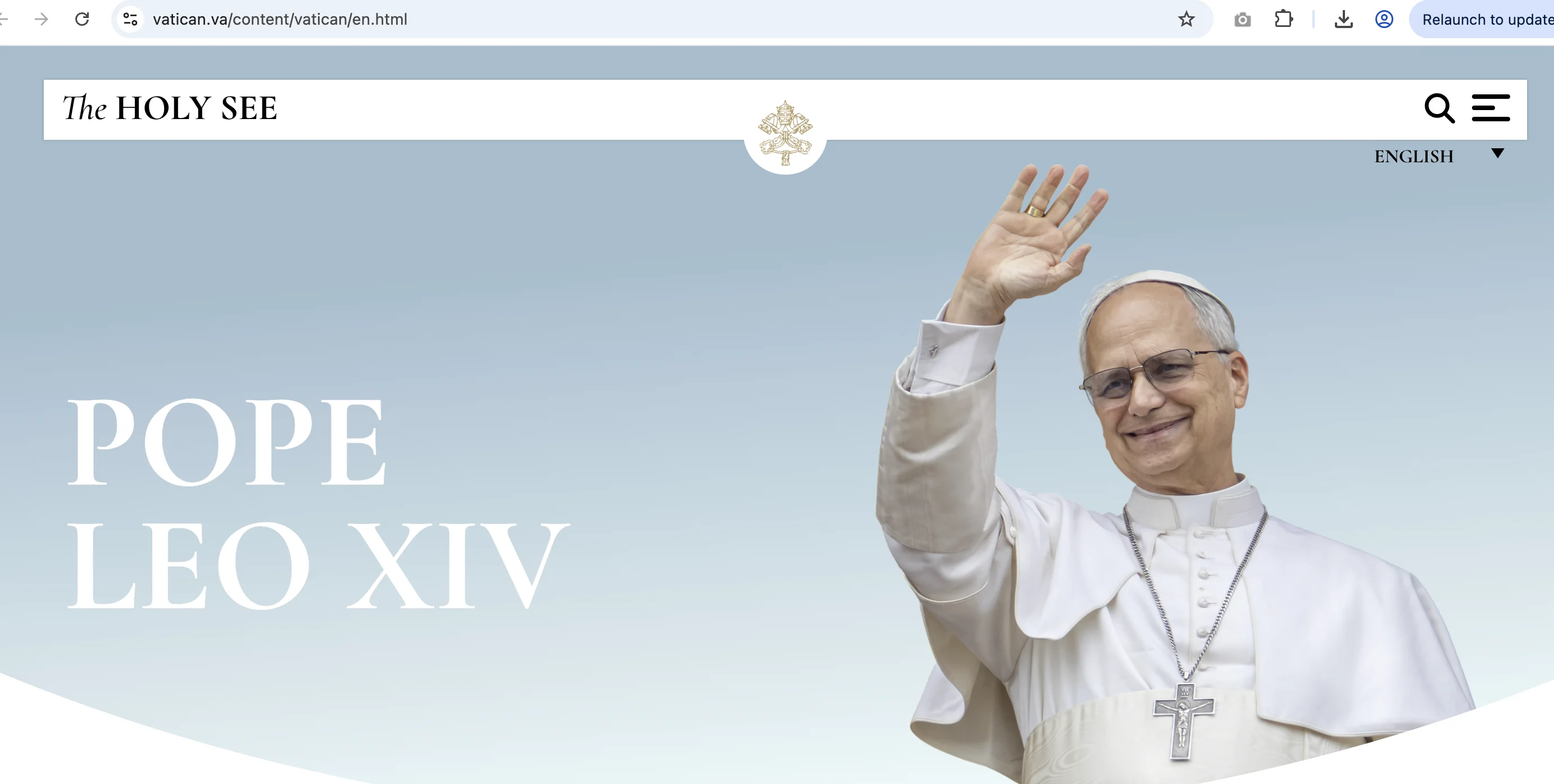
Maintaining your website is as important as launching it. If it’s unclear and outdated, new potential members might not come.
So, your website should include service times, location and maps, basic info about your church, and what to expect. Connect your website to your Google Business Profile and make sure your contact details are consistent across platforms.
The anxiety level of first time visitors can be overwhelming. They feel as though they will look foolish, or get lost on the campus when they attempt to locate your church. Grab your smartphone and take a raw, unedited, 60 second walk-through of your facility. Take pictures of the parking lot. Take pictures of the entrance to your facility. Take pictures of what people are actually wearing. Place these images/video directly onto your home page.
Another thing we’d like to mention is SEO, which stands for search engine optimization. It’s what helps people find the church when they search online. In your page titles, website text, headings etc., use phrases like “church in [city]” or “[denomination] church near me”.
Social media for visibility and engagement
Social media, like Instagram, Facebook, or even TikTok, helps people notice the church and stay aware of what’s happening. It’s good for sharing updates, showing what the church is like, and staying visible.
Here are a few ideas when it comes to what to share: event announcements, reminders, sermon highlights, photos from community events, simple updates.
We already covered the importance of understanding your audience, and social media plays a big part in thatpart of that. Different channels are better suited to different audiences and different purposes.
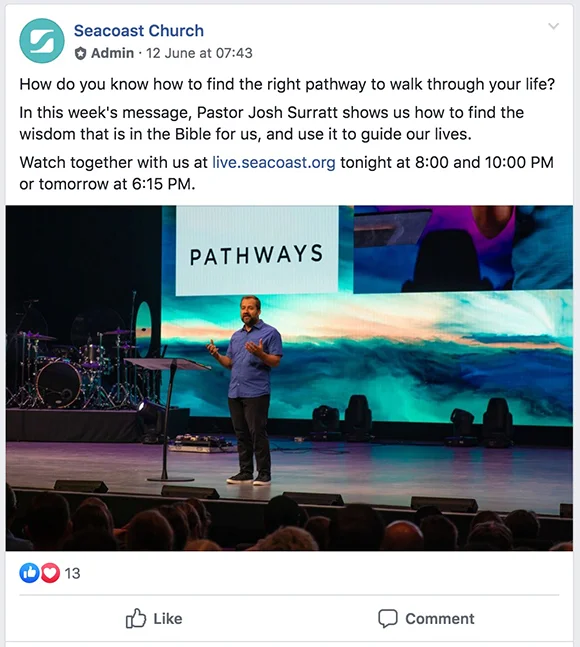
- Facebook: older audiences, local community, events.
Useful for sharing updates, creating event pages, and keeping members informed about what’s happening week to week.
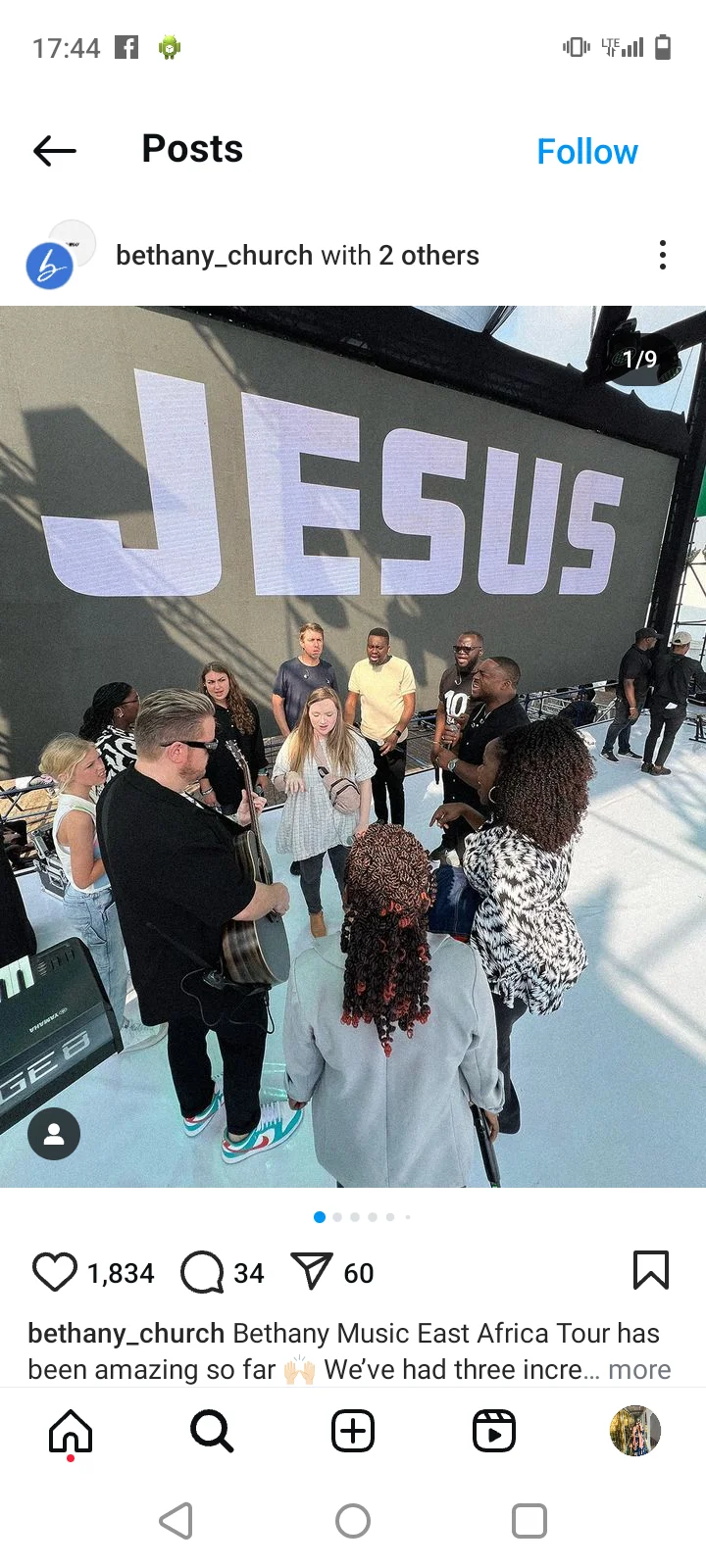
- Instagram: visuals, younger audiences.
Good for sharing photos, short videos, and quick updates that show the atmosphere and community life of your church
- YouTube: longer videos, livestreams.
Ideal for sharing full sermons, recordings of services, and making content available to people who can’t attend in person.
Authentic, short-form video has been found to be the most effective way to communicate a message in 2026. A church’s “raw,” unpolished, and mostly shot on a smartphone will allow new visitors to see the heart of your church through videos that are created by the members themselves.
You don’t need to be present on every single social media platform. If you understand your audience well, you’ll know which 1-2 platforms are the best fit. And don’t forget! Social media shouldn’t be your only channel; it works best when combined with other approaches.
Email and direct communication
Email is one of the most reliable ways to stay in touch with people directly. Unlike social media, it isn’t affected by algorithms or timing, so your messages are more likely to reach people when you send them, making it a dependable channel for updates and reminders.
It’s especially useful for weekly updates, event reminders, important announcements, and follow-ups. Many churches also use newsletters as a simple way to keep everything in one place.
Check out the example below:
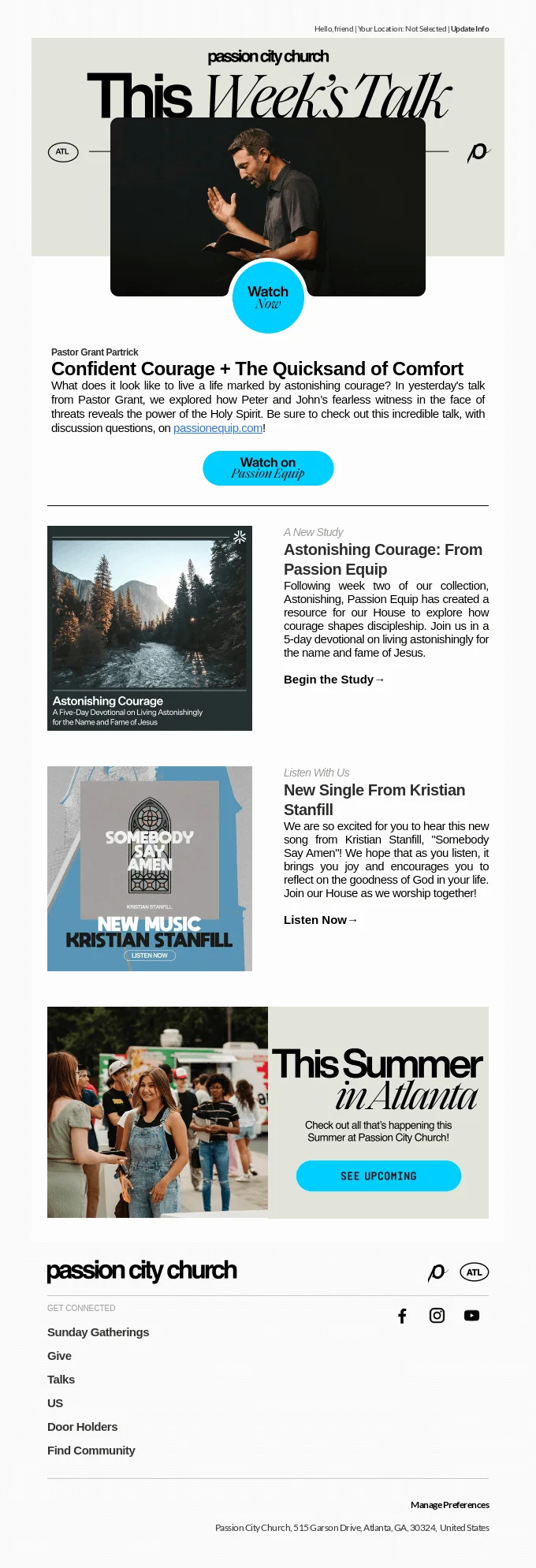
Another great reason to use email is that people might miss social media announcements or forget information they received in person. Keep your email comms simple and regular, try not to overwhelm your audience.
You don’t need to send out emails by hand; there are plenty of email service providers that can handle all the behind-the-scenes stuff for you. Many offer free plans or free trials, as well as discounts for non-profits, which makes them perfect for church use.
Local presence (Google Maps and directories)
Showing up on online maps is as important as having a website, especially for searches like “church near me”.
The most widely used map platforms include Google Maps and Apple Maps. People often choose where to go based on location, reviews, and basic information like opening hours and photos.
Here’s what it looks like in practice:
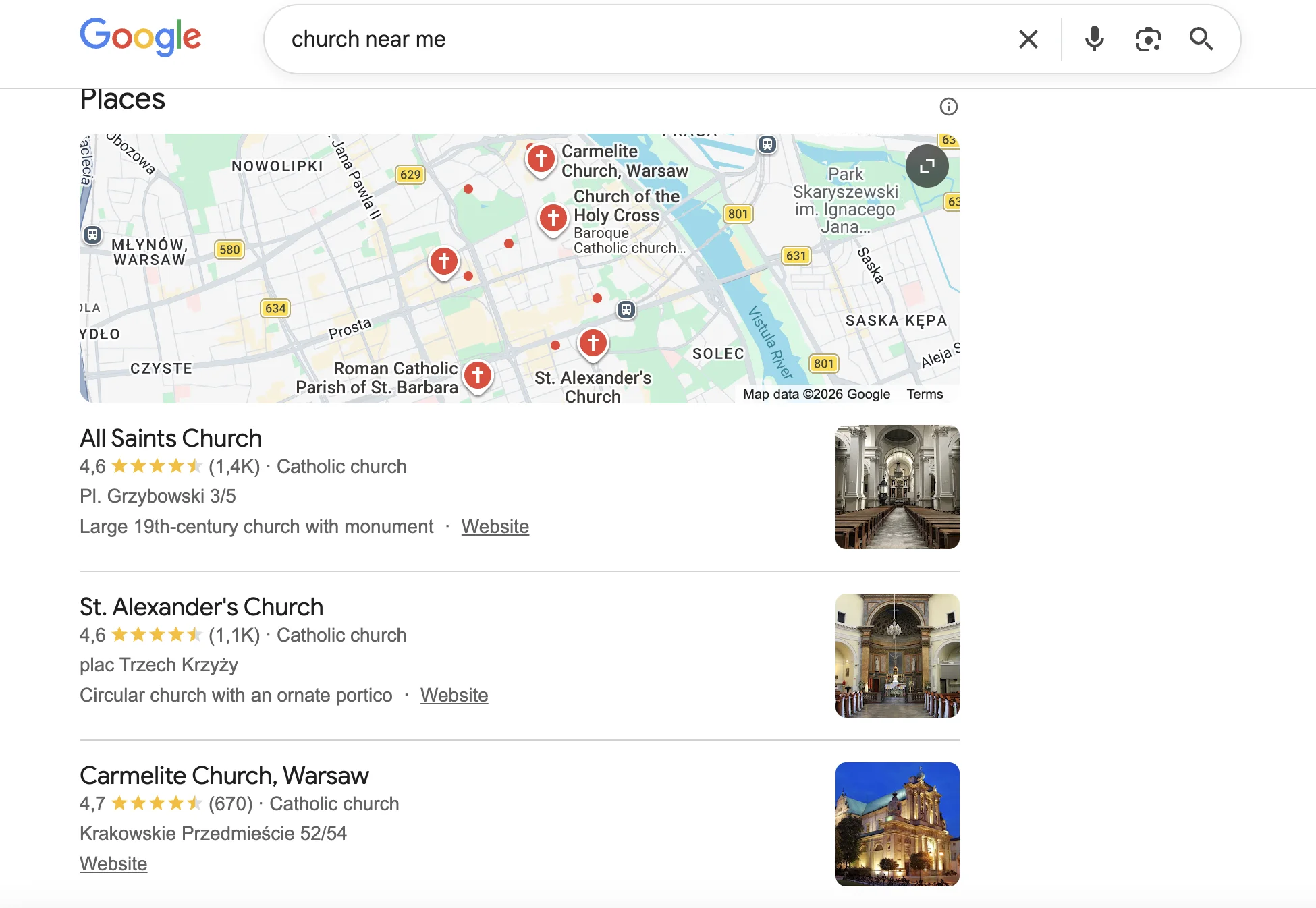
Information must be accurate and consistent across channels. Positive reviews increase trust, and even a small number helps. Consider asking your existing regular members to leave some reviews.
Local and offline channels still matter
So, what about these 20% who don’t check websites or use Google when deciding to join a new church? They matter, too. Local, offline visibility is still very important.
Here are a few ideas for what works: signs outside the church, posters and flyers in the area, community boards, local newspapers, and word of mouth.
Your offline approach doesn’t have to compete with your online marketing efforts. If anything, they can complement and reinforce each other.
Promoting church events and outreach
Even great events need clear communication. Simple, consistent promotion makes the difference
Start with a clear goal for each event
Not every event has the same purpose, and promotion works best when the goal is clear. Different messaging and channels are needed for different goals. Without this, your marketing can become generic.
Examples of goals could include attracting new members during big church events like Easter, raising funds, and so on. For example, for a fundraiser, you should focus on cause and impact, like what you’re supporting and why it matters.
Simple multi-channel promotion plan
Sometimes, people need to see the same message more than once. Relying on several channels is a good idea.
For example, include information about the event on your website, send emails to invite your congregation, as well as to remind them of the event, have announcements on your social media, and also mention the event during services. Don’t forget about offline channels too!
People miss things all the time, so repetition across channels is normal.
Example: Christmas campaign
For example, let’s imagine you’re running a Christmas campaign, and your goal is to attract first-time visitors and to increase attendance for the Christmas service.
Here’s a simple promotion plan you can steal:
- 2-3 weeks before: create an event page on your website, including service time, location, and what to expect; announce the event during regular services. Send an initial email and post about the event on social media.
- 1 week before: share a reminder on social media, send a reminder email, update posters and other materials if applicable.
- 1-2 days before: share a final reminder on socials, highlight key info to prevent confusion on the day.
Don’t forget to encourage members to invite their friends and family, as well as to and share photos from previous years. All messaging should be welcoming and clear (like “All are welcome”).
Turning sermons and events into content
Churches already create content every week with weekly sermons. This means you don’t need to start from scratch and instead, you can just reuse what you have. Sermons and events are a fantastic content source, and turning them into smaller pieces of content saves time and keeps communication consistent.
Here’s an example. One sermon can be turned into a newsletter. A quote or a key idea can be shared on social media. If you recorded it, you could share a video clip on YouTube or TikTok. You can also turn it into a blog post or a simple recap. This strategy reduces workload and ensures consistency.
Turning first-time visitors into returning members
Attracting new visitors is important, but what happens next matters just as much. Turning first-time visitors into returning attendees is where real growth happens.
Make the first visit simple and welcoming
The first visit is often the deciding moment. If it’s confusing or uncomfortable, first-time visitors might not come back. This isn’t necessarily about marketing per se, but it’s important to make note of this regardless.
When it comes to that first visit, details make a big difference. In practice, it means things like clear signage (entrance, parking etc.), someone available to greet visitors, a clear structure, as well as easy access to basic info. It also helps to set expectations in advance — for example, on your website (what to expect, how long the service lasts, what the atmosphere is like).
Collect contact details respectfully
Staying in touch starts with having a way to contact people. Keep the process simple: visitor cards, sign-up forms, QR codes for quick signup. The main details to ask for are a name and email address, with a phone number as an optional extra.
Always make it clear what people are signing up for and give them a choice in how they’re contacted. Don’t forget about data protection laws like GDPR in the EU and CAN-SPAM in the United States.
Follow up with a simple sequence
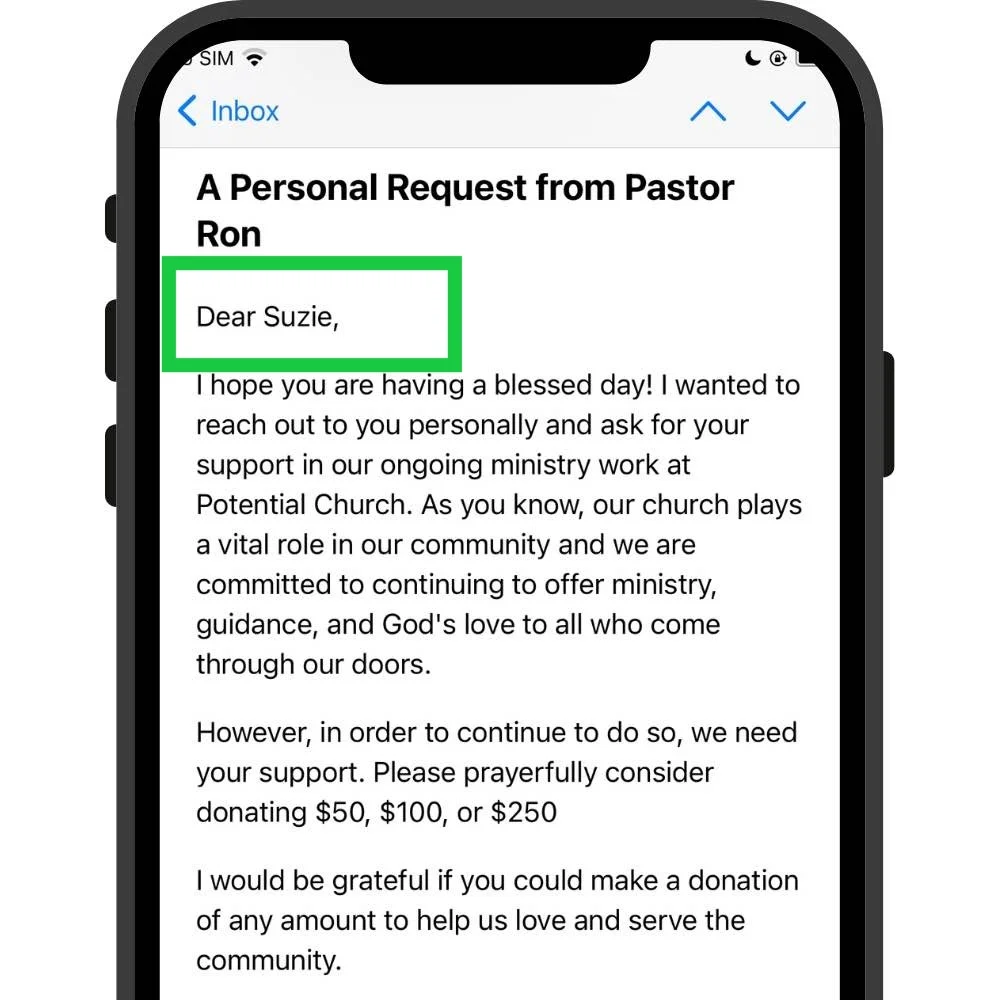
What happens after the visit is as important as the promotion itself. Many visitors don’t return simply because there’s no follow-up. Here are a few simple ideas: a thank-you message for visiting, helpful info on future events and how to get involved, an invitation to return.
Keep it personal and simple — it’s easy with email marketing. Even small touches, like using someone’s name or tailoring messages based on their interests, can make communication feel more relevant and welcoming.
Nothing a church can design for welcome will help to retain people better than a personal text or handwritten note sent within a day of their first visit. Once a person gets through the door, it’s just the first step. It is when they feel you remember them the following Sunday that they will return.
Lastly, don’t overwhelm the recipient with too many messages.
How to measure results
Once you start putting these ideas into practice, it helps to understand what’s actually working.
Track a few key metrics
You don’t need complex analytics, but tracking a few simple things can show you what’s working. You should focus on simple, visible outcomes.
If you don’t know how to where to get started with this, here are a few ideas for metrics:
- Number of first-time visitors
- Event attendance
- Email engagement (like opens or clicks, you can track this via your ESP)
- Website visits (basic level)
- Volunteer sign-ups
Trends matter more than exact numbers, and even a small improvement over time is a success.
Review campaigns and events, and improve gradually
Use each event as an opportunity to learn. After it’s over, take a few minutes to review what worked and what didn’t — attendance vs expectations, which channels brought people in, what messages got attention, and any points of confusion.
Don’t repeat the same approach without reflecting.
Managing marketing with limited resources
Even with limited time and resources, a simple and structured approach can go a long way.
Use volunteers effectively
Many churches rely on volunteers.
Match tasks to people’s skills and availability, and don’t overwhelm them with vague responsibilities. Avoid leaving everything to one person, such as the pastor. Splitting responsibilities often works better, so two people handling a few well-defined tasks is a practical approach.
For example, one person can manage the newsletter and basic website updates, while another handles social media and photos. Students or younger members often have experience with social media, content, or basic marketing tools and can support simple tasks.
Create simple systems and templates
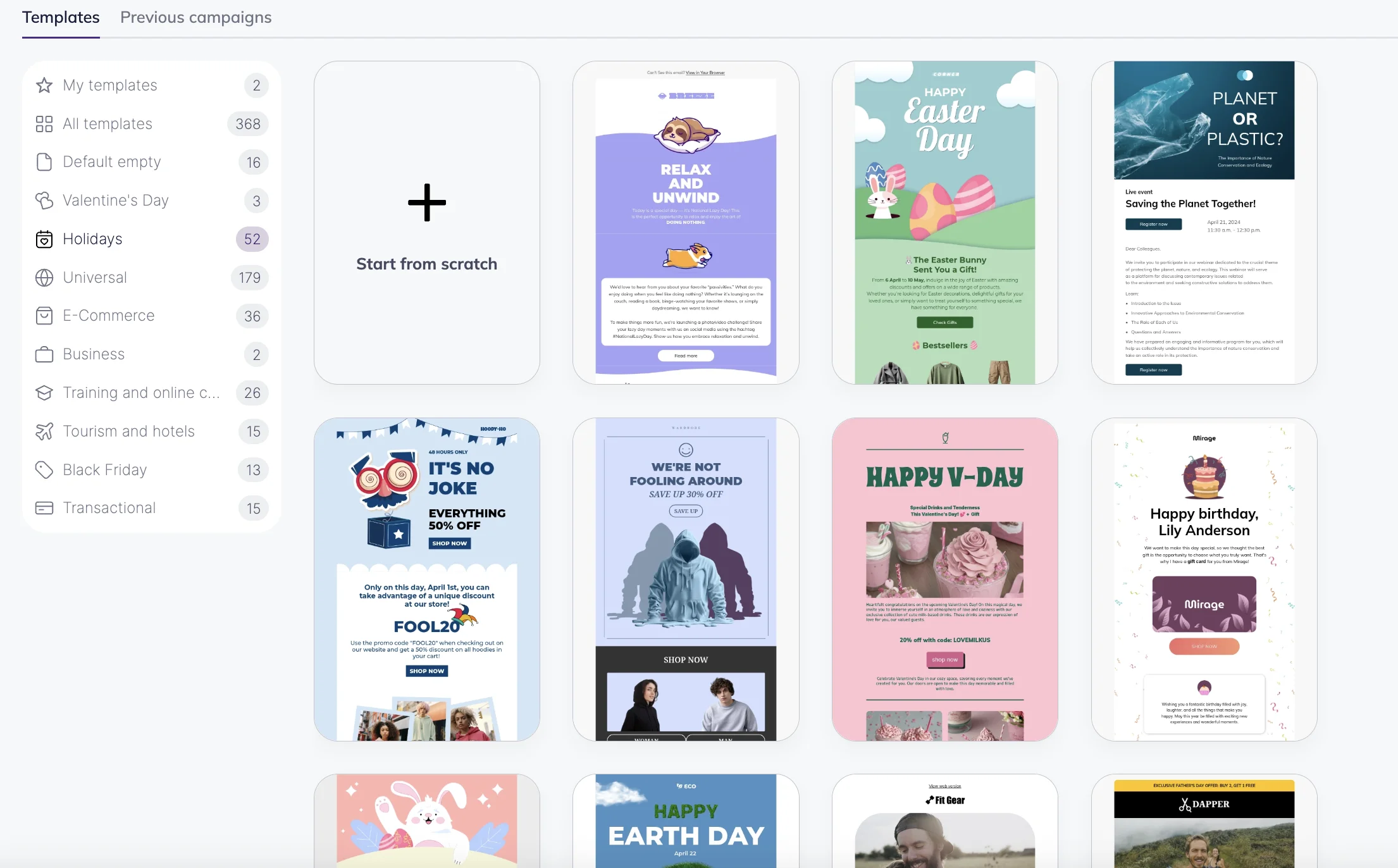
Simple, repeatable systems save time and reduce stress. Much of church communication is repetitive, so you can reuse templates for newsletters or weekly updates, especially if you’re using email.
Many modern ESPs offer easy-to-use templates, so you don’t need any technical knowledge. For example, this is what Selzy’s email template library looks like. You can also make your own for constant use.
Focus on consistency
Consistency matters more than doing things perfectly.
Regular communication builds familiarity and trust, and people are more likely to engage when they hear from you consistently. This could mean sending newsletters on a regular schedule and posting simple updates from time to time.
FAQ about church marketing strategies
Is marketing appropriate for churches?
Certainly! In fact, marketing is necessary for churches. However, it should be approached as communication and outreach, rather than promotion or “selling”.
How much should a church spend on marketing?
There is no fixed number. Many churches work with very limited budgets and focus on low-cost or free solutions like social media, email, and local listings. If you do have a budget, start small and prioritise the basics first.
Which platforms work best for churches?
This really depends on your audience. A few core platforms are essential, though: this includes your website and a Google Maps listing. In terms of social media, Facebook, Instagram, and YouTube can support visibility and engagement. Don’t try to focus on everything at once, though.
What are the best free marketing methods?
The good thing about church marketing is that much of it can be done for free. Start by setting up and maintaining a Google Business Profile. Other crucial methods include using social media consistently, sending email newsletters, sharing sermons online, and even asking your congregation to spread the word by inviting their friends and family.
How to measure success?
You don’t need state-of-the-art analytics. Start by focusing on a few simple metrics like website visits, newsletter engagement, event attendance, social media interaction, and the number of returning visitors. The goal isn’t just to reach, but whether more people are connecting with your church and staying engaged over time.
 New and noteworthy on our blog
