


Key takeaways
- Email cadence refers to how often and regularly emails are sent over time, considering factors like frequency, timing, and consistency.
- Finding the right email cadence is crucial to avoid subscriber fatigue, low engagement, high unsubscribe rates, and reduced brand trust.
- Studies suggest starting with 1-3 emails per month, monitoring engagement before increasing frequency, and considering weekly or twice-weekly emails for optimal performance.
- The ideal email cadence varies based on audience, industry, and content, with most businesses sending between 1-3 emails monthly.
Finding the right email cadence can be tricky, especially if you’re new to email marketing. There’s no single rule that works for everyone, and choosing the wrong frequency can hurt engagement.
In this article, we’ll examine what email cadence is, how to set it, and how to avoid the most common mistakes. We’ll also do a deep dive on marketing statistics to help you make the most informed decision possible.
What is email cadence?
Email cadence is how often you send emails and how regularly you do it over time.
It’s not just about the number of emails you send in a week or a month, but rather a pattern. For example, a weekly newsletter and a short onboarding series have different email cadences.
The term email cadence has several main components:
- Frequency (daily/weekly/monthly).
- Timing (like days of the week or spacing between emails).
- Consistency (predictable vs random).
At the same time, email cadence is not a one-off campaign or sending as many emails as possible. It’s also not the same for every business, group of subscribers, or audience.
Understanding email cadence helps marketers build a predictable sending system — one that makes it clear to subscribers what to expect. For marketers, it helps avoid sending too many emails — or too few — by finding a balance between staying visible and respecting your audience’s tolerance.
Why finding the right email cadence is important
Finding the right email cadence matters because sending too few emails isn’t effective, but sending too many causes problems as well. It’s because sending too few emails is not ideal, and neither is sending too many. Both can cause problems. Your general aim should not be “send more emails”, but get better results over time.
Here are the potential consequences of sending emails too often:
- Subscriber fatigue. If you send too many emails, people may start feeling overwhelmed and less likely to engage with them.
- Lower open and click rates over time, so people stop opening your emails at all. And if they’re not opening your emails, your click-through rate and click-to-open rate feel that too.
- Higher unsubscribe and spam rates. If your subscribers get way too many emails from you than they’d like to, they might mark them as spam or unsubscribe entirely. This hurts your sender reputation and your list health.
- Reduced campaign visibility. Even high-quality emails can be overlooked simply because subscribers are tired of seeing another email from you.
And here’s what can happen if you send emails too rarely:
- Lower brand recognition. People might forget that you and your brand existed at all.
- Lower engagement. Your emails might feel irrelevant, leading to fewer opens and clicks.
- Reduced brand trust. If your communication is inconsistent, it can make your brand feel less reliable or trustworthy.
- Higher unsubscribe likelihood. If you email so rarely that your audience doesn’t even remember signing up, they’re also likely to unsubscribe or mark you as a spammer.
Email cadence statistics and market insights
Key ideas:
- Start with 1–3 emails per month. This is the most common cadence across industries and a safe baseline if you’re unsure.
- Monitor engagement before increasing frequency. Track opens, clicks, and unsubscribe rates. If engagement stays stable, you can test sending more often.
- Weekly or twice-weekly emails perform best overall. Studies show these cadences balance strong opens and clicks with lower unsubscribe rates.
- Adjust based on context, not gut feeling. Promotional emails typically require more caution, while informational emails like newsletters are better tolerated at a steady weekly pace.
So, what is the ultimate email cadence? The TLDR is, it depends. There’s no universal answer here. And it depends on a lot of things, including your audience, your industry, your goals, your location, and your content.
That said, you don’t just need to rely on guesswork; there’s been plenty of research done on the topic of email cadence. Let’s have a look at some existing studies to give you a useful starting point.
According to a study by MailerLite, the vast majority of businesses send emails at least once a month. Overall, most businesses send between one and three emails monthly.
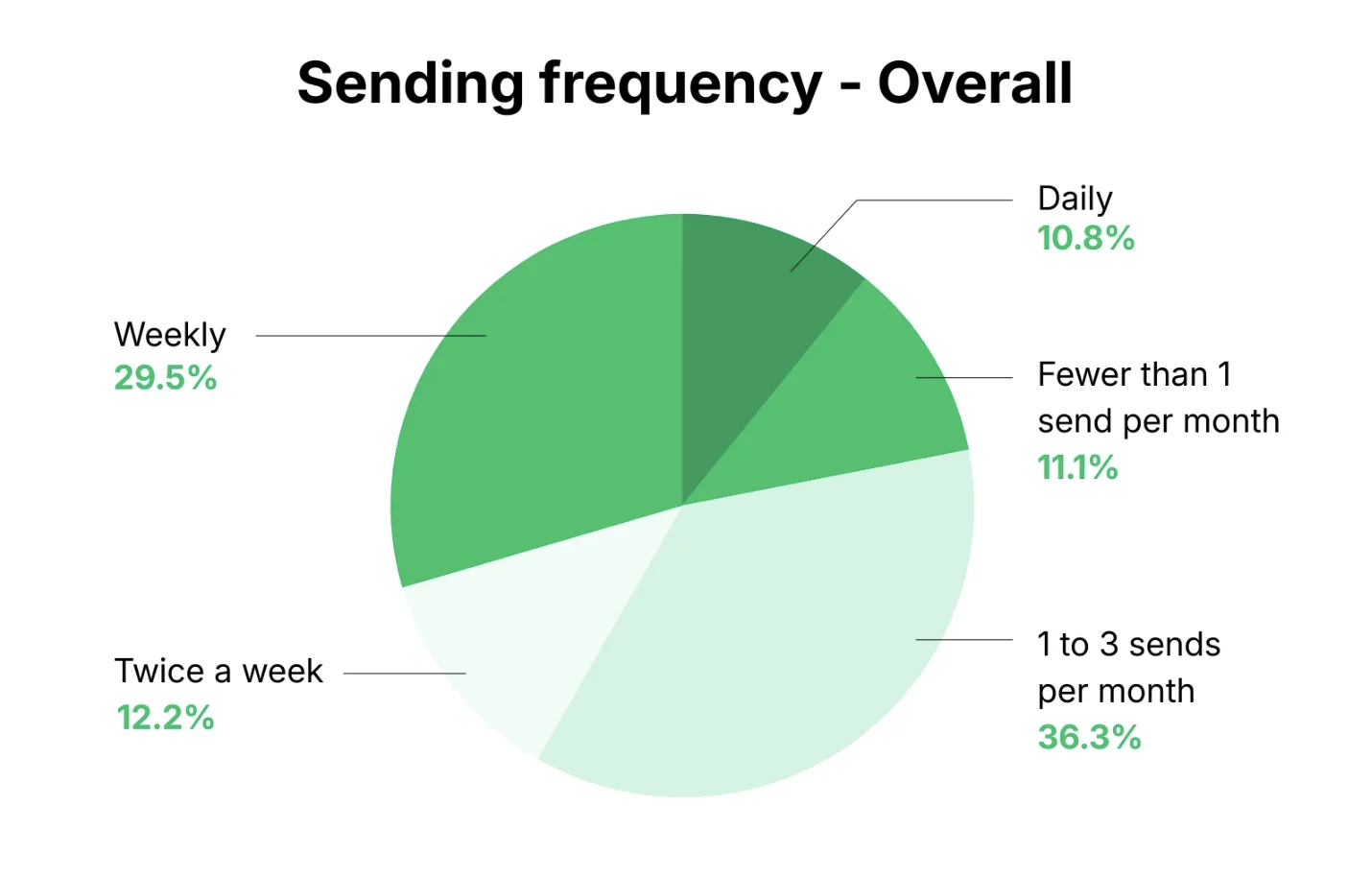
And this result is consistent with other studies. For example, research by Litmus shows a similar pattern, with weekly and multiple-times-per-week sending being the most common.
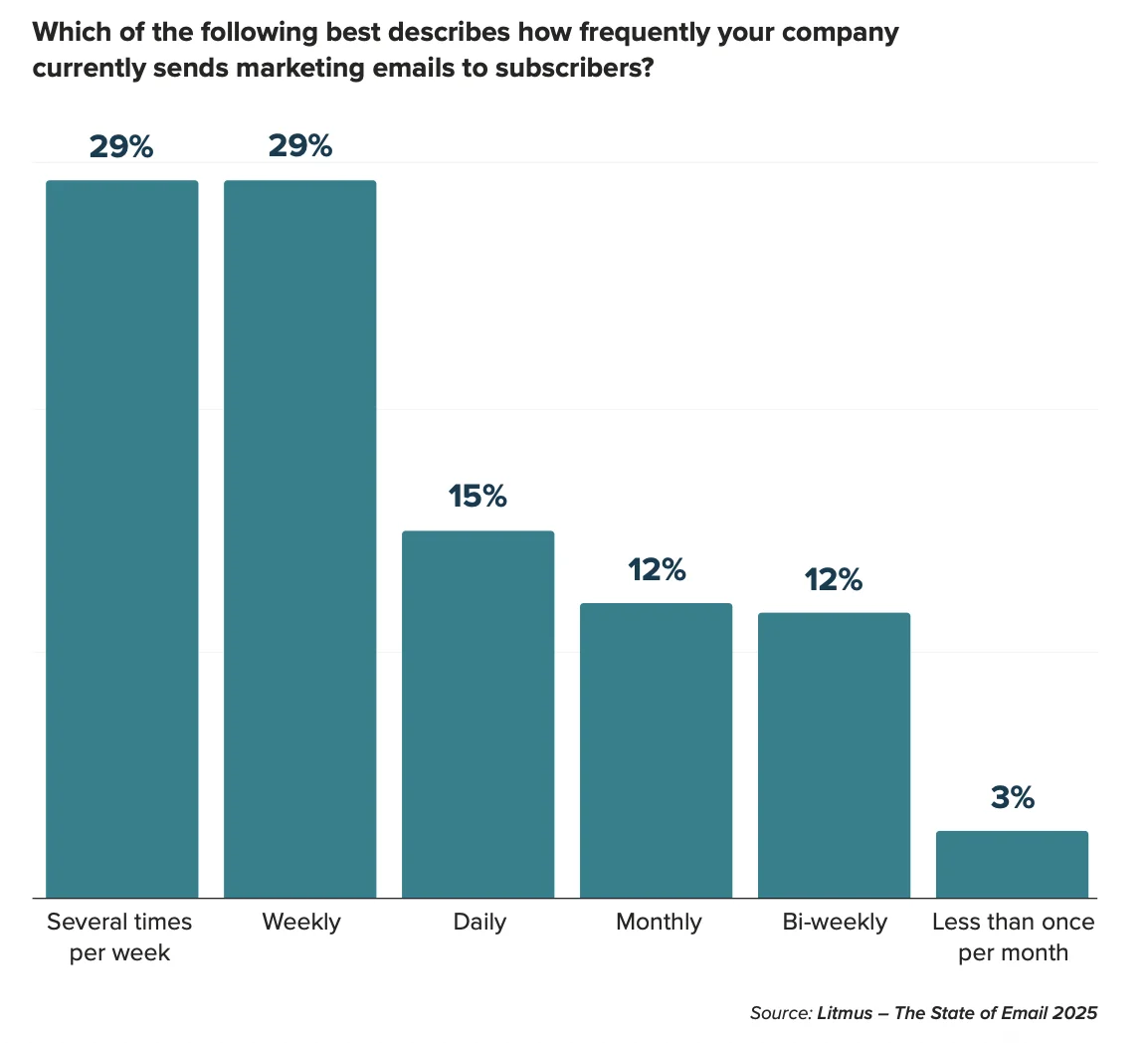
According to Litmus, the size of your company matters too. Small (29%) and mid-market (32%) companies most commonly send marketing emails weekly, whereas enterprise businesses (38%) most commonly send emails several times per week.
But let’s go back to the MailerLite study.
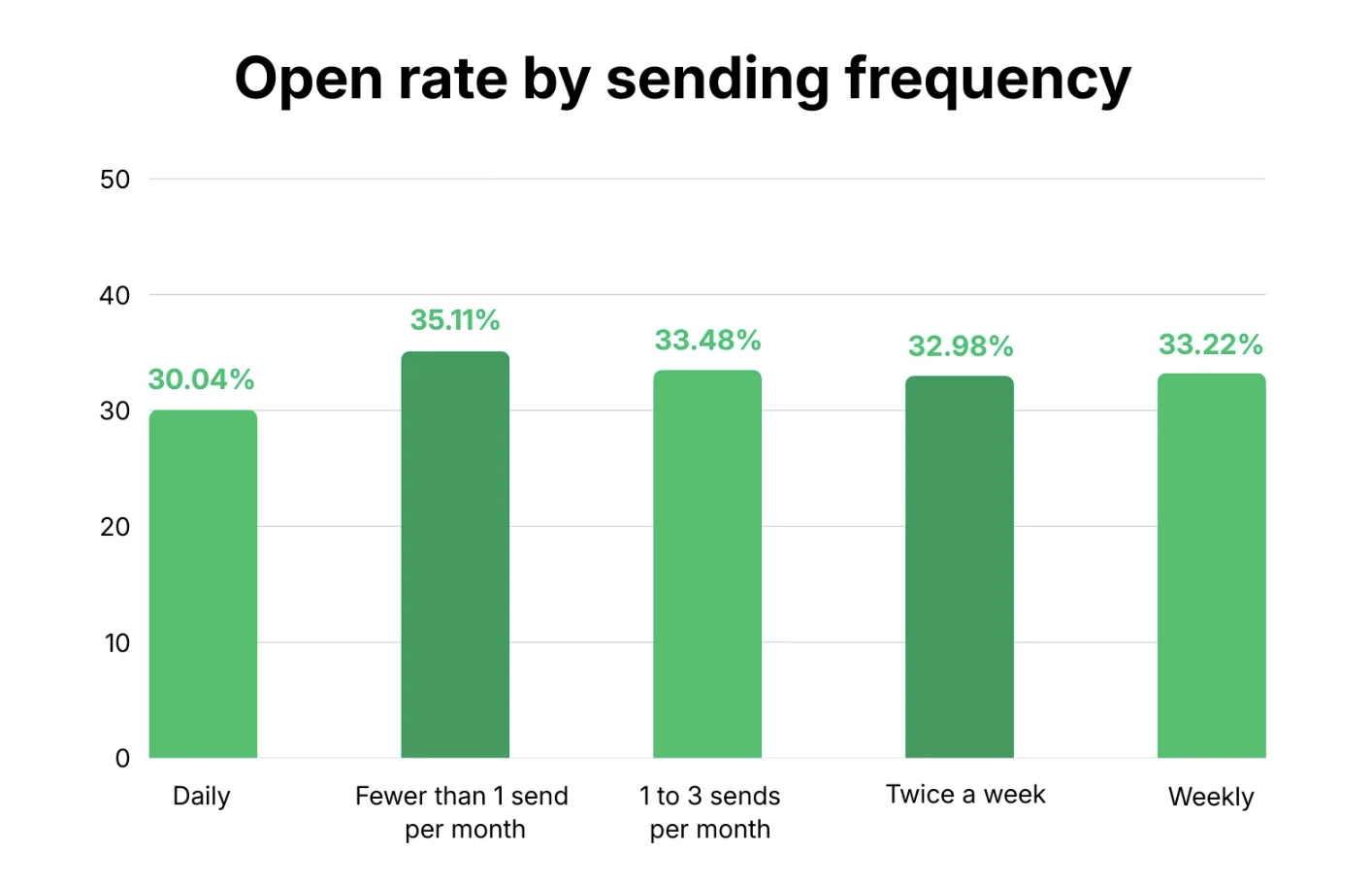
This is how sending frequency affects the open rate. It stays relatively stable when emails are sent monthly, weekly, or even twice a week. However, when emails are sent daily, open rates drop.
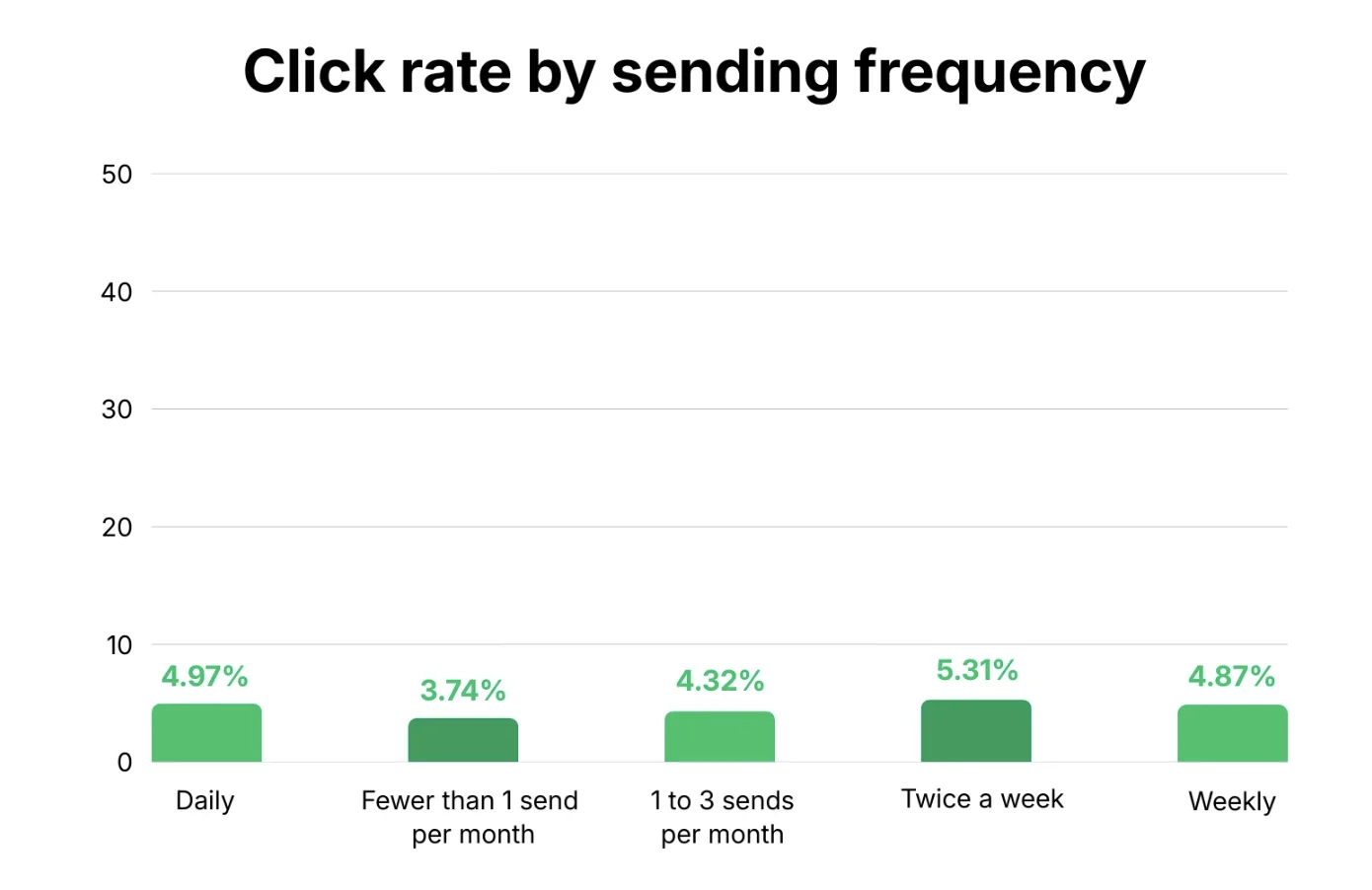
As for the click-through rate, it generally improves as sending frequency increases, peaking at twice-weekly emails.
Weekly sending performs almost as well, while daily emails receive slightly fewer clicks. Very infrequent sending shows the weakest click-through performance.
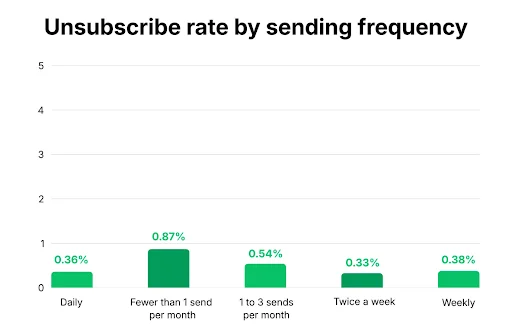
Now, let’s have a look at what the study has to say about the last (but not least) important metric — the unsubscribe rate.
The data shows that very infrequent or inconsistent emailing is linked to higher unsubscribe rate. In other words, subscribers are more likely to opt out when they hear from a brand irregularly or after long gaps. By contrast, regular weekly or twice-weekly sending means a lower unsubscribe rate.
So, you’re preparing your campaign.
If you settle on emailing weekly, or twice a week, what days should you select? A study by Databox suggests that most marketers report the best engagement on Tuesday emails. In general, it seems that the closer you get to the weekend, the lower the engagement.
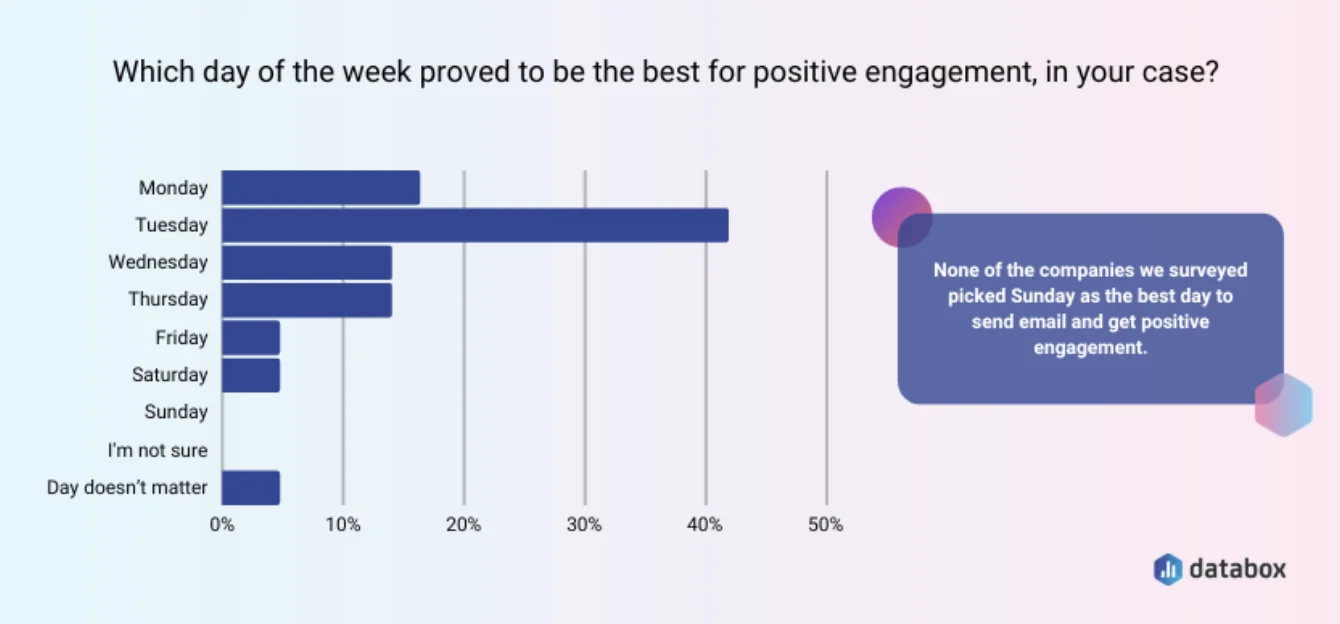
This statistical knowledge is important, but also, your customers might be different.
So take these theoretical benchmarks, apply them practically and then refine based on how your customers act. And you’ll be in good company. According to Databox, 72% of businesses surveyed adjust their cadence based on engagement from recipients.
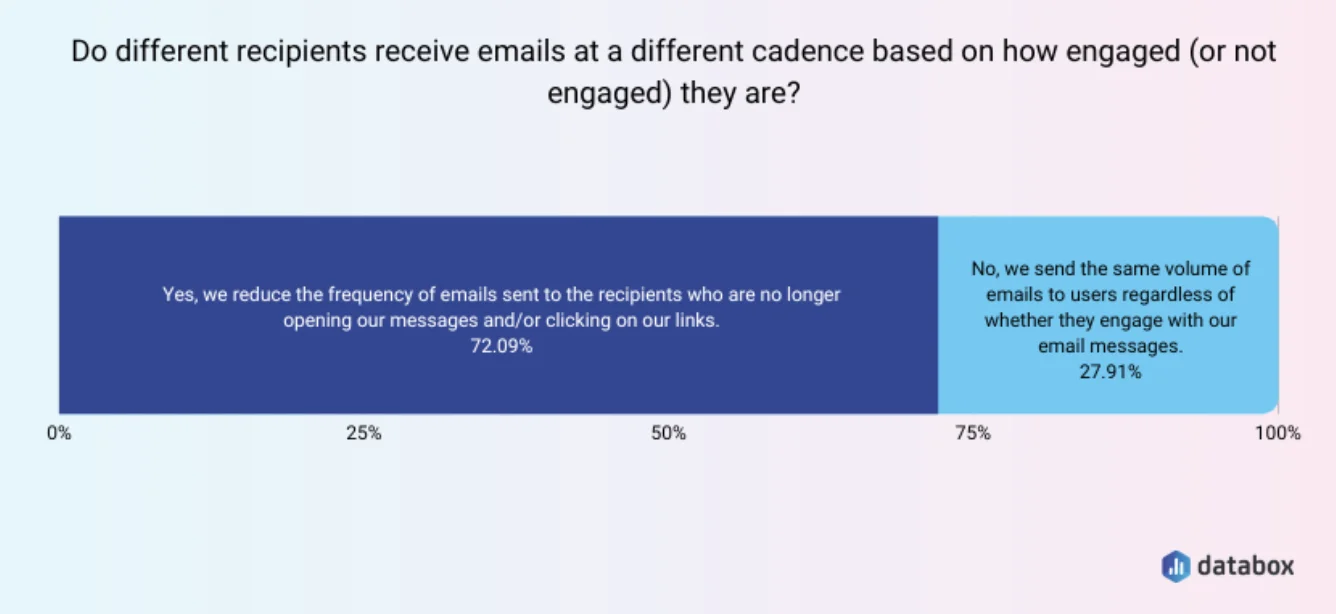
Still, almost 30% of participants of this study sent the same volume of emails regardless of engagement. And not listening to your customers is always a bad idea.
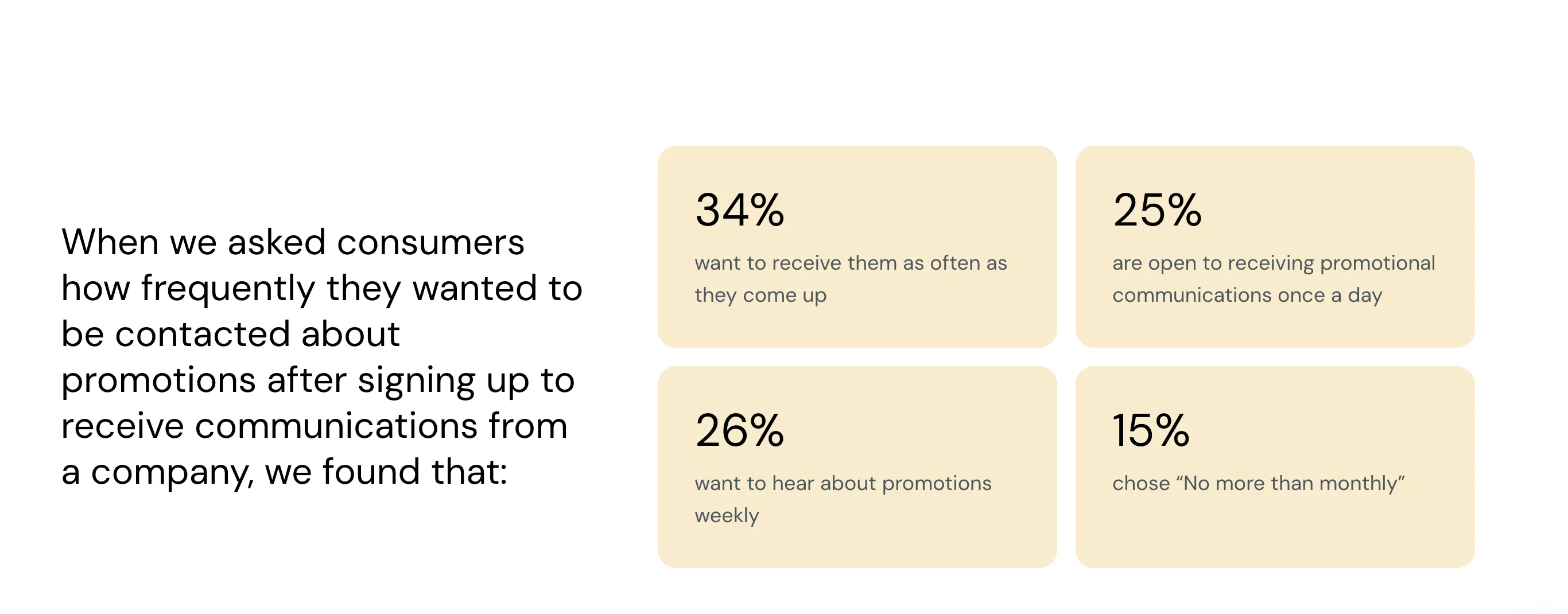
According to a different study by Sinch, more than 26% of consumers say too many emails discourage them from buying, while almost 10% say not hearing from a brand often enough can also push them away. So, you have to be flexible.
Sinch also has some info on how often recipients want to see promotional info in their inboxes.
In contrast, this is what audiences say about receiving informational emails, such as newsletters.
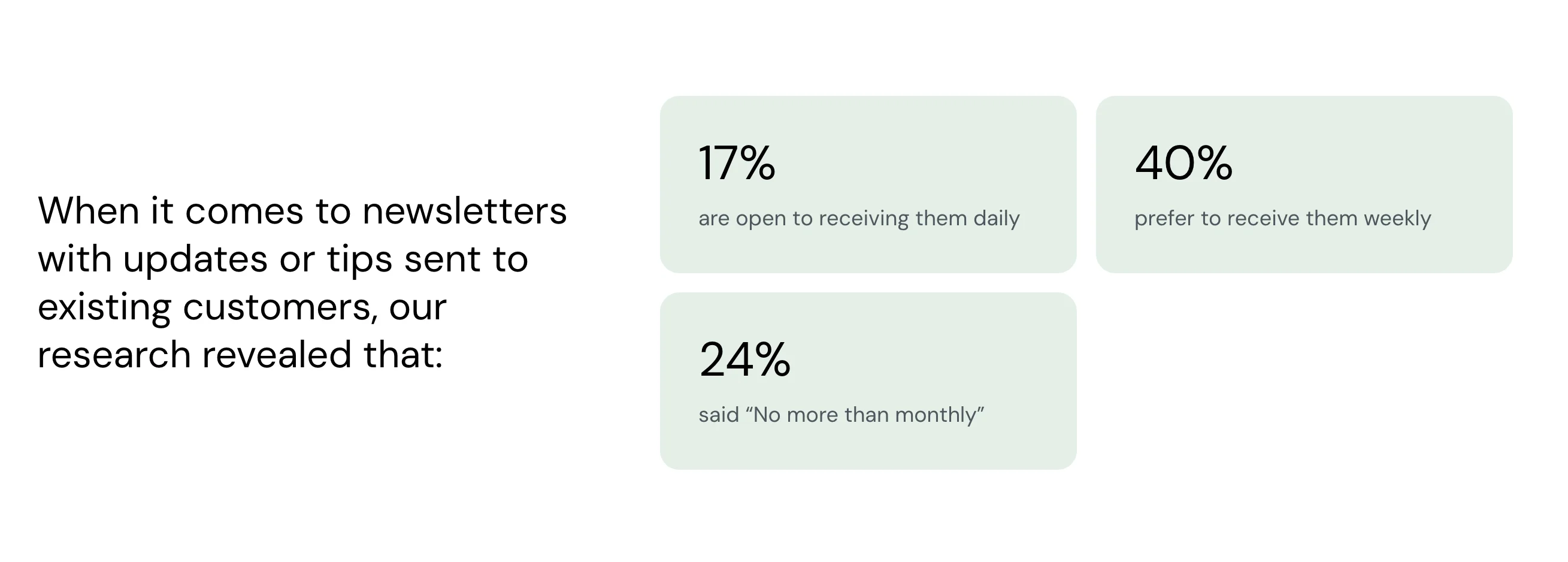
This shows how widely consumer expectations vary around promotional email frequency.
How to determine the right email cadence
There is no single “right” email cadence for everyone. Benchmarks we listed above can give you a good starting point, but they’re not a rule. The best cadence depends on your audience, the type of emails you send (for example, promotions vs newsletters), and how subscribers engage over time.
As a marketer, you shouldn’t rely on guesswork. Follow our step-by-step guide instead.
Step 1. Analyze your data
The first thing is to analyze your existing data.
If you’re sending email campaigns, it’s better done with the help of an email service provider, rather than Gmail. Most ESPs, including Selzy, have dashboards that show you all the relevant stats and data.
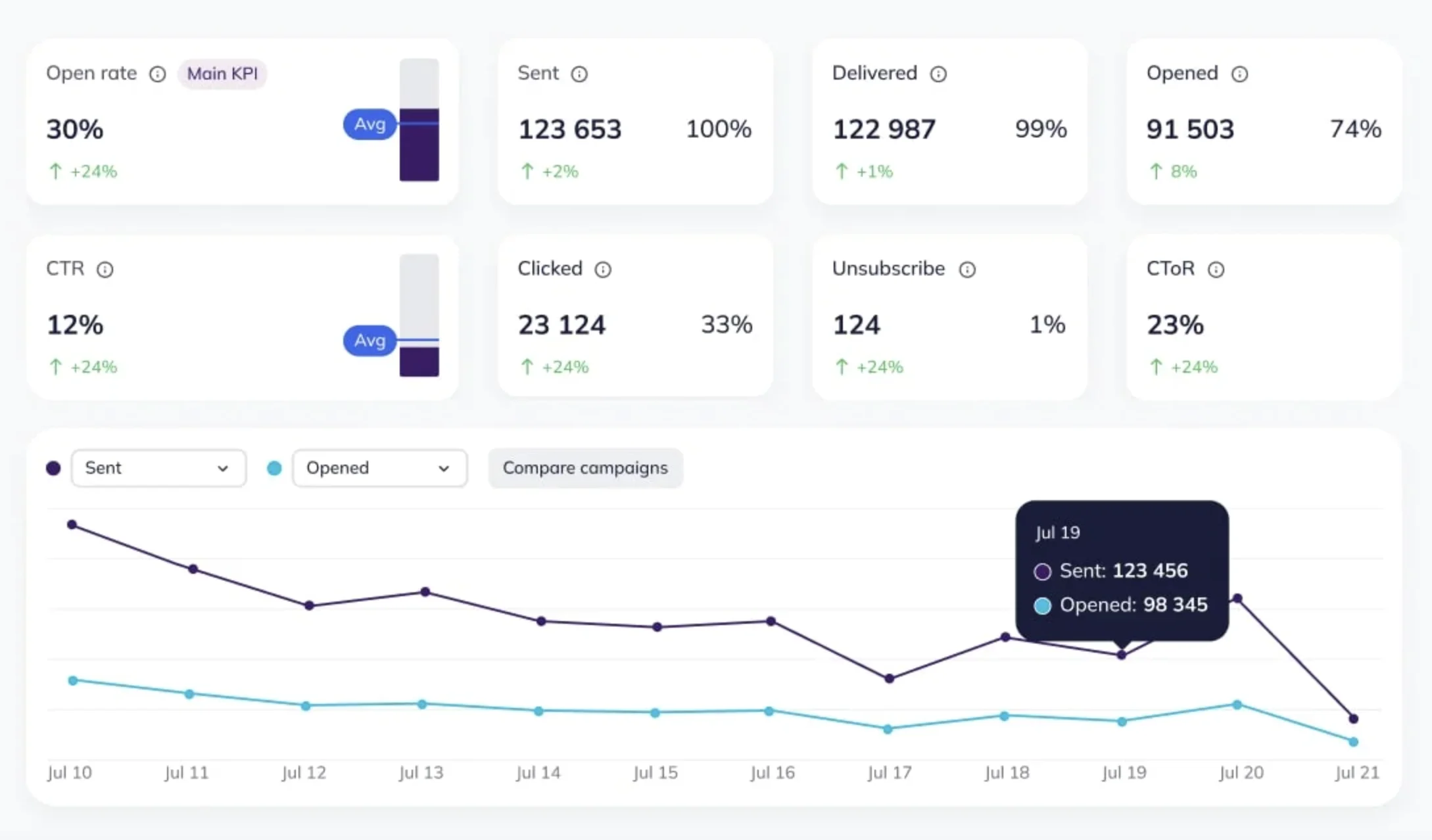
When you’re reviewing your data, don’t just focus on a single campaign, but rather examine multiple sends over time. Compare performance before and after any changes in sending frequency.
Here’s what you should pay attention to:
- Drops in open rates after increasing frequency
- Declining click-through or click-to-open rates
- Spikes in unsubscribes after sending multiple emails close together
These signs will help you understand whether you need to adjust your current cadence or not.

Step 2. Consider your industry
What industry you’re in also matters, as email cadence norms can vary.
Swipe to learn how sending frequency differs across several industries.
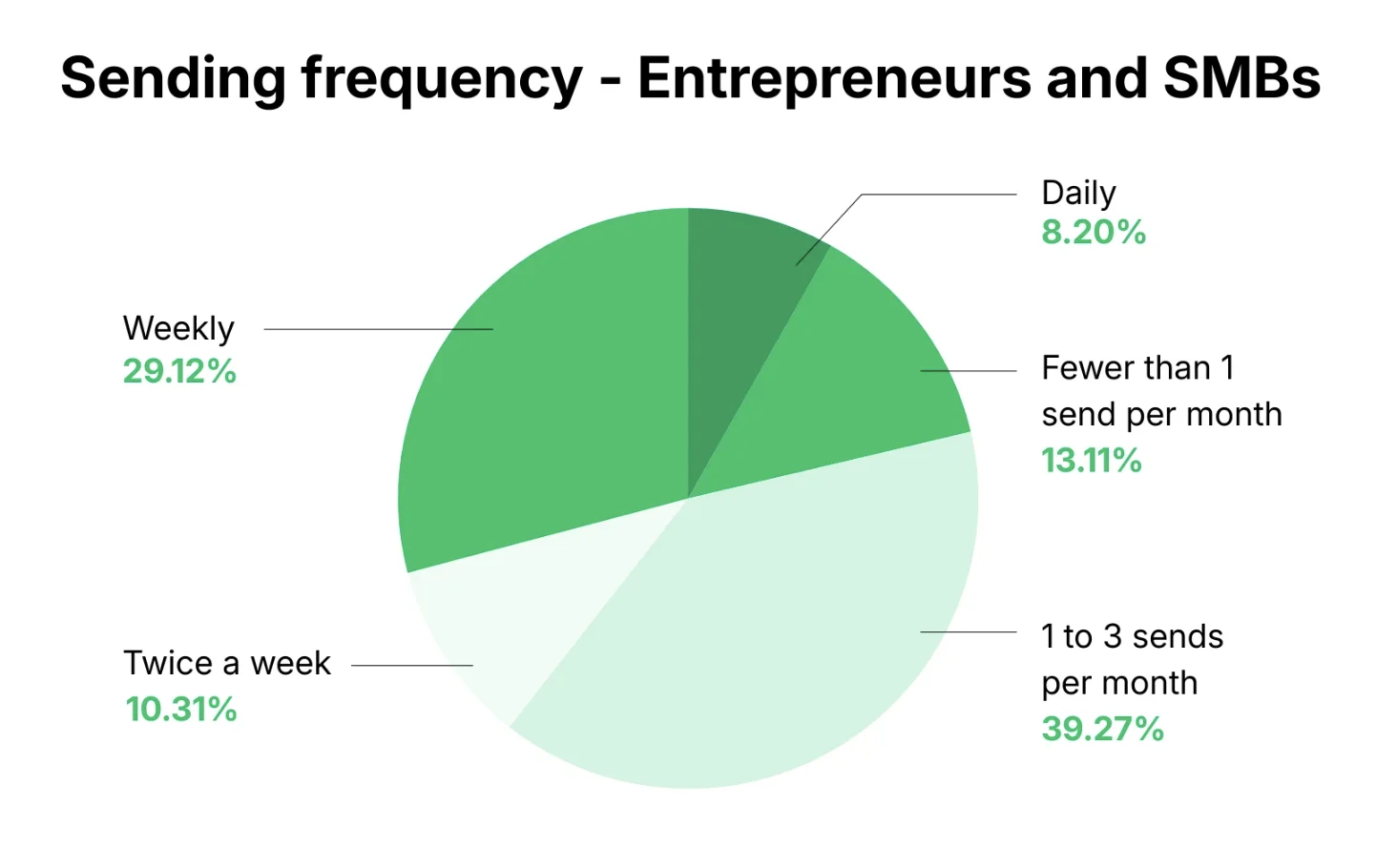
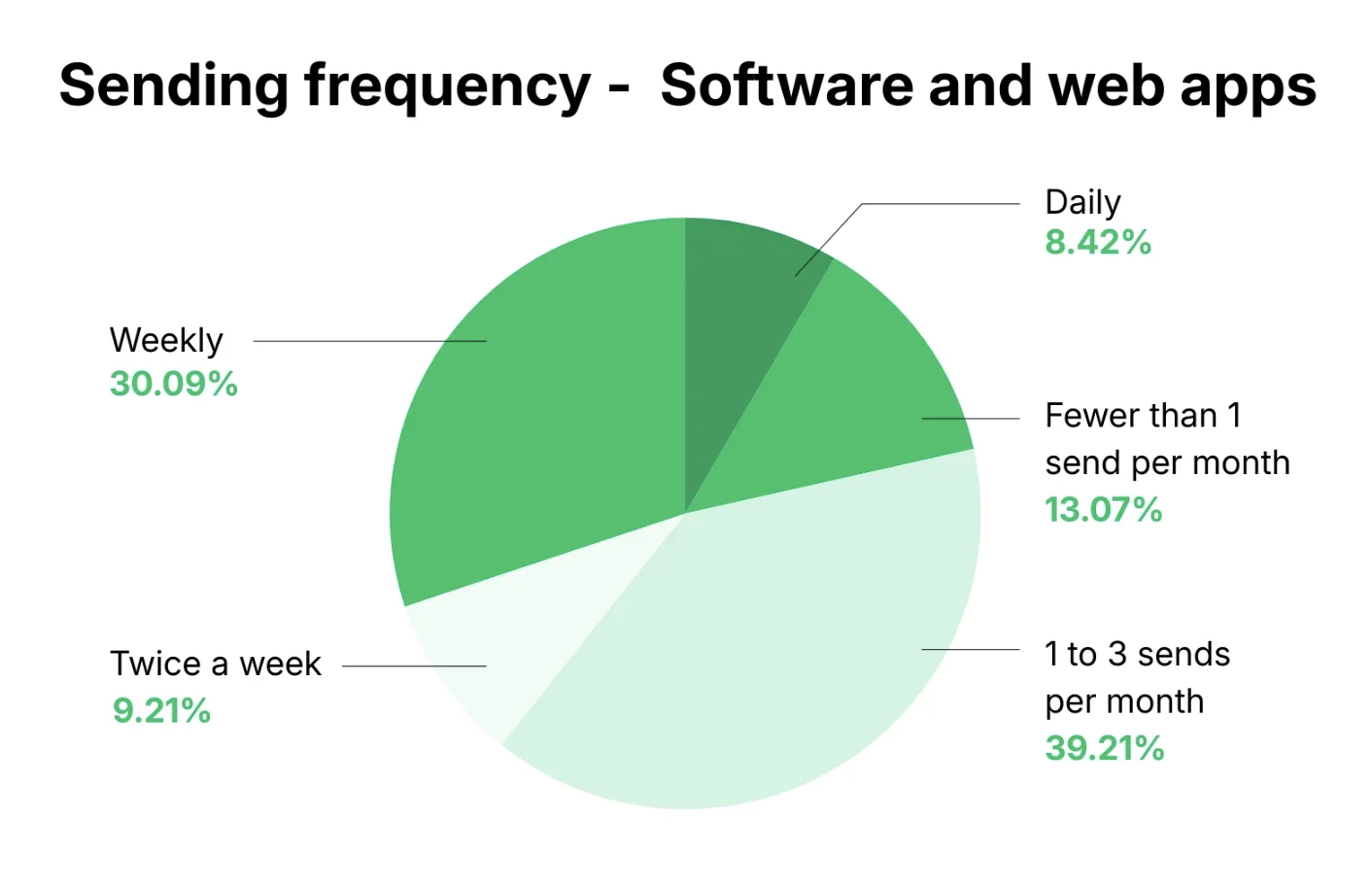
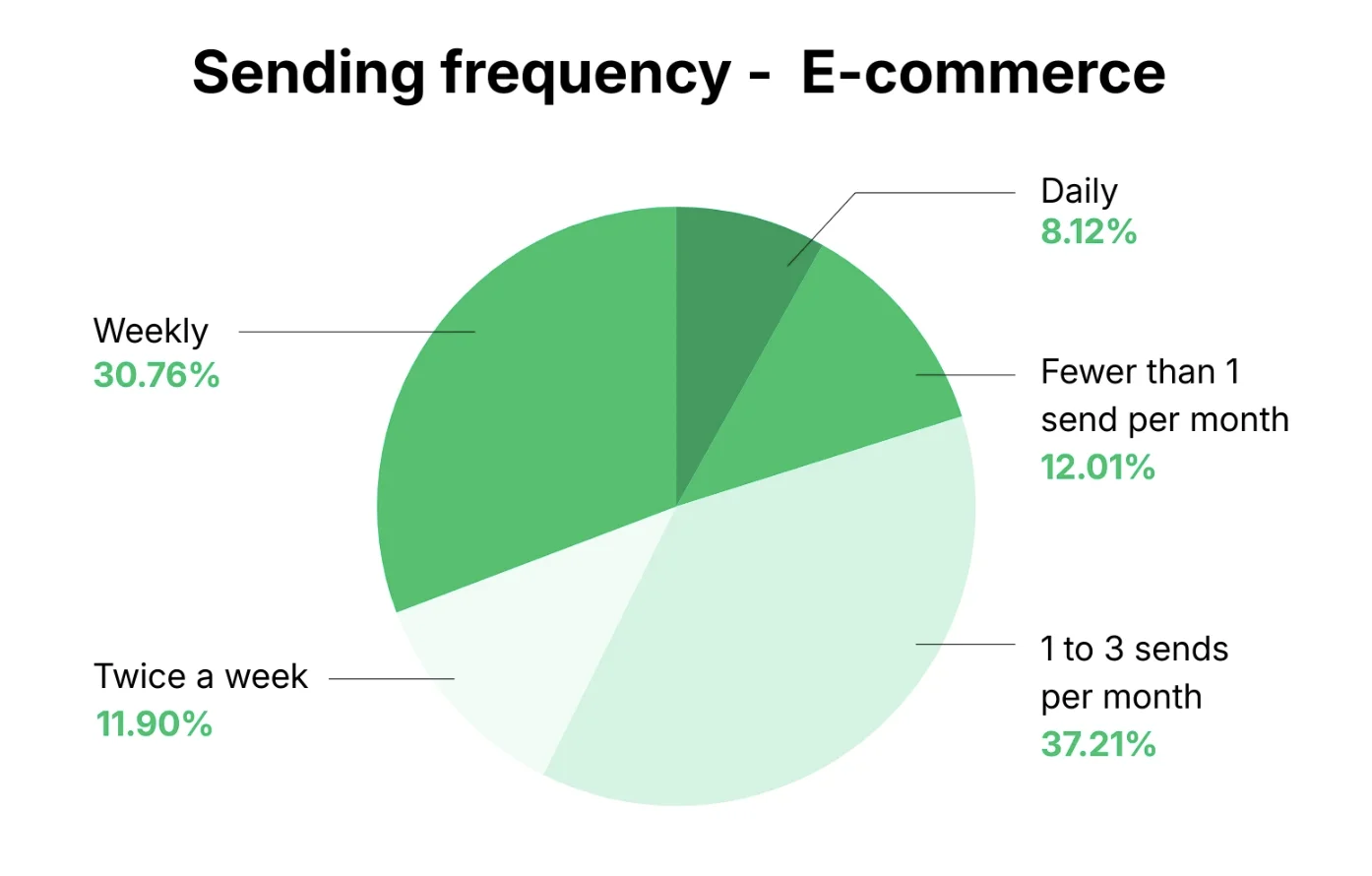
As you can see, email cadences are not the same for all industries above. But there are clear patterns. Sending 1–3 emails per month or emailing weekly is the most common approach, while daily sending is relatively rare.
So, this suggests that moderation is the norm across the board. Some businesses email slightly more often, others less, depending on what they sell. The “right” cadence often reflects factors like purchase cycle length, product complexity, and how frequently customers expect updates or promotions.
Step 3. Survey your audience
You don’t have to guess your audience’s preferences; you can just ask them yourself. Feedback from subscribers can help you decide how often to send emails, along with your data and benchmarks.
Here are a few ways you can do this:
- Add a quick poll to your email itself.
- Build a short survey using Google Forms or a dedicated survey-building platform.
- Ask during onboarding, for example: “How often would you like to hear from us?”.
Keep surveys short and easy; you don’t want to overwhelm your audience with a million questions. In some cases, you can also offer a small incentive for completing your poll, such as a discount, to get more people to respond.
This step is especially useful if your email list is new, if people have complained about too many emails, or if you’ve changed your content.
Just remember that what people say isn’t always what they do! Always compare survey answers with real engagement data.
Step 4. Monitor unsubscribe rates
We’ve already established the importance of unsubscribe rates; they’re one of the clearest signals that your sending cadence is off. A few one-off unsubscribes are normal, so you don’t need to worry about that.
You should watch out for patterns, though. They include:
- Sudden spikes in unsubscribes.
- Increases after sending several emails close together.
- Unsubscribes after long gaps between emails.
If you notice that something’s off, consider it a signal to pause and review your cadence.
Step 5. Conduct A/B testing
With A/B testing, you can test a new cadence without resorting to guesswork.
Usually, A/B testing refers to sending two slightly different versions of the same email to two different groups of subscribers and seeing which performs better. In this case, you can send the same emails to two different groups, but at different frequencies. For example, you might compare weekly sending with twice-weekly sending, or steady emails with short bursts.
You can actually carry out A/B tests manually, but most ESPs, including Selzy, can test things automatically, making the process as easy as it gets.
Common mistakes and how to avoid them
It’s really easy to mess up when you’re just getting started with setting your email cadence. Here’s what to watch out for.
Sending the same email to everyone
One cadence might not work for everyone. Segmenting your audience, aka splitting it into several groups based on traits or behavior, is a great way to avoid over- or under-emailing.
By grouping subscribers based on behaviour or interests, you can adjust when and how often different people receive emails. For example, highly engaged subscribers usually tolerate more frequent emails, while less active users may need a lighter presence.
More segmentation ideas: by engagement level, lifecycle stage, or interests.
Increasing frequency too quickly
If you’re just getting started, increasing your email frequency too quickly can overwhelm your subscribers.
Instead, start with a conservative cadence and increase it gradually. This gives people time to get used to hearing from you and makes it easier to spot negative signals.
Sending emails at random intervals
Try to stick to a regular schedule and avoid long gaps followed by sudden bursts of emails.
A predictable cadence makes your emails feel more intentional and easier for subscribers to engage with. Email cadence is all about rhythm, after all!
Choosing poor send times
Even well-written emails can underperform if they’re sent at the wrong time.
Earlier in the article, we already established that you should aim for mid-week sending and try to avoid weekends, especially Sundays. But the time of day when you send matters, too. According to a study by Mailjet, most people check their email multiple times a day.
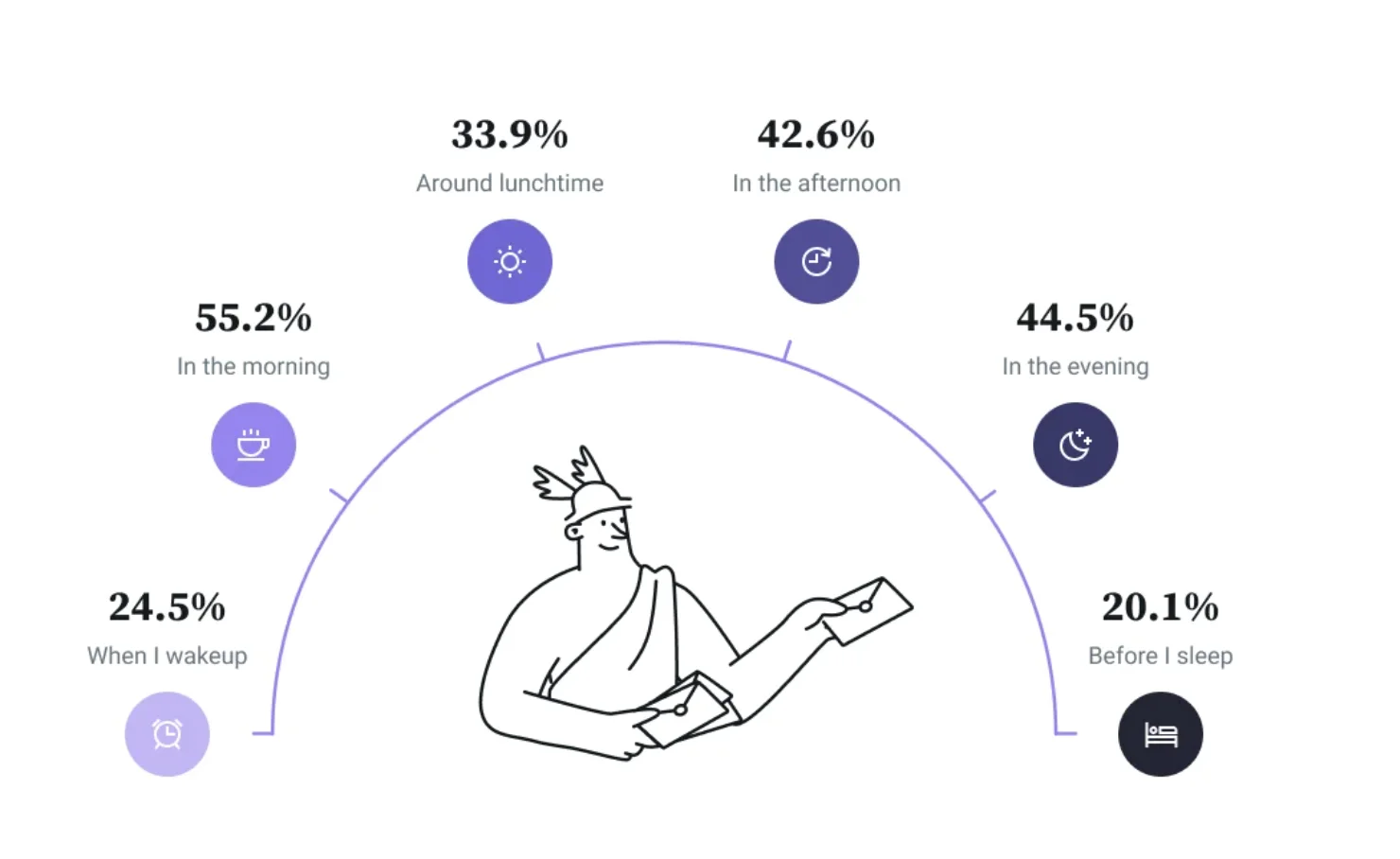
So, what is the best time to send emails?
According to the study, mid-morning and early afternoon are generally safer choices. Morning (9–11 AM) sees high inbox activity. The early afternoon slot (12–3 PM) is good for both B2B and B2C. Late afternoon (3–6 PM) is also a strong engagement window. Anything earlier or later than that isn’t as great for engagement.
Don’t forget about time zones, too.
If you have an international audience, you should match your send times to when your audience is active, not to your own time of day. And if your audience is so large that it spans multiple timezones, you can segment by location to make sure everyone gets their emails at the best time.
Also, try to keep regional trends in mind.
According to Litmus, companies in North America most commonly send emails weekly (29%), while businesses in Europe, the Middle East, and Africa (27%) — and especially in Asia-Pacific (43%) — tend to send emails several times per week. So, when emailing audiences from these parts of the world, don’t take only their time zone into consideration, but also the frequency they may be accustomed to.
Keeping the same cadence forever
Email marketers know that you can’t just set something once and forget about it. The same is true for email cadence. As your audience or goals change, the cadence that worked before may stop working. Watch how your subscribers respond over time and keep monitoring the data provided by your ESP. Make changes gradually and give each adjustment time to show results.
FAQ
How often should I send marketing emails?
This is a million-dollar question. There’s no single answer that works for everyone.
Many businesses send emails weekly or 1–3 times per month, but the right cadence depends on your audience, industry, and content. The best approach is to start conservatively and then adjust.
Can I send different emails at different frequencies?
Yes, and you should! Segmenting your audience allows you to send emails at different frequencies based on engagement, interests, or lifecycle stage.
How can I tell if my email cadence is too frequent or too rare?
Watch out for various metrics on your ESP’s dashboard. If open rates and clicks start dropping or unsubscribes increase, your cadence may be too frequent. If engagement is low and subscribers seem to forget your brand, you may not be emailing often enough.
Should transactional emails follow a different cadence than marketing emails?
Absolutely. Transactional emails, like password resets or order confirmations, are triggered by user actions and are expected by recipients. They shouldn’t be limited by your marketing cadence.
 New and noteworthy on our blog
