



Key takeaways
- B2B email marketing software is crucial for sending, automating, segmenting, and measuring email campaigns targeted at business buyers.
- The right software should support longer sales cycles, multiple decision-makers, CRM data, lead nurturing, and lifecycle messaging.
- High-stakes or personalized emails should be sent manually, but for larger campaigns, a dedicated service is needed.
- Software choice impacts deliverability, costs, and marketing effectiveness.
Choosing B2B email marketing software is not only about sending newsletters. The right platform should help you segment decision-makers, nurture long sales cycles, connect with your CRM, track engagement, and keep deliverability healthy as your list grows.
In this guide, we compare B2B email marketing services by use case, automation, segmentation, integrations, pricing model, and ease of use so you can choose a platform that fits your sales cycle and team size.
The importance of choosing good software for B2B email marketing
B2B email marketing software is a platform for sending, automating, segmenting, and measuring email campaigns aimed at business buyers. Unlike a basic newsletter sender, a B2B platform should support longer sales cycles, multiple decision-makers, CRM data, lead nurturing, and lifecycle messaging.
The stakes are higher in B2B than in many consumer campaigns. A single deal can involve several contacts, weeks or months of research, and multiple follow-ups before a prospect is ready to talk to sales. Good software helps you keep that process organized: you can tag contacts by role, company, source, lead magnet, product interest, or funnel stage, then send relevant messages instead of one generic blast.
Some high-stakes or very personalized emails can still be sent manually. These include individual outreach messages to CEOs, founders, or company owners. But as soon as you need to send more than several hundred emails, run promotional campaigns, or trigger follow-ups based on behavior, you need a dedicated service instead of Gmail or Outlook.
Email marketing software also affects deliverability, costs, and the overall effectiveness of marketing efforts. If you choose a platform that is hard to use, weak on segmentation, or disconnected from your CRM, your campaigns become slower to launch and harder to measure.
What to look for in B2B email marketing services
When you compare B2B email marketing services, look past the first-month price. The best choice depends on your sales cycle, database size, team workflow, and how much automation you need.
Key features
Prioritize automation, segmentation, personalization, A/B testing, templates, analytics, and deliverability tools. Automation features like autoresponders and drip campaigns help marketers send follow-ups based on forms, downloads, demo requests, product interest, or past email engagement.
Segmentation is especially important for B2B. Your list may include founders, procurement managers, sales leaders, operations teams, and marketing specialists from the same target account. Each group may need a different message, offer, proof point, or call to action.
A/B testing helps reduce risk before you scale a campaign. You can test subject lines, calls to action, email layouts, offers, and body copy on a smaller segment, then send the stronger version to the rest of the list.
Integrations
B2B email marketing services should connect with the tools your team already uses: CRM software, landing page builders, payment platforms, webinar tools, customer support systems, and analytics tools. Reliable integrations help you pass lead data between systems and avoid manual list exports.
Pricing
Pricing models vary. Some tools charge by contacts, some by monthly email volume, some by seats, and some by product bundle. Before choosing a platform, check the official pricing page and compare the cost at your expected list size, not only at the entry level.
Also check which features are included in the plan you need. Advanced automation, transactional email, landing pages, CRM functionality, advanced reporting, dedicated IPs, or priority support may be available only on higher-tier plans.
For the starting prices below, we used the lowest paid monthly price, billed monthly, in USD, excluding discounts. Where a current official pricing page was unclear in our audit, we used pricing already verified in related Selzy comparison articles.
Quick comparison of B2B email marketing software
| Tool | Best for | Strong B2B fit | Starting price |
| Selzy | Small and growing B2B teams | Email campaigns, automation, segmentation, A/B testing, support | From $7.5/month Free plan: yes |
| Brevo | Teams that need email plus CRM-style customer tools | Email, SMS, automation, CRM, conversations | From $9/month Free plan: yes |
| HubSpot | Sales-led teams that want CRM and marketing together | CRM, forms, landing pages, lifecycle automation, reporting | From $20/month/seat Free tools: yes |
| ActiveCampaign | Advanced automation and lead nurturing | Behavioral automation, CRM, segmentation, personalization | From $15/month Free plan: no; free trial available |
| Mailchimp | Teams that want a familiar all-in-one marketing tool | Email builder, journeys, templates, basic CRM-style data | From $13/month Free plan: yes |
| Mailtrap | Product and SaaS teams that care about email infrastructure | Email marketing, transactional email, testing, deliverability checks | From $15/month Free plan: yes |
| GetResponse | Webinars, funnels, and lead generation | Email, automation, landing pages, webinars, conversion funnels | From $19/month Free plan: yes |
| MailerLite | Lean teams that want clean email and simple automation | Email builder, landing pages, forms, automation | From $10/month Free plan: yes |
| Moosend | Simple automation at a moderate budget | Campaign editor, automation, templates, reporting | From $9/month Free plan: no; free trial available |
| AWeber | Small businesses that want guided email marketing | Templates, landing pages, automation, support | From $15/month Free plan: yes |
| Constant Contact | Small businesses and local B2B services | Email, events, SMS, social posting, reporting | From $12/month Free plan: no; free trial available |
| Zoho Campaigns | Companies already using Zoho apps | Zoho CRM integration, automation, list management | From $3/month Free plan: yes |
12 best B2B email marketing software options
The right software will help you implement B2B email marketing best practices: segment audiences, personalize communication, automate follow-ups, and measure results. Here are the strongest options to consider.
1. Selzy – Best for affordable B2B email marketing with strong core features
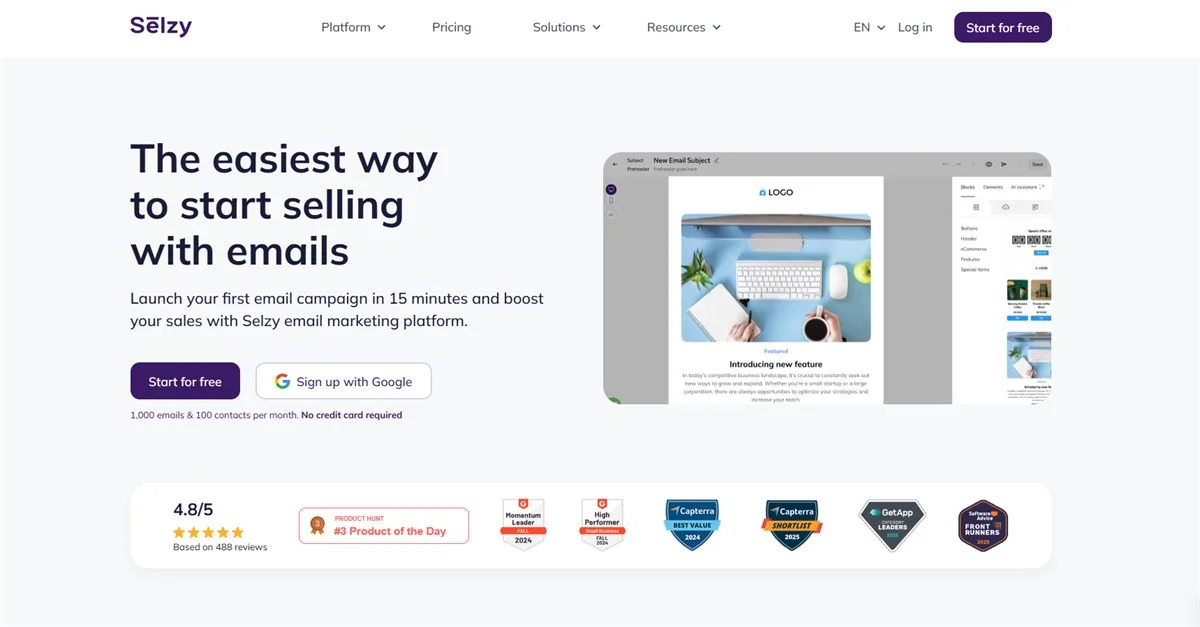
Selzy is an intuitive email marketing platform for creating campaigns, landing pages, SMS campaigns, automations, segments, forms, and A/B tests without a steep learning curve. It is a good fit for B2B teams that need dependable email marketing, useful automation, and clear reporting at a manageable cost.
Best for: small and growing B2B companies, SaaS teams, agencies, consultants, and service businesses that want practical email marketing tools without paying for an enterprise suite.
Not best for: teams that need a full CRM, sales pipeline, or complex multi-product customer platform inside the same tool.
Key B2B features: drag-and-drop email builder, landing page builder, SMS, segmentation, tags, automation, A/B testing, forms, analytics, deliverability tools, and helpful support.
Starting price: from $7.5/month. Free plan available. Selzy paid plans scale by contacts and sending needs.
Bottom line: Selzy is the strongest pick if you want an accessible B2B email marketing platform with the core features most teams actually use every week.

2. Brevo – Best for email marketing plus customer platform features
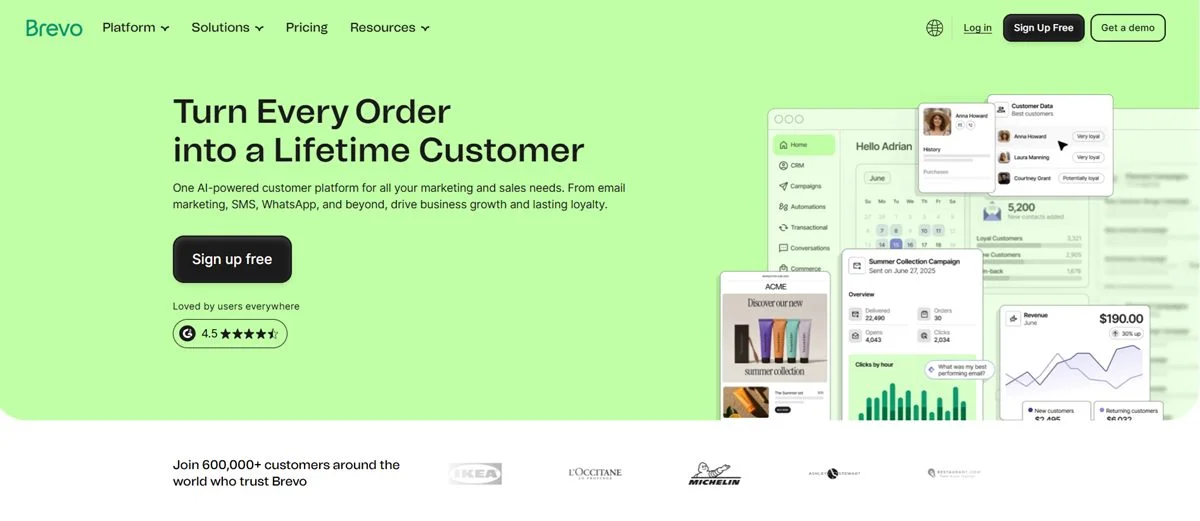
Brevo, formerly Sendinblue, combines email marketing with SMS, WhatsApp, CRM, automation, and customer conversation tools. For B2B companies, the appeal is that marketing, sales, and customer messaging can sit closer together than in a basic newsletter platform.
Best for: B2B teams that want email marketing together with CRM-style customer data and multichannel messaging.
Not best for: teams that only need simple newsletters and do not want a broader customer platform.
Key B2B features: email campaigns, marketing automation, landing pages, forms, CRM, SMS, WhatsApp, transactional email, and reporting.
Starting price: from $9/month. Free plan available. Brevo paid plans vary by sending volume and feature access.
Bottom line: Brevo is a practical option when email is only one part of your customer communication stack.
3. HubSpot – Best for B2B teams that need CRM and marketing together
HubSpot is a customer platform with marketing, sales, service, content, and operations products. Its email marketing features are strongest when they are used with HubSpot CRM data, forms, landing pages, lists, and lifecycle stages.
Best for: sales-led B2B companies that want email marketing connected to CRM, lead capture, pipeline activity, and reporting.
Not best for: teams that only need a lightweight email sender and do not want a larger platform.
Key B2B features: CRM, forms, landing pages, email campaigns, segmentation, workflows, lead nurturing, personalization, dashboards, and sales alignment.
Starting price: from $20/month/seat. Free tools available. HubSpot costs can depend on hub tier, seats, contacts, and add-ons.
Bottom line: HubSpot is a strong choice when your email strategy depends on shared sales and marketing data.
4. ActiveCampaign – Best for advanced automation and lifecycle nurturing
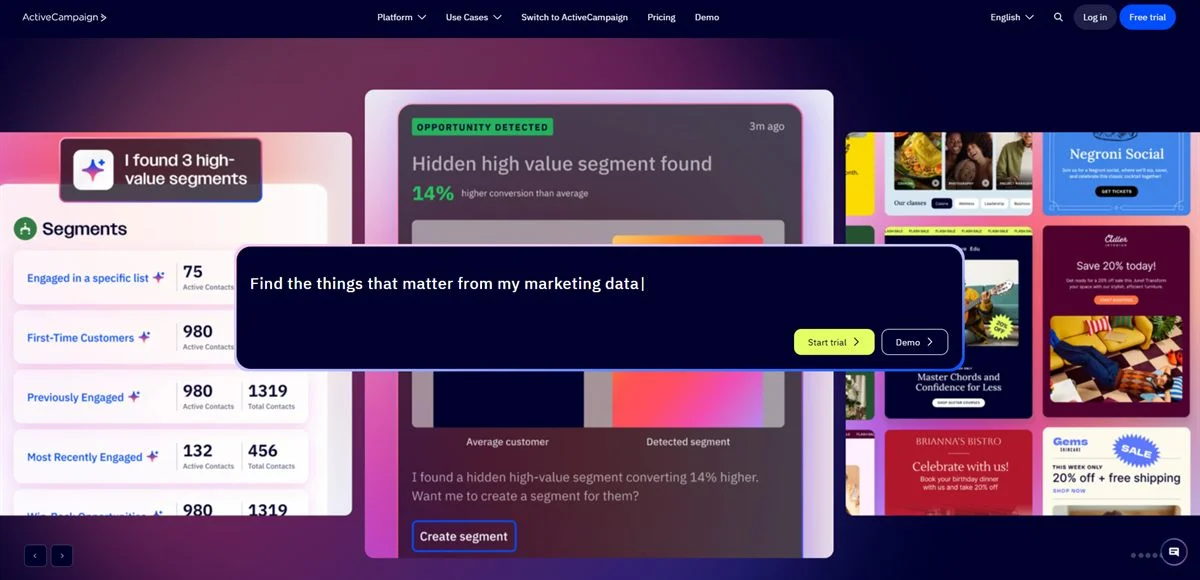
ActiveCampaign is known for automation-heavy marketing. It helps teams create workflows based on contact behavior, tags, CRM updates, website activity, and campaign engagement.
Best for: B2B teams that already know their nurture paths and want to build more advanced automations.
Not best for: teams that want the simplest possible newsletter tool or have no time to design workflows.
Key B2B features: visual automation builder, segmentation, personalization, CRM, lead scoring, site tracking, email campaigns, forms, and reporting.
Starting price: from $15/month. No free plan; free trial available. ActiveCampaign pricing depends on contact count, plan tier, billing period, and selected product.
Bottom line: ActiveCampaign is a good fit when your B2B email program needs branching logic, behavior-based triggers, and detailed nurture sequences.
5. Mailchimp – Best for teams that want a familiar all-in-one marketing tool
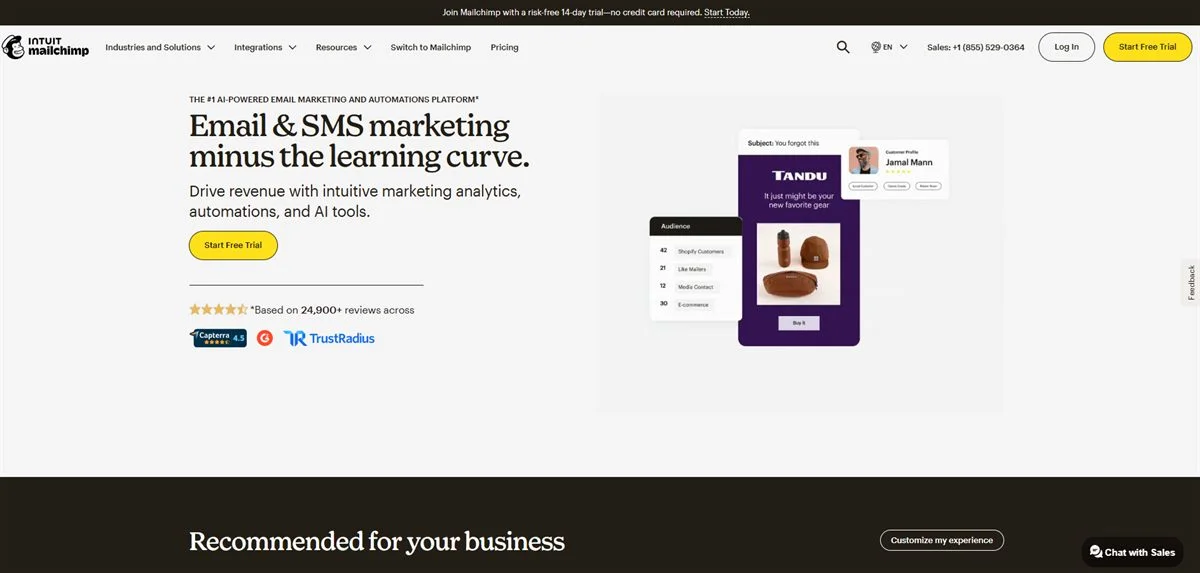
Mailchimp is one of the best-known email marketing platforms. It includes email campaigns, templates, customer journeys, landing pages, forms, audience tools, and reporting in a familiar interface.
Best for: B2B teams that want a mainstream platform with many templates, integrations, and educational resources.
Not best for: teams that need deep sales CRM functionality or highly specialized deliverability workflows.
Key B2B features: email builder, templates, automations, audience segments, forms, landing pages, analytics, and many integrations.
Starting price: from $13/month. Free plan available. Mailchimp pricing changes by contact count, currency, billing period, and included features.
Bottom line: Mailchimp is a solid option for teams that want a recognizable marketing platform and do not need a heavy CRM-first setup.
6. Mailtrap – Best for SaaS and product teams that need marketing and email infrastructure
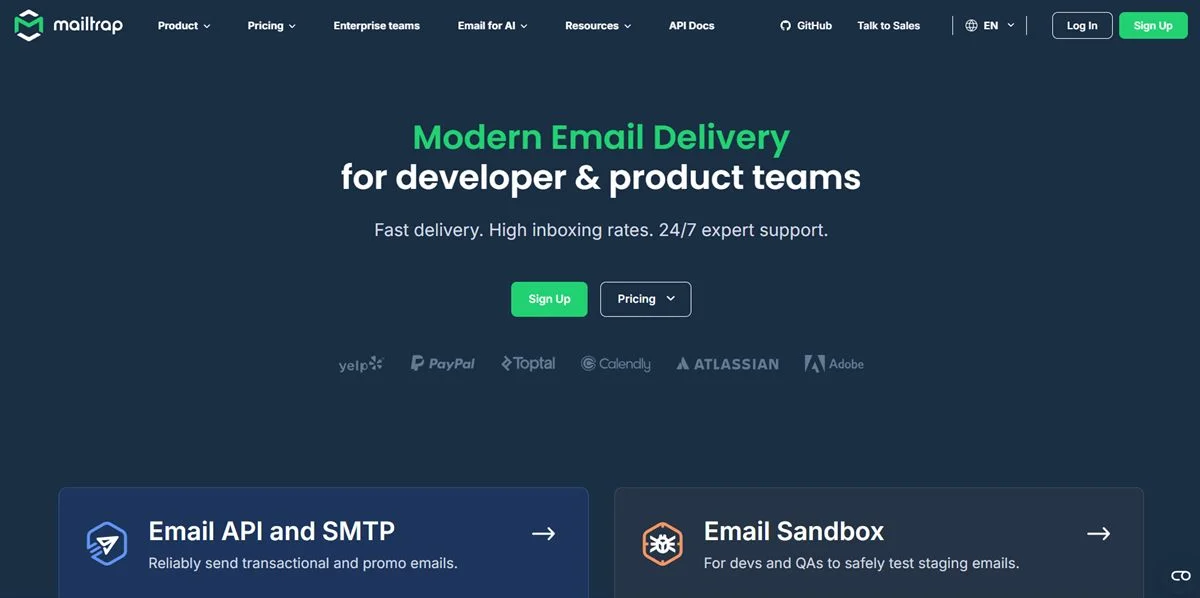
Mailtrap is different from many tools on this list because it covers both marketing email and email infrastructure. It is useful for SaaS, product, and engineering-led companies that care about campaign sending, transactional email, testing, and deliverability.
Best for: B2B SaaS and product teams that send marketing emails plus transactional or product-triggered emails.
Not best for: non-technical teams that want only a classic newsletter editor and no infrastructure features.
Key B2B features: email marketing, SMTP/API sending, email testing, deliverability checks, analytics, and tools for separating marketing and product email streams.
Starting price: from $15/month. Free plan available. Mailtrap pricing is split across product areas such as Email Marketing, Email API/SMTP, and testing.
Bottom line: Mailtrap is strongest when your B2B email program involves both marketers and developers.
7. GetResponse – Best for webinars, funnels, and lead generation
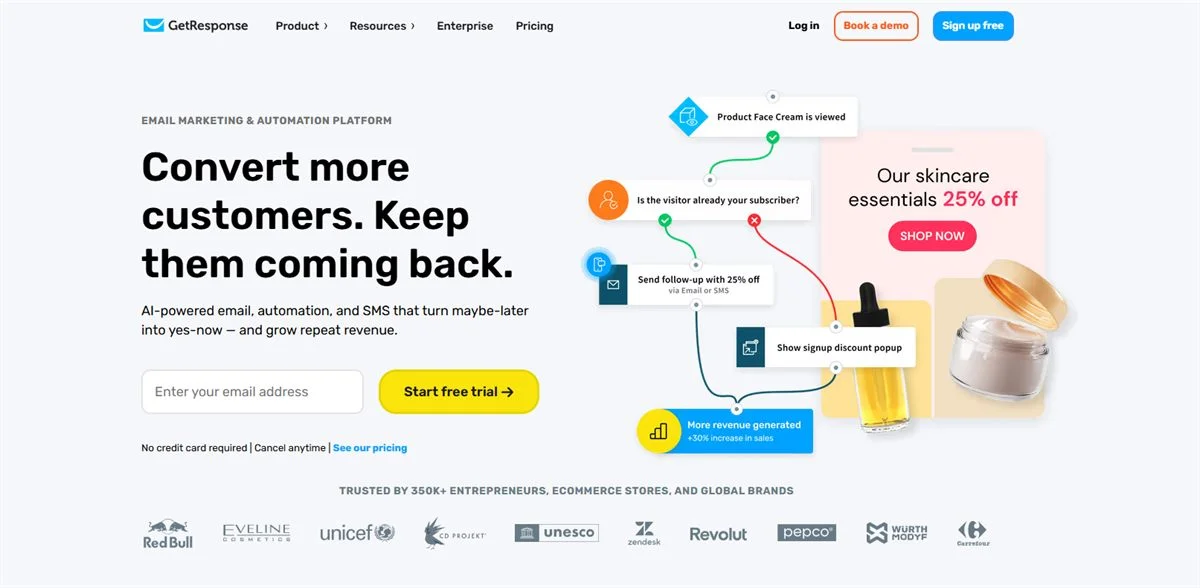
GetResponse combines email marketing with automation, landing pages, forms, webinars, and funnel-building tools. This makes it useful for B2B companies that generate leads through gated content, webinars, product demos, and educational campaigns.
Best for: teams that use webinars, landing pages, and automated funnels as part of B2B lead generation.
Not best for: teams that already have separate webinar and landing page tools and only need basic email sending.
Key B2B features: email campaigns, autoresponders, automation workflows, landing pages, forms, webinars, conversion funnels, and analytics.
Starting price: from $19/month. Free plan available. GetResponse pricing varies by list size and feature tier.
Bottom line: GetResponse is a good option if webinars and lead magnets are central to your B2B funnel.
8. MailerLite – Best for lean teams that need simple email marketing and landing pages
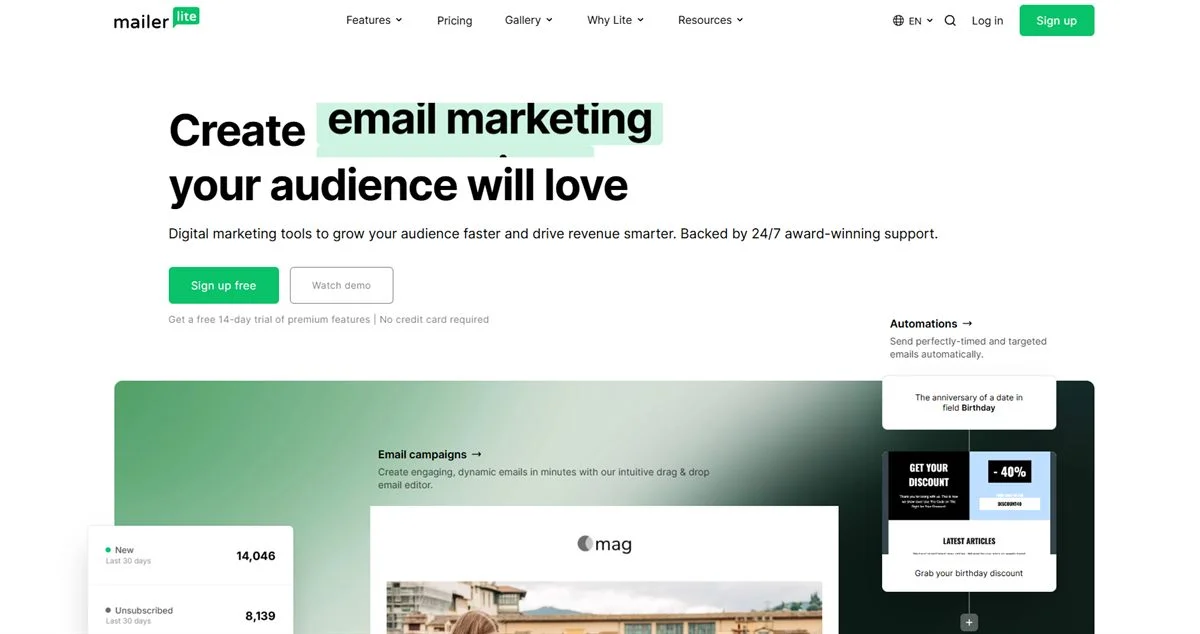
MailerLite focuses on clean email marketing, landing pages, forms, websites, and automation. The interface is approachable, which makes it attractive for small B2B teams without a dedicated marketing operations specialist.
Best for: lean B2B teams, creators selling to businesses, consultants, and small service companies.
Not best for: companies that need advanced CRM, lead scoring, or complex cross-channel automation.
Key B2B features: email builder, templates, signup forms, landing pages, automation, segmentation, surveys, and analytics.
Starting price: from $10/month. Free plan available. MailerLite paid plans scale by subscriber count and features.
Bottom line: MailerLite is a strong choice when you want email and landing pages to stay simple.
9. Moosend – Best for straightforward email automation
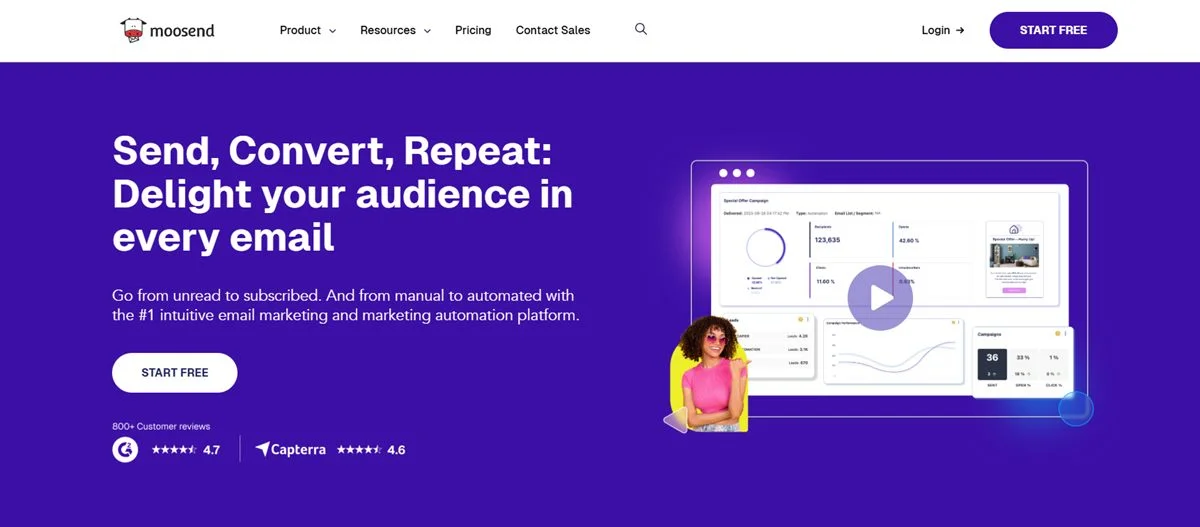
Moosend offers campaign creation, automation, templates, forms, landing pages, and reporting. It can work well for B2B teams that want automation without adopting a larger sales and customer platform.
Best for: companies that need standard email marketing and automation workflows at a moderate complexity level.
Not best for: teams that need native CRM depth, sales pipeline management, or enterprise-wide customer data tools.
Key B2B features: drag-and-drop campaign builder, automation workflows, segmentation, templates, forms, landing pages, and analytics.
Starting price: from $9/month. No free plan; free trial available. Moosend paid plans depend on list size and features.
Bottom line: Moosend is worth considering if you want a focused email automation tool without a broad CRM suite.
10. AWeber – Best for small businesses that want guided email marketing
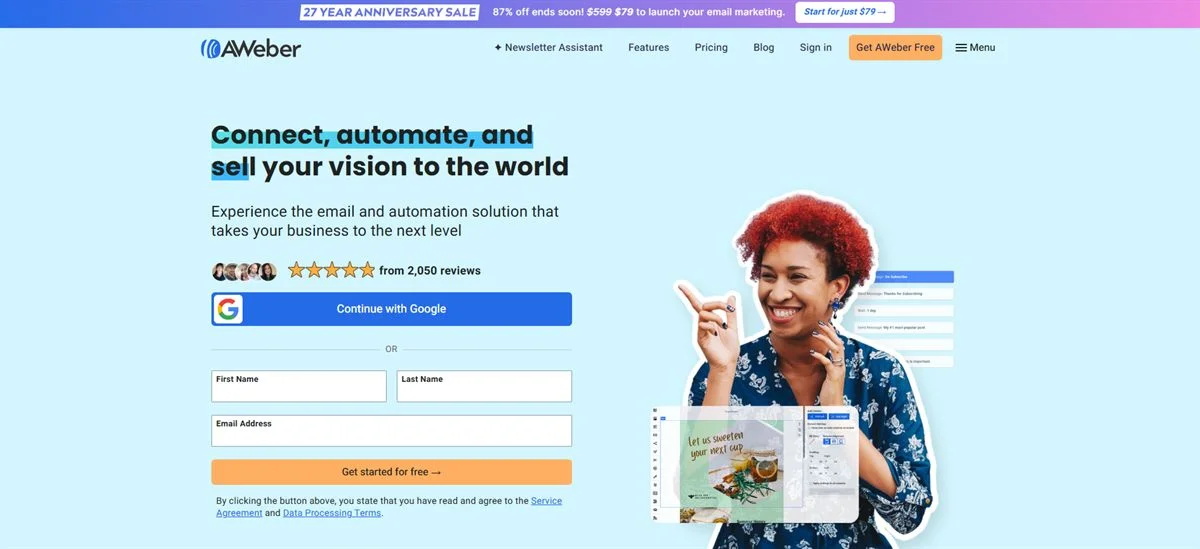
AWeber is built around email campaigns, landing pages, sign-up forms, templates, automation, ecommerce tools, and support. It is especially relevant for smaller B2B teams that want a traditional email marketing service with helpful guidance.
Best for: small businesses, consultants, agencies, coaches, and B2B service providers that want an approachable email platform.
Not best for: teams that need deep CRM, advanced lead scoring, or complex account-based workflows.
Key B2B features: email templates, landing pages, sign-up forms, automations, segmentation, analytics, integrations, and customer support.
Starting price: from $15/month. Free plan available. AWeber paid-plan limits depend on subscribers and features.
Bottom line: AWeber is a dependable small-business option when support and ease of use matter more than advanced B2B operations.
11. Constant Contact – Best for local B2B service businesses
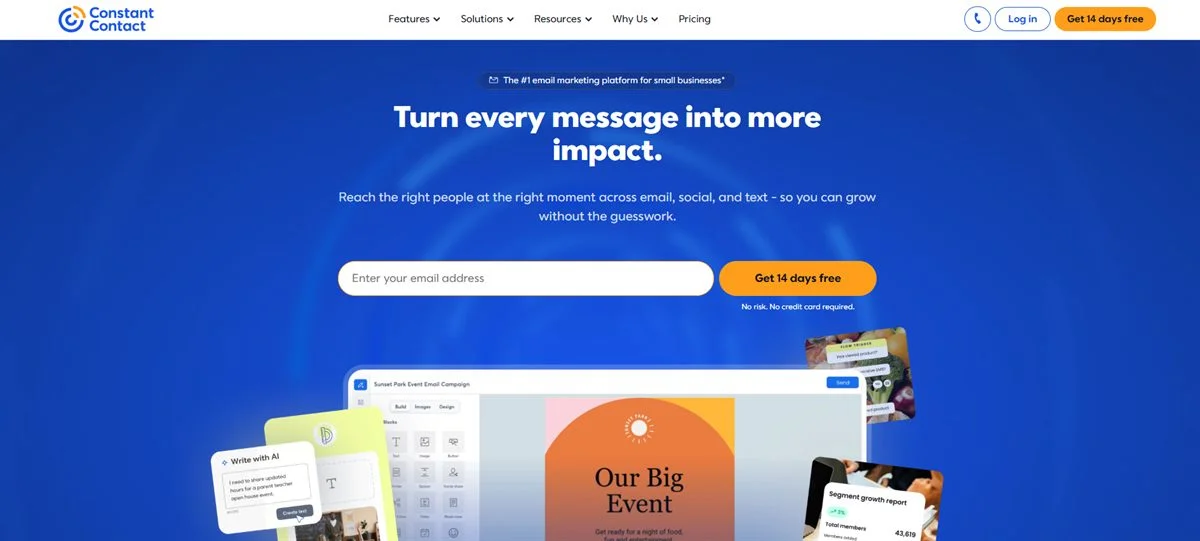
Constant Contact offers email marketing, automation, templates, list management, reporting, social posting, events, SMS, and other small-business marketing tools. It is a practical fit for B2B service companies that promote appointments, events, consultations, or local offers.
Best for: local B2B services, associations, consultants, small agencies, and businesses that run events or recurring promotions.
Not best for: companies that need a sophisticated CRM-first platform or highly technical email infrastructure.
Key B2B features: email editor, templates, automation, list management, reporting, event tools, SMS, social posting, and integrations.
Starting price: from $12/month. No free plan; free trial available. Constant Contact pricing is plan-based and can depend on contact count and features.
Bottom line: Constant Contact is useful when your B2B marketing is closer to local service marketing than complex SaaS lifecycle automation.
12. Zoho Campaigns – Best for teams already using Zoho CRM
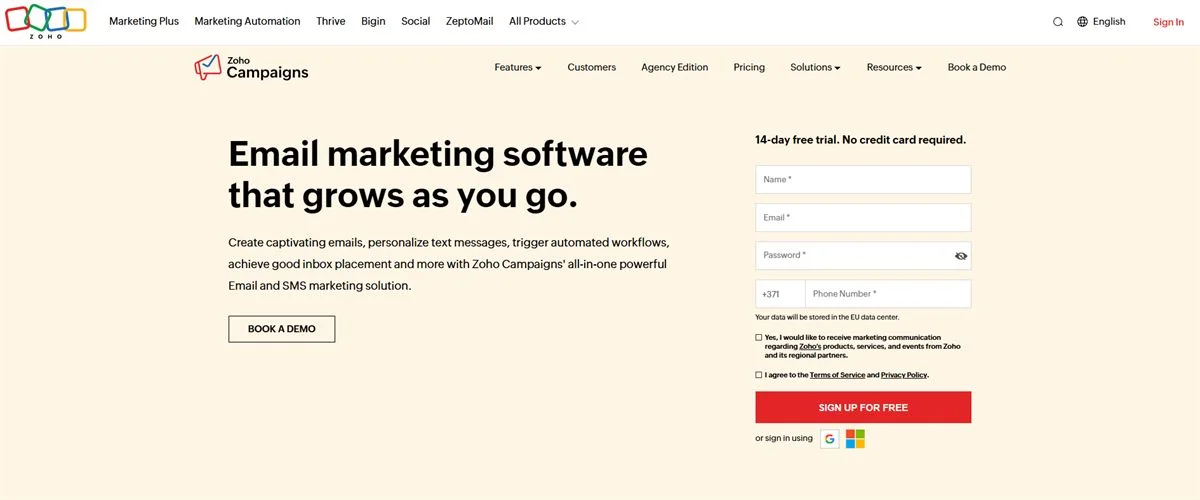
Zoho Campaigns is Zoho’s email marketing platform. Its biggest advantage for B2B teams is the fit with the broader Zoho ecosystem, especially Zoho CRM, where sales and contact data can support segmentation and follow-ups.
Best for: companies already using Zoho CRM or other Zoho apps.
Not best for: teams that do not use Zoho and want the fastest standalone email setup.
Key B2B features: email campaigns, templates, automation, list management, signup forms, segmentation, reports, and Zoho CRM integration.
Starting price: from $3/month. Free plan available. Zoho Campaigns offers several pricing approaches, including contact-based, send-based, or credit-based options depending on region and plan.
Bottom line: Zoho Campaigns makes the most sense when your sales and customer data already live in Zoho.
How to choose the right B2B email marketing software
Start with your actual workflow. If your team mainly sends newsletters and simple nurture sequences, a focused email platform may be enough. If email is tied to sales follow-up, account data, lead scoring, and pipeline reporting, choose a platform with stronger CRM or integration options.
- For affordability and ease of use: start with Selzy, MailerLite, AWeber, or Moosend.
- For CRM-connected marketing: compare HubSpot, Brevo, ActiveCampaign, and Zoho Campaigns.
- For SaaS and product email: consider Mailtrap, especially if transactional email and testing matter.
- For webinars and funnels: look at GetResponse.
- For local services and events: compare Constant Contact and Mailchimp.
Before paying, test the editor, import a sample list, build one segment, create one automation, and check reporting. A tool can look strong on a pricing page but still be too slow for your team to use every week.
FAQ: B2B email marketing software
What is the best B2B email marketing software?
There is no single best platform for every B2B company. Selzy is a strong all-around choice for affordable email marketing; HubSpot is better when CRM and sales alignment are central; ActiveCampaign is strong for complex automation; and Mailtrap is useful for SaaS teams that need both marketing and email infrastructure.
What features matter most for B2B email marketing?
The most important features are segmentation, automation, personalization, deliverability support, analytics, A/B testing, and CRM or data integrations. These features help you manage long buying cycles and send different messages to different decision-makers.
Do B2B companies need marketing automation?
Most B2B companies benefit from automation once they have more than one lead source or more than one follow-up path. Automation can welcome new leads, deliver gated content, follow up after webinars, remind prospects about demos, and re-engage inactive contacts.
Should B2B teams choose a CRM or an email marketing platform?
Many teams need both. A CRM stores account and sales activity, while an email marketing platform sends campaigns and automations. If your CRM is central to your process, choose an email tool that integrates well with it or a platform that includes both.
Final thoughts
Email marketing is an essential channel for B2B companies that want to nurture leads, educate buyers, support sales, and stay visible during long decision cycles. The right tool should fit your team size, budget, list growth, automation needs, and sales workflow.
If you want a practical starting point, compare Selzy, Brevo, HubSpot, ActiveCampaign, Mailchimp, Mailtrap, GetResponse, MailerLite, Moosend, AWeber, Constant Contact, and Zoho Campaigns against one real campaign you plan to run. The best platform is the one your team can use consistently, measure clearly, and scale without rebuilding your whole process later.
And after you find the best email marketing solution for your needs, follow the email marketing checklist to make sending campaigns smoother.

 New and noteworthy on our blog