


Key takeaways
- True personalization in emails goes beyond just adding recipient details; it involves understanding their current goals, frustrations, and desires.
- Dynamic customer personas that evolve based on new data help in creating more relevant and personalized content.
- The author's writing style, including tone, vocabulary, and sentence structure, plays a crucial role in making emails feel human and authentic.
- Incorporating company context, such as brand values, products, unique voice markers, and different markets, adds depth and uniqueness to emails.
Have you noticed that many emails sound the same these days? AI has made it a walk in the park to send more newsletters faster, but it has also made it easier to create generic copy that feels like it was written for no one in particular. So, how to humanize AI emails and make them sound more human?
What can really grab your recipient’s attention is when a message reflects what they care about at the moment, what’s slowing them down, and what would make their day easier.
In this article, we break down a simple formula for achieving it: combining dynamic customer personas, your own writing style, and your company’s context. Together, these elements produce effective AI-powered emails that feel more authentic.
Why email personalization ≠ tokenization?
You probably know everything about the basics of email marketing personalization: adding a recipient’s name, a company, or an anniversary date with merge tags. So, when people talk about “personalized” emails, they often mean just adding those tokens, and there’s that.
This trick is easy, but it doesn’t create a real connection. Readers know it’s just a database merge. It may grab their attention for a second, but it won’t make the message feel relevant. Emails like that risk feeling robotic and forgettable.
True personalization is different. It’s about context, not just contact. Instead of sprinkling tokens, you focus on three things:
- Jobs: What is this person trying to achieve right now?
Building a campaign before a festive rush, spending two hours designing and testing a newsletter instead of eight, learning how to use automation for the first time, or preparing a last-minute report for their manager.
- Pains: What slows them down or frustrates them?
No time to sit designing for hours, lack of coding skills, struggling to make the interactive email look good on mobile, or worrying about sending something with a technical mistake.
- Gains: What would make them feel successful or satisfied?
Saving two hours of work, getting a polished template approved by their boss on the first try, seeing more clicks from a campaign, or feeling more confident using the tool.
This “jobs/pains/gains” framework produces customer-centric communication instead of mechanical personalization. When you combine it with AI, dynamic customer personas, and an author’s writing style, you move from tokenization to true personalization.
There’s a variety of email marketing tools out there that can help you mix your persona and unique tone of voice.
In the image below, you can see a tool example where you can combine your personas with a brand voice by using a quite simple prompt. It will help you generate personalized emails that feel authentic and on brand.

Ingredient 1: Dynamic customer personas
Static personas are like old family photos: They may be nice to look at, but they no longer reflect reality. If you build emails only around a few fictional personal details such as “Mark, 35, email marketer with three years of experience, lives in São Paulo,” you’ll quickly miss the mark. People’s needs, jobs, and motivations constantly change.
In contrast, dynamic personas are alive. They update as soon as you get new data (survey answers, website behavior, campaign results, or even direct replies from subscribers). Each new signal refines the picture.
Imagine this scenario:
Someone downloads your free template, and you tag them as “beginner.”
↓
Then, you see they’re actively testing automation workflows. It means that this customer persona evolved, and you can start offering them more advanced content.
↓
A month later, the same persona starts exporting emails for multiple clients. Now it’s a great time to recognize them as an “agency professional” and adjust your emails for them.
In the example below, there’s a fragment of an email tailored to the subscriber’s interests and recent behavior.

Each of these steps changes not just who they are but how you should talk to them through your emails. Another ingredient that will help you personalize AI emails is the author’s writing style.
Ingredient 2: Author’s writing style
Imagine that one marketer writes in a casual tone, using short sentences, a few emojis, and light humor. Another uses a formal tone, characterized by structured paragraphs, polite transitions, and no slang. A third has a mentor vibe: supportive, explaining with simple analogies, step by step.
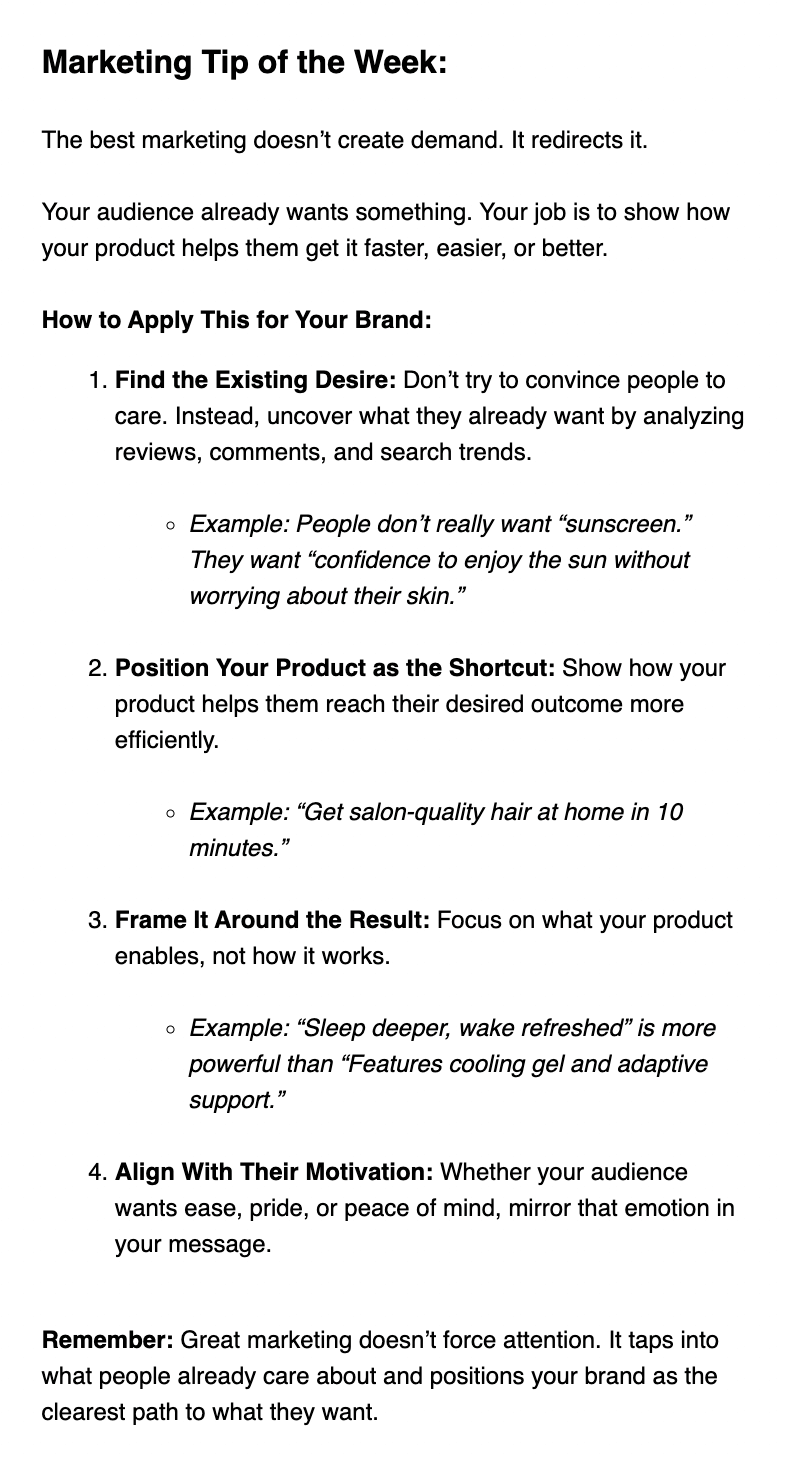
Each style shapes how your audience receives the personalized message. For example, a newsletter from Chase Dimond with email marketing tips is instantly recognizable in your inbox thanks to the unique author’s style.
What makes up an author’s writing style?
- Tone of voice (friendly, formal, humorous, motivational).
- Vocabulary (simple daily words vs. professional jargon).
- Sentence structure (it can be short and punchy or long and tech-oriented, depending on your audience and writing style).
How to make emails feel human?
The good news is that AI can analyze your (or other copywriters’ from your team) past emails or blog posts and identify a unique style based on examples. With just a handful of samples, AI can detect recurring tone patterns, preferred words, and even pacing.
Why this matters: If you consistently write in your own recognizable style, subscribers start to “hear” your voice in their inbox. When multiple authors work in one company, you can create an entire library of styles, like a chorus of voices. That way, you can delegate writing without losing consistency.
How to capture and reuse your style with AI
- Collect samples
Ask your copywriters to provide 5-10 textual samples. These can be emails, blog articles, or social media posts — anything that feels very genuine and reflects their style. For this analysis, it’s crucial to avoid using any AI-generated content.
- Ask AI to analyze
You can use a prompt such as “Analyze this writing and describe the tone, vocabulary, sentence structure, and common patterns.”
- Document the rules
Use the findings of the previous step to produce a short “style guide” (e.g., “Use short sentences, rhetorical questions, a friendly but professional tone, and real-life examples”).
- Reuse in prompts
The next time you generate a copy, include the style guide’s rules, for example, “Write in my style: short sentences, warm tone, real-world analogies, structured with bullet points.”
This way, you humanize AI emails, the personalized message echoes your own unique voice, and your subscribers will hear it.
Ingredient 3: Company context
Even the most detailed persona and authentic author’s style won’t feel complete without the company’s own context. Think of it as the backdrop on a stage: values, mission, and brand DNA. Without it, your emails could have come from anyone, whereas you want your brand voice to be recognizable and unique.
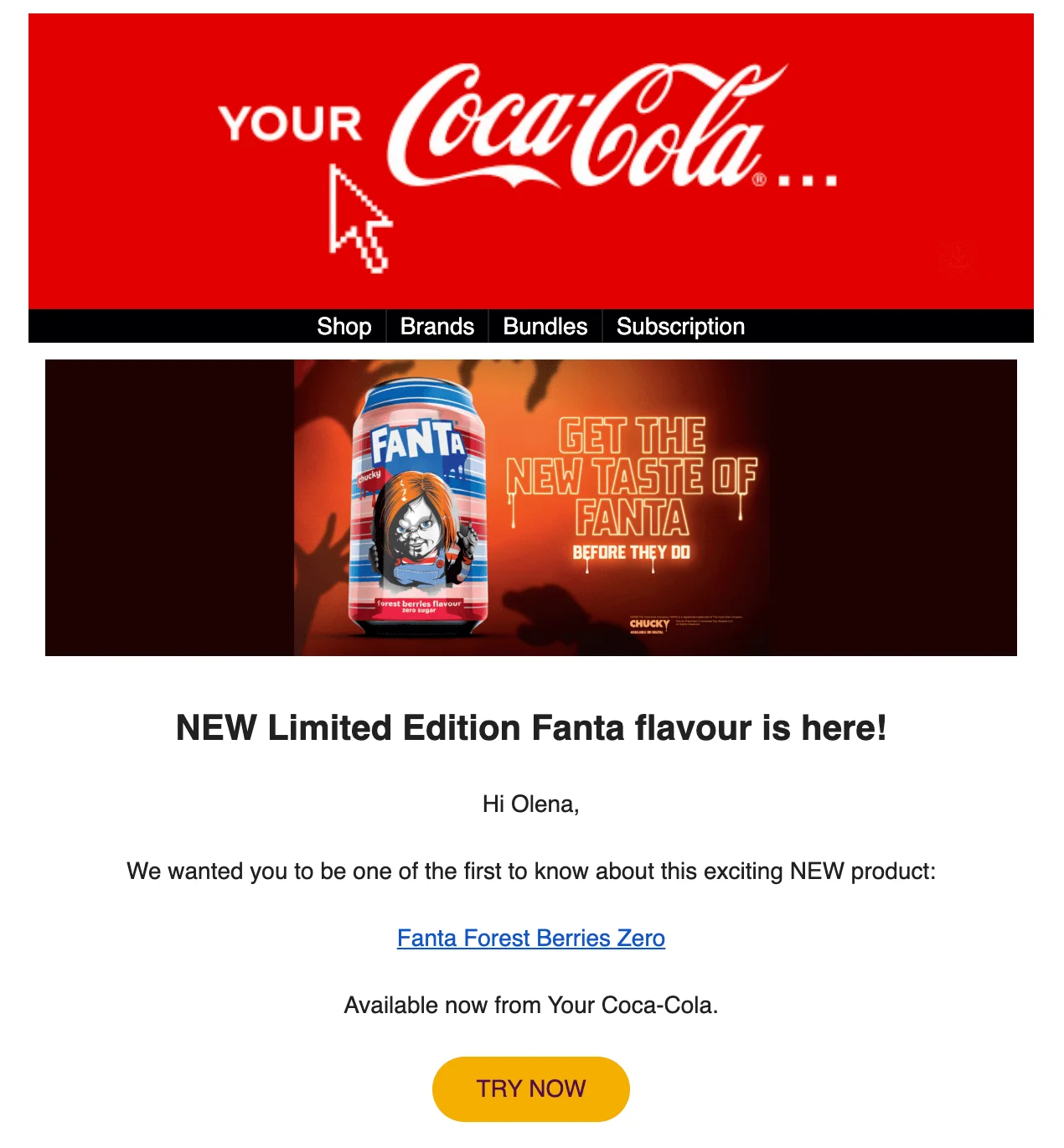
In the example below, you can see a pretty simple email from Coca-Cola promoting their new product (a banner, a brief copy with a link, and a single CTA). But you can recognize the sender within seconds, right?
What does company context include?
- Brand values and mission
What does your company stand for? Is it about simplicity, innovation, sustainability, or affordability?
- Products and services
It’s crucial not just to promote them but to focus on the problems they solve (e.g., speed up the production process, let users create beautiful personalized emails without coding skills, and more).
- Different markets and regions
The same product can be framed differently for a startup founder in Berlin or a small shop owner in São Paulo.
- Unique voice markers
Phrases, metaphors, and even humor that your team naturally uses.
Imagine a design platform that wants to make design accessible to everyone. When this context is included, an email to a busy business owner might say, “Even if you’ve never touched design tools before, you can launch a polished campaign in under 10 minutes.”
If you don’t add the context, your email may look like a random product update: “We’ve added new templates for faster design.”
See the difference? Context turns a simple feature update into a story aligned with your own brand values.
A formula for customer-centric emails
After assembling all these ingredients, you may be wondering how to put them together. Here’s our simple formula:
Context = persona + author style + company profile
Personalized email = brand kit + context + prompt
- Persona defines the recipient’s expectations based on their goals, frustrations, and desires.
- Author style helps you make your message human and on brand.
- Brand kit brings in visual identity and assets.
- Prompt activates the AI to generate the message.
The key idea is to define your persona, generate a unique author’s style, add your company context, and use these elements in prompts. Here is a prompt example with the persona information, the tone of voice, and the company context:
Create a product update email for marketers.
Persona: junior marketing specialist at a SaaS company spending too much time on email design.
Use the CompanyABC tone of voice: practical and optimistic.
Mention the modular email design feature that allows users to design email elements once and then reuse them across multiple campaigns.
Keep it under 150 words and highlight time savings.
It’s also crucial to remember the goal of your campaign as it sets the direction (what you want this email to achieve: inform, inspire, or drive action).
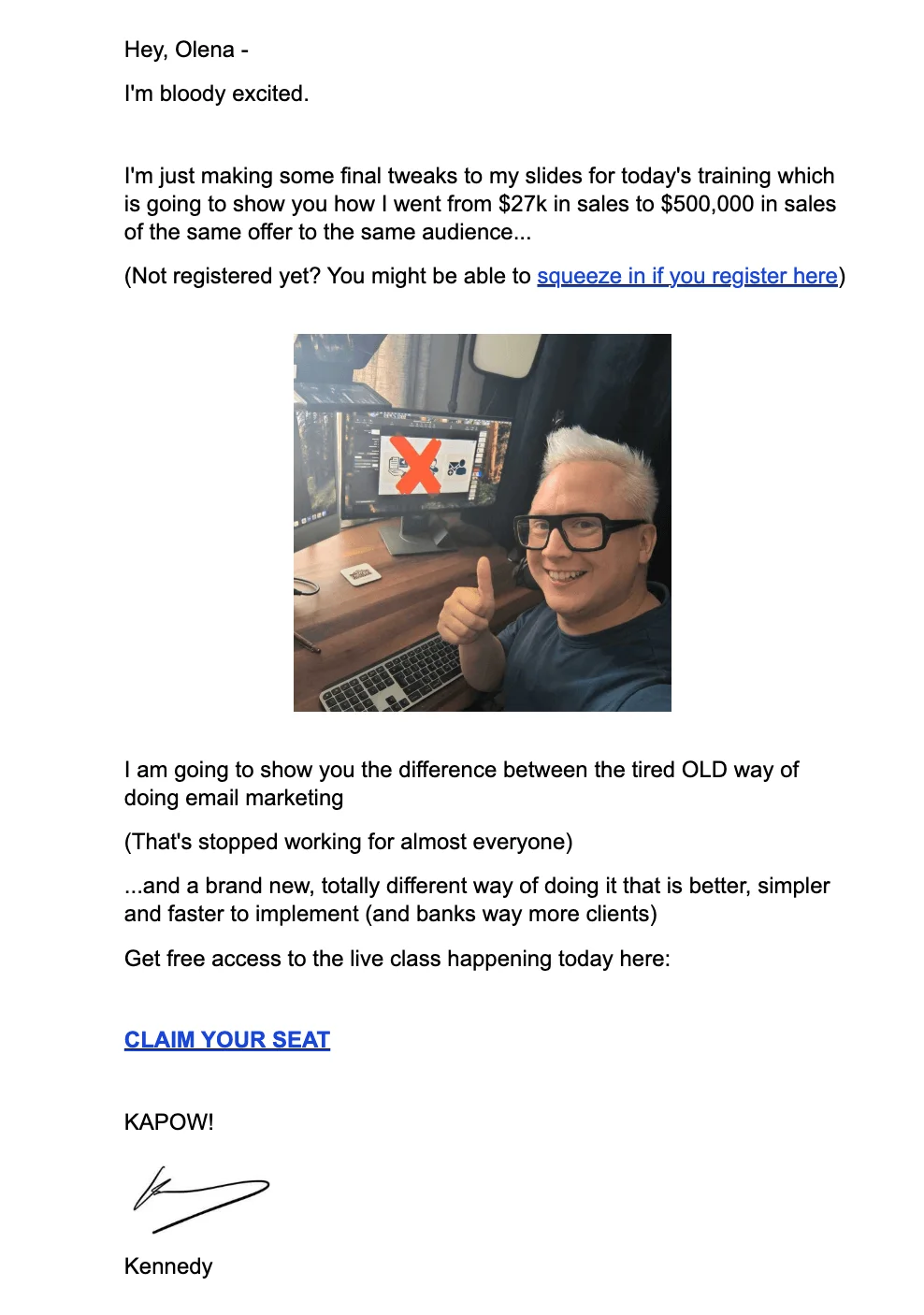
The email below sounds like it was written specifically for the recipient and doesn’t look like a generic copy from any inbox. Besides, it also includes a clear goal you just can’t miss (an engaging invitation to the live class).
AI then serves as the interpreter. You don’t just say, “Write an email about a new feature.” You guide it with all three ingredients to get a truly personalized email in a short time.
Wrapping up
The good news is that AI isn’t here to replace you; without human guidance, it provides generic, one-size-fits-all emails that don’t appeal to any audience’s specific needs and interests.
But with AI, you can save time and write highly personalized emails that sound human simultaneously. The key is to blend three ingredients: a dynamic customer persona, the author’s unique writing style, and your company context.
After feeding this essence of true personalization to AI, you’ll no longer have to send out dull, robotic copies. Instead, you’ll get humanized emails and say exactly what you want to convey to your recipients.
 New and noteworthy on our blog