


Key takeaways
- Email marketing is evolving rapidly with the influence of AI, privacy updates, and deeper segmentation and automation by ecommerce teams.
- A good email marketing blog should provide practical advice, be current, offer clear context, be easy to scan, and link to credible data.
- Best email marketing blogs for beginners include Selzy, Mailchimp, EmailOctopus, and Campaign Monitor.
- Blogs for strategy and growth are GetResponse, Klaviyo, Moosend, and Drip.
- For design, testing, and deliverability, consider Litmus, Email on Acid, Really Good Emails, and Email Love.
Email marketing changes quickly: AI affects how inboxes summarize messages, privacy updates make opens harder to read, and ecommerce teams keep pushing deeper segmentation and automation. A good email marketing blog helps you keep up without turning every update into another browser tab you never reopen.
We reviewed the current search results for email marketing blogs and refreshed this list around practical use cases: beginner education, strategy and growth, design inspiration, testing, deliverability, and adjacent resources that make email campaigns better.
What makes a good email marketing blog
A good email marketing blog should help you make better campaign decisions, not just publish generic tips. Before adding a blog to your reading list, check whether it is current, practical, and clear about the context behind its advice.
- It is active. Email marketing guidance ages quickly, so look for recent posts, updated guides, or current benchmark reports.
- It is practical. The best posts show examples, workflows, screenshots, templates, or decision criteria you can apply.
- It is honest about context. Advice for ecommerce automations may not fit a nonprofit newsletter, and enterprise deliverability advice may be overkill for a small list.
- It is easy to scan. Clear headings, summaries, tables, and examples make a resource useful when you need an answer fast.
- It links to credible data. Benchmarks, studies, and product claims should be sourced or explained.
Best email marketing blogs: quick comparison
| Blog | Best for | Level | Main topics | Why follow |
| Selzy | Clear email marketing guides | Beginner to intermediate | Campaigns, automation, examples, strategy | Simple explanations with practical examples |
| Mailchimp | Small business basics | Beginner | Lists, segmentation, ecommerce, brand stories | Broad resource library from a long-running ESP |
| EmailOctopus | Straightforward newsletter advice | Beginner | Newsletters, automation, design, trends | Fresh and accessible posts, including 2026 topics |
| Campaign Monitor | Newsletter design and AI-era tips | Beginner to intermediate | Design, copy, automation, AI, agencies | Strong practical blog hub in the SERP |
| GetResponse | Long-form guides and automation | Intermediate | Automation, ecommerce, funnels, newsletters | Detailed posts and current 2026 guides |
| Klaviyo | Ecommerce lifecycle marketing | Intermediate to advanced | Email, SMS, customer data, campaign strategy | Active 2026 blog with ecommerce-heavy insight |
| Moosend | Small business marketing tactics | Beginner to intermediate | Email software, newsletters, automation, templates | Active blog hub ranking in the SERP |
| Drip | Ecommerce email strategy | Intermediate | Lifecycle emails, ecommerce growth, segmentation | Good for store owners and DTC teams |
| Litmus | Email testing and industry research | Intermediate to advanced | Trends, QA, accessibility, deliverability | Strong research and email-production depth |
| Email on Acid | Email code and pre-send QA | Advanced | HTML, rendering, dark mode, accessibility | Useful when production quality matters |
| Really Good Emails and Email Love | Design inspiration | All levels | Email examples, templates, code inspiration | Large searchable libraries of real emails |
Best email marketing blogs for beginners
Start with these blogs if you want clear explanations, campaign ideas, and practical email marketing fundamentals.
1. Selzy
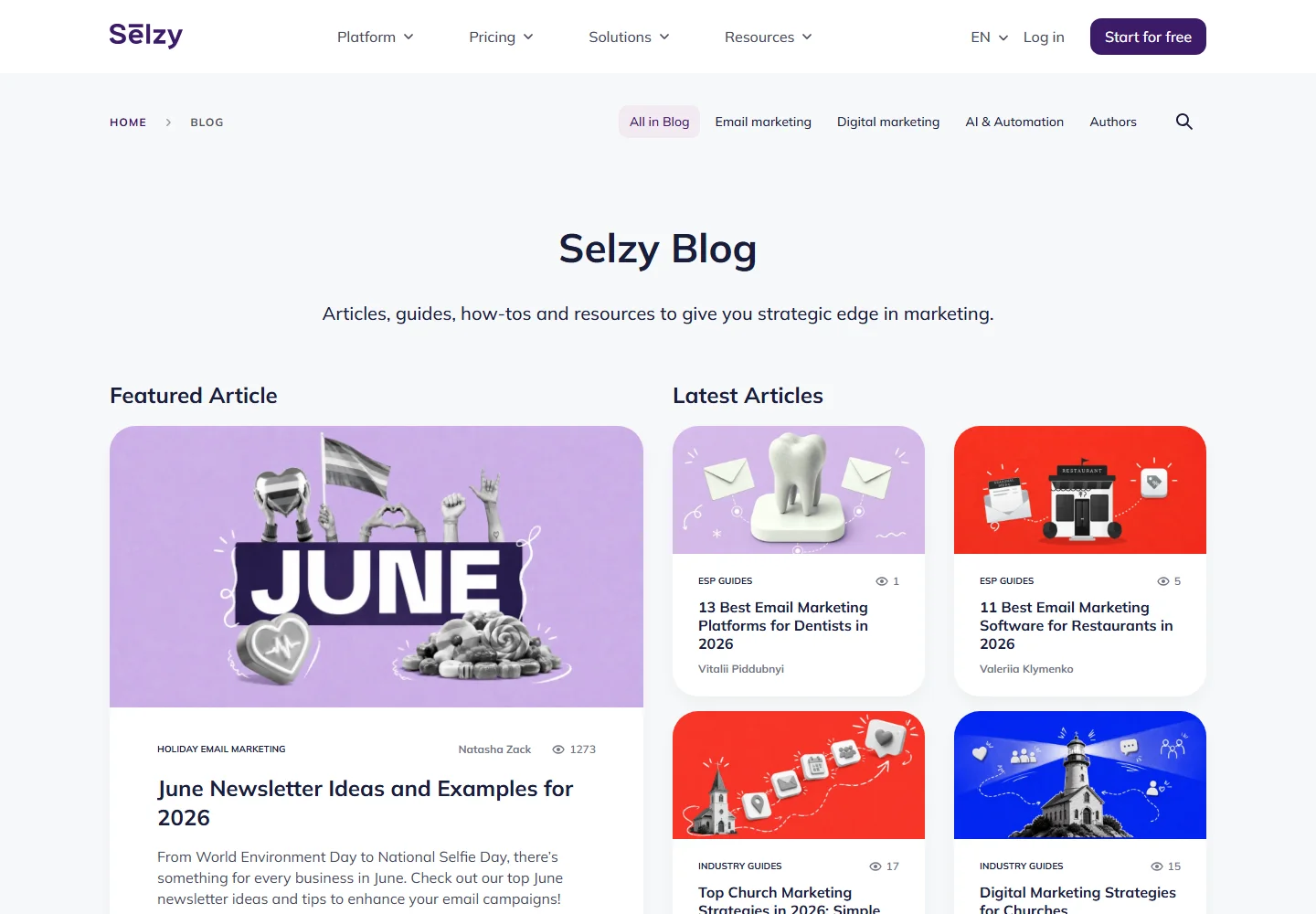
Best for: marketers who want clear, example-based email marketing advice without unnecessary jargon.
Why follow:
- The blog covers email campaigns, automation, newsletters, deliverability basics, examples, and platform comparisons.
- Selzy often explains topics with screenshots, examples, and practical takeaways instead of abstract theory.
- It is especially useful when you want to turn a concept into a campaign your team can actually send.
Look for:
- how-to guides, campaign examples, email marketing strategy posts, platform comparisons, and seasonal campaign ideas.
Keep in mind: Selzy is also an email marketing platform, so product-related articles should be read with that context in mind.

2. Mailchimp
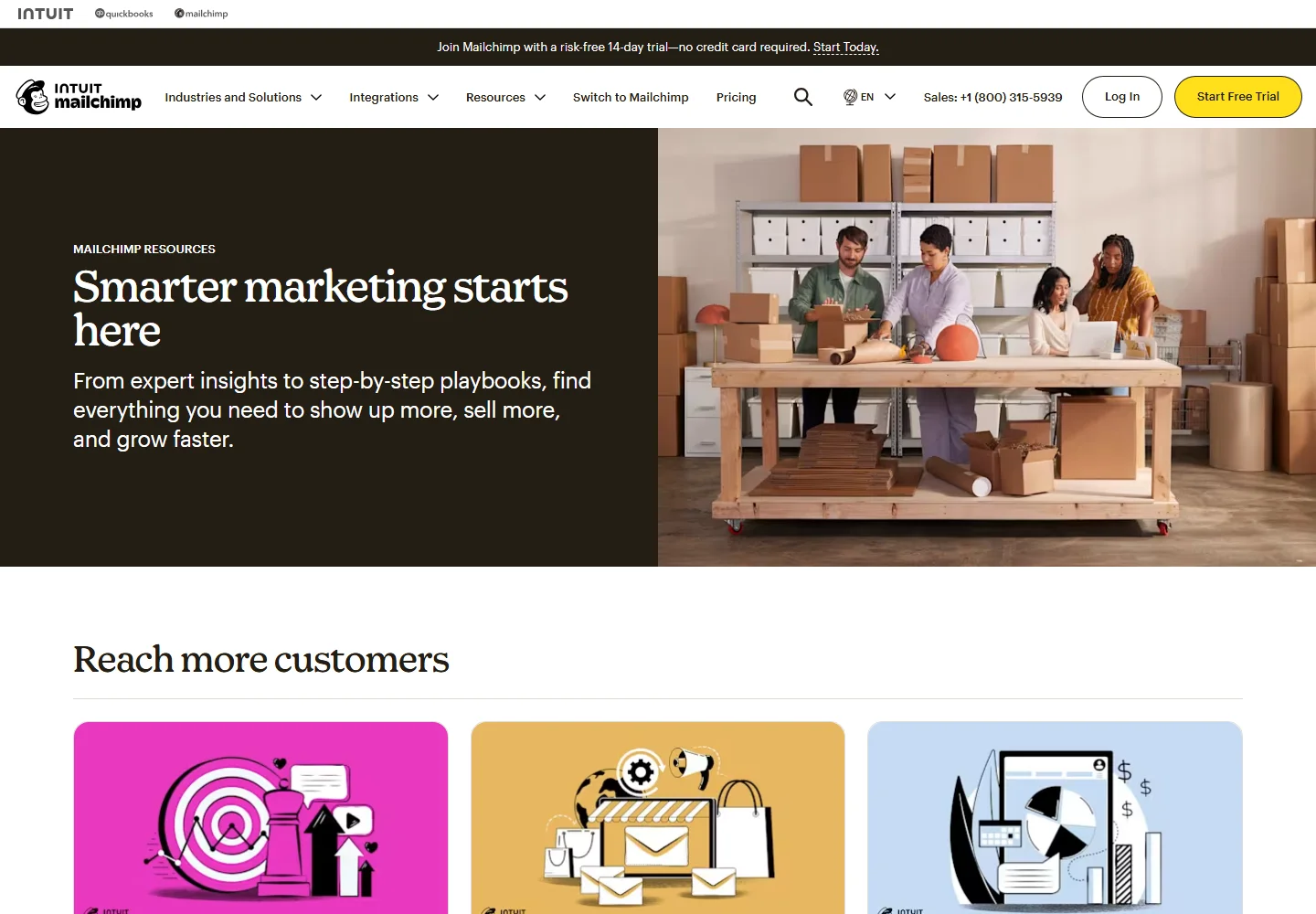
Best for: small businesses and beginners learning the basic language of email marketing.
Why follow:
- Mailchimp has a large resource library that covers email lists, segmentation, automation, ecommerce, and customer journeys.
- The content is approachable for teams that are still learning how email marketing fits into their broader marketing plan.
- It also includes brand and entrepreneurship content that can help with campaign positioning.
Look for:
- beginner email marketing explainers, list growth guides, ecommerce resources, and customer story content.
Keep in mind: Many resources naturally connect back to the Mailchimp product, so compare advice with vendor-neutral sources when choosing tools.
3. EmailOctopus
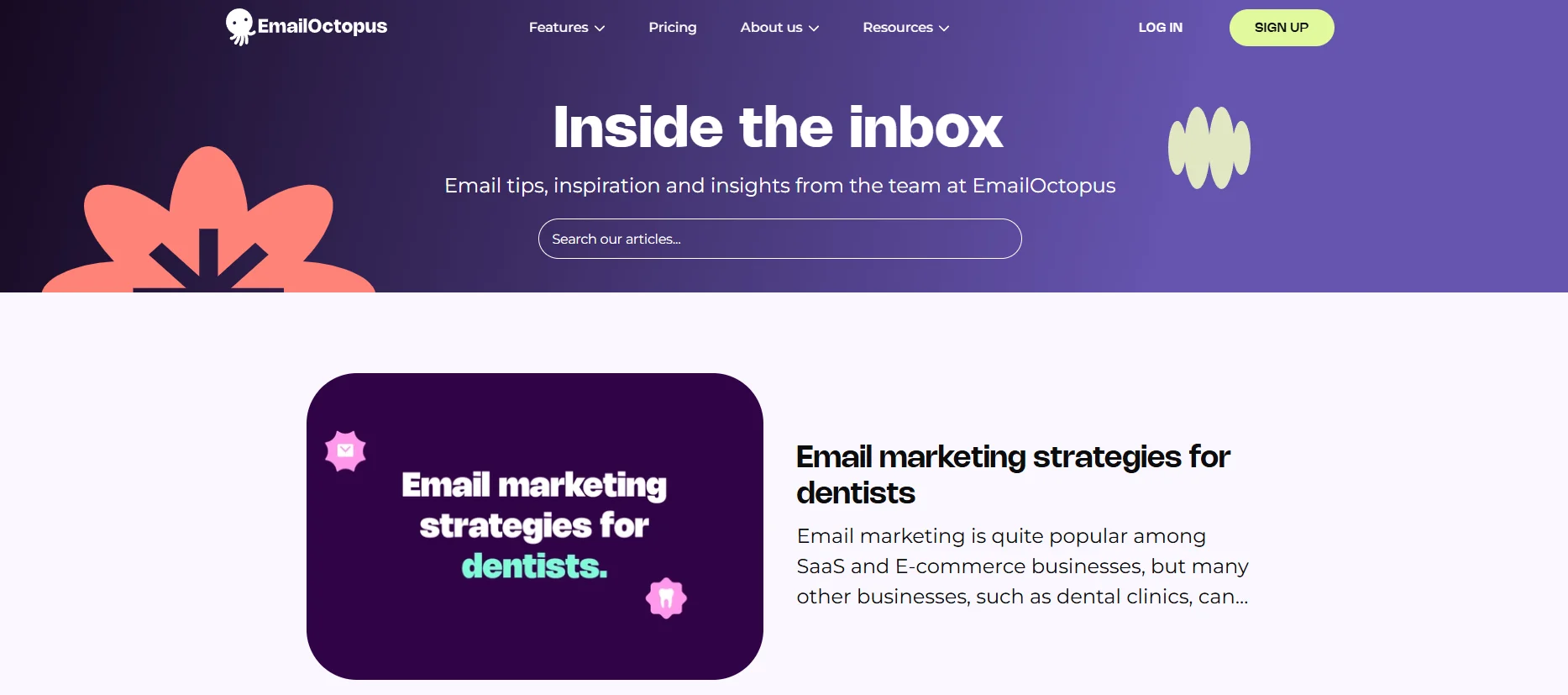
Best for: simple newsletter advice, automation basics, and email design ideas.
Why follow:
- EmailOctopus ranks at the top of the current SERP for this keyword and has current posts on email design trends and 2026 email marketing trends.
- The blog is easy to scan and useful for smaller teams that want focused advice rather than a huge marketing library.
- It covers newsletters, automation, creator workflows, and practical campaign improvements.
Look for:
- newsletter strategy, automation templates, email design trends, and case studies from small teams or creators.
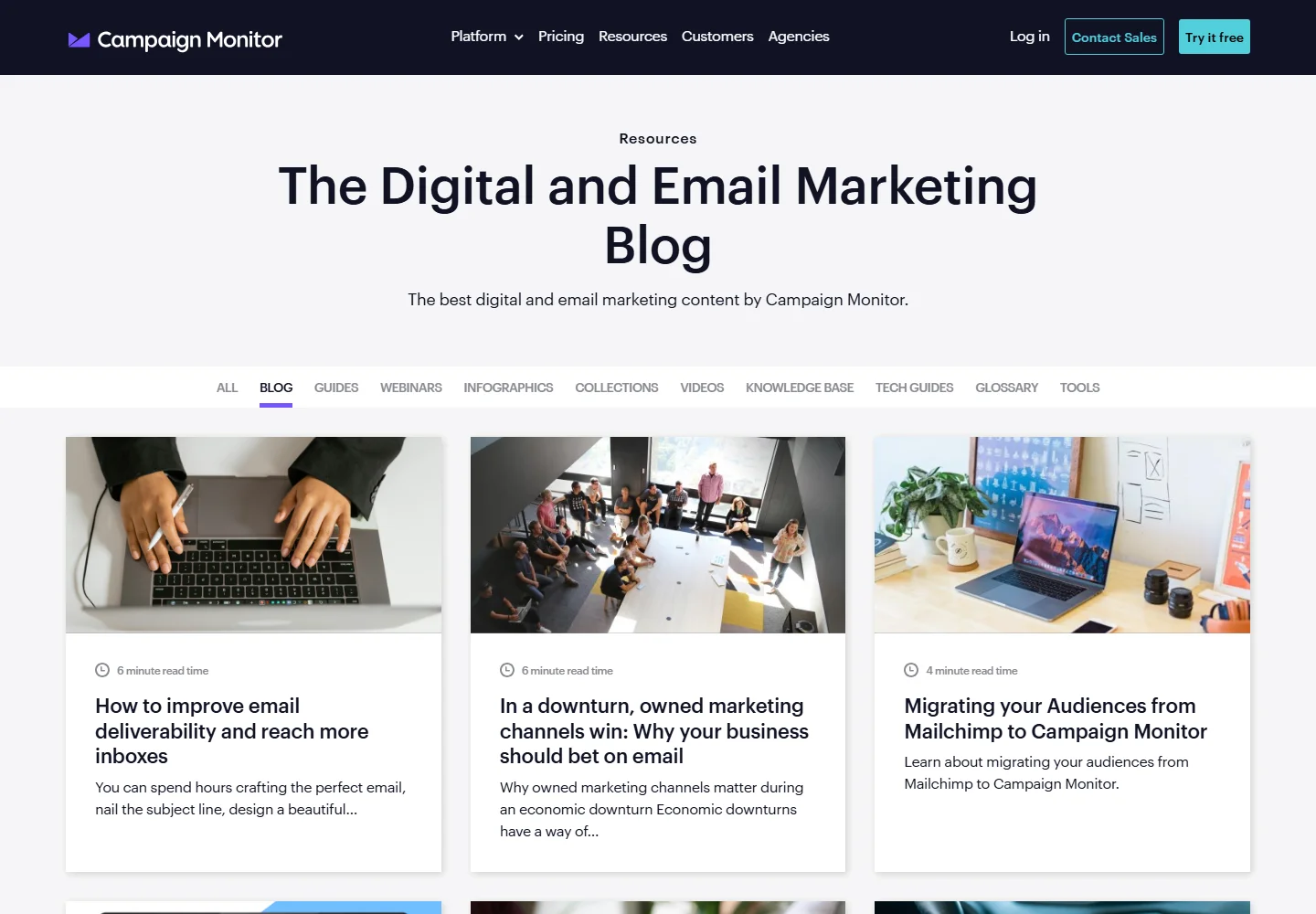
Best for: newsletter design, copywriting ideas, and practical campaign improvement.
Why follow:
- Campaign Monitor’s blog remains active and includes current AI, newsletter, and automation resources.
- The archive is useful for design, copy, agencies, and examples of effective email campaigns.
- It is a strong resource when you want polished newsletters and brand-consistent campaigns.
Look for:
- newsletter design posts, copywriting tips, AI marketing resources, agency guides, and automation ideas.
Keep in mind: Some posts focus on Campaign Monitor’s own positioning, so use it alongside broader resources.
Best email marketing blogs for strategy and growth
These blogs are better for marketers who already know the basics and want deeper ideas for automation, ecommerce, lifecycle marketing, and growth.
5. GetResponse
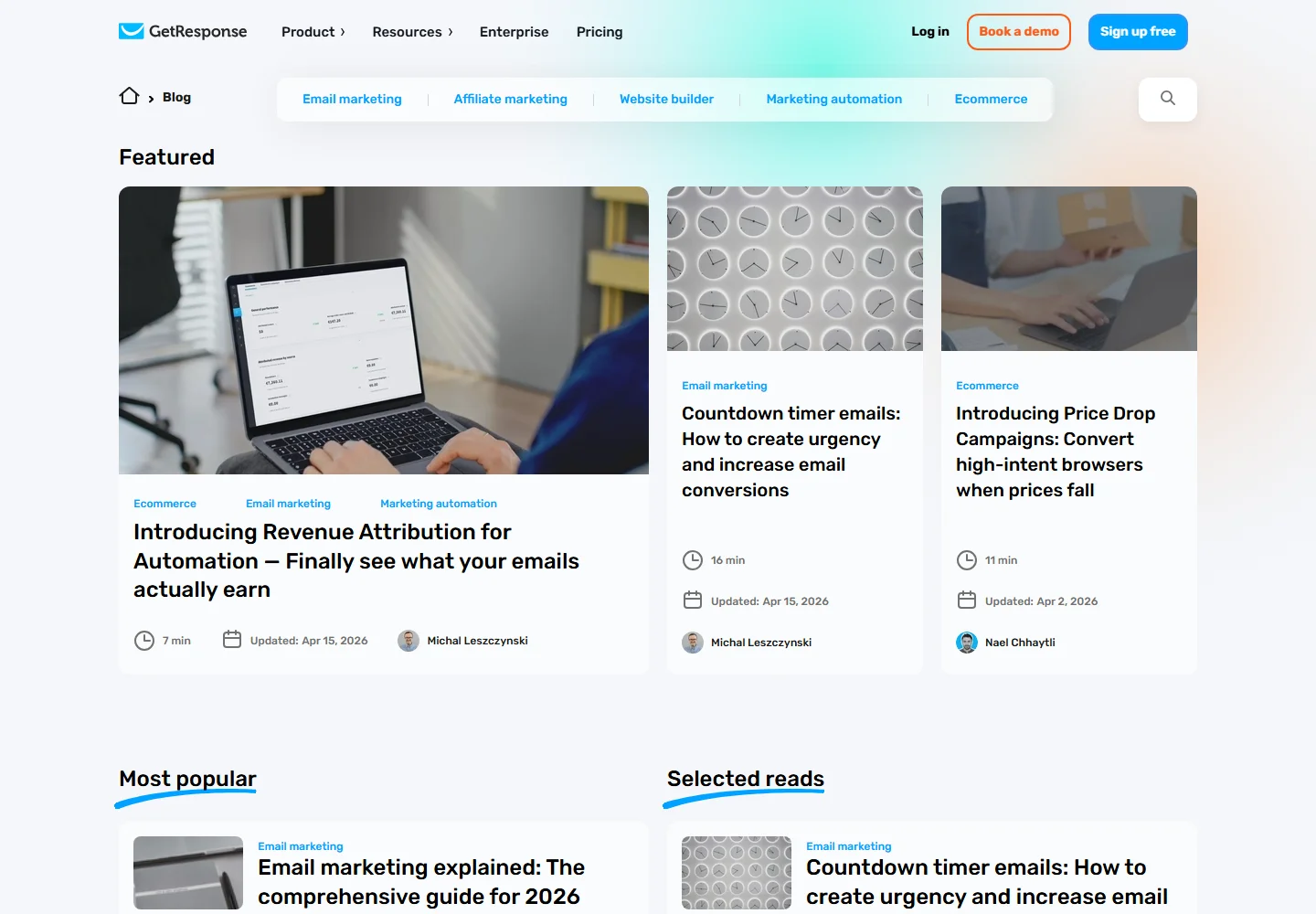
Best for: long-form guides, automation, funnels, and ecommerce marketing.
Why follow:
- GetResponse publishes detailed guides and keeps major posts updated, including email marketing guides for 2026.
- The blog covers email marketing together with automation, ecommerce, landing pages, webinars, and conversion funnels.
- It is useful when you want more than a quick checklist and have time for a deeper read.
Look for:
- email marketing guides, automation posts, ecommerce marketing trends, newsletter software comparisons, and product update explainers.
Keep in mind: Long posts can be dense, so use the blog when you need depth rather than fast inspiration.
6. Klaviyo
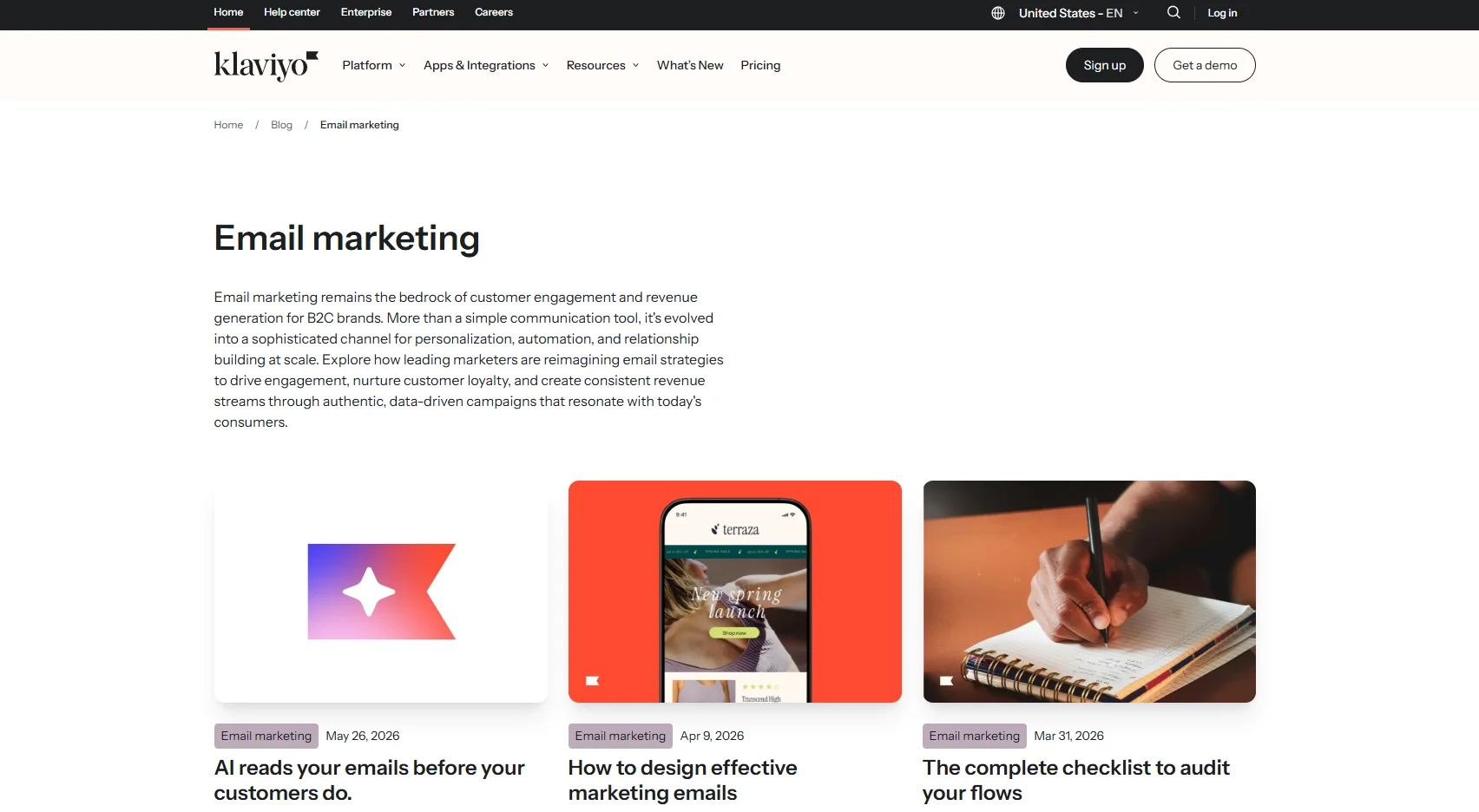
Best for: ecommerce marketers working with customer data, lifecycle campaigns, and revenue-focused email.
Why follow:
- Klaviyo has an active 2026 blog with recent posts on email marketing, campaign strategy, AI, and ecommerce trends.
- The content is strong for lifecycle flows, segmentation, retention, and performance-oriented ecommerce campaigns.
- It helps connect email marketing to SMS, customer data, and broader customer journeys.
Look for:
- email marketing best practices, ecommerce campaign ideas, segmentation, AI and inbox changes, lifecycle flows, and retention strategy.
Keep in mind: Klaviyo’s point of view is heavily ecommerce and product-led, so it may be less relevant for B2B, nonprofits, or simple newsletters.
7. Moosend
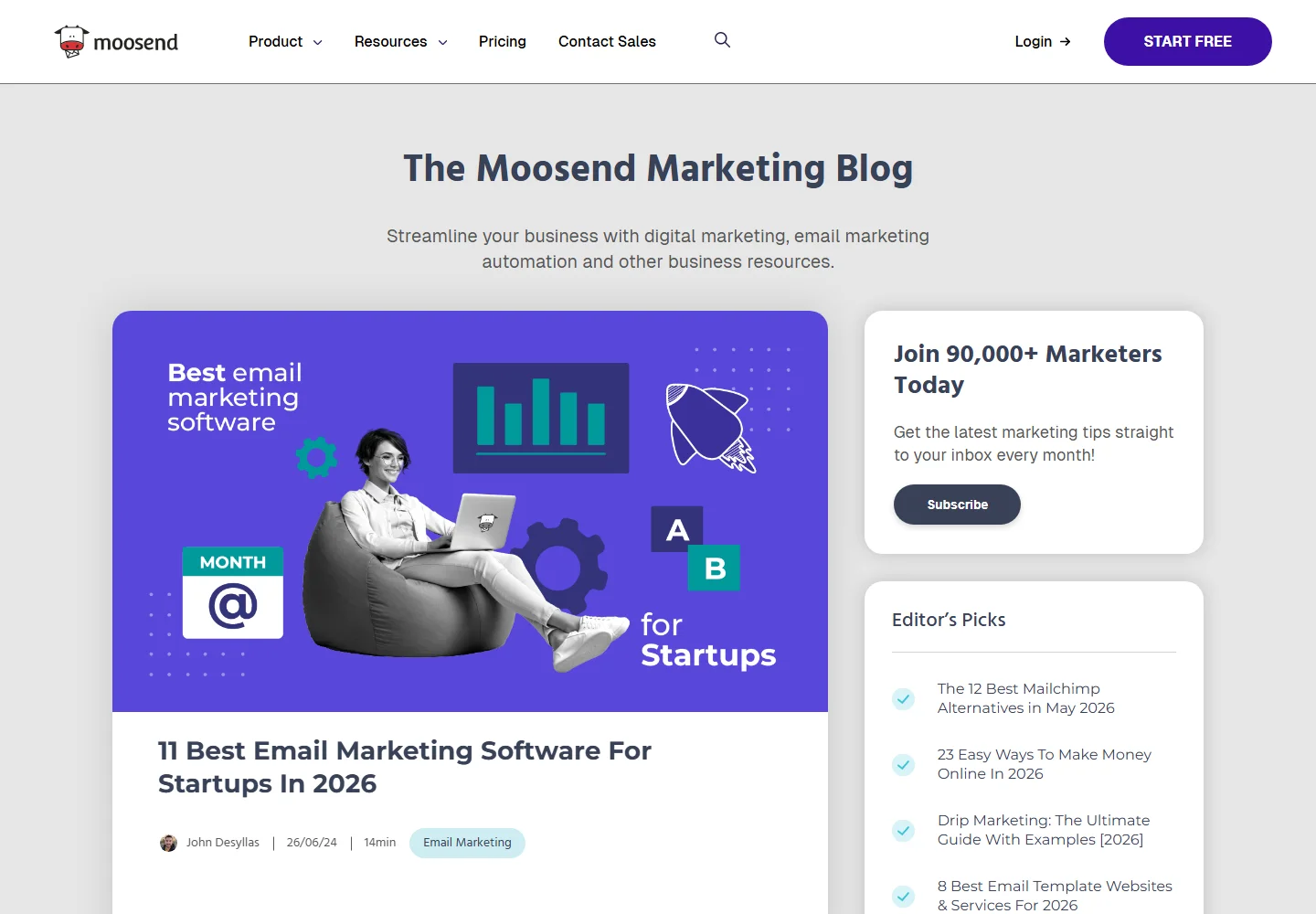
Best for: small businesses comparing email tools, newsletter ideas, and automation tactics.
Why follow:
- Moosend’s blog ranks in the current SERP and is actively updated with email marketing software and newsletter resources.
- It balances beginner-friendly explanations with practical tool comparisons and campaign ideas.
- The blog is useful when you want tactical advice without jumping straight into enterprise-level marketing operations.
Look for:
- email newsletter software comparisons, automation guides, template ideas, list-building posts, and small-business email marketing tips.
Keep in mind: Like other ESP blogs, some comparison content may reflect product positioning.
8. Drip
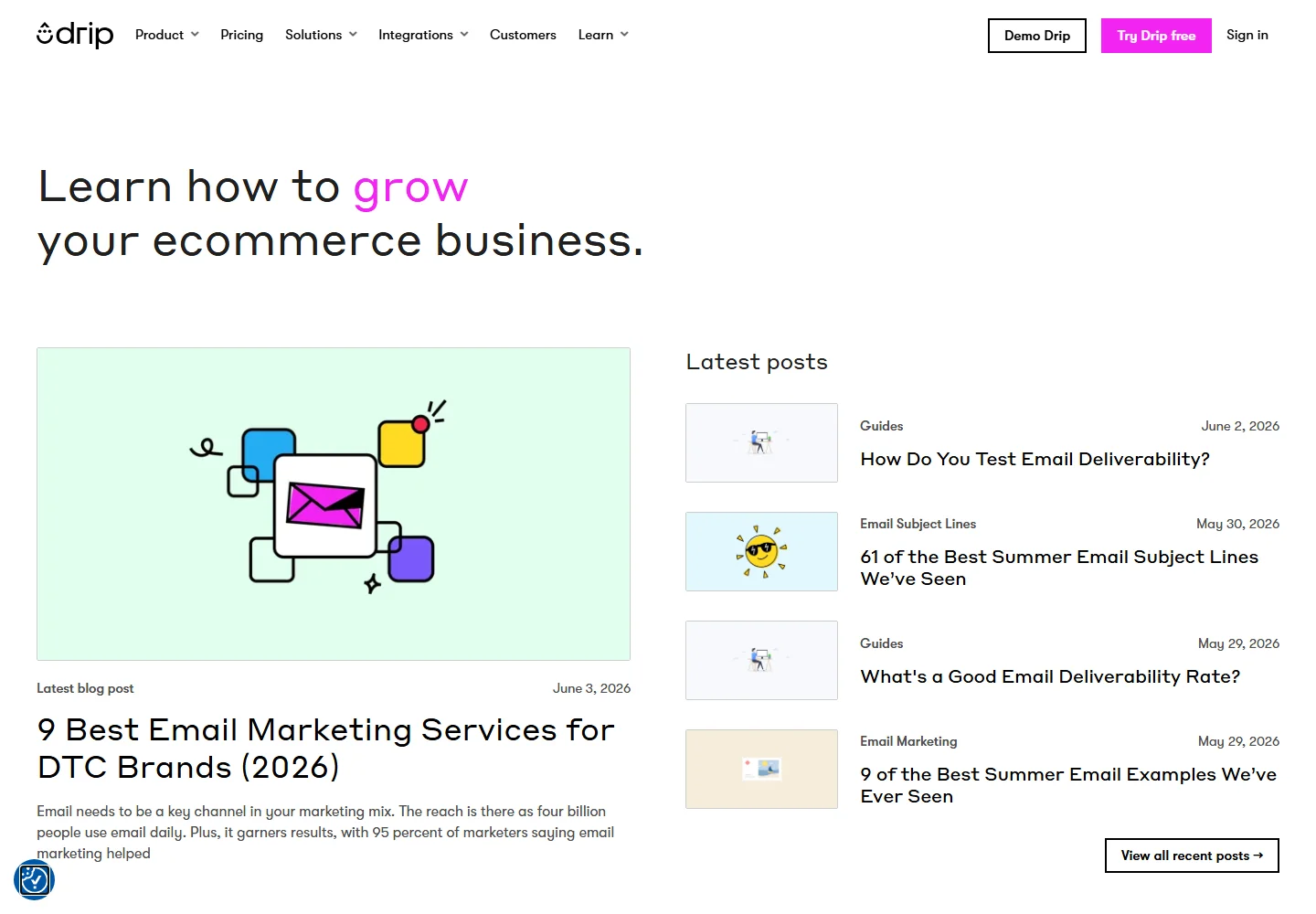
Best for: ecommerce stores and DTC teams building lifecycle campaigns.
Why follow:
- Drip focuses on ecommerce email marketing and the customer journeys that support repeat purchases.
- The blog is useful for segmentation, personalization, abandoned cart flows, post-purchase emails, and store growth.
- It is a good bridge between simple email tactics and more advanced revenue-focused strategy.
Look for:
- ecommerce lifecycle campaigns, automation ideas, segmentation, retention, and email examples for online stores.
Keep in mind: The ecommerce focus is a strength for stores but may be too narrow for some B2B or nonprofit readers.
Best email marketing blogs for design, testing, and deliverability
Use these resources when you are improving how emails look, render, and perform across inboxes and devices.
9. Litmus
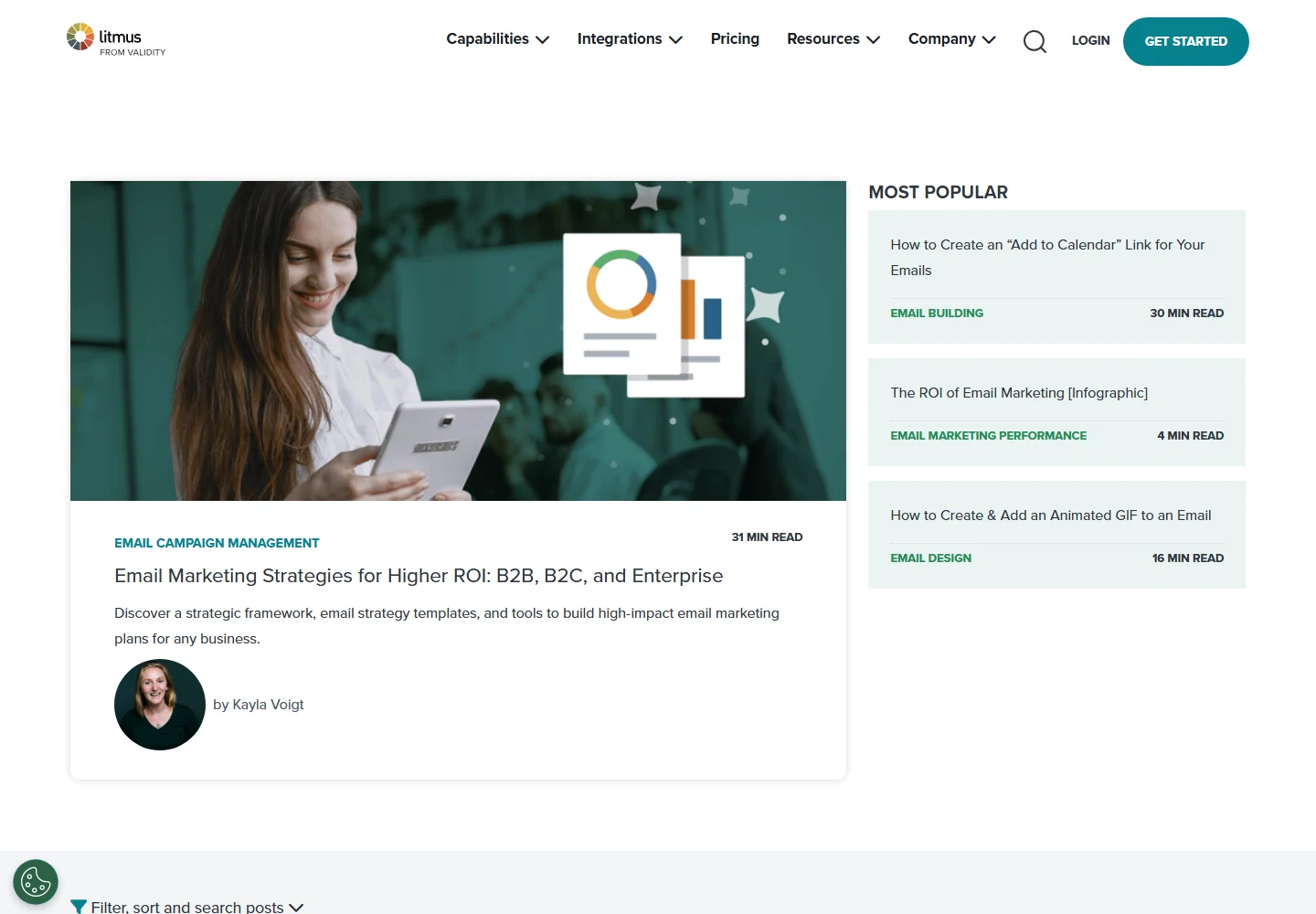
Best for: email testing, production quality, accessibility, and industry research.
Why follow:
- Litmus is one of the strongest resources for email production, testing, trends, and quality assurance.
- Its research and trend reports are widely referenced by email marketers and production teams.
- The blog helps teams think about rendering, accessibility, personalization, privacy, and inbox changes.
Look for:
- email trend reports, accessibility guidance, rendering and QA posts, email design breakdowns, and testing workflows.
Keep in mind: Some advice is most useful for teams that already have a formal email production workflow.
10. Email on Acid
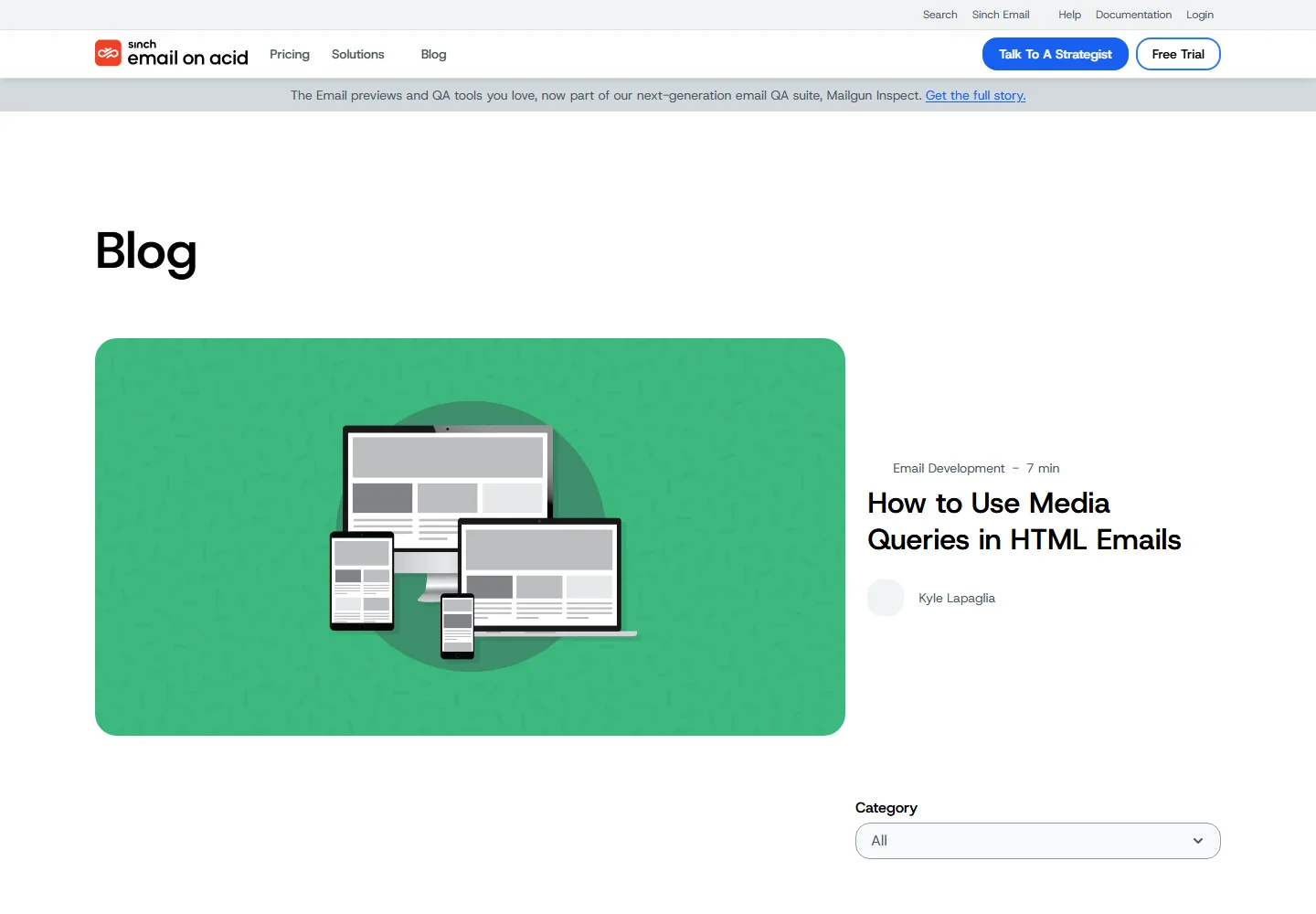
Best for: HTML email, rendering issues, dark mode, and pre-send testing.
Why follow:
- Email on Acid is useful when campaign quality depends on how emails render across clients and devices.
- The blog covers technical topics such as HTML, CSS, accessibility, dark mode, and pre-send QA.
- It is a practical resource for designers, developers, and marketers who work closely with email code.
Look for:
- dark mode guides, coding best practices, accessibility posts, rendering issue explainers, and pre-send checklists.
Keep in mind: Some content is technical, so beginners may want to pair it with simpler design resources.
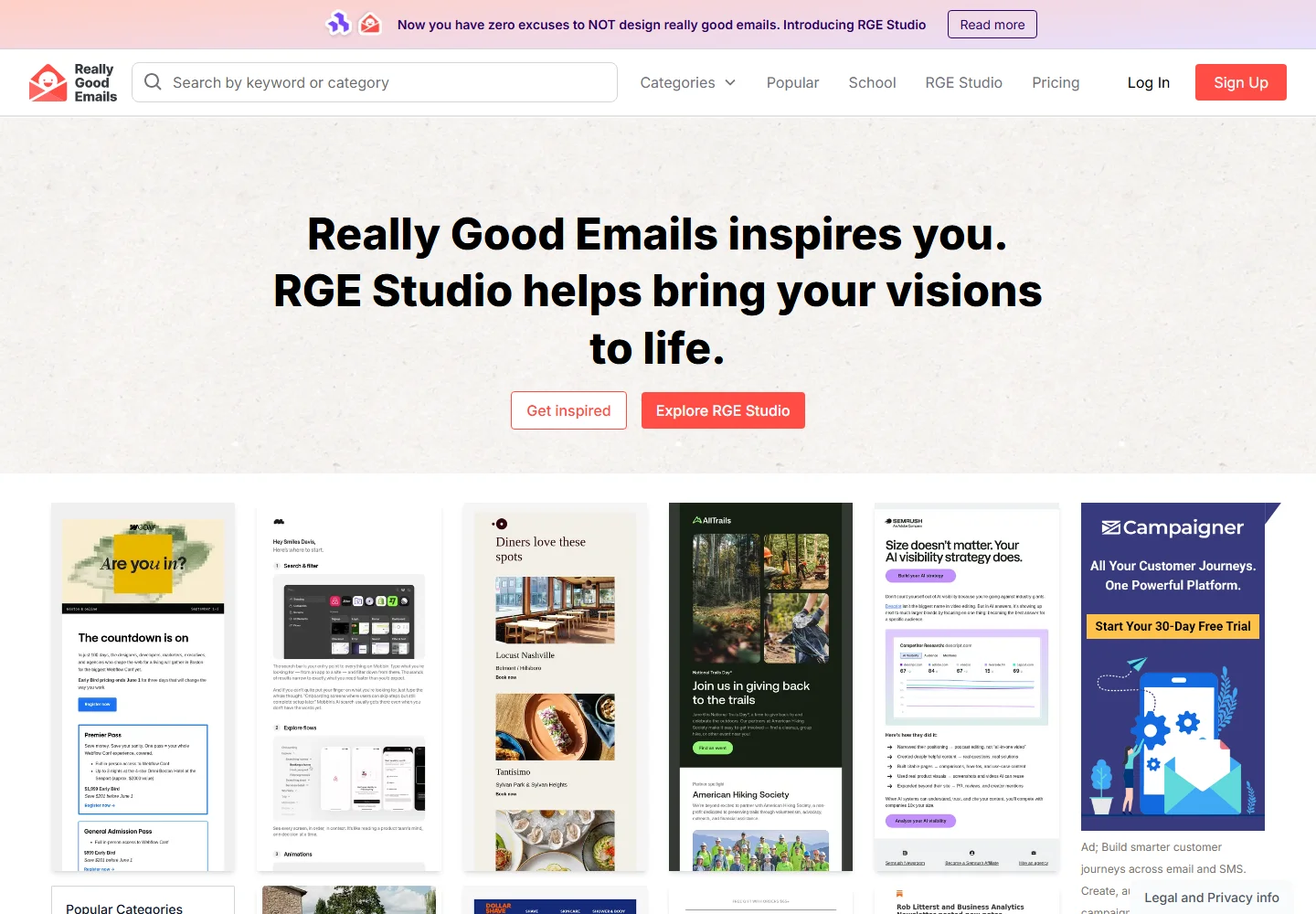
Best for: email design inspiration, competitive research, and examples.
Why follow:
- Both resources collect real email examples that can help you understand how brands structure campaigns.
- They are useful for visual research before writing newsletters, onboarding flows, promotional campaigns, and lifecycle emails.
- They help you move from generic advice to concrete layouts, patterns, and copy examples.
Look for:
- newsletter examples, ecommerce campaigns, lifecycle emails, onboarding sequences, promotional emails, and design patterns.
Keep in mind: These are inspiration libraries rather than traditional editorial blogs, so use them together with strategic resources.
Other useful email marketing resources
Not every helpful resource is strictly an email marketing blog. These sites can still improve your campaigns, especially around writing, usability, and broader marketing strategy.
12. MarketingProfs
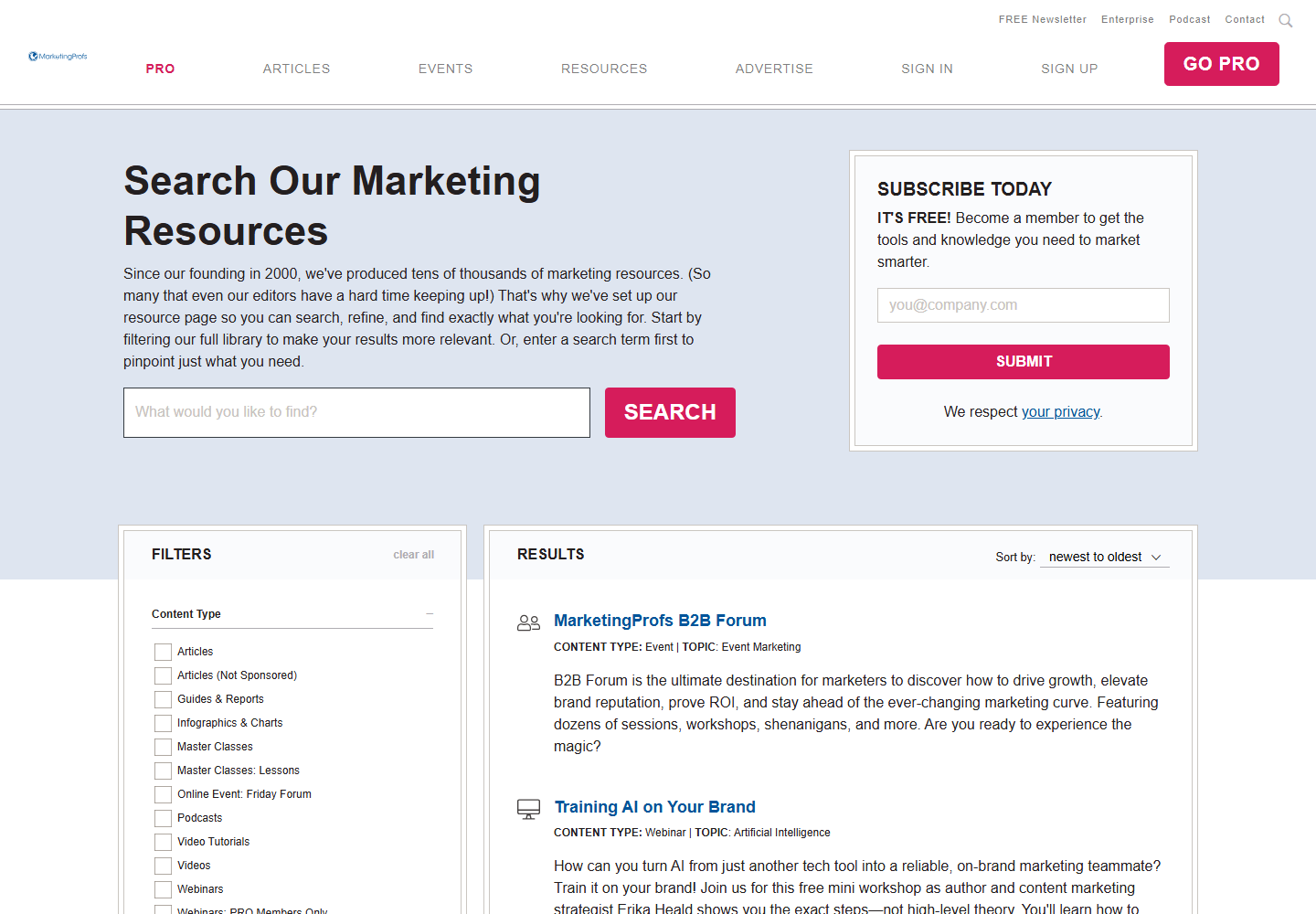
Best for: broader marketing strategy, research, webinars, and practical B2B ideas.
Why follow:
- MarketingProfs covers many marketing disciplines, including email, content, B2B, analytics, and customer engagement.
- It is useful when email is only one part of a larger marketing program.
- The resource library includes articles, webinars, podcasts, and training-style content.
Look for:
- email marketing articles, B2B strategy, content marketing, webinars, and research-backed marketing advice.
Keep in mind: It is a broad marketing resource, so not every visit will lead directly to email-specific advice.
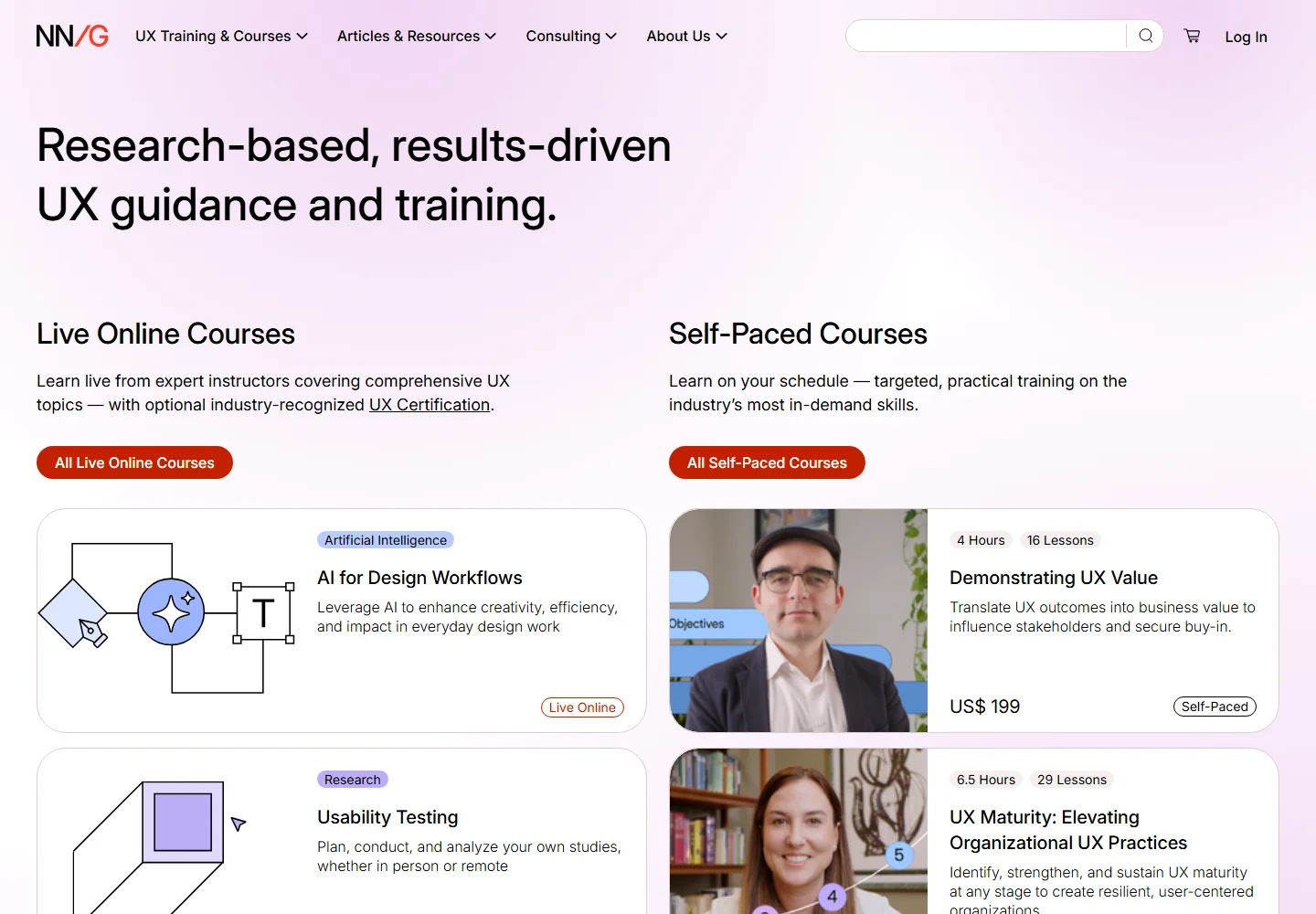
Best for: UX, usability, readability, and customer behavior.
Why follow:
- NN/g is not an email marketing blog, but its UX research helps you write and design emails that are easier to understand.
- The site is valuable for hierarchy, scannability, accessibility, forms, navigation, and user behavior.
- Those lessons apply directly to landing pages, email layouts, calls to action, and post-click experiences.
Look for:
- usability heuristics, readability research, accessibility guidance, ecommerce UX, and customer behavior studies.
Keep in mind: Use it as an adjacent resource rather than a source of email-specific tactics.
14. Copyblogger
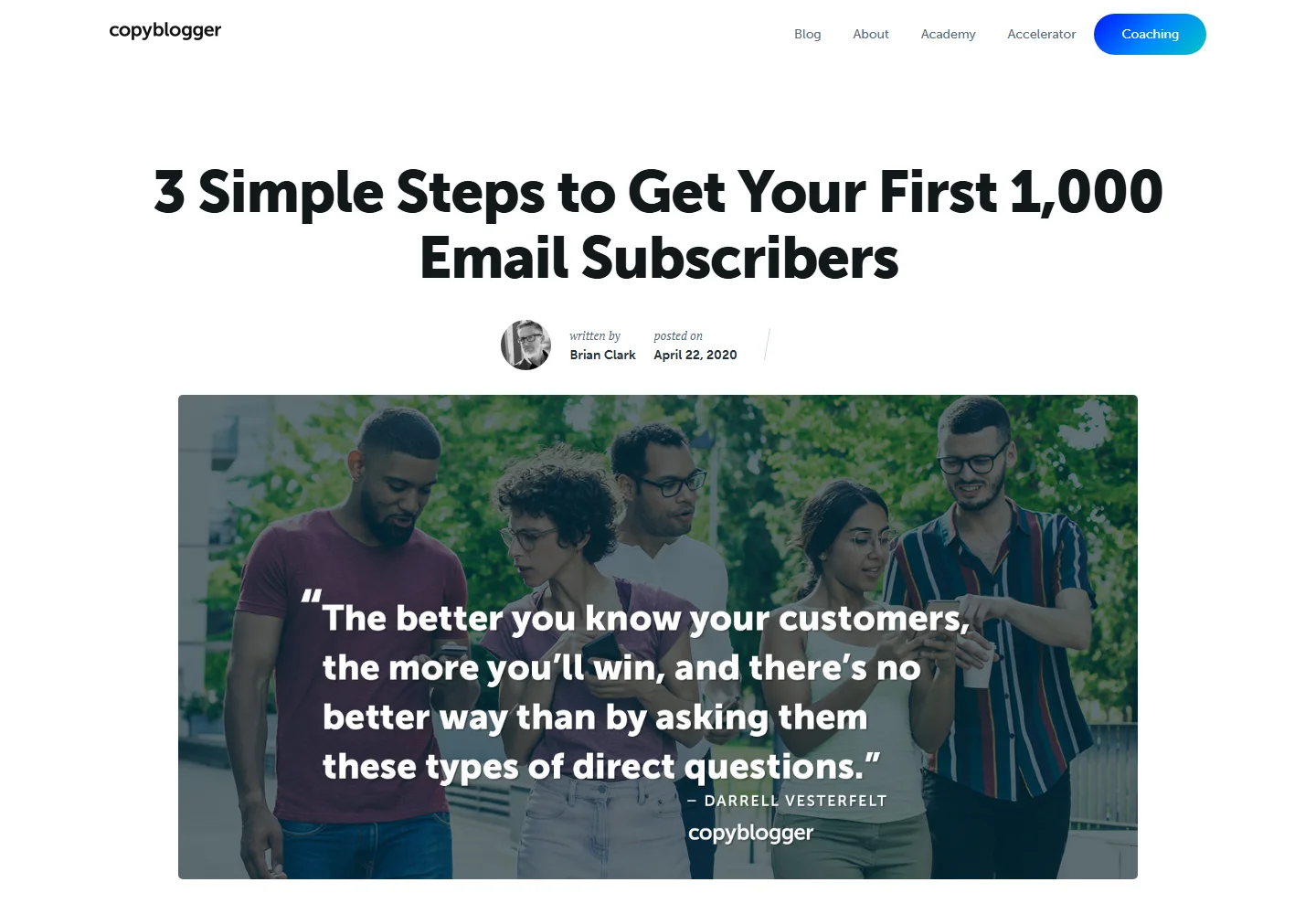
Best for: copywriting, content strategy, and persuasive writing.
Why follow:
- Copyblogger is useful when your email problem is really a writing problem: unclear angle, weak hook, or vague call to action.
- The site covers content, persuasion, entrepreneurship, and email marketing from a writing-first perspective.
- It is a good resource for newsletter writers and marketers who want stronger campaign copy.
Look for:
- email marketing posts, copywriting frameworks, content strategy, headlines, and audience-building advice.
Keep in mind: The email marketing section is narrower than the broader copywriting archive.
15. EmailMonday
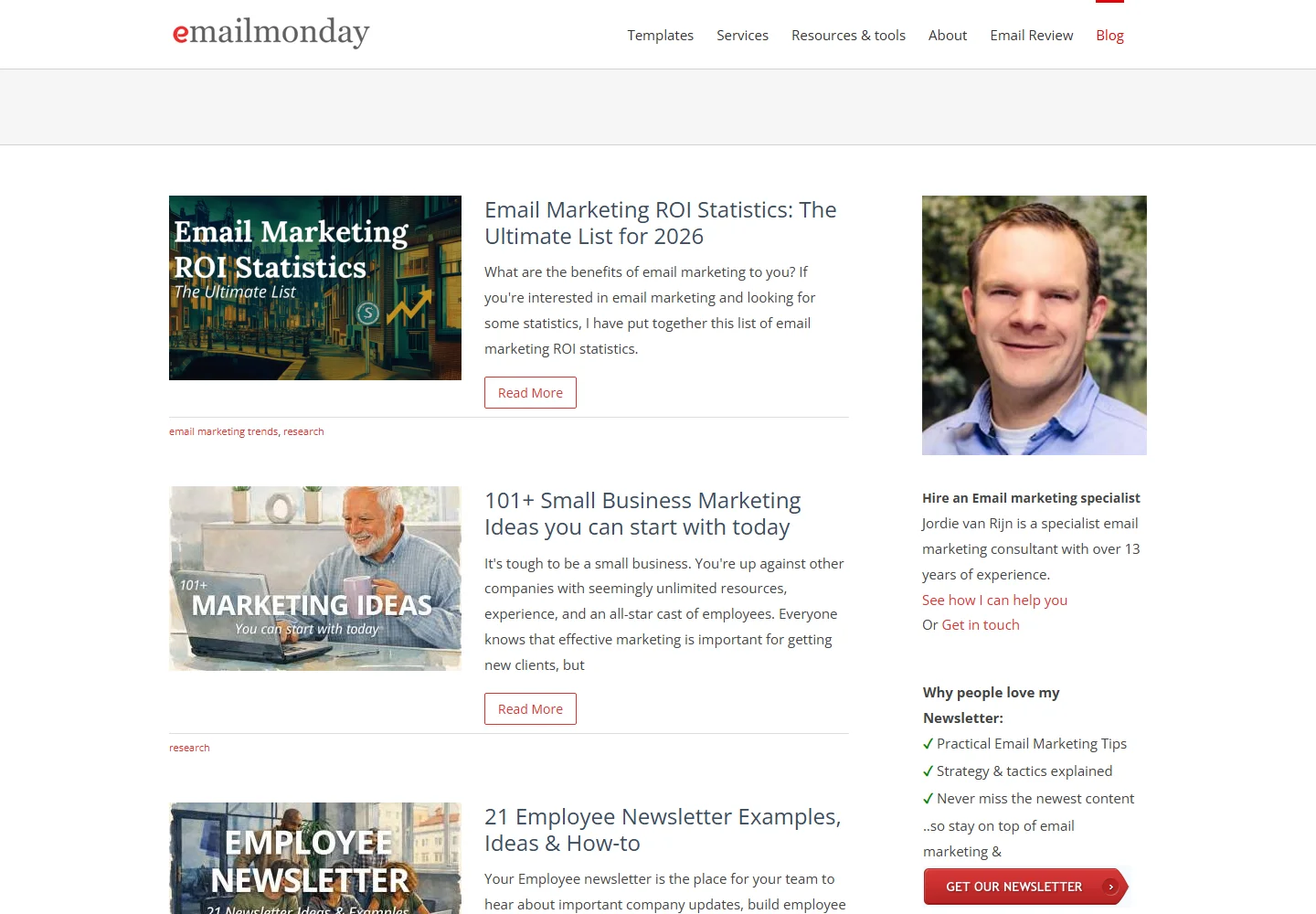
Best for: deep email marketing commentary, statistics roundups, and consultant perspective.
Why follow:
- EmailMonday is curated by email marketing consultant Jordie van Rijn and remains useful for deep dives and statistics-oriented posts.
- It can help advanced readers understand benchmarks, testing debates, and email optimization questions.
- The archive is especially useful when you need a thorough overview rather than a quick checklist.
Look for:
- statistics roundups, testing articles, optimization posts, and email marketing strategy commentary.
Keep in mind: Use it as a specialist archive; not every post will feel as fresh or beginner-friendly as active ESP blog hubs.
Final thoughts
The best email marketing blog for you depends on what you are trying to improve. If you are new to email marketing, start with Selzy, Mailchimp, EmailOctopus, or Campaign Monitor. If you work in ecommerce, add Klaviyo, Drip, Moosend, and GetResponse. If you care about production quality, testing, accessibility, and design, follow Litmus, Email on Acid, Really Good Emails, and Email Love.
The smartest approach is to build a small reading stack instead of subscribing to everything. Pick one beginner-friendly blog, one strategy blog, one design or testing resource, and one adjacent writing or UX resource. That gives you enough variety to keep learning without turning your inbox into another task list.
 New and noteworthy on our blog
