


Key takeaways
- Multichannel marketing engages customers through various digital and physical channels.
- Omnichannel marketing aims for integrated customer conversations across channels.
- Multichannel marketing focuses on promoting products, while omnichannel emphasizes customer experience.
- Multichannel uses mostly static messaging, while omnichannel offers dynamic, personalized messages.
- Multichannel benefits include wider reach, less channel dependence, and better data collection.
- Omnichannel benefits include better sales performance, higher customer loyalty, and improved marketing ROI.
If you have more than one marketing channel, it can lead to better results. If you focus on several channels like your TikTok page, website, SEO blog, and emails, you’ll get a wider reach, more sales, and a much bigger marketing ROI. However, there’s more than one approach to handling several marketing channels at once — and, while these two are siblings, they’re not twins!
In this article, we’ll compare omnichannel vs multichannel marketing approaches. We’ll explore the differences and how to figure out which is better for your business.
What is multichannel marketing, and how does it work?
Multichannel marketing is engaging with your potential, current, and recurrent customers via several channels. These channels can be digital like emails, social media, search engine ads, your online store, and so on — or physical, like all sorts of printed ads, direct mail, offline pop-up events, you name it.
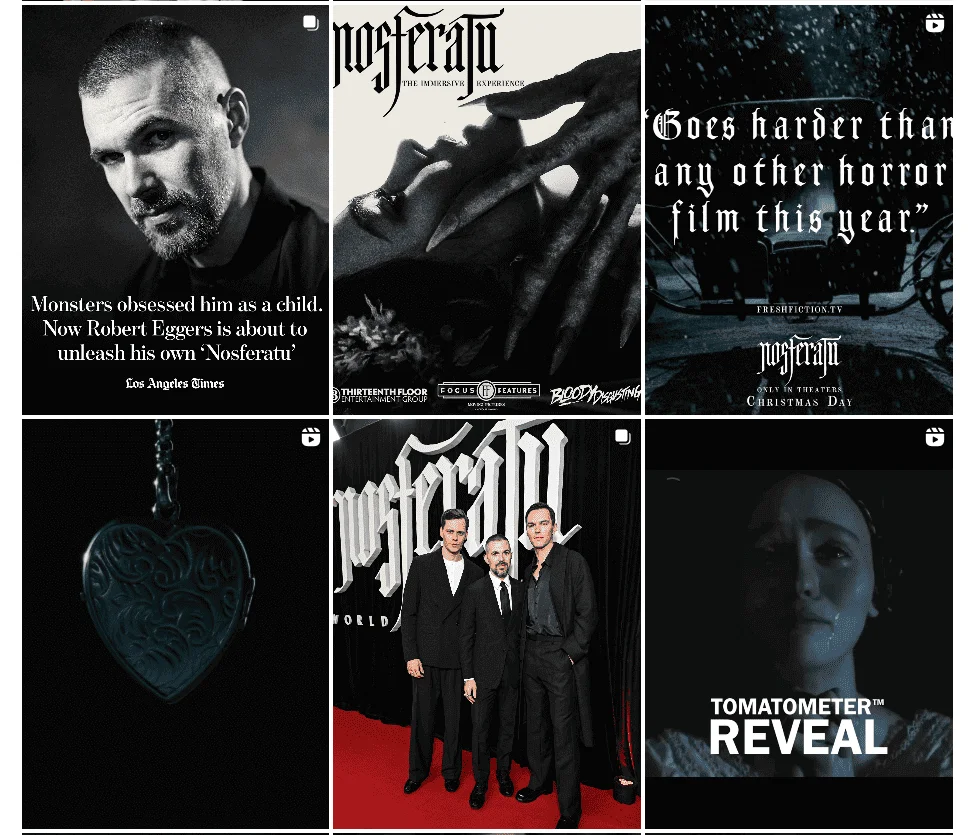
A great example of multichannel marketing is the promotion strategy of Nosferatu, yet another movie adaptation of Bram Stoker’s Dracula. Aside from the obligatory film trailer, the film’s marketing team also maintained an extensive social media presence on Instagram. They also had coffin bed pop-ups and distributed a limited edition of coffin popcorn tins — for those not interested in sleeping in a sarcophagus.


How does it work? Pretty straightforward, actually. You have several separate channels, several types of content, lots of management work, and promotional activities to engage your customers. That way, you get a wider and more diverse reach. Also, some channels are aimed at audiences at different “temperatures” — for example, emails are for those already interested in your brand, and short videos target those who haven’t heard about your business. This allows you to have wider coverage and move your audience down the sales funnel.
For example, someone saw a viral video from your account, then visited your website, subscribed to a newsletter, got a welcome email with a discount… Boom, you got yourself a purchase.
What is omnichannel marketing, and how does it work?
Omnichannel marketing, like its multichannel counterpart, also implies working with several offline and digital marketing channels. The difference is, it aims at an integrated, uninterrupted conversation with customers across these channels, achieved via technology and marketing solutions. It requires leveraging tons of customer data and personalizing every possible interaction. One big difference, compared to multichannel marketing, is a great focus on creating good customer experiences.
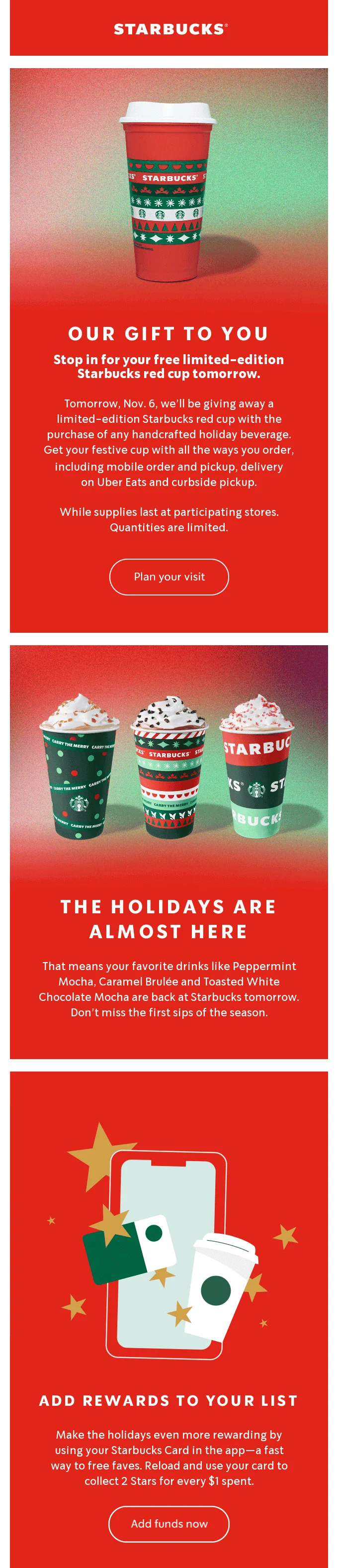
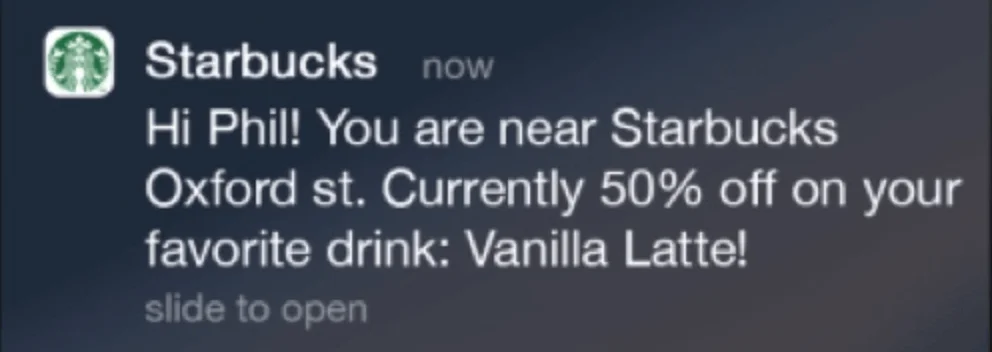
A textbook example of omnichannel marketing is Starbucks. The brand launched a mobile app for a loyalty program called Rewards. Those who downloaded the app get exclusive offers via email and location-based personalized push notifications prompting them to go to the nearest Starbucks shop. The loyalty program also works for those ordering not just from the coffee shops but also third-party marketplaces like Uber Eats — according to this email we found on Really Good Emails.
How does it work? Omnichannel marketing strategy is a bit trickier. You’ll need a centralized customer data source that will be “available” to all the omnichannel automation software you’re using for different channels. Then, you’ll learn complex marketing solutions and use them to craft personalized messages with a lot of customer-based variables in them. That way, each customer gets a different email or push notification with the content tailored to their past interactions with your business. And you’ll also have to adhere to data-related legislations like GDPR, which complicates the use of data. But at the same time, it’s very much worth it, especially when it comes to improving customer loyalty. So, you’ll end up in the positive, but we’ll talk about it later.
The difference between multichannel and omnichannel strategies
We already mentioned some of the key differences between multichannel and omnichannel strategies — for example, omnichannel customer experience being more of a focus. Let’s explore it deeper — here’s a spreadsheet for a better understanding.
| Multichannel marketing | Omnichannel marketing | |
| Marketing campaigns’ focus | Promoting a product or a service | Creating a special or improving the existing customer experience |
| Integration between channels | Messages, although consistent in branding, are mostly isolated. They can also be identical in the case of cross-posting short videos on social media, for example | The channels are very integrated, a certain platform “remembers” the history of interactions both inside the platform in question and on other platforms |
| Types of messages | Mostly static messaging — the same for all viewers, also may involve some degree of segmentation and personalization | Dynamic, both the content and the display of the messages depend on past interactions, which is achieved via data integration and automation solutions |
| Customer journey mapping | Mostly simple cross-channel pathways like: social media account → website → newsletter subscription → first purchase | Often involves working with convoluted journeys with moving between several channels, both offline and online |
| Optimization | Depending on a channel, in some cases optimization via A/B testing right away is not possible, and collecting data right away is not possible either — so, waiting, trying, and experimenting is the only way to go | A/B testing and other studies for data-driven marketing decisions |
| Customer data storage | Can be stored and used separately or together, depending on the task | Always stored in the centralized place and requires a Customer Data Platform (CDP) |
| Target metrics | Brand awareness, outreach, new customer acquisition, conversions to first purchase — although can also improve customer loyalty | Depends on the task, but works especially great for customer loyalty, lifetime value, average order value, and so on |
Benefits of each marketing strategy
Both strategies seem like a lot of headache — managing multiple channels, creating tons of content, learning new technology, setting up analytics, ensuring legal compliance… And, given that content marketing won’t bring you millions in revenue immediately and might require some extra work for optimization, you might think: is it worth the effort? Will my labor pay off?
If done right, it will — here are some benefits of both omnichannel and multichannel marketing approaches.
Multichannel marketing benefits
Content creation for the website, social media, emails, paid ads, and whatever else you’d like is a lot — especially if you’re a solopreneur managing your own business. However, this labor brings fruits like:
- A wider reach. Not all your customers “live” in the same online and offline spaces — they have well-established purchasing and Internet use habits. These habits imply comfortable and familiar experiences, and they won’t be broken just for the sake of buying from you. For example, not all Gen Z customers have a TikTok account, and those used to buying on Amazon or other marketplaces are less likely to shop off your website directly. So, if you have several communication and shopping outlets, you’ll capture a much larger segment of your target audience.
- Less channel dependence. Putting all eggs in one basket is always a terrible idea, and marketing is no exception. Any third-party digital platform might cease to exist or change algorithms to the point of working against you, offline channels are not 100% reliable as well — and what if these were your only outlet? Opting for several channels makes you more resilient.
- Better data. One platform won’t give you a full picture and a clear understanding of how your customers react to marketing efforts. Also, not all platforms allow A/B testing. So, with several channels, you’ll collect richer and more nuanced data.
Omnichannel marketing benefits
You thought multichannel marketing was a handful? Try omnichannel marketing — that’s way more technology to adopt and data to protect. But even such a labor-intensive endeavor has its perks:
- A better sales performance. Omnichannel communication is powerful enough to increase the order rate by as much as 494% — now that’s what we call efficiency.
- A higher customer loyalty. 61% of consumers claim that if a company caters to their needs in terms of customer experience, they agree to spend more with it. Omnichannel communication is all about tailoring almost every single interaction to a particular person, so there you have it — more loyal customers that buy more and stay for longer.
- A higher chance of impressing the younger clientele. Gen Z customers “broke the traditional funnel” — straight up salesy marketing approaches won’t work, they want brand interactions to feel like a conversation. Omnichannel marketing can create that feeling.
- A higher marketing ROI. It’s generally cheaper to work on customer retention than to throw all your resources at getting more new customers. Omnichannel marketing is focused on retention, so you’re more likely to end up in the positive. Also, since omnichannel communications lead to more orders, you’re simply getting more money out of each message.
Omni vs Multichannel: How to choose the right strategy
We describe the benefits of the two approaches in great detail, but it doesn’t mean you absolutely have to implement one of these or even both, or otherwise no one will ever buy from you again. These marketing strategies are complex, labor-intensive, and require skilled people and, oftentimes, a decent budget. So it’s crucial to assess which one your business actually needs.
Let’s break down the choice process and learn when omnichannel or multichannel marketing will be the valid option for your company.
When is multichannel marketing the right choice?
Here are the possible situations that might need the help of multichannel marketing:
- You’re only starting. You can’t work on retention if you don’t have anyone to retain yet. So, for younger businesses, focusing on acquisition via several channels is more viable.
- You don’t have resources. Omnichannel marketing requires investments, training a team (or hiring a new one), and buying more software for execution. So, for smaller businesses that can’t afford to spend a fortune on promotion, the multichannel approach is better.
- Your goal is publicity, not sales. Not every business is an e-commerce enterprise. Musicians and other artists, content creators (i. e. podcasters or YouTubers), independent media outlets, or even freelancers working on their personal brand often don’t need complex automation scenarios. So, for some industries like the aforementioned ones, making engaging short videos or hiring a PR person to get more mentions on the news is more reasonable than crafting a convoluted funnel.
Does it mean you can’t work on retention if any of this applies to you? No — if anything, we absolutely recommend adding a retention-focused channel like emails to your marketing toolbox.
A great example of that is Summer Eternal, a game development studio that recently emerged from ZA/UM and the former Disco Elysium team. They execute a pretty frugal but efficient multichannel marketing strategy: a gorgeous landing page, an X account mostly for memes and community building, and a newsletter both for funsies and nurturing those willing to donate to a crowdfund once it’s opened.


By the way, we wrote a whole guide on email marketing for the gaming industry, if you’re interested.
When is omnichannel marketing the best option?
None of the above applies to you? Here’s when omnichannel marketing can help:
- You’re improving customer loyalty. Unlike multichannel marketing, the omnichannel approach is less focused on acquisition. So, if you have people to retain, why not go omnichannel and start sending cart abandonment emails at least?
- Your end goal is sales. Multichannel marketing is good for publicity and awareness, however, it doesn’t necessarily lead to purchases right away. If what you want right now is effective money-making, hyperpersonalized messages, automation, and lots of integrated channels will help.
- You can afford it. Once you have enough budget to invest in marketing activities, it might be reasonable to invest in omnichannel marketing, which is more pricey but with a higher potential payoff in the future.
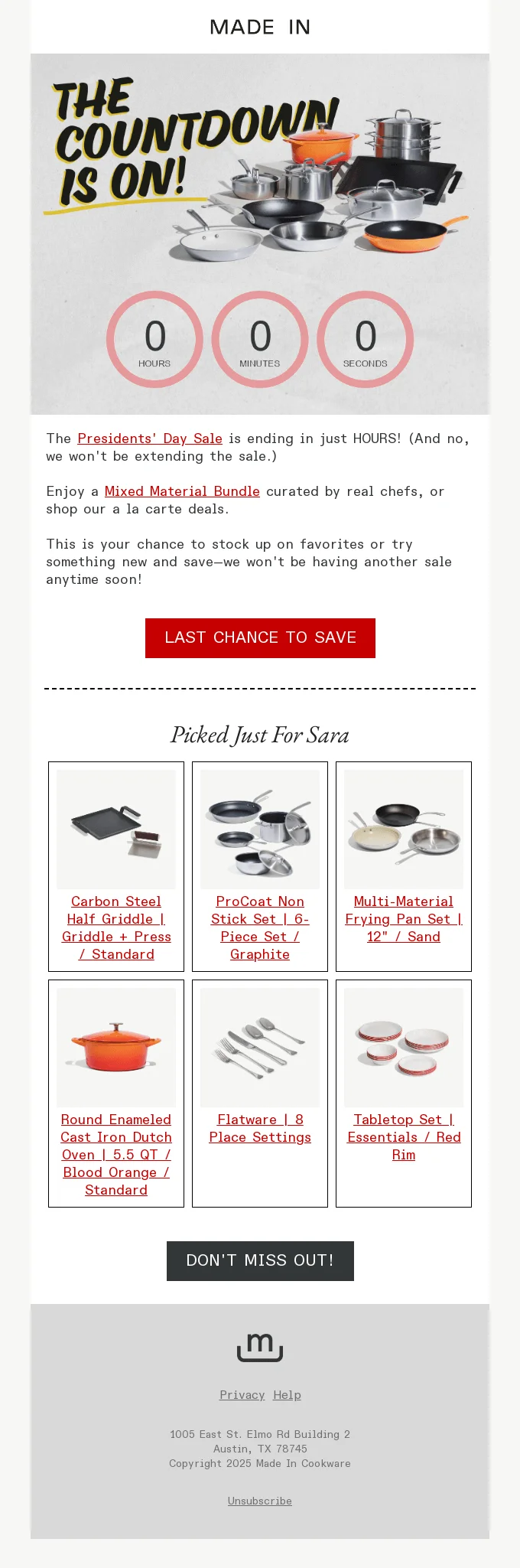
Does all that mean omnichannel marketing is not and will never be available to small businesses? Not really: while you can’t run a powerful omnichannel machine, you can start introducing small omnichannel elements even on a budget. For example, recommendation emails like this one from Made In Cookware are relatively easy to craft, as long as you have enough data. Such messages integrate two channels: the online store and emails. That’s not a full-blown omnichannel strategy, but it’s a great start!
Wrapping up
Omnichannel and multichannel marketing strategies are similar in the baseline — both involve several channels. However, the main focus, target metrics, types of content to use, data treatment, and the level of cross-channel integration are what make them different.
Here’s a spreadsheet so you don’t forget the important ideas — you can even take a screenshot, we don’t mind!
| 🎨 Multichannel marketing | 🤖 Omnichannel marketing | |
| Key features | Several channels involved, mostly isolated, static messaging | Several channels involved, very integrated and automated, dynamic and personalized messaging |
| Key focus | New customer acquisition, virality, brand awareness and recognition, product promotion | Customer retention and loyalty, direct conversions to sales via complex funnels, improving customer experience |
| Key benefits (compared to single-channel strategies) | A wider outreach, less dependence on one channel, more enriched data since it’s from various sources | A better loyalty, more purchases, a higher ROI |
| Best for | Gaining more publicity
Businesses on a budget Small companies that have just started and can’t work on retention yet |
Retention-focused marketing campaigns
Earning more money in the short term Big e-commerce enterprises that can afford it |
 New and noteworthy on our blog