


First meeting with a big company CEO, should you make a joke? Or even offer to show them a funny picture? This may sound ridiculous, but these strategies do work in cold email outreach!
Humor is the heart of Jon Buchan’s effective copywriting strategy called Charm Offensive, and it helped him book major clients. Read Selzy’s interview for the story of a drunk email that started it all, ways to develop a good sense of humor to help your work, and a joke at the very end.
Jon Buchan is the Founder and Director of Charm Offensive.

Jump to the topic you are most interested in:
- Career path
- The drunk email that started it all
- Growing Charm Offensive
- The essence of the approach
- Marketing influences
- Humor’s power in professional communication
- When not to use humor
- Humor etiquette rules
- Developing a sense of humor
- Misconception about cold emails
- Effective cold emailing strategies
- Strategies beyond humor
- Biggest writing mistake in communication with leads
- People who use humor well
- AI tools and humor
- Current favorite visual joke
Professional journey
Tell us about your career path. What led you to marketing and founding your own agency?
I’ve always had an interest in digital marketing. It followed on from my interest in computers in school.
At the start of 2006, I was depressed and made a decision to move to London. I cold emailed a digital marketing agency with a bullet point list of my skills, got an interview, and got the job. I worked at various agencies before ultimately deciding “I think I can do this better myself” and set my own up with my brother in 2010.
For those unfamiliar with you, can you relay the igniting incident of your approach to copy — the story of a drunk email you’ve once sent?
A good few years ago, I was desperate for sales after my word-of-mouth work dried up. I got hellishly drunk one night and wrote a completely absurd cold email. I was still tipsy the next morning and decided it was still a good idea to send it to pretty senior Marketing Directors at big brands.
To my astonishment, it worked. I got the most amazing complimentary responses and requests for calls/meetings. My favourite one succinctly said, “My colleague forwarded me your spam email and we would like to meet you to discuss opportunities.”
I have hundreds of these screenshots showing responses to my irreverent cold emails saved. It always felt great to receive them.
I’ve met with senior decision makers at RedBull, Pepsi, Symantec, Hewlett-Packard, HSBC, Barclays, and countless other global brands, exciting start-ups, and regular ol’ SMEs.
I’ve used this same style to get senior editors at large publications to respond to me and publish my clients’ content. I’ve used it to help people get as many job interviews as they want – and to meet people I really look up to. I figured out a way to get the attention of busy people by accident.
I’d never read a single book about copywriting at the time — and that’s a big reason my unorthodox approach worked. I didn’t know what I was supposed to do. I interrupted the pattern by virtue of not knowing what the “best practice guidelines” were.
I would always hear that you shouldn’t try humour in business. It’s too risky. I’m glad I took a chance. As it turns out, funny cold emails, LinkedIn messages, and direct mail letters are an exceptionally effective lead-generation tool — when done right.
How did Charm Offensive come to be and eventually become your full-time job?
In 2017, I started thinking about building an audience. I knew I had something unorthodox and effective. I really liked this Facebook Group called “The Cult Of Copy.” I did a paid call with the guy who runs it, Colin Theriot. On the call, he gave me a ton of advice. However, most importantly, he told me that I had something unique and I was enthusiastic enough about it to make it interesting to people.
I set the group up and worked hard to grow it. I went on tons of podcasts. I did Facebook Live interviews with other Facebook Group admins. I got my story to the top of several business subreddits. Within 30 days, I’d hit 1,000 members. I started an email list. Within 3 months, I’d sold my first digital product. At this point, I knew I wanted to do this for a living. I loved seeing people get amazing results using my unorthodox techniques. I worked hard to grow my audience and create new products. In 2018, I’d made so many products that I set up my subscription offering, Charm Offensive Professional.
Humor in professional communication
If you could summarize your approach to copy in one sentence, what would it be?
I can do it in two words: “Disarming candour.”
What or who has influenced your method of outreach and copywriting? And who inspires (or continues to inspire) you now?
I didn’t have any copywriting influences. My drunk cold email didn’t use copywriting formulas. It used humour. I used to watch stand-up comedy and sitcoms until the early hours as a teenager. This was my 10,000 hours experience. If I’d known I was “working”, I probably would haven’t done this 😀
My top marketing influences are Rory Sutherland (vice chairman of the Ogilvy & Mather group of companies) and Dave Trott (creative director, copywriter, and author).
Why does humor work in lead generation and professional communication?
It stands out. When everyone else uses the exact same style, everyone blends in. Everyone gets ignored.
Charm Offensive style copy is refreshingly honest. It doesn’t read like a standard boring B2B copy. If you can make someone smirk, smile, or laugh out loud, you’re more likely to get a positive reply from them. You’ve had the best first impression possible. You’ll be remembered. Your email might get shared around a company. The replies you do get will be in a friendly tone. The fake corporate veneer is removed. Your conversations with prospects are more candid. And, you’ll be doing business with people who enjoy the exciting taboo of smiling occasionally at work 😀 That’s much better than dealing with stern types who can ruin you and your team’s morale.
When should people be cautious about using humor?
The only exclusion is when you’re selling something that is life and death related. There are some issues where you need to be solemn. However, that’s a very small % of businesses.
Humor in cold outreach contradicts many people’s notion of etiquette. What are some of the etiquette rules that should never be broken even if you’re trying to stand out from the competition?
Think about the target of your humour. Don’t mock the prospect! Self-deprecating humour is safe. However, don’t be self-deprecating about your skills. You should show confidence in them.
You should also try to avoid being “faux cocky.” This can just come off as arrogance, as you don’t have the benefit of intonation as you do with vocalised speech.
What can you recommend for people to develop their sense of humor?
Watch lots of stand-up comedy and sitcoms. Buy books on joke writing. Read more funny stuff. Practice — write every day.
Cold emails and copywriting
What’s one thing people get wrong about writing cold emails?
They play it safe and write boring emails. If you Google “best cold email template”, the results are horrendous. It’s the same tiny, 3 sentence template that’s robotic with no signs of personality at all.
How do you make cold emailing effective?
First off, make sure you’ve cleaned your email lists. You must make sure your emails are valid.
I highly recommend using a cold email platform to automate the process of sending cold emails and follow-ups to prospects who’ve not replied.
Make your copy disarming and funny. Don’t be dull. If you blend in with everyone else, you’re going to be ignored.
Finally, make sure your offer is something people want. Without the right offer, all of the other stuff won’t matter.
Read more
- Selzy’s articles on effective cold emailing
- Tidy it up: How to clean your email list and boost engagement
- An ultimate guide on writing a follow-up email that gets responses
What are some other strategies you recommend, apart from infusing charm into the copy?
Adding more personalisation can drastically improve your response rates. If you can demonstrate you’ve actually done your research on the prospect and the prospect’s company, it shows this isn’t a mass email to thousands of people. You’ve actually spent time looking into them.
Read more
Selzy’s articles on the power of personalization in marketing
What is the biggest writing mistake people can commit when communicating with prospects?
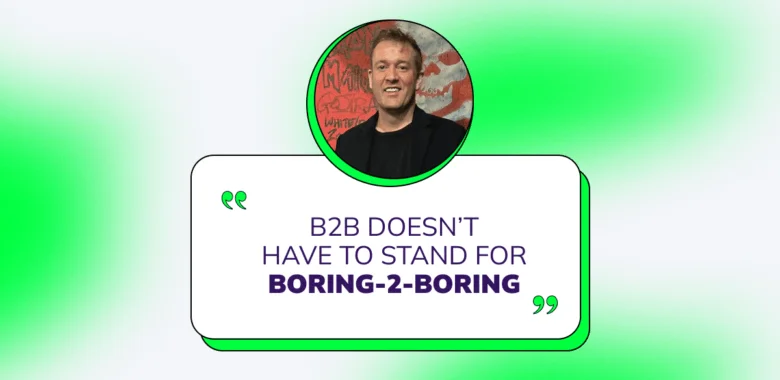
Being boring. B2B doesn’t have to stand for Boring-2-Boring.
Rambling on. You don’t need to keep your emails to 3 lines but you shouldn’t try to sell absolutely everything about your offering in the first email. The job of the cold email is to get a response and book a call. When you get on the call, then you can go into more detail.
What individuals or brands use humor well?
As far as individuals, there are a few folks who use humour really well. Ben Settle, Daniel Throssell, Laura Belgray, Justin Blackman, and Lianna Patch.
As far as brands, none stand out right now.
In your experience, are AI tools good with humor?
For the most part, it’s not great. The jokes generated by ChatGPT can be pretty lame.
However, for syntax-based humour, ChatGPT is pretty good. I’ve been able to teach ChatGPT my formulas, and it’s able to write additional versions of funny lines and make them relevant to specific themes, offers, disciplines, or situations.
I actually released a product called The Charming AI Pack which shows people how to create unlimited funny lines using my prompts.
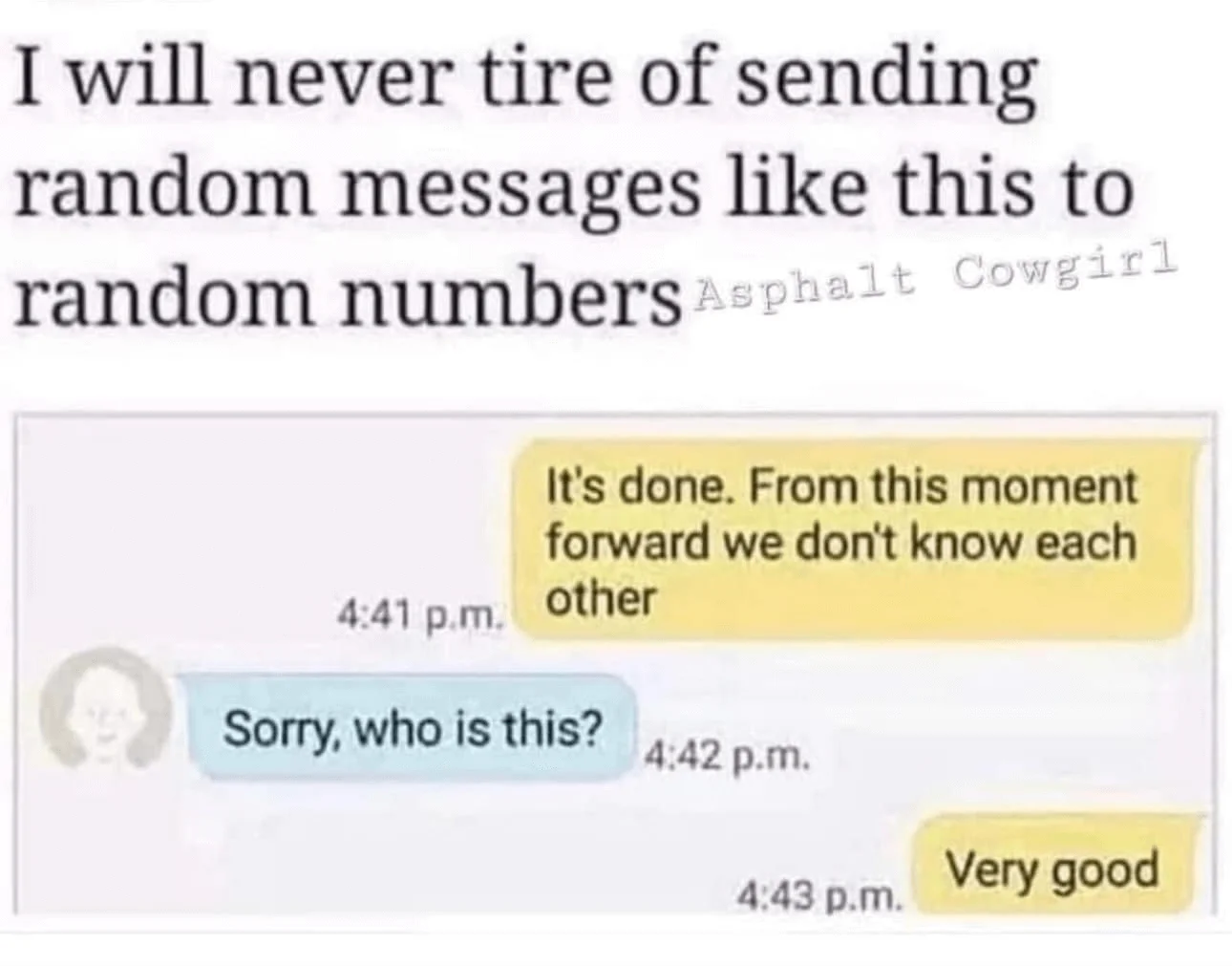
What’s your favorite meme or visual joke?
At the moment, this one:
 New and noteworthy on our blog