


Key takeaways
- Email marketing for dentists is effective for improving trust and relationships, targeted marketing, cost-effective communication, and increasing appointment bookings.
- Dentists can send various types of emails like welcome emails, new product/service launch emails, educational content/how-to emails, reminder emails, birthday greetings, and targeted promotional emails.
- Starting a dental practice email marketing campaign involves choosing the right email marketing service, offering valuable freebies, promoting forms, setting clear goals, sending out emails, and monitoring results.
Email marketing for dentists can help dental practices stay in touch with patients, send appointment reminders, promote relevant services, share oral health tips, and bring inactive patients back. It is also a practical channel for building patient relationships without relying only on social media or paid ads.
In this article, we’re going to explore email marketing for dentists. First, we’ll outline the types of emails that dental practices can send out. Next, we’ll give you a few insights on how to start a dental practice email marketing campaign. Finally, we’ll share best practices for improving engagement, bookings, and retention.
Why is email marketing for dentists so effective?
Email marketing gives dentists a direct and personal way to communicate with patients throughout the whole patient lifecycle: from the first visit to regular check-ups, treatment follow-ups, reactivation campaigns, and long-term retention. Here are some reasons why it is such a powerful tool:
- Improved trust and relationships. By regularly engaging with patients through useful emails, you can stay present between visits. Like dental direct mail, emails can help you stay top of mind and reinforce the patient’s connection with your practice.
- Targeted marketing. Email marketing allows you to segment patient lists and send more relevant messages to specific groups. For example, you can create separate campaigns for new patients, families, people interested in cosmetic services, or patients who have not booked an appointment in a while.
- Cost-effective communication. Email marketing is a cost-effective method of reaching out to patients. According to Litmus, email drives an ROI of $36 for every dollar spent as a general email marketing benchmark. With a relatively small investment, you can send useful content directly to patients’ inboxes. That is one reason email marketing for a small business can work well, including for dental practices.
- Increased appointment bookings. Sending reminders, recall emails, and reactivation campaigns can encourage patients to book regular check-ups, confirm visits, or return after a long break. In the long run, this can support a steadier appointment schedule.
Dentist email marketing messages to send out
Now, we will guide you through some email types dentists could include in dental newsletters.
Welcome emails
The welcome email is the first impression you make on prospective clients. According to Get Response, welcome emails have an average open rate of 63.91%. You should use this potential to your advantage.
In general, a welcome email should be a warm introduction to who you are. With that in mind, include a brief overview of the services you provide, a link to book or manage an appointment, and practical details such as office hours, location, insurance or payment information, and what to expect during the first visit. You could also use it as an opportunity to highlight what emails the client should expect to receive from you in the future.

The example above is a real welcome email from toothpaste brand Pärla.
Take a look at the structure of the email: it starts with keywords about the brand and immediately offers new customers a promo code to use. The brand continues with a link to the statement about commitment to quality and transparency — this positions them as responsible and trusted.
At the end of the welcome email, Pärla uses a popular marketing technique — user-generated content, which in this case means customer testimonials. A dental practice can adapt the same idea by showcasing patient reviews, stating its mission, explaining what makes the first visit comfortable, and offering a clear next step, such as booking a consultation or confirming an appointment.
New product or service launch emails
Are you introducing a new product or service? If so, send out an email to let patients know about it. Explain its benefits, and mention any exclusive offers or discounts associated with the launch. For a dental practice, this could be a new whitening service, implant consultation, aligner option, membership plan, or preventive care package.
Encourage the recipients to take action. For example, you could include a link to book a consultation, ask a question, call the office, or visit a landing page with more details about the service.
Take the launch email from the toothpaste brand Boka for example:

This email is the perfect example of a good structure and clear message. Boka listed all the benefits of a new product with small explanation captions for them but did not go overboard with information. The brand included three call-to-action buttons in different parts of their email, but with one message and link, so whenever a customer has made a decision to shop, the link is there.
Educational content and how-to emails
Marketing and education go hand in hand: almost every brand wants its customers to learn more about the product and make the right decisions. With that in mind, companies create educational newsletters, put together workshops and webinars, or share useful tips and insights from experts. Email is a perfect tool for educational marketing, especially in medical or hygiene-specific fields: dental practices can share oral hygiene tips, post-treatment care reminders, prevention advice, and answers to common patient questions.
While learning might be associated with boring school lessons, it doesn’t have to be this way. The flossing brand Flaus took an unusual and fun approach for their email marketing campaign: they used frequently asked questions (or FAQ) to educate their subscribers on both the flossing process and the brand.
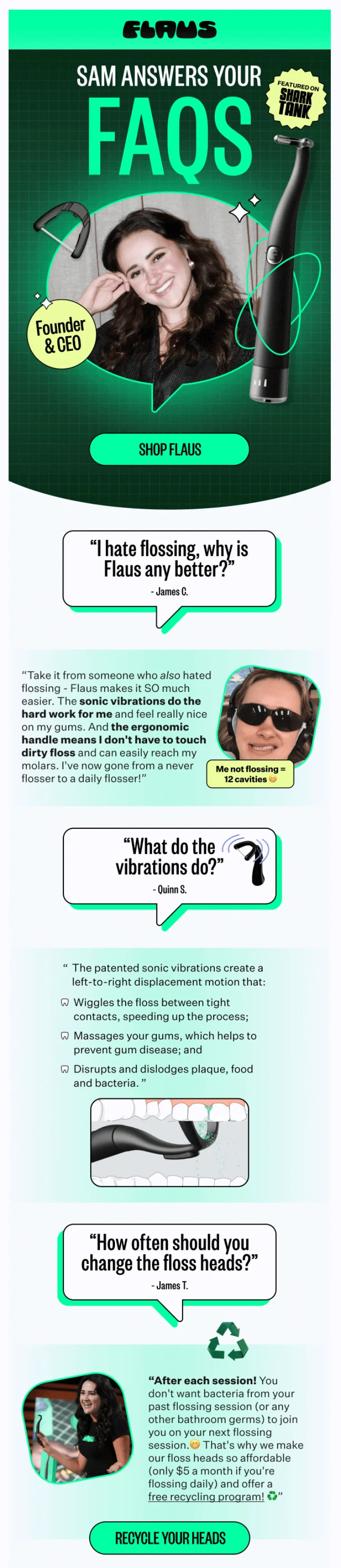
The message seems personal since it’s not just the brand, but its founder who answers all questions. This email explains how to use an electric floss safely and effectively while promoting the product. Bright colors help to make the email (and the brand) look modern and cool.
Reminder emails
Send regular appointment reminders to help patients remember scheduled visits. Include the appointment date, time, address, preparation instructions, and an easy way to confirm, reschedule, or cancel the appointment. This can improve the patient experience, reduce missed appointments, and lower the number of manual reminder calls your staff needs to make.

The message here gets the point across. First, the recipient sees the logo of the dental clinic and a greeting. It is worth noting that the message uses the recipient’s name, making the email sound friendlier.
Then, there is the date and time of the appointment. The bold font makes both details easy to notice. It helps the email fulfill its purpose, which is to get the client to show up to their appointment.
Celebrating a patient’s birthday
Make patients feel special by sending birthday greetings. Include a sincere message, as well as a small token of appreciation.
To give an example, it could be something as simple as a discount:
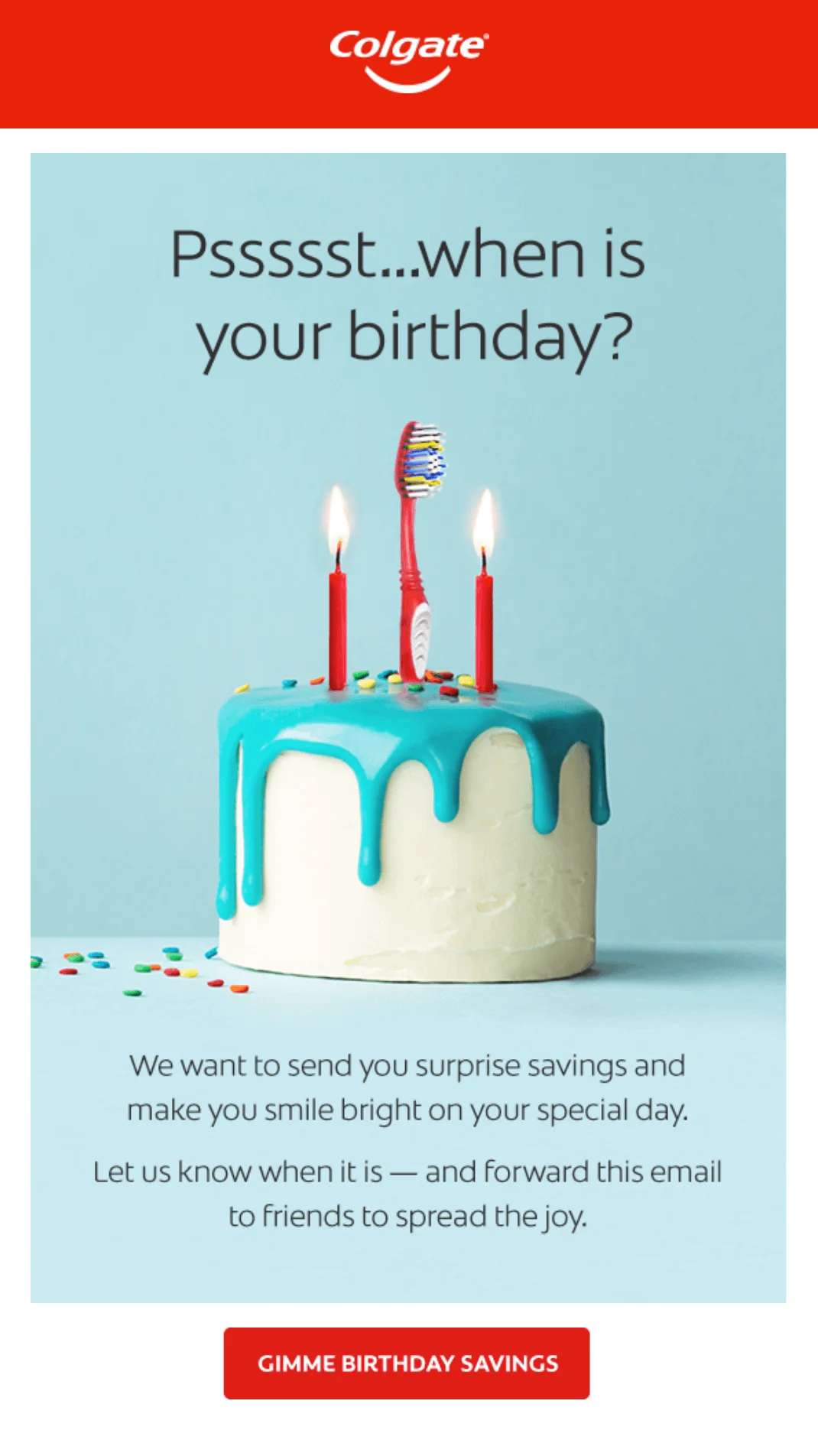
While the email above does not contain a discount, it still fits the bill. It starts with a fun and interesting image of a toothbrush stuck in a birthday cake. Above it, Colgate asks the recipient when their birthday is.
It suggests that the subscriber may receive a birthday discount after sharing the date. In a dental practice, a birthday email can also include a friendly greeting, a check-up reminder, or a small patient-safe incentive. The text on the button is a unique call to action, too. It sounds fun and gives the message a unique vibe.
Targeted promotional emails
Consider offering discounts on teeth whitening, dental cleanings, or other popular treatments. If you want to make such emails more effective, invest in personalization. A promotion based on stated preferences or consented audience segments is more likely to feel relevant than a generic offer sent to everyone.

In the case of the email above, the recipient has a history of crowding issues. So, Smile Direct Club sent them a message related to clear aligners. It outlines the entire process of applying for the aligners. It also mentions their affordability. Such straightforwardness makes the offer easier to understand.
Other useful dental email ideas include recall or check-up reminders, post-treatment follow-ups, review requests, inactive patient reactivation emails, insurance benefits reminders, and seasonal campaigns. For example, you can send back-to-school check-up reminders, Halloween cavity-prevention tips, or holiday whitening offers.
How to start a dental practice email marketing campaign
Digital marketing can be tricky and overwhelming, especially for beginners. Before choosing tools or writing your first email, define what you want the campaign to do: bring in new patients, reduce missed appointments, promote a service, reactivate old patients, or improve retention. If you just started your marketing campaign for your dental practice, these tips will help you build it step by step:
-
Decide on an email marketing service
The first step is to choose an email marketing platform that has special features and functions not available in regular email clients like Gmail. There are many options available, such as Selzy, Mailchimp, and Constant Contact. While it’s useful to look at prices first, choose a platform based on your goals, list size, templates, automation needs, deliverability, analytics, and ease of use. For a dental practice, it is also helpful to look for forms, segmentation, appointment-friendly automation, and clear reporting. In case you need help, here’s an article about the best email marketing services.
-
Come up with a valuable freebie to boost sign-ups
People love getting things for free, and you can use it to your advantage. Encourage your patients, existing or future ones, to sign up for your email list with a valuable freebie. It could be a step-by-step guide with oral health tips, a checklist for preparing for a first visit, or a discount coupon for dental services. Make a social media post, print a poster to hang in your office, and track how quickly your list grows over time.
-
Start promoting your forms and collecting emails
Now, it is time to start promoting your email sign-up form on your social media and your website. As we’ve mentioned above, you can collect email addresses at your dental office. It could be as simple as asking patients to sign up when they are at the reception desk, during online booking, or through patient intake forms. You can also place QR codes on front-desk signs, waiting-room posters, receipts, or appointment cards. Make sure patients understand what they are subscribing to, and avoid sending sensitive personal health information in promotional emails unless you have checked the rules that apply to your practice.
-
Set clear goals
Before you start sending emails, define goals for your email marketing campaign. Do you want to increase appointment bookings? Reactivate patients who have not visited in a while? Promote whitening, implants, or cleanings? Or are you planning to launch your own line of dental care products? Every next step will depend on the type of goal you’ve chosen.
-
Start sending out emails
Whenever there is a new subscriber, start with a welcome email. As mentioned above, it helps introduce new clients to your dental practice, explain the benefits of your services, and set you up as a caring professional. Then, plan a simple content calendar and start sending out dental newsletters on a regular basis. A practical schedule can include monthly oral health tips, seasonal reminders, occasional service promotions, and automated appointment or recall messages.
To always stay on top of the email game, don’t forget to follow email marketing trends.
-
Monitor the results
Finally, remember to monitor and analyze the results of your emails. Most email marketing platforms provide analytics tools to track key metrics, such as open rates, click-through rates, bounce rates, unsubscribes, and conversions. For a dental practice, it is also useful to track booked appointments, confirmed visits, calls, and form submissions from each campaign. Some of your emails will perform better than others, and this will give you insights and guidance for your next campaign.
Dental email marketing best practices and tips for better results
Craft quality content
Strong dental email content is useful, easy to skim, and tied to a clear next step. The more relevant and valuable your content is, the better chance patients have to read it, click it, and remember your practice when they need care. Here are a few ideas for the content of the next email campaign for your dental practice or product:
- Oral health and hygiene tips. To leverage it, make them short and practical, and use examples or illustrations.
- Educational newsletter. What’s the science behind that unusual toothpaste TikTok is talking about? Why should you give 30 minutes before drinking your next glass of water? Use interesting trends and facts to keep your readers engaged, but make sure not to overwhelm them. This is for fun learning, not for a university thesis!
- Updates and news. Keep your subscribers informed on your dental practice’s newest features, additions to your staff, or partnerships.
Whatever path you take, always mention the value this content brings to your reader. For example, “5 habits that can help prevent costly dental problems” is both a value point and a good subject line. Use a friendly and conversational tone to build a connection with your audience. Incorporate images, infographics, and videos to make your emails more visually appealing and easy to read.
Leverage automation
Email marketing automation is a feature that saves you time and money. With it, your emails can reach subscribers at the right moment. Here’s how you can use it:
- Send a new-patient welcome sequence with office details, first-visit expectations, and booking links.
- Set appointment reminders and recall reminders for regular check-ups.
- Send post-visit follow-ups with general care instructions and a way to contact the office with questions.
- Create birthday, seasonal, or service-specific offers for patients who have agreed to receive marketing emails.
- Build reactivation campaigns for patients who have not booked an appointment in a while.
The best part? With automation, your email software can keep track of timing and sending instead of you.
Add personalization
Personalization can make dental emails feel more relevant and useful. Address your patients by their names, or add specific dental care content that will be useful for a specific group of clients. For example, you can create different messages for new patients, families, patients overdue for a check-up, people interested in cosmetic dentistry, and inactive patients you want to re-engage.
You can also use another powerful tool — dynamic content. With it, your email content changes depending on who receives the email. For example, patients can receive different offers or educational blocks based on stated preferences, previous clicks, or consented audience segments.
Keep your list healthy and emails easy to open
Even a useful email campaign can underperform if people do not recognize the sender or if the email is hard to read. Use a clear sender name, avoid clickbait subject lines, choose mobile-friendly templates, include an unsubscribe link, and clean inactive or invalid contacts from your list. This will help you protect deliverability and understand which patients actually want to hear from your practice.
Take advantage of A/B testing
A/B testing involves sending two versions of an email to a small portion of your audience to see which one performs better.
You can test different elements such as subject lines, email designs, calls-to-action, or sending times. The results will give you insights into your subscribers’ likes and dislikes. For example, you might find out that patients ignore general office news but open emails with practical teeth-cleaning tips, insurance reminders, or check-up offers.
Final thoughts
To make email marketing work for a dental practice, focus on the messages that help patients take the next step:
- Use emails to deliver important information or valuable offers at the right time. With automation and personalization set up, your patients stay engaged and informed, while you save time and reduce manual follow-up.
- Explore different email types, including welcome emails, appointment reminders, recall campaigns, promotions, review requests, and educational newsletters. Use them to support patient relationships and keep your schedule active.
- Keep experimenting with your email campaigns. Try A/B tests, different designs, subject lines, send times, and calls to action to see what works best for your patients.
 New and noteworthy on our blog
