


Key takeaways
- Microsoft Outlook email templates can enhance productivity and save time in business communication.
- Email templates in Outlook are pre-designed messages that can include text, formatting, images, and attachments.
- Advantages of using email templates in Outlook include time-saving, consistency, reduced errors, and convenience.
- Disadvantages of using email templates in Outlook include limited customization, stale content, formatting issues, and potential overuse.
- Steps to create an email template in Outlook involve signing in, opening My Templates, creating the template, and saving it.
When managing a business, coordinating with colleagues, or reaching out to clients, efficiency is key. Looking for ways to save precious time and boost your productivity? Microsoft Outlook email templates can help.
Whether you’re experienced or just getting started with Outlook, learning how to create email templates in Outlook can elevate your email game.
How to create an email template in Outlook in 5 steps
Here’s the fast way to create an Outlook email template:
- Sign in to Outlook and click New mail.
- Open My Templates.
- Click + Template.
- Type your template and click Save.
- Insert the template into a new email, edit it if needed, and send.
If you use the desktop version of Outlook, you can create a template by composing an email and saving it as an .oft file.
What are email templates in Outlook?
Firstly, what is Outlook? Outlook is a personal information manager and email application developed by Microsoft. It helps manage emails, calendars, contacts, tasks, and notes. Outlook is available as part of the Microsoft Office suite and as a standalone application for Windows, macOS, iOS, and Android devices. It is one of the most prominent email tools globally, especially popular among corporate users. If you send many emails via Outlook while maintaining consistency in elements like email signature and tone of voice, templates could be a quick and easy solution for you.
In Outlook, email templates are pre-designed email messages that can be saved and reused for future emails. These templates can include text, formatting, images, attachments, and other elements commonly used in emails. Users can create and save email templates to streamline the process of composing similar messages, such as responses to frequently asked questions, meeting invitations, or marketing communications.
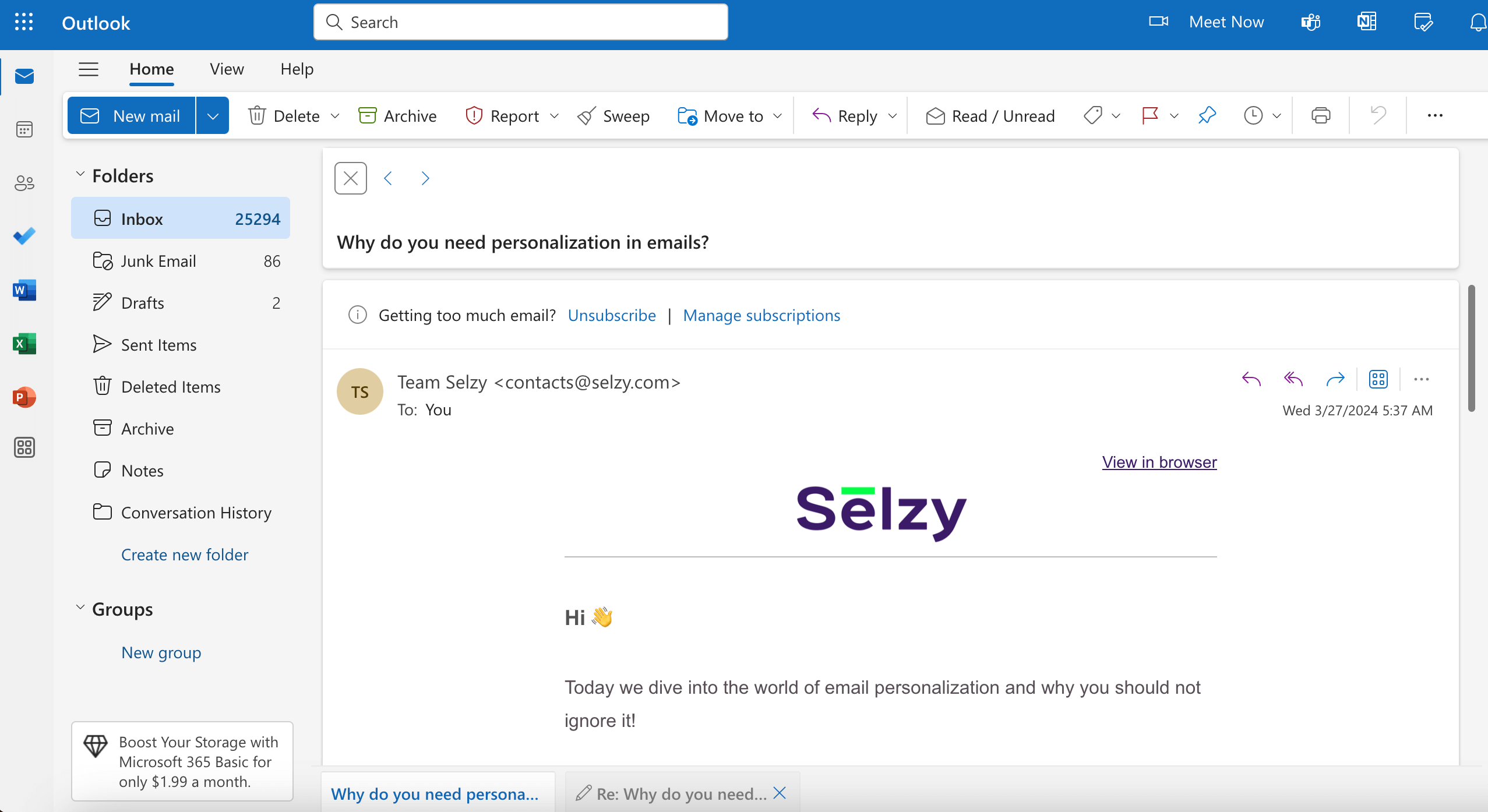
Here is an example of an email opened via the Outlook web app:
What are the advantages and disadvantages of using them?
Email message templates optimize your workload by eliminating the need to start from scratch for every task. Using quick email templates in Outlook offers several advantages:
- Time-saving. Templates allow you to quickly create emails for common scenarios without having to retype the same content each time. This may be especially useful when sending multiple emails at once. Find out how to send mass emails via Outlook in our blog.
- Consistency. Message templates help maintain a consistent format and messaging across your emails, ensuring professionalism and brand consistency.
- Reduced errors. Pre-designed templates reduce the likelihood of errors or omissions in your emails since you’re working from a standardized format.
- Convenience. Templates can be easily accessed and reused whenever needed, providing convenience and flexibility in managing your email communications.
Even though the email template feature is very helpful, you should be wary of its drawbacks. Here are some potential disadvantages of quick message templates to consider:
- Limited customization. Templates may not always allow for complete customization, leading to generic-looking emails.
- Stale content. If templates are not regularly updated or refreshed, they may contain outdated information or messaging, leading to a disconnect with recipients.
- Formatting issues. Templates may cause compatibility or formatting issues across different email clients or devices, which will affect what your email looks like for receivers. For example, Gmail doesn’t support a lot of fonts, and if you use something other than Open Sans or Roboto in your Outlook email template, your message will render differently to a recipient using Gmail.
- Overuse. Relying heavily on templates can result in repetitive and impersonal communication.
How to create an email template in Outlook step by step
Creating, using, and editing Outlook templates is quick, easy, and intuitive, especially when using the Outlook website. If you want to reap the benefits of this feature, follow these steps:
Online at Outlook.com
- Log onto the Outlook website.
- Click on New mail.
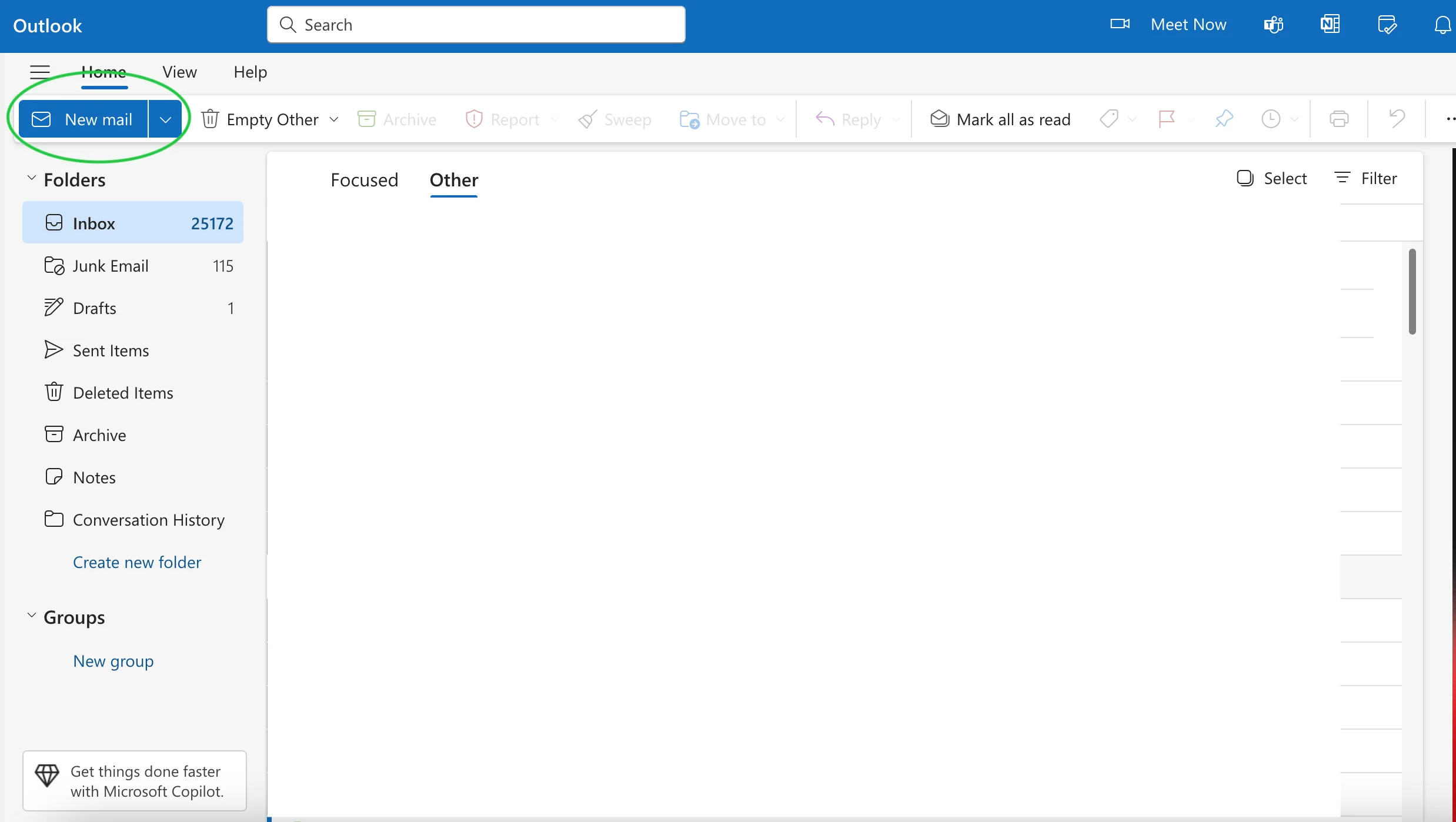
- Select the Apps icon on the toolbar and click on My Templates.
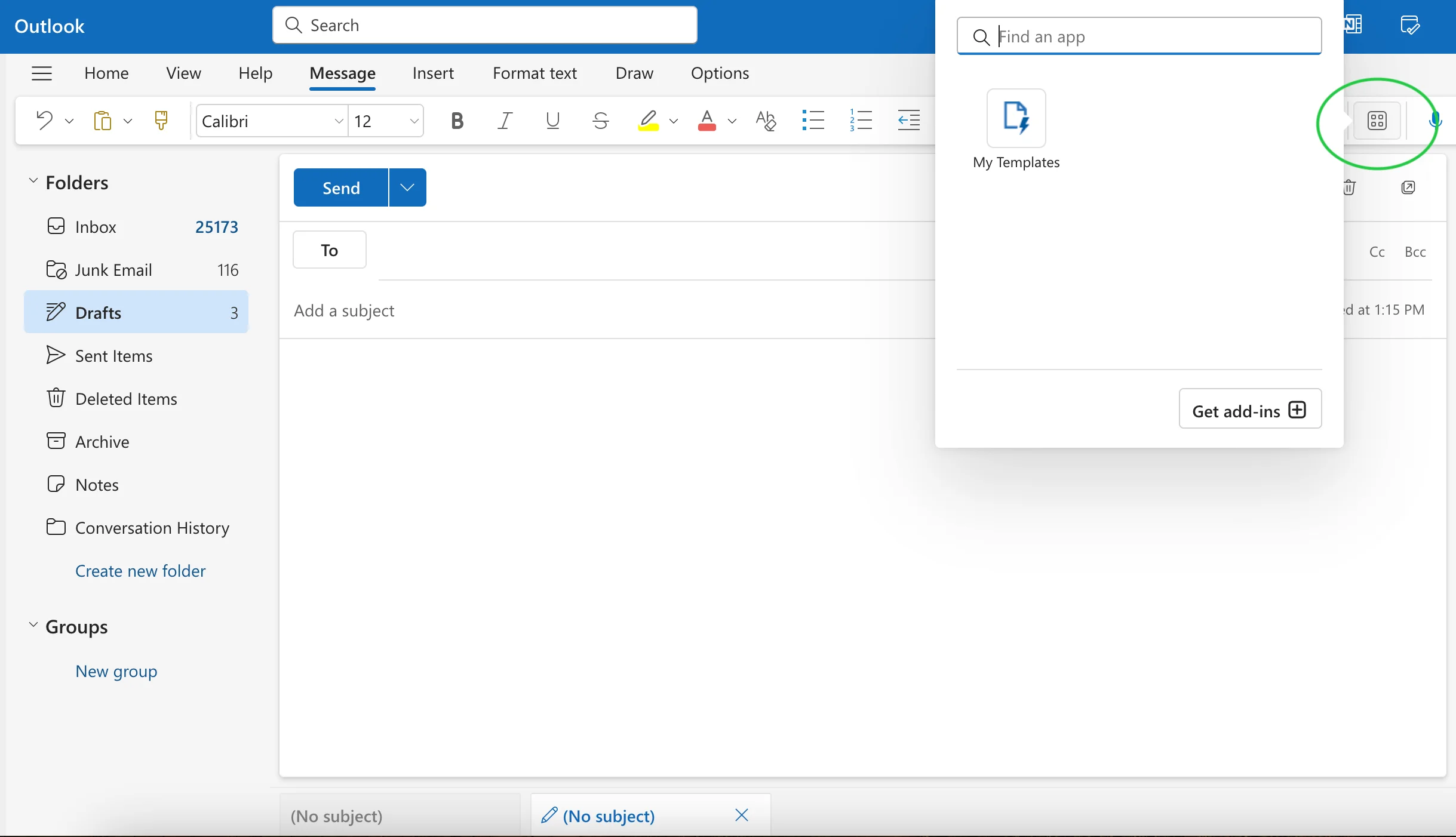
Please note that for some users, templates can be found under More Options in the lower right (three dots). Here’s what it looks like:
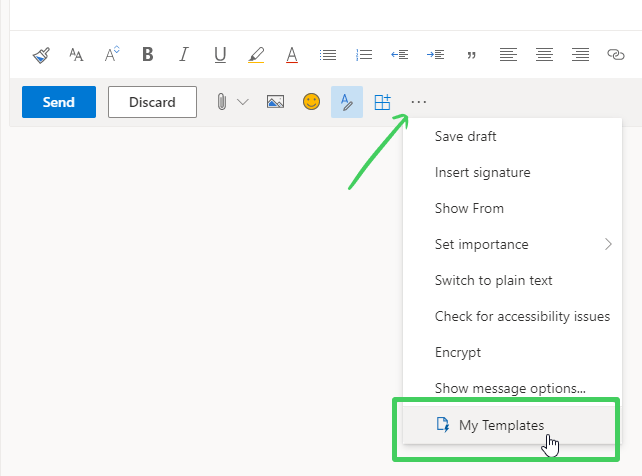
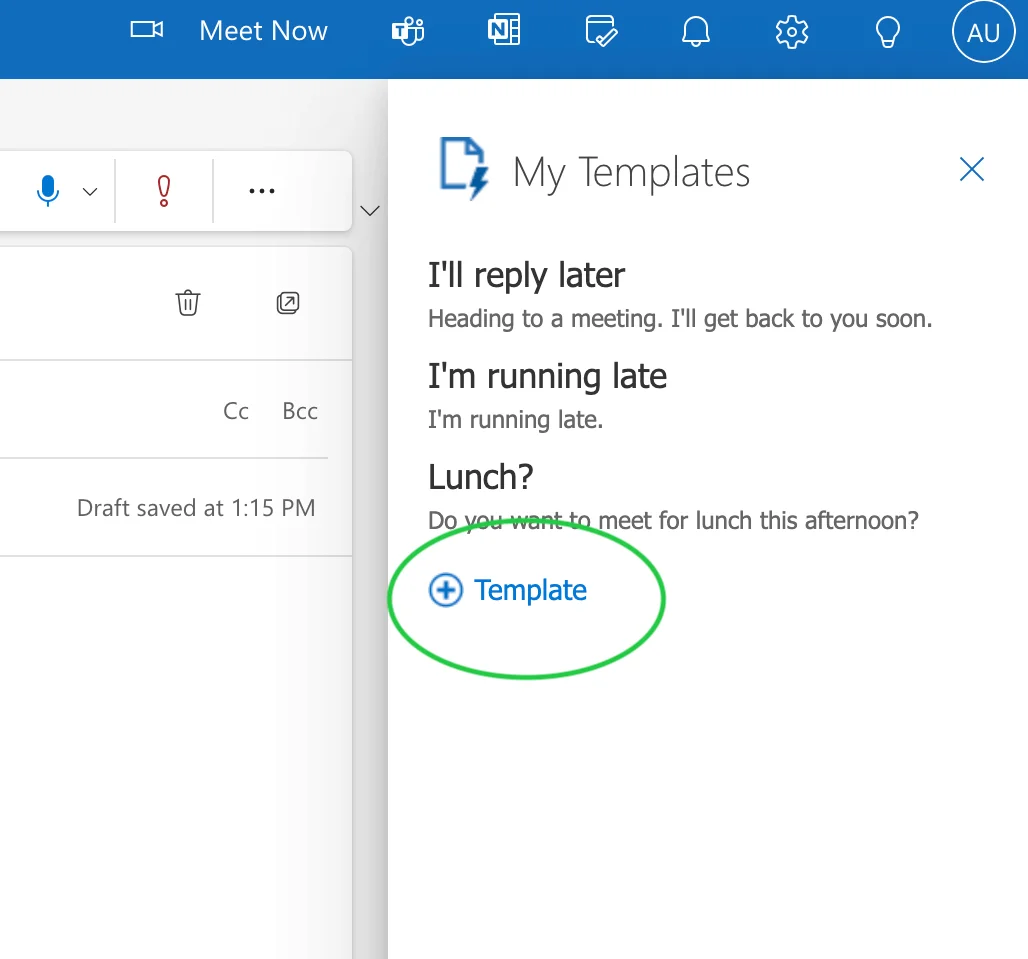
- Once you’ve selected My Templates, you will see the pre-made Microsoft templates and the option to create your own. To do so, click on + Template.
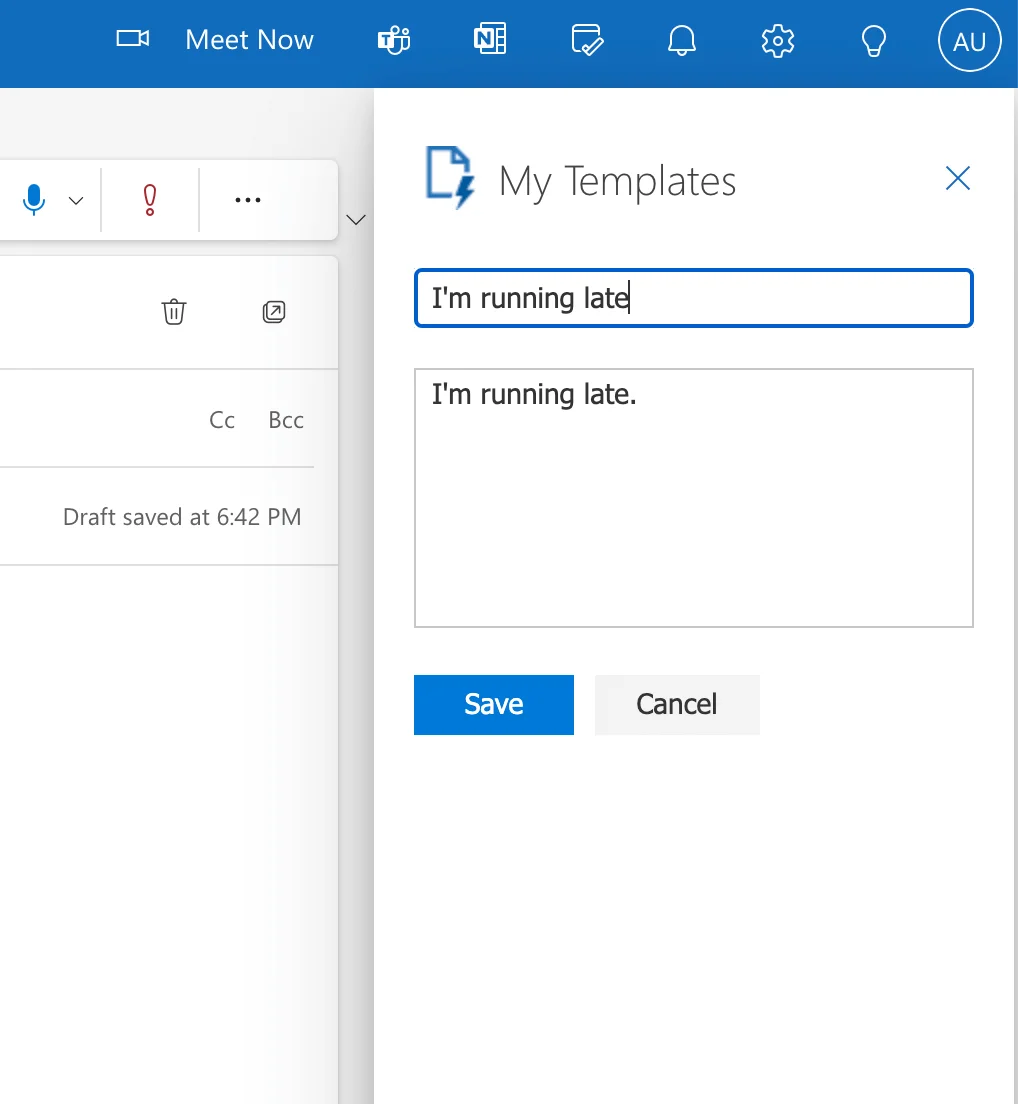
- Create your template in the dialog box. Press Save once you’re done.
In the desktop version of the program
Creating an email template using the Outlook desktop application is less straightforward than doing so online. Don’t worry — the following guide will teach you how to do it.
- Launch the Outlook application on your computer.
- In the Home menu, select New Email.
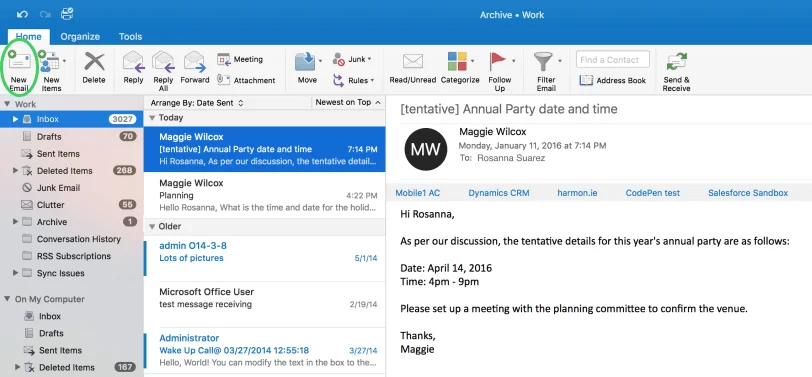
- Once the dialog box opens, write the body of your template. Press File once you have finished crafting it.
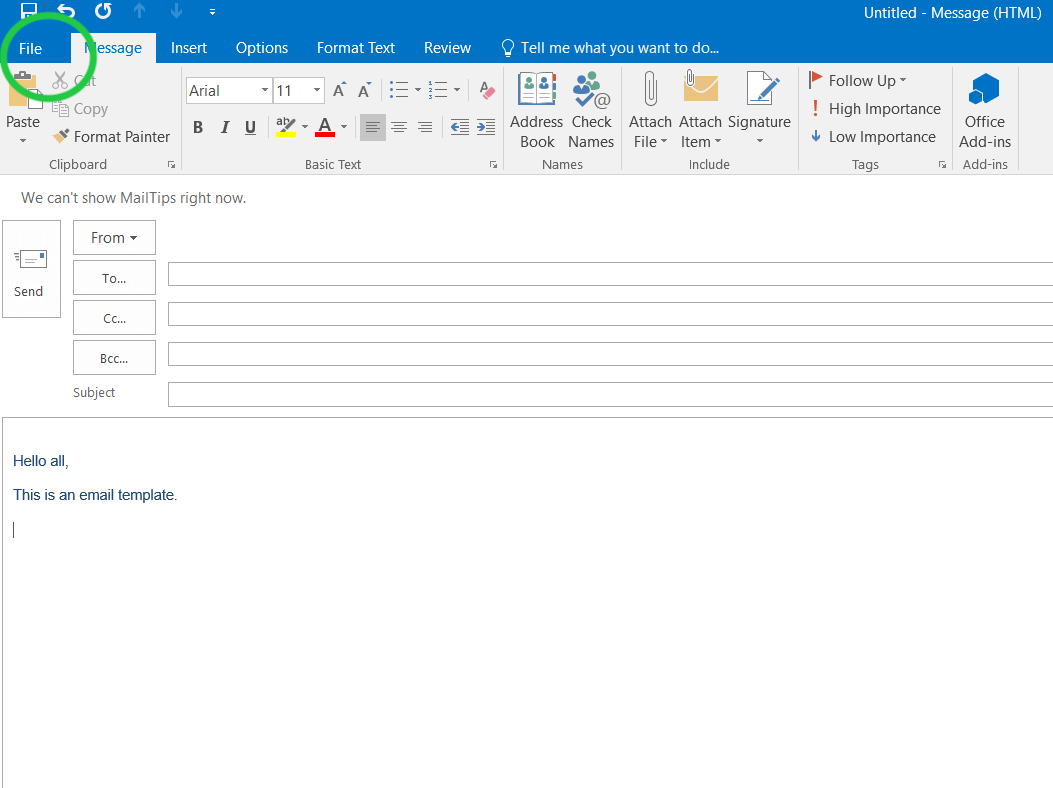
- Press Save As. When the menu opens, select Outlook Template as the type.
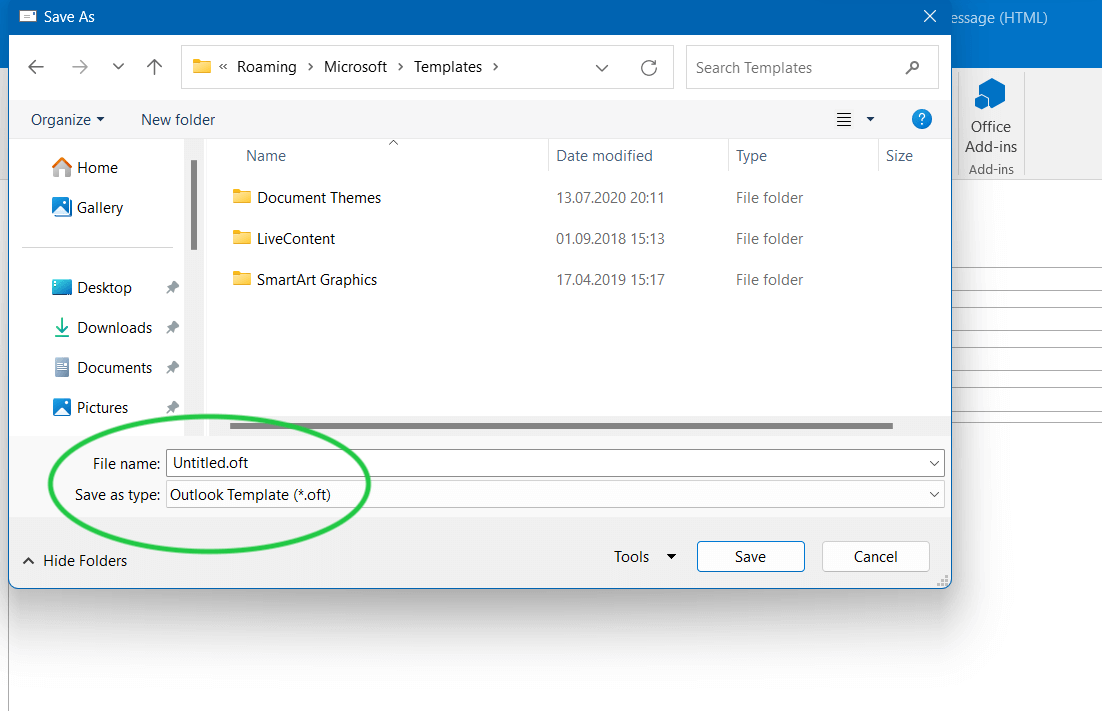
- Click Save.
How to use email templates in Outlook
Now that you’ve created a template or two, it’s time to learn how to use them in your emails.
Online
Follow the steps listed above to find your template library. Click on the template you’d like to use, and it will appear in the body of your email.
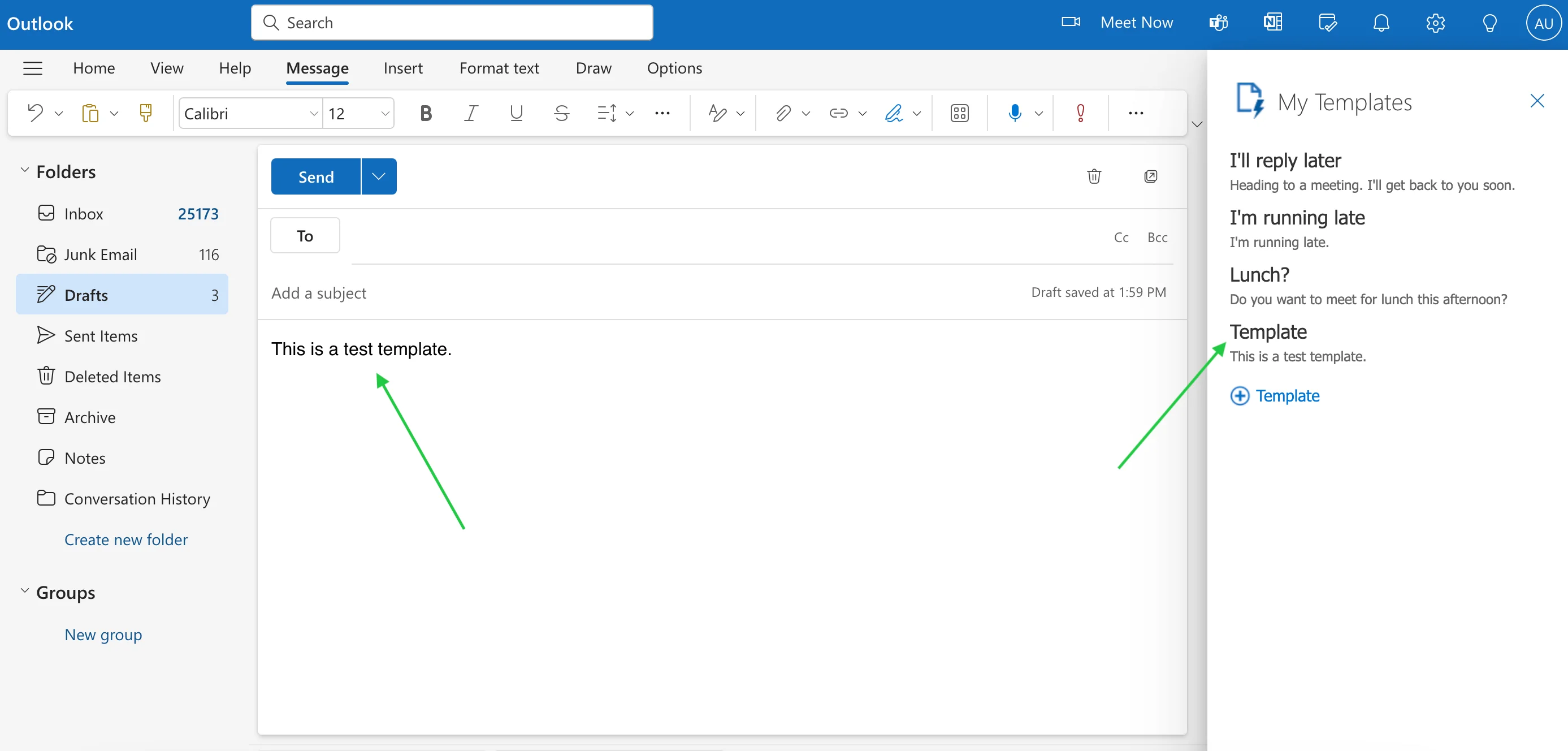
Feel free to customize the message as needed, and when composing a new email, make sure to include the subject line and recipients. Finally, press Send when you’re done.
In the desktop program
Again, using your templates is harder on the desktop app than it is on Outlook.com — here’s how:
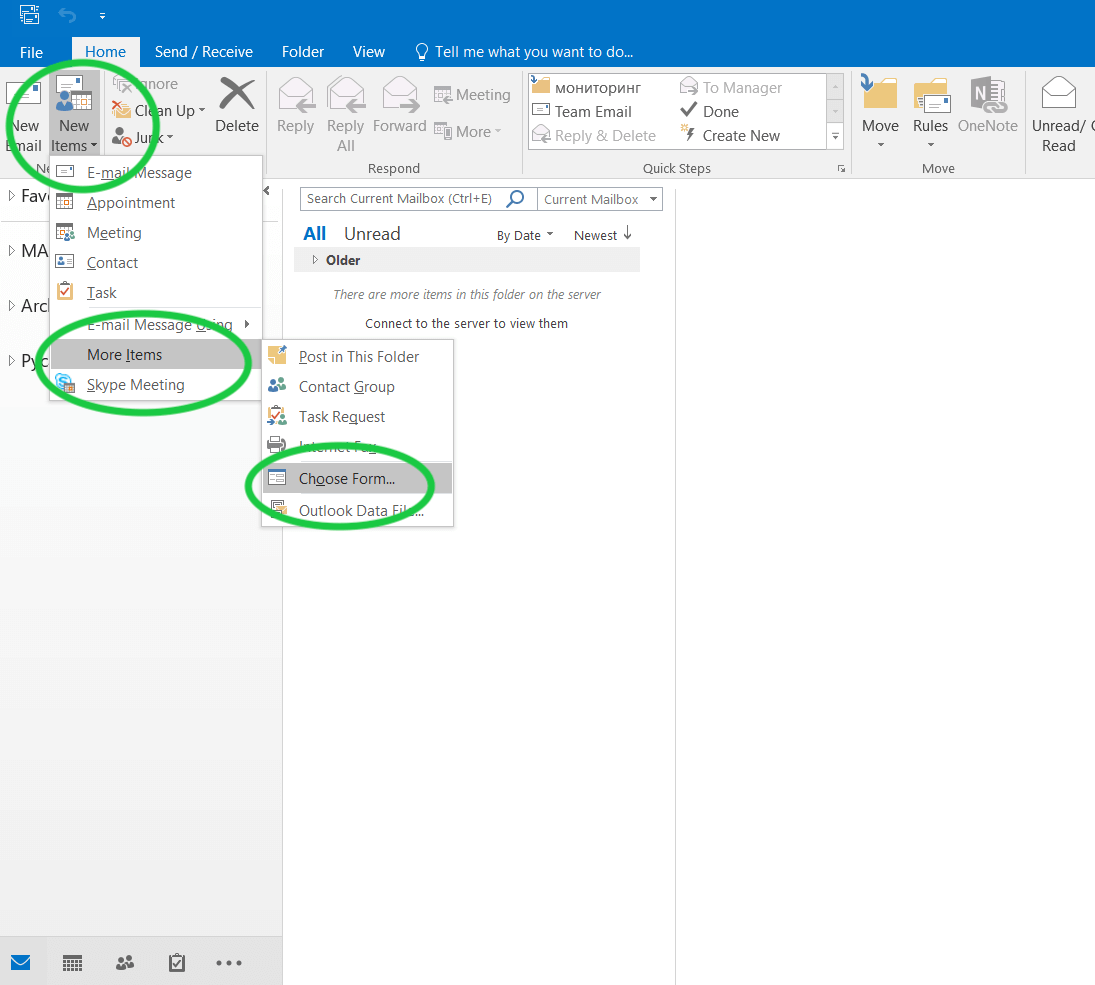
- Click on New Items and select More Items. Press Choose Form in this menu.
- In the Choose Form dialogue box, in Look In, click on User Templates in File System.
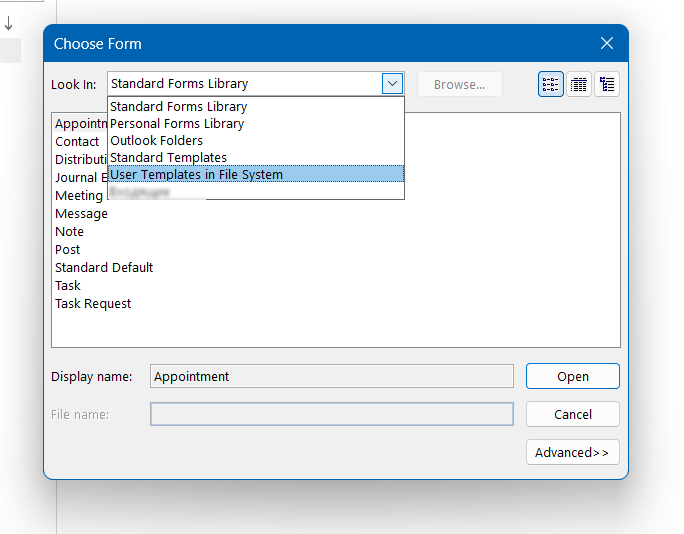
- Select your template and click Open.
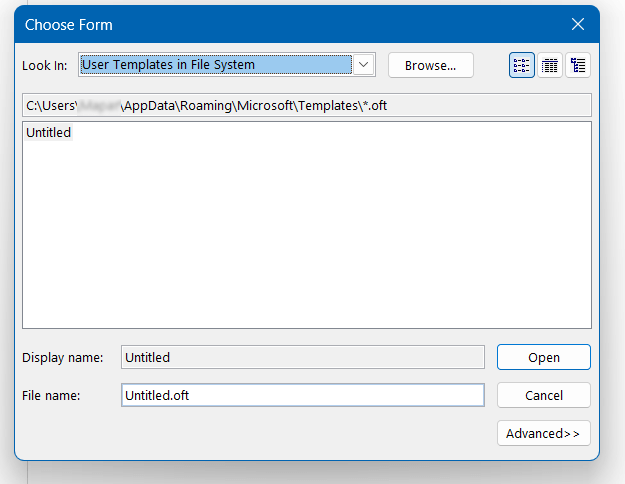
- As before, make the necessary changes to the body of your email, and don’t forget to add a subject line!
How to edit an Outlook email template
Now you know how to create templates using Microsoft Outlook. The next step is learning how to edit them.
In the web version
To edit a template on the web version of Outlook, hover over the top right-hand corner of the template and click on the pencil and paper icon.
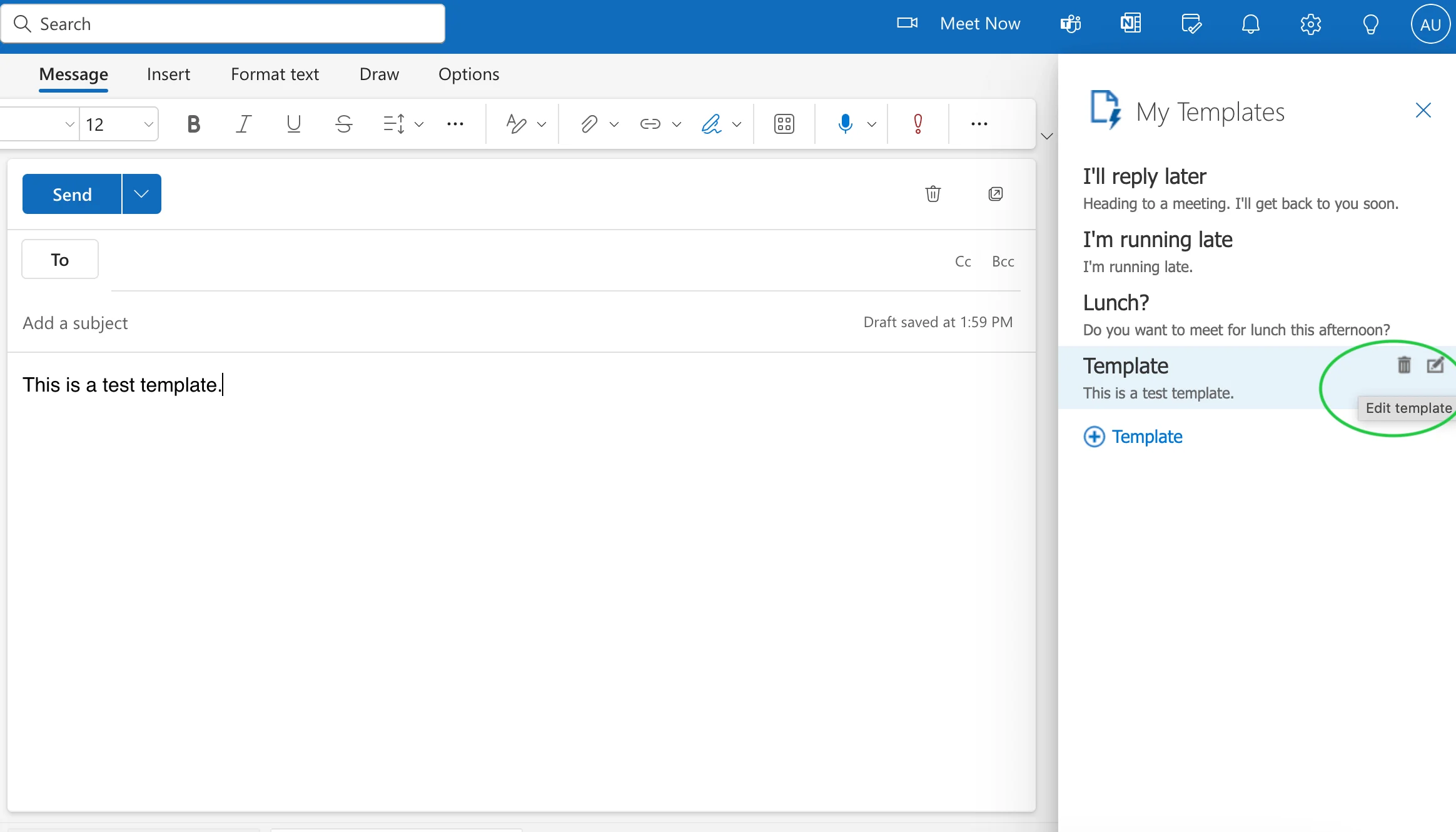
Press Edit Template and edit your template in the dialogue box.
If you decide that you no longer need a particular template and would like to delete it, the bin icon is located to the left.
In the desktop application
The process of editing a template via the Outlook desktop is very similar to that of creating and applying. Follow these steps:
- Click on New Items and select More Items. Press Choose Form in this menu.
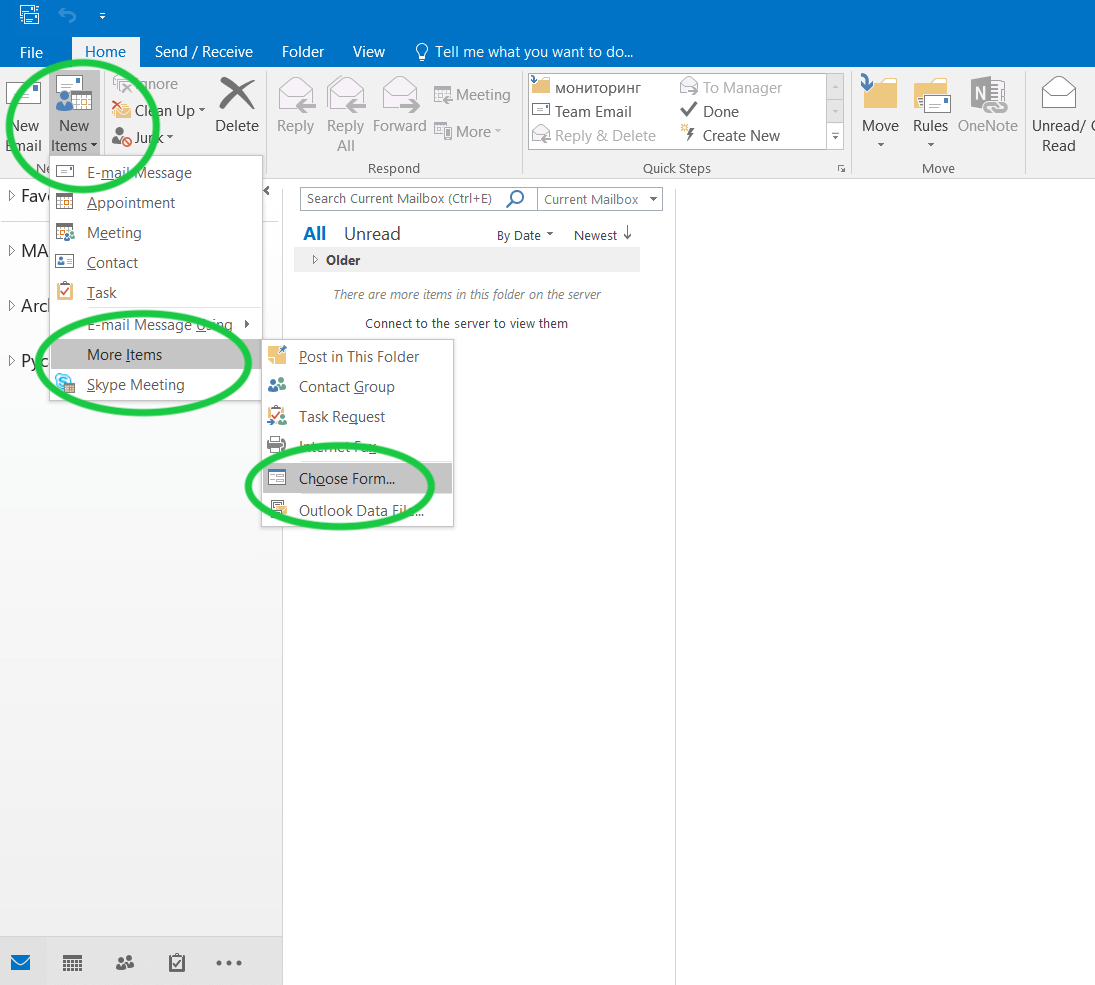
- In the Choose Form dialogue box, in Look In, click on User Templates in File System.
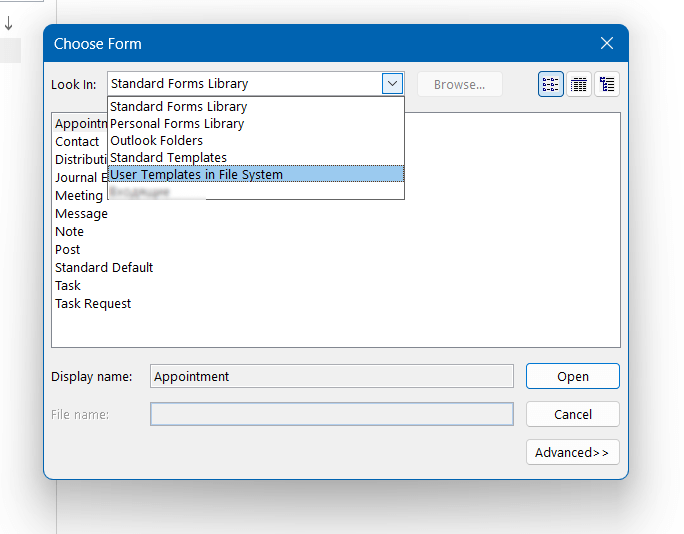
- Open the template and make edits. Do not click Send! Instead, press Save As followed by Outlook Template.
- Save it as you would save a new template.
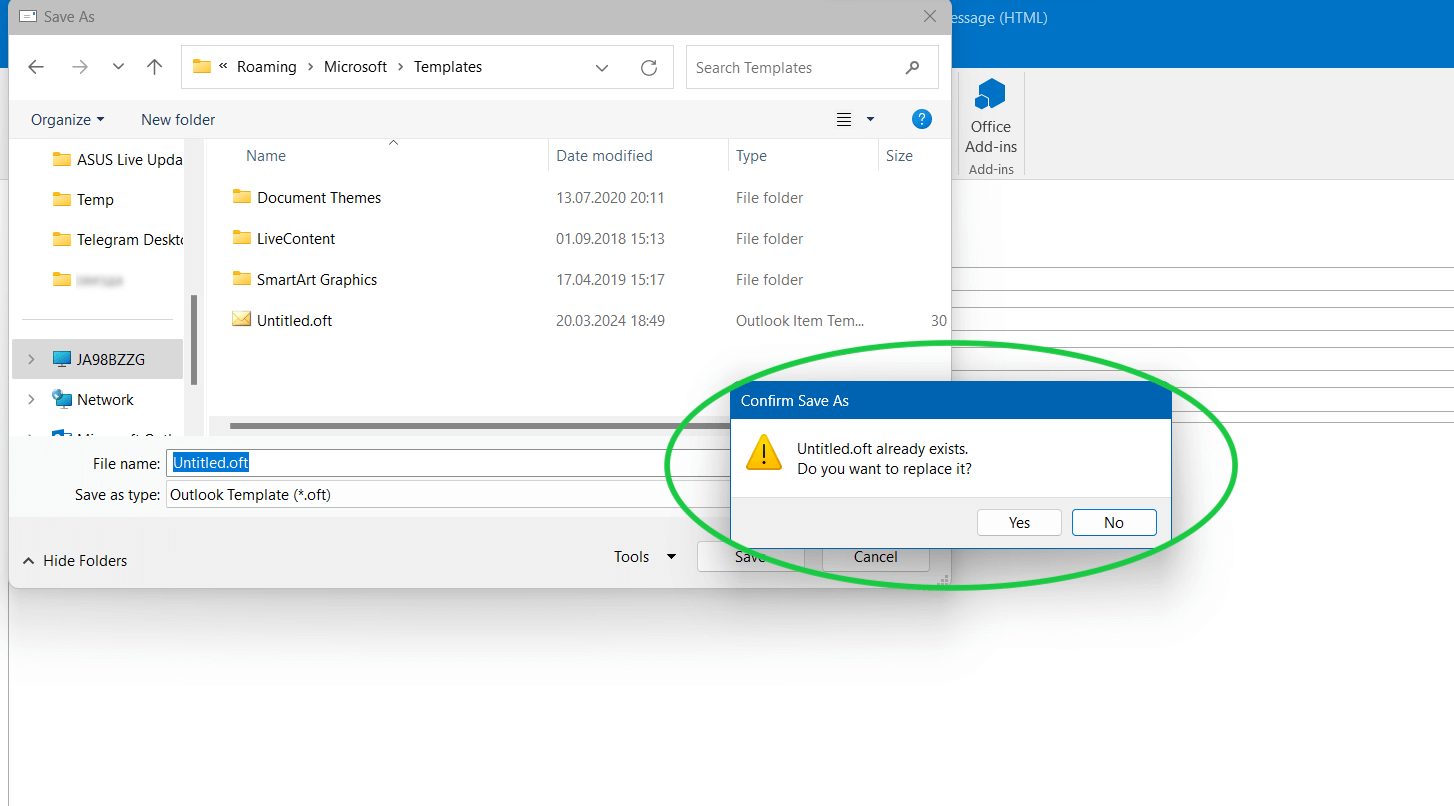
- Once you click save, Outlook will show a prompt asking you whether you want to replace the existing template with the edited version. Press Yes.
Outlook is one of the most well-known and best email clients for general use. Another one is Gmail, which also offers email templating features. If your email needs go beyond what Outlook can offer, but you’d still like to take advantage of templates, check out email service providers. They’re especially useful for email marketing businesses and marketing professionals.
Outlook email templates not working? Here’s how to fix it
Even though Outlook templates are easy to use, as with any other tool, you might run into issues. Here are the most common problems and how to solve them:
Templates are not showing in Outlook
If you can’t find your templates, the My Templates feature may not be enabled.
How to fix it:
- Open a new email in Outlook.
- Click the three dots (More options).
- Select Get/Add apps.
- Search for My Templates and enable it.
If you’re using a work account, it’s also possible that your organization may have disabled add-ins. In that case, contact your admin.
“My Templates” is missing
Sometimes the feature isn’t visible at all in the toolbar.
How to fix it:
- Check under the three-dot menu (More options).
- Add it manually via Apps/Add-ins.
- Restart Outlook after enabling it.
Formatting looks wrong
Outlook templates support limited formatting, which can cause layout issues like fonts not being supported, HTML formatting not being preserved or images not displaying correctly.
How to fix it:
- Stick to standard fonts like Arial or Roboto.
- Avoid complex layouts.
- Test your template by sending it to yourself first.
Template didn’t save or update
If your changes aren’t saved, you may have edited the email instead of the template itself.
How to fix it:
- Reopen the template via My Templates.
- Click the Edit (pencil) icon.
- Save your changes again.
For desktop templates (.oft files), make sure you:
- Click Save As.
- Select Outlook Template (.oft).
- Overwrite the existing file.
Templates work differently on desktop and web
Outlook behaves differently depending on the version you’re using.
How to fix it:
If something isn’t working, double-check which version you’re using and follow the correct steps.
Outlook email template ideas
Here are ready-to-use Outlook email template examples for common business scenarios. These will allow you to send emails quickly in different situations. The square brackets within these templates indicate variables that allow you to personalize the message.
Don’t forget to add a subject line and a signature!
Internal meeting request
Hi [coworker’s name],
I hope this email finds you well. I am [my name and job title] here at [company name], and I would love to have a brief chat with you about [topic]. Would you be available on [date and time]?
Thank you so much for considering my request.
[Signature]
Team management
Dear all,
I am writing to inform you about [challenge]. As part of this, I need you to complete the following — [brief task description].
Here are the instructions:
- [Brief about Step 1]
- [Brief about Step 2]
- [Brief about Step 3]
Please submit this by [deadline date and time].
Do not hesitate to contact me at [my phone number] if you have any questions.
Thanks,
[Signature]
Requesting external feedback
Dear [client name],
We’re very grateful you chose [product name], and would like to learn more about your experience. This will help us make [product name] even better.
Please take our short survey and let [company name] know how things are going.
Here’s a link to the survey: [link]
Kind regards,
[Signature]
Sharing company news externally
Dear [client name],
Thank you for being with [company name]. We would like to inform you about some company updates you may find interesting.
[Heading 1]
[Image 1]
[Text 1]
[Heading 2]
[Image 2]
[Text 2]
Stay tuned for more information about our newest products and deals!
Sincerely,
[Signature]
Tips for making templates in Outlook
Now you know everything there is to know about making and sending emails featuring templates. Here are a few tips and tricks to make template creation easier:
- Start with a clear purpose. Before creating a template, think of the purpose of your email. Whether it’s for client communication, project updates, or a marketing business, clarity helps in crafting effective templates.
- Use a consistent format. Maintain consistency in your email templates to reinforce your brand or personal style. This includes using the same fonts, colors, and layout structure.
- Don’t neglect email etiquette. For example, make sure your message template has a professional email sign-off and a professional subject line that is not misleading or disrespectful.
- Test before using. Before sending your message template to a wider audience, send a test email to yourself or a colleague to ensure everything looks as intended. Check for formatting issues, broken links, or missing information.
- Update templates regularly. Periodically review and update your email templates to reflect any changes in your messaging or business needs. This ensures that your templates remain relevant and effective over time.
- Use static images. As we mentioned earlier, images and other media can be used in an Outlook template. However, animated GIFs are not supported, so it’s best to stick to static pictures.
Conclusion
Templates for Outlook are a quick and easy way to increase efficiency and maintain consistent email communication in personal and business contexts. You can create, use, edit, and delete Outlook templates in the desktop application and its web version. If you don’t know where to start, use our Outlook email template examples.

 New and noteworthy on our blog