


Key takeaways
- Chatbot marketing strategy improves customer experience with 24/7 communication, boosts engagement and conversion rates.
- Determine goals, target market preferences before implementing chatbot marketing.
- Choose a reliable chatbot builder with tracking metrics integration.
- AI-powered chatbots learn from data, provide personalized recommendations, enhance customer experience.
- Chatbots offer instant, accurate support, tailored responses, and consistent branding.
- Chatbots optimize customer support, lead generation, personalized recommendations, and upselling.
Is there a strategy that can help generate leads, increase conversion rates, and improve customer service all at once? Chatbot marketing, a new digital staple for businesses of all sizes, might just do the trick.
This tactic is about using automated software embedded into a website, messaging, or mobile app to encourage user engagement. In this article, we’ll take a look at how chatbot marketing operates and how you can start using one for your business.
TL;DR
The chatbot marketing strategy allows businesses to improve customer experience with 24/7 synchronized, relevant communication. Chatbot marketing benefits and increases both engagement and conversion rates.
A chatbot for marketing can be rule-based or AI-driven. Either way, chatbots are programmed to mimic the look and feel of a conversation with a human, as they interact with users and deliver information, guide them through sales funnels, and react instantly to the most frequently asked questions. This is why chatbot marketing is a way to develop a user-centric experience.
Before using chatbot marketing, determine the goals you want to achieve and identify the target market, its preferences, demographics, and pains. This is vital, since it will help you choose the voice for your chatbot, its form, and how it will engage with your audience. Remember that your chatbot’s personality needs to be consistent with your brand and be close to how an actual person sounds.
After that, pick a reliable chatbot builder with specific features, designed to work well across multiple channels and with integrations for tracking metrics. Create and launch your chatbot and test your marketing strategy. Finally, reshape your approach based on user feedback and analytics.
With a well-defined plan, appropriate tools and platforms, and data analysis, chatbot marketing will bring great results for your business.
What is chatbot marketing, and why does it matter?
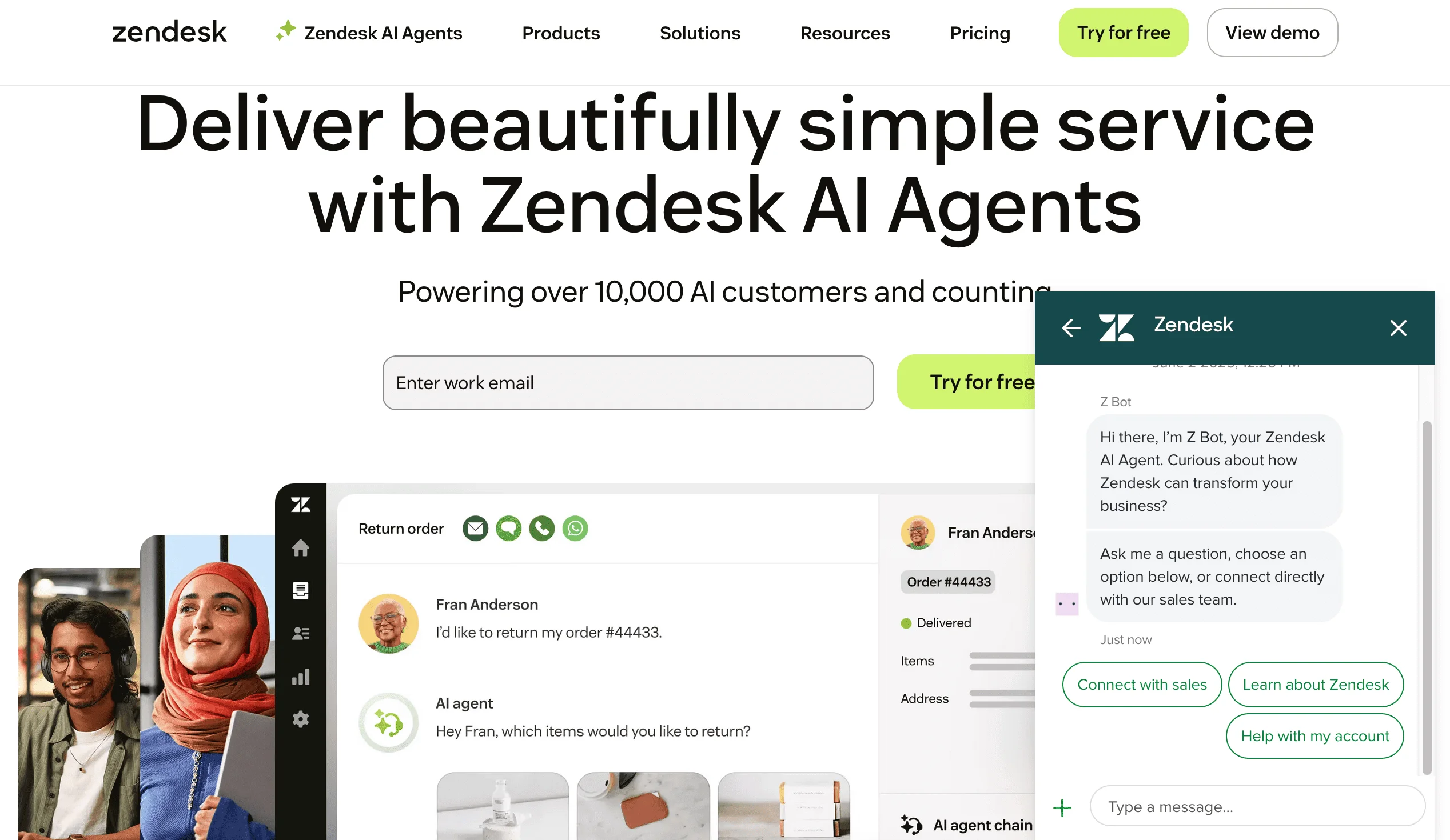
Chatbot marketing is using automated bots that replicate human conversations with customers in real-time, guiding them through the buyer’s journey. Chatbots can provide instant support to users at any time, no matter their time zone, juggle several tasks at once, and reduce the need for human agents.
You can use separate chatbots for every platform or a universal one. Omnichannel chatbots can be integrated into a great number of platforms, from websites to social media, SMS, WhatsApp, Telegram, and other apps. They can retain information about customers across channels and make the experience truly personalized and relevant.
Key benefits of chatbot marketing
Chatbot marketing can ease your business’s day-to-day operations and help you grow. Here are some of the benefits you can expect from this strategy:
- Significant cost savings since the need for human agents’ involvement is reduced
- Relevant and timely communication when the customers are most active
- Consistent branding and messaging
- Less time spent dealing with routine tasks or repetitive inquiries
- Scalability — chatbots can grow with your customer base
- Enhanced customer journey and higher conversions
If you opt for AI-powered chatbots, they can learn from the data collected and improve further. They also track interactions in real time and retain customer information even across platforms. Along with tailored messages, product and action recommendations, this makes AI chatbots great for personalization.
How chatbots enhance customer experience
Users often complain about waiting long hours before having their issues addressed in traditional customer service models, and we know that time is becoming one of the most valuable resources for all of us.
Customers are 2.4 times more likely to stay with companies that solve their problems quickly. And when we’re talking about social media, one third of people expect replies to tags and direct messages within one hour. Using chatbots can tackle this problem and deliver support that boosts customer satisfaction, since they provide instant and accurate answers around the clock.
On top of that, a modern artificial intelligence chatbot tailors its responses according to customer data, past purchases, browsing habits, history, and preferences, which makes customers feel recognized and appreciated. For example, a chatbot on an e-commerce platform can offer special discounts to returning customers or suggest similar or complementary products. A clothing store could recommend outfits based on the user’s style, shaped by their previous purchases. These data-driven interactions can simulate human-like conversations, enhance customer engagement, and encourage users to repeat business.
Additionally, chatbots offer consistent, contextual yet conversational customer support, no matter where users are, because they can be integrated into various platforms. This creates a truly omnichannel experience. For instance, if a customer starts chatting with a bot on Instagram, they can easily continue the same conversation on a different platform. This constant presence helps to build trust in your business, since customers feel seen and taken care of.
Chatbot use cases in marketing
Let’s now dive into the practical chatbot use cases.
Customer support and FAQs
Customer support usually has to deal with frequently asked questions (FAQs), such as return policy, tracking orders, or problems with login and password. Instead of occupying human agents’ time, chatbots can tackle these inquiries. Your agents will be free to deal with more complex issues, and your customers can access this support around the clock, across various platforms. This optimizes work processes and improves the overall user experience.
AI software can have thoughtful, intelligent conversations to engage users, as it understands a wide range of customer inputs, even in casual language or with typos. A user might ask for “order tracking,” or write “I didn’t get my products,” or even “where is my package,” and get support and order details.
When this technology is paired with CRM or helpdesk software, it can escalate complex queries to human representatives and even provide feedback forms after a conversation.
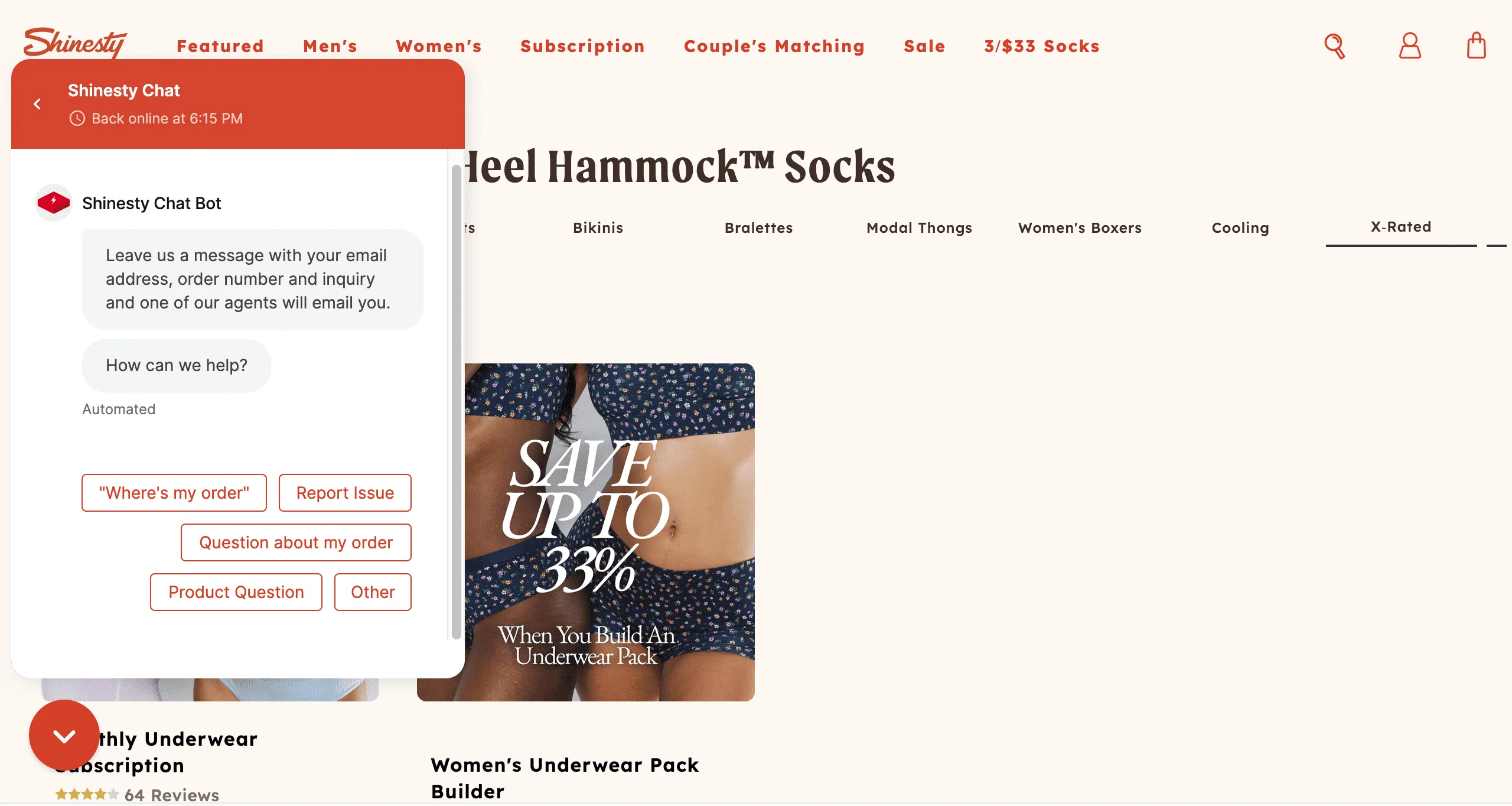
For example, underwear brand Shinesty has a chatbot that helps users track their orders, answer questions, and redirects them to the support team when needed.
Lead generation and qualification
If your business needs to revamp the lead generation and qualification strategy and make it faster and smarter, you can try to craft 2 to 4 phrases to initiate a dialogue between users and the chatbot. Ask “What brings you here today?” or something else and motivate users to engage in the conversation and provide more information about themselves.
Chatbots for marketing can also help your business filter leads based on specific predefined criteria, which allows sales teams to focus on the most promising prospects, boost conversion rates, and save time and resources.
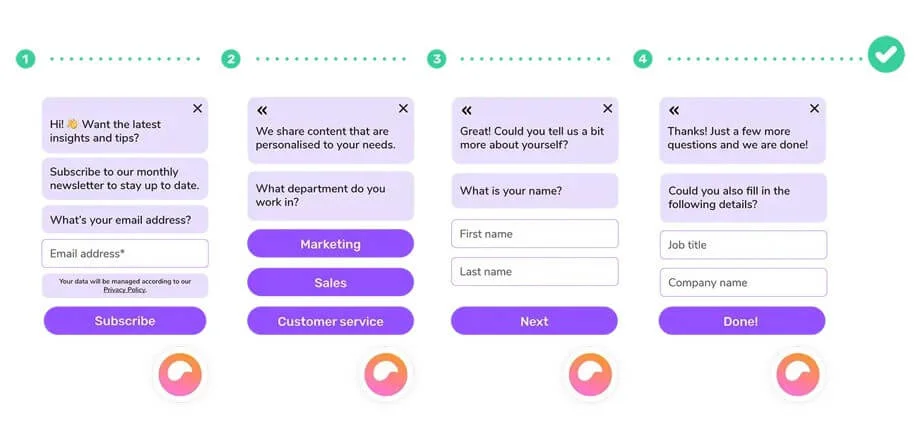
When integrated with CRM systems and other marketing platforms, chatbots can send out tailored follow-up messages automatically, which keeps the sales funnel moving smoothly without manual effort. This is a great way to help your sales teams nurture potential clients.
Here’s an example of how Ashot Nanayan, CEO and Founder at DWI, uses an omnichannel chatbot to address customers’ needs at different stages of the funnel:
We programmed our chatbot to do much more than just answer common questions about the services and the prices. It also identifies the user’s intent and their purchase stage. For example, in cases where a user explores, the bot can offer a helpful resource. If someone is ready for action, it can set up a discovery call.
A certain improvement we’ve seen is that after we introduced smooth hand-offs between the bot and human agents during busy times, we reduced drop-offs by 34%. In addition, we increased qualified lead conversions by 19% within the first three months.
Personalized recommendations and upselling
As we mentioned earlier, marketing chatbots tailor messages and experiences according to users’ data and behavior. This includes natural and relevant product recommendations.
This kind of suggestion and upselling is one of the most effective and user-centric solutions of chatbot marketing. It’s also very lucrative for businesses. Online stores that use chatbots have a 20% higher median order value.
When someone is searching for a product on a company website, for example, a chatbot can recommend complementary items, accessories, and upgrades of services. And all of that, according to that individual’s preferences and browsing history.
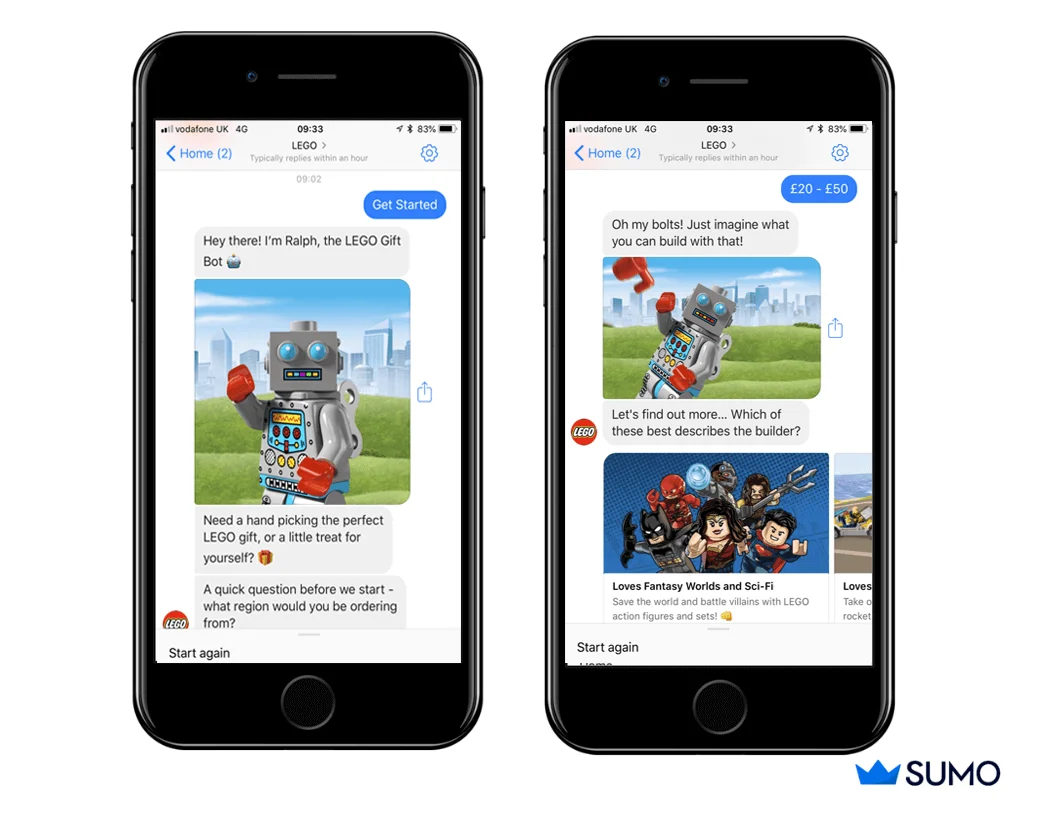
Since chatbots can be connected with marketing automation platforms and operate across various channels, they can suggest upsells where and when your customers are most likely to buy. These personalized interactions can significantly increase the chances of users making a purchase and turning into loyal customers.
Social media and ad campaigns
Chatbots not only engage users, but they can also nurture leads from social media and paid campaigns. Connect your chatbot with your social media, CRM, and email service provider, and it will be able to follow up with customers who showed interest in your ad but didn’t make a purchase.
For example, if someone clicks on an Instagram ad for a health product, they might be welcomed by a chatbot that offers a quiz to help them find the perfect protein shake.
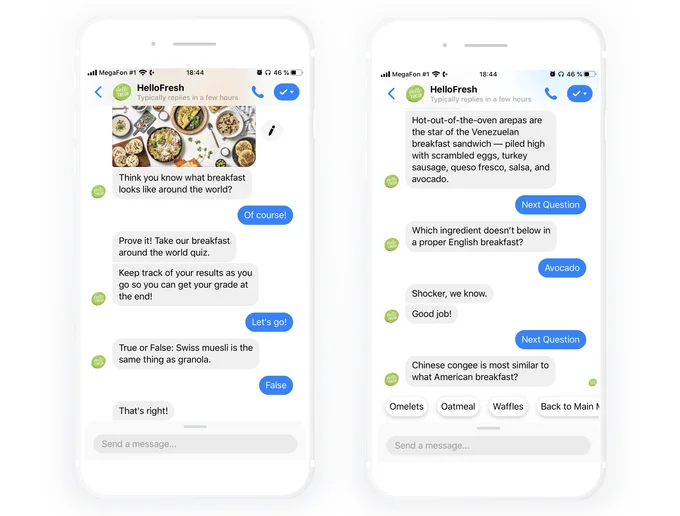
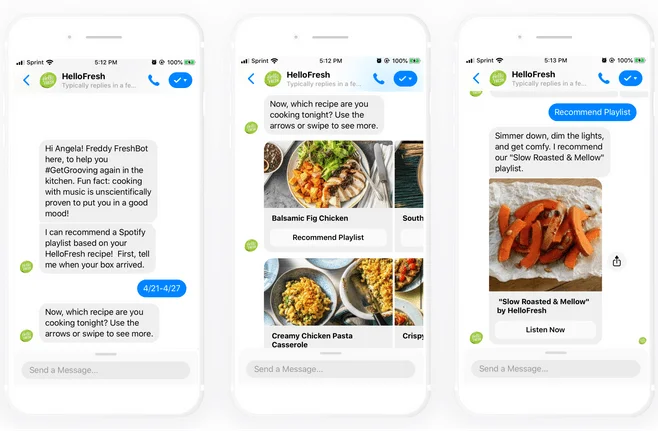
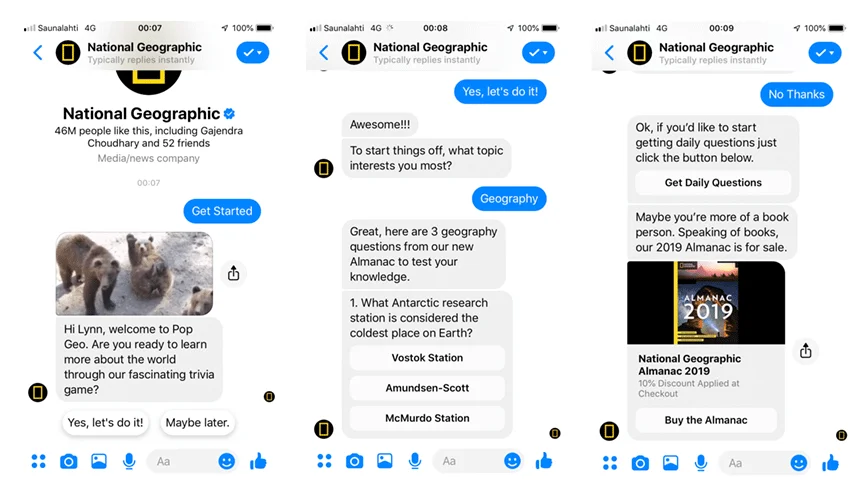
HelloFresh’s Freddy chatbot uses Facebook Messenger and sends customers a quiz that lets them test their knowledge on breakfast foods around the world. The chatbot even recommends a playlist based on the dish.
Chatbot marketing in action: Real-world examples
Bots are no longer characters from science fiction books and movies. They are now a real tool that can help your business boost productivity, engagement, and overall customer experience. From e-commerce to healthcare and SaaS, brands use chatbot marketing in creative and result-driven ways.
H&M
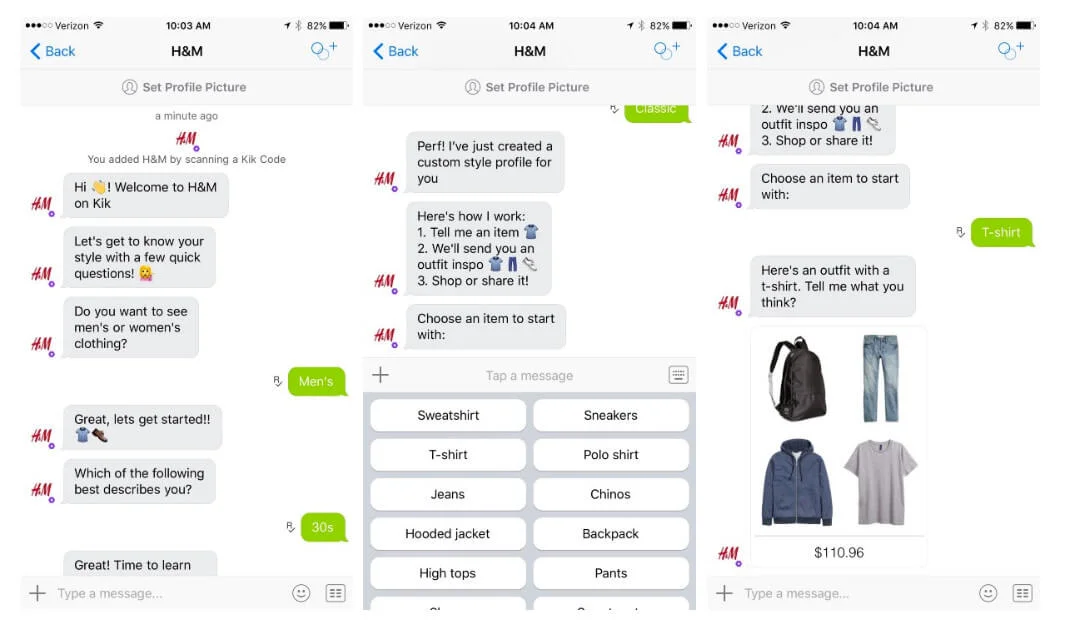
E-commerce brands, especially those in clothing, were among the early adopters of chatbots to help users find their style and make a purchase. Take H&M, for example. The brand uses a chatbot on the website to engage users with a few questions. Based on the responses, it suggests outfits and accessories that fit both their budget and style.
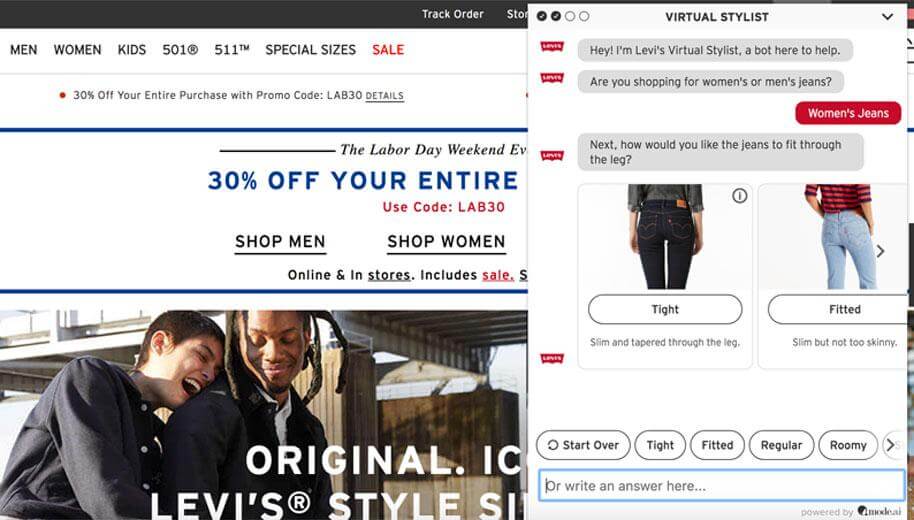
Levi’s
Levi’s is another brand that leverages chatbots to help customers find the ideal clothing based on past purchases, sizes, and personal preferences. This technology not only provides real-time updates on product availability but also makes the checkout process smoother, ultimately boosting both sales and customer satisfaction.
Marriott International
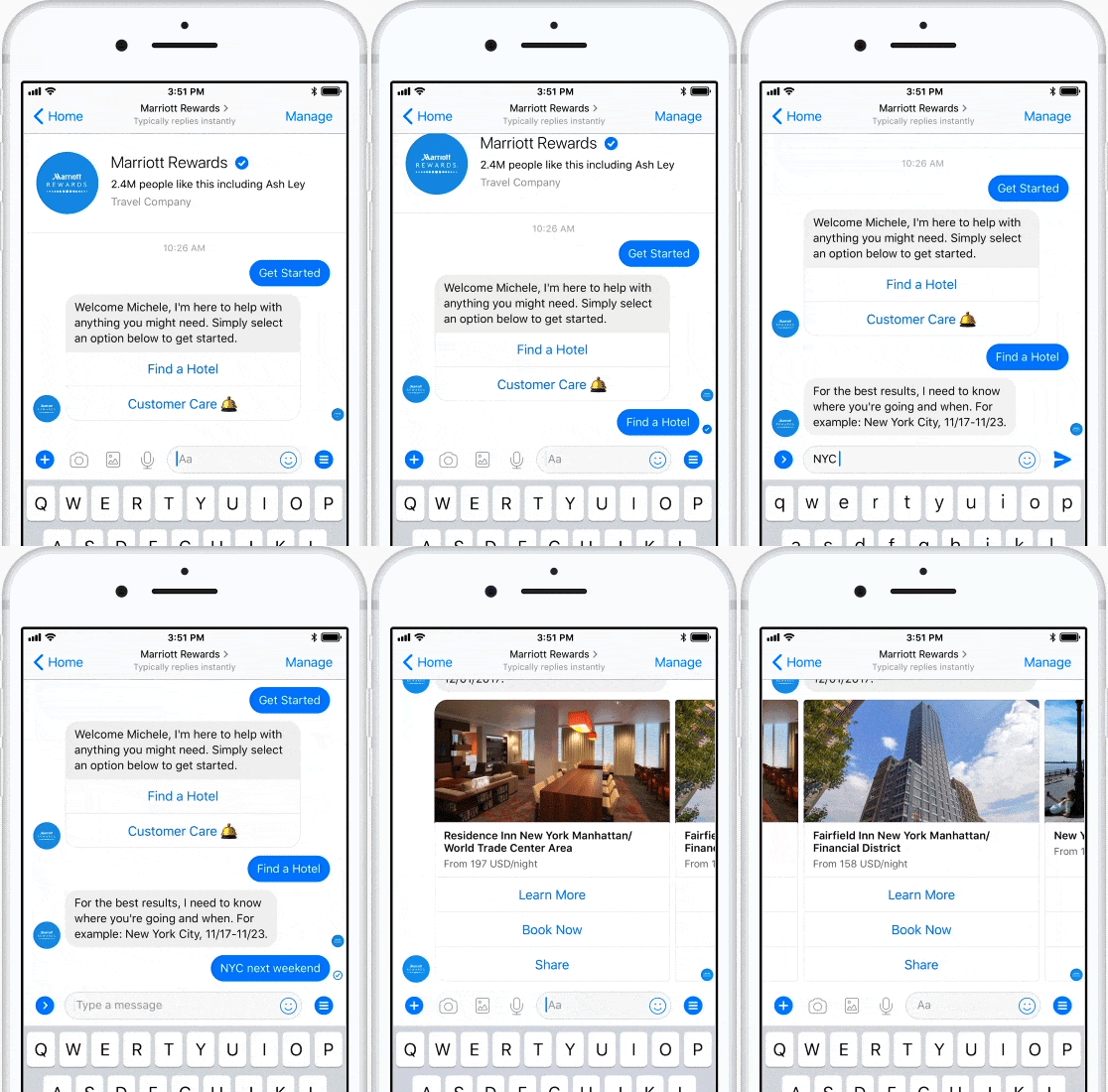
The service industry, like hotels, is also using chatbot marketing for service updates, booking, and cancellation inquiries. It saves staff time and also addresses issues quickly and efficiently. Marriott International, for example, rolled out a chatbot that allows guests to book rooms, modify their reservations, and request late checkouts. This is a much smoother and faster way than having to call customer service.
Drift
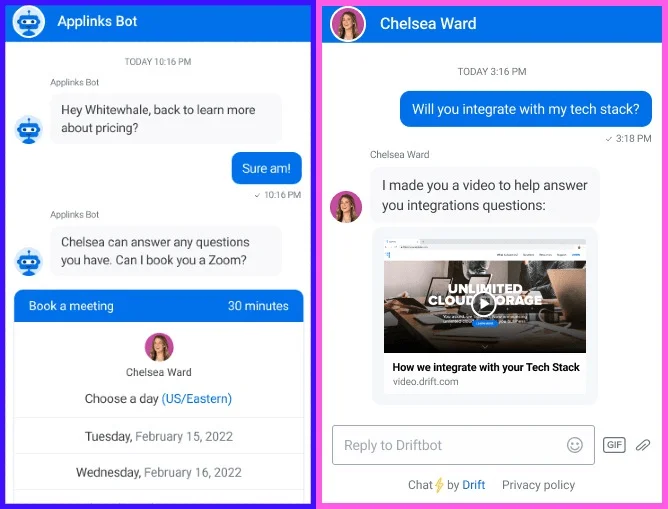
Drift is a SaaS company that uses chatbots to interact with website visitors, asking simple questions to qualify leads and connect them to the right sales team. The chatbot provides valuable content to users, addresses common inquiries, and suggests next steps, guiding users through the sales funnel while collecting valuable insights to enhance future campaigns.
10 essential tips for an effective chatbot marketing strategy
Ready to learn how to make a chatbot? Here are some recommendations on how to get the most out of it!
1. Define your chatbot’s purpose
Define your goals before starting to work on a chatbot and establish the metrics you will use to evaluate its performance. It doesn’t matter if your business focuses on lead generation, lead nurturing, customer service, upselling, or handling Q&A; there should be a clear purpose behind the chatbot design and setup.
2. Choose the right chatbot platform
To get the best results from chatbots, choose one of the best chatbot platforms. Think about how well it integrates with your CRM and other marketing tools, as well as how customizable the solution is to fit your specific needs. Additionally, make sure to go with a company that provides AI chatbots for marketing.
If you have your own development team, you might want to make a custom solution using ChatGPT, Gemini, or other chatbot platforms. It is a more complex and time-consuming process, but you’ll be able to control every aspect of the chatbot.
3. Integrate chatbots with your CRM & marketing tools
A chatbot can be much more effective if it’s connected to your other marketing tools. This integration creates a smooth flow of customer data, leading to a more customized experience for users.
4. Humanize your chatbot’s tone and personality
The way your chatbot communicates should embody your brand’s personality. To enhance the customer experience and make each chat more enjoyable, give your chatbot a warm and friendly tone and use an AI humanizer for it to align with your brand’s voice.
5. Use chatbots for engagement-driven campaigns
Create marketing campaigns that really engage users. Imagine a chatbot that offers a quiz to help customers find the perfect product or even provides special discounts to boost those conversions.
6. Implement AI and machine learning for better responses
Some chatbots have the ability to learn from past conversations and improve with time, thanks to the power of AI and machine learning, and can provide users with more accurate responses and a much richer experience. If you want to get the most out of your chatbot marketing, opt for the most advanced technology.
7. Optimize chatbot conversations for conversions
Define clear calls-to-action (CTAs) that persuade users to take your desired actions, whether that’s filling out a form or making a purchase. Make sure your chatbot’s conversations are designed to drive conversions, as this is what makes it effective.
8. Leverage chatbots for email & SMS marketing
Connect your chatbot to email and SMS marketing campaigns to reach users across various channels, ensuring they receive the right message at just the right moment. You can also use a Telegram chatbot to add another convenient platform for your customers to use.
9. Gather and analyze chatbot data for insights
Remember to keep track of how chatbots interact with users to spot areas for improvement and pay attention to metrics like response time, customer satisfaction, and conversion rates. Use chatbot analytics to fine-tune your chatbot marketing strategy and enhance your results.
10. Continuously test and improve your chatbot
Always gather user feedback, test your chatbot, and update your strategy and marketing goals accordingly. Don’t stop after launch, continue making your chatbot even smarter and effective, so it always performs best and helps you achieve your goals.
Common pitfalls to avoid in chatbot marketing
Like most things, the advantages of chatbot marketing come with their fair share of challenges. Let’s learn about some common pitfalls and how to avoid them.
Over-automation without a human touch
There are times when users really want to connect with a real person, and not every situation can be resolved by a bot. Automation shouldn’t be the only trick in your hat, it should be complemented by a human touch when necessary.
Frustrated users are more likely to walk away from the conversation altogether. To avoid this, make sure your chatbot has clear options for handing over to a human agent and make it clear to users when they’re chatting with a bot or a human. A well-rounded marketing system strikes a balance between the quickness of automation and the empathy and adaptability of human support.
Ignoring user feedback and interaction data
Remember, just like any other digital marketing tool, chatbots in marketing need to be fine-tuned. Take time to review chatbot transcripts, check for error rates, and adjust your flow, tone, and content as needed. Your customers dropping off early or asking questions that your chatbot can’t handle might be the warning signs that something’s off. Keep an eye on user feedback and the data gathered from interactions with your chatbot to make necessary improvements.
A smart chatbot marketing strategy is always evolving and should adapt based on real user behavior.
Conclusion
Chatbot marketing has impacted almost every industry from e-commerce to B2B. For improving customer service and engagement, automating routine support tasks, and increasing conversions, it’s one of the unparalleled strategies. And if you integrate it with AI and machine learning, a chatbot can adapt over time and deliver more and more relevant responses.
To truly bring out the potential of chatbot marketing, businesses need to have a solid strategy:
- Define clear goals.
- Select the right platforms.
- Continuously optimize based on data and user feedback.
Follow these steps, and chatbot marketing can elevate your communications with smarter, faster, and more personalized interactions at every touchpoint.
 New and noteworthy on our blog