


Key takeaways
- Email remains a practical channel for e-commerce growth, aiding in shopper retention, cart recovery, product promotion, loyalty building, and customer retention.
- The best e-commerce email marketing software depends on store size, budget, e-commerce platform, automation needs, and data utilization.
- Key features to consider in e-commerce email marketing software include native e-commerce integrations, revenue-focused automation, segmentation, personalization, pricing that supports growth, and reporting for revenue attribution.
Email is still one of the most practical channels for e-commerce growth. It helps online stores bring shoppers back, recover abandoned carts, promote products, build loyalty, and turn one-time buyers into repeat customers.
But the best email marketing software for e-commerce is not always the most famous or the most expensive option. The right platform depends on your store size, budget, e-commerce platform, automation needs, and how much customer data you want to use.
Best e-commerce email marketing software at a glance
| Platform | Best for | Starting price | E-commerce fit |
| Selzy | Small online stores and simple e-commerce campaigns | From about $7.5/month | Affordable email marketing with Shopify and WooCommerce integrations |
| Omnisend | E-commerce stores that want email, SMS, and push | From $13/month | Strong e-commerce workflows and multichannel campaigns |
| Klaviyo | Data-heavy Shopify and e-commerce brands | From $20/month | Advanced segmentation, profiles, and product recommendations |
| Mailchimp | Beginners and simple newsletters | From $13/month | Easy campaign builder, but e-commerce depth depends on plan and setup |
| Brevo | Budget-conscious stores with large lists | From $9/month | Email-volume pricing and multichannel tools |
| ActiveCampaign | Advanced automation users | From around $19/month | Powerful workflows, but may be too complex for smaller stores |
| GetResponse | Stores that also need funnels and landing pages | From around $19/month | Email, automation, landing pages, and sales funnels |
| MailerLite | Simple, affordable email marketing | From $10/month | Easy to use, good for smaller stores |
| Drip | E-commerce personalization and customer journeys | From $39/month | Strong behavior-based email marketing |
| Shopify Email | Shopify merchants who want native simplicity | Free monthly email allowance, then usage-based | Convenient for Shopify-only stores |
| Boldinbox | B2B and high-volume senders needing unlimited campaigns | From ~$14/month | Unlimited sending, AI tools, SMS and WhatsApp integration |
How to choose email marketing software for e-commerce
Choosing email marketing software for an online store is different from choosing a general newsletter tool. E-commerce teams need integrations, revenue-focused automation, product data, segmentation, and reporting that connects email activity to sales.
Native e-commerce integrations
Start with the platforms your store already uses. The best email marketing software for e-commerce should connect directly with Shopify, WooCommerce, BigCommerce, Magento, or your custom store setup.
Native integrations make it easier to sync customers, products, orders, carts, and purchase history. Without this data, you will spend more time moving information manually and less time building campaigns that make money.
Automation for revenue-focused flows
For e-commerce, automation is not a nice extra. It is one of the main reasons to use email marketing software at all. Look for tools that support revenue-focused flows such as:
- Welcome emails
- Abandoned cart emails
- Browse abandonment
- Post-purchase emails
- Product recommendations
- Cross-sell and upsell emails
- Win-back campaigns
- Back-in-stock alerts
- Replenishment reminders
- Review requests
A platform may look affordable at first, but if key automation flows are locked behind a higher plan, the real cost can grow quickly.
Segmentation and personalization
E-commerce email marketing works best when messages reflect what shoppers actually do. Good software should let you segment customers by purchase history, engagement, order value, product interest, location, and lifecycle stage. For more inspiration, check which subject lines work best for e-commerce.
- New subscribers
- First-time buyers
- Repeat customers
- VIP customers
- Inactive customers
- Cart abandoners
- Recent browsers
- Customers interested in specific categories
- Customers close to churn
Pricing that will not punish growth
Pricing models vary a lot. Some platforms charge by contacts, some by email volume, and some by a mix of email, SMS, and feature access. Before choosing a tool, check:
- How many contacts are included
- Whether unsubscribed contacts count
- Monthly email limits
- Automation limits
- SMS pricing
- Required annual contracts
- Feature restrictions by plan
The best option is not always the cheapest one. It is the platform that gives your store the right features at the growth stage you are in.
Reporting and revenue attribution
E-commerce teams need to know what email campaigns actually bring in revenue. Look for reporting that includes:
- Open rates
- Click rates
- Conversion rates
- Revenue per campaign
- Revenue per automation
- Average order value
- Unsubscribes
- Deliverability metrics
If a platform connects campaign activity with store sales, it becomes much easier to decide what to improve next.
11 Best email marketing software for e-commerce
1. Selzy — Best for small online stores that need affordable e-commerce email marketing
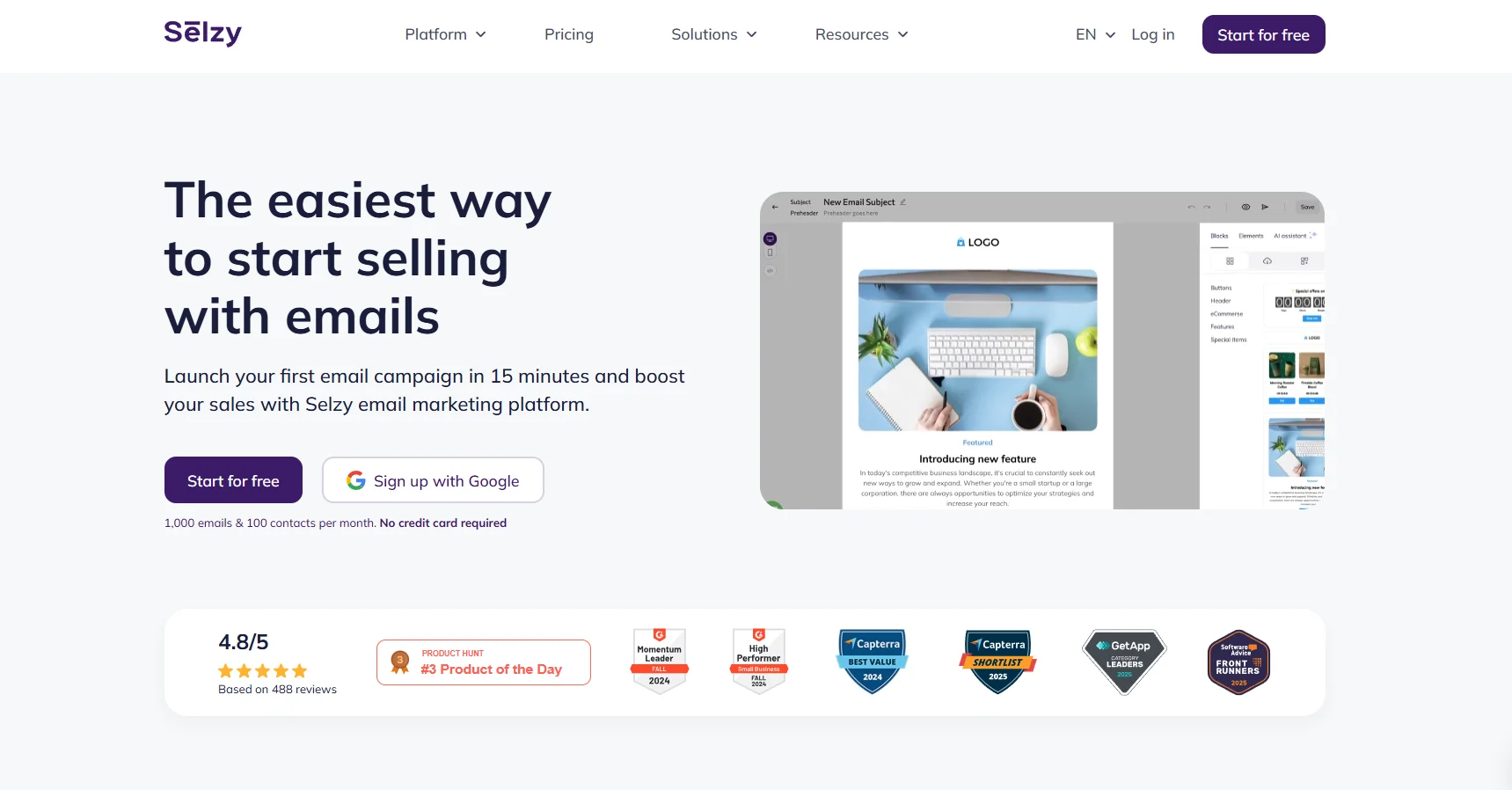
Selzy is an email marketing platform for small businesses, online stores, and teams that want to launch campaigns without a long setup. It combines an email editor, templates, segmentation, automation, and e-commerce integrations in a straightforward interface.
For e-commerce, Selzy works especially well for stores that need practical campaigns rather than enterprise complexity. You can create newsletters, product announcements, promo emails, welcome sequences, abandoned cart emails, and customer reactivation campaigns.
Key Selzy features for e-commerce
- Drag-and-drop email editor
- Ready-made email templates
- Automation flows
- Segmentation
- Personalization
- A/B testing
- Shopify and WooCommerce integrations
- Pop-ups and subscription forms
- Analytics and campaign reporting
Pros
Selzy is affordable, easy to learn, and suitable for small online stores that want to start sending revenue-focused emails quickly. The platform does not overload beginners with unnecessary complexity.
Cons
Large e-commerce brands that need advanced predictive analytics or highly complex omnichannel orchestration may need a more specialized platform.
Pricing
Selzy paid plans start from about $7.5/month.
Best for
Selzy is best for small and growing online stores that need affordable email marketing with simple automation and e-commerce integrations.

2. Omnisend — Best for e-commerce stores that want email, SMS, and push
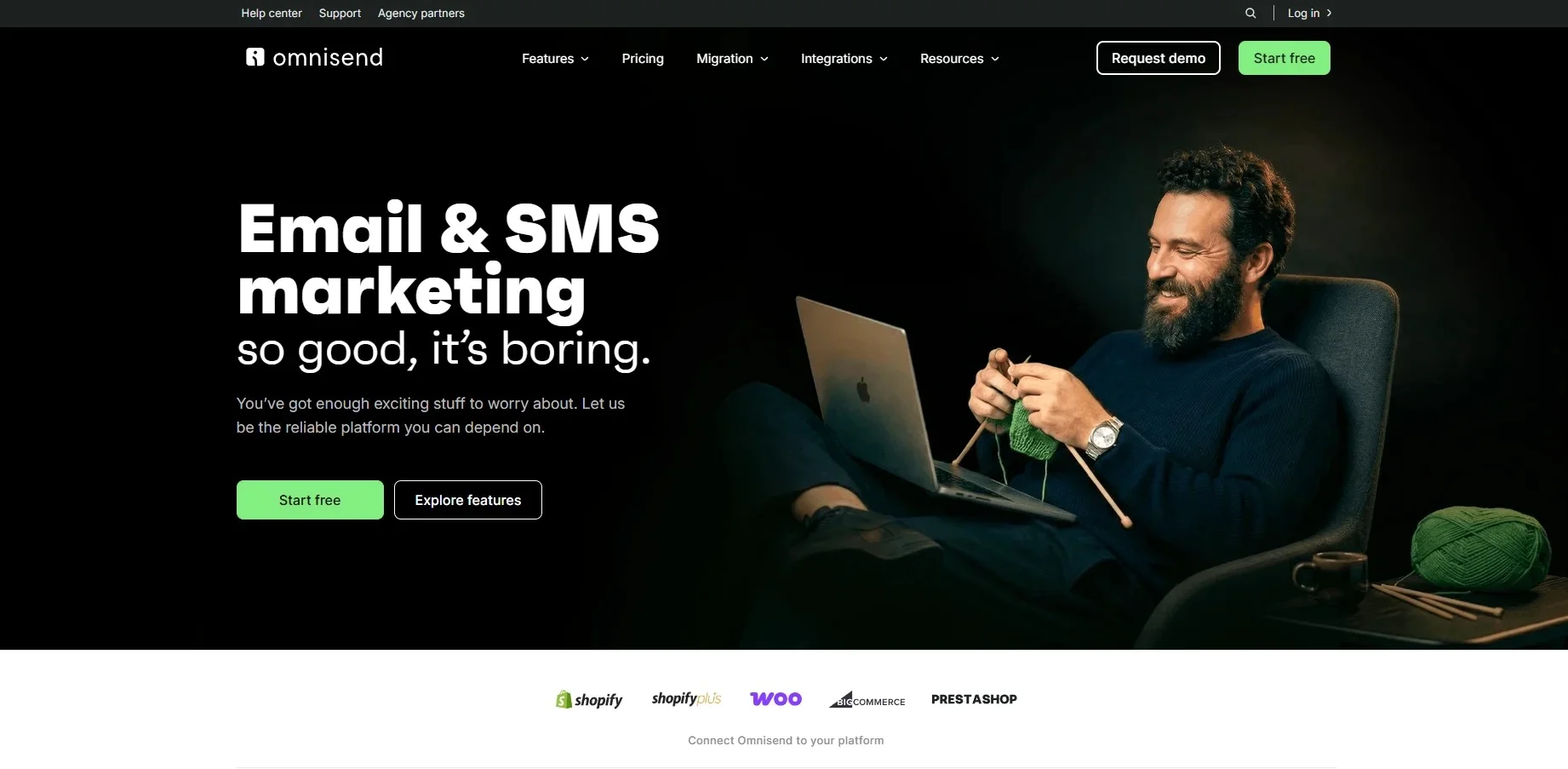
Omnisend is built specifically for e-commerce and focuses on email, SMS, and push notifications in one platform. It is a strong option for stores that want to coordinate several channels without stitching together too many tools.
Key Omnisend features for e-commerce
- Email campaigns
- SMS campaigns
- Push notifications
- Prebuilt e-commerce automations
- Segmentation
- Product recommendations
- Shopify, WooCommerce, and BigCommerce integrations
- Forms and pop-ups
Pros
Omnisend gives e-commerce teams many ready-to-use workflows, including abandoned cart, welcome, post-purchase, and customer reactivation sequences. Its multichannel setup is convenient for stores that want more than email.
Cons
Costs can rise as your audience and SMS usage grow. Some smaller stores may not need all of the multichannel features.
Pricing
Omnisend paid plans start from $13/month.
Best for
Omnisend is best for e-commerce stores that want email, SMS, push notifications, and revenue-focused automation in one place.
3. Klaviyo — Best for data-heavy Shopify and e-commerce brands
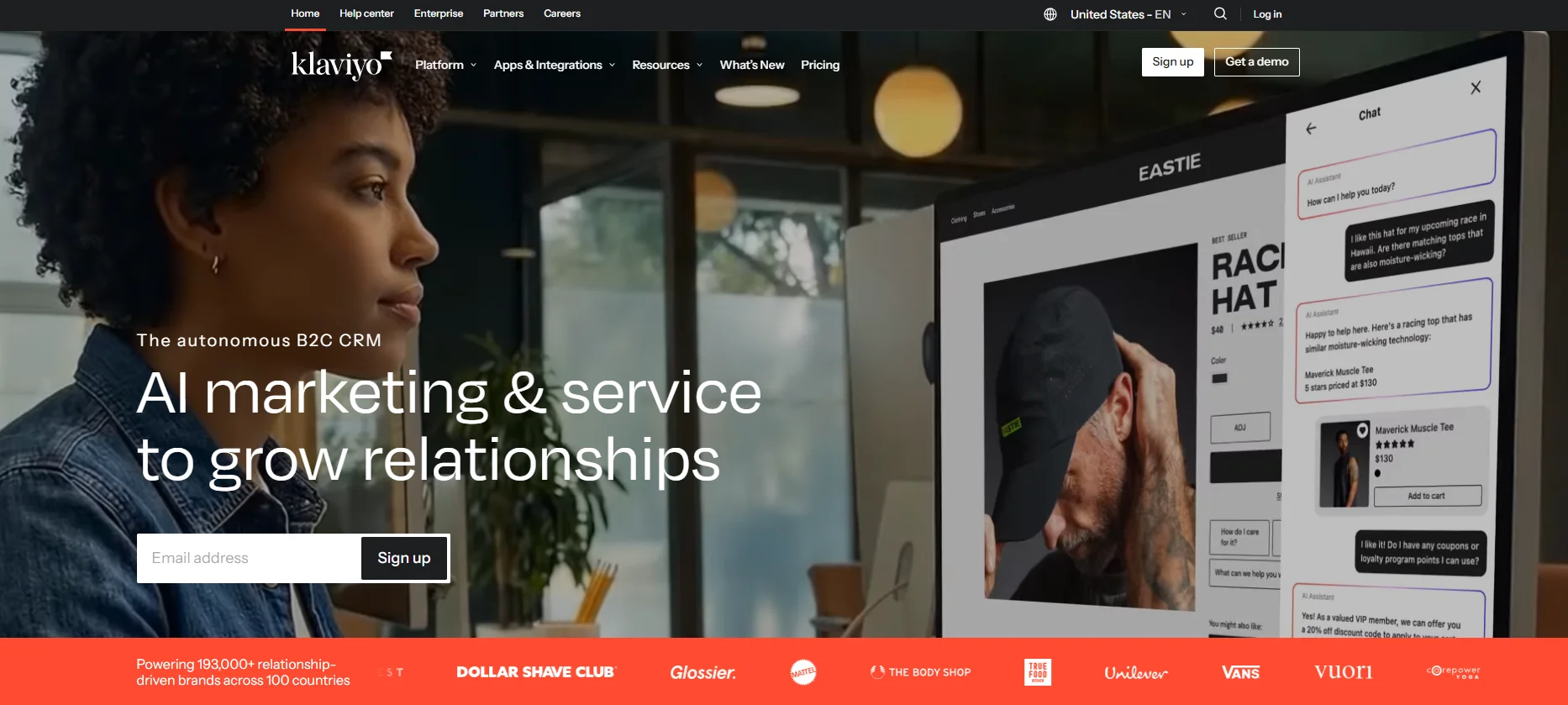
Klaviyo is one of the most popular email marketing platforms for e-commerce, especially among Shopify brands. It is built around customer profiles, product data, segmentation, and revenue attribution.
Key Klaviyo features for e-commerce
- Advanced segmentation
- Customer profiles
- Prebuilt automation flows
- Product recommendations
- Predictive analytics
- Email and SMS campaigns
- Deep Shopify integration
- Revenue reporting
Pros
Klaviyo is powerful for stores with rich customer data. It helps teams build precise segments and personalized campaigns based on browsing, purchase behavior, predicted lifetime value, and engagement.
Cons
Klaviyo can feel complex for beginners, and pricing can become expensive as your list grows.
Pricing
Klaviyo paid plans start from $20/month.
Best for
Klaviyo is best for data-heavy Shopify stores and e-commerce brands that want advanced segmentation and personalization.
4. Mailchimp — Best for beginners and simple newsletters
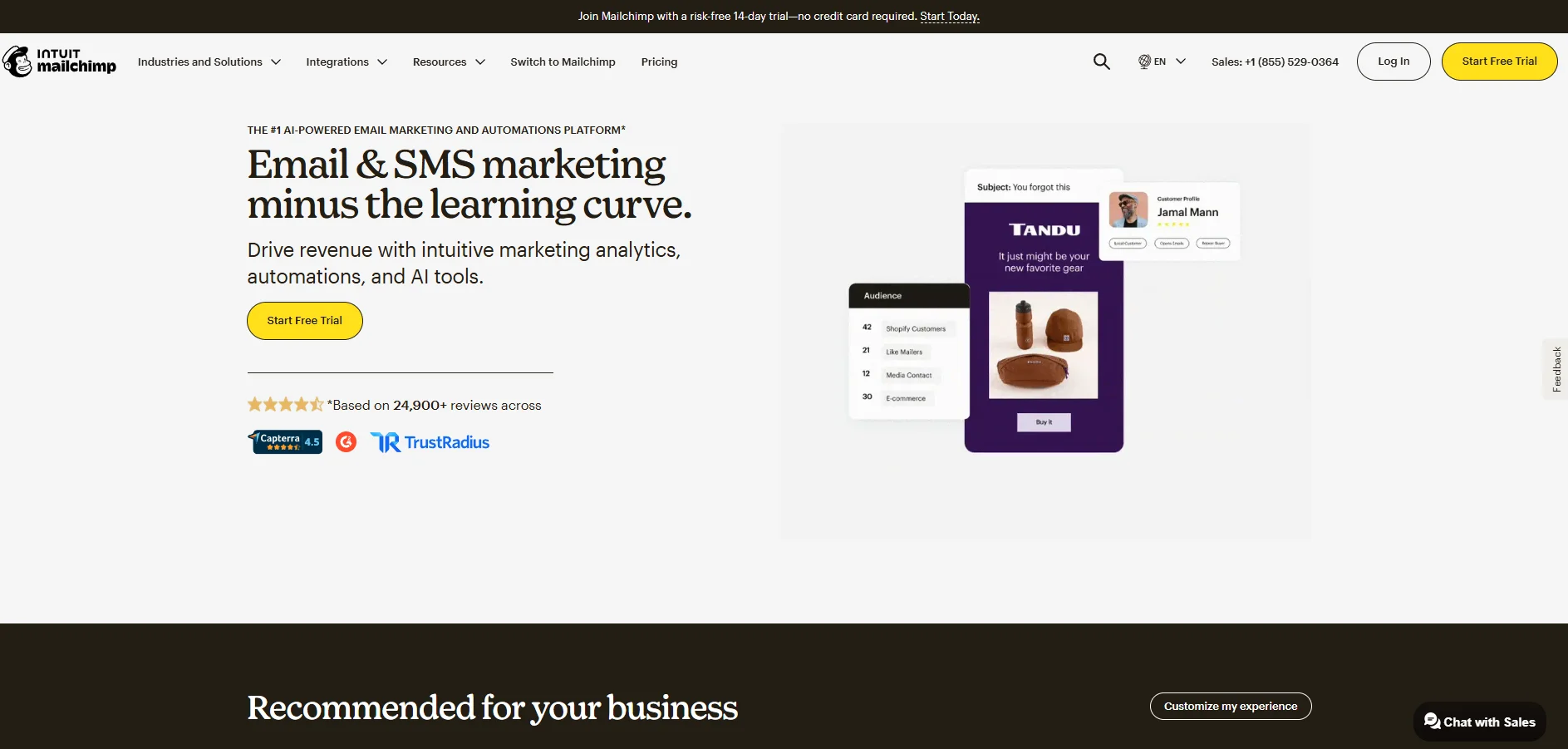
Mailchimp is a well-known email marketing platform with an accessible editor, templates, basic automation, landing pages, forms, and integrations. It can work for e-commerce, especially for beginners and small stores with simple needs.
Key Mailchimp features for e-commerce
- Email campaigns
- Templates
- Basic automation
- Landing pages
- Forms
- Audience management
- A/B testing
- E-commerce integrations
Pros
Mailchimp is easy to start with and has a familiar interface. It is a reasonable choice for stores that mainly need newsletters, promotions, and simple customer updates.
Cons
Advanced e-commerce features, detailed segmentation, and stronger automation may require higher plans or more setup.
Pricing
Mailchimp paid plans start from $13/month.
Best for
Mailchimp is best for beginners and small stores that need simple newsletters and basic marketing campaigns.
5. Brevo — Best for budget-conscious stores with large lists
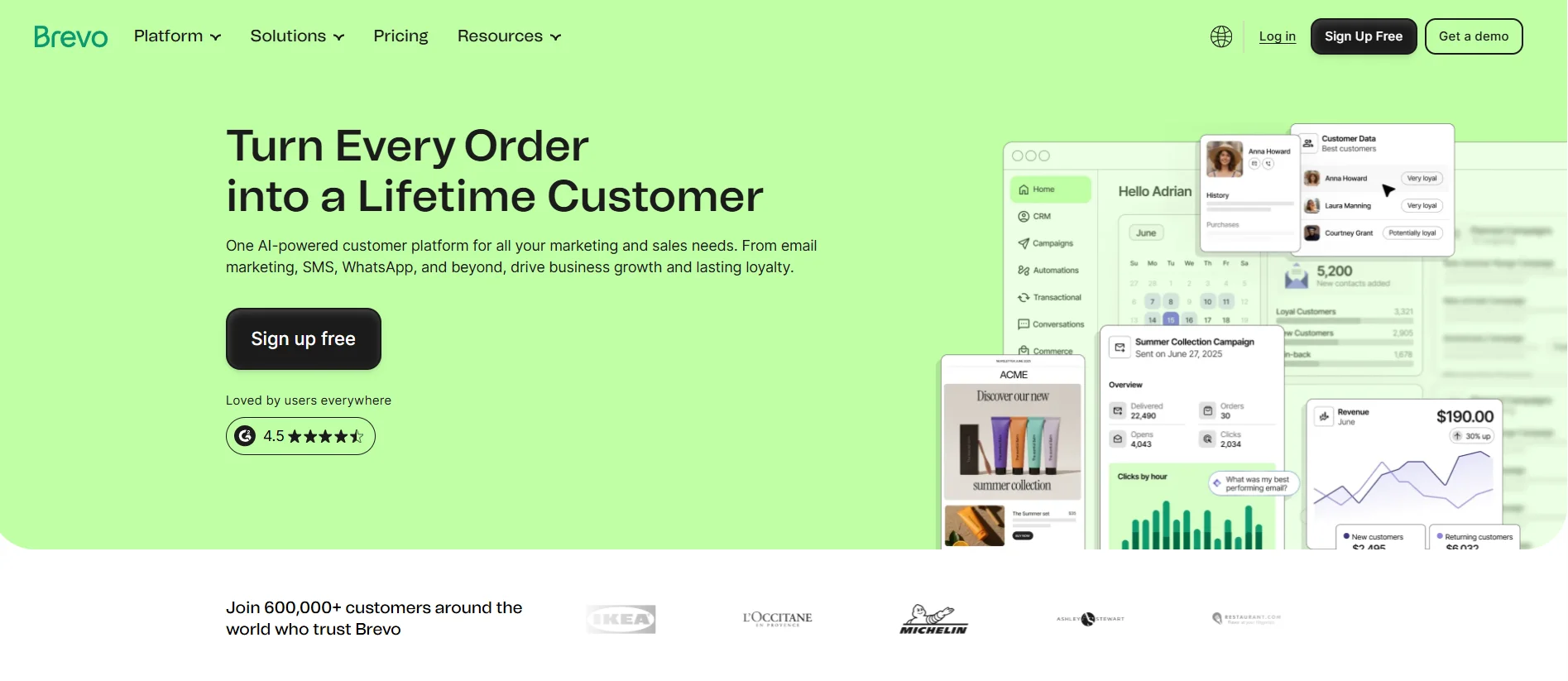
Brevo is an email marketing and CRM platform that charges mainly by email volume rather than contact count. This can make it attractive for stores with large lists that do not send to everyone all the time.
Key Brevo features for e-commerce
- Email campaigns
- SMS and WhatsApp campaigns
- Marketing automation
- CRM tools
- Transactional emails
- Forms
- Segmentation
- E-commerce integrations
Pros
Brevo is flexible for teams that want email marketing, transactional email, and basic CRM features in one product. Its pricing model can be useful for stores with many contacts.
Cons
Some templates and automation options may feel less specialized for e-commerce than tools built only for online stores.
Pricing
Brevo paid plans start from $9/month.
Best for
Brevo is best for budget-conscious e-commerce teams with large contact lists and moderate sending volume.
6. ActiveCampaign — Best for advanced automation users
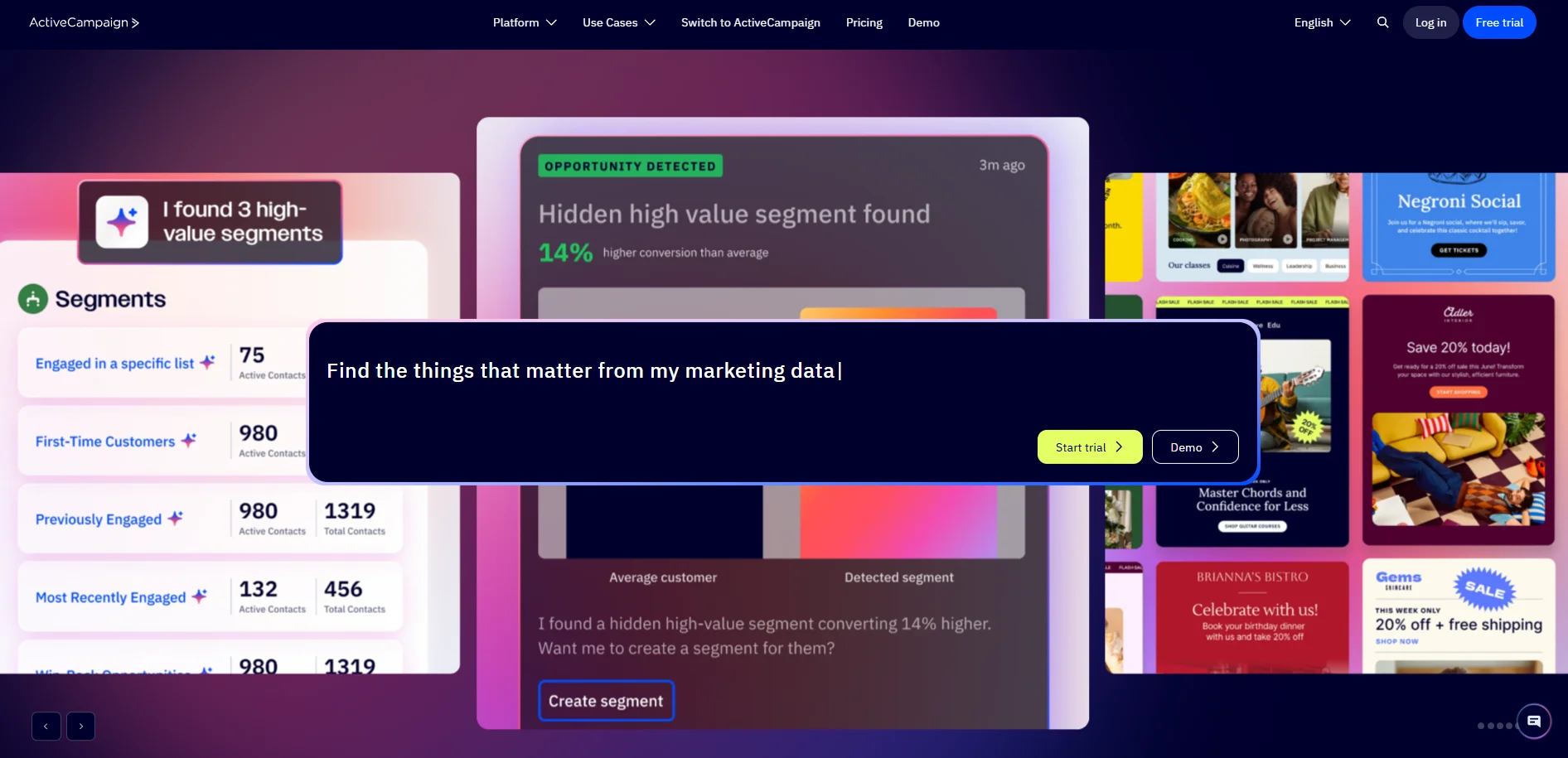
ActiveCampaign is known for advanced automation and CRM functionality. It can support sophisticated customer journeys for online stores that need more than simple email sequences.
Key ActiveCampaign features for e-commerce
- Advanced automation builder
- CRM
- Segmentation
- Personalization
- Site tracking
- Email campaigns
- A/B testing
- E-commerce integrations
Pros
ActiveCampaign is very flexible. Stores can build detailed workflows based on customer behavior, purchase activity, tags, and engagement.
Cons
The platform may be more complex than small stores need. Getting full value often requires time, planning, and a clear automation strategy.
Pricing
ActiveCampaign paid plans start from around $19/month.
Best for
ActiveCampaign is best for stores that need advanced automation and are ready to spend time configuring detailed workflows.
7. GetResponse — Best for stores that also need funnels and landing pages
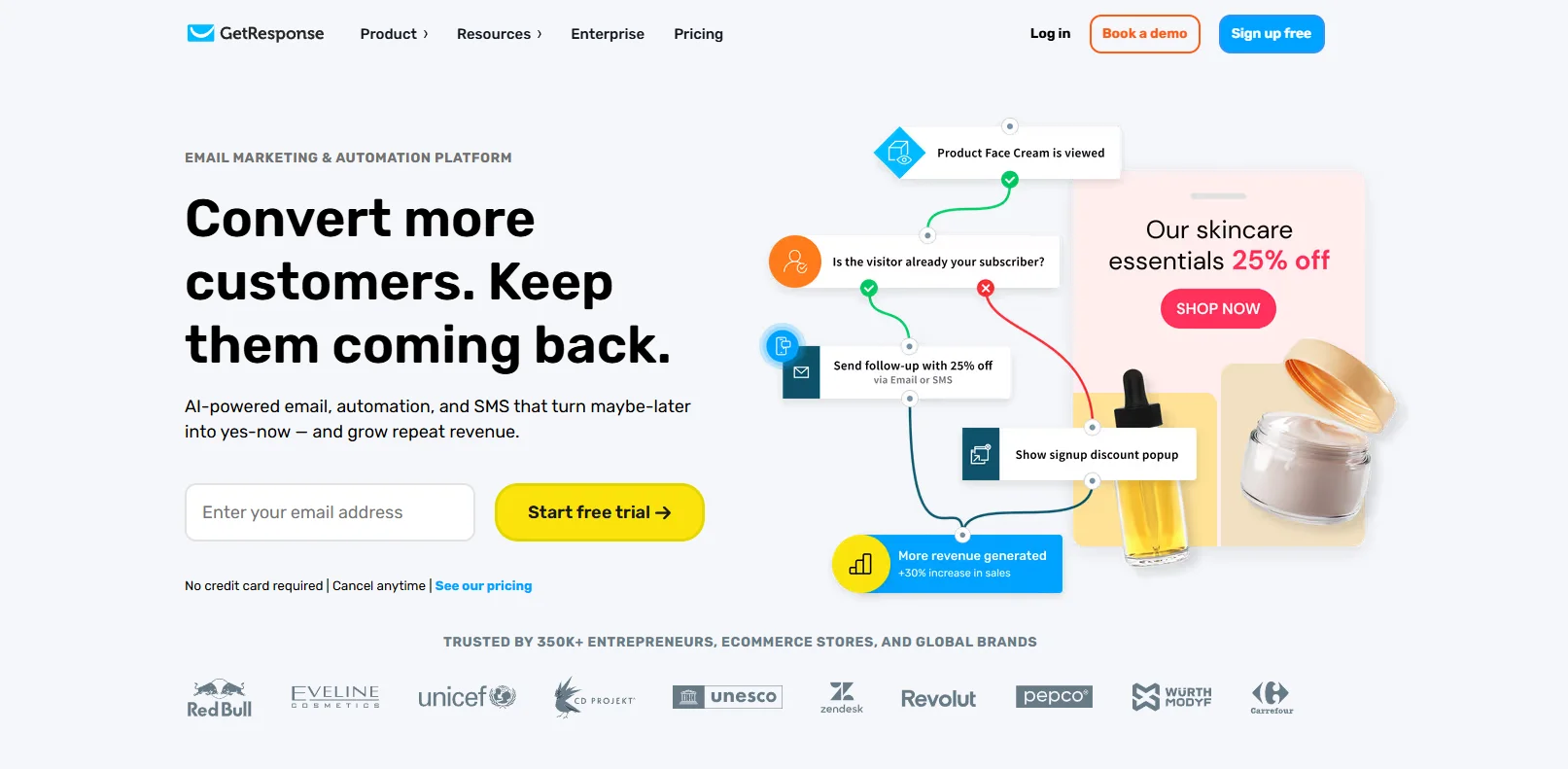
GetResponse combines email marketing with automation, landing pages, webinars, forms, and conversion funnels. It can be useful for e-commerce teams that want marketing assets beyond email campaigns.
Key GetResponse features for e-commerce
- Email campaigns
- Automation workflows
- Landing pages
- Forms
- Conversion funnels
- Webinars
- E-commerce integrations
- Product recommendations
Pros
GetResponse offers a broad marketing toolkit. It is helpful for stores that want landing pages, funnels, and email automation in one subscription.
Cons
Because the platform covers many areas, some stores may find it less focused than dedicated e-commerce email tools.
Pricing
GetResponse paid plans start from around $19/month.
Best for
GetResponse is best for stores that need email marketing plus landing pages, funnels, and other campaign assets.
8. MailerLite — Best for simple, affordable email marketing
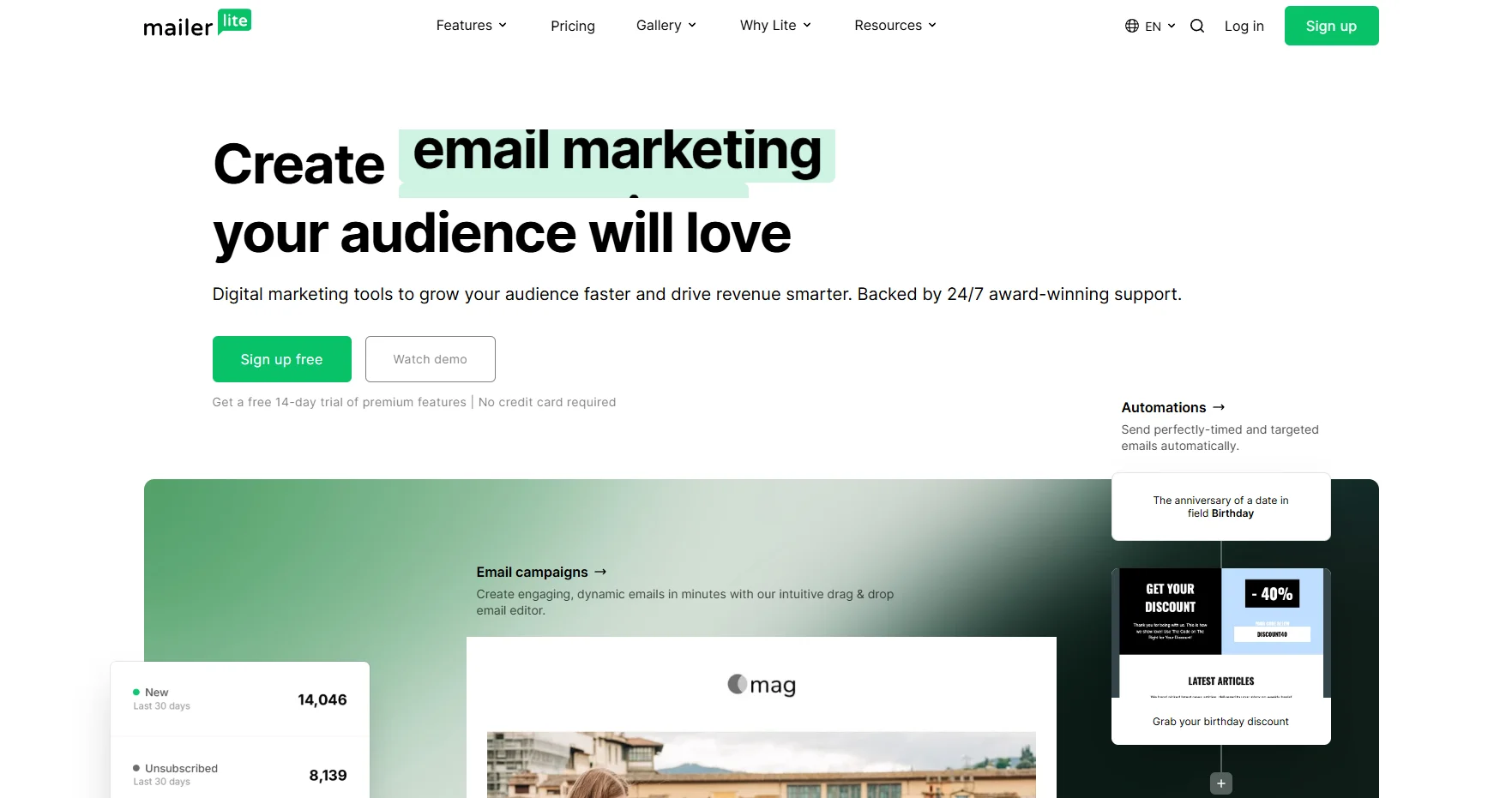
MailerLite is a simple email marketing platform with a clean interface, templates, forms, landing pages, and automation. It is popular with small businesses because it is easy to use and reasonably priced.
Key MailerLite features for e-commerce
- Email campaigns
- Templates
- Automation
- Forms and pop-ups
- Landing pages
- Segmentation
- A/B testing
- Shopify and WooCommerce integrations
Pros
MailerLite is beginner-friendly and affordable. It is a good fit for smaller stores that want newsletters, basic automation, and simple customer segments.
Cons
It does not offer the same depth of e-commerce analytics and advanced personalization as more specialized platforms.
Pricing
MailerLite paid plans start from $10/month.
Best for
MailerLite is best for small stores that want affordable, simple email marketing without a steep learning curve.
9. Drip — Best for e-commerce personalization and customer journeys
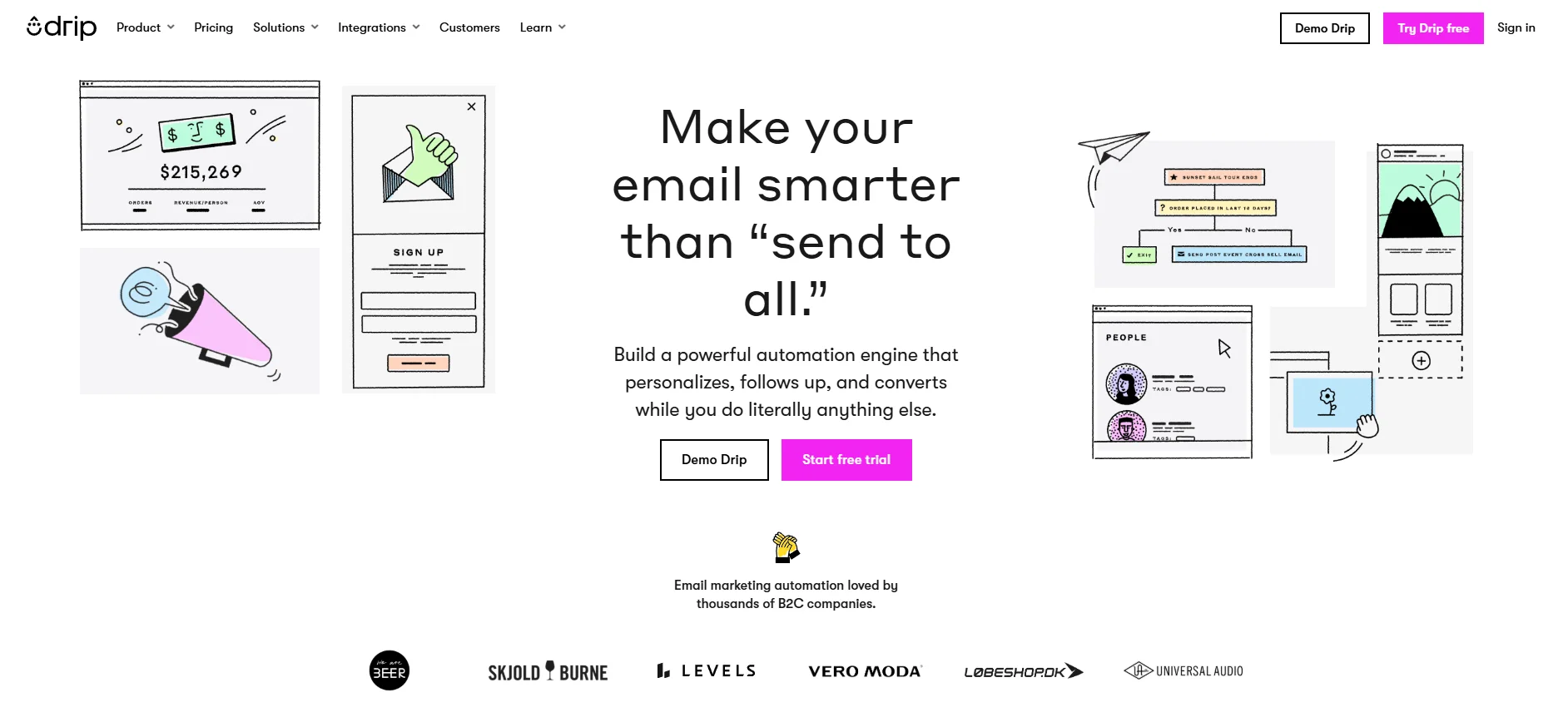
Drip is a customer-focused e-commerce email marketing platform built around behavior, personalization, and automated journeys. It is designed for stores that want to create more relevant customer experiences based on what shoppers do.
Key Drip features for e-commerce
Drip includes email campaigns, automation workflows, segmentation, onsite campaigns, forms, personalization, product recommendations, and e-commerce integrations.
Use cases include:
- Abandoned cart recovery
- Browse abandonment
- Product recommendations
- Post-purchase campaigns
- Customer win-back flows
- Personalized offers
- Segmentation by behavior and purchase history
Pros
Drip is strong for e-commerce brands that want to build personalized journeys and use customer behavior in campaigns. It is more e-commerce-focused than many general email marketing tools.
Cons
Drip is not the cheapest option, and it may be too advanced for very small stores that only need simple newsletters.
Pricing
Drip paid plans start from around $39/month.
Best for
Drip is best for e-commerce stores that want personalized customer journeys and behavior-based automation without moving into enterprise-level software.
10. Shopify Email — Best for Shopify merchants who want native simplicity
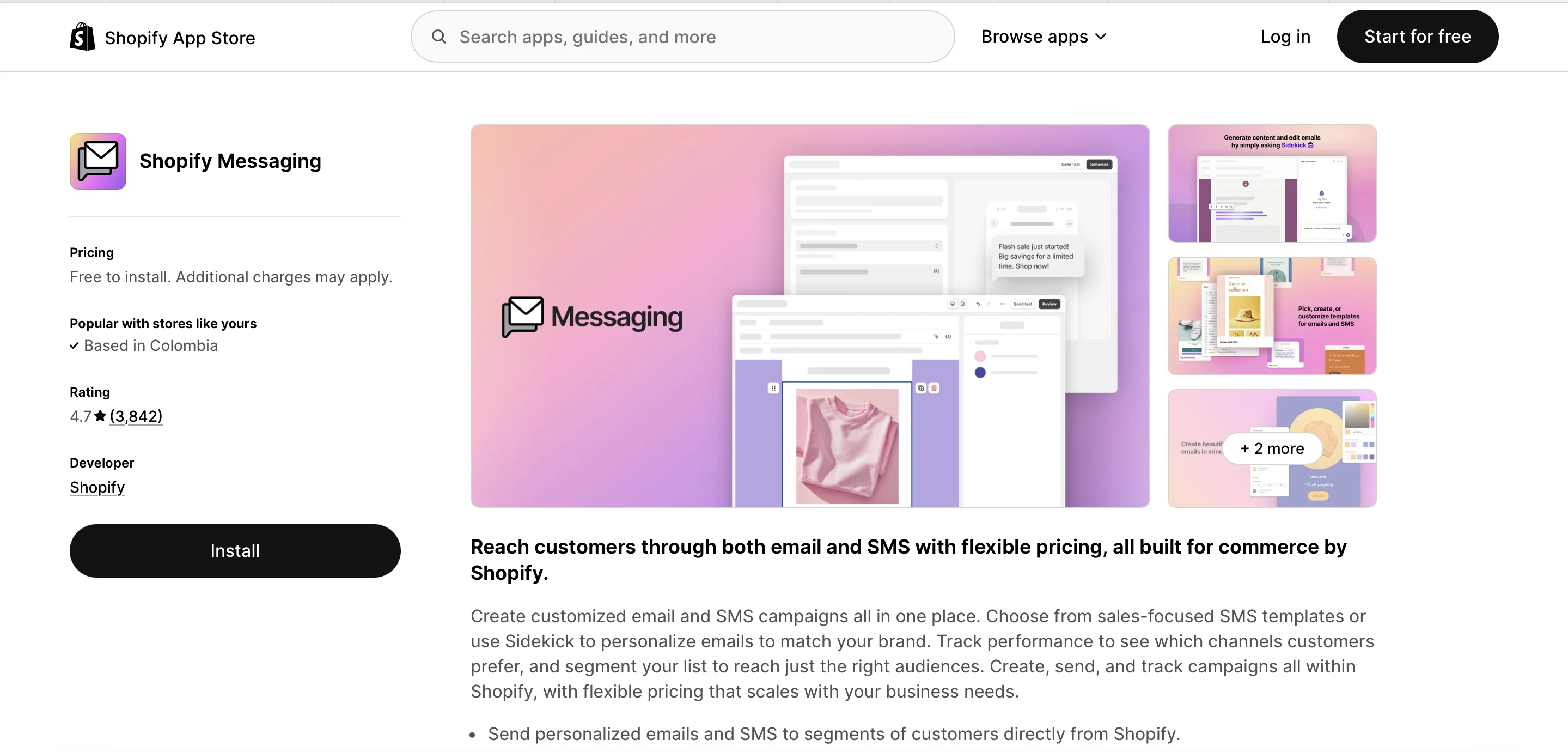
Shopify Email is Shopify’s native email marketing tool. It is built into the Shopify admin, so merchants can create campaigns using store products, customer groups, and brand assets without connecting a separate platform.
Key Shopify Email features for e-commerce
- Native Shopify integration
- Product-based email templates
- Customer segmentation
- Basic automation
- Campaign analytics
- Store branding
- No separate setup for Shopify users
Pros
Shopify Email is convenient and simple. It is a good starting point for Shopify merchants who want to send product updates, promotions, and basic automated emails from the same place they manage their store.
Cons
It is limited compared with dedicated e-commerce email marketing platforms. Stores that need advanced automation, deeper testing, or multichannel campaigns may outgrow it.
Pricing
Shopify Email includes a free monthly email allowance, then charges based on usage.
Best for
Shopify Email is best for Shopify-only merchants who want a simple native tool and do not need advanced email marketing features yet.
11. Boldinbox – Best for B2B e-commerce teams that need unlimited sending at an affordable price
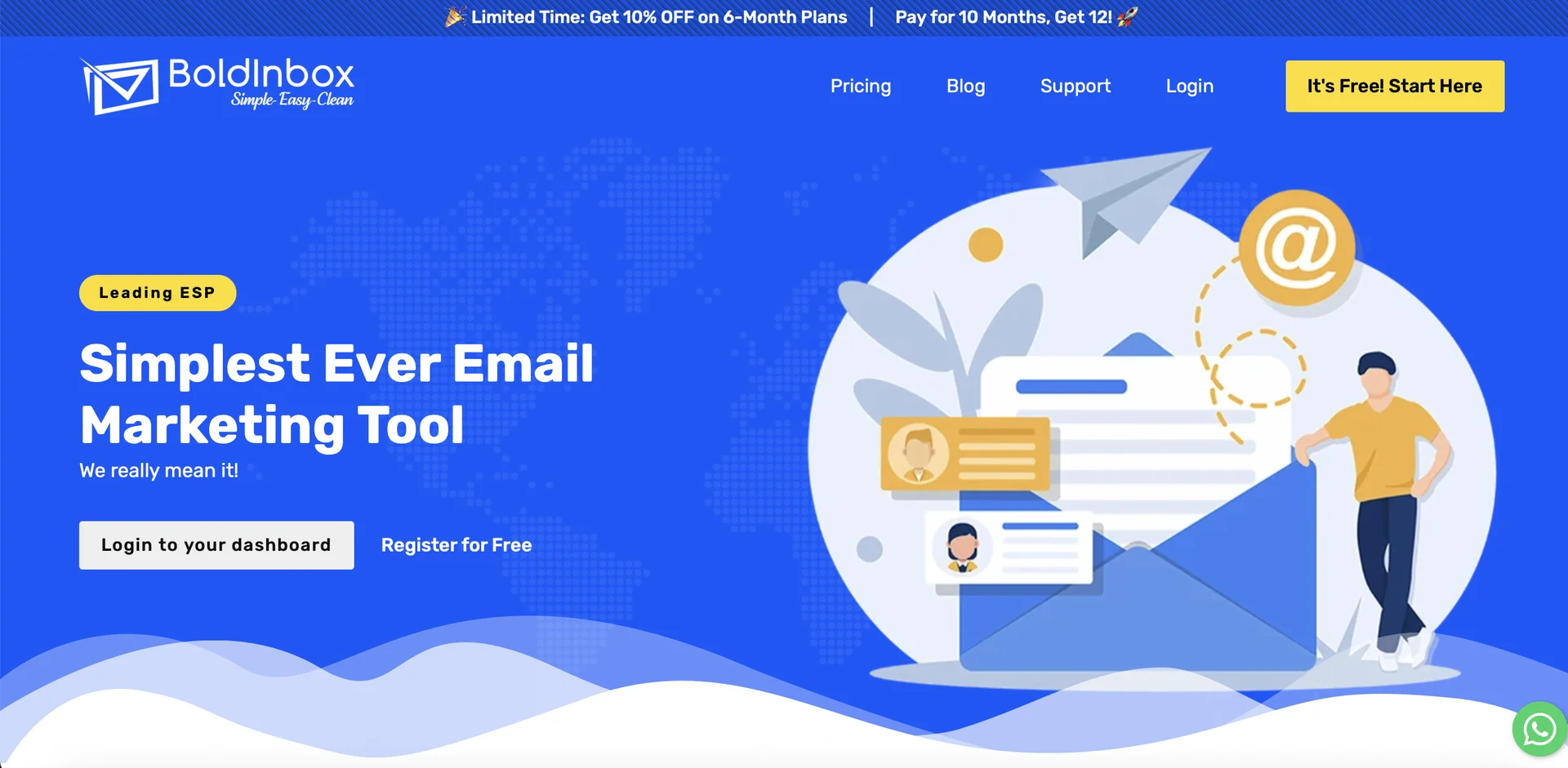
Boldinbox is an email marketing platform built for businesses that want to send high-volume campaigns without hitting contact caps or email sending limits. For B2B e-commerce teams – wholesale suppliers, trade portals, distributor networks, and corporate procurement platforms – Boldinbox combines unlimited email sending, automation, AI-powered tools, and multichannel communication in a cost-effective platform designed for growing B2B businesses.
Where many platforms charge more as your list grows, Boldinbox keeps costs predictable. This makes it a strong fit for B2B stores that manage large contact databases, run frequent promotional campaigns to trade buyers, and cannot afford to pause outreach every time they cross a subscriber threshold.
Key Boldinbox features for e-commerce
- Drag-and-drop email editor
- AI-powered subject line generator
- Unlimited email sending (contact plan-dependent)
- Advanced list segmentation
- Contact management without arbitrary caps
- Automation workflows
- Personalization tools
- SMS and WhatsApp integration via Multiplat Systems
- CRM integration
- Transactional email support
- Campaign analytics and reporting
- Premium expert support for free and paid users, including DNS setup assistance
Pros
Boldinbox’s unlimited sending model helps businesses avoid higher costs as email volumes grow. For B2B e-commerce teams that regularly send seasonal catalogs, bulk order promotions, restock alerts, trade show invitations, or account-specific offers, this approach removes the need to ration campaigns based on pricing tiers. The AI subject line generator is a useful built-in tool for teams that want to improve open rates without a separate optimization tool. SMS and WhatsApp integration through Multiplat Systems also makes Boldinbox a reasonable choice for B2B stores that want email and messaging in one managed setup.
Cons
Boldinbox currently operates as an independent email marketing platform and does not yet offer native third-party integrations with platforms such as Shopify, WooCommerce, Wix, or WordPress. Native integrations are under development. However, many businesses using these e-commerce platforms already rely on Boldinbox to manage and scale their email marketing campaigns independently. Organizations that require built-in, plug-and-play integrations today may prefer platforms with more extensive native app ecosystems.
Pricing
Boldinbox plans start from approximately $14/month, with scalable options available for larger subscriber lists. Enterprise and large-list pricing is available directly from the team.
Best for
Boldinbox is best for B2B e-commerce businesses, wholesale platforms, and high-volume senders that need unlimited email campaigns, scalable contact management, and multichannel support at a cost-effective price.
E-commerce email marketing features worth prioritizing
Abandoned cart emails
Abandoned cart emails are one of the highest-priority automations for online stores. They remind shoppers about products they left behind and can include product images, prices, discounts, or urgency.
Browse abandonment
Browse abandonment emails target visitors who viewed products but did not add anything to cart. These campaigns work best when your platform can track product interest and connect it to subscriber profiles.
Post-purchase emails
Post-purchase emails help customers understand what happens next, discover related products, leave reviews, or join a loyalty program.
Win-back campaigns
Win-back emails are sent to customers who have not purchased or engaged for a while. They can include reminders, personal offers, product updates, or a reason to return.
Product recommendations
Product recommendations use customer behavior and purchase history to suggest relevant items. Even simple recommendations can improve click-through rates when they match the customer’s interests.
Revenue reporting
Revenue reporting connects email campaigns and automations to sales. This helps you compare campaigns by revenue, not only by opens and clicks.
Which e-commerce email marketing software should you choose?
The best email marketing software for e-commerce depends on your store size, platform, budget, and marketing maturity.
- Choose Selzy if you need affordable e-commerce email marketing for a small or growing store.
- Choose Omnisend if you want email, SMS, and push notifications in one e-commerce-focused platform.
- Choose Klaviyo if you run a data-heavy Shopify brand and need advanced segmentation.
- Choose Mailchimp if you are a beginner and mainly need simple newsletters.
- Choose Brevo if you have a large list and want email-volume-based pricing.
- Choose ActiveCampaign if you need complex automation and CRM-style workflows.
- Choose GetResponse if you also need funnels, landing pages, or webinars.
- Choose MailerLite if you want simple and affordable campaigns.
- Choose Drip if personalization and customer journeys are your priority.
- Choose Shopify Email if you want the simplest native option inside Shopify.
- Choose Boldinbox if you run a B2B e-commerce business or send high-volume campaigns and want unlimited email sending with multichannel support.
For most small stores, it is better to start with a tool that is easy to use and covers the core flows: welcome emails, abandoned carts, post-purchase emails, and win-back campaigns. You can move to a more advanced platform when your data, team, and strategy are ready for it.
FAQ about email marketing for e-commerce
What is the best email marketing software for e-commerce overall?
There is no single best option for every store. The right platform depends on your store size, budget, e-commerce platform, automation needs, and how much customer data you want to use.
Which email marketing software is best for small online stores?
Selzy and MailerLite are strong fits for smaller stores because they are simple and affordable. Shopify Email is also a practical option for Shopify merchants who want native simplicity.
What is the best option for Shopify stores?
Shopify Email is the most convenient choice for Shopify-only merchants because it is native and simple to use. Klaviyo is a stronger fit for data-heavy Shopify brands that want advanced segmentation and recommendations.
What is the best option for WooCommerce stores?
Selzy is listed as a good fit for affordable email marketing with WooCommerce integrations. The most important factor is choosing a platform that connects directly to your store data.
Which platforms offer free or low-cost plans?
Shopify Email includes a free monthly email allowance, then uses usage-based pricing. Brevo starts from about $9/month, MailerLite from $10/month, and Selzy from about $7.5/month.
What automations should an e-commerce email platform support first?
The most important automations are welcome emails, abandoned cart emails, browse abandonment, and post-purchase emails. Other valuable flows include product recommendations, cross-sell and upsell emails, win-back campaigns, back-in-stock alerts, replenishment reminders, and review requests.
How do Klaviyo and Mailchimp compare for e-commerce?
Klaviyo is better for data-heavy Shopify and e-commerce brands that need advanced segmentation, profiles, and product recommendations. Mailchimp is easier for beginners and simple newsletters, but its e-commerce depth depends on the plan and setup.
How do Omnisend and Klaviyo compare?
Omnisend is best for stores that want email, SMS, and push in one platform, with strong e-commerce workflows and multichannel campaigns. Klaviyo is better when you want advanced data use, segmentation, and product recommendations.
 New and noteworthy on our blog
