


Key takeaways
- B2B email marketing is crucial for businesses to promote products/services to other businesses.
- B2B email marketing can be used for lead generation, nurturing leads, customer retention, and cross-selling.
- Email marketing is popular among B2B marketers, with 35% using it in 2022.
Email marketing is a powerful tool for businesses looking to promote their products or services to other businesses, but it can also be challenging to get right. To help you figure it out, we’ll share some real-life successful B2B email marketing examples. They show a range of different tactics and strategies that businesses use to create effective B2B email marketing campaigns. Whether you’re looking to promote a new product, nurture leads, or simply stay in touch with existing customers, you’ll find some valuable insights and content inspiration.
What is B2B email marketing exactly?
B2B email marketing is a way to promote products and services to other businesses. This can include newsletters, promotional emails, or other types of marketing communications sent to companies or organizations rather than individuals. B2B email marketing can be used to achieve a variety of goals, for example:
- Lead generation — by encouraging businesses to sign up for newsletters or other email marketing communications, or by offering free resources or trials in exchange for contact information.
- Nurturing leads — B2B emails provide valuable information and marketing resources to help businesses make informed purchasing decisions.
- Customer retention — email marketing helps to keep in touch with existing customers and encourages them to continue doing business with your company.
- Cross-selling — you can promote related products or services to existing customers to increase sales and revenue by simply sending an email.
Because of its benefits, many B2B marketers use email marketing. In 2022, 35% of B2B and B2C marketers worldwide used email marketing, and it was the third most popular digital marketing channel overall. Now that we’ve discussed B2B email marketing in general, let’s look at some real B2B email marketing examples you can draw inspiration from.
Killer B2B email examples you can learn from
B2B email marketing is a powerful tool, so if you want to maximize the success of your campaigns, check out these great B2B best email marketing examples:
Welcome emails
A welcome email is an automated email sent to new subscribers when they sign up to receive messages from a business. It is basically the first email that your clients receive, and it is designed to introduce the business and set the tone for future communications. An effective welcome email is a crucial opportunity for a business to make a positive first impression on new subscribers. These types of emails tend to have significantly higher open rates compared to promotional emails — 30,45% in 2021.
Welcome emails are often used to drive engagement and encourage new subscribers to take a specific action, such as visiting a website or filling out a form. To a well-designed welcome email, add information about future content (for example, provide links to previous blog posts or simply list what you’ll be sending) and a marketing offer for newcomers.
From: Shopify
Subject: Say hello to your store
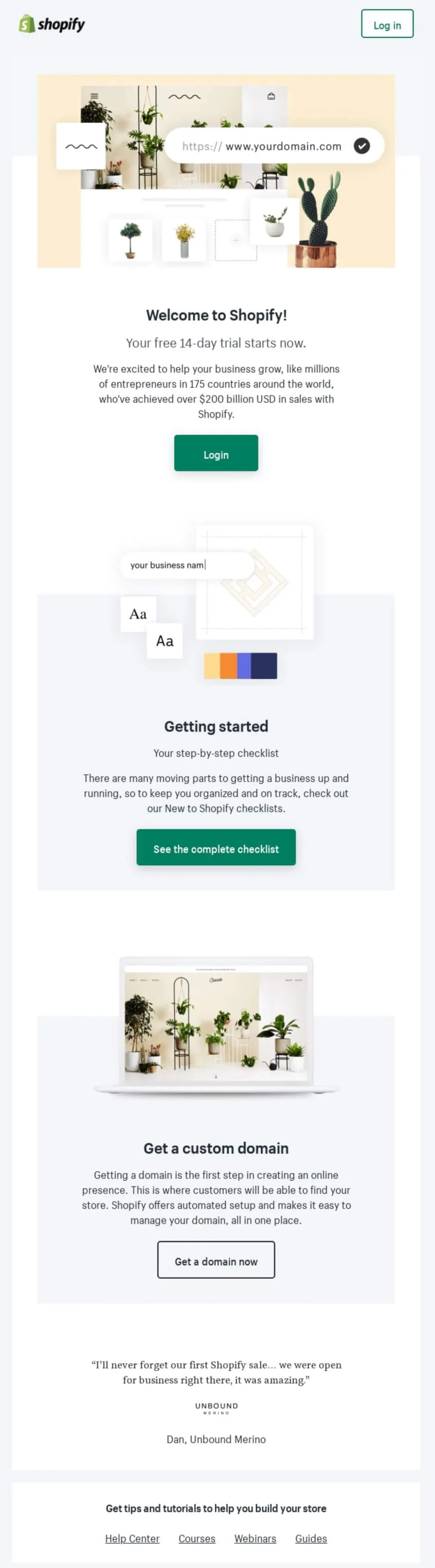
In this email, Shopify provided users with resources for a quicker start. This welcome marketing tactic is a good example for anyone crafting their own message.
Re-engagement emails
These types of emails are sent to customers who have not opened or clicked on links in any emails from the business in a certain period. Re-engagement emails can include special offers or promotions, valuable content or resources, or just a message from the business asking if the subscriber would like to continue receiving emails.
From: Flywheel
Subject: We Miss You 😢
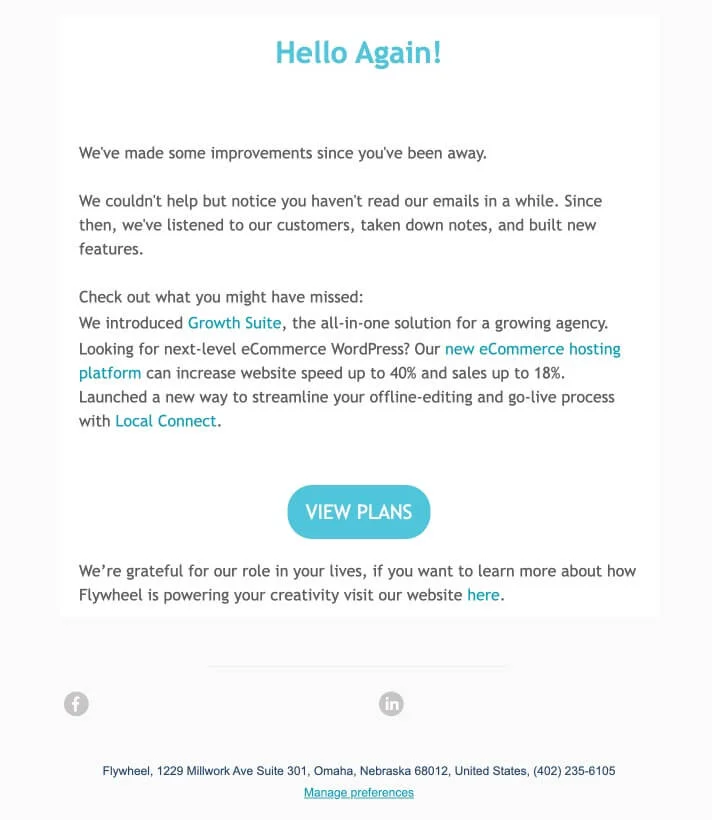
Flywheel’s re-engagement email is short but full of helpful content for a dormant subscriber. For example, the company included product updates and a CTA button leading to pricing plans and different offers. This way if subscribers open the email, they can continue the journey to the website.
Tip
Work on B2B email subject lines as they are key to making your marketing more effective. In fact, subject lines need as much if not more attention as the email content itself. Even the greatest marketing efforts can fall short just because subscribers didn’t open the email.
Activation email
These types of emails are sent to encourage a recipient to take action, for example, signing up for a service, making a purchase, or downloading a resource. These emails are useful at several stages of the sales funnel and especially during consideration. Activation emails are often a part of a complex onboarding or activation process and push customers towards further interaction with a product or service.
The content of these emails is usually straightforward and limited. They aren’t meant to be promotional, so the marketing part — if it is present — is paired down.
From: InVision
Subject: Build wireframes with Freehand
This email from InVision describes the benefits of the service’s particular feature. It’s meant to ease the onboarding process of new users. The action that the email encourages readers to take is to try the feature.
Announcement email
Announcement emails are a great way to let your clients know about a new product, service, event, or other important information. You can include new offerings, promote events, share your company’s updates, and communicate important information.
Although an announcement email can be about almost anything, unlike an informational newsletter it doesn’t include a lot of different content at once. Announcements are dedicated to one particular topic.
From: Asana
Subject: Coming soon! Organize My Tasks your way
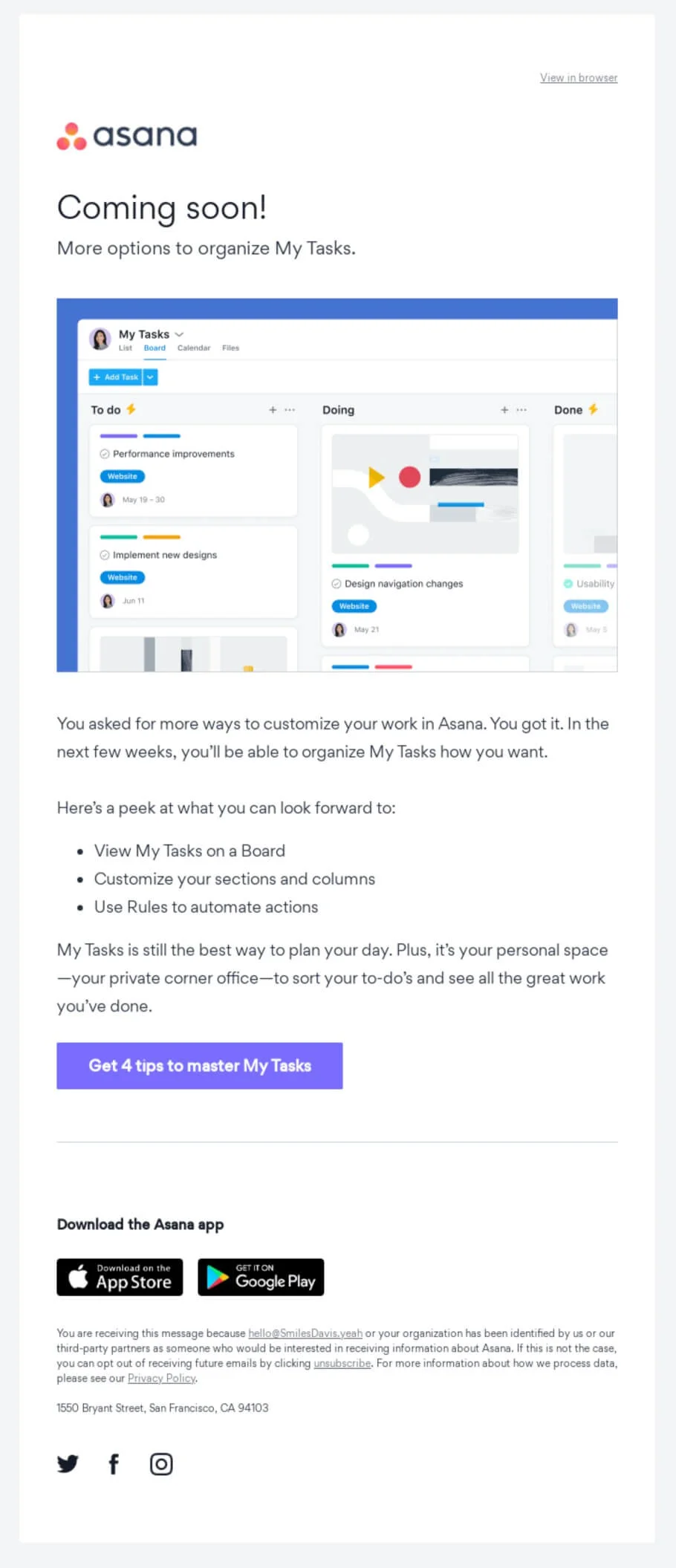
This announcement email example from Asana directs subscribers’ attention to new additions to the service. It is a good marketing tactic to excite users to launch in advance.
Campaign support email
Next, let’s talk about campaign support emails. These emails share additional information or resources to support a specific marketing campaign. In other words, campaign support emails convey in-depth details about a product or service, highlight key features or benefits, or offer special promotions or discounts. It’s important to send these emails to a targeted list of subscribers who have shown interest in the topic to raise awareness of the campaign and drive engagement.
From: AppSumo
Subject: Cash in on this opportunity
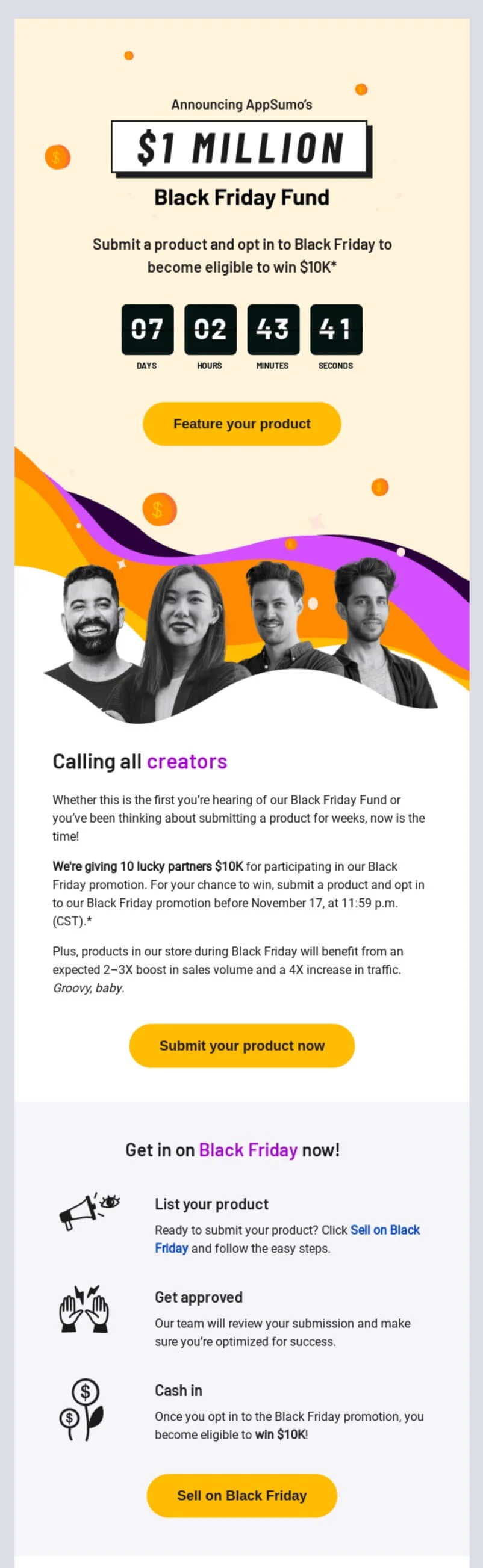
This email from AppSumo acts in support of their giveaway. Adding an email campaign to their marketing widens the potential audience that will see the offer.
Event newsletters
Both online and offline marketing meetups are great to deepen the relationship with customers, strengthen their loyalty, and convert leads. B2B newsletters are another great way to promote an upcoming event or share updates and information about an event that has already taken place. The content of the event newsletter includes details about the event, such as the date, time, location, and any special guest speakers or activities. You also should include some information about how to register or purchase tickets for the event. To make your event newsletters stand out, add specific and unique insights, and offer actionable tips and advice on how to make the most out of the occasion.
Creating excitement and anticipation is important for this marketing email type. Use visuals and design to pull readers in and show the atmosphere or value of the event. For example, embed videos, GIFs, or photos in the email.
From: Miro
Subject: Connecting Is Back — Come to Distributed 2021
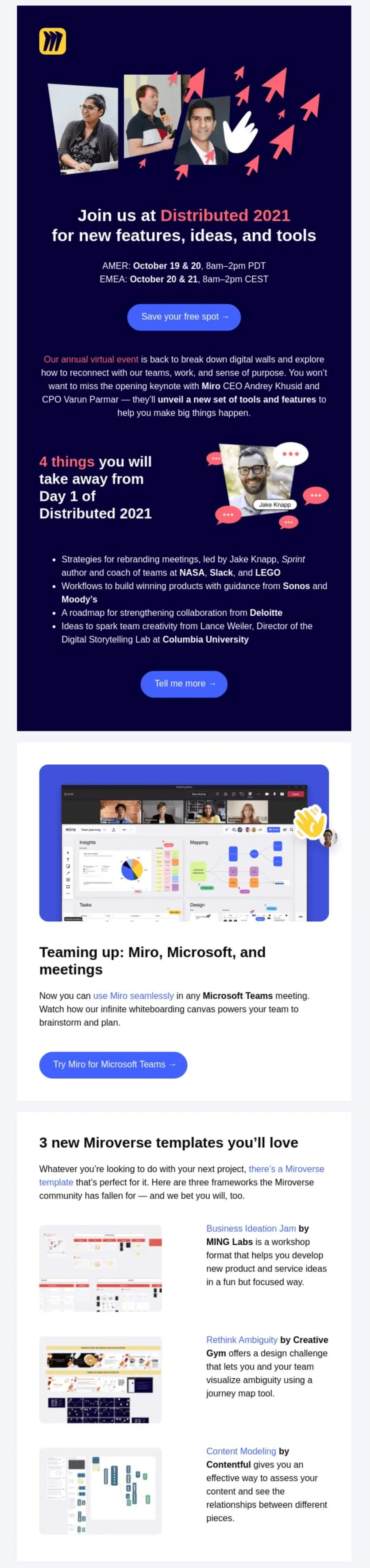
Miro’s email provides the most important details right at the beginning. Photographs of speakers show that this marketing event is first and foremost about people’s interactions and exchanging professional experiences. This email is also an example of a simple design with two accent colors: red for text accents and blue buttons for CTAs.
Webinar invitation email
Webinar invitations are an excellent way to provide valuable information and resources to your subscribers. If your company plans an online meeting, send an email invitation to your subscribers. Always include information about the webinar, such as the topic, date and time, and any relevant details about the presenter or the content. To make your webinar invitations more interesting, include statistics and data on the benefits of attending the webinar, and offer a special promotion or discount for early registration.
From: Zoom
Subject: [You’re Invited] Best Practices for Hosting Digital Events
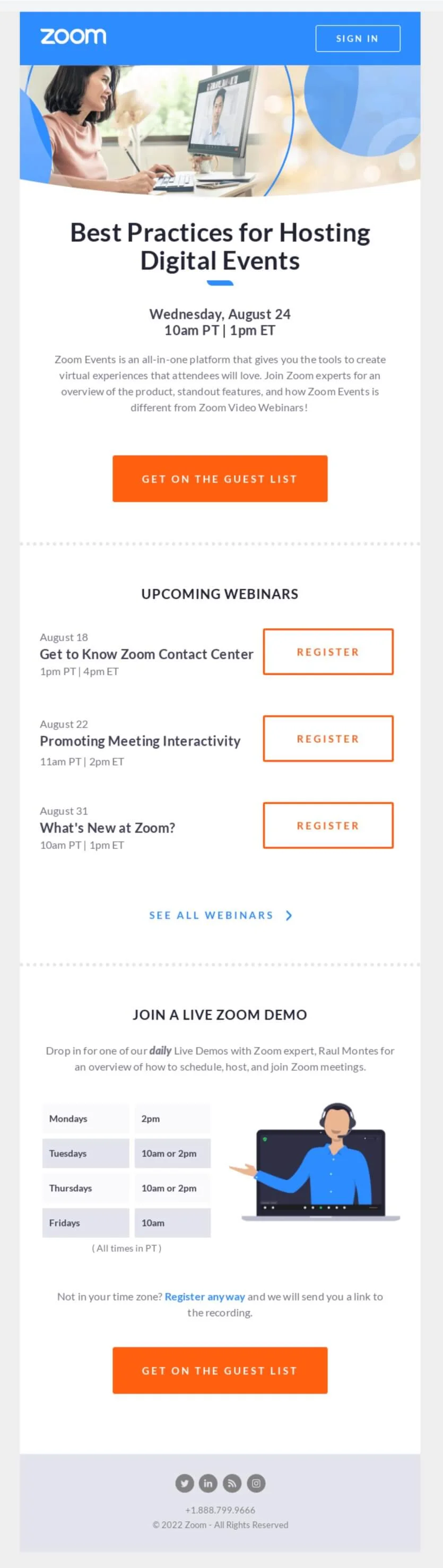
This email gives an overview of upcoming webinars and clearly indicates the topic and timing of the earliest one.
Follow-up emails
Follow-up emails are an essential aspect of B2B email marketing as they help to keep your audience engaged and build lasting relationships with your subscribers. These emails can be sent after a previous interaction, such as a webinar or event, or after a recipient has taken a specific action, such as downloading a white paper or signing up for a newsletter. There’s no need to send a follow-up email manually thanks to marketing automation in email service providers.
From: Salesforce
Subject: Highlights from Connections
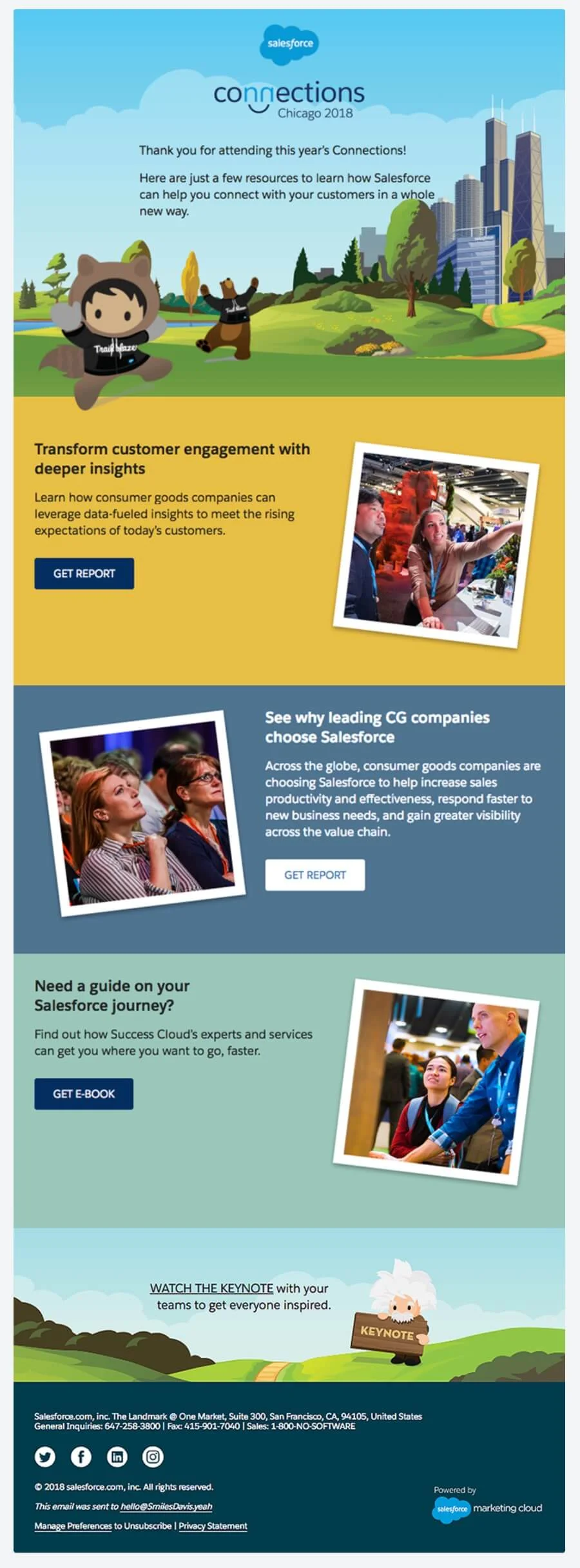
In its follow-up email, Salesforce specifies three different areas a reader can be interested in after the event. It serves as reinforcement of previous marketing efforts.
Curated email content
Curated email content is another effective technique for B2B email marketing as it provides high-value content that is carefully selected and organized to provide value to the reader. These emails are created with a specific target audience in mind and are meant to be relevant, informative, and engaging. The content for an email like this can be sourced from various media such as articles, blog posts, whitepapers, research reports, case studies, and more.
From: CleverTouch
Subject: Creating the perfect destination office
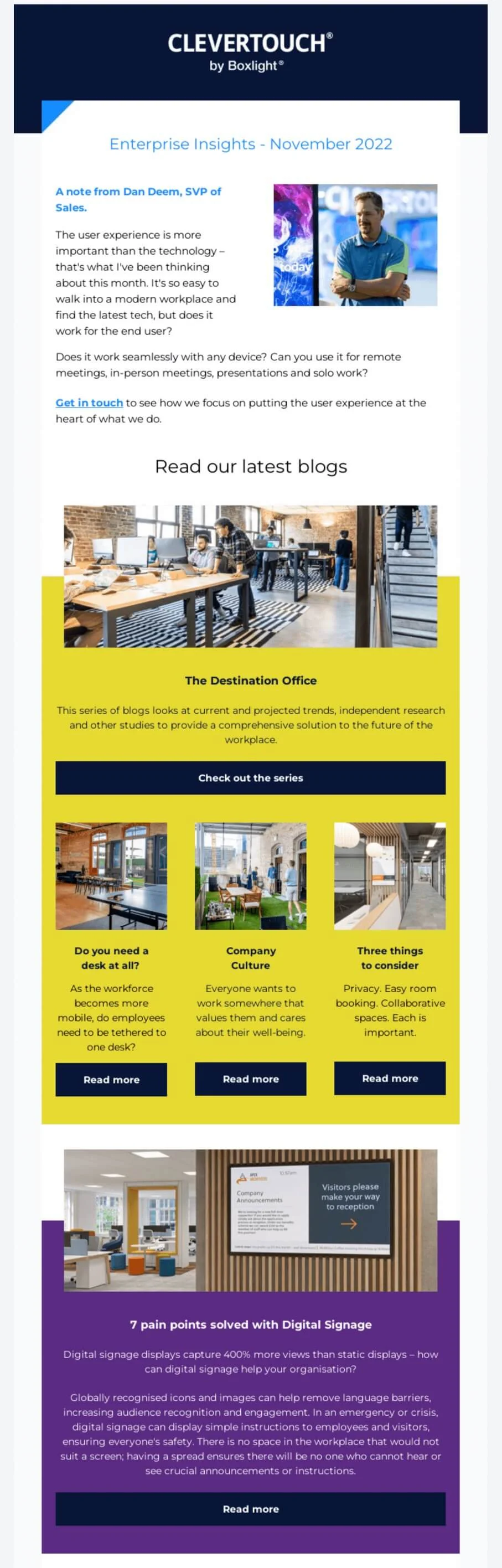
CleverTouch compiled in one email different blog articles about the future of the workspace. The value of this marketing email is clear: readers can get an overview of the topic without searching for other resources.
Case study email
Case studies are an effective way to showcase your capabilities or expertise and demonstrate the value of your company or service to other businesses or professionals. These emails feature a detailed description of a real-world situation or problem and its resolution. Share case studies, you can establish yourself as a thought leader in your industry and differentiate yourself from your competitors.
From: ECC New Zealand
Subject: Case Study: Onslow
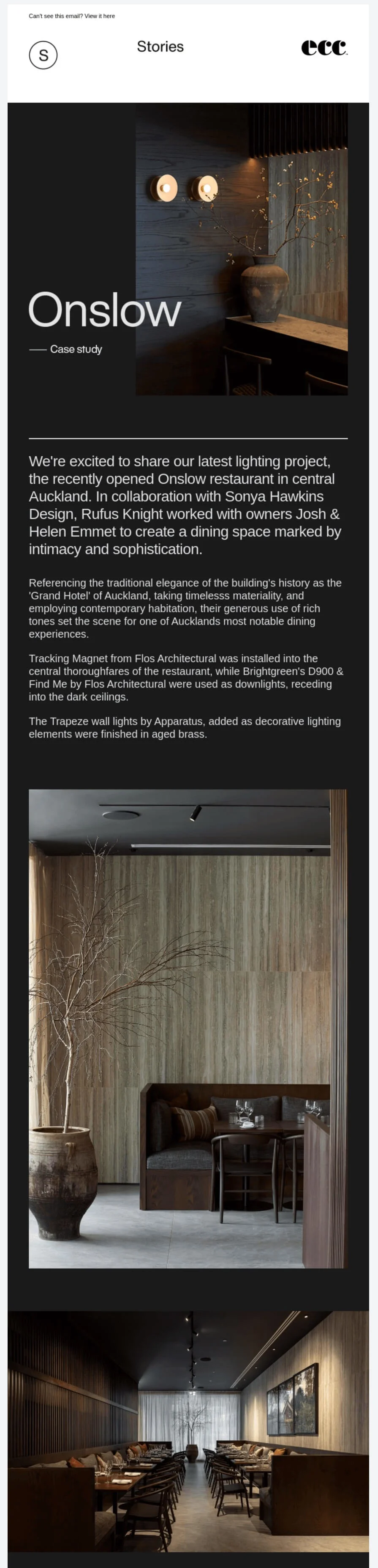
This email is dedicated to one project which makes it easier for leads to understand the company’s processes and services. And seeing an example of previously done work, some of the readers may become customers.
White paper distribution email
White papers are detailed and informative reports that explore a specific topic or issue in depth. These emails are designed to raise brand awareness and strengthen the image and expertise of your company in the eyes of your clients. By offering valuable and informative content in the white papers, businesses establish themselves as industry leaders and differentiate themselves from competitors.
From: Merkle
Subject: Three research-backed strategies to implement now
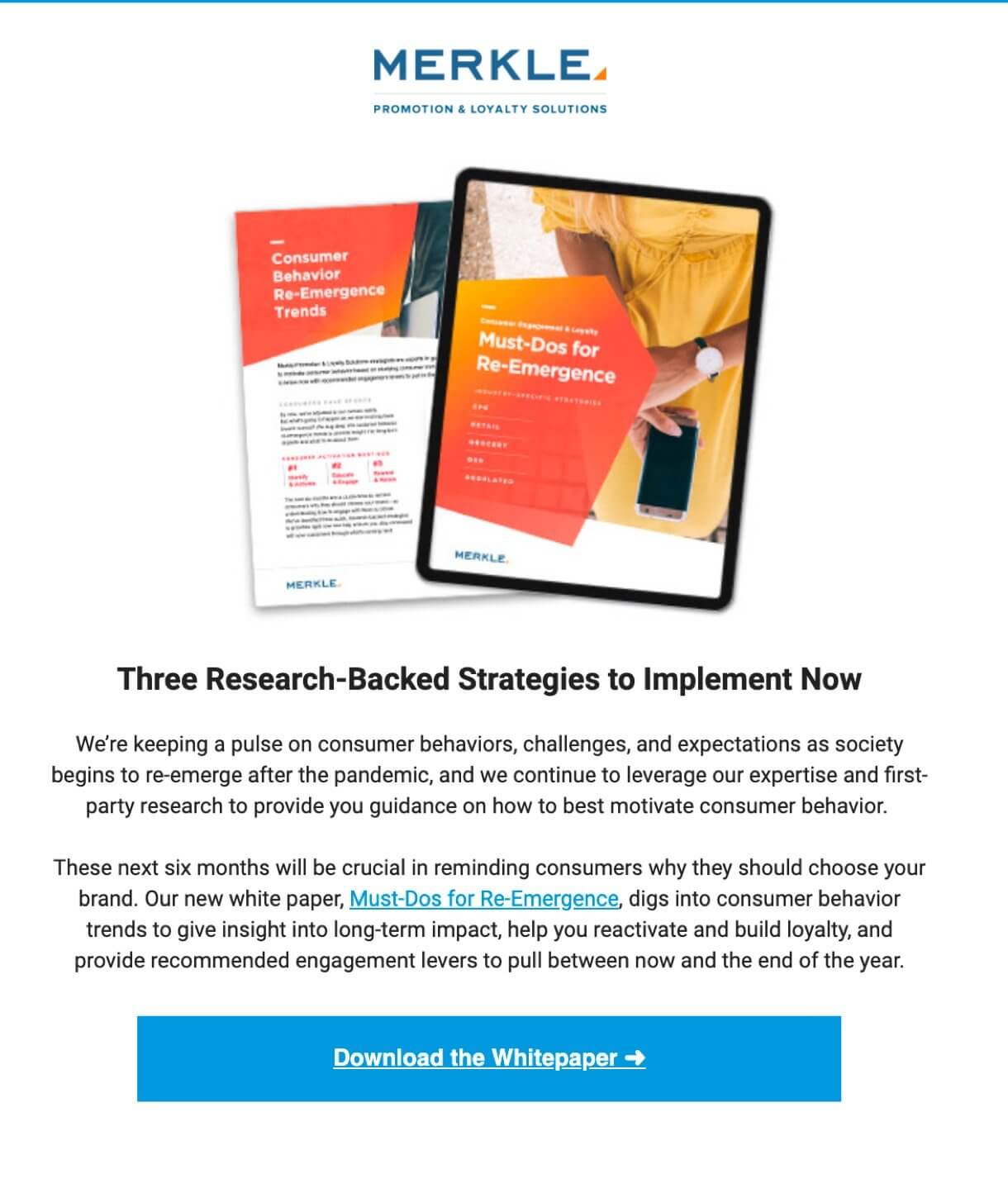
Merkle shows that a white paper email doesn’t need to be complex. The value is in the report itself, not in its descriptions or visuals.
Tips and tricks emails
These emails are a type of B2B email marketing that provide valuable and useful information to the recipients, including tips, tricks, or other helpful insights that are relevant to the recipient’s business or professional needs. You can build lasting relationships with the audience and skyrocket the chances of repeat sales.
From: Asana
Subject: Mid-year goals check-in
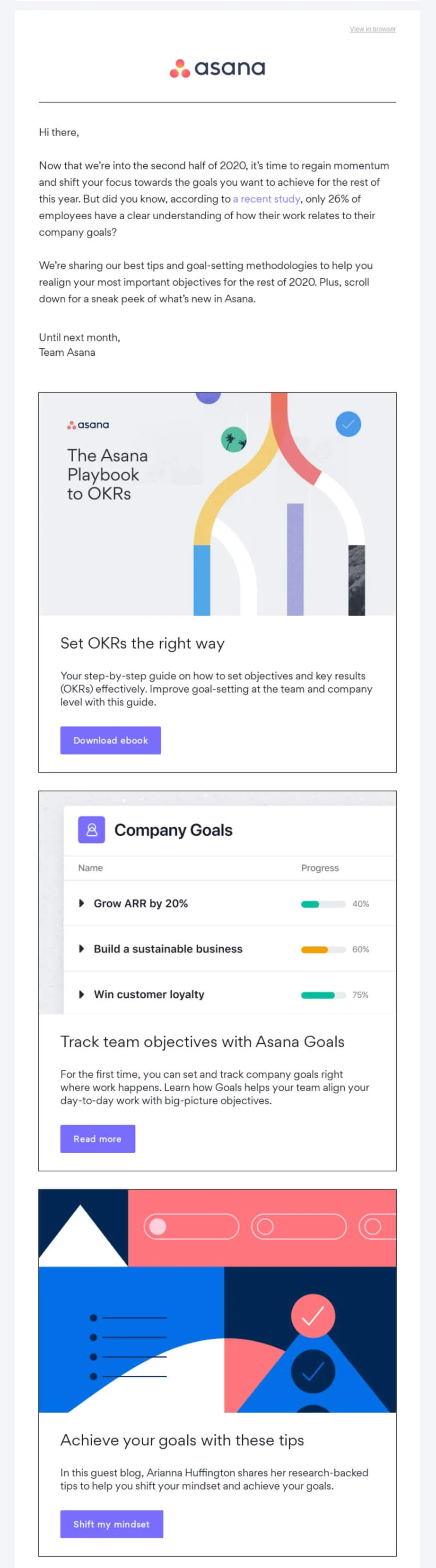
In this email, Asana points out recent research data to underline the importance of the content provided. It is a good marketing tactic to establish the expertise and attentiveness of the company.
Free trial email
Another way to promote a product or service to prospects is to recommend a free trial via email. It’s an effective way to showcase the benefits of your offers and encourage potential customers to buy the product. By allowing customers to try the product or service by themselves, businesses can showcase the value and benefits of the offer in a way that is more convincing than simply listing features or benefits.
From: Google
Subject: Start using your G Suite free trial today
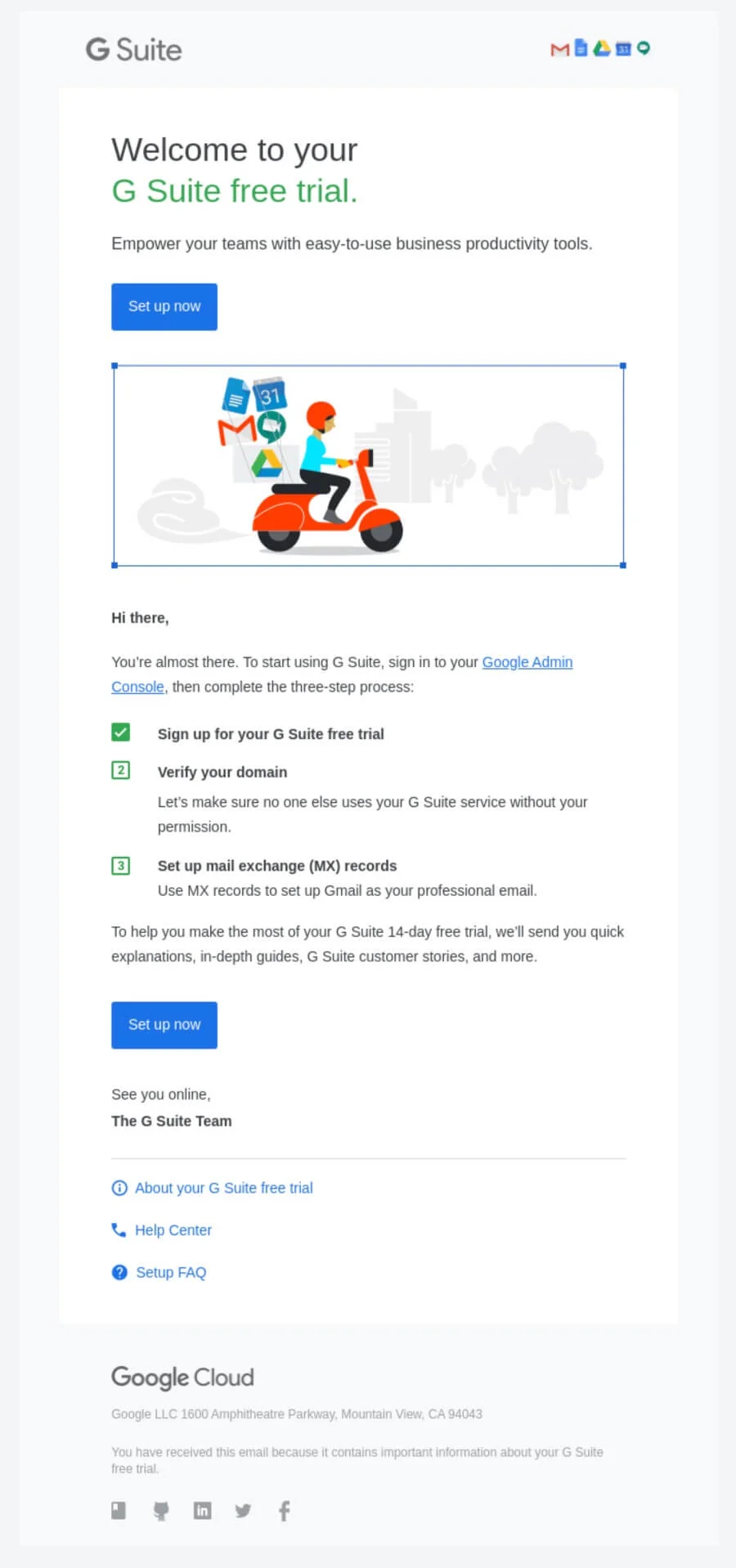
Google’s free trial email is an example of a successful marketing campaign as it clearly states all the steps necessary to accomplish an action — set up the account and start using the service.
Survey email
Conducting a survey via email is a pretty common method for gathering feedback from customers. By inviting your existing clients to participate in a survey, you can learn more about their experiences, preferences, and needs, and use this information to improve your products, services, and customer experience.
From: Tailor Brands
Subject: Penny (or more) for your thoughts?
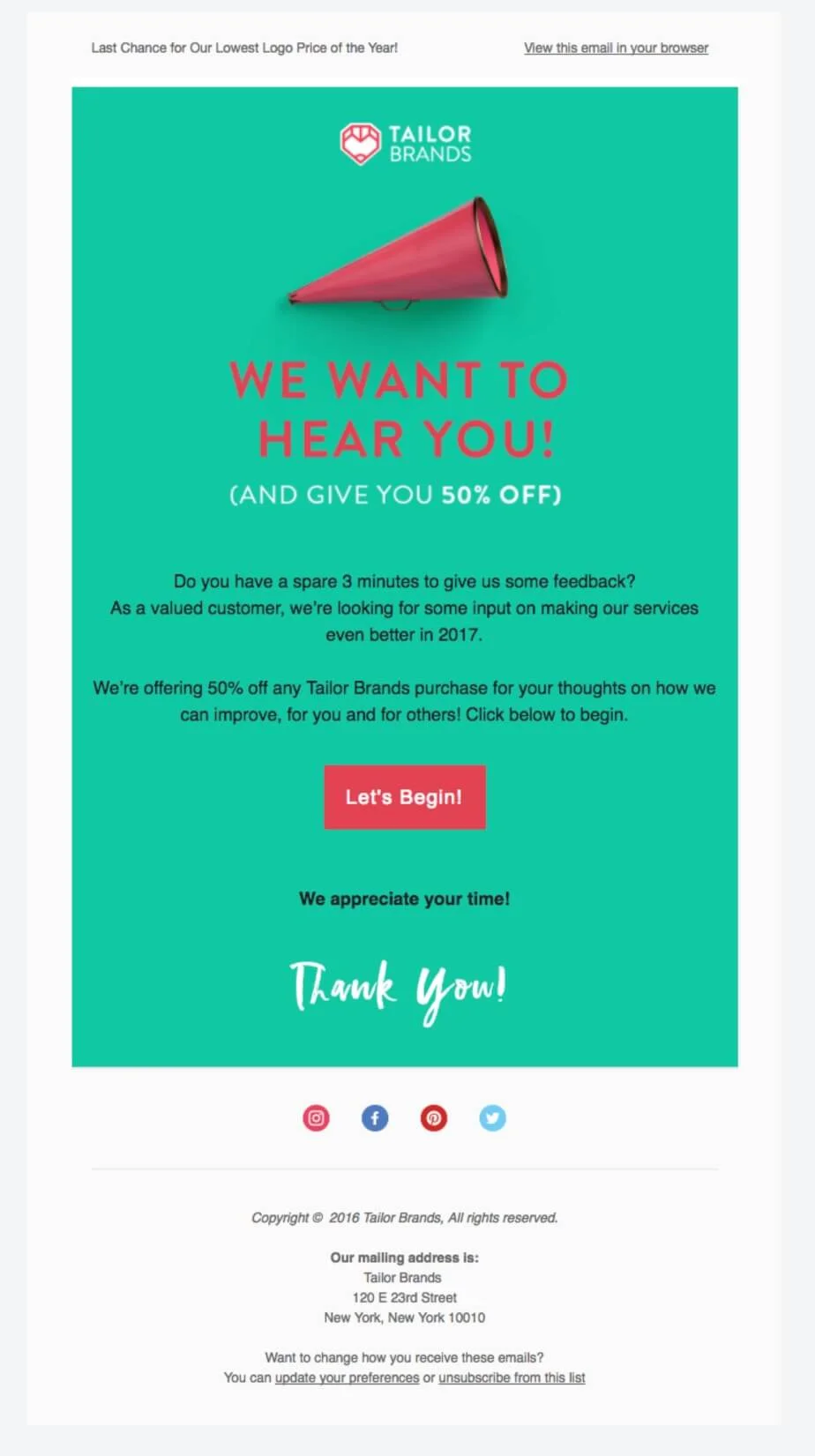
This survey email is short and its color scheme is appropriately limited. The email’s important information and an image at the top are accented with a shade of red.
Cross-promotion email
Cross-promotion emails are a type of B2B email marketing that aims at promoting a product or service to the audience of another company. These emails can establish partnerships or collaborations between companies and be an effective way to reach a new audience and generate leads.
From: Vimeo
Subject: Join us for a webinar with Asana

This email has the two collaborating companies’ logos at the top and clearly states each of the panelists’ positions and companies.
How to create effective B2B marketing campaigns
Creating effective B2B marketing campaigns requires a strategic and targeted approach. So here are a few tips for you to follow:
Segmentation
If you want to create effective B2B email marketing campaigns, you need to understand your prospects’ needs and preferences. This requires careful segmentation of your email lists, so you can send the right message to the right group of prospects. If you’re promoting a new product, you may want to send emails to a group of prospects who have previously shown interest in similar products. On the other hand, if you’re trying to increase customer retention, you may want to send emails to a group of existing customers, highlighting the benefits of your products or services.
High-quality content
Another important aspect of B2B email marketing is the quality of the content you send. The more valuable and relevant the email copy is to your customers, the more likely they are to engage with your emails. This is why it’s important to invest in creating high-quality, informative, and engaging email content. You can include case studies, testimonials, and examples of how other businesses have benefited from your products or services.
A/B testing
In order to get the most out of your B2B email marketing campaigns, it’s important to test different strategies, messages, and content types. By experimenting with different tactics, you can find out what works best for your specific audience and goals. You can test different subject lines, email formats, and CTAs to see which ones generate the highest open and click-through rates. You can also test sending emails at different times of day or week to see which ones generate the most engagement. Additionally, A/B testing can also be a great way to optimize your email campaigns and improve their performance over time.
Automation tools
Another important consideration is to use marketing automation tools, as they can help you automate repetitive tasks, like sending welcome emails, re-engagement emails, and drip campaigns. This allows you to focus on creating high-quality email content, rather than spending time on manual tasks. Marketing automation tools can also help you track and analyze the performance of your email campaigns, so you can make data-driven decisions about how to improve them.
Conclusion
Use this list of B2B email marketing best practices as inspiration and a reference for creating impactful campaigns. With the examples provided in this article, you can learn how to create effective B2B email marketing campaigns that drive engagement and help you reach your marketing goals. By curating emails carefully and getting creative, rather than relying heavily on sales copy, businesses can effectively engage both prospective and existing clients.
Try out something from our B2B email marketing list or save it for later:
- Welcome emails
- Re-engagement emails
- Activation email
- Announcement email
- Campaign support email
- Event newsletters (webinar invitations, follow-up emails)
- Curated email content (case studies, white papers, tips and tricks)
- Free trial promotion email
- Survey email
- Cross-promotion email
 New and noteworthy on our blog