


Key takeaways
- Singles' Day originated in China and has become a significant shopping event on November 11, providing opportunities for ecommerce brands to engage in self-gifting, limited-time offers, and exclusive product releases.
- Before planning a Singles' Day campaign, ensure audience awareness of the event and align the product with self-gifting categories like fashion, beauty, food, entertainment, and travel.
- When structuring a Singles' Day email campaign, consider a sequence of teasers, main launch emails, and reminders to maximize engagement.
Singles’ Day takes place on November 11. The occasion began in China and later became a major 11.11 shopping event, giving ecommerce brands a natural theme for self-gifting, limited-time offers, and exclusive product drops.
In this guide, you’ll find 11 Singles’ Day email examples and a practical framework for planning your own campaign — from timing and subject lines to segmentation and measurement.
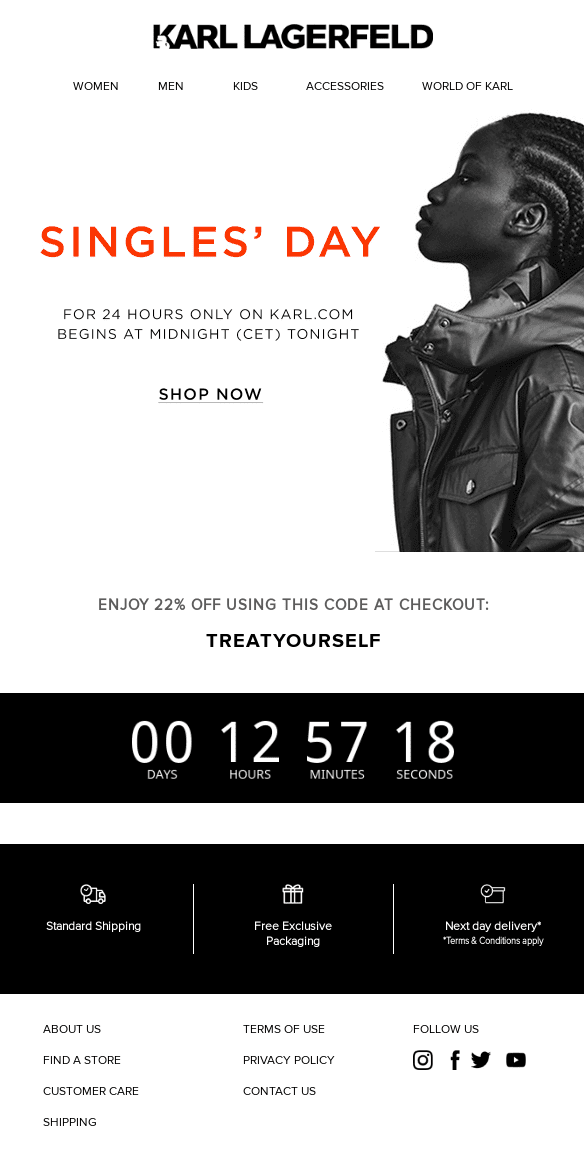
1. Karl Lagerfeld — Use a countdown timer
The Karl Lagerfeld email makes the deadline impossible to miss: a prominent countdown supports the 22% discount, while the restrained design keeps attention on the offer and calls to action.
Why it works: The timer turns a general “limited time” message into a concrete deadline. How to adapt it: Use a timer only when it reflects the real end time, and repeat the deadline in text so the message still makes sense if images are blocked.
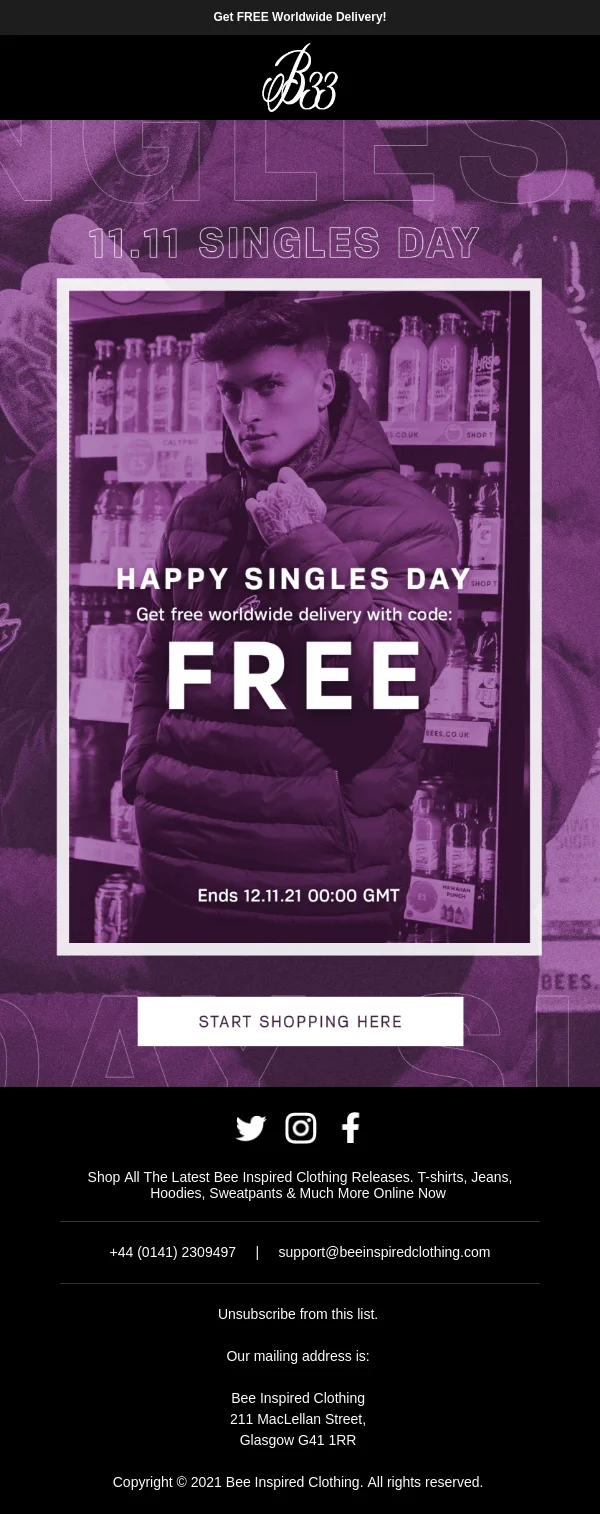
2. Bee Inspired Clothing — Offer free shipping
Bee Inspired Clothing leads with a simple benefit: free worldwide delivery for a limited time. The focused call to action and lifestyle image make the promotion easy to understand at a glance.
Why it works: Shipping cost is a common purchase barrier. How to adapt it: State eligible regions, minimum order value, and delivery deadline clearly. If worldwide shipping is not feasible, tailor the message by location.
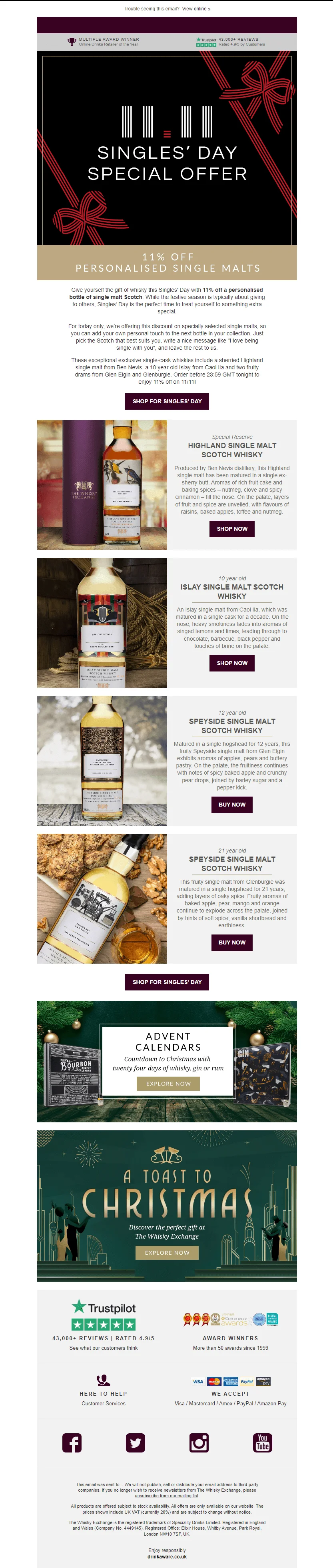
3. The Whisky Exchange — Connect the product to the occasion
The Whisky Exchange demonstrates that Singles’ Day does not have to be limited to fashion or cosmetics. The product and copy create a playful link to enjoying something independently.
Why it works: The occasion becomes a creative frame rather than a forced discount label. How to adapt it: Find a real self-gifting, solo-use, or “single item” connection that fits the brand voice.
4. Mejuri — Add a gift with purchase
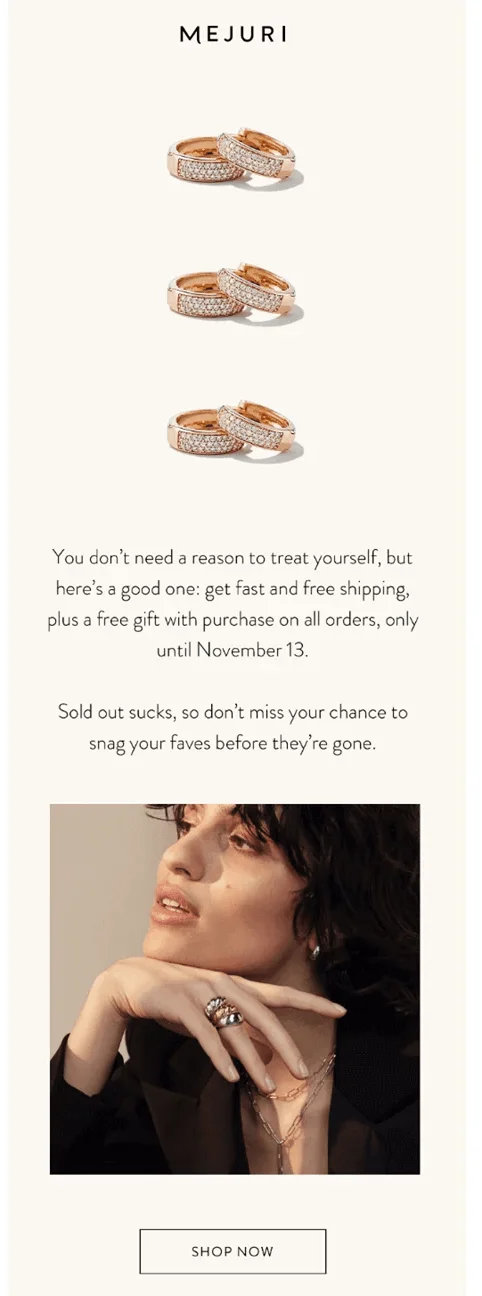
Mejuri adds value with a gift instead of relying only on a price reduction. That approach can protect the perceived value of the main product while still giving shoppers a reason to act.
Why it works: The reward feels exclusive and tangible. How to adapt it: Show the gift, state the qualifying spend, and explain whether quantities are limited.
5. Feelunique — Use motion to explain and attract
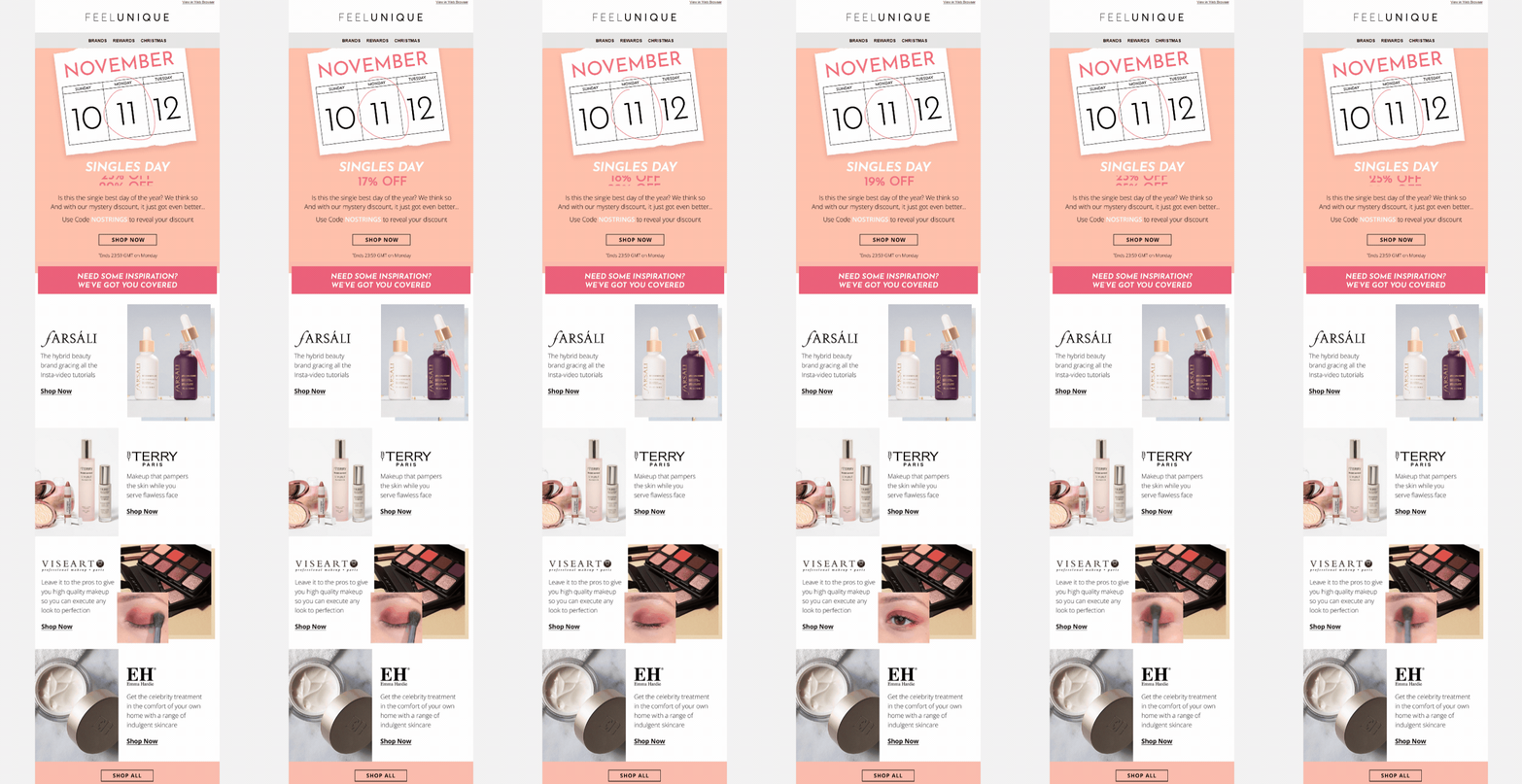
Feelunique uses GIFs for two jobs: one highlights the promotion and another demonstrates how to apply a product. Motion supports both attention and product education.
Why it works: Each animation has a clear purpose. How to adapt it: Keep the file lightweight, make the first frame understandable, and avoid competing animations that distract from the CTA.
6. Ideal of Sweden — Make the discount instantly visible
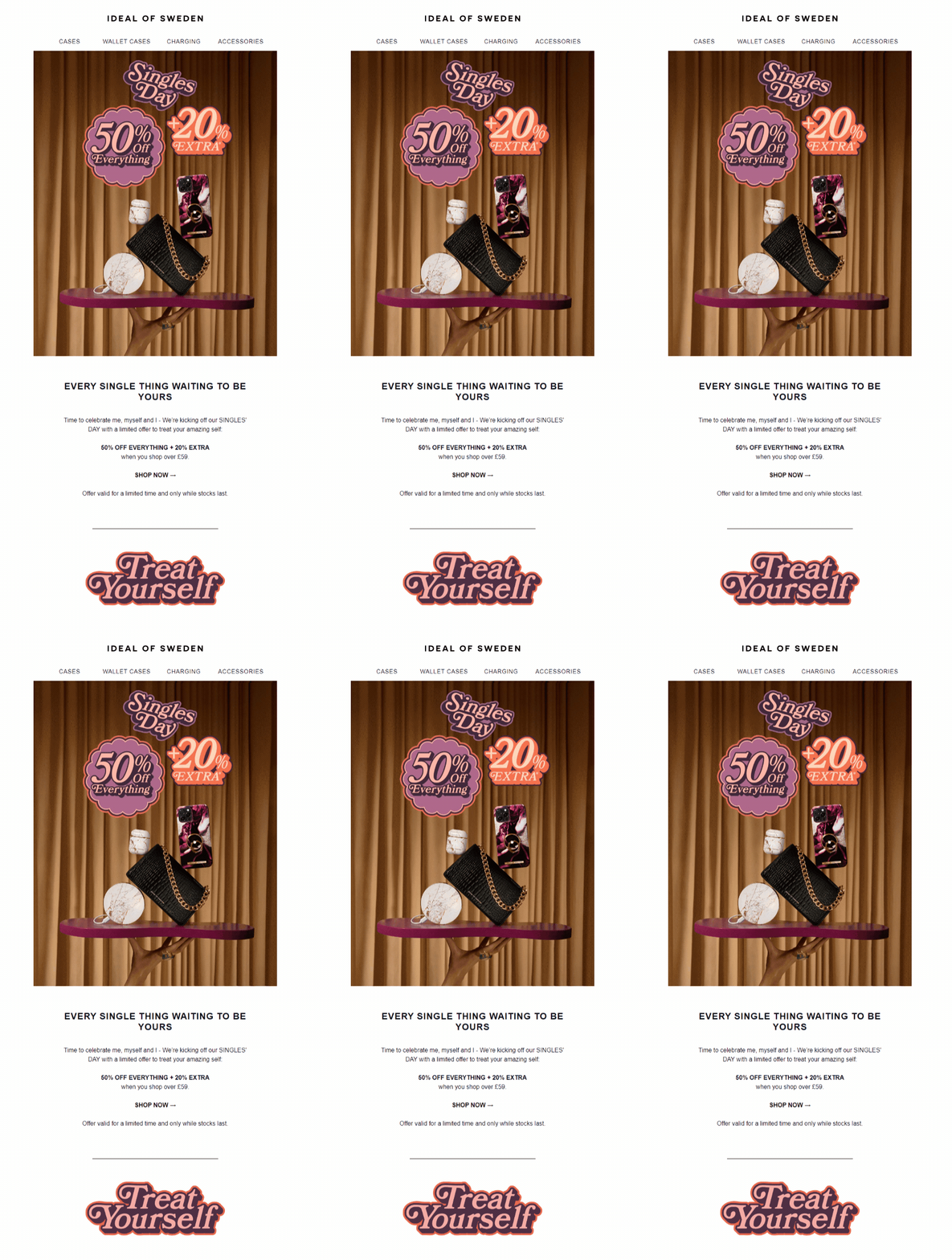
A small animated detail pulls attention toward Ideal of Sweden’s 50% discount without making the entire email feel busy.
Why it works: Motion reinforces the main value proposition. How to adapt it: Animate one important element — the discount, deadline, or product — and keep the rest of the composition stable.
7. Aromatherapy Associates — Build a self-care angle
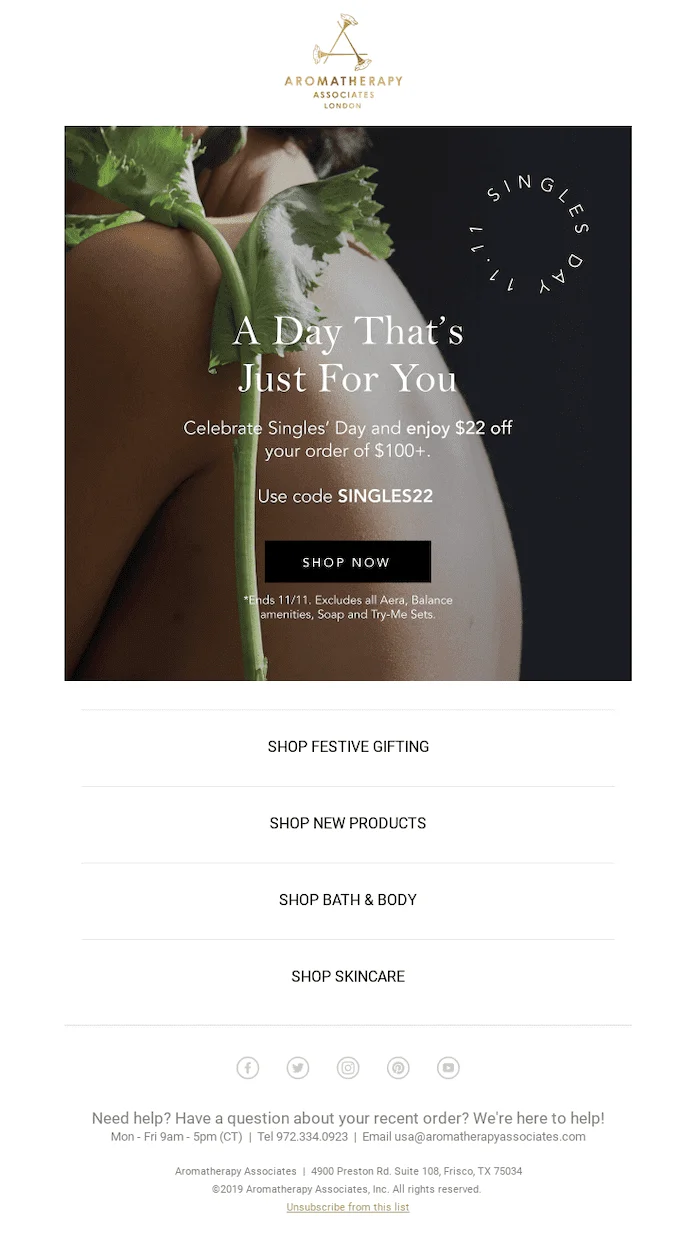
Aromatherapy Associates connects Singles’ Day with taking time for oneself. That framing feels natural for wellness products and gives the promotion an emotional benefit beyond price.
Why it works: The message matches the product category. How to adapt it: Use self-care language only when it is credible for the product and avoid stereotypes about people who are single.
8. Bumble and bumble — Make the offer easy to scan
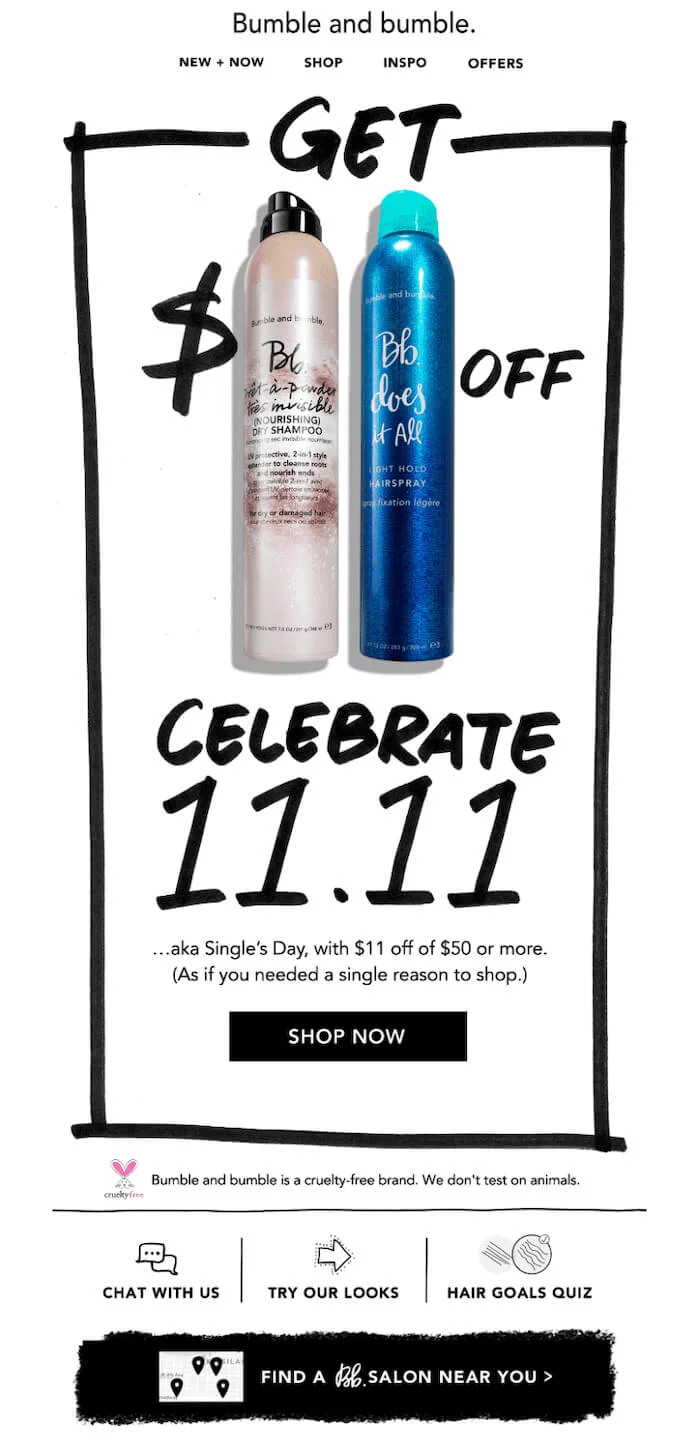
Bumble and bumble combines large product imagery with an expressive headline, making the email feel celebratory without relying on long copy.
Why it works: Strong hierarchy helps readers understand the promotion quickly. How to adapt it: Use one dominant headline, a concise benefit, and a CTA that remains visible on mobile.
9. Yoox — Use a distinctive visual system
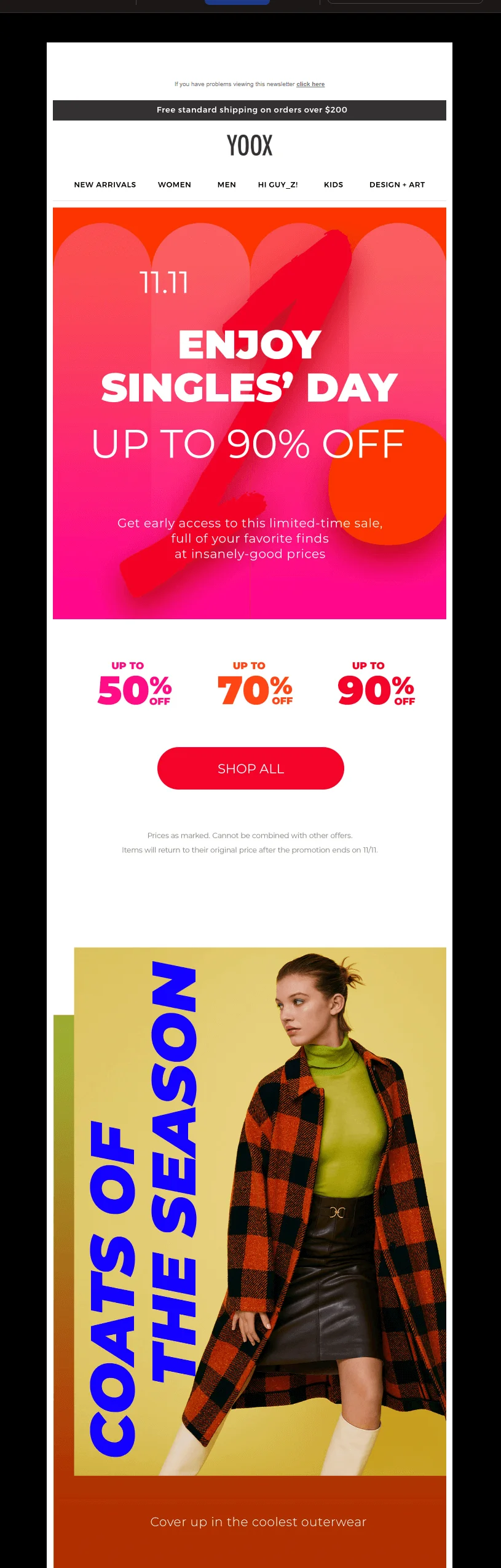
Yoox pairs large-scale imagery with a recognizable gradient. The treatment gives the 11.11 promotion its own identity while remaining connected to the brand.
Why it works: The visual style makes the campaign memorable. How to adapt it: Use seasonal color and typography consistently across the teaser, launch, and reminder emails.
10. Greetabl — Recommend relevant products
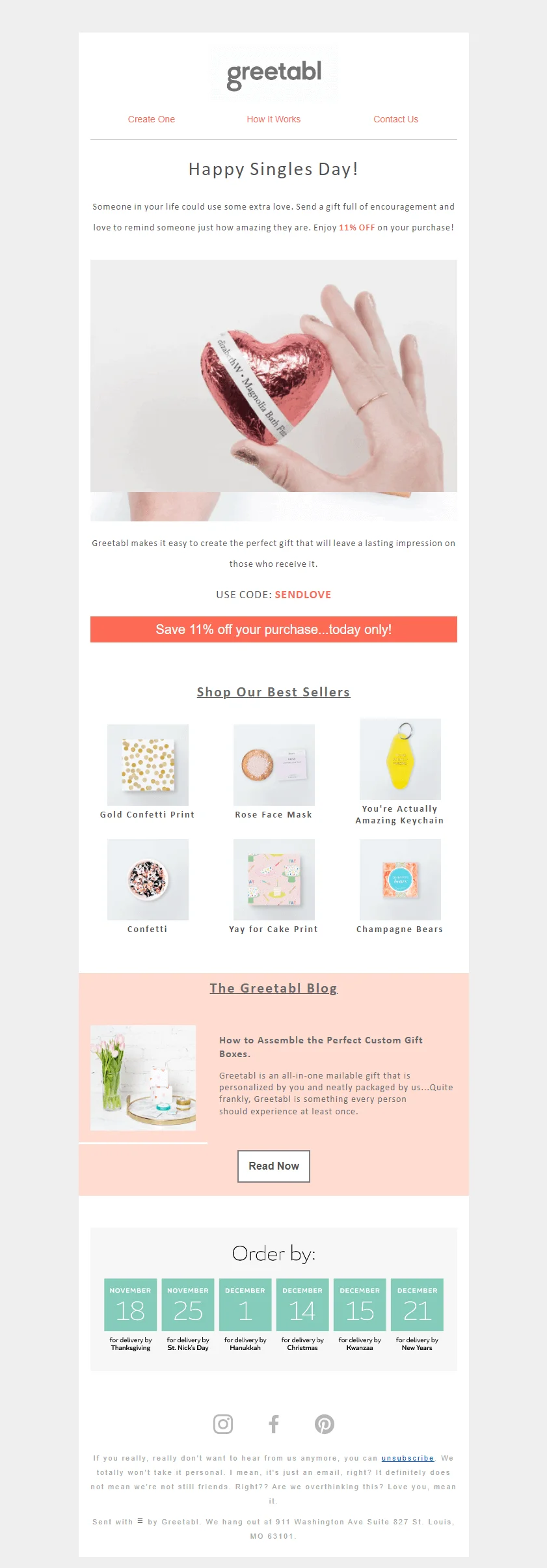
Greetabl uses best sellers to help subscribers decide what to buy. Recommendations add social proof and shorten the path from promotion to product.
Why it works: The email answers “What should I choose?” How to adapt it: Personalize by category or browsing behavior where possible, and keep the selection small enough to scan. See more ideas in these email footer examples.
11. Innisfree — Create an exclusive 11.11 offer
Innisfree combines an exclusive product or gift with bright, product-led creative. The offer feels connected to the event rather than like a generic discount with a new label.
Why it works: Exclusivity and limited availability create a reason to shop now. How to adapt it: State exactly what is exclusive, who qualifies, and when the offer ends.


FAQ
What is Singles’ Day and when is it celebrated?
Singles’ Day is celebrated on November 11 (11.11). It began in China as an informal celebration among university students in the 1990s and later became a major ecommerce shopping event, especially after Alibaba’s first 24-hour 11.11 sale in 2009.
How do you write a Singles’ Day promotional email?
Make the benefit clear right away and keep the message focused on self-gifting, limited-time offers, or exclusive drops. If your audience may not recognize Singles’ Day, explain it in one sentence; if they already know it, lead with the offer. Use segmentation so the campaign reaches the right subscribers with the right level of context.
When should you send Singles’ Day emails?
A short sequence works better than a single send. A practical timing plan is 5–7 days before to tease or offer early access, 1–2 days before to reveal the offer, November 11 for the main launch, and the final hours for a last reminder to engaged non-purchasers.
What are good Singles’ Day email subject lines?
Good subject lines keep the occasion, benefit, or deadline visible. Examples include: “11.11 is almost here — your offer arrives early,” “Singles’ Day: 11% off for 24 hours,” and “Final hours: the 11.11 offer ends tonight.”
Should every ecommerce brand run a Singles’ Day campaign?
No. Singles’ Day works best when the audience recognizes the occasion and the product category naturally fits self-gifting, such as fashion, beauty, food and drink, entertainment, home goods, hobbies, travel, or personal services. Brands should also consider whether the campaign can offer a clear limited-time benefit without weakening Black Friday or Cyber Monday promotions.
 New and noteworthy on our blog
