



Key takeaways
- Twilio SendGrid, once trusted for email services, is losing appeal due to technical complexities, high costs, and poor support.
- Alternatives to SendGrid offer low-cost plans, advanced features, and excellent customer support for email marketing.
- SendGrid is now part of Twilio, offering transactional and marketing email tools.
- Pros of SendGrid include scalability, data analysis tools, and integration options.
- Cons of SendGrid include high cost, challenging setup, and inefficient marketing automation.
Businesses that used to trust Twilio SendGrid’s sterling reputation and email delivery services are now looking for better options. They have plenty of good reasons for this, such as technical complexities, a high price tag, and inefficient customer support. These and other issues made SendGrid less appealing to businesses of all sizes.
Thankfully, there are alternatives with low-cost paid plans, high-end features, and exceptional customer support for all your email marketing needs. We’ve rounded up the 11 best alternative tools for SendGrid so you can choose the right one for your business.
What is SendGrid?
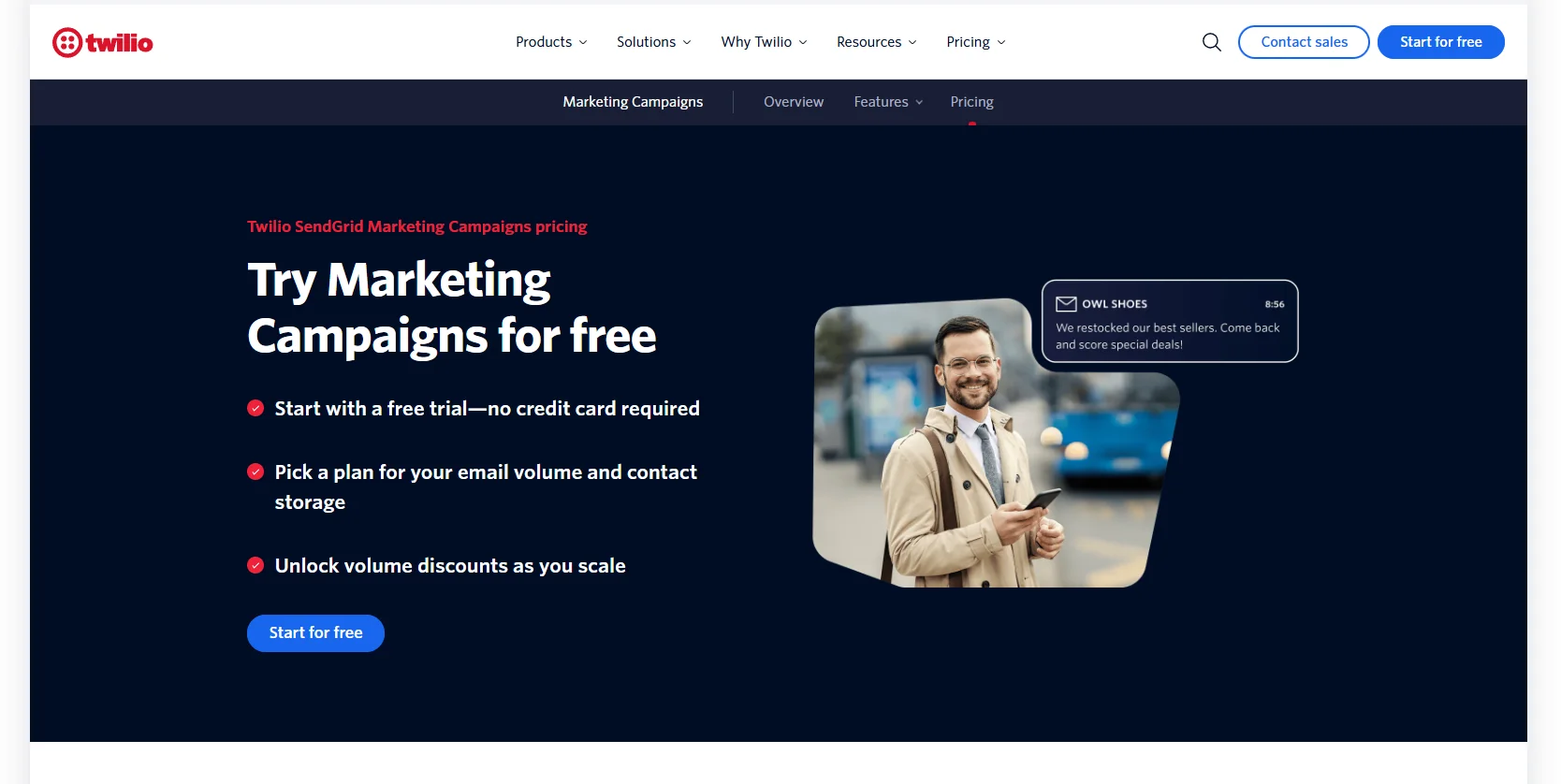
Twilio SendGrid (formerly SendGrid) is an email delivery platform within Twilio that provides both transactional email (via API) and email marketing tools.
SendGrid is no longer a standalone platform — its website, pricing, and documentation are now fully integrated into Twilio. However, it is still maintained as a distinct product line within Twilio. So, unlike most tools on this list, SendGrid is part of a broader communications platform (Twilio), which also includes SMS, voice, and other APIs.
Pros and cons of choosing SendGrid for your business
Choosing the right email marketing tool requires a clear understanding of its strengths and weaknesses to ensure it meets business-specific needs. Let’s explore the pros and cons of SendGrid, drawing on authentic user feedback from trusted review sites like G2 and Trustpilot.
SendGrid advantages
- Scalable as businesses grow, adapting to higher volume demands
- In-depth data analysis and reporting tools
- Extensive integration options
SendGrid disadvantages
- Prohibitively expensive for small companies
- Challenging initial setup
- Intense learning curve
- Inefficient marketing automation
- Challenging integrations with lesser-known software like Monday.com and Pipedrive that require custom solutions
- Unsatisfactory support
Twilio SendGrid pricing (via Twilio)
Free plan
No free plan.
Free trial with $0/mo for 60 days, store up to 100 contacts and send up to 100 emails/day.
Paid plans
Twilio SendGrid has separate pricing for its two products:
Email API (transactional emails):
- Free trial: $0/month for 60 days, up to 100 emails/day
- Essentials: starting at $19.95/month (email-volume based)
- Pro: starting at $89.95/month
- Premier: custom pricing
Marketing Campaigns (email marketing):
- Free trial: $0/month for 60 days (limited contacts and sends)
- Basic: starting at $15/month
- Advanced: starting at $60/month
- Custom: custom pricing
Top alternatives to SendGrid: The overview
| Platform | Free options | Best for | Stands out for | Starting price |
| Selzy | Free plan with up to 100 contacts, 1,000 emails/month, and basic functionality | SMBs, startups, e-commerce businesses, non-profit organizations, and solopreneurs | AI writing assistant, Premade blocks, Chatbot builder, Anti-spam helper | $5.25/month for 500 contacts and unlimited emails |
| MailerSend | Free plan with up to 500 emails/month | Small to medium-sized businesses looking for a transactional email service | API-driven service, deep analytics, and webhooks | $28/month for 50,000 emails |
| Mailgun | Free plan with 100 emails per day | Developers, businesses, and SaaS companies | Advanced analytics, flexible tagging system, and RESTful API | $15/month for 10,000 emails |
| Mailtrap | Free plan with 4,000 emails/month, capped at 150/day, no expiry | Developers and product teams sending transactional and bulk email from one account | Isolated IP pools per sending stream, automatic DKIM rotation, 8 SDKs, official MCP server | $15/month for 10,000 emails |
| AWeber | A 14-day free trial | Non-profits, small companies, and entrepreneurs | Email automation, split testing, web push notifications | $12.5/month for 500 subscribers |
| Kit | Free plan with up to 10,000 subscribers | Creators, bloggers, and marketers | Visual automation templates and builder, customizable sign-up forms | $33/month for 1,000 subscribers |
| Zoho Campaigns | Free plan with up to 2,000 contacts and 6,000 emails/month | Small businesses, and marketers | Contact scoring & tags, dynamic content, Email polls, and attachments, Recipient time zone & optimal open time sends | $3/month for 500 contacts and unlimited emails |
| Omnisend | Free plan with up to 250 contacts and 500 emails/month | Small and medium-sized businesses, ecommerce | Pre-built automation workflows, and dynamic content options | $16/month for 500 contacts and 6,000 emails |
| Brevo | Free plan with up to 300 emails/day | Small businesses, startups | SMS marketing, automation, built-in CRM | $8.08/month for 5,000 emails |
| Mailchimp | Free plan with up to 500 contacts and 1,000 emails/mo or 500/day | Startups, small to medium-sized businesses | Generative AI, custom-coded email templates, robust segmentation and analysis tools | $10/month for 500 contacts |
| Constant Contact | 30-day free trial with up to unlimited contacts and 100 emails total | Small businesses, and nonprofits | Drag-and-drop editor, landing pages, event marketing, and social media integration | $12/month for 500 subscribers |
How to choose a SendGrid alternative (quickly)
- Developers / APIs → Mailgun, Postmark, MailerSend
- Beginner-friendly marketing → Selzy, Mailchimp, Brevo
- Ecommerce & multichannel → Omnisend, Brevo
- Creators & newsletters → Kit
- Low-cost options → Selzy, Zoho Campaigns
Selzy — Best for its affordable pricing, automation, A/B Testing
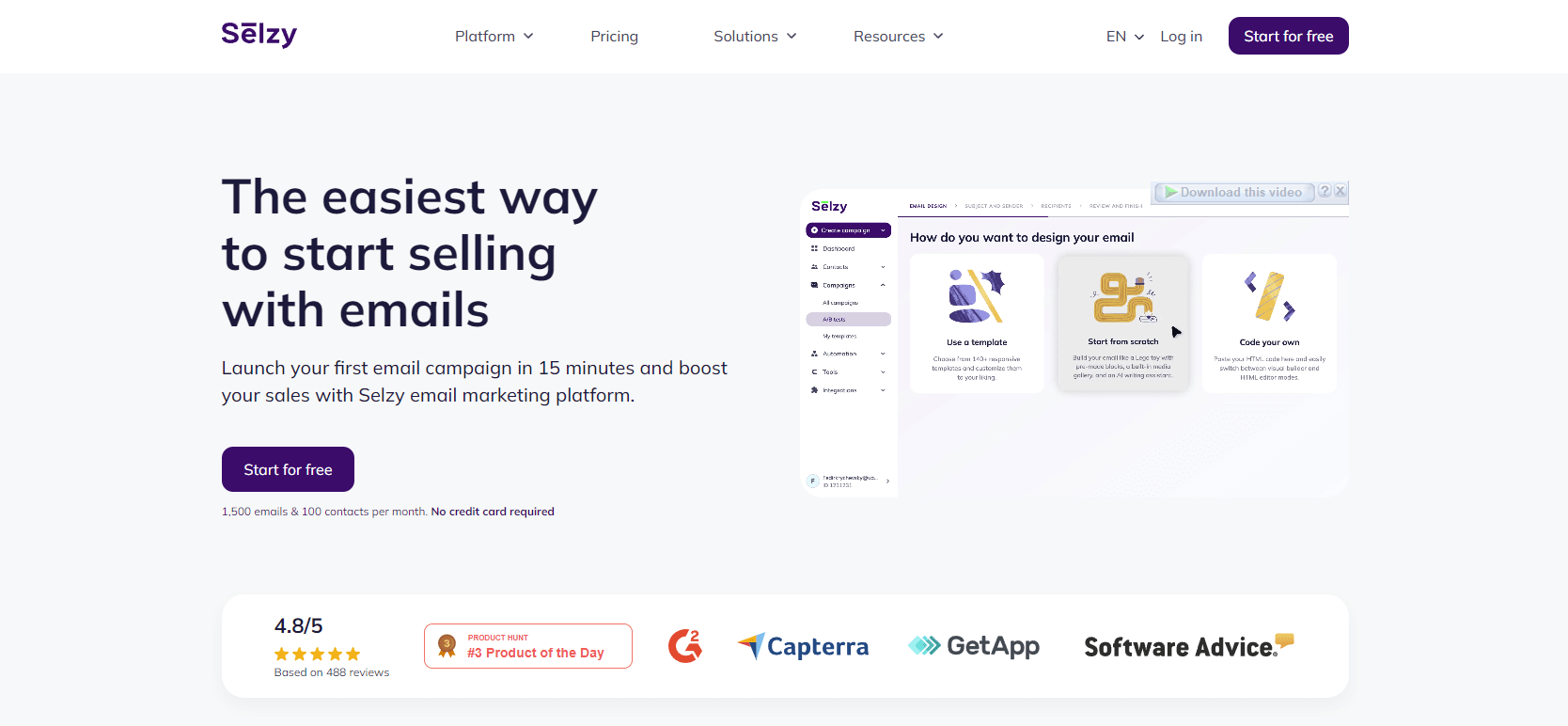
Selzy is a widely acclaimed SendGrid alternative thanks to its reliable performance, cost-effective pricing, and top-notch customer service. This unified and feature-rich marketing tool is ideal for expanding the reach and driving sales. Even better, its user-friendly interface is intuitive enough that even a newbie can launch their first campaign in under 15 minutes!
Selzy doesn’t stop there and takes email automation to the next level with prebuilt automation workflows for common scenarios like welcome emails, abandoned carts, and re-engagement.
Other notable features include built-in anti-spam and quality checks to ensure high deliverability. The email builder also comes with an AI assistant that helps you with many things from generating an entire email to writing, creating images, and translating.
Need support? Selzy offers 24/7 customer support to assist you whenever you need it.
Pros
- Much more affordable than SendGrid with plans starting at $5.25/month for 500 contacts and unlimited emails
- 99% email deliverability with built-in optimization utilities like spam testing
- Simple and user-friendly email builder
- Built-in AI assistant
- Chatbot builder for enhanced customer experience
- 24/7 customer support with quick turnaround via chat, email, and phone on all plans, even on the free one
- Transactional emails via SMTP and API, allowing businesses to send system emails alongside marketing campaigns
- In addition to email, Selzy supports SMS campaigns and building landing pages
Cons
- Fewer integration options but it does integrate with Google Sheets, WordPress, Hubspot, Shopify, and Facebook
Pricing
Free plan
The free plan includes 100 contacts, 1,000 emails per month, and a basic set of features.
Paid plans
- Lite: $5.25/month for unlimited emails and 500 contacts + A/B testing, segmentation, and shareable email URLs
- Standard: $10.5/month for unlimited emails, 500 contacts + lite plan features + anti-spam tips, email size check, Telegram chatbots, and more
- Full Service: Custom price for personalized service, 360 campaign management to individual solutions

MailerSend — Best for efficient workflows
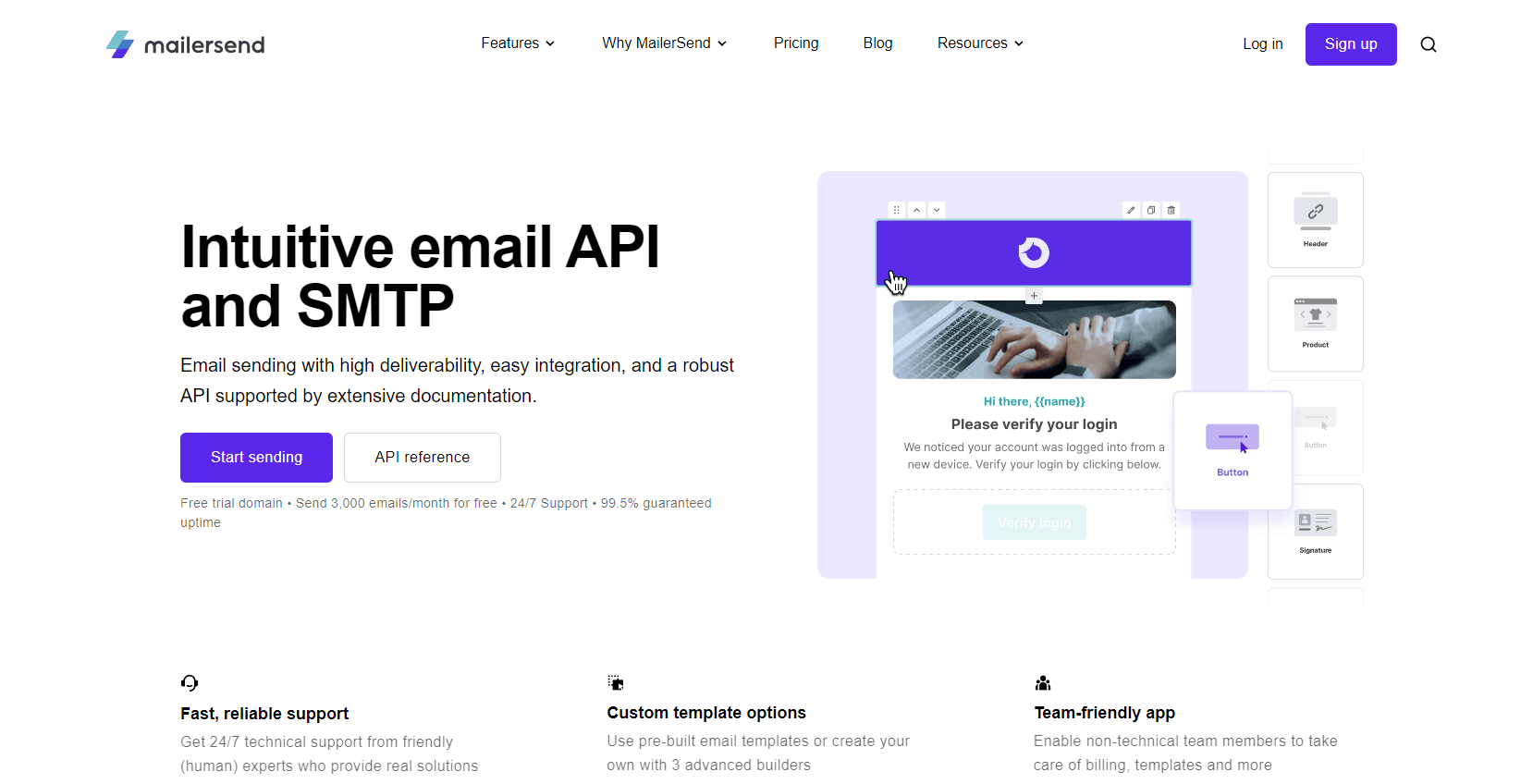
MailerSend is another great SendGrid alternative for small to medium-sized businesses aiming to send sales-related emails with higher deliverability.
It offers a smooth API integration process and clear documentation, which makes it perfect for developers and marketers. Its simple user interface and drag-and-drop editor will let you effortlessly build emails without coding skills.
MailerSend also provides webhooks and SMTP relay support, facilitating integration with existing workflows and applications. It includes features such as email verification, inbound routing, webhooks, and developer-focused API tools.
Then there are collaboration tools for team members to work together in real-time, ensuring everyone is on the same page and reducing communication-related errors.
Pros
- Real-time collaboration features for more efficient teamwork
- Reliable deliverability optimization tools
Cons
- MailerSend falls short of advanced features like A/B testing, automated IP warmup, and custom metadata, making it less suitable for larger companies.
- The free plan only includes 3 email templates which many users find limiting.
- MailerSend often experiences deliverability issues, especially during the IP warmup phase, potentially affecting campaign performance during the crucial early stages.
Pricing
Free plan
The free plan includes 500 emails/month
Paid plans
- Hobby: $5.6/month includes 5,000 emails/month as an entry-level paid tier
- Starter: $28/month for 50,000 emails + 50 sender identities and inbound routing feature.
- Professional: $88/month for 50,000 emails + 400 email verification credits, 1,000 domains, unlimited templates, and high throughput API.
Mailgun — Best for API-based bulk email with robust analytics

Mailgun is a popular tool among developers, businesses, and SaaS companies mainly because it’s built around transactional email APIs designed to send, receive, or monitor emails.
The tool also provides a reliable and quick email delivery service, with features such as real-time list validations, reputation monitoring, and inbox placement testing. It even supports users staying off blocklists, avoiding spam traps, and monitoring domain and IP reputation.
Mailgun also supports inbound email routing and webhook-based event tracking for application workflows.
One great feature of Mailgun is its comprehensive analytics, which allows businesses to figure out a data-driven email strategy.
Pros
- Good email deliverability and suppression list management
- Robust analytics and data logs for detailed performance tracking
Cons
- A slightly confusing interface is challenging for beginners.
- Many users, especially EU residents have expressed dissatisfaction with the platform’s customer support.
- Pricing plans can be costly for high-volume users.
Pricing
Free plan
Free plan: with a daily sending cap of 100 emails.
Paid plans
- Basic: starts from $15/month for up to 10,000 emails.
- Foundation: starts from $35/month to 50,000 emails.
- Scale: starts from $90/month for 100,000 emails.
Mailtrap — Best for keeping transactional and bulk email on separate reputations
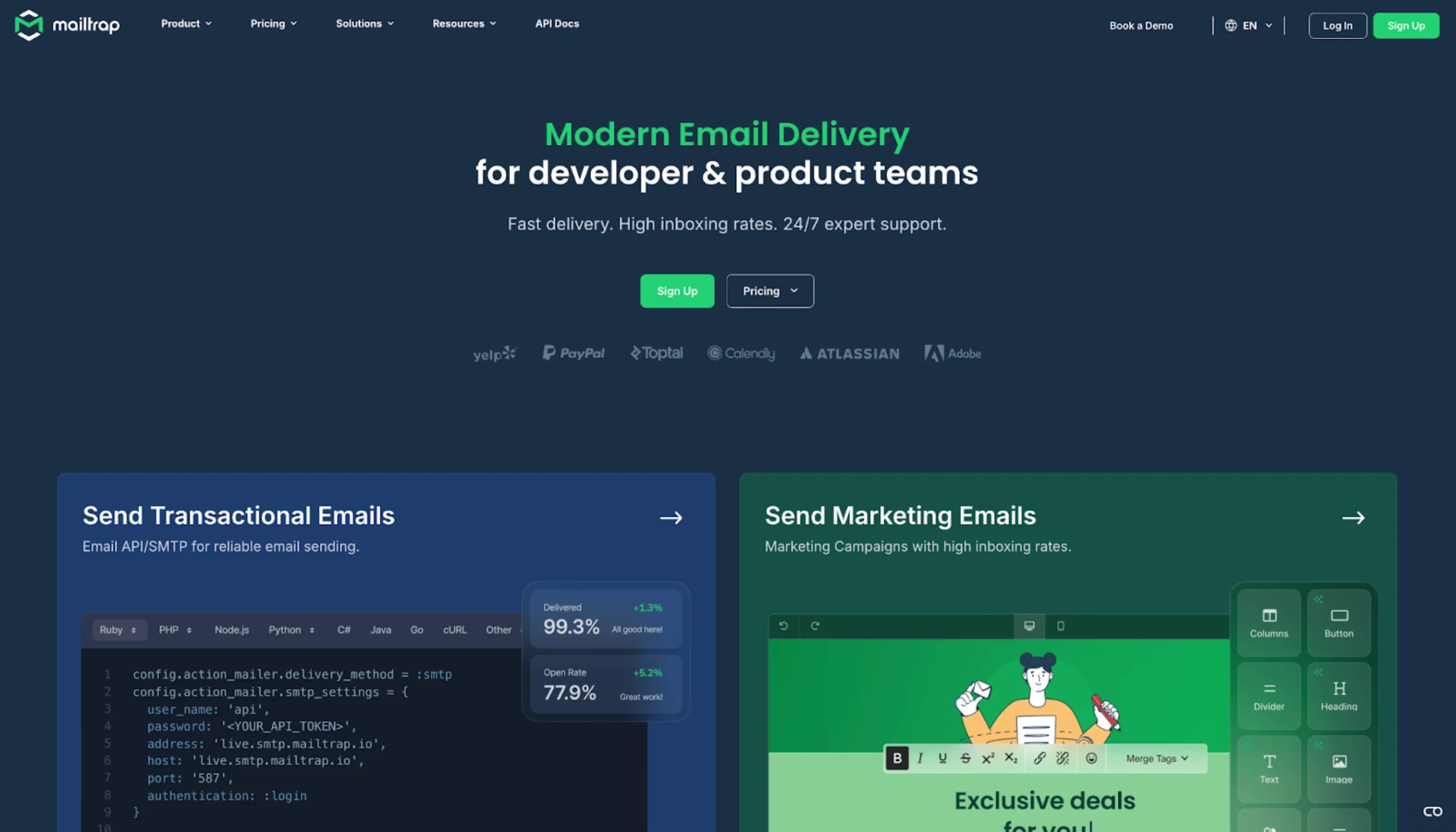
Mailtrap is an email delivery platform built for product teams that send transactional and bulk email from the same account. The part that separates it from the rest of this list is that the two never share a reputation. Transactional and bulk traffic run on isolated IP pools by default, on every plan including the free one, so a promo campaign that picks up complaints cannot drag down the password resets and receipts sending alongside it.
Teams leaving SendGrid over the free plan tend to notice Mailtrap’s next – It is permanent: 4,000 emails a month, capped at 150 a day, no card required and no 60-day clock.
Setup runs about five minutes. You add your DNS records, Mailtrap configures SPF, DKIM, and DMARC from there, and DKIM keys then rotate monthly on their own. Official SDKs cover Node.js, PHP, Ruby, Python, Java, .NET, Go, and Elixir, and there is an SMTP relay, webhooks, and a Handlebars template editor for teams that would rather not touch the API at all.
Analytics break down by mailbox provider and by sending stream, which means a Gmail problem shows up as a Gmail problem instead of a dip in one blended number. Bounce suppression and bounce categorization run automatically, and spam complaint data from 20+ ISPs lands in the same dashboard.
Marketers get a separate product alongside the API: Mailtrap Email Marketing, with contact lists, segmentation, and a drag-and-drop builder, billed apart from sending. And for anyone automating email with AI, Mailtrap publishes an official MCP server, so agents running in Claude Code, Cursor, or VS Code can send mail, manage templates, and pull stats without custom glue code.
Pros
- Transactional and bulk email run on separate IP pools by default, on every plan including the free one
- Permanent free plan of 4,000 emails a month with no credit card and no trial countdown
- Automatic SPF, DKIM, and DMARC setup once DNS records are added, with DKIM keys rotating monthly
- Analytics split by mailbox provider and by sending stream, plus spam complaint data from 20+ ISPs
- Official SDKs for eight languages and an official MCP server for AI agents
- ISO 27001, SOC 2 Type II, GDPR, and EU-US Data Privacy Framework, backed by a 99.99% uptime SLA
Cons
- No built-in email verification, so list cleaning needs a separate tool
- 24/7 live chat starts on the Business plan. Free and Basic get email support on weekdays
- Email Marketing is billed separately from Email API/SMTP, so running both means two line items
Pricing
Free plan
The free plan includes 4,000 emails per month with a 150/day cap, 1 user, 1 sending domain, and 3 days of logs. It does not expire and does not ask for a card.
Paid plans
- Basic: $15/month for 10,000 emails with 3 users, 5 sending domains, 5-day log retention, and click tracking. The same tier covers 50,000 emails at $20/month and 100,000 at $30/month.
- Business: $85/month for 100,000 emails plus a dedicated IP with automatic warmup, SSO, reputation monitoring, sub-accounts, 15-day logs, and 24/7 priority support.
- Enterprise: from $750/month for 1.5M emails plus unlimited users and domains, 30-day log retention, and audit logs.
Mailtrap Email Marketing is priced separately, starting free for 500 contacts, with Essential from $15/month.
AWeber — Best for easy autoresponders and quick campaign setup
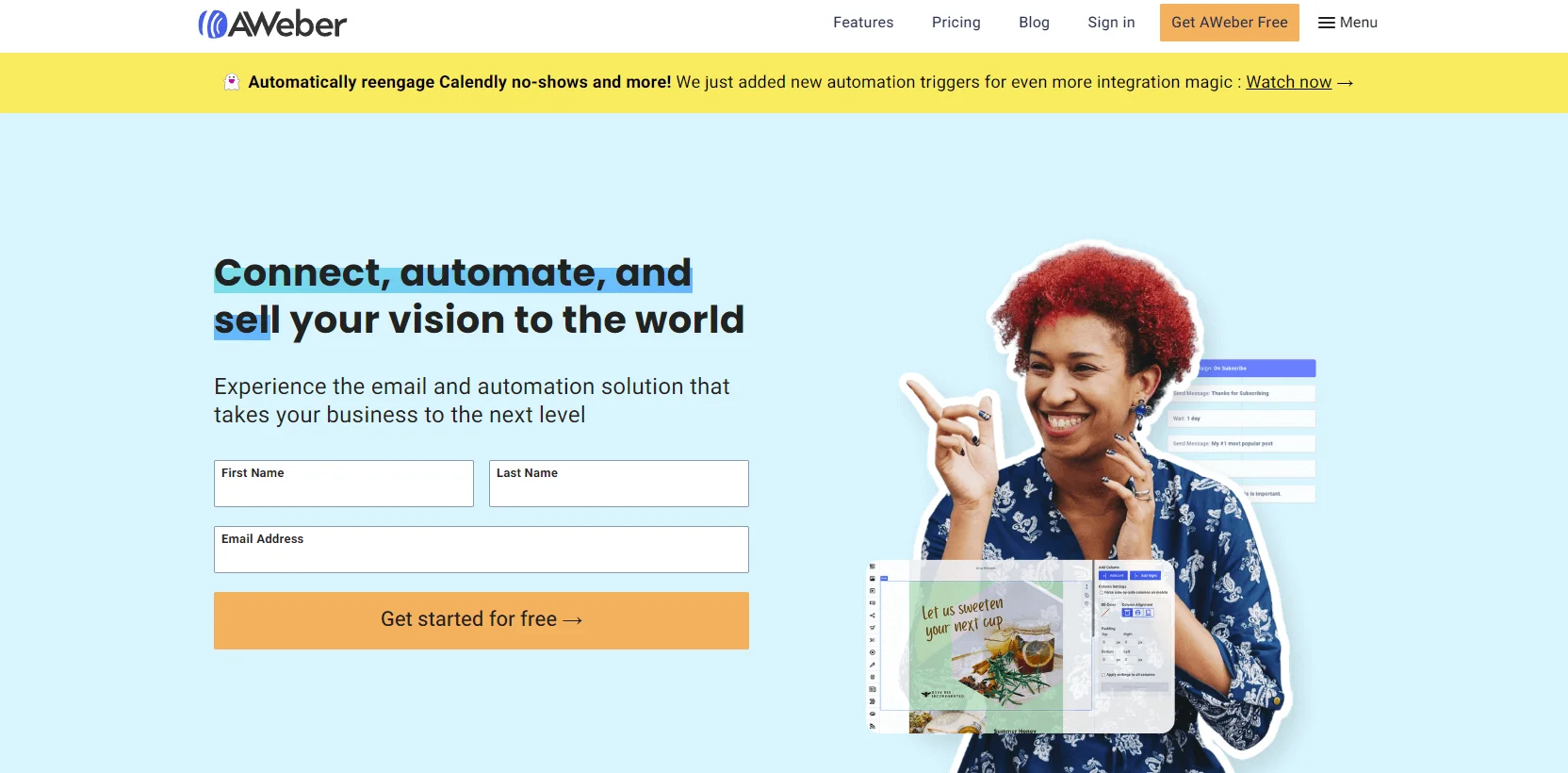
AWeber is a terrific email marketing solution for startups, entrepreneurs, and non-profits with many essential features like segmentation, A/B testing, real-time advanced analytics, and third-party integrations.
One of AWeber’s strengths is its ability to create autoresponder campaigns which helps businesses set up these campaigns to engage subscribers based on actions like sign-ups or purchases. There is an extensive knowledge base, webinars, and tutorials designed to get new users up and running instantly.
AWeber also includes features such as web push notifications, AI writing assistance, landing page builders, and ecommerce tools for selling products and subscriptions.
Pros
- Autoresponders and drip campaigns
- Extensive template library with 700+ customizable templates
Cons
- The interface and templates may look and feel a bit outdated.
- Unsubscribed contacts still count towards the subscriber total.
- No segmentation options in the free plan and only one segment in the Lite plan.
- Falls short of advanced features like dedicated sender IP addresses.
Pricing
Free plan
No free plan.
AWeber offers a 14-day free trial.
Paid plans
- Lite: $12.50/month for 500 subscribers with email sends of 10x your subscriber list + 3 landing pages, users, and more.
- Plus: $20/month for 500 subscribers with email sends of 12x your subscriber list + unlimited landing pages, users, and more.
- Done For:$20.00/month + $79 setup fee for unlimited subscribers; and 15x subscribers max, monthly email sends + email marketing setup done in 7 days.
Kit (ex-ConvertKit) — Best for automation workflows tailored to creators
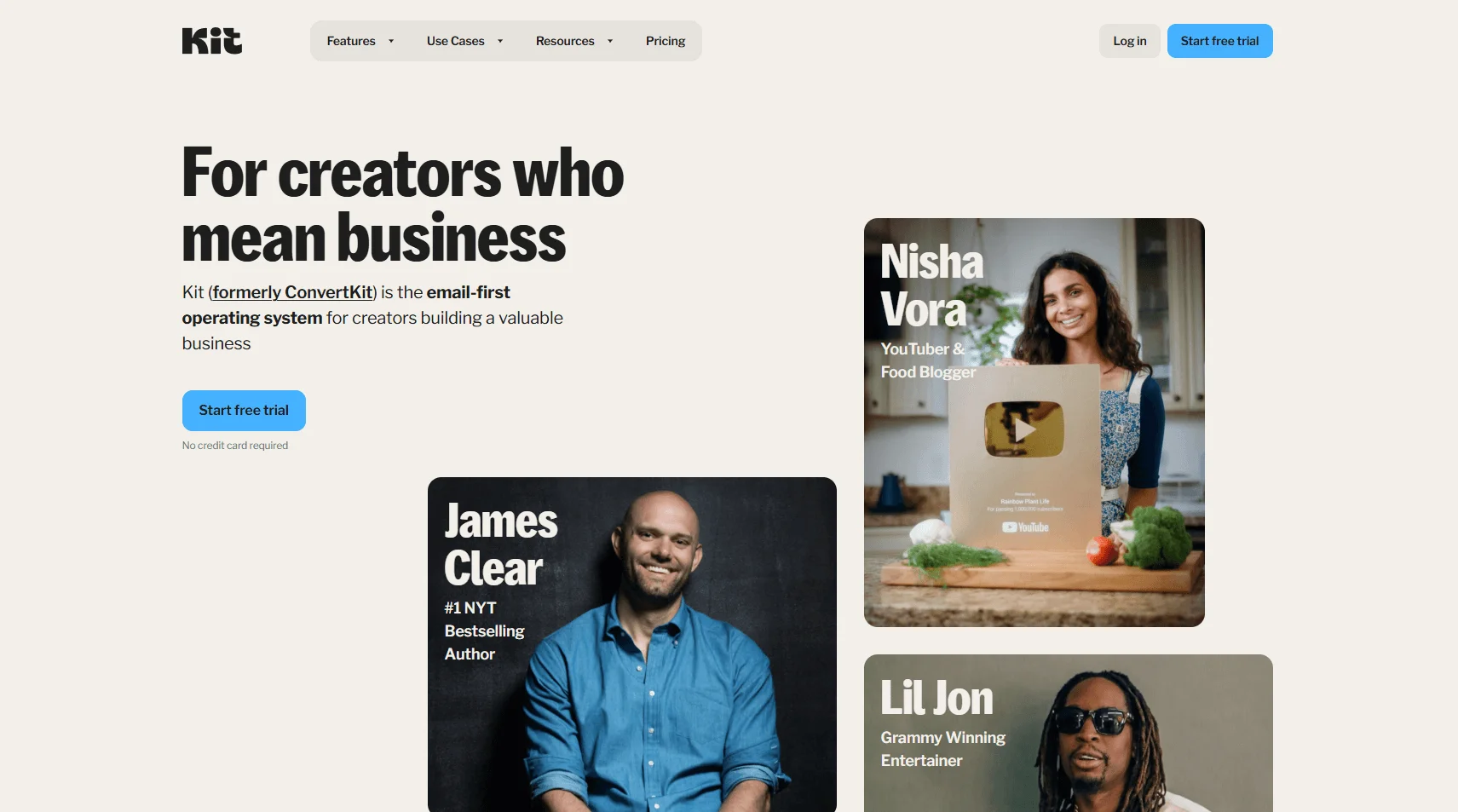
Kit (ex-ConvertKit) is another great email marketing platform suitable for content creators, like bloggers, YouTubers, podcasters, and even course creators. Platform features, especially email marketing automation, are designed to help users monetize their content and sell digital products.
One of Kit’s main selling points is its visual automation builder, which allows users to build sophisticated email sequences and funnels in no time.
Tagging and segmentation tools are also noteworthy, helping users organize subscribers into different groups based on behavior, preferences, or engagement.
Kit includes built-in monetization tools, allowing users to sell digital products, subscriptions, and earn through creator recommendations.
Pros
- Tailored for content creators
- Flexible list management options
- Supports paid newsletters and other content monetization options
Cons
- No drag-and-drop builder
- Relatively basic reporting and analytics options
- Not a great choice for midsize and large businesses, as price increases steeply for mailing lists with 1000+ subscribers
Pricing
Free plan
Free for up to 10,000 subscribers, but limited to 1 basic visual automation, email sequence, and user.
Paid plans
- Creator: $33/month for 1,000 subscribers + unlimited visual automation, email sequences, and 2 users.
- Pro: $66/month for all features from Creator + unlimited users.
Zoho Campaigns — Best for CRM integration within the Zoho suite
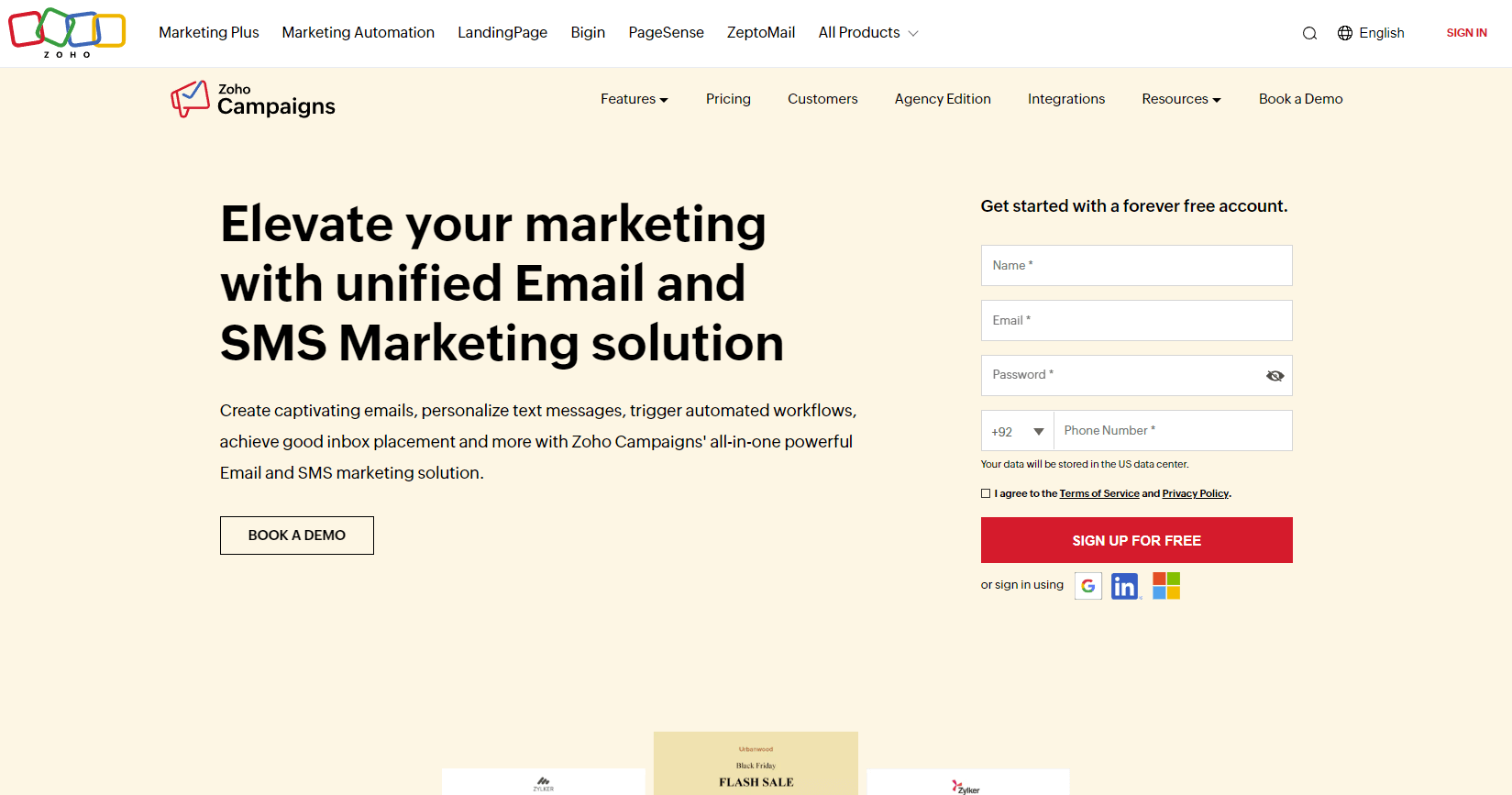
Zoho Campaigns is a subset of the Zoho suite and therefore integrates nicely with other Zoho products. Best suited for ecommerce businesses with simple workflow requirements or marketing agencies working with multiple clients.
A few of its features are sure to appeal to ecommerce users, like cart abandonment and purchase follow-up workflows. It also includes a mobile app, a drag-and-drop email builder, pre-designed layouts, analytics, and automation. Yet, advanced features like advanced segmentation and drag-and-drop workflows, are only available on the pricey ‘Professional’ plan.
Overall, Zoho Campaigns is worth considering, especially for professionals already using Zoho CRM or Zoho suite products. A learning curve is, however, associated with this tool.
Automation features are limited on lower-tier plans, with advanced workflows available only on the Professional plan.
Pros
- Multiple useful integration options
- Pre-built templates, workflows, and automation
Cons
- Workflow and automation setup can be confusing and difficult.
- Email deliverability has been reported to be lower than other options, especially if email authentication is not set up correctly.
- Loading times can be slow, especially for automated sequences that target thousands of subscribers.
Pricing
Free plan
Free for up to 2,000 contacts, 6,000 emails per month, and 5 users, but with limited ready-made templates.
Paid plans
- Standard: $3/month for 500 contacts and unlimited emails + basic segmentation and drag-and-drop workflows, access to all ready-to-use email templates, dedicated IP, SMS marketing, and 10 users.
- Professional: $4.50/month for everything from standard plan + advanced segmentation and, additional advanced features, + 20 users.
Omnisend — Best for multichannel marketing (email, SMS, web push)
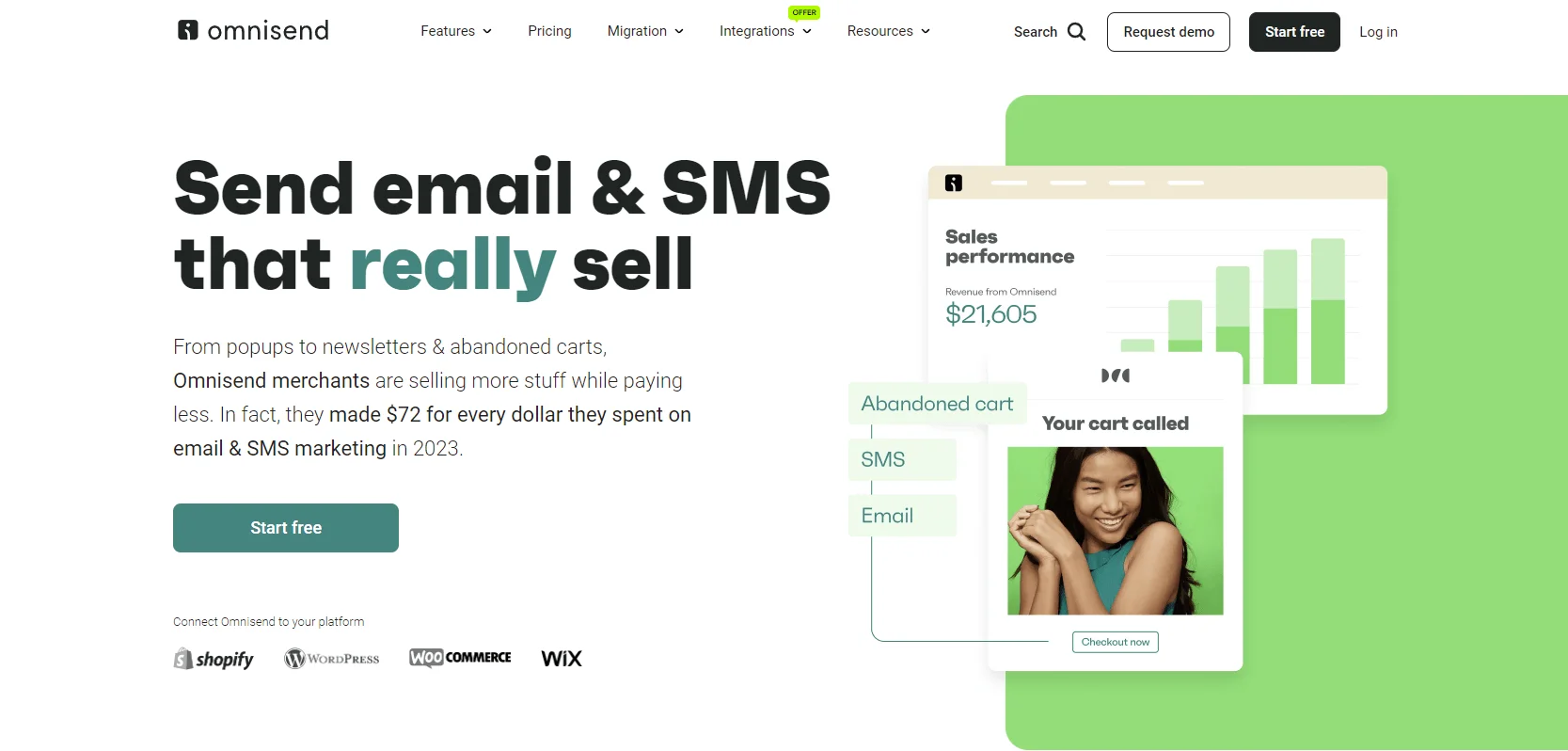
Omnisend is a tool for e-commerce businesses looking to streamline their email marketing efforts and drive more sales. Omnisend facilitates this by allowing users to combine email, SMS, web push notifications, and even Google or Facebook retargeting ads within the same workflow. This gives users exceptional flexibility to reach their customers through their preferred channels.
Users can then utilize Omnisend’s pre-designed email templates and a drag-and-drop email editor, advanced segmentation, customizable pop-ups, and more to build an effective campaign.
One standout feature, however, is its advanced automation capabilities. The drag-and-drop automation builder helps users create complex workflows relevant to their customers’ behavior. Apart from seamless integrations with e-commerce platforms and customer review management features for Shopify, Omnisend also features “shoppable emails” that import product listings directly from stores.
Omnisend provides pre-built e-commerce automation workflows such as abandoned cart recovery and post-purchase follow-ups.
Pros
- Sales, revenue tracking, and analytics.
- Helpful customer support.
Cons
- There are fewer design options compared to other tools.
- Advanced features, like automation workflows and omnichannel integrations, can be daunting for new users and small businesses to navigate.
- Some users have found Omnisend’s pricing structure a bit confusing.
Pricing
Free plan
Free for up to 250 contacts and 500 emails. The free plan includes access to all features but is limited by the number of contacts and monthly email sends.
Paid plans
- Standard: $11.2/month for 500 contacts, 6,000 emails, unlimited push notifications, 1,000 published Shopify reviews, and a one-time $1 in free SMS.
- Pro: $41.3/month for 2,500 contacts, unlimited emails, push notifications and published Shopify reviews, as well as advanced reporting with 3,933 free SMS/month.
Brevo — Best for SMS and email automation in one platform
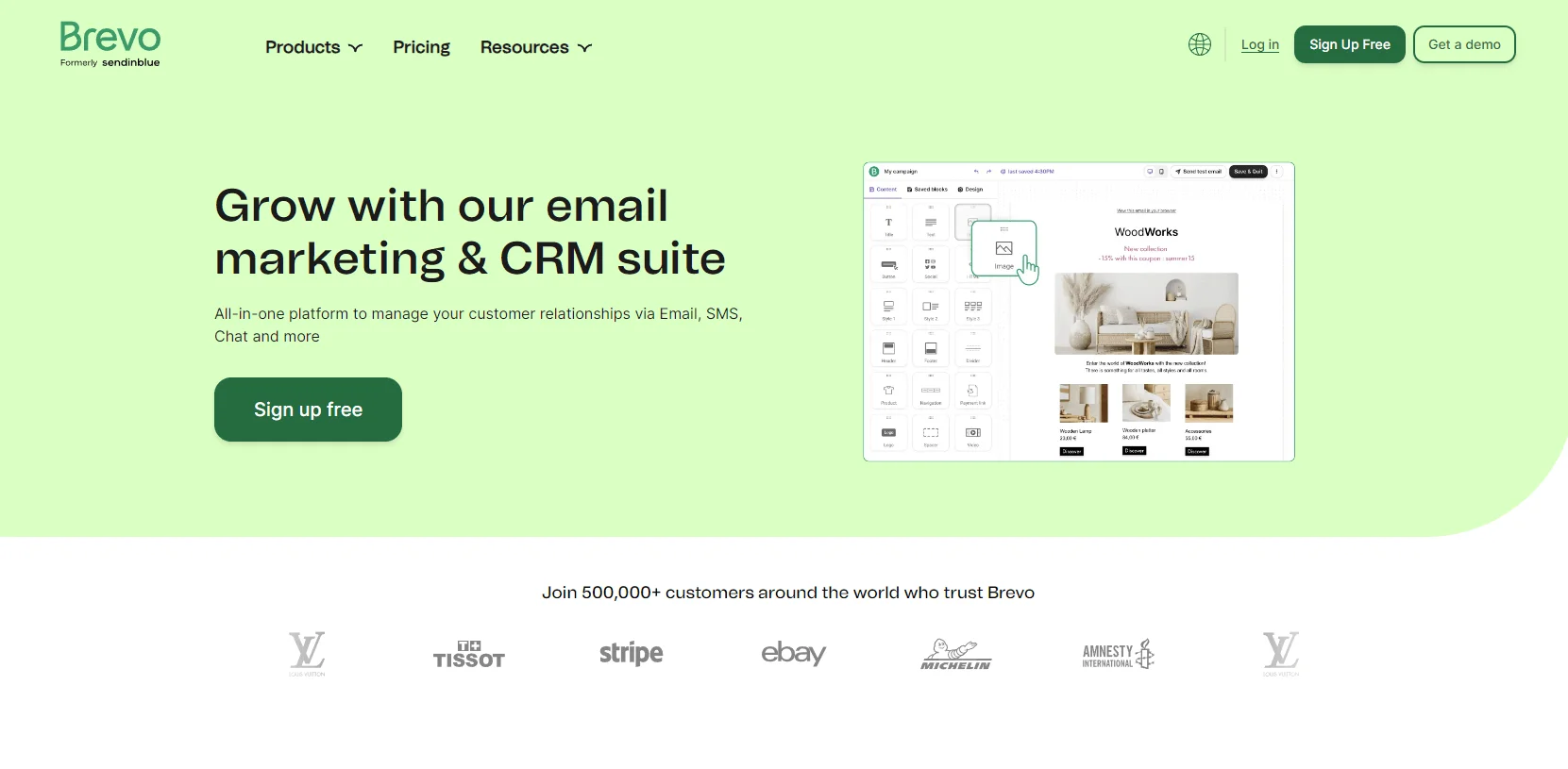
Brevo is a versatile email marketing and communication tool that is ideal for small to medium-sized businesses aiming to manage email marketing automation, SMS campaigns, WhatsApp messaging, and live chat all in one place.
With its user-friendly drag-and-drop email editor and wide selection of pre-built templates, users can quickly create professional-looking emails.
One of Brevo’s key strengths is its advanced automation capabilities and visual workflow editor. These capabilities help users create automated workflows based on audience behavior. That’s where the platform’s segmentation options tie in, too.
Brevo includes a built-in CRM, transactional email support (SMTP/API), and multichannel marketing features such as SMS, WhatsApp, and push notifications.
Pros
- Beginner-friendly setup and implementation
- In-depth visual workflow automation options
Cons
- The free plan is quite restrictive, only allowing 300 emails per day, with Brevo’s branding.
- Advanced features like predictive sending, landing pages, A/B testing, and phone support are only available for business plan users.
- The deliverability isn’t good, according to an independent study, Brevo had a spam rate of 27.4% compared to an industry benchmark of 14.8%.
Pricing
Free plan
The free plan offers 300 emails/day, customizable email templates, all the necessary infrastructure for transactional emails, and other basic features.
Paid plans
- Starter: $8.08/month for 500 contacts and 5,000 emails, with basic reporting, analytics, and more.
- Business: $16.17/month for up to 500 contacts and 5,000 emails, with marketing automation, advanced reporting and analytics, and more.
- Professional: $449/month for advanced analytics, AI-powered segmentation and recommendations, WhatsApp and multichannel campaigns, push notifications, and up to 10 users.
- Enterprise: Custom price for unlimited contacts, advanced integrations, and exclusive features.
Mailchimp — Best for an intuitive content creation suite
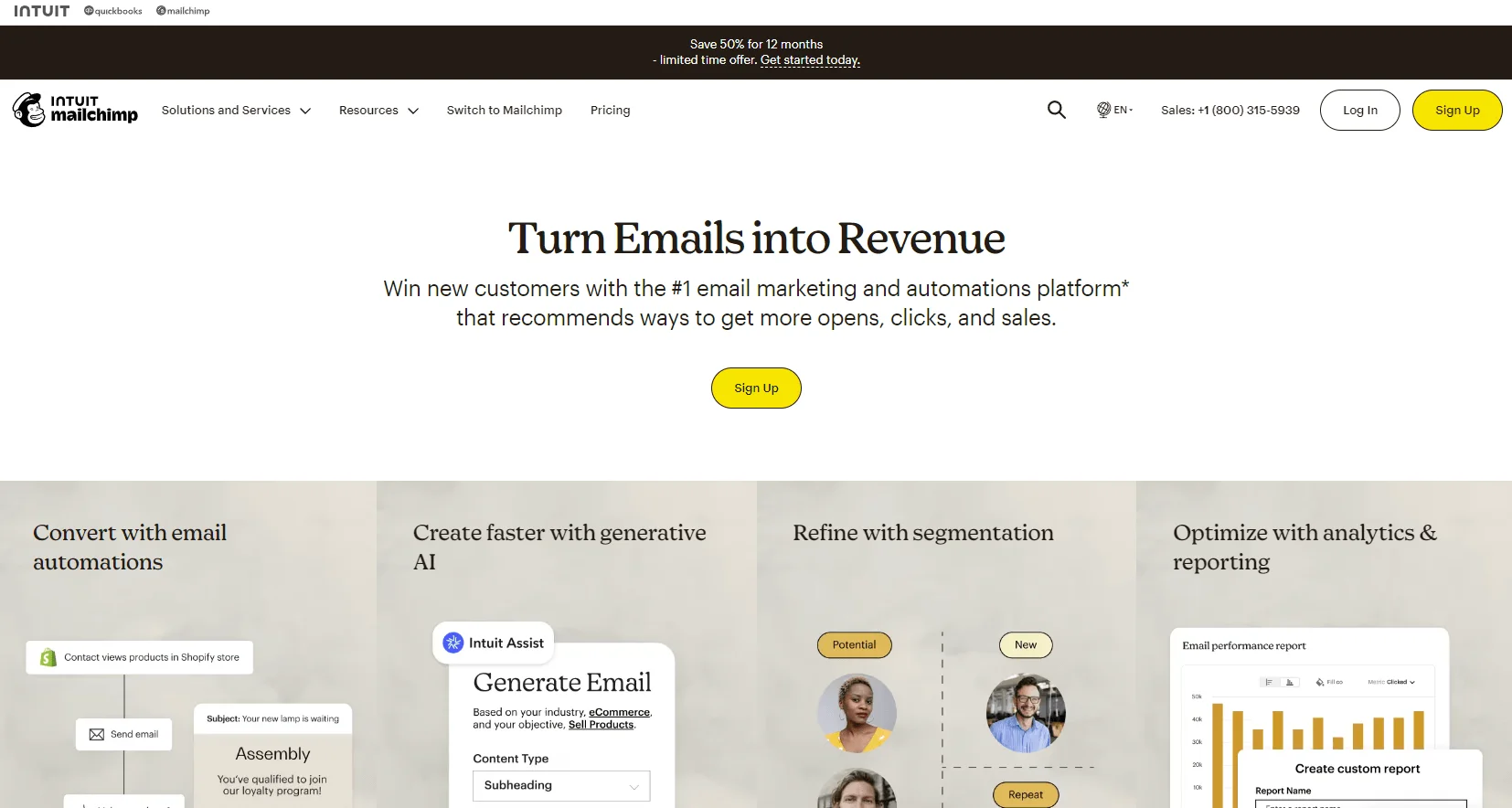
Mailchimp is one of the best-known email marketing tools widely used by businesses due to its powerful feature set. Mailchimp provides users with everything they need to manage email campaigns, automation, and audience engagement effectively.
There’s an advanced automation mode named Customer Journeys. It includes a library of pre-built sequences, along with a range of rules and actions for users to create simple or complex sequences for their audience.
Mailchimp also includes landing pages, forms, CRM-style audience management, and optional transactional email via add-ons.
Pros
- Hosting, landing page builder, website builder
- Advanced automation features
Cons
- Transactional emails (SMPT server) cost extra.
- Free and entry-level plans are relatively basic, with no custom-coded templates, advanced analytics, segmentation, dynamic content, and more.
- Due to the pricing model, Mailchimp’s pricing can escalate quickly as it charges for duplicate, unsubscribed, and inactive contacts too.
Pricing
Free plan
The free plan includes 250 contacts and 500 emails/month.
Paid plans
- Essentials: $10/month for 500 contacts and 5,000 (10x contacts) emails, limited reporting and analytics, 4 Journey points, and 3 seats.
- Standard: $16/month for 500 contacts and 6,000 (12x contacts) emails, advanced reporting, analytics, segmentation, and other features, 200 Journey points, and 3 seats.
- Premium: $280/month for 10,000 contacts and 150,000 (15x contacts) emails, advanced reporting, analytics, segmentation, and other features, 200 Journey points, and unlimited seats.
Constant Contact — Best for live event management and RSVP tools
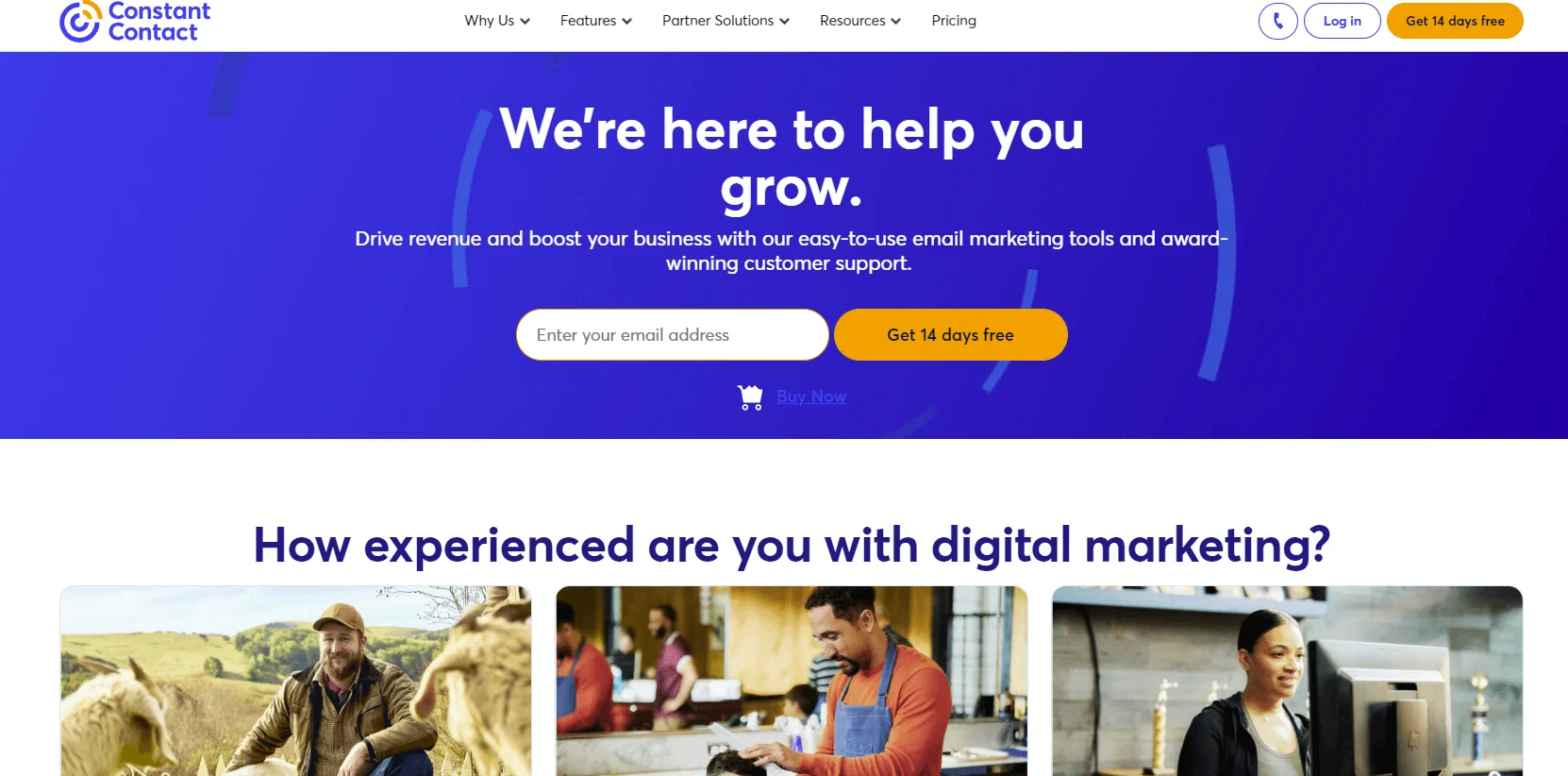
Constant Contact is an email marketing solution built for small businesses and beginners with features geared toward e-commerce and brand marketing.
These features help users build an audience, create eye-catching emails, and manage events effectively. It has pretty much all the essential features like email automation, segmentation, third-party app and service integrations, detailed reporting, analytics, and more.
One notable feature, however, is event management, which can be found in the lite plan.
This allows users to create and promote events, send invitations, track RSVPs, and manage registrations for webinars, workshops, and live events in one place.
Constant Contact also includes event management tools, social media posting, and advertising integrations.
Pros
- Over 5,000 integrations with filters by category
- Automated contact list segmentation based on engagement
Cons
- The automation workflows are insufficient.
- The template designs can feel a bit dated compared to newer alternatives.
- The pricing structure can quickly become steep for larger contact lists.
Pricing
Free plan
No free plan but you can sign up for a 30-day free trial period limited to 100 emails total.
Paid plans
- Lite: $12/month for 500 contacts, 5,000 emails (10x the number of contacts), basic reporting features, 1 automation template, and 1 user.
- Standard: $35/month for 500 contacts, 6,000 emails (12x the number of contacts), advanced reporting features, 3 automation templates, and 3 users.
- Premium: $80/month for 500 contacts, 12,000 emails (24x the number of contacts), advanced reporting features, unlimited automation templates, and unlimited users.
Conclusion
SendGrid is a reliable service with a good reputation but not devoid of pitfalls. However, its alternatives maintain a good balance between pricing, functionality, and support. The choice, however, depends on your specific requirements.
Take the time to evaluate each alternative thoroughly utilizing their free plan before committing so you can find an email marketing tool that aligns perfectly with your needs, goals, and budget.

Frequently Asked Questions (FAQs)
Why use SendGrid and not SMTP?
Unlike basic SMTP, SendGrid and its alternatives provide advanced features like email automation, analytics, deliverability optimization, and easy integration with apps. They allow businesses to send out high volumes of emails while having more control and insights than with traditional SMTP services.
What are the limitations of SendGrid?
SendGrid’s shortcomings include a steep learning curve, insufficient marketing automation features, and high pricing, which makes it unaffordable for small businesses and startups. Small businesses or users who prefer a simpler email marketing tool with more competitive pricing would be advised to look at SendGrid’s many alternatives and find something that fits their needs better.
Can I use SendGrid for free?
Yes, SendGrid offers a free plan. It allows up to 100 emails per day with basic features like analytics and deliverability optimization. Free plan restrictions and the lack of advanced features, however, make it suitable only for users with very basic email marketing needs.
 New and noteworthy on our blog