


Real estate agencies know that with the right email strategy, you can increase the number of sales and reduce the time it takes customers to make purchase decisions. So your email campaign should be perfect so that you don’t get lost among the competitors. Not sure where to start? Don’t worry, we’ve got you covered. In this article, we’ll share some of the best real estate newsletter ideas and examples to help get you started.
Quick answer
A real estate newsletter is a regular email that keeps buyers, sellers, homeowners, investors, and past clients engaged with useful local information. The best real estate newsletter ideas combine market updates, listings, neighborhood content, practical home advice, client stories, and clear next steps.
For stronger results, match each newsletter to the reader’s stage. First-time buyers need education and checklists, active buyers need relevant listings and open houses, sellers need pricing and preparation advice, and past clients need helpful reminders, community updates, and referral prompts.
Key takeaways
- Real estate newsletters are essential for engaging buyers, sellers, homeowners, investors, and past clients with valuable local information.
- Tailor newsletters to different audience segments: first-time buyers, active buyers, potential sellers, homeowners, investors, and past clients.
- Include a mix of content like market updates, listings, neighborhood information, practical home advice, client stories, and clear calls to action.
- Use newsletters to nurture leads, build local authority, drive traffic to listings, generate referrals, and keep former clients connected.
What is a real estate newsletter?
Real estate newsletters are a fantastic way to keep your network engaged by providing value. They are sent on a regular basis and can take the form of informative, educational, or entertaining content.
Real estate newsletters usually cover a variety of topics. Buying or selling houses, how-tos and advice for finding a new home, information about community resources and events, stories about local businesses, and agent experiences in the real estate business are all common subjects. By providing helpful information instead of selling directly, agents can build trust and relationships with their readers.
Why use real estate newsletters in your marketing campaign
Real estate decisions rarely happen after one interaction. A buyer may research neighborhoods for months, a seller may wait for the right season, and a past client may not need an agent again for years. Newsletters help your email marketing real estate campaign stay visible during that long cycle without turning every message into a hard sell.
A good newsletter can help you nurture leads who are not ready yet, build local authority, drive traffic to listings and open houses, generate referrals, and keep former clients connected to your brand. It also gives you a repeatable channel for sharing useful market knowledge instead of relying only on social posts or one-off follow-ups.
The key is balance. If every email is only a listing alert, subscribers may tune out. Mix listings with education, neighborhood stories, homeowner tips, market context, and proof that you understand the local community.
Use your newsletter as a relationship-building channel, not just a property broadcast. The more relevant your content is to each reader’s location, budget, timeline, and life stage, the easier it is to earn replies, referrals, and future conversations.
Before you choose topics, decide who the newsletter is for. The same idea can work differently for buyers, sellers, homeowners, and past clients, so use this quick map to match content to intent.
| Audience segment | Newsletter goal | Best content ideas | Example CTA |
| First-time buyers | Educate and reduce anxiety | Buying process guides, financing basics, inspection tips, neighborhood explainers | Download the buyer checklist |
| Active buyers | Help them act quickly | New listings, open houses, price changes, saved-search updates | Book a showing |
| Potential sellers | Build confidence in timing and price | Market snapshots, seller prep checklists, valuation tips, staging advice | Request a home value estimate |
| Homeowners | Stay useful between transactions | Maintenance reminders, remodeling ROI, local services, tax-season reminders | See this month’s homeowner tips |
| Investors and landlords | Support portfolio decisions | Rental trends, cap-rate context, neighborhood demand, regulation updates | Review investment opportunities |
| Past clients and referral contacts | Stay top of mind | Community news, client stories, anniversary notes, referral prompts | Refer a friend |
Top real estate newsletter ideas (with examples)
Coming up with fresh ideas for your newsletter can be a challenge. That’s why we’ve put together this list of top real estate newsletter ideas (with examples) to help you get started.
Events newsletters
Your real estate newsletter doesn’t have to be all about properties and listings. Mix things up by including an event or two in your newsletter each month. This could be an upcoming open house, a community event, or even something as simple as a holiday party at your office. Not only will this help keep your readers engaged, but it will also help them get to know you and your team better.
Local events are a great way to get involved in your community and connect with potential leads. You can easily create a community event newsletter and start promoting the event by partnering with or sponsoring the event organizer. This is also a valuable networking opportunity to meet other local professionals and develop a co-marketing plan. Co-marketing with other businesses is an extremely viable yet underutilized business strategy that can be beneficial for all parties involved.
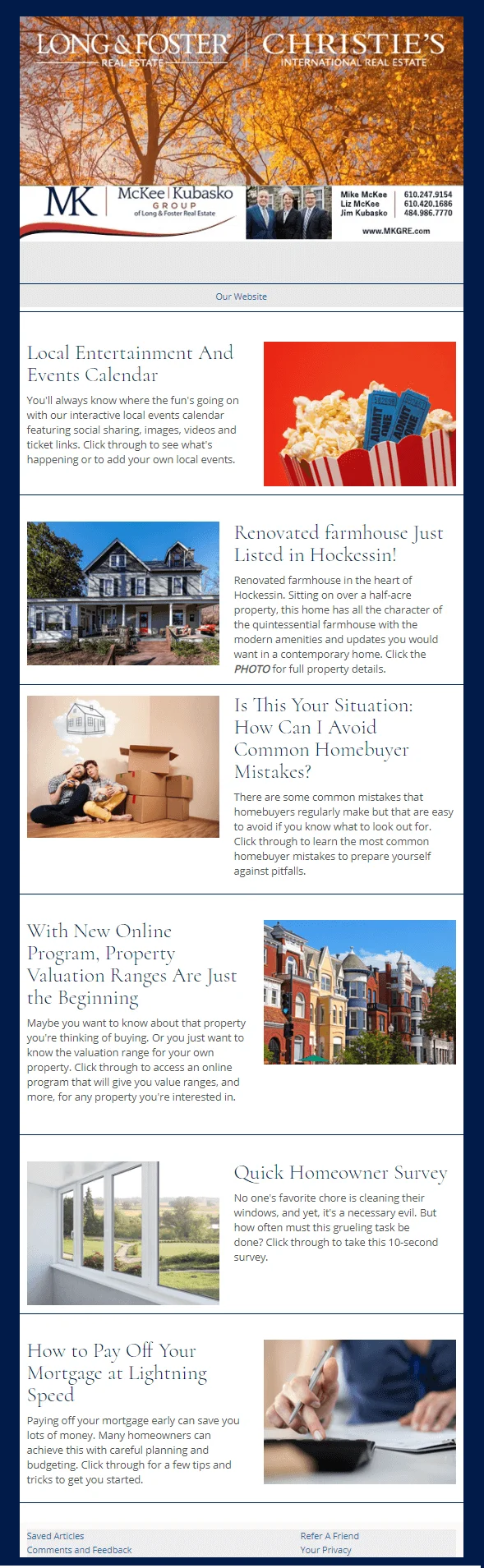
In the example below, the company just begins its email with local events options:
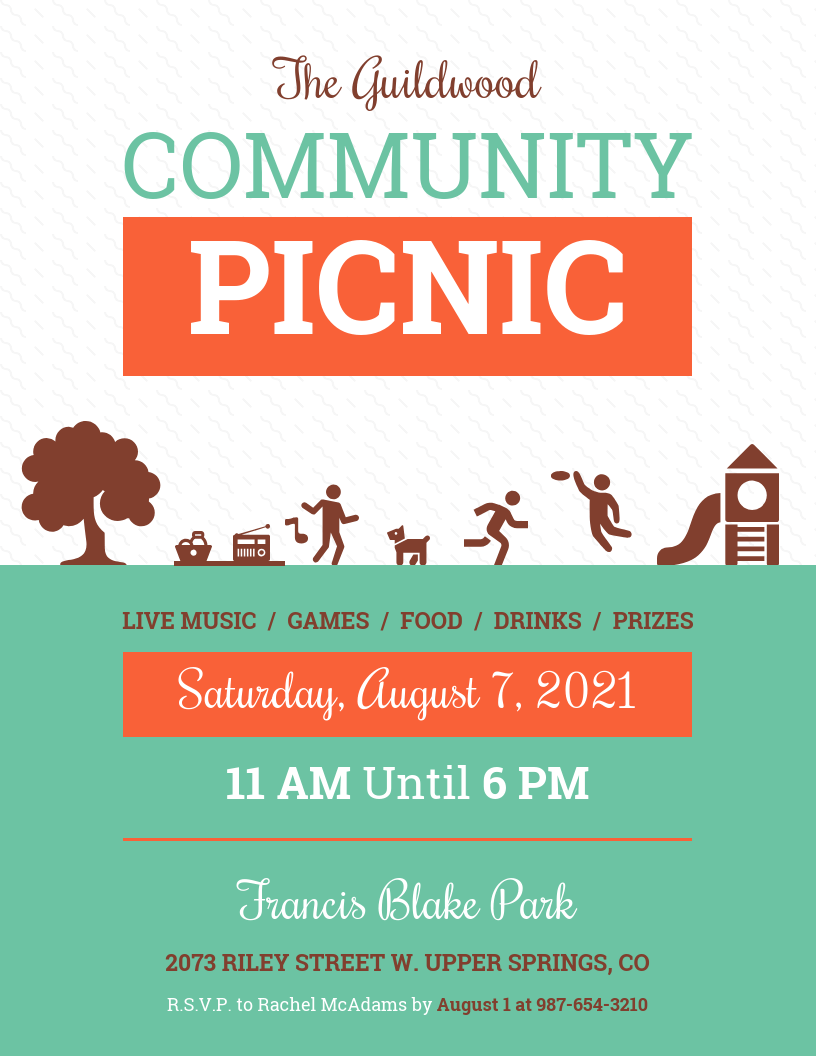
The following message is another example of an events newsletter:
Market updates
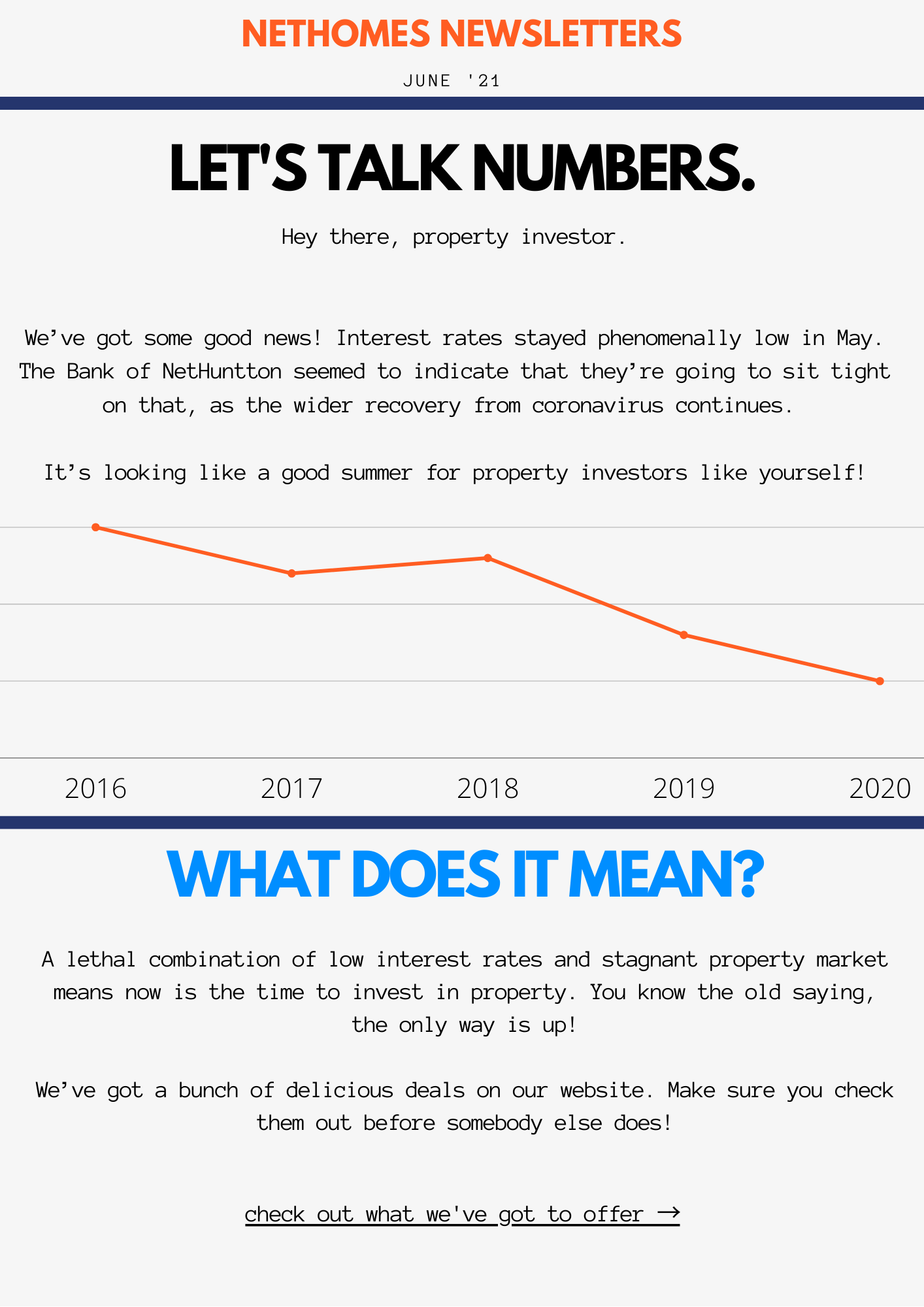
Let your real estate newsletter include some kind of market update. This could be a brief overview of the housing market in your area or a more specific update on the prices of properties in certain neighborhoods. You could also highlight any changes or trends that you’re seeing in the market. This could also be changes to mortgage rates, new laws or regulations, etc. You can share your thoughts and analysis on these developments.
Advice and tips
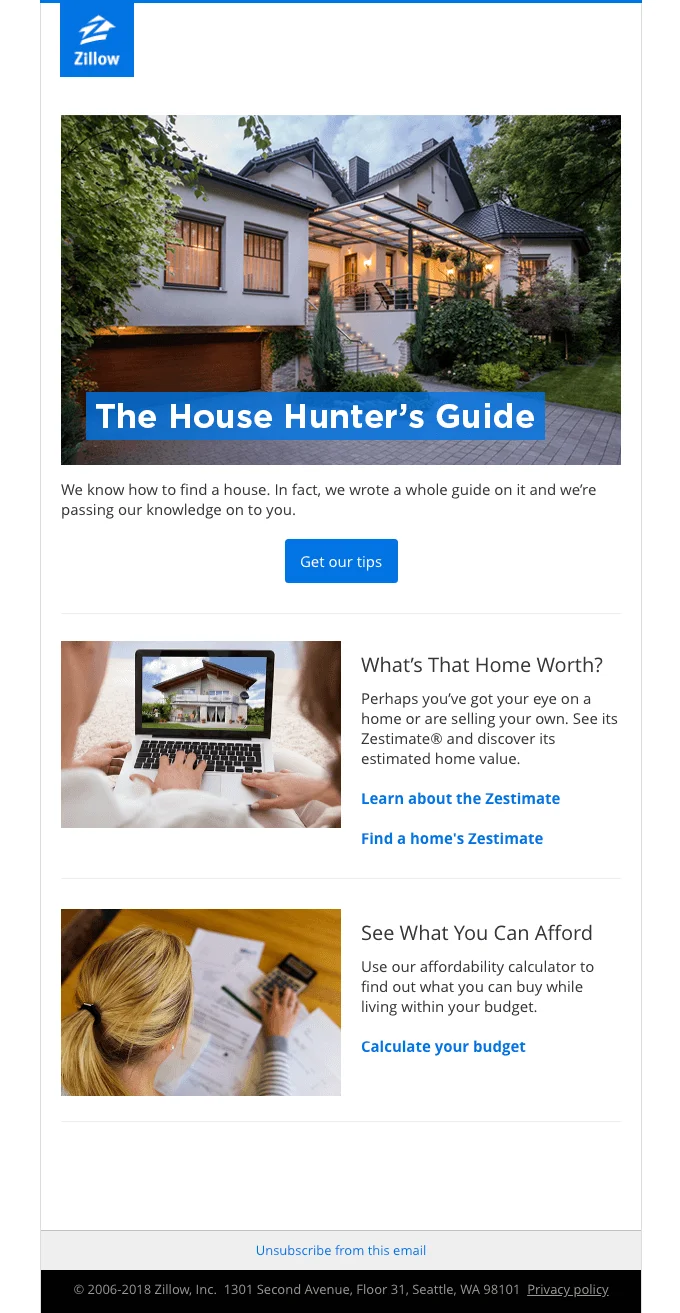
Your readers want advice and tips that will make their lives easier. Why not give it to them in a weekly or monthly email newsletter? You can home in on topics like staging homes to sell, decorating inexpensively, or finding the most idyllic hood for a lifestyle of homeowners.
You can also use this type of newsletter to show off your real estate knowledge. Share your tips for buying or selling a home, negotiating the best price, or getting the most out of your home inspection.
In this way, you can show that you are not only interested in selling, but also in providing users with the necessary knowledge.
An email from Zillow is a great example of such an informative newsletter:
Holidays celebration
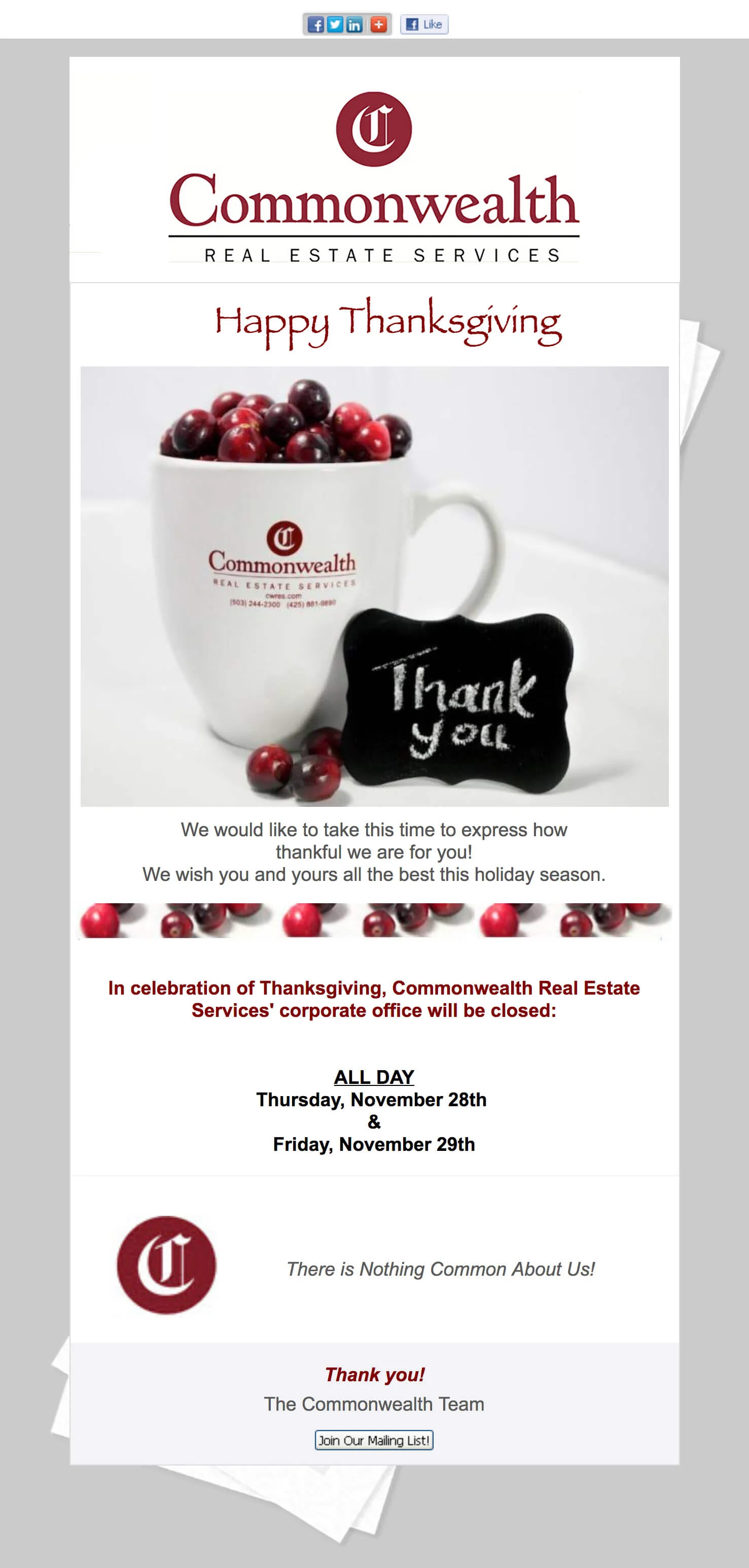
New and unique ideas for celebrating holidays are always a fun way to engage your community (and spark conversation with the more passive leads in your contact list).
Make sure your subscribers know you’re thinking of them during holidays by sending a holiday-themed newsletter. You can wish them a happy holiday season and let them know about any special deals or promotions you’re running. You can also include information about upcoming events or open houses in your holiday email marketing campaign.
Or you might also send a congratulatory note to your subscribers and let them know about the adjustments in your office hours.
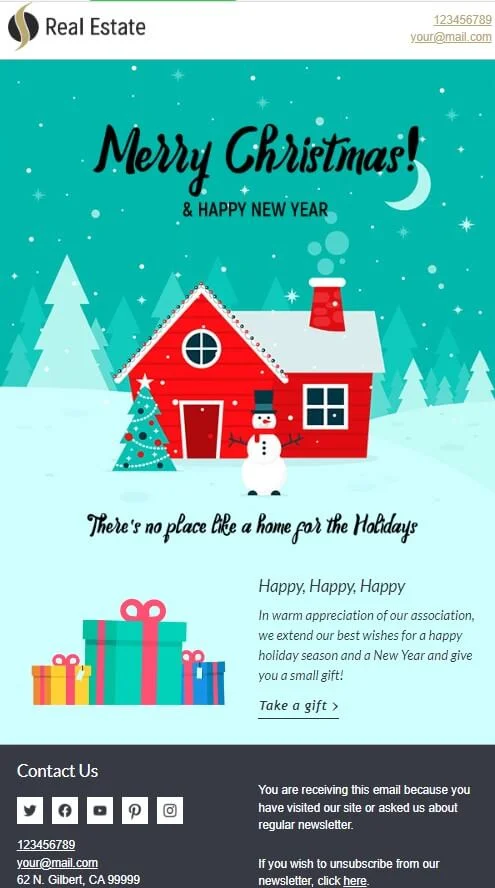
Send a heartfelt message of congratulations, along with a present as a sign that you value your consumers.
News and announcements
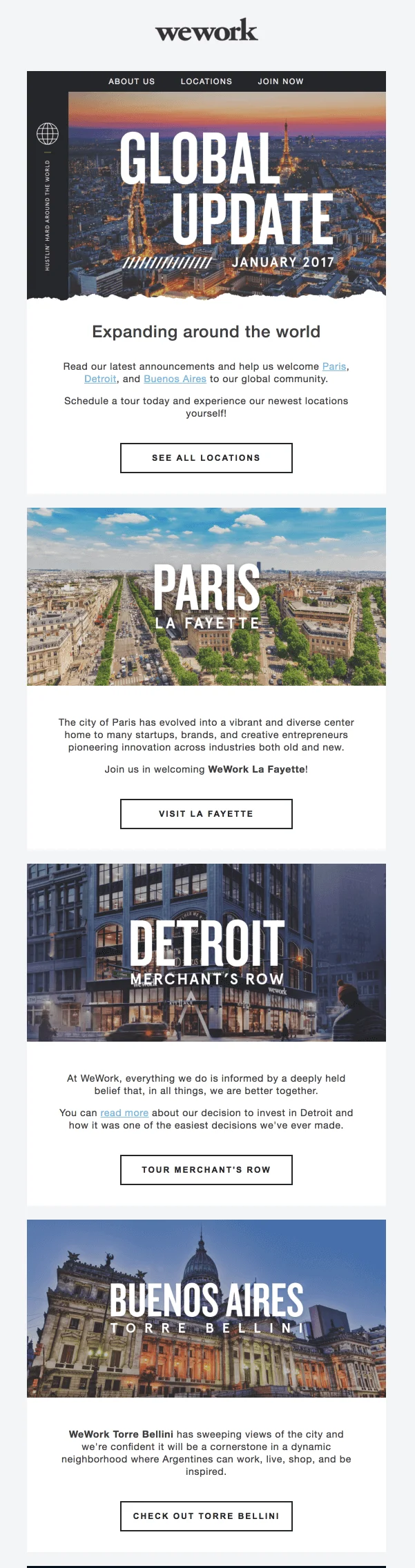
Keep your finger on the pulse of the local business scene with this weekly newsletter. Highlight recent news, like new businesses opening in town or expansions that are happening. Announce events in the life of your company.
Use this kind of newsletter as an opportunity to discuss topics such as transport infrastructure or local attractions which can all affect real estate prices. Keep your customers informed on everything that could influence the market.
WeWork in its email announces the new locations in which it sells properties:
Quiz newsletters
You can increase engagement by adding a quiz to your real estate newsletter. People love taking quizzes, and they’re considered to be effective tools to get people interested in your content.
Some ideas for quiz email topics include:
- What type of homebuyer are you?
- How much do you know about the homebuying process?
- What kind of home would you be most interested in?
A good quiz can be both informative and entertaining, giving the reader a chance to learn something new while also testing their knowledge on a given subject.
You can also use quizzes as a way to gather data about your subscribers. This information can be used to segment your list and send more targeted content. For example, if you have a quiz about what type of homebuyer someone is, you can use that information to send them more relevant information about the homes available in their area.
Below is a typical example of a message with quiz elements that will allow you to learn a little more about a member of the community.
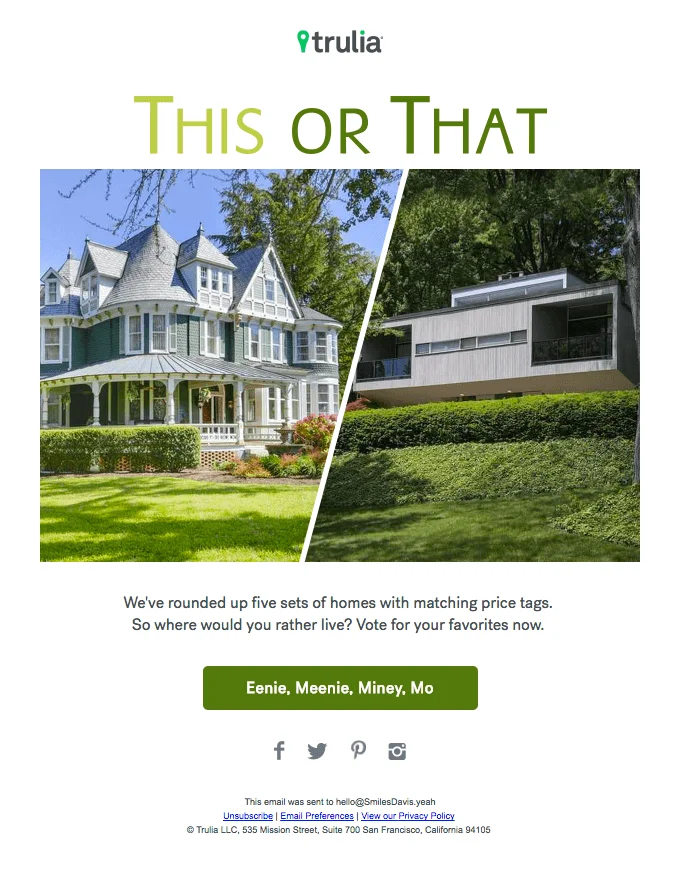
To generate your own quiz or survey, you can use pre-made templates. Also, use quizzes to increase leads on your website with a signup form, not just in newsletters.
Listing alerts
Use listing alerts which notify subscribers whenever a new property that meets their criteria is listed. This way, they’ll always be the first to know about new homes on the market.
To ensure that your listing alerts are relevant to your subscribers, you can segment your list by criteria like location, price range, and type of property. That way, they’ll only receive alerts for homes that fit their needs.
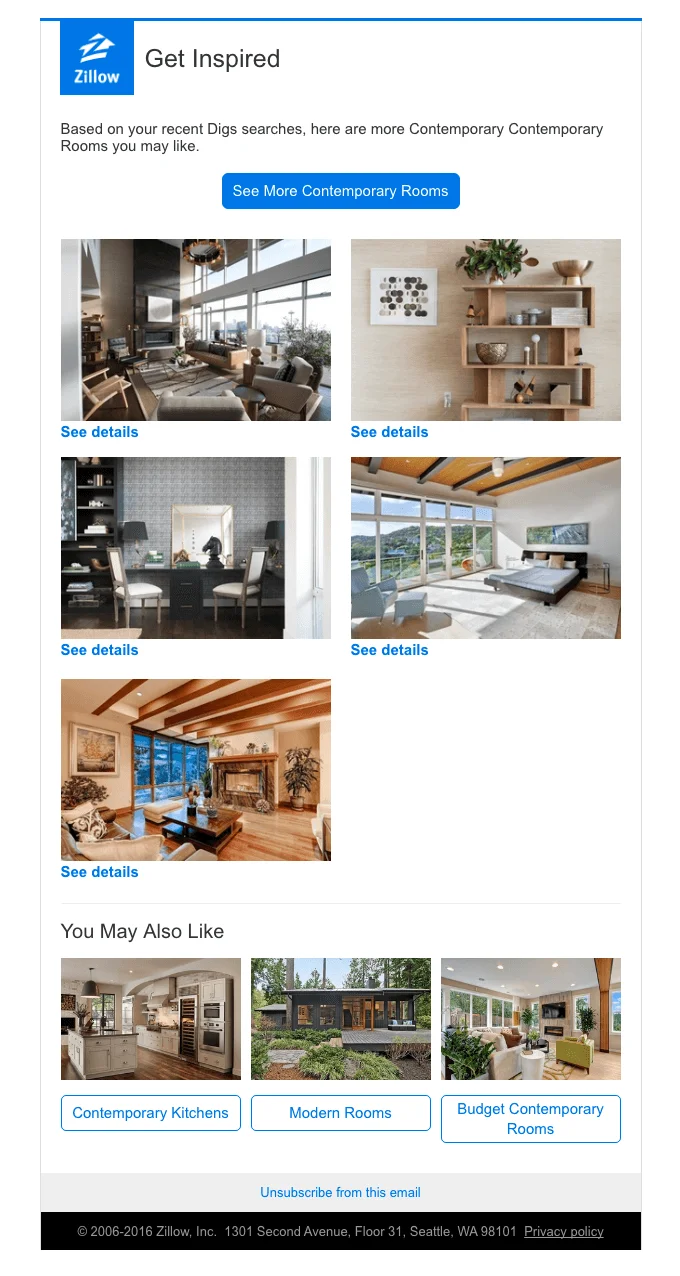
The message below contains quiz elements so you can learn more about a member of your community.
Contest newsletters
Although it may be tempting to just feature all homes you have for sale all the time, this isn’t the most effective way to engage leads who don’t have an immediate intention to buy or sell. To keep passive leads engaged, try thinking outside the box for ideas that will capture their attention.
Get your customers engaged by hosting a contest where they can win a prize for submitting the best real estate-themed photo or video. Make sure to promote the contest well in advance so that people have time to submit their entries.
You could also host a contest where people have to guess the sale price of a home you have listed, with the winner receiving a gift card or other prize.
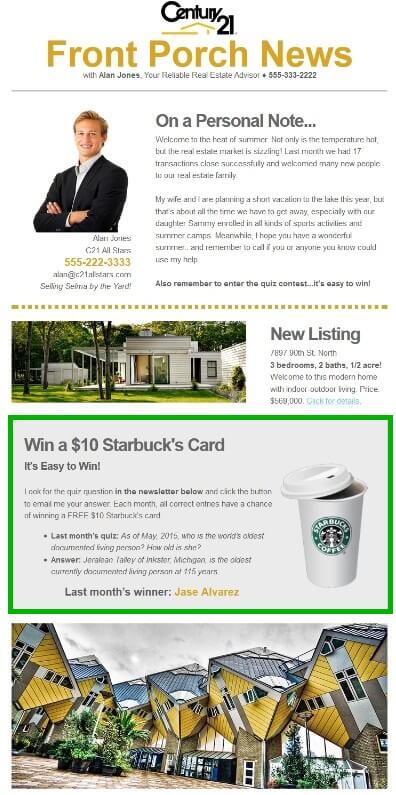
The message below invites you to participate in a contest in the form of a quiz. By answering the question correctly, you increase your chances of winning.
Seasonal newsletter
Consider sending out email newsletters that coincide with the changing seasons. For example, a summer newsletter could feature tips on how to beat the heat during home showings, while a winter newsletter could offer advice on staying warm during open houses.
Topic ideas for your newsletters:
- Spring: Home buying tips, spring cleaning ideas, ways to spruce up your yard.
- Summer: Outdoor entertaining ideas, vacation rental tips, energy-saving tips.
- Fall: Home maintenance tips, preparing your home for winter, decorating for the holidays.
- Winter: Tips for staying cozy at home, winter travel ideas, New Year’s resolutions.
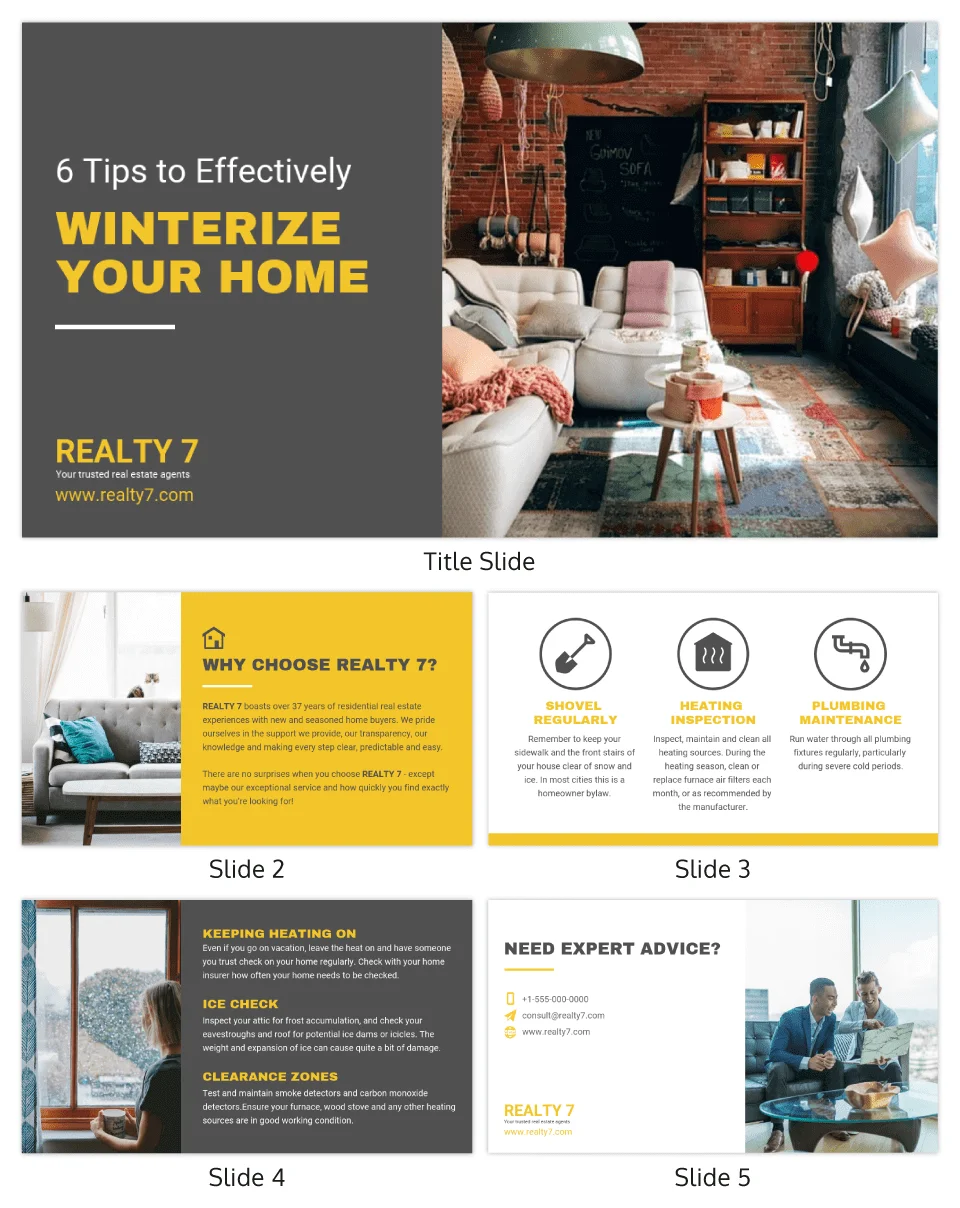
Look at the template below to get an idea of what a seasonal newsletter might look like:
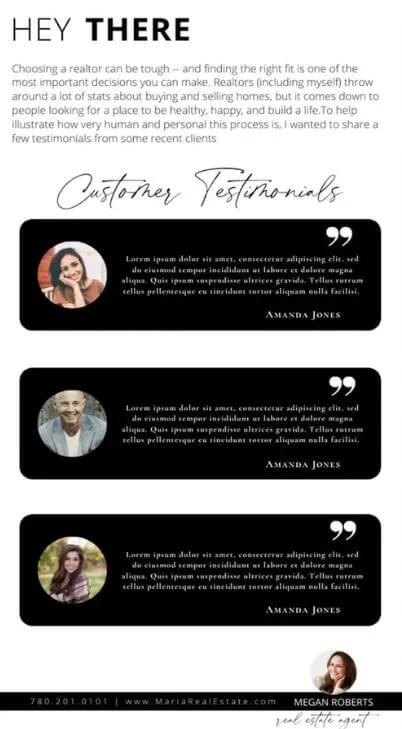
Customer success stories
Customer success stories are a powerful way to show off your product or service in action and convince potential customers that you’re the right choice for them. These types of emails can be particularly effective for real estate businesses since people considering buying or selling a home are often looking for reassurance that they’re making the right decision.
Your customers are your best advocates. When they’re happy with your services, they’re more than willing to tell others about their great experience. Customer success stories are the perfect way to show off your happy customers and promote your business at the same time.
If you’re not sure how to get started with storytelling in email marketing, here is an idea for your next email campaign:
Many subscribers will read your newsletter on a phone, so make every issue easy to scan on a small screen. Use short paragraphs, clear section breaks, tappable buttons, and images that still make sense when scaled down.
More real estate newsletter ideas to try
If your regular newsletter starts to feel repetitive, rotate in a few additional formats:
- Neighborhood spotlight: feature a local area with commute notes, schools, parks, restaurants, price trends, and the type of buyer it fits.
- Mortgage or rate explainer: translate market news into practical advice, such as how a rate change affects monthly payments or buying power.
- Seller preparation checklist: share what to clean, repair, photograph, stage, and decide before listing a property.
- Home maintenance tips: send seasonal reminders for HVAC checks, roof inspections, landscaping, energy savings, or storm preparation.
- Open house recap: summarize buyer questions, common objections, and what the activity says about local demand.
- Local market myth-busting: answer common assumptions about pricing, timing, bidding wars, or whether buyers should wait.
How often should you send a real estate newsletter?
Most real estate businesses can start with a monthly newsletter and add extra sends for high-intent segments. Weekly emails can work when you have enough local inventory, market movement, or community content. Biweekly newsletters are a good middle ground for agents who want consistent contact without forcing weak topics.
A simple monthly rhythm might look like this:
- Week 1: local market update or neighborhood snapshot.
- Week 2: listing alert, open house invitation, or buyer opportunity.
- Week 3: homeowner, seller, or financing tip.
- Week 4: community news, client story, or referral reminder.
Adjust the cadence by audience. Active buyers and sellers may need more frequent, personalized updates, while past clients may prefer a lighter monthly or quarterly digest.
Real estate newsletter template structure
You do not need to start from a blank page every time. Use a repeatable structure and change the main topic based on the audience segment.
- Subject line angle: make the benefit clear, such as a market shift, new listing, checklist, or local update.
- Opening hook: explain why this email matters now.
- Local insight: add a neighborhood, pricing, inventory, or community detail.
- Main content block: include the listing, tip, checklist, event, or story.
- Proof point: add a client example, recent result, market observation, or useful image.
- CTA: ask for one clear action, such as booking a call, viewing a listing, requesting a valuation, or replying with preferences.
- Footer prompt: make it easy to ask a question, update preferences, or refer a friend.
Mini template outlines
Buyer newsletter: start with a current buying challenge, show one local insight, highlight relevant listings or open houses, then invite readers to share their budget and must-have features.
Seller newsletter: lead with a market update, explain what it means for pricing or timing, add a preparation checklist, then offer a home value estimate.
Past-client newsletter: share a community update or homeowner tip, include a short success story, then make referrals easy with a simple reply-based CTA.

Real estate newsletter best practices
- Segment buyers and sellers. A first-time buyer, a luxury seller, and a past client should not always receive the same message.
- Make it local. Neighborhood context, school calendars, events, commute changes, and local market shifts make your newsletter harder to replace with generic advice.
- Use strong visuals. Property photos, neighborhood images, charts, and simple checklists can make the email easier to scan.
- Keep CTAs specific. Use one clear next step, such as “Book a showing,” “Get a home value estimate,” or “Reply with your preferred neighborhood.”
- Design for mobile. Many subscribers will read quickly on a phone, so keep paragraphs short and make buttons easy to tap.
- Track engagement. Watch opens, clicks, replies, unsubscribes, and listing inquiries to learn which topics actually move leads forward.
- Avoid listing-only emails. Listings are useful, but trust grows faster when you also send education, local context, and helpful advice.
Conclusion
For a real estate agent, email newsletters are a great way to keep in touch with clients.
Some email newsletter ideas include sharing your real estate knowledge, promoting holiday deals, announcing company news and events, hosting contests, and featuring customer success stories. Seasonal email newsletters are also a great way to stay top-of-mind with your clients and let them know you’re always thinking of them.
No matter what type of email newsletter you send, make sure it is relevant and engaging so that your clients will always look forward to hearing from you. If you’re looking for a way to increase engagement and sales, real estate newsletters in your email marketing funnels are a great option.
 New and noteworthy on our blog
