


Key takeaways
- Storytelling in email marketing enhances campaigns by making them more memorable, emotional, and persuasive.
- Storytelling involves creating a narrative structure in emails to engage readers and connect with them on a deeper level.
- Key elements of a successful storytelling email series include a hero, a story behind the hero, the journey, and a special gift to the reader.
- Types of stories to include in email marketing campaigns are origin stories, product launches, success stories, interviews, and behind-the-scenes stories.
Email marketing can promote products, educate subscribers, nurture leads, and build brand awareness. Storytelling gives those campaigns a narrative structure, so the message feels more memorable than a simple list of features or offers.
In this article, we’ll explain what storytelling in email marketing is, why it works, which story types brands can use, and how to structure a story-driven email without losing sight of the campaign goal.
Quick answer
Storytelling in email marketing means using a narrative structure to make a campaign more memorable, emotional, and persuasive. Instead of listing product features, a storytelling email introduces a character, problem, conflict, journey, and resolution, then connects that story to a useful next step for the subscriber.
What exactly is storytelling?
In simple words, storytelling is a process of putting useful info in a narrative form to communicate something to your audience.
Storytelling is not just about writing longer copy or using decorative language. It is a content marketing technique that connects a real audience problem to a message, offer, or action through a narrative. The story should be useful and engaging at the same time: readers need to understand what happened, why it matters, and what to do next. It works for companies of any size, especially when planning an email marketing strategy.
In a great story, each component matters: design, copy, pacing, and the call to action should all support the same narrative.
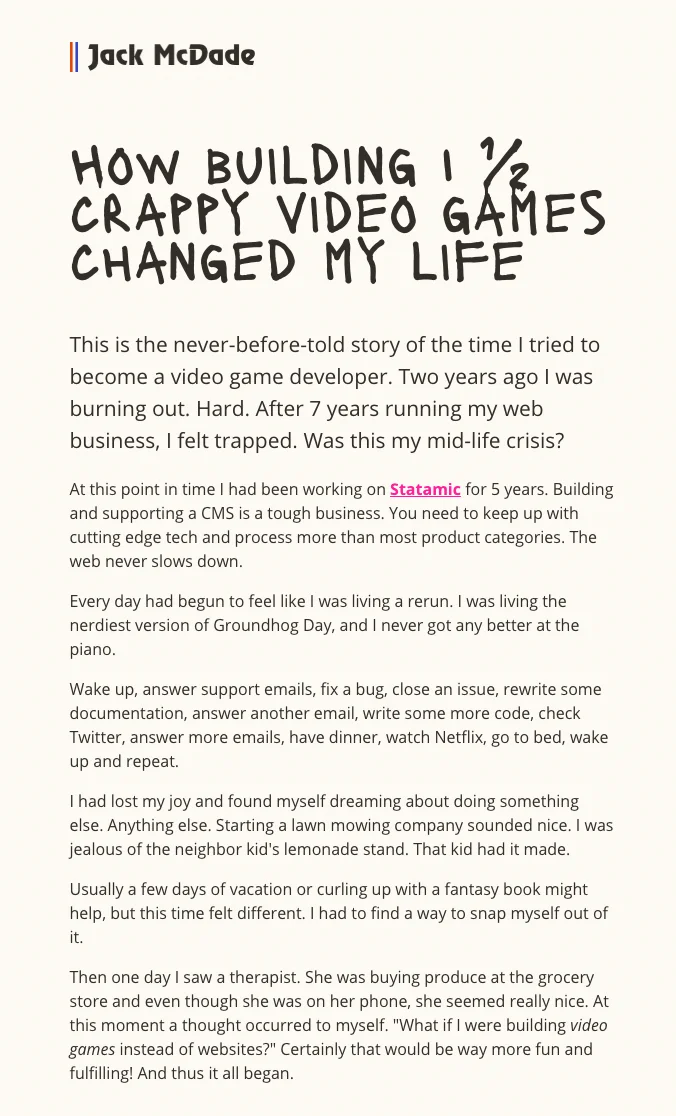
This is an abstract from newsletters by Jack McDade. The first thing we see is a catchy header, written in an unusual font. Then, from the very beginning, the author gets us emotionally involved telling a problem he had faced several years ago. That’s exactly what storytelling is about: creating a connection between the author and the reader.
Why use storytelling in email marketing?
Inboxes are crowded, and subscribers often skim past campaigns that look like ordinary promotions. Storytelling helps because a narrative gives readers a reason to keep reading and makes the message easier to remember. With the help of storytelling, you’ll be able to:
- Create connections with your audience. When people read an exciting story, they feel a better connection with the brand standing behind it. The stories awaken emotions, which leads to a growth of sales. Moreover, investigations say that facts are approximately 22 times more likely to be remembered if they are part of a story.
- Make an impact on the readers. If a message your brand is trying to convey is wrapped into a story that keeps the reader hooked, it is likely to be more memorable. Stories make a bigger impact compared to standard email.
- Use a holistic approach instead of a single-vector strategy. If you send promotional emails only, they may be too salesy. Otherwise, educational emails may lack information about your products or services. But stories have all that.
Here are the other reasons to integrate storytelling into your email marketing strategy:
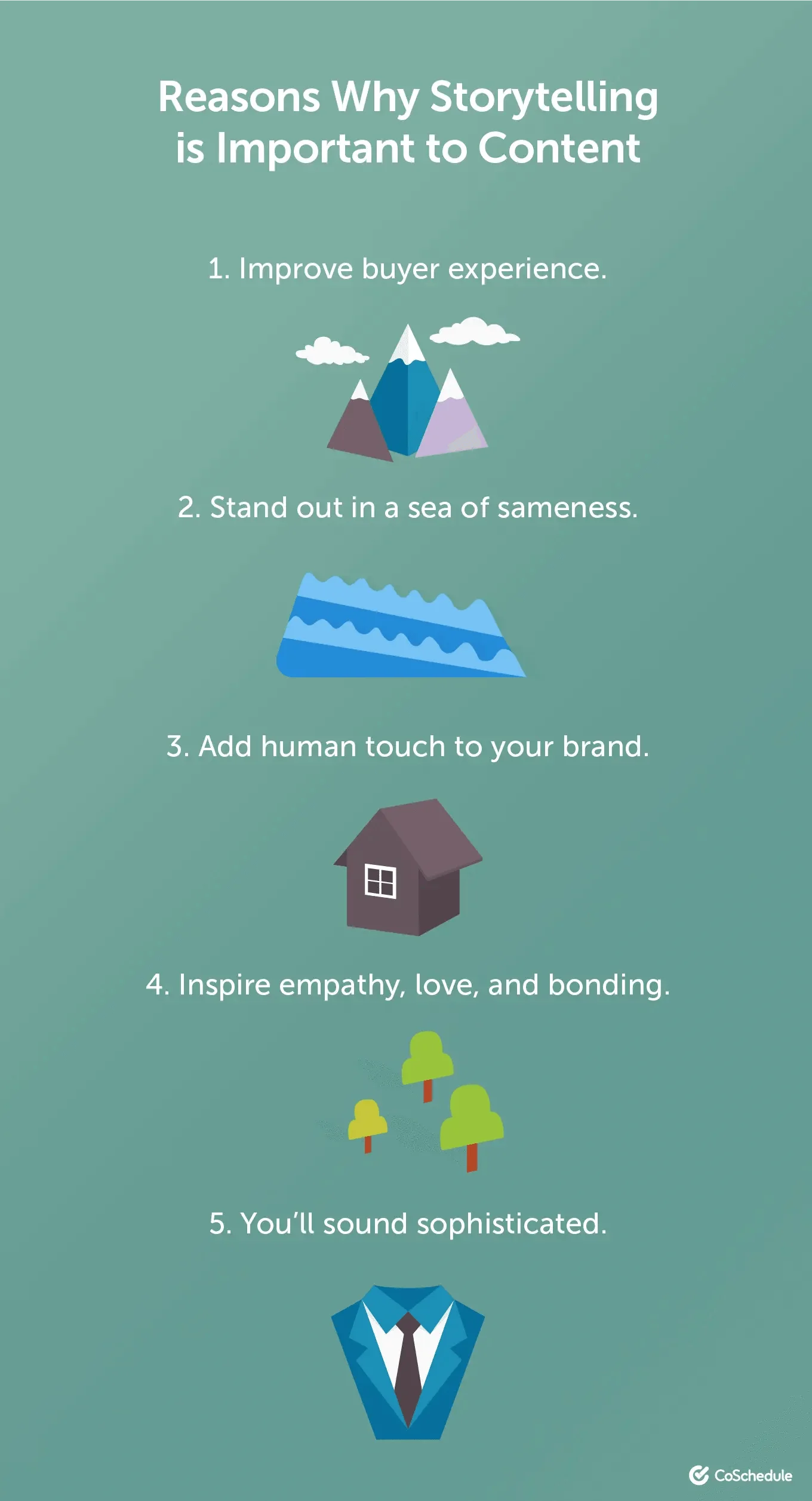
So, if you are looking for a proven technique to improve your email marketing, and are willing to stand out from competitors, storytelling may become a great help.
The essential elements of a storytelling email series
Let’s observe the most essential elements of a successful storytelling campaign. These are a hero, a story behind this hero, the journey, and, in the end, a special gift to a reader.
Before choosing a mascot, plot, or example format, use a simple structure for the email itself: identify the subscriber’s problem, introduce a relatable hero or point of view, show the conflict or obstacle, describe the change that happens, connect the resolution to your offer, and end with one clear CTA. Keep the story short enough for email: the narrative should support the message, not bury it.
A hero
Creating a mascot is a frequent storytelling practice.
A mascot is a central figure: it engages the reader and helps to create a story that nurtures, converts, and sells. The best hero is the one that is related to your company and products and can be easily associated with them.
When you create a hero, think of the buyer personas and base your mascot’s characteristics on them. Add some details to make the hero more catchy, vivid, and unique, and here you are!
A well-designed portrait of a hero stimulates our imagination and that’s already a good start for your storytelling email marketing campaign.
A story behind the hero
When you’re done with the hero, it’s time to create a story behind them. Base the story on the pains and desires of your hero, i.e. your buyer persona. You are probably aware of these points: you’ve highlighted them in numerous marketing campaigns before, so you should have no problems creating a story where the hero solves them all.
The goal of the story is the following: showing that your product or service can solve the problem of the hero or at least provide some help. Through a story, you describe how your product or service can make the buyer’s life better and easier.
How to make your story even more exciting?
- Raise the stakes. Get your hero to take serious risks. You can even show that their life is in danger.
- Surprise your readers. The more unexpected though credible the plot twists are, the more the reader is involved in your story.
- Show transformations. A good story changes the life of the hero, their character, and values.
The journey
It’s time to solve numerous problems your hero has to face. And here comes your company! Show that your hero has found a solution by discovering your products or services.
Avoid direct advertising and continue telling your story, adding more and more details. A good trick is to mention that a mascot has tried something else, but it didn’t help. Dive deeper into the details –– the more realistic the figures and facts are, the better your story converts.
A special gift to a reader
When the story is over, treat the readers who have come to the end with some special offers. For example, it can be a welcome discount, or a lead magnet like a free book, guide, or checklist.
Types of stories to include in your campaign
There are different types of stories to use in your email marketing campaigns. Using them will make your company more memorable and increase your conversion rates. Let’s observe these types.
Origin stories
That’s the most obvious storytelling technique that helps to humanize your brand. It is perfectly suitable for welcome emails because new subscribers are still learning who you are. Show what drove you to create the company and the brand. This story will also help to show your morals and values, and differentiate your company from competitors.
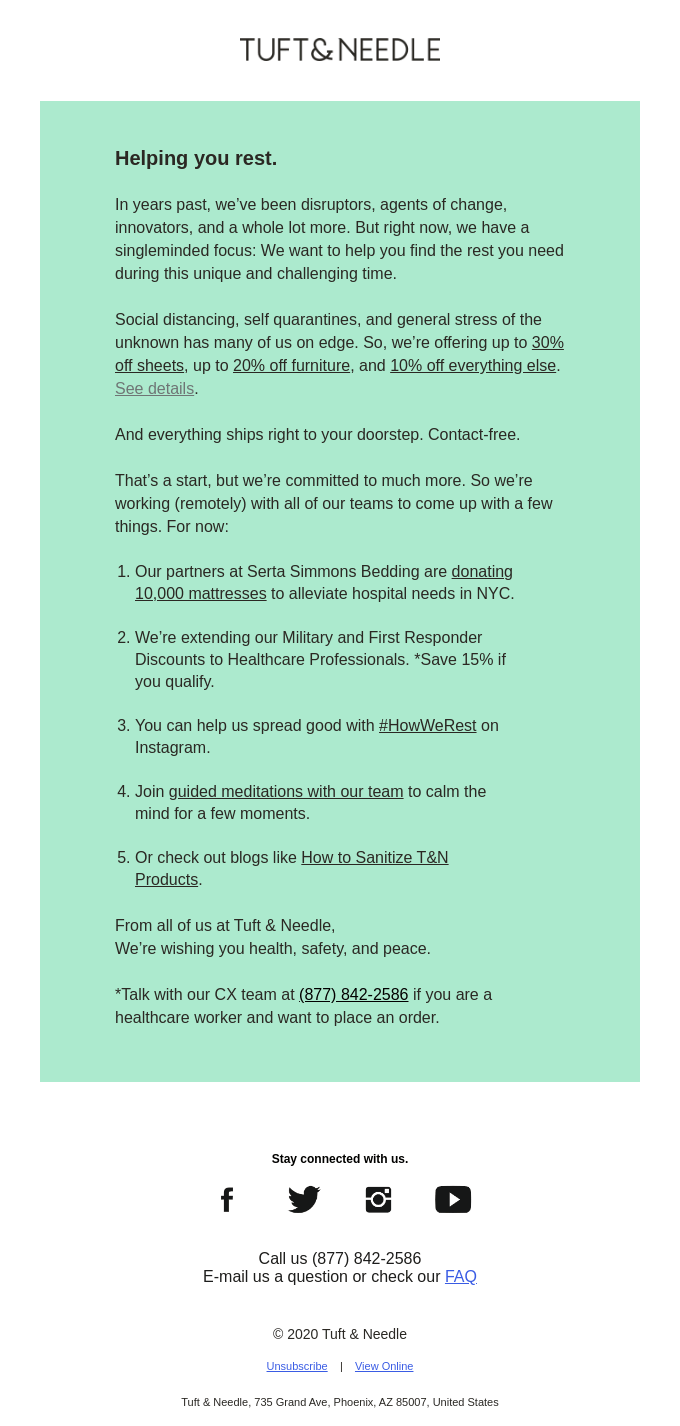
In this example, Tuft & Needle doesn’t tell the story of the company, but focuses on its values and philosophy, highlighting the unique mission of the brand: helping people overcome stress and feel relief.
Product launches
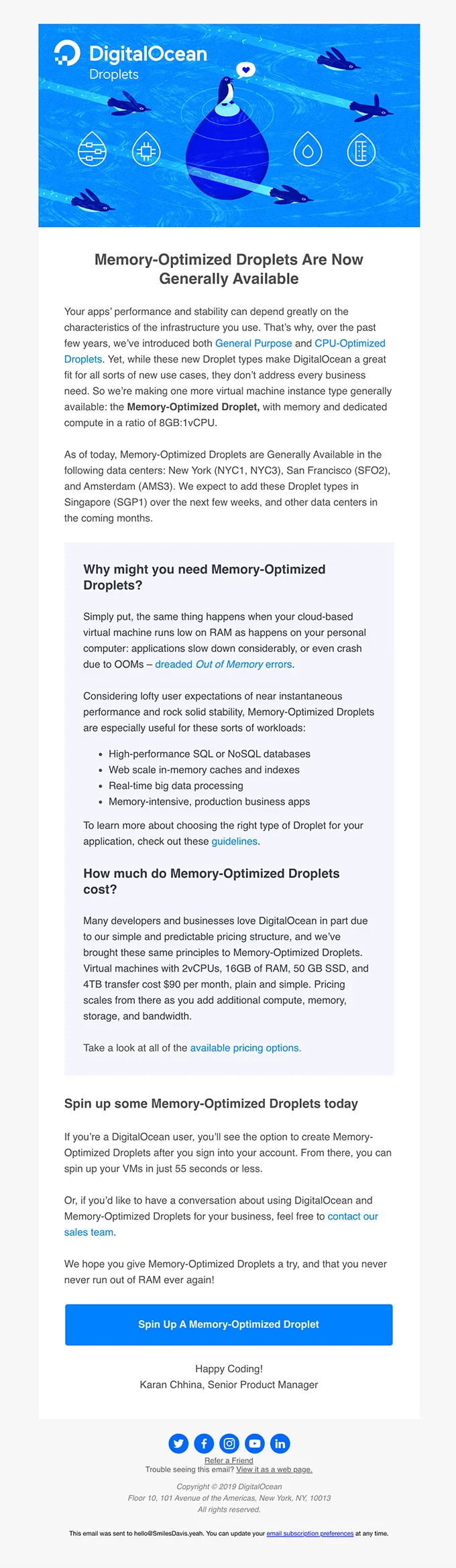
You can inform the subscribers about important product launches using stories in your newsletters. Tell about recent innovations in a vivid and involving manner. Do not just use plain facts — show the before-and-after for users and the way readers may apply these updates like Digital Ocean did in their email.
Success stories
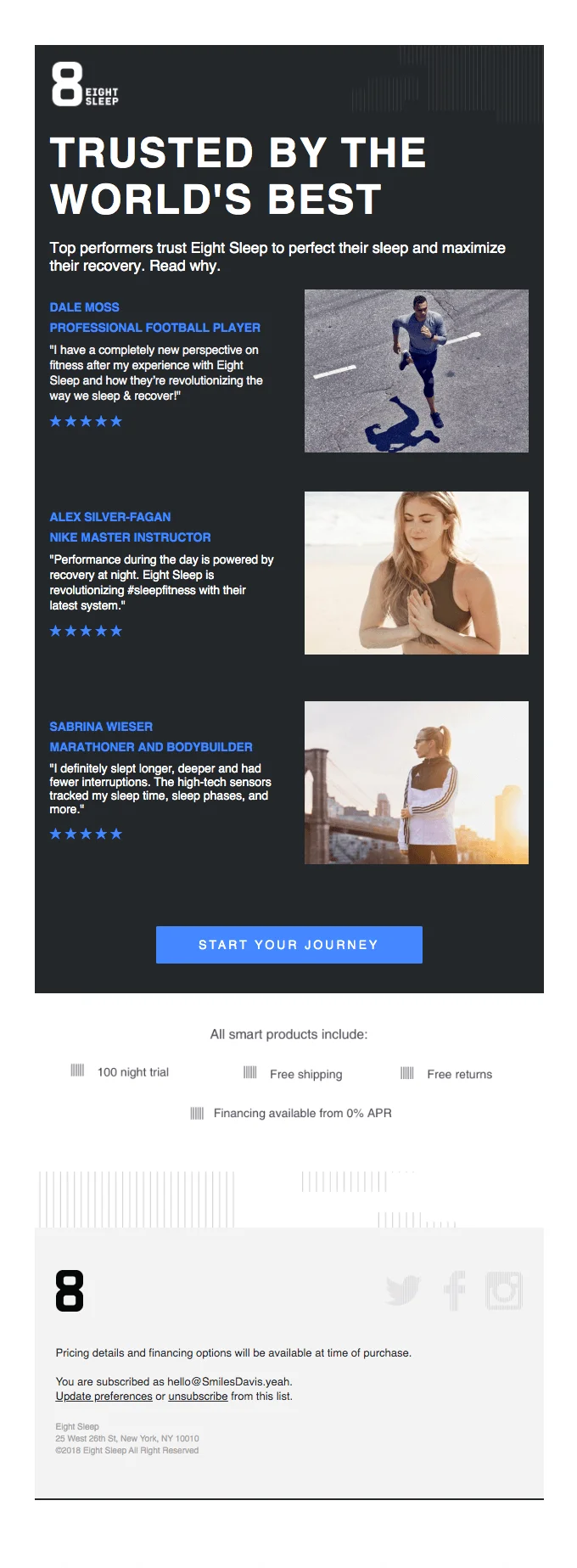
To see someone’s way to success with every last detail is inspiring and motivating. That’s why this technique is also frequently used when it comes to email marketing storytelling. You can tell your personal story, the story of your brand, or your most popular product.
Another technique that works is the usage of customer testimonials: show how the clients succeeded using your product or service. A strong success story needs a concrete result, not just a happy quote. See how Eight Sleep did that in their email marketing campaign:
Interviews
Interviews with CEOs or employees help to “humanize” the brand showing that there are real people with their pains, dreams, and desires behind it. You can also invite somebody that has an impact in your industry, or simply interview your customers.
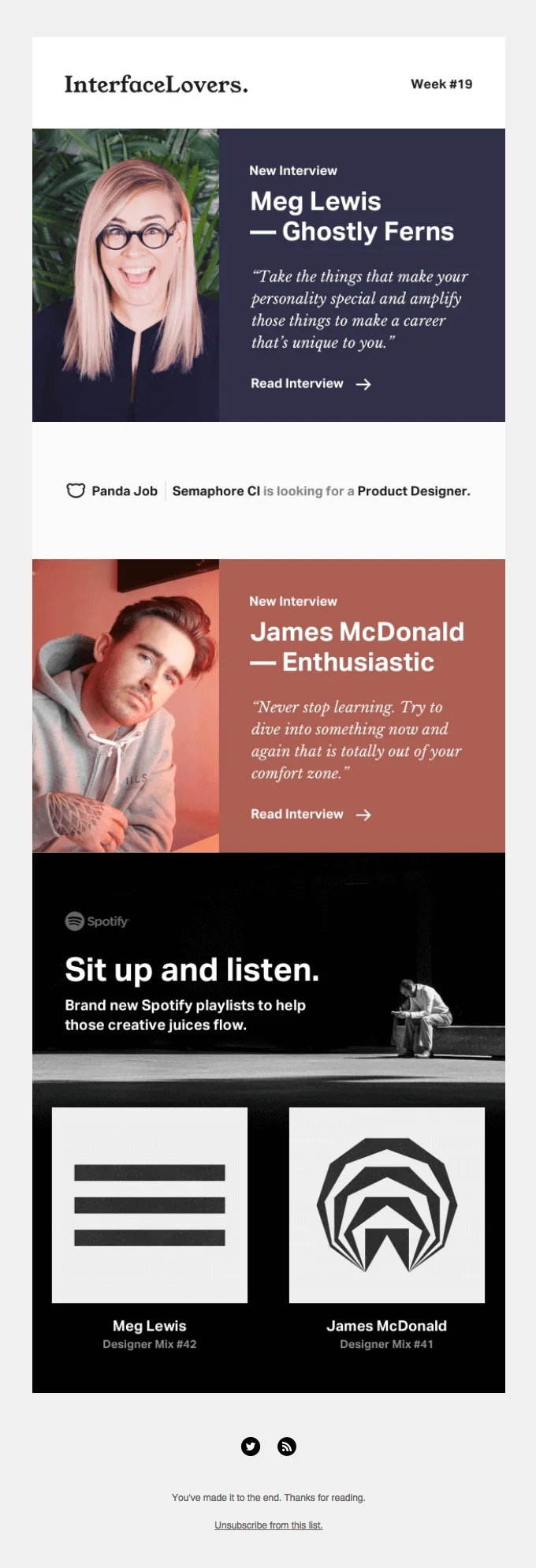
In the newsletter above, Interface Lovers invited influential members of the designer community to share their opinions with the readers. They unveil their personal experiences and share useful tips on work-life balance. Interviews can also become recurring newsletter content when your audience wants expert context, not only product updates.
Behind the scenes
A better understanding of “how it works” helps the customers to anchor their decision to buy your products or services. When they see the process from within, they understand your competitive advantages and their trust in the company grows. Behind-the-scenes stories work best when the process itself explains quality, care, or a meaningful product difference.
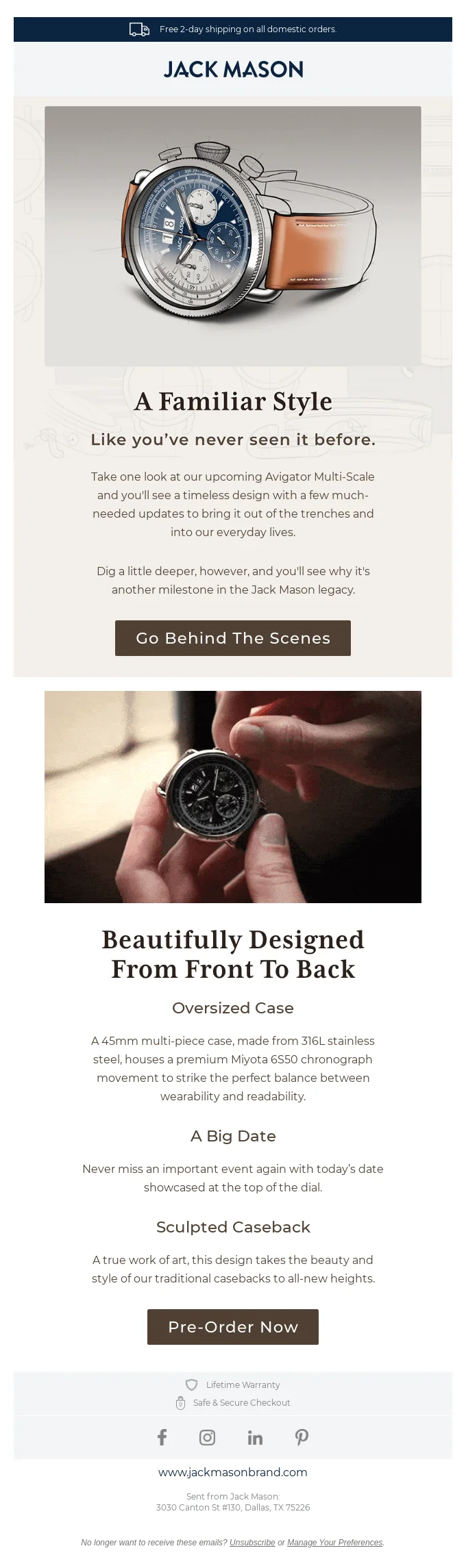
Jack Mason decided to shed some light on how their upcoming model of the watch is produced. Even a CTA button “Go behind the scenes” looks as if you are a chosen one to unveil the biggest secret.
Storytelling should not make the email confusing. The narrative must match the campaign goal, audience segment, and CTA. If the subscriber cannot quickly understand why the story matters, the email may feel like filler instead of a useful message.

Best storytelling email examples to take a look at
Let’s take a closer look at how to apply storytelling in different types of emails. Use the pattern labels below as reusable prompts when planning your own campaigns.
Welcome emails
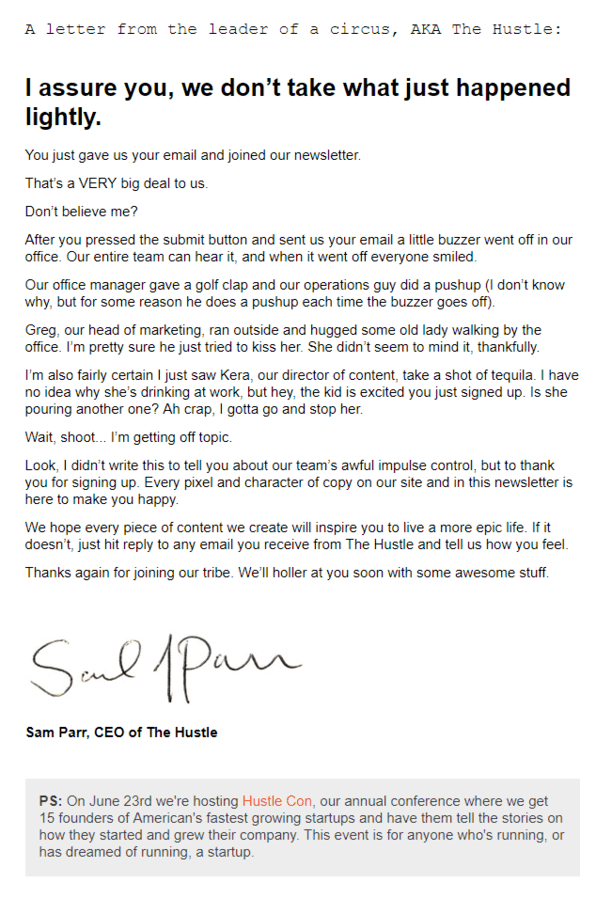
When you use storytelling in your welcome email, you immediately get the reader interested. In this example, the CEO of the company introduces the members of the team in a light and funny way — it looks ingenious compared to ordinary “Thanks for subscription” emails. Story pattern: founder welcome.
Promotional emails
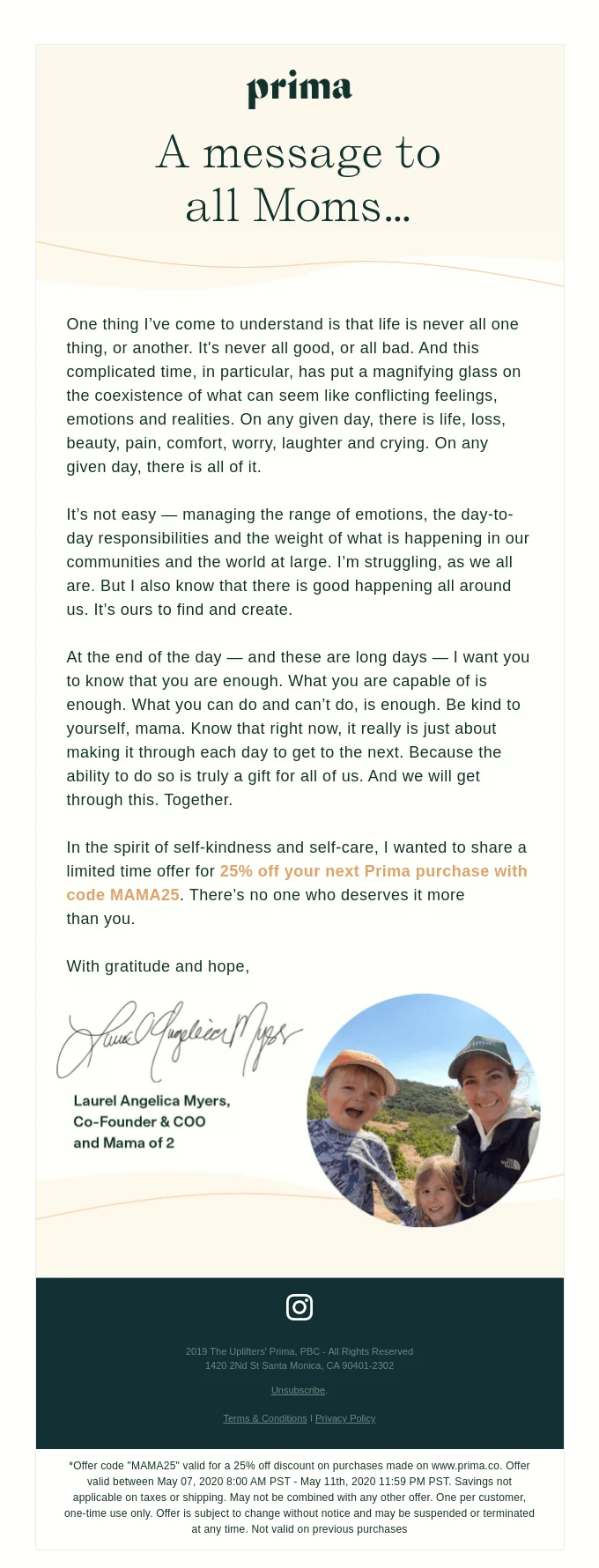
Everyone is tired of numerous newsletters trying to sell something. That’s why using a story when writing a promotional email can help to sweeten the pot and make your offer gentle and unobtrusive. Prima neatly did that in their Mother’s day campaign: first, they appreciated moms and highlighted their impact, and then offered a promo code for the next purchase. Story pattern: values-led promotion.
Lead nurturing emails
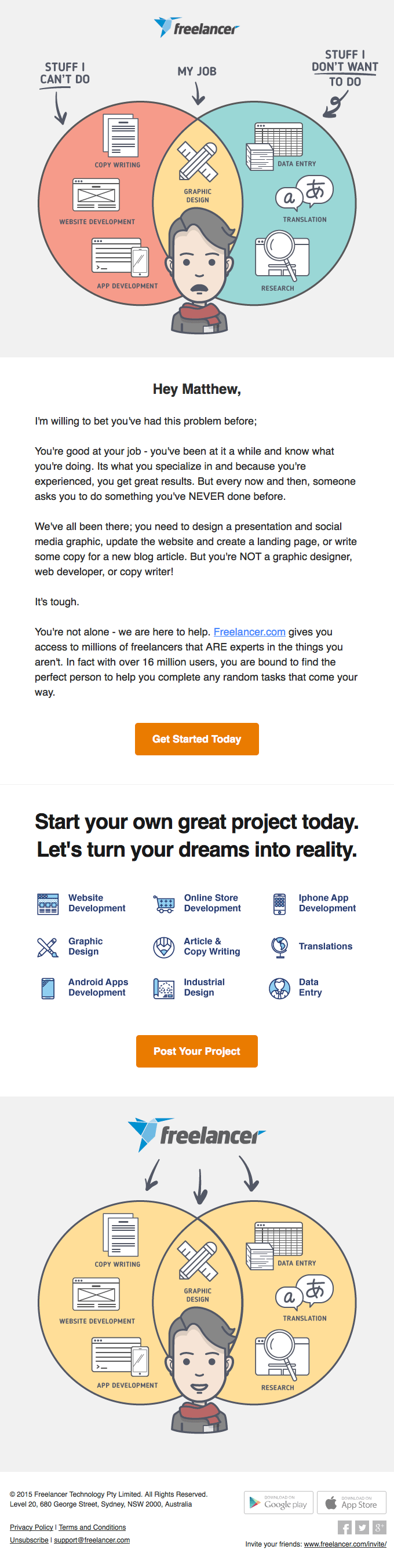
A nice example of storytelling in lead nurturing email by Freelancer. They highlighted the pains and desires of their customers and showed the way their service could solve these problems. The illustrations deserve special attention: they perfectly demonstrate the final result the user of the service will get. Story pattern: customer problem to solution.
Milestone emails
These are automated messages the company sends to subscribers on special occasions like birthdays, anniversaries, etc.
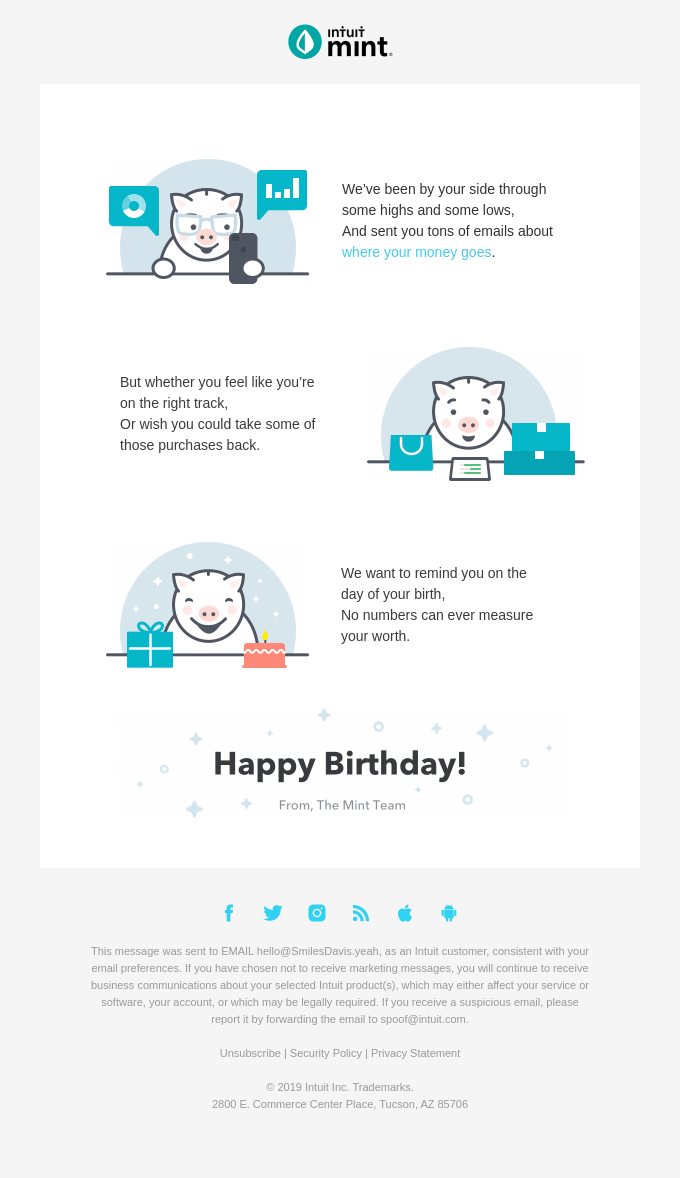
Mint chose a cute pig mascot to illustrate its happy birthday email to subscribers. No CTA button shows that the company doesn’t aim to sell anything — they just want to show how much their customers matter to them. Story pattern: milestone without hard sell.
Company anniversary emails

Company’s anniversary is a great occasion to tell the subscribers your story — but do that in an unconventional way, like Care/of did. They took the most significant figures and showed them in the form of cute illustrations. Even if you are not really interested, it catches your eye and makes you read an email to the end. Story pattern: anniversary recap.
Storytelling email checklist
Before sending a storytelling email, check that the story has a clear purpose, a relevant audience, a recognizable problem, a concise narrative arc, one main emotion, one CTA, and a measurable goal. If any part does not support the email goal, cut it.
FAQ
What is storytelling in email marketing?
Storytelling in email marketing means using a narrative structure to make a campaign more memorable, emotional, and persuasive. Instead of only listing features or offers, the email presents a character, problem, conflict, journey, and resolution, then ties that story to a useful next step for the reader.
Why does storytelling work in emails?
Storytelling works because inboxes are crowded and people often skim ordinary promotions. A narrative gives readers a reason to keep reading, helps the message stick, and can create a stronger connection with the brand by awakening emotions.
What are the key elements of a storytelling email?
A storytelling email should have a clear narrative structure with a character, problem, conflict, journey, and resolution. The design, copy, pacing, and call to action should all support the same story and lead the reader toward the campaign goal.
What types of stories can brands use in email campaigns?
Brands can use stories that connect a real audience problem to a message, offer, or action. The content describes storytelling as a flexible content marketing technique that works for companies of any size, especially when planning an email marketing strategy.
How do you write a storytelling email without making it too long?
Keep the story useful and focused on the reader’s problem, why it matters, and what to do next. The goal is not longer copy, but a clear narrative where every part supports the message and the call to action.
Final thoughts
One of the most effective email marketing tips is to apply storytelling in your strategy. It allows you to make people feel involved with your brand and products, creating an emotional connection and increasing your conversions. Due to storytelling, you’ll be able to:
- Create connections, engage your audience
- Make an impact on the readers and create a memorable experience
- Use a holistic approach instead of a single-vector strategy
There are four the most essential elements in every effective story:
- The hero –– the central figure that involves the reader and helps to create a story that nurtures, converts, and sells.
- The story behind this hero –– base it on the pains and desires of your hero.
- The journey –– create unexpected plot twists to engage the reader.
- A special gift to a reader –– finally, offer something valuable for those who have read till the end: a discount, free trial, etc.
You can use stories of any type in your email marketing campaigns:
- Origin stories: show what you drove to create the company and the brand.
- Product launches: inform the subscribers about important product launches using stories.
- Success stories: you can tell your personal story, the story of your brand, or your most popular product.
- Interviews with CEOs or employees help to “humanize” the brand showing that you have lots of things to share with the world.
- Behind the scenes: gives a better understanding of “how it works”.
Everyone loves stories, but not everyone can tell a good one. Become the company that tells, not sells, and you’ll see the growth of revenue in the nearest future.
 New and noteworthy on our blog
