



The best email marketing software for agencies should make client work easier, not heavier. It should help your team launch campaigns faster, automate repetitive tasks, collaborate on email content, segment audiences, and report results clearly to clients.
Some platforms are best for small agencies that run newsletters and promotional emails. Others are built for complex automation, e-commerce, SaaS funnels, transactional emails, or enterprise-level client management. The right choice depends on your client mix, team size, budget, and the type of email services you sell.
Below, we’ll compare the best email marketing platforms for agencies, starting with Selzy.
Best email marketing software for agencies: Quick comparison
| Tool | Best for | Starting price | Key agency advantage |
| Selzy | Small and growing agencies | From about $7.5/month | Easy email creation, automation, flexible pricing, and fast onboarding |
| Campaign Monitor | Agencies managing multiple client accounts | From $11.7/month | Client dashboards, branded reporting, and template controls |
| ActiveCampaign | Automation-focused agencies | From around $19/month | Advanced workflows, CRM, lead scoring, and behavior-based targeting |
| Mailchimp | Agencies serving beginners and small businesses | From $13/month | Familiar interface, templates, and simple campaign management |
| Brevo | Budget-conscious agencies | From $9/month | Email, SMS, CRM, and transactional emails in one platform |
| HubSpot | Full-service and enterprise agencies | From $10/month | CRM, marketing automation, reporting, and sales alignment |
| MailerLite | Small agencies and simple campaigns | From $10/month | Clean interface, landing pages, forms, and affordable plans |
| Drip | Ecommerce agencies | From $39/month | Customer behavior tracking, segmentation, and revenue-focused automations |
| GetResponse | Course, webinar, and creator agencies | From around $19/month | Email, funnels, webinars, landing pages, and automation |
What makes email marketing software good for agencies?
A good email marketing platform for agencies should do more than send campaigns. It should make client work easier to manage at scale.
For agencies, the most important question is not only “Can this tool send emails?” It is “Can this tool help us deliver better email marketing for several clients without increasing production chaos?”
Here are the main criteria agencies should look at.
Client management
Agencies often manage multiple brands, lists, domains, templates, automations, users, and reports. If the platform does not support clean account separation, work can become messy fast.
The best agency-friendly tools offer features such as client workspaces, subaccounts, agency dashboards, permissions, template controls, or simple ways to switch between clients.
This matters because each client should have separate data, separate campaigns, separate billing logic, and separate reporting. A mistake in account organization can create privacy risks, reporting confusion, or accidental sends to the wrong audience.
Ease of campaign production
Agencies create email campaigns repeatedly. A platform should help teams move quickly from brief to draft to approval to launch.
Useful features include drag-and-drop editors, reusable templates, saved blocks, brand kits, mobile previews, test sends, A/B testing, and collaboration tools.
For agencies, speed matters. If every campaign requires too much manual formatting or developer support, margins shrink and deadlines become harder to meet.
Automation depth
Some clients only need newsletters and simple welcome emails. Others need complex workflows based on behavior, purchase history, lead score, lifecycle stage, form submissions, or website activity.
Before choosing a platform, agencies should decide how advanced their automation services are.
If your agency mostly sells newsletters, a simple platform may be enough. If you sell lifecycle marketing, lead nurturing, e-commerce flows, onboarding, or retention campaigns, automation depth becomes one of the most important selection criteria.
Reporting and client proof
Clients want to understand what they are paying for. Agencies need reporting that makes results easy to explain.
At minimum, agencies need opens, clicks, unsubscribes, bounces, audience growth, and campaign engagement. Depending on the client type, e-commerce revenue, pipeline impact, conversions, attribution, or lifecycle performance may also matter.
The stronger the reporting, the easier it is to show value, retain clients, and justify ongoing email marketing work.
Pricing flexibility
Pricing is especially important for agencies because clients can have very different sending patterns.
One client may have a large list but send once a month. Another may have a smaller list but send several campaigns per week. A third may need automations, transactional emails, SMS, or CRM features.
Agencies should look beyond the starting price. The real question is how pricing changes when contact lists grow, sending volume increases, more users are added, or clients need advanced features.
Integrations
Agencies work with many different client tech stacks. One client may use Shopify, another WooCommerce, another WordPress, another HubSpot, another Salesforce, and another a custom website or CRM.
The email marketing platform should connect with the tools your clients already use. Important integrations include e-commerce platforms, CRMs, website builders, form tools, payment systems, analytics platforms, webinar tools, and automation connectors.
Support and onboarding
Support matters more for agencies than for solo users because client work has deadlines.
If a campaign is blocked, an automation breaks, deliverability drops, or migration takes too long, the agency is responsible in the client’s eyes. Helpful onboarding, documentation, live support, migration help, and account support can save time and protect client relationships.
Best email marketing software for agencies
1. Selzy — best for small and growing agencies
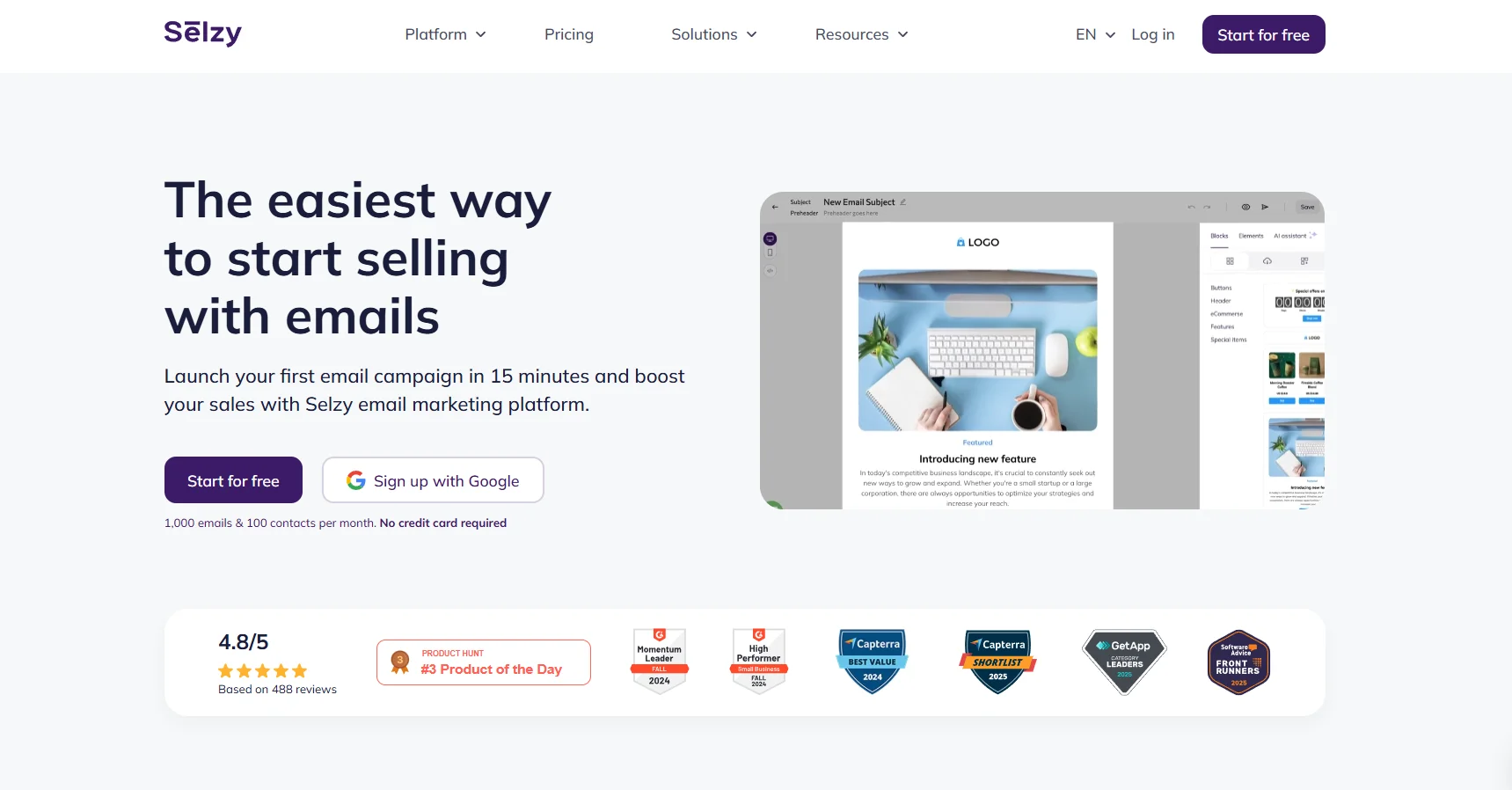
Selzy is a strong choice for small and growing agencies that need a practical, affordable, and easy-to-use email marketing platform for client campaigns.
It is especially useful for agencies that want to launch emails quickly, create professional-looking campaigns without coding, set up simple automations, test content, and keep costs predictable.
Many small agencies do not need a complex enterprise automation suite from day one. They need a tool that helps them onboard clients faster, build campaigns efficiently, and explain results clearly. Selzy fits this use case well.
Why agencies choose Selzy
Selzy is built around simplicity and speed. Agencies can use the drag-and-drop email builder to create campaigns without relying on developers. Ready-made templates help speed up production, while A/B testing and analytics help improve results over time.
For agencies working with small businesses, local brands, e-commerce stores, creators, educators, and professional service providers, this balance is important. These clients often need effective email marketing, but they may not have large budgets, technical teams, or complex marketing operations.
Selzy also works well when clients are new to email marketing. The platform is easier to explain than more advanced tools, which makes it easier for clients to review campaigns, understand reports, and approve work.
Key features for agencies
Selzy includes the core features agencies need for everyday email marketing: email builder, templates, contact management, signup forms, popups, A/B testing, automation, segmentation, and campaign analytics.
The drag-and-drop editor is useful when an agency needs to create several campaigns per week. Templates and reusable layouts help reduce production time, especially for recurring newsletters, promotional campaigns, event emails, and seasonal offers.
Automation features allow agencies to build welcome sequences, follow-ups, reactivation emails, lead nurturing flows, and basic lifecycle campaigns.
A/B testing helps agencies test subject lines, email content, offers, and campaign angles. Instead of relying only on assumptions, teams can learn what works for each client’s audience.
Analytics help agencies report essential campaign performance to clients, including engagement and subscriber behavior.
Best agency use cases
Selzy is a good fit for agencies managing email marketing for small businesses, e-commerce stores, service providers, SaaS startups, educational projects, creators, local brands, and professional services.
For e-commerce clients, agencies can use Selzy for product announcements, seasonal campaigns, customer follow-ups, promotional emails, and basic lifecycle flows.
For service businesses, agencies can use it for newsletters, lead nurturing, event reminders, client education, reactivation campaigns, and appointment-related communication.
For creators and educators, Selzy can support newsletters, launch sequences, lead magnets, webinar follow-ups, and course-related campaigns.
Pros for agencies
Selzy is easy to learn, affordable, and practical for teams that need to move quickly. It covers the most important email marketing needs without overwhelming users with enterprise-level complexity.
It is also a strong option when an agency wants to keep production efficient. Teams can build campaigns, automate simple journeys, test ideas, and report results without creating heavy internal processes.
Possible limitations
Selzy may not be the best fit for large agencies that need advanced account hierarchy, complex permission systems, deep CRM functionality, enterprise-grade reporting, or highly sophisticated automation logic.
Agencies managing dozens of enterprise clients may need more advanced governance and customization than Selzy is designed to provide.
Bottom line
Choose Selzy if your agency needs a simple, affordable, and reliable platform for email campaigns, newsletters, automations, e-commerce emails, and small-business clients.

2. Campaign Monitor — Best for agencies managing multiple client accounts
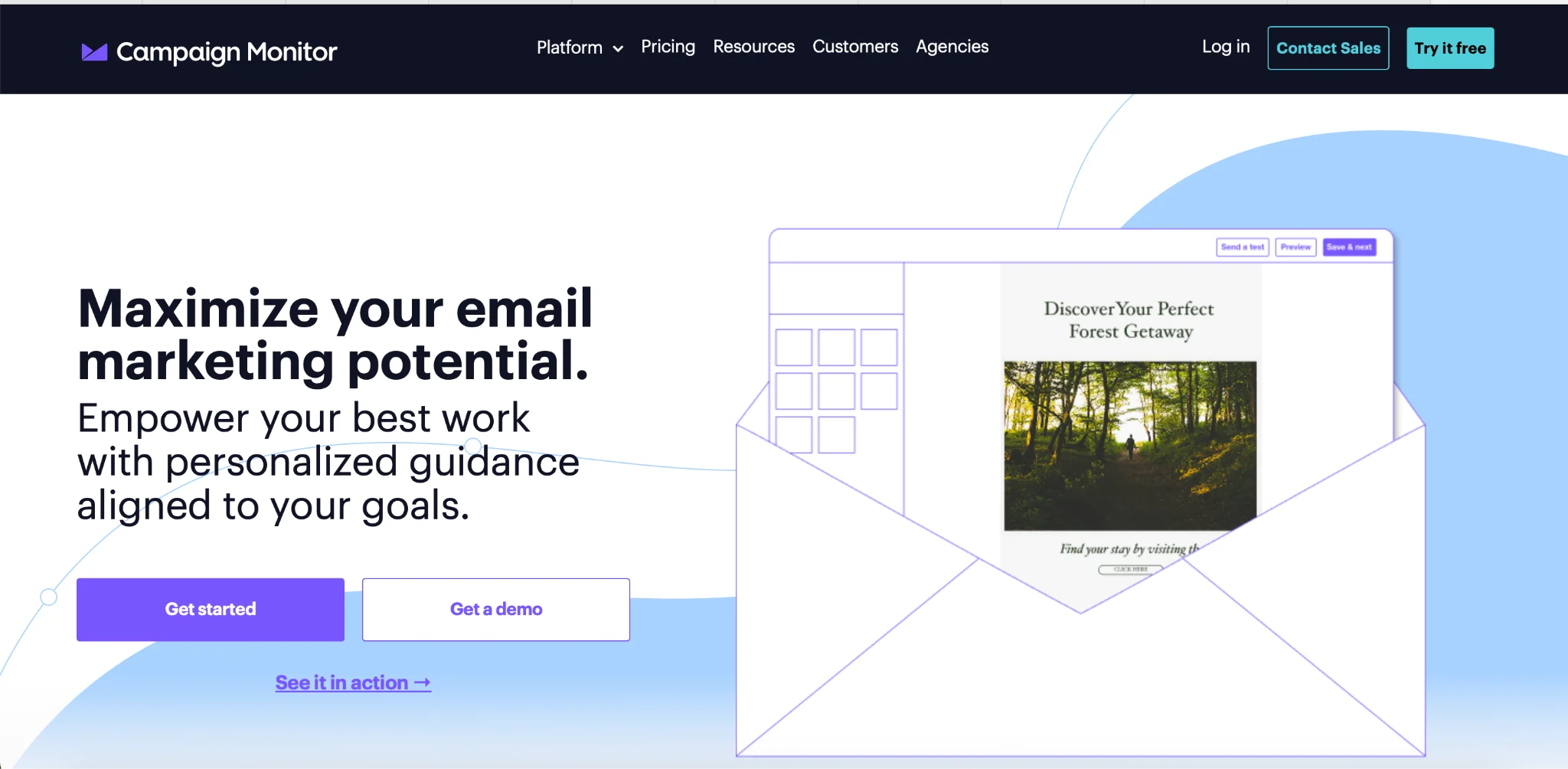
Campaign Monitor is one of the more agency-oriented platforms on this list. It is especially useful for agencies that manage several client accounts and want better structure around dashboards, reporting, template control, and client-facing workflows.
Unlike basic email tools that are mostly designed for single businesses, Campaign Monitor is a stronger fit for agencies that need to organize multi-client work and present campaign results professionally.
Why agencies choose Campaign Monitor
Campaign Monitor’s agency value comes from client management and presentation. Agencies often need to manage campaigns for several clients while maintaining clear separation between accounts, templates, reports, and users.
The platform is especially helpful when agencies want branded reporting or client-facing dashboards. This can make email marketing feel like a more professional managed service rather than a collection of disconnected campaigns.
Template controls are another important advantage. Agencies can create templates for clients and lock certain sections to protect brand consistency. This is useful when multiple people are involved in campaign creation or approval.
Key features for agencies
Campaign Monitor includes a drag-and-drop builder, automation, segmentation, reporting, client account management, integrations, branded reporting, and template controls.
The agency dashboard helps teams manage client work more efficiently. Reporting tools help agencies show performance in a way clients can understand. Template controls help protect brand guidelines and reduce accidental design mistakes.
Automation features allow agencies to build customer journeys based on subscriber behavior, although Campaign Monitor is usually strongest for agencies that value client management and campaign execution rather than extremely complex automation logic.
Best agency use cases
Campaign Monitor is a good fit for agencies that manage newsletters, promotional campaigns, branded campaigns, customer journeys, and recurring email work for multiple clients.
It is especially relevant for agencies that want to present email marketing as a polished client service. If your agency cares about branded reports, client dashboards, and template governance, Campaign Monitor is worth considering.
It can also work well for agencies serving larger brands, franchises, distributed teams, or clients with strict brand guidelines.
Pros for agencies
Campaign Monitor gives agencies stronger client management than many general-purpose email tools. Its reporting, template controls, and branded experience can help agencies look more professional and reduce operational friction.
It is also useful for keeping campaigns organized when different clients require different templates, audiences, and approval processes.
Possible limitations
Campaign Monitor may be more than a small agency needs if the team only sends basic newsletters for a few clients. Some of its most useful agency features may matter more once client volume increases.
Agencies that need very advanced automation, CRM functionality, or deep behavior-based segmentation may prefer tools such as ActiveCampaign, HubSpot, or Drip.
Bottom line
Choose Campaign Monitor if your agency manages multiple client accounts and needs stronger client dashboards, branded reporting, and template controls.
3. ActiveCampaign — Best for automation-focused agencies
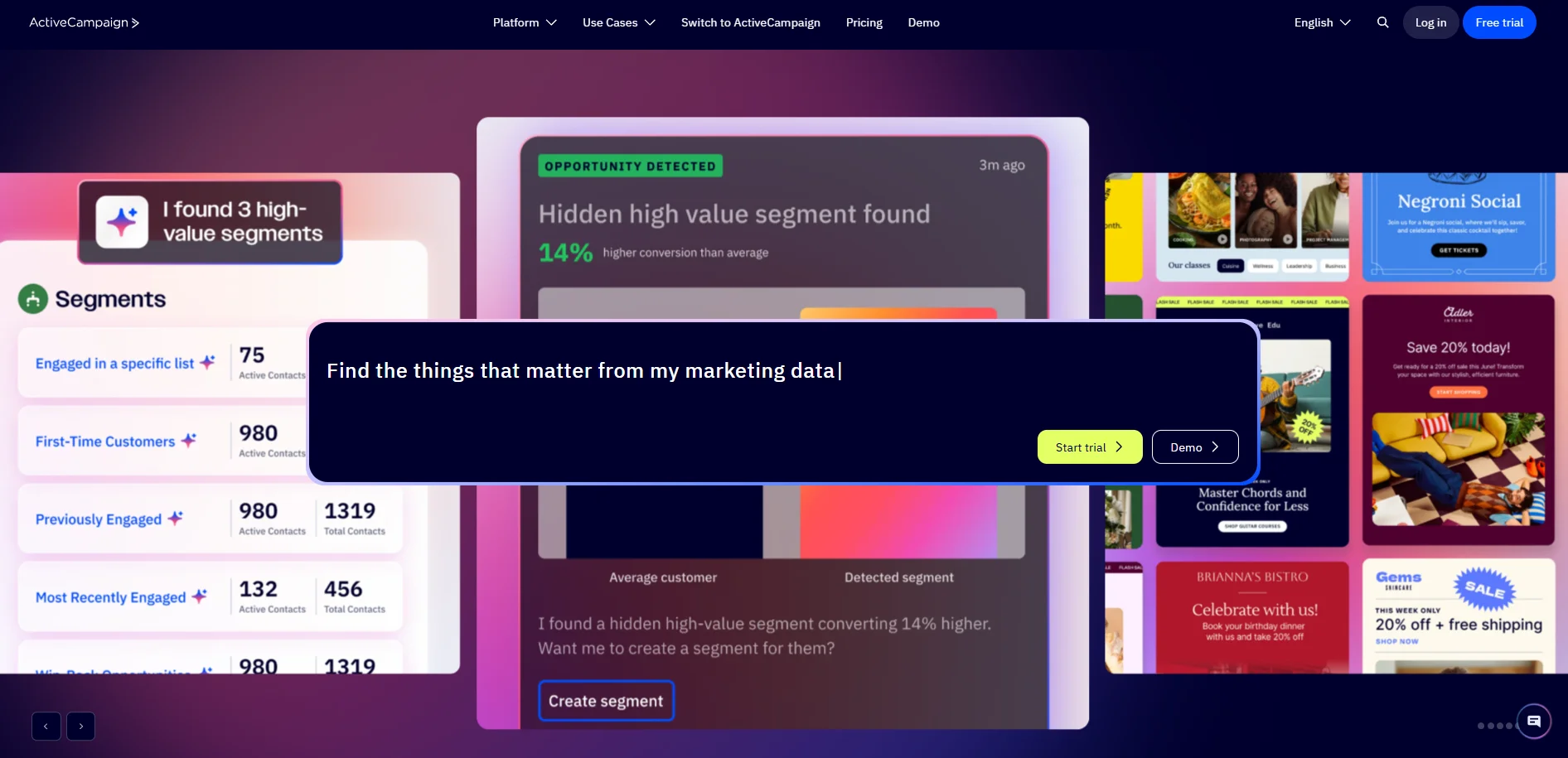
ActiveCampaign is best for agencies that sell advanced automation, lifecycle marketing, lead nurturing, and CRM-connected campaigns.
It combines email marketing with automation, segmentation, CRM features, lead scoring, website tracking, and sales pipeline tools. This makes it a strong choice for agencies working with clients that have longer sales cycles or more complex customer journeys.
Why agencies choose ActiveCampaign
ActiveCampaign’s biggest strength is automation depth. Agencies can create workflows based on tags, behavior, form submissions, website visits, email engagement, lead scores, purchases, lifecycle stages, and CRM activity.
This makes the platform especially useful for B2B companies, SaaS businesses, consultants, service providers, and clients that need more than basic newsletters.
For example, an agency can build a journey that starts when a lead downloads a resource, scores the lead based on engagement, sends educational emails, notifies sales when the lead becomes qualified, and moves the contact into a CRM pipeline.
Key features for agencies
ActiveCampaign includes a visual automation builder, segmentation, tagging, CRM, lead scoring, landing pages, forms, dynamic content, split testing, website tracking, sales pipelines, and integrations.
The automation builder is flexible enough for advanced workflows. Agencies can create different branches based on subscriber behavior and personalize follow-ups depending on what each contact does or does not do.
The CRM and lead scoring features are especially useful for agencies that need to connect email marketing with sales outcomes.
Best agency use cases
ActiveCampaign is best for agencies that work on lifecycle marketing, lead nurturing, B2B funnels, SaaS onboarding, sales enablement, customer education, reactivation, and upsell campaigns.
It is a strong fit when clients need more than campaign sending. If the client needs automation strategy, segmentation logic, CRM integration, and sales follow-up, ActiveCampaign can be a powerful option.
Pros for agencies
ActiveCampaign gives agencies deep automation capabilities and strong segmentation. It can support sophisticated strategies that simpler platforms cannot handle.
It also helps agencies connect email marketing with sales processes, which is important for B2B and service-based clients.
Possible limitations
ActiveCampaign can be overwhelming for beginners. Agencies need time to learn the platform and build clean automation structures.
Pricing can also increase as clients add contacts or need more advanced features. For simple newsletter clients, ActiveCampaign may be more complex than necessary.
Bottom line
Choose ActiveCampaign if your agency focuses on advanced automation, CRM-connected campaigns, lead nurturing, lifecycle marketing, or sales-driven email strategy.
4. Mailchimp — Best for agencies serving beginners and small businesses
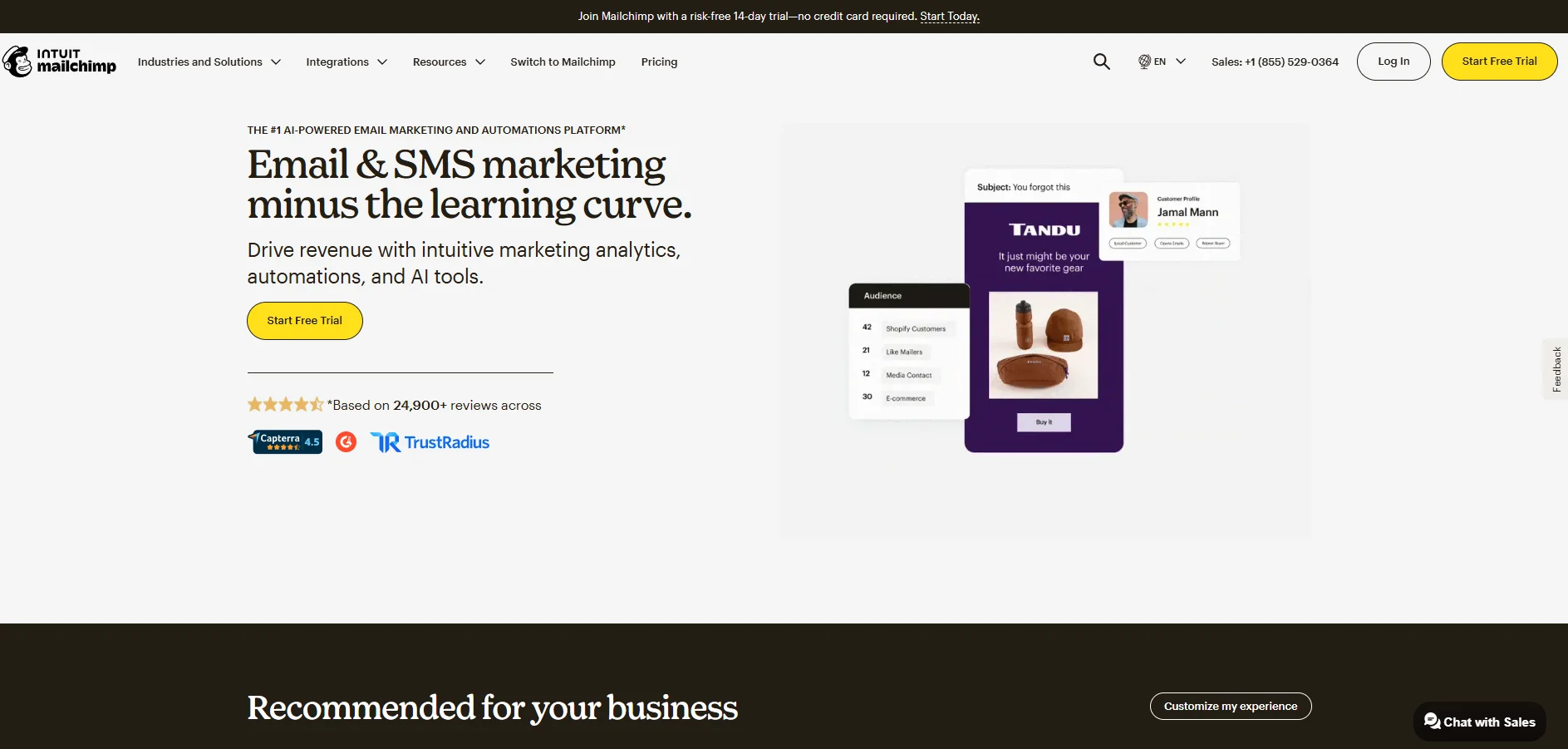
Mailchimp is one of the most recognizable email marketing platforms. Many agencies work with it because clients already use it, know the brand, or feel comfortable starting there.
It is a practical option for basic email campaigns, newsletters, landing pages, signup forms, and simple automations.
Why agencies choose Mailchimp
Mailchimp’s biggest advantage is familiarity. For many small-business clients, Mailchimp feels approachable. This can reduce resistance when an agency recommends email marketing for the first time.
The platform has a clean campaign builder, templates, audience tools, basic automations, and integrations with many common small-business tools.
For agencies serving clients that mainly need newsletters, announcements, promotions, and simple customer follow-ups, Mailchimp can be enough.
Key features for agencies
Mailchimp includes a drag-and-drop email builder, email templates, audience segmentation, forms, landing pages, basic automation, analytics, A/B testing, and integrations.
It is useful for quickly launching campaigns and helping beginner clients understand email marketing basics.
Mailchimp also works well when an agency inherits a client account that is already set up. In many cases, the agency can improve templates, clean up audiences, build basic automations, and improve reporting without migrating the client immediately.
Best agency use cases
Mailchimp works best for agencies serving small businesses, nonprofits, creators, local brands, early-stage startups, and clients that are just beginning with email marketing.
It is useful for monthly newsletters, product updates, event promotions, simple welcome emails, seasonal campaigns, and basic list growth.
Pros for agencies
Mailchimp is familiar, easy to start with, and widely supported by integrations. Many clients already understand it or have used it before.
For simple campaigns, this can make onboarding faster and reduce the amount of client education required.
Possible limitations
Mailchimp is not always ideal for agencies that need deep automation, complex segmentation, advanced reporting, or strong multi-client management.
As clients grow, agencies may find that the platform becomes more expensive or less flexible than expected. Agencies that sell advanced lifecycle strategy may eventually need a more powerful automation platform.
Bottom line
Choose Mailchimp if your agency serves beginners and small businesses that need a familiar tool for newsletters, basic campaigns, and simple automations.
5. Brevo — Best for budget-conscious agencies
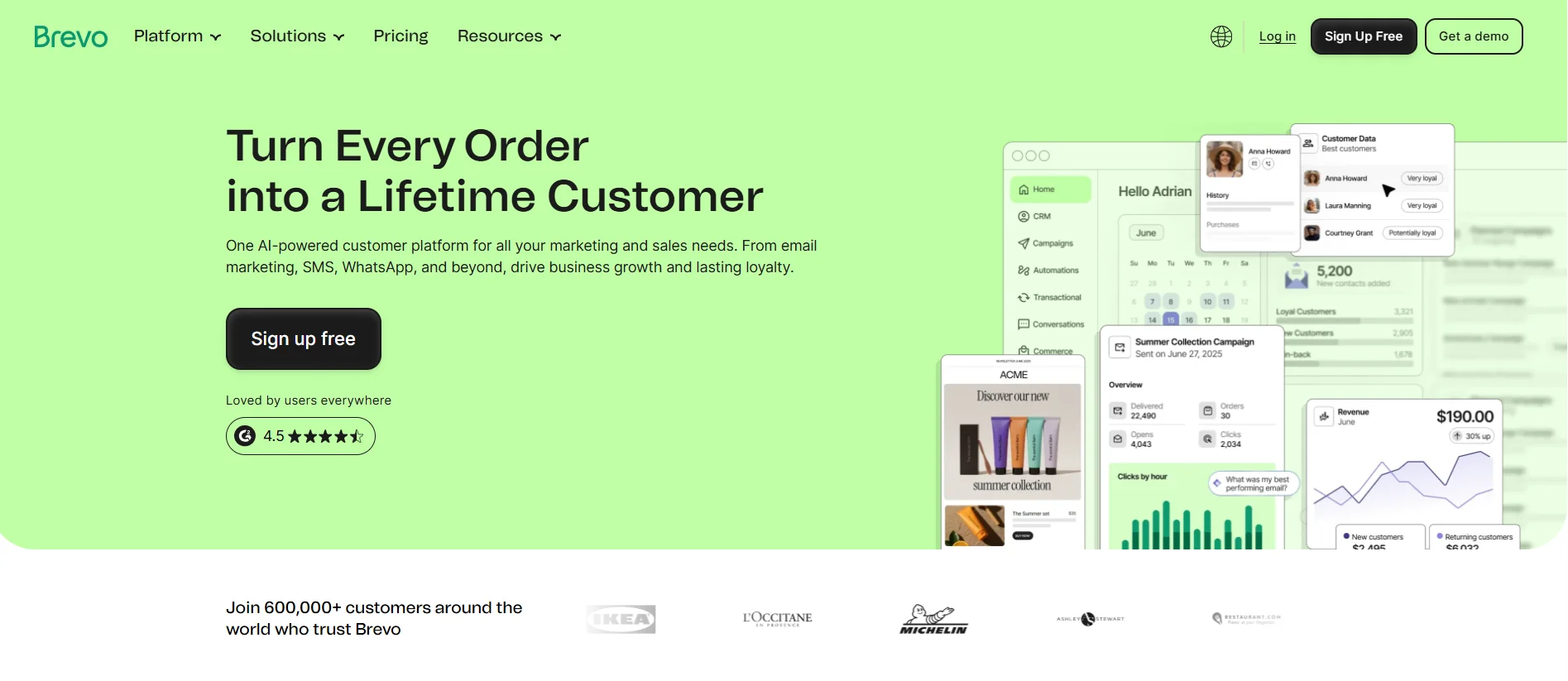
Brevo is a good option for budget-conscious agencies that want email, SMS, CRM, automation, and transactional email features in one platform.
It is especially useful for clients that need several communication channels but do not want to pay for multiple separate tools.
Why agencies choose Brevo
Brevo is attractive because it combines email marketing with additional communication and customer management features. Agencies can use it for newsletters, promotional emails, SMS campaigns, transactional messages, forms, landing pages, automation, and basic CRM work.
This makes it a practical choice for small businesses that want a broader marketing toolkit at an accessible price.
Brevo’s pricing model can also be useful for clients with large contact databases and lower sending frequency, depending on the plan and sending needs.
Key features for agencies
Brevo includes email campaigns, SMS marketing, marketing automation, transactional email, CRM, landing pages, forms, segmentation, WhatsApp campaigns in some regions, and reporting.
Its transactional email capabilities are especially useful for agencies working with e-commerce stores, SaaS products, booking platforms, or websites that need order confirmations, password resets, notifications, and other system emails.
Best agency use cases
Brevo is a good fit for agencies serving small businesses, local services, e-commerce shops, appointment-based businesses, and clients that want email plus SMS or transactional messages.
For example, an agency might use Brevo for promotional campaigns, appointment reminders, order updates, abandoned cart emails, simple lead nurturing, and customer follow-ups.
Pros for agencies
Brevo offers a broad feature set at an accessible price. It can reduce the need for multiple tools when clients need email, SMS, CRM, and transactional messaging.
It is also a good option when agencies want to support clients with practical, multi-channel campaigns without moving into a more expensive enterprise platform.
Possible limitations
Brevo may not offer the same depth of automation, reporting, or CRM functionality as more specialized advanced platforms.
Agencies managing complex funnels or sophisticated lifecycle programs may eventually need a more powerful tool.
Bottom line
Choose Brevo if your agency needs an affordable platform that combines email, SMS, CRM, and transactional messaging for small-business clients.
6. HubSpot — Best for full-service and enterprise agencies
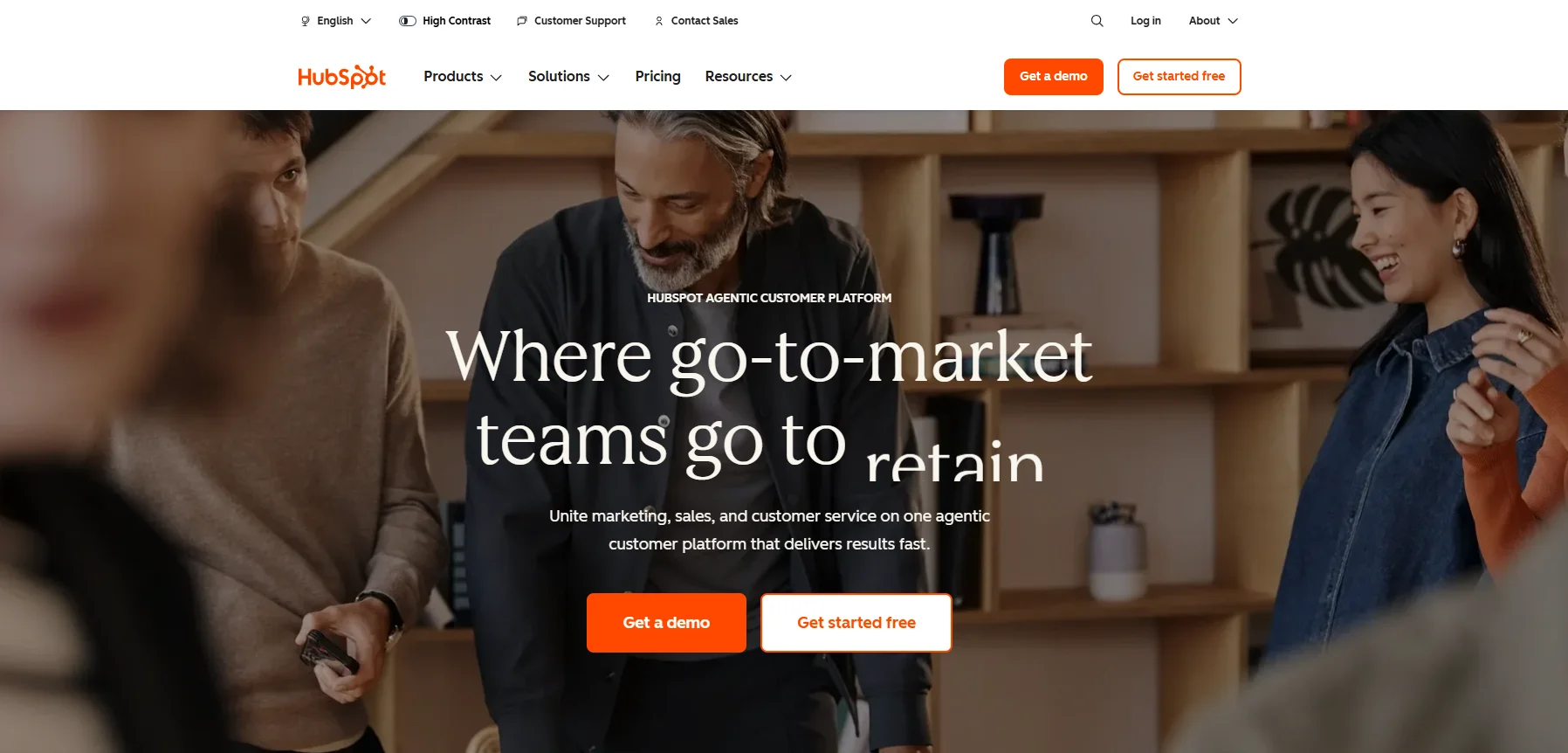
HubSpot is much more than an email marketing platform. It is a full CRM and marketing automation ecosystem that includes email, forms, landing pages, workflows, reporting, sales tools, ads, lead management, and customer data.
It is best for agencies that manage full-funnel marketing, inbound strategy, sales alignment, and enterprise-level client operations.
Why agencies choose HubSpot
HubSpot is valuable when email marketing needs to connect directly to CRM data, sales activity, lifecycle stages, lead scoring, attribution, and revenue reporting.
For full-service agencies, this can be a major advantage. Instead of managing email in one tool, leads in another, and sales data somewhere else, HubSpot brings many parts of the customer journey into one system.
This makes it useful for agencies that want to prove how marketing contributes to pipeline, sales, and customer growth.
Key features for agencies
HubSpot includes email marketing, CRM, workflows, landing pages, forms, smart content, lead scoring, campaign reporting, sales pipeline tools, ads, live chat, contact management, attribution, and integrations.
Its reporting and CRM features are especially useful for agencies that need to show business impact beyond email opens and clicks.
HubSpot also has a strong partner ecosystem, training resources, and agency-focused programs, which can be helpful for agencies building services around the platform.
Best agency use cases
HubSpot is best for agencies serving B2B companies, SaaS brands, professional services, enterprise clients, high-ticket businesses, and clients with long or complex sales cycles.
It is useful when email marketing is part of a broader inbound marketing, sales enablement, demand generation, or revenue operations strategy.
For example, an agency can use HubSpot to capture leads through landing pages, nurture them through email workflows, score them based on engagement, pass qualified leads to sales, and report on pipeline impact.
Pros for agencies
HubSpot gives agencies a complete marketing and CRM system. It is powerful when clients need one platform for marketing, sales, reporting, and customer data.
It also helps agencies move beyond campaign-level reporting and connect email marketing to business outcomes.
Possible limitations
HubSpot can be expensive and complex. It may be overkill for clients that only need newsletters, basic automations, or simple promotional campaigns.
Agencies also need trained team members to implement HubSpot properly. Poor setup can lead to messy data, confusing workflows, and underused features.
Bottom line
Choose HubSpot if your agency manages full-funnel marketing, CRM, sales alignment, reporting, and enterprise or high-value clients.
7. MailerLite — Best for small agencies and simple campaigns
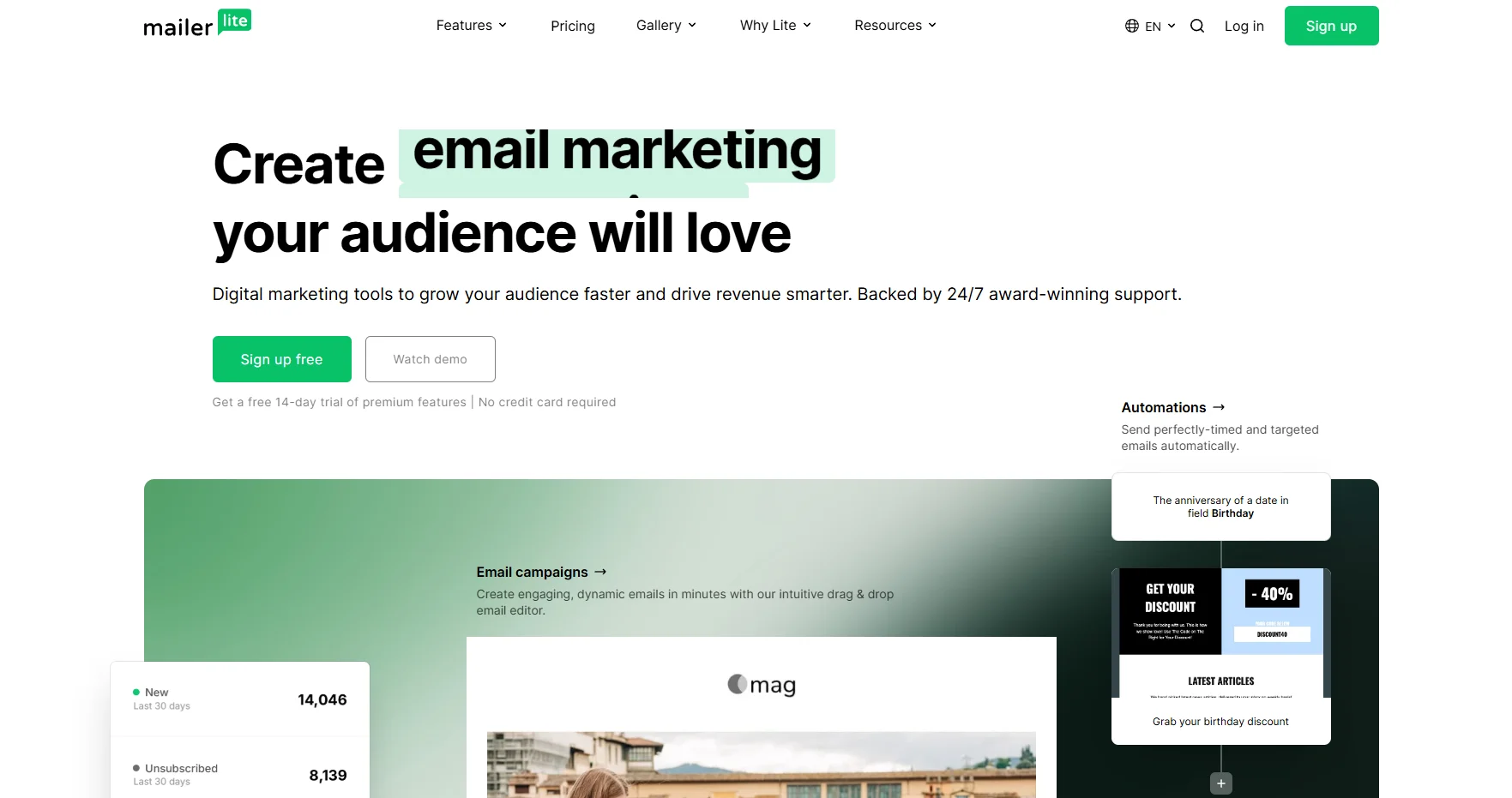
MailerLite is a clean and affordable email marketing platform that works well for small agencies managing simple campaigns.
It is especially useful for teams that need an easy interface, fast campaign production, landing pages, forms, and basic automations without a steep learning curve.
Why agencies choose MailerLite
MailerLite’s main advantage is simplicity. Agencies can create campaigns quickly, build landing pages, set up forms, manage subscribers, and launch basic automations without heavy technical work.
This makes it a strong choice for small agencies that work with clients who need practical email marketing but do not require advanced automation or complex reporting.
MailerLite is also attractive for cost-sensitive clients, creators, nonprofits, bloggers, and local businesses.
Key features for agencies
MailerLite includes a drag-and-drop email editor, templates, landing pages, websites, forms, popups, automation builder, surveys, segmentation, and campaign analytics.
The platform is useful for creating newsletters, lead magnet campaigns, welcome sequences, simple sales emails, and promotional campaigns.
Its landing page and website features can also help agencies support clients that need basic lead generation assets without adding another tool.
Best agency use cases
MailerLite works well for agencies serving bloggers, creators, local businesses, nonprofits, small e-commerce brands, early-stage startups, and small service providers.
It is a good option for newsletters, simple automations, lead magnets, event promotions, and basic audience growth.
Pros for agencies
MailerLite is easy to use, affordable, and quick to implement. It helps agencies keep production simple and avoid unnecessary complexity.
It is a good fit when the client values clean design, simple workflows, and budget-friendly pricing.
Possible limitations
MailerLite is not ideal for complex client management, advanced behavioral automation, deep CRM integration, or sophisticated reporting.
Agencies that manage large-scale lifecycle programs may find it too limited.
Bottom line
Choose MailerLite if your agency needs a simple, affordable platform for small clients, newsletters, landing pages, and basic automations.
8. Drip — Best for e-commerce agencies
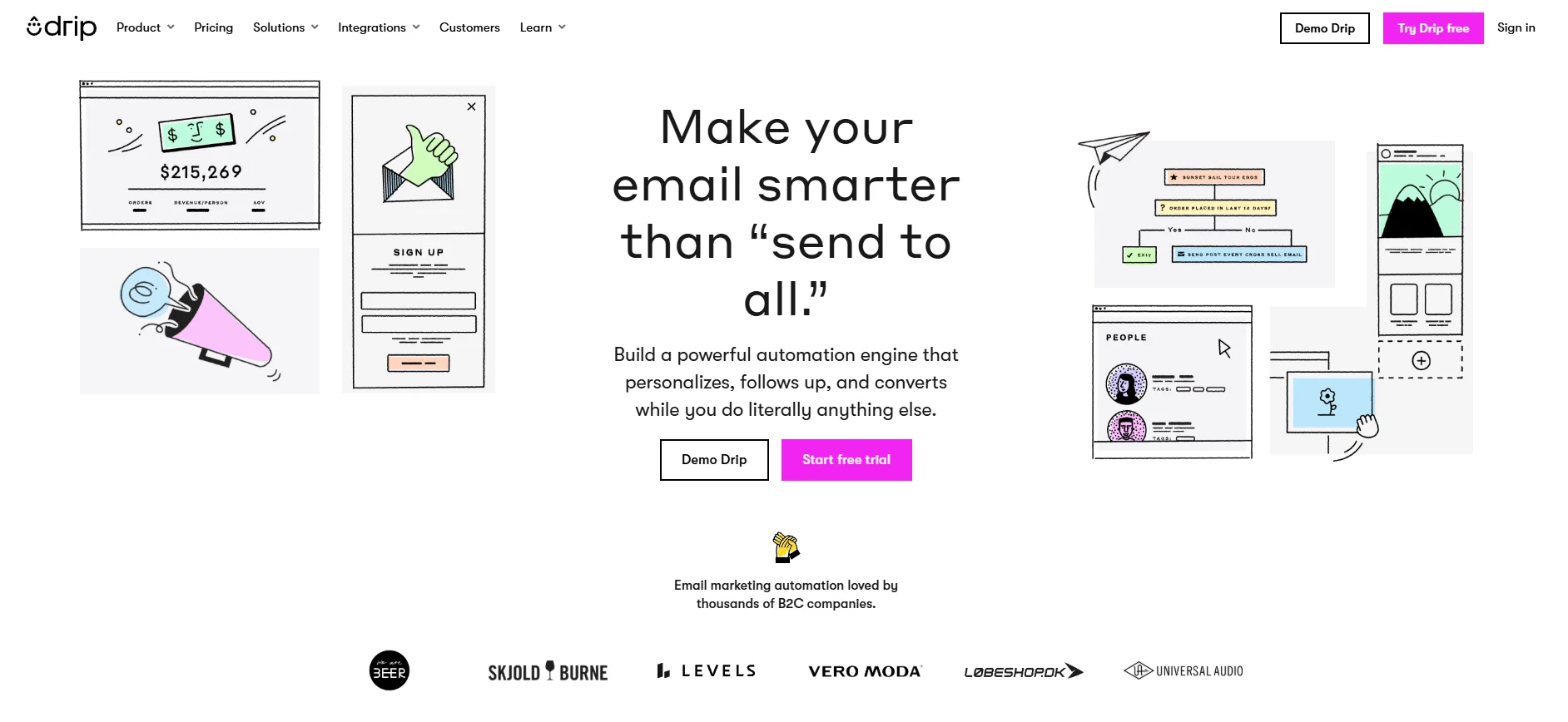
Drip is an email marketing and automation platform focused on e-commerce. It is built for agencies that need behavior-based campaigns, customer segmentation, purchase data, and revenue-focused automation.
For e-commerce agencies, Drip can be a strong choice because it connects email strategy directly to customer actions and store revenue.
Why agencies choose Drip
Ecommerce email marketing is different from general newsletters. Online stores need campaigns and automations based on browsing behavior, cart activity, purchase history, product interest, order value, customer loyalty, and inactivity.
Drip is designed around this type of customer behavior. It helps agencies create targeted campaigns that respond to what shoppers do.
This makes it useful for agencies that want to build more personalized e-commerce journeys and report on revenue impact.
Key features for agencies
Drip includes email automation, segmentation, e-commerce integrations, onsite forms and popups, customer behavior tracking, product recommendations, dynamic content, and revenue reporting.
Its e-commerce integrations help agencies pull in customer, order, and product data. This data can then be used to create more relevant campaigns and automations.
Best agency use cases
Drip is best for e-commerce agencies managing Shopify, WooCommerce, BigCommerce, or similar online stores.
Common use cases include abandoned cart emails, browse abandonment, post-purchase flows, product recommendations, win-back campaigns, VIP customer campaigns, replenishment reminders, seasonal campaigns, and loyalty-building sequences.
Pros for agencies
Drip is strong for e-commerce segmentation and revenue-focused automation. It helps agencies create campaigns based on real customer behavior rather than generic audience lists.
It is especially useful when an agency wants to connect email performance to purchases and customer lifetime value.
Possible limitations
Drip may not be the best choice for agencies that mainly serve B2B, SaaS, nonprofits, creators, or service businesses.
Its strengths are most valuable when e-commerce behavior and revenue tracking are central to the client’s email strategy.
Bottom line
Choose Drip if your agency focuses on e-commerce and needs customer behavior tracking, segmentation, and revenue-driven automations.
9. GetResponse — best for course, webinar, and creator agencies
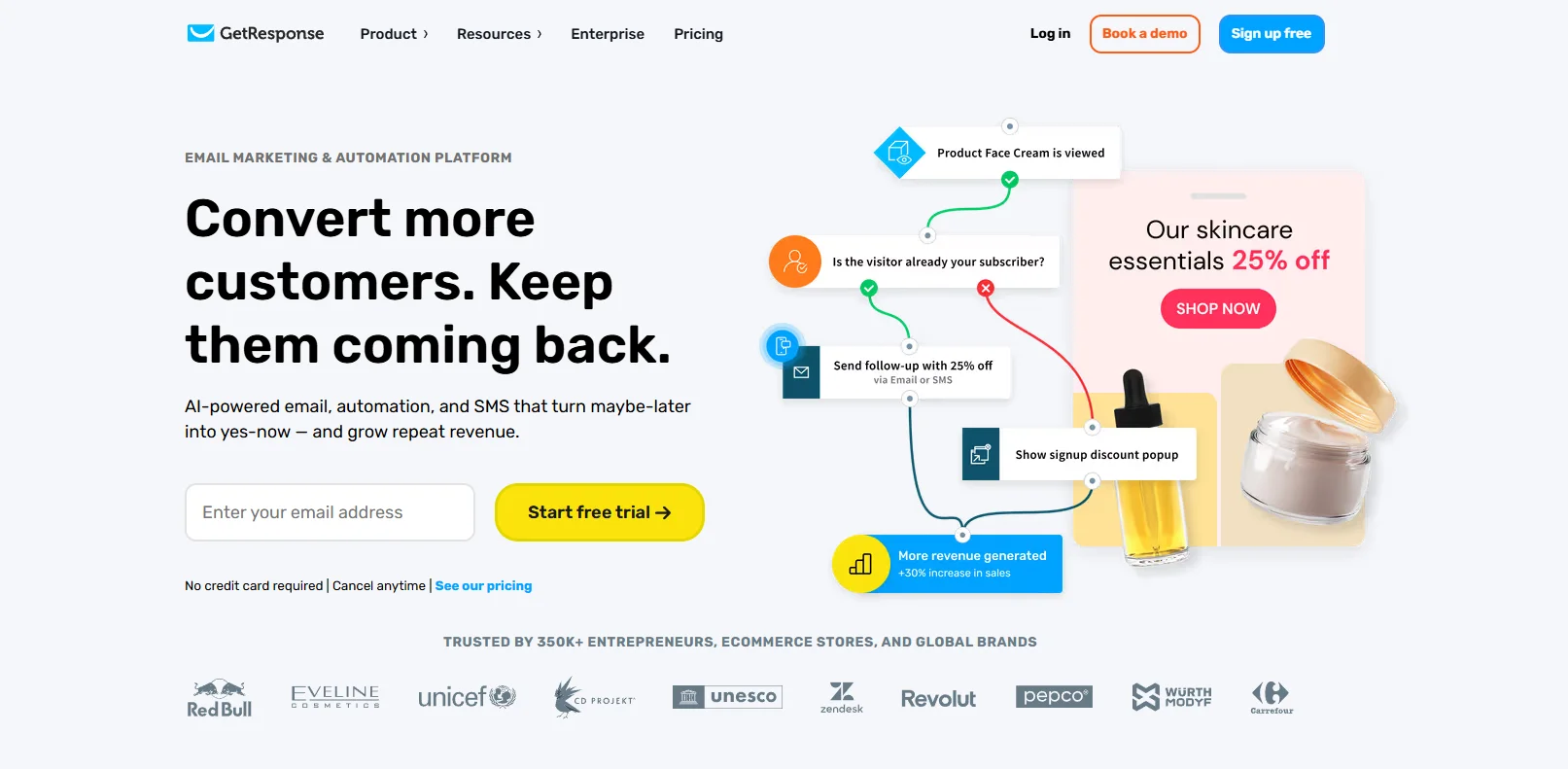
GetResponse is an all-in-one marketing platform that combines email marketing with automation, landing pages, webinars, forms, and conversion funnels.
It is especially useful for agencies working with course creators, coaches, educators, consultants, creators, and businesses that rely on lead magnets or online events.
Why agencies choose GetResponse
GetResponse stands out because it includes webinar and funnel features alongside email marketing. This makes it useful for agencies that build more than individual campaigns.
For example, an agency can create a funnel that starts with a downloadable guide, continues with a webinar invitation, sends reminders, follows up with attendees, and promotes a paid offer.
This is valuable for clients who sell knowledge products, coaching, consulting, training, digital products, or event-based offers.
Key features for agencies
GetResponse includes email campaigns, marketing automation, landing pages, forms, webinars, conversion funnels, e-commerce features, segmentation, and analytics.
The automation builder allows agencies to create follow-up sequences based on subscriber actions and engagement. Landing pages and webinar tools help agencies build full campaign flows without relying on too many separate platforms.
Best agency use cases
GetResponse is a good fit for agencies serving course creators, educators, consultants, coaches, creators, and businesses that use webinars or lead magnets to generate sales.
It is useful for webinar funnels, course launches, lead nurturing, sales sequences, event reminders, and content-driven campaigns.
Pros for agencies
GetResponse gives agencies a broad set of tools for building funnels, not just sending emails.
It can reduce tool complexity for clients that need landing pages, webinars, and automated email sequences in one place.
Possible limitations
GetResponse may be more complex than needed for clients that only want newsletters or basic promotional emails.
Some advanced features may only be available on higher plans, so agencies should check plan details carefully before recommending it to clients.
Bottom line
Choose GetResponse if your agency works with creators, educators, coaches, consultants, webinars, courses, landing pages, and funnel-based marketing.
How to choose the best email marketing software for your agency
There is no single best platform for every agency. The right choice depends on your services, client types, budget, and workflow.
Here is a practical way to narrow the list.
If your agency is small and needs speed
Choose a platform that is easy to learn, affordable, and fast to implement.
Best options: Selzy, MailerLite, Mailchimp.
These tools are better suited for newsletters, simple automations, promotional campaigns, and small-business clients.
If your agency manages many clients
Look for account organization, client dashboards, permissions, reporting, and template controls.
Best option: Campaign Monitor.
This matters when you need to separate client work clearly and present email marketing as a professional managed service.
If your agency sells automation strategy
Choose a platform with deep workflow logic, segmentation, tagging, behavior triggers, CRM features, and reporting.
Best options: ActiveCampaign, HubSpot.
These platforms are stronger for lifecycle marketing, lead nurturing, sales follow-up, and more complex customer journeys.
If your agency works with e-commerce brands
Choose a platform that can use customer behavior, purchase data, and revenue reporting.
Best option: Drip.
For e-commerce, the platform should support abandoned cart flows, post-purchase emails, product recommendations, win-back campaigns, and revenue attribution.
If your agency serves creators, coaches, and educators
Choose a platform with landing pages, funnels, webinars, and automated follow-up sequences.
Best option: GetResponse.
This is especially useful when email marketing is connected to lead magnets, webinars, course launches, or paid offers.
If your clients need multiple communication channels
Choose a platform that combines email with SMS, CRM, and transactional messages.
Best option: Brevo.
This is useful for small businesses that want one affordable platform for several customer communication needs.
Common mistakes agencies make when choosing email marketing software
Choosing based only on starting price
The cheapest plan is not always the cheapest long-term option. Agencies need to consider list growth, send volume, user seats, automation features, reporting, and support.
A tool that looks affordable at 1,000 contacts may become expensive at 50,000 contacts or when the client needs advanced automations.
Ignoring client management
A platform may work well for one business but become frustrating when used for ten clients. Agencies should check whether the tool supports separate accounts, workspaces, permissions, reports, and templates.
Overbuying too early
Some agencies choose enterprise-level tools before they actually need them. This can create unnecessary complexity, longer onboarding, and higher costs.
If your clients only need newsletters and simple automations, a simpler platform may be more profitable and easier to manage.
Underestimating automation needs
The opposite mistake is choosing a basic tool when clients actually need complex journeys. If your agency sells lifecycle marketing, e-commerce flows, or sales automation, weak automation features will quickly become a limitation.
Forgetting about reporting
Clients do not just want campaigns sent. They want proof that email marketing is working.
Agencies should choose platforms that make reporting clear, repeatable, and useful for client conversations.
Which email marketing software should your agency choose?
Choose Selzy if your agency wants a simple, affordable, and practical tool for email campaigns, automations, newsletters, e-commerce emails, and small-business clients.
Choose Campaign Monitor if branded reporting, template control, and client account management are top priorities.
Choose ActiveCampaign if your agency sells advanced automation, lifecycle marketing, lead nurturing, or CRM-connected campaigns.
Choose Mailchimp if your clients need a familiar tool for simple newsletters and basic campaigns.
Choose Brevo if your agency wants email, SMS, CRM, and transactional emails in one affordable platform.
Choose HubSpot if your agency manages full-funnel marketing, CRM, sales alignment, and enterprise-level clients.
Choose MailerLite if you need a clean, budget-friendly platform for small clients and simple campaigns.
Choose Drip if your agency focuses on e-commerce and revenue-driven customer journeys.
Choose GetResponse if your clients rely on webinars, courses, landing pages, and funnel-based marketing.

 New and noteworthy on our blog
