


Key takeaways
- Moosend is a popular email marketing tool for small to medium-sized businesses, but users often switch due to limited integrations, basic customization, and pricing limitations.
- Consider Moosend alternatives for better features; 10 platforms are detailed based on pricing, automation, integrations, ease of use, ecommerce capabilities, and scalability.
- Selzy is highlighted as a top Moosend alternative, offering affordable pricing, AI-powered tools, and 24/7 support.
- Mailchimp is recommended for automated campaigns, providing a free plan for up to 500 contacts and 1,000 emails per month.
Moosend is a highly popular email marketing tool designed for small to medium-sized businesses. However, there are a number of reasons to try Moosend alternatives. User reviews frequently mention limited integrations, basic template customization, and pricing limitations at higher feature tiers as common reasons for switching from Moosend.
For these reasons and others, you might want to try out a Moosend alternative for email marketing. If so, you’ve come to the right place; this article contains 10 other platforms you may consider for your next campaign. Here, you’ll find breakdowns of advanced features, as well as pros, cons, and pricing information for each.
We compared these Moosend alternatives based on pricing, automation features, integrations, ease of use, ecommerce capabilities, and scalability for growing businesses.
The best alternatives to Moosend at a glance
| Platform | Free options | Best for | Unique features | Starting price |
| Selzy | Free plan: up to 100 contacts and 1,000 emails/month. New users can also start a 14-day trial with 2,000 contacts and 10,000 emails | Startups; small, medium-sized, and large businesses; e-commerce stores | 24/7 support, AI-powered email editor, analytics | $7.5/month: 500 contacts and unlimited emails |
| Mailchimp | Free plan: up to 250 contacts and 1,000 emails/month (250 per day) | E-commerce, small and medium-sized businesses | CRM integration, email marketing automation, landing page builder | $13/month: 500 contacts, monthly email limit of 10x contact list |
| ActiveCampaign | Free 14-day trial: up to 100 contacts and 100 emails; limited to 1 user | E-commerce, medium-sized businesses | 900+ integrations, dynamic content, lead tracking | $15/month: 1,000 contacts, monthly email limit of 10x contact list |
| Constant Contact | Free 30-day trial: unlimited contacts and up to 100 emails | Non-profits, small businesses | Customer survey feature, engagement heatmap, social media ads manager | $12/month: 500 contacts, monthly email limit of 10x contact list |
| GetResponse | Free plan: up to 500 contacts and 2,500 emails/month | E-commerce, solopreneurs, small to medium-sized businesses | Autoresponders, free onboarding, landing page builder | $19/month: 1,000 contacts and unlimited monthly emails |
| Kit | Free plan: up to 10,000 subscribers and unlimited emails | Bloggers, content creators, marketers | Paid newsletters, landing page builder, subscriber tagging | $15/month: 300 subscribers and unlimited emails |
| Zoho Campaigns | Forever free plan: up to 2,000 contacts and 6,000 emails/month | Marketers, small businesses | Dynamic content, email polls, optimal open time sends | $4/month: 500 contacts and unlimited emails |
| AWeber | Free trial: 14 days, access to all the features of the plan you select | Non-profits, startups, small businesses | Advanced analytics, email split testing, functional free plan | $15/month: 500 subscribers, monthly email limit of 10x contact list |
| Omnisend | Free plan: up to 250 contacts and 500 emails/month | E-commerce, small to medium-sized businesses | 130+ integrations, automation workflows, dynamic content | $16/month: 500 contacts and 6,000 emails/month |
| Klaviyo | Free plan: up to 250 contacts and 500 emails/month; email support for 60 days | Experienced marketers, startups, small businesses | Built-in forms and pop-ups, easy setup, SMS marketing | $20/month: 251–500 active profiles and 5,000 emails/month |
About Moosend
Moosend is an email marketing platform designed for small and medium-sized businesses. It includes a drag-and-drop editor, automation workflows, landing pages, and AI-powered tools for campaign creation.
While Moosend is relatively affordable, many advanced features — including some automation and audience-management capabilities — are limited to higher-tier plans. The platform also offers fewer integrations and template customization options than some competitors.
Moosend currently offers a 30-day free trial, while paid plans include unlimited email sends and automation features.
Why use Moosend alternatives?
There are a lot of reasons to pick Moosend for your email marketing needs, but you may still wish to consider other services. While the Pro subscription tier includes basic features you’d like to see in an email marketing platform, many of the more advanced tools like certain automation triggers and audience discovery are locked behind higher prices. If you’re working on a budget, it might be worth looking into more affordable options.
Additionally, if you’re a small business looking to get started with a free plan, you’ll have to look for other email services like Moosend. With the exception of its free trial, all of Moosend’s plans are paid, ruling it out as an option.
Most businesses switch from Moosend when they need more advanced automation, stronger e-commerce integrations, better deliverability controls, or a more scalable pricing structure.
10 best Moosend alternatives to consider
If you’re looking for the best Moosend alternatives, your search is over. In this section, we go over ten of the best email automation tools, breaking down the pros, cons, and prices. With our help, you’ll be able to find the best solution for you and your business.
Please note that most of these Moosend-type services are best suited for small and medium-sized businesses. Others may be best for particular types of companies — for example, non-profits or online retailers. So, when making your final decision, make sure you compare the available options to determine which would be the best fit for both the size and type of company you’re running.
Selzy — Best option for email marketing
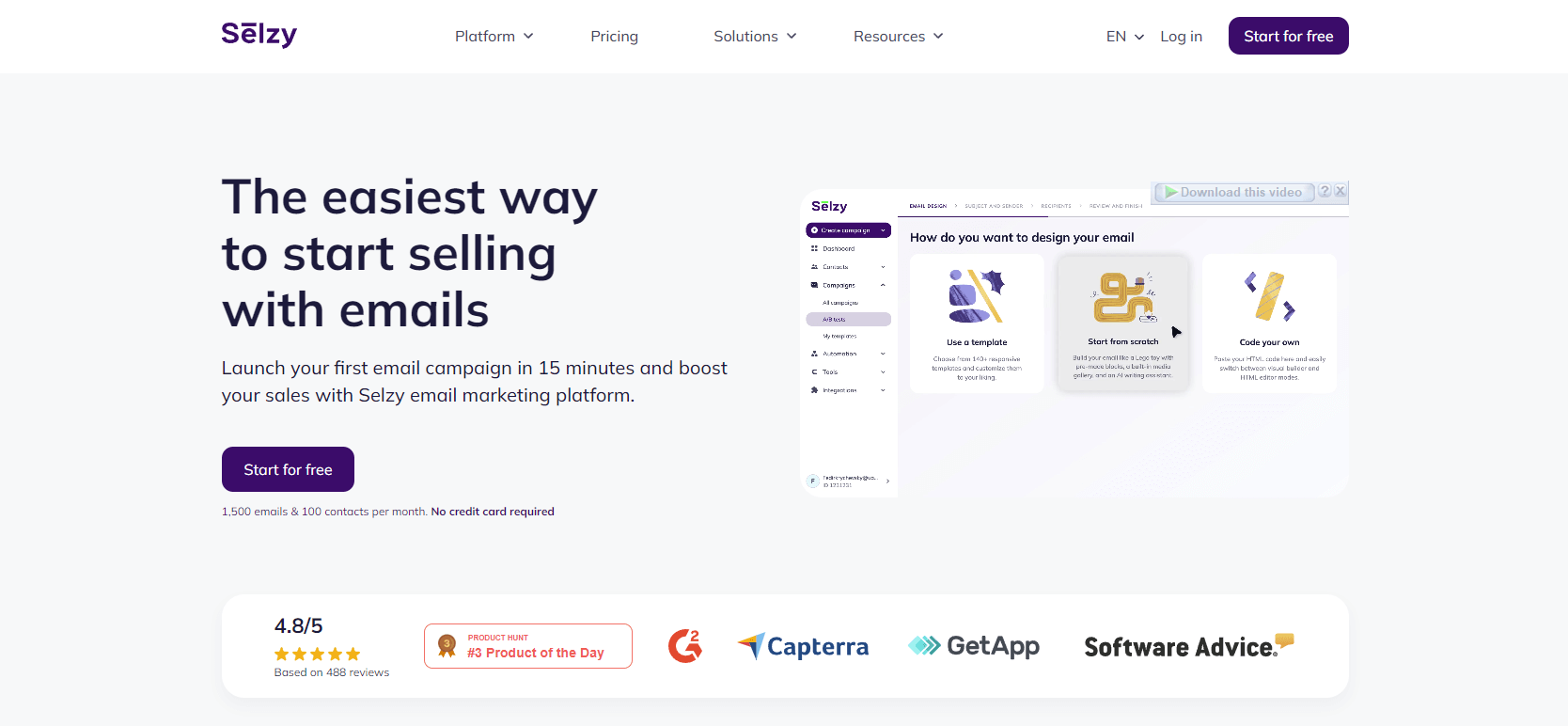
One of the strongest alternatives to Moosend, both in terms of price and the range of features on offer, is Selzy. With this email marketing solution, putting together effective promotional campaigns is both easy and affordable. Selzy is particularly appealing to small and medium-sized businesses looking for a balance between affordability, automation, and responsive customer support.
Compared to Moosend, Selzy offers more responsive customer support, stronger built-in AI tools, and a lower entry price for businesses that want unlimited email sending without upgrading to expensive tiers.
With the help of advanced AI technology, Selzy’s user-friendly email builder makes it easy to create impactful, personalized messages and deliver them to your audience. The platform also includes audience segmentation features, allowing marketers to engage with subscribers more effectively. Additionally, users can take advantage of advanced analytics to track the performance of advertising campaigns, making it easier to refine marketing strategies.
Selzy further supports its users by offering email marketing courses to help them refine their skills and maximize the platform’s capabilities. So, whether you’re using the budget-friendly Free plan or comprehensive Enterprise bundle, you’ll be able to acquire the necessary expertise to make the most of your email marketing campaign.
Pros
- One of the cheaper alternatives to Moosend, Selzy allows you to scale your business without paying high monthly costs.
- Selzy is very easy to use; new users will only need to dedicate 15 short minutes to get their account up and running to send emails.
- Marketers can access game-changing courses to sharpen their advertising skills and improve overall results.
- Selzy’s 24/7 customer support team can be contacted through a range of different channels, including phone, email, and live chat.
Cons
- Selzy offers fewer integrations than some other platforms, but there is still a wide range of CRM and CMS integrations, and other services that can integrate with the platform.
Pricing
Selzy’s paid plans are priced according to the number of contacts:
- Free plan: 100 contacts, 1,000 emails/month. New users can also start a 14-day trial with 2,000 contacts and 10,000 emails.
- Lite plan: $7.5/month, 500 contacts, unlimited emails, A/B testing, custom unsubscribe page builder.
- Standard plan: $15/month, 500 contacts, unlimited emails, plus anti-spam tips, email deliverability tips, subject line assistance, and more.
- Enterprise plan: custom price, 500,000+ contacts, unlimited emails, plus access to all Selzy features.

Mailchimp — Best for automated campaigns
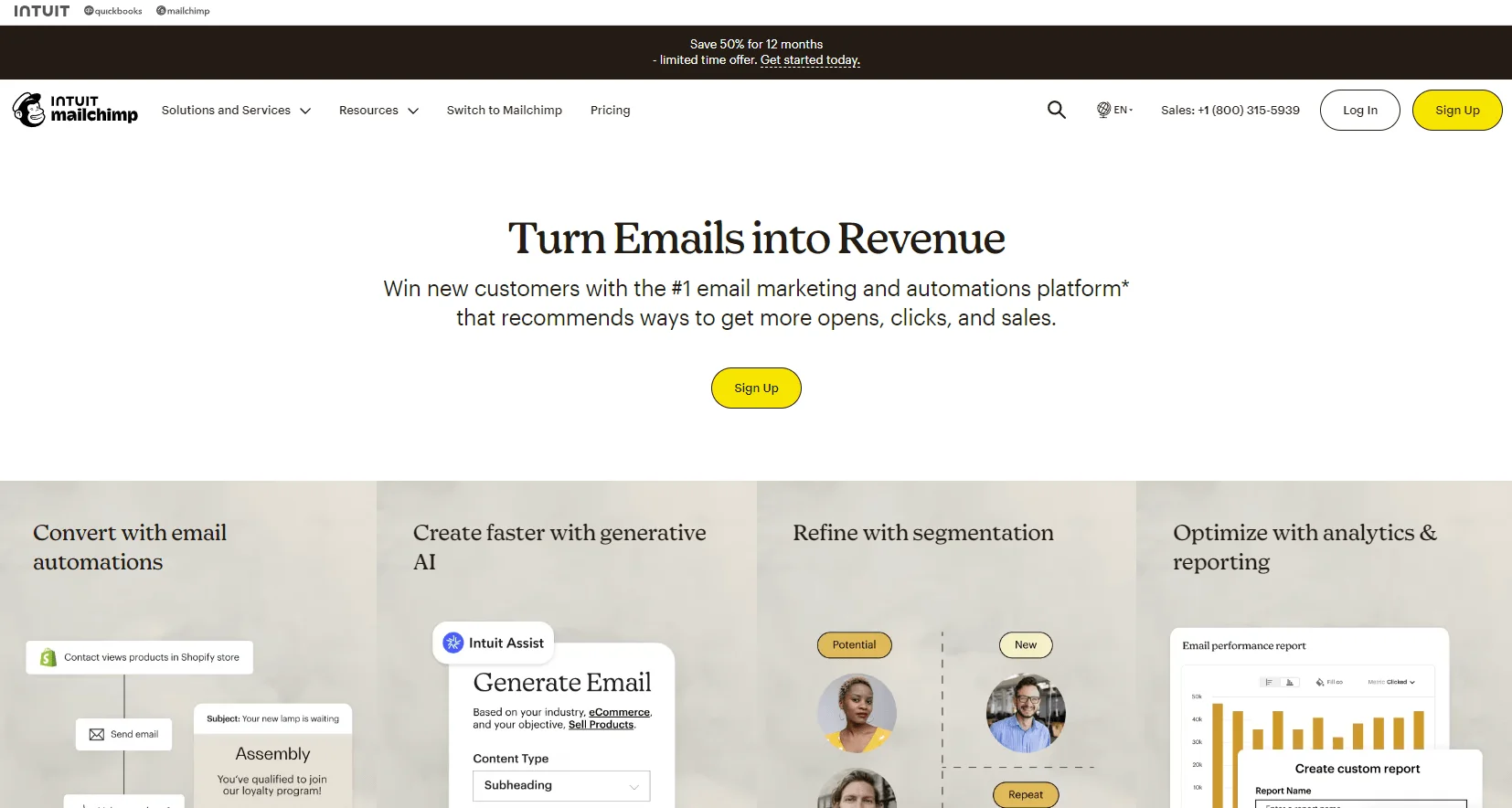
Mailchimp’s free plan includes up to 500 contacts and 1,000 emails per month, making it one of the best free Moosend alternatives on the market. The platform boasts a pretty comprehensive range of marketing features, including contact list management, email automation, and analytics and reporting features. It has an array of templates to choose from, too, though the selection is a little limited compared to those on offer elsewhere. Mailchimp remains one of the most widely adopted email marketing platforms among small businesses thanks to its broad feature set and extensive integrations.
Compared to Moosend, Mailchimp offers a broader integration ecosystem and more mature automation workflows, making it a stronger option for businesses already using multiple marketing tools.
While Mailchimp does have a good selection of tools for experienced managers, this can make it a little confusing to new users. If you don’t have a lot of experience using email marketing tools, you may want to consider another option.
Pros
- Detailed insights into campaign performance
- Library of pre-built email automation sequences
- Helpful customer support service
Cons
- Complex UI can be daunting for new users.
- Advanced analytics and segmentation, custom-coded templates, and other features are not available at Free and Essentials plan levels.
Pricing
- Free plan: 250 contacts, 500 emails/month (250 emails/day), basic templates, support for 30 days only.
- Essentials: $13/month, 500 contacts, monthly email limit of 10x contacts, plus A/B testing, forms and landing pages, and limited analytics.
- Standard: $20/month, 500 contacts, monthly email limit of 12x contacts, plus more automation options, advanced segmentation, and behavioral targeting.
- Premium: $350/month, 10,000 contacts, a monthly email limit of 15x contacts, plus 4 onboarding sessions, priority support, and unlimited users.
ActiveCampaign — Best for experienced marketers
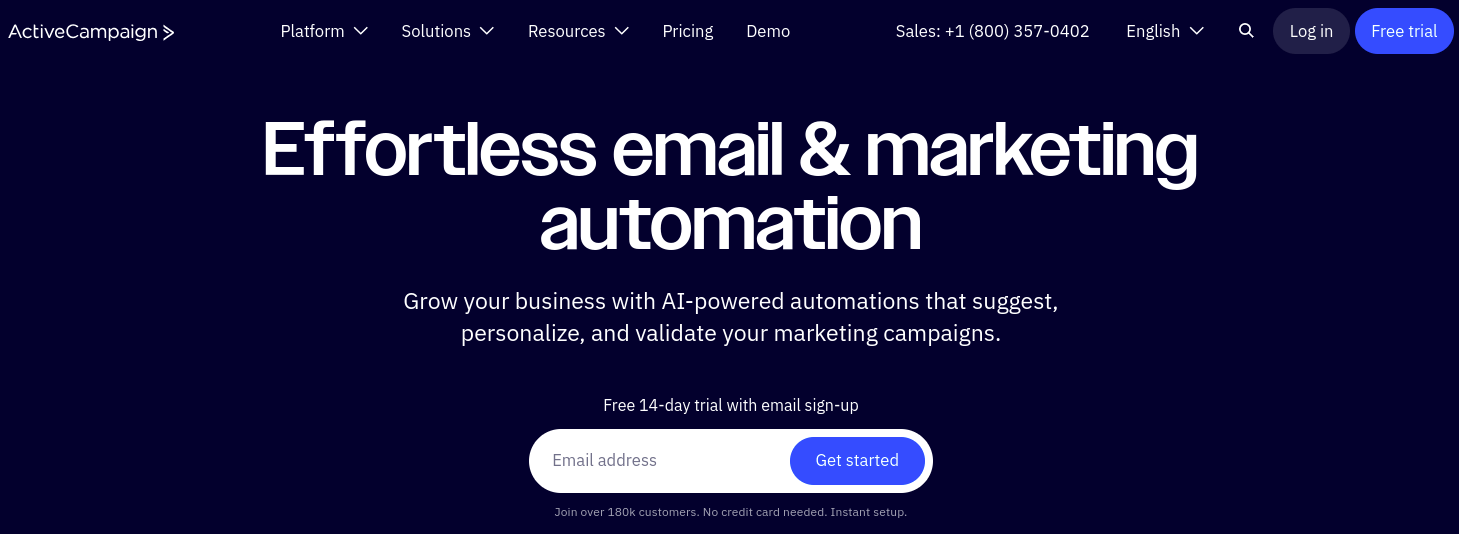
If you’re an experienced marketer looking to create comprehensive marketing campaigns with the help of advanced automation and detailed analytics, ActiveCampaign is the best alternative to Campaign Monitor for you. The service includes a great email builder, too, with over 120 templates to choose from. ActiveCampaign is especially popular among experienced marketers running behavior-based automation and multi-step customer journeys.
While Moosend focuses on simplicity, ActiveCampaign is better suited to businesses that need advanced automation logic, CRM functionality, and deeper customer journey customization.
The wide range of features can make this platform a little daunting for beginners. Also, all those features don’t come for free; smaller businesses may find this option on the pricier side. However, if these two points aren’t deal-breakers for you, ActiveCampaign might be worth thinking about.
Pros
- Extremely detailed campaign analytics, including click-maps and geo-tracking
- Good range of email templates, created using both HTML and CSS
- Highly trained, experienced customer support staff
Cons
- A steep learning curve for new users
- Not as affordable as some of the other entries on this list
Pricing
- Starter plan: $15/month, 1,000 contacts, monthly email limit of 10x contacts, 1 user, 5-action automation, A/B testing for emails.
- Plus plan: $49/month,1,000 contacts, monthly email limit of 10x contacts, 1 user, unlimited-action automation, standard segmentation, landing pages.
- Pro plan: $79/month, 1,000 contacts, monthly email limit of 12x contacts, 3 users, A/B testing for emails and automation, advanced segmentation.
- Enterprise plan: $145/month, 1,000 contacts, monthly email limit of 15x contacts, custom objects, premium CRM integrations, all other features.
Constant Contact — Best for event organizers
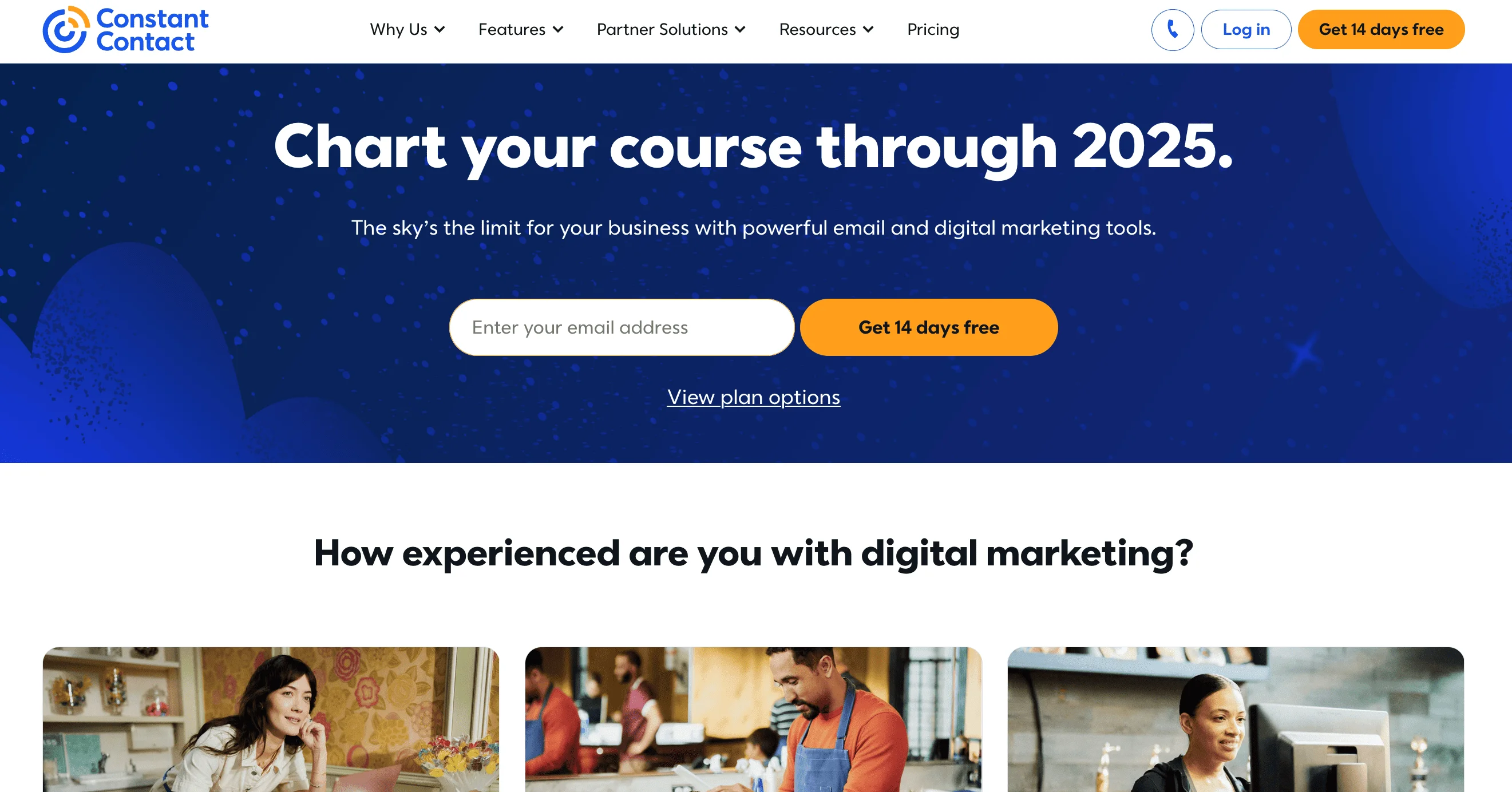
For marketers looking for companies like Moosend to put together events as well as effective email campaigns, Constant Contact is a great option. This is because, in addition to features like surveys and polls, advertisers can also use this platform to promote and sell event tickets using its handy Event Management tool. The platform is particularly well known among nonprofits and local organizations that regularly run events and community campaigns.
Compared to Moosend, Constant Contact stands out for its event management and social marketing features, though it offers fewer advanced automation capabilities.
Other benefits of Constant Contact include AI content recommendations, a wide range of beneficial integrations, and web signup forms. However, despite all these perks, this platform isn’t perfect; most notably, it lacks some important automation options you can find elsewhere, including multichannel features.
Pros
- Social media integrations for reaching a wider audience
- Event management features
- Generative AI making it easier to put together effective emails
Cons
- No advanced automation features
- Lower tiers lacking audience segmentation options
Pricing
- Lite plan: $12 month, 500 contacts, monthly email limit of 10x contacts, 1 automation template, 1 user, limited reporting features.
- Standard plan: $35 month, 500 contacts, monthly email limit of 12x contacts, 3 automation templates, 3 users, advanced reporting features.
- Premium plan: $80 month, 500 contacts, monthly email limit of 24x contacts, unlimited automation templates, unlimited users.
GetResponse — Best for digital content makers
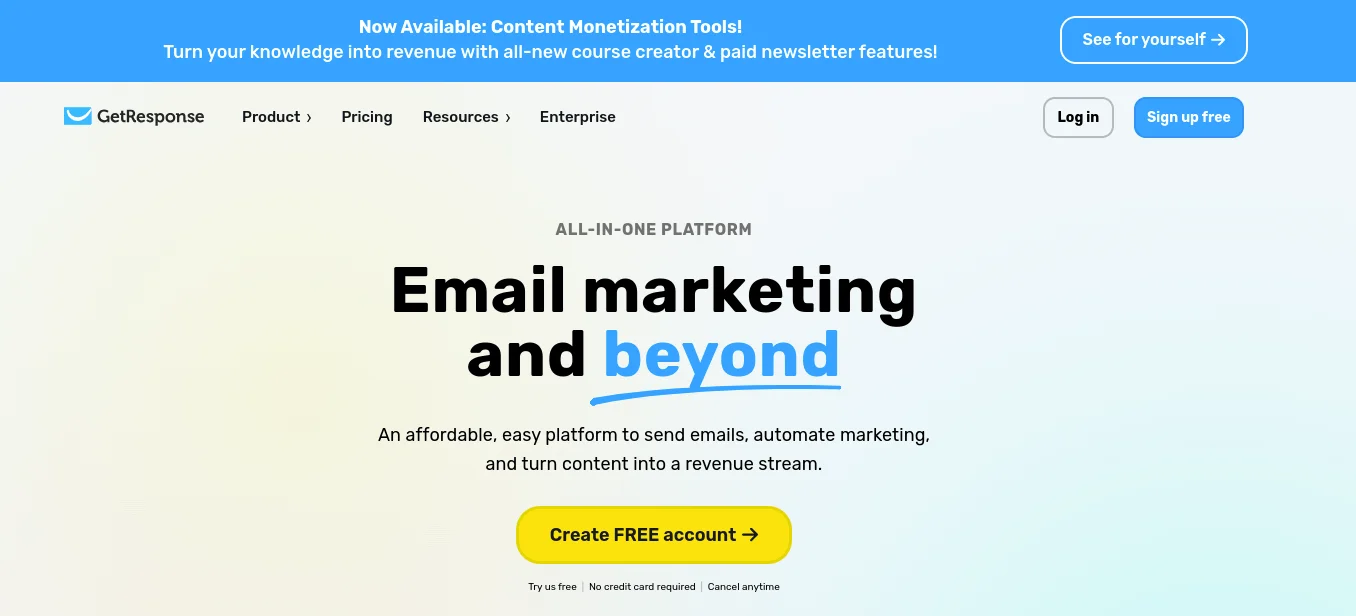
An all-in-one marketing tool, GetResponse is one of several Moosend competitors that is particularly well-suited to online retailers. With this platform, users can create mailing lists, implement automation, view and analyze key statistics, and engage customers through multiple marketing channels like SMS and web push. GetResponse is widely used by e-commerce brands and digital businesses that rely on webinars, funnels, and multichannel marketing.
GetResponse offers broader multichannel marketing functionality than Moosend, including webinars, sales funnels, and SMS campaigns for businesses running more complex customer acquisition strategies.
Newsletter templates, lead funnels, and a landing page builder are just a few of the features marketers can enjoy when using GetResponse. However, it should be noted that users of the platform’s free-forever plan will not be given access to the full range of tools on offer — such as automation.
Pros
- Free onboarding and migration support for all paid plans
- Sales funnels and landing pages
- Easy to use
Cons
- Companies with large contact lists may not be able to afford even GetResponse’s cheapest rate.
- Email automation and other features are only available at high subscription tiers.
Pricing
- Free plan: 500 contacts, 2,500 emails/month, 1 landing page, key metrics tracking.
- Starter: $19 month, 1,000 contacts, unlimited emails, autoresponders, signup forms, and landing pages.
- Marketer: $59/month, 1,000 contacts, unlimited emails, advanced marketing automation workflows, and advanced audience segmentation.
- Creator: $69/month, 1,000 contacts, unlimited emails, abandoned cart recovery, e-commerce tracking, and web push notifications.
- Enterprise: Custom pricing with custom features.
Kit — Best for bloggers
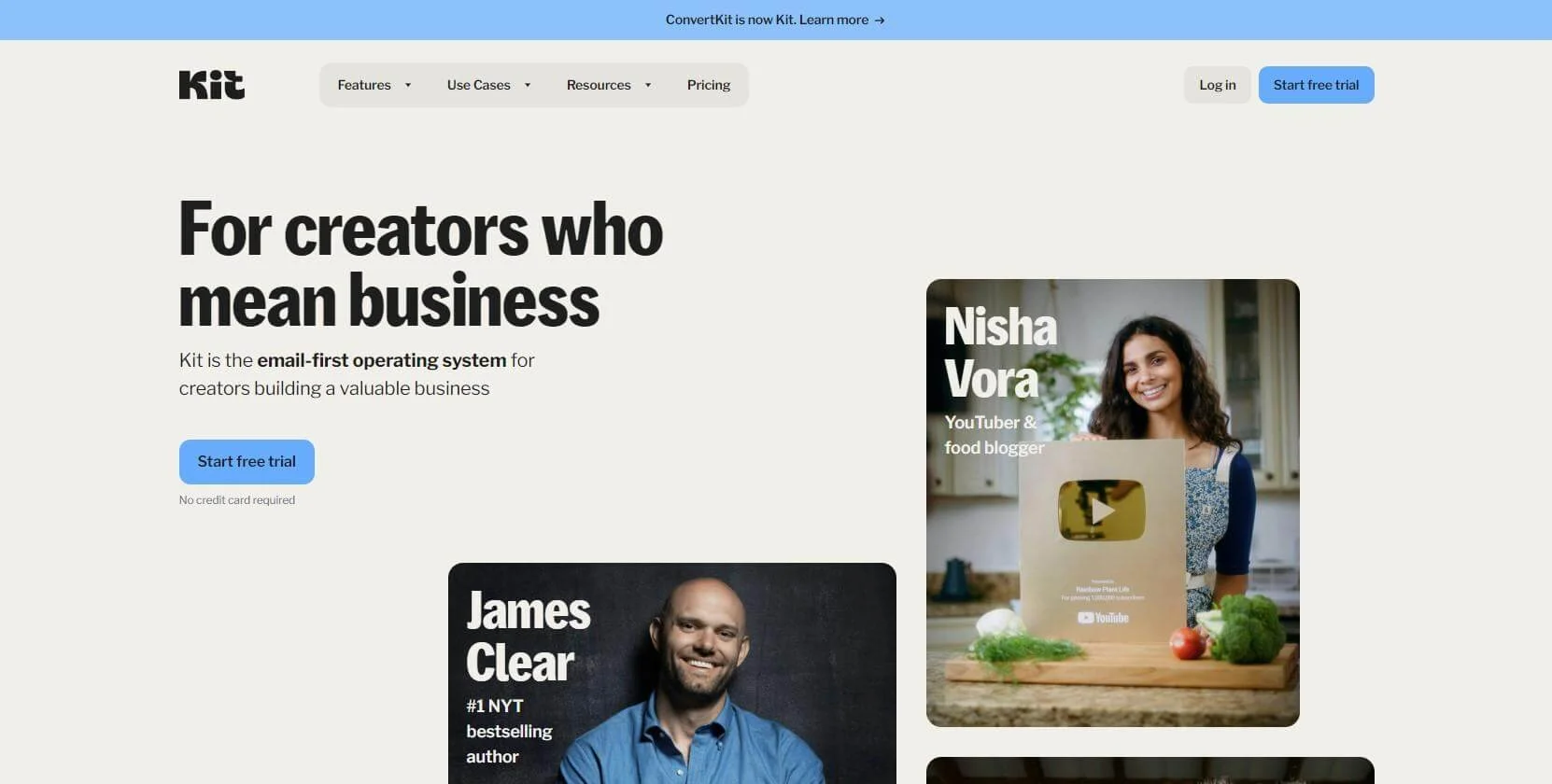
If you’re a marketer or content creator looking for an email service like Moosend, Kit (previously known as ConvertKit) might be the right platform for you. This tool was made with creatives in mind, helping everyone from bloggers to advertisers to artists monetize their passions. Thanks to user subscription management, automated marketing campaigns, and unlimited email sequences, users can grow their audience and engage viewers easily.
Unlike Moosend, Kit is built specifically for creators and bloggers, with stronger audience monetization tools and subscriber tagging features.
With that said, Kit comes with its disadvantages, too. One of the biggest is scalability. Once you exceed the 1,000 subscriber mark, plan prices escalate drastically, making the platform quite expensive to use.
Pros
- Flexible payment plans
- Connect with fellow bloggers through Kit’s Creator Network
- Content monetization
Cons
- No drag-and-drop builder
- Prices increase steeply when users surpass 1,000+ subscribers
Pricing
- Newsletter plan: Free, 10,000 subscribers, unlimited email broadcasts and landing pages, 1 user, plus 1 email sequence and 1 basic visual automation.
- Creator plan: $15/month, 300 subscribers, unlimited email broadcasts and landing pages, 2 users, unlimited email sequences, and unlimited visual automation.
- Creator Pro plan: $25/month, 300 subscribers, unlimited email broadcasts and landing pages, unlimited users, insights dashboard, priority support, and more.
Zoho Campaigns — Best for online retailers
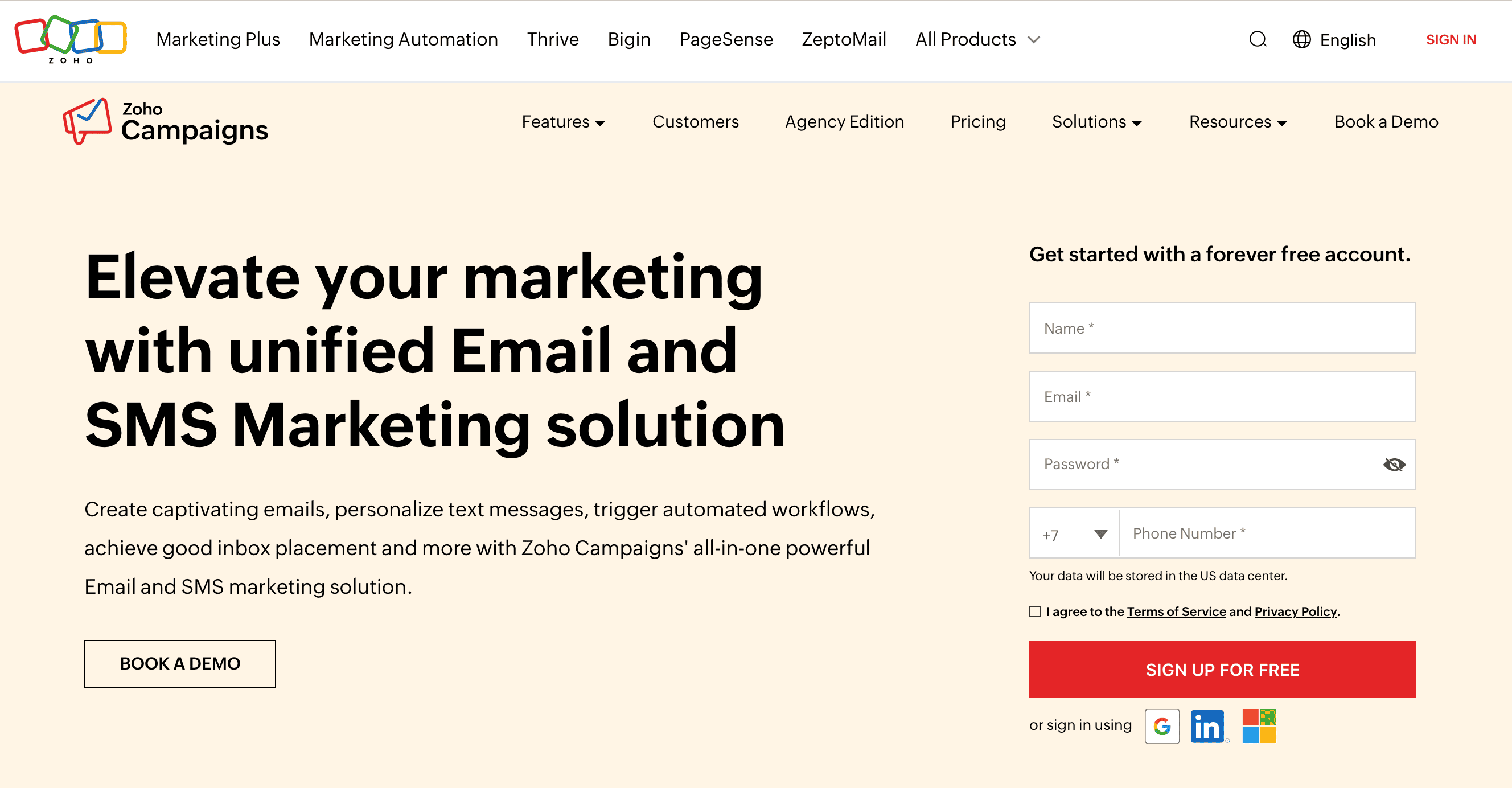
If you’re in the market for a free Moosend alternative, you might want to consider Zoho Campaigns for your advertising endeavors. This platform is part of the Zoho suite, so it integrates perfectly with other Zoho products. Businesses already using Zoho CRM often choose Zoho Campaigns to simplify sales and marketing synchronization.
Compared to Moosend, Zoho Campaigns is a stronger fit for businesses already using Zoho CRM and other Zoho business tools thanks to its native ecosystem integrations.
Zoho Campaigns is especially well-suited to online retailers, thanks to its purchase follow-up and automated cart abandonment workflows. With its selection of attractive email templates, insightful analytics, and email automation, it is an effective tool in marketing, helping users reach customers with effective advertisements.
Pros
- Useful integrations
- Pre-made email templates, workflows, and automation
- Mobile app
Cons
- Email deliverability is reported to be lower with Zoho than with other options.
- Setting up automation workflows can be tricky.
Pricing
- Forever Free plan: 2,000 subscribers, 6,000 emails/month, 5 users, signup forms, limited email templates, compliance check.
- Standard plan: $4/month, unlimited emails, 10 users, basic segmentation, access to all templates, basic drag-and-drop workflows.
- Professional plan: $6/month, unlimited emails, 20 users, advantaged segmentation, contact scoring and tags, advanced drag-and-drop workflows, and more.
AWeber — Best for a quick start
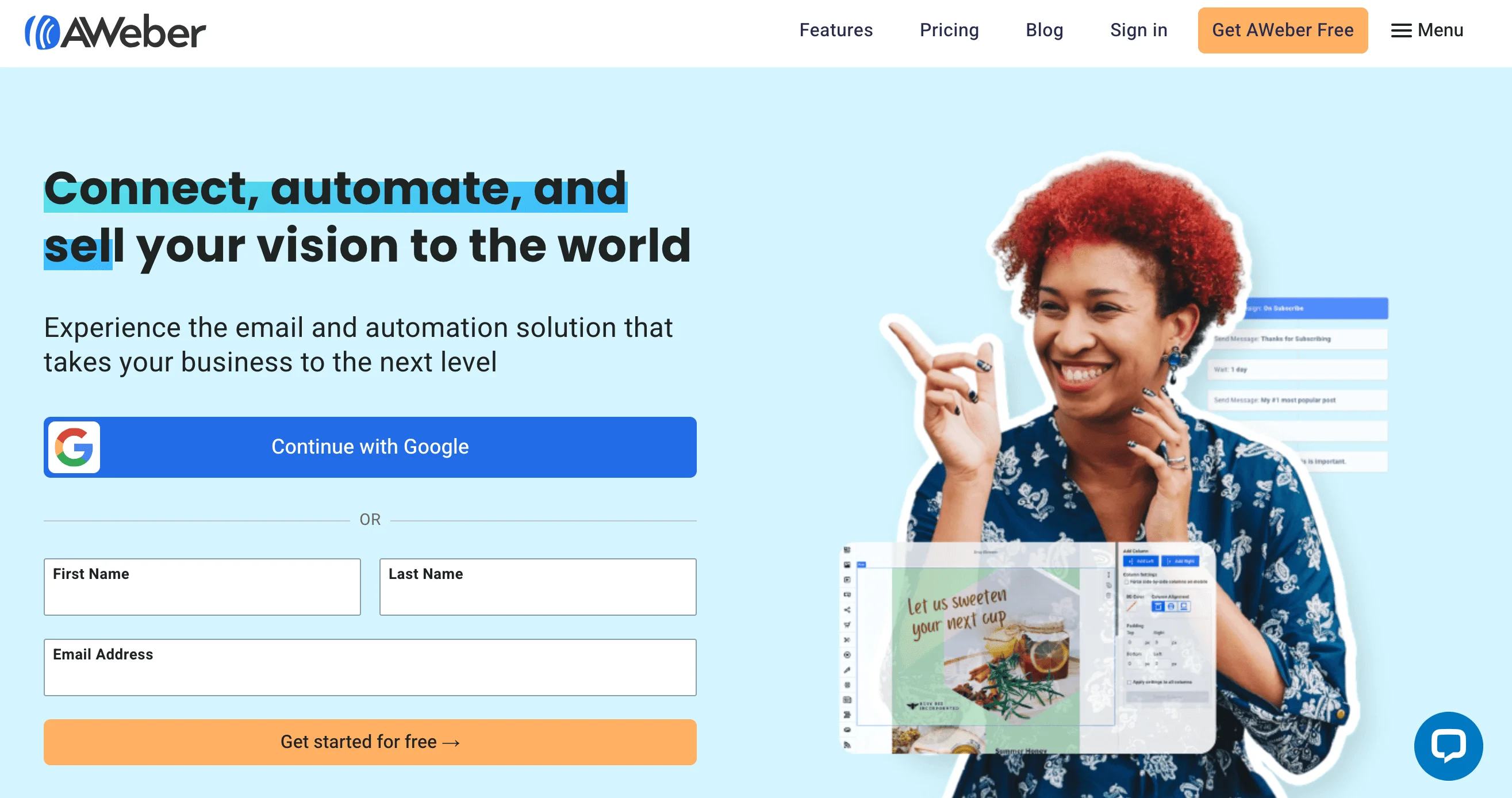
AWeber is an alternative to Moosend that we love for its simplicity. It may not have all the bells and whistles of some of the other options on this list, but this platform’s automation tools, contact list management functionality, and built-in e-commerce features make it stand out. Omnisend is particularly well known for its Shopify and WooCommerce integrations, making it a strong choice for e-commerce-focused brands.
AWeber is generally easier for beginners to learn than Moosend and includes a functional free plan, though its analytics and automation features are less advanced than some competitors.
With an in-built AI writer, autoresponders, automation, and the ability to segment your list, AWeber has all the necessary features to craft effective emails for your audience. However, one of the downsides of this platform is that its analytics tools are weaker than those offered by other services.
Pros
- Over 700 integrations
- Landing page builder
- Web push notifications
Cons
- Email templates have quite basic designs.
- Limited analytics.
Pricing
- Free trial: 14 days, access to all the features of the plan you select.
- Lite plan: $15/month, unlimited contacts, monthly email limit of 10x contact list, 3 landing pages, 3 email automation, 3 users.
- Plus plan: $30/month, unlimited contacts, monthly email limit of 12x contact list, unlimited landing pages, email automation, and users.
- Unlimited plan: $899/month, unlimited contacts, monthly email limit of 15x contact list, all features, personalized account management.
Omnisend — Best for Shopify marketers
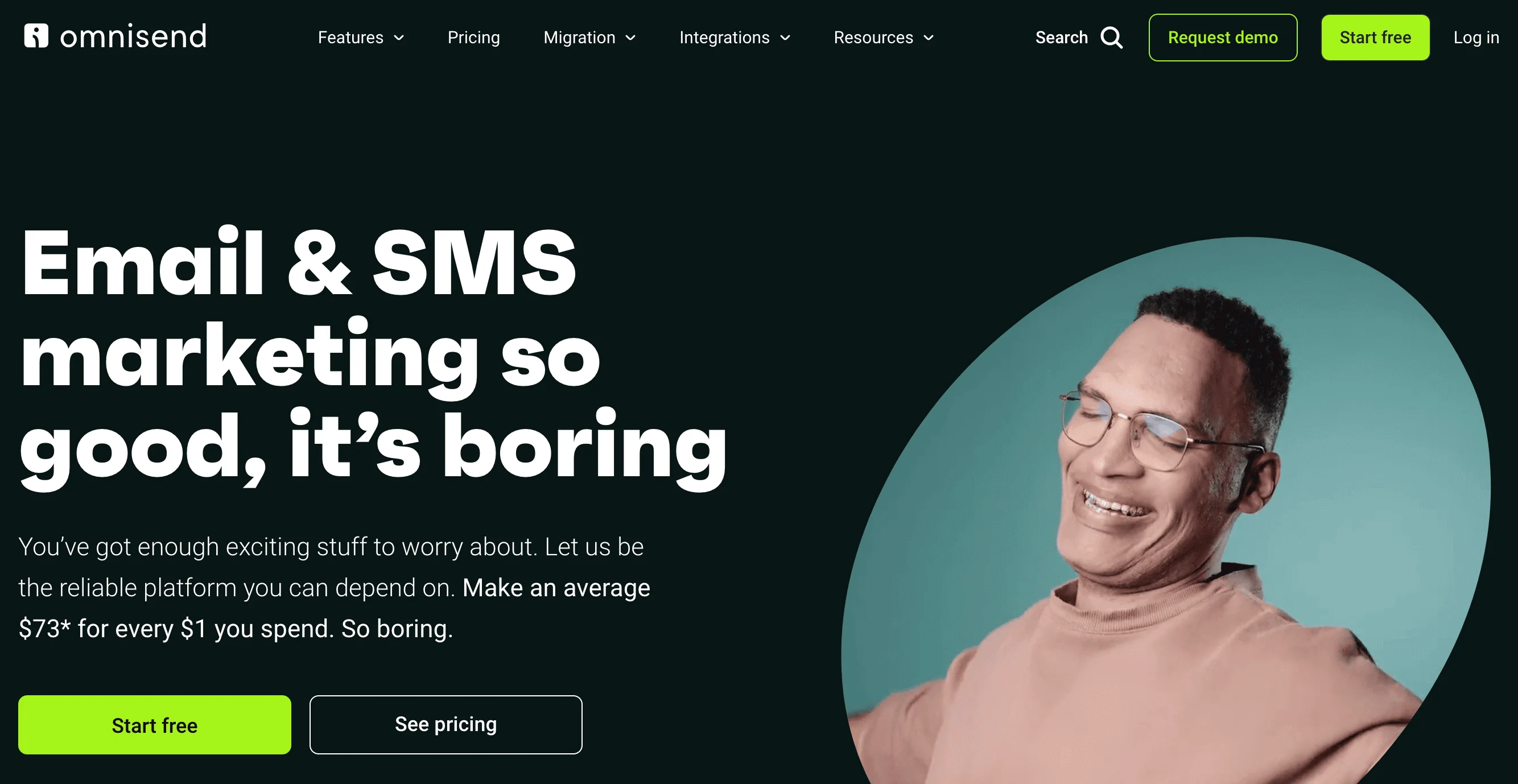
If your next advertising campaign relies on multichannel marketing features, Omnisend might be the best alternative to Moosend for you. This platform uses a blend of emails, SMS, and push notifications to reach your audience, backed up by features like automation, e-commerce integrations, templates, and more.
Compared to Moosend, Omnisend provides stronger ecommerce functionality, including prebuilt Shopify workflows, SMS marketing, and omnichannel automation.
Omnisend is particularly good for online retailers. It has many pre-built automation workflows to choose from, as well as dynamic content, personalized product recommendations, abandoned cart reminders, and more. However, the platform has some limitations. Both CRM and Google Analytics integration are lacking.
Pros
- Integration with 130+ e-commerce and other app
- Easy to use, with user-friendly workflow automation
Cons
- Fewer design options than other Moosend alternatives
- No Google Analytics or CRM integrations
Pricing
- Free plan: 250 contacts, 500 emails/month, 50 published reviews (Shopify).
- Standard plan: $16/month for 500 contacts, up to 6,000 emails/month, 1,000 published reviews.
- Pro plan: $59/month for 2,500 contacts, unlimited emails, published reviews, advanced reporting.
Klaviyo — Best for multichannel marketing
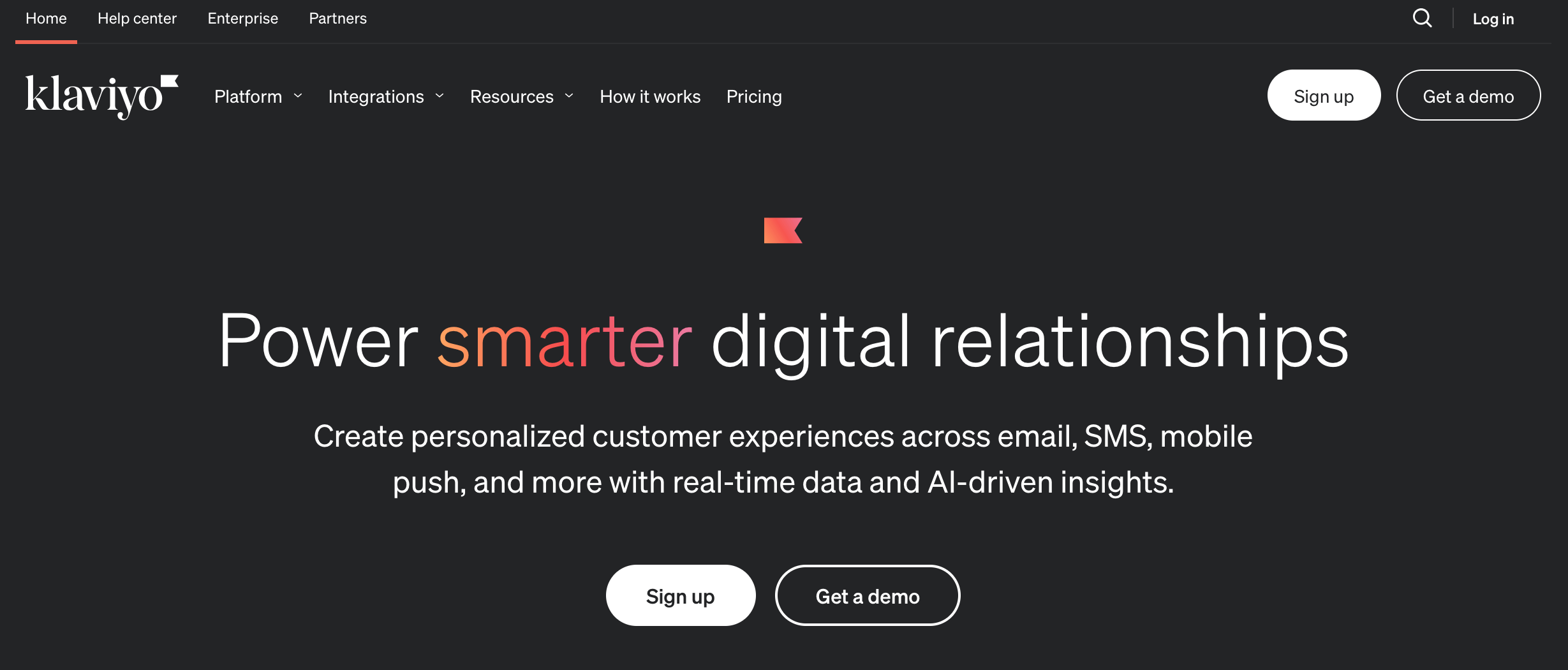
Our final entry in this list of Moosend alternatives, Klaviyo, offers great insights into customer behavior with robust reporting tools, customer profiles, and precise segmentation. With this information, users can create targeted email campaigns and take advantage of Klaviyo’s extensive library of templates. Klaviyo is widely adopted by data-driven e-commerce brands that prioritize segmentation and customer lifetime value tracking.
Klaviyo offers more advanced segmentation and e-commerce analytics than Moosend, making it particularly attractive to data-driven online retailers.
Despite these advanced features, Klaviyo is easy to navigate, thanks to its clean, straightforward interface. Nonetheless, advertisers may be put off by the platform’s relatively high prices.
Pros
- Comprehensive marketing solution for both email and SMS
- Built-in forms and pop-ups
- Lots of templates to choose from
Cons
- Not as cheap as some other competitors of Moosend
- Steep learning curve for people who are new to marketing
Pricing
- Free plan: up to 250 active profiles, 500 emails/month, 150 free monthly SMS/MMS credits, email support for 60 days.
- Email plan: $20/month for up to 500 active profiles, 5,000 emails/month, SMS/MMS fees, mobile push notifications.
- Email and SMS plan: $35/month for up to 500 active profiles, 5,000 emails/month,150 free SMS/MMS credits, mobile push notifications.
Conclusion
There is no shortage of email platforms like Moosend available on the market. We hope that this review of ten leading alternatives has made your search for a good email marketing platform a little bit easier.
Selzy is a fantastic example of a particularly high-quality Moosend alternative, featuring AI-powered tools, automation features, analytics, and more, all for affordable prices. If you’re looking to start an email marketing campaign for your small, medium, or large enterprise, Selzy might just be the best email service provider for you.

 New and noteworthy on our blog