


Key takeaways
- Email automation software streamlines marketing efforts, boosts sales conversion, attracts new subscribers, and enhances campaign effectiveness.
- Factors to consider when choosing email marketing automation software include sending limits, A/B testing, segmentation, personalization, price range, and reviews.
- No perfect email marketing automation tool exists, but selecting based on these factors can find a suitable match for a business.
If you are looking for a way to enhance your marketing strategy, create targeted email campaigns, and engage your subscribers, email automation software is a powerful way to streamline your marketing and grow your business. Using software, you can increase sales conversion, attract new subscribers and customers, boost the effectiveness of your marketing campaigns, and make them more relevant and personal for your contacts.
In this article, you’ll find a list of the best email automation software for you to choose from. So, keep reading to find a solution that suits you.
Quick verdict
If you want a beginner-friendly and affordable email automation tool, start with Selzy. If you need advanced branching and AI-assisted workflows, compare ActiveCampaign. If your store depends on abandoned cart, product, SMS, and ecommerce events, shortlist Omnisend and Klaviyo. If you want a CRM-first suite, compare HubSpot, Keap, and Ontraport. If you are a creator or newsletter writer, Kit is often a better fit than a general ecommerce platform.
How to choose email marketing automation software
How we compared the tools
We compared the tools by automation depth, free-plan usefulness, monthly starting price, segmentation and personalization, ecommerce or CRM features, extra channels such as SMS and push, integrations, support access, and fit for different business types. Pricing and plan limits change often, so use this list as a shortlist and confirm the exact plan details before buying.
There are many email marketing automation software services on the market now, so how do you make a good choice for your business? Before selecting a tool, make sure to scan through its website to check the list of its features and other essential information, such as the following:
- Sending limits. Usually, email marketing tools set limits on the number of contacts and email sends. Depending on the size of your business, you can choose a tool and a plan that is suitable for you. Let’s say, you have a small e-commerce business and the list of your contacts is not too long. In this case, you won’t need to purchase a plan that covers too many subscribers.
- A/B testing option. Testing your emails may help you identify what works best for your subscribers. This can also improve the experience of your customers. Most email marketing apps offer split testing for manual one-off email campaigns. However, some tools also offer A/B testing for automated campaigns — the feature is less common but good to have.
- Segmentation and personalization. If you want to make your emails more relevant and improve subscriber interaction, you may need to look for these features. Depending on your business type, look for a tool that supports the level of personalization you require. For example, for an e-commerce company, dynamic product blocks can help drive sales and engage potential customers.
- Price range and free plans. If the automation features that a free plan provides are enough for you, you won’t need to purchase a paid version. Usually, you can find the list of the available plans on the platform’s website.
- Reviews. There’s a lot of intel you can get from reviews. For example, if the tool doesn’t offer a free plan, you can get firsthand accounts on its usability, learning curve, and more. It will also help you learn about repeating issues like deliverability problems, bad tech support, or scammy policies.
Before you choose, answer a few practical questions: do you only need welcome and drip sequences, or do you need branching workflows? Do you need ecommerce triggers like abandoned cart, post-purchase, and product recommendations? Do you need CRM or sales pipeline automation? Will you add SMS, WhatsApp, or push notifications later? Can you test automated emails, not only one-off campaigns? What support level is included in the plan you can afford?
There’s no such thing as a 100% perfect email marketing automation tool — however, using all this information, you can find a practical match for your business.
13 best email automation tools in 2026
The email marketing automation market offers an abundance of tools, differing in features, prices, and other characteristics. To help you find the right fit, we’ve rounded up 11 of the best email automation tools.
Before we begin, here’s a handy table for you (billed monthly):
| Tool | Best for | Free plan or trial | Starting paid price | Automation depth | Channels / CRM / ecommerce | Key limitation |
| Selzy | Beginners and small businesses | 1,000 emails / 100 contacts | $7.500/mo | Templates, no-code builder, API triggers | Email, Telegram workflows, transactional/API options | Not a full CRM suite |
| Brevo | Budget multichannel marketing | Free plan with 300 emails/day | Paid plans start around $9/mo | Unlimited workflows on higher tiers | Email, SMS, WhatsApp, CRM, transactional email | Advanced automation is not on every plan |
| Mailchimp | Marketing teams and agencies | Free plan with limited contacts/sends | $13/mo | Customer journeys and AI tools on paid tiers | Email, landing pages, 300+ integrations | Advanced automation gets expensive |
| ActiveCampaign | Advanced automation | Free trial | Contact-based pricing; check current plan | Deep branching, AI, goals, ecommerce triggers | Email, CRM add-ons, SMS/WhatsApp add-ons, ecommerce integrations | More complex than beginner tools |
| MailerLite | Simple budget automation | Free for up to 250 subscribers | $12/mo | Visual automations, templates, landing pages | Email, websites, forms, digital products, integrations | Less deep for advanced CRM/ecommerce use |
| Constant Contact | Small and midsized businesses | Free trial | $12/mo | Welcome emails, templates, resend, custom paths on higher tiers | Email, SMS/social tools, events, Shopify integrations | Custom automation is gated by plan |
| HubSpot | All-in-one CRM and marketing | Free CRM and marketing tools | $20/mo/seat monthly for Starter | Workflow builder scales on higher tiers | CRM, sales, service, content, data, 2,000+ integrations | Professional automation costs much more |
| Omnisend | Ecommerce stores | Free for 250 contacts / 500 emails | Contact-based pricing; check current plan | Prebuilt ecommerce workflows and custom events | Email, SMS, push, Shopify/WooCommerce/BigCommerce/Wix | Built mainly for ecommerce |
| Klaviyo | Ecommerce segmentation | Free for 250 active profiles / 500 emails | Contact-based pricing; check current plan | Segmentation, automations, ecommerce events | Email, SMS, ecommerce integrations, customer data | Pricing scales with active profiles |
| Kit | Creators | Free Newsletter plan | $33/mo for Creator at 1,000 subscribers | Sequences and visual automations | Email, landing pages, forms, digital products, paid newsletters | Not built as a CRM or ecommerce catalog platform |
| EmailOctopus | Budget-conscious senders | 2,500 subscribers / 10,000 emails | $9/mo billed yearly | Basic automation flows | Email, forms, landing pages, Amazon SES option | Less advanced automation depth |
| Keap | CRM + automation | 14-day free trial | $299/mo | Sales and marketing automation | CRM, ecommerce tools, payments, pipeline automation | High starting price |
| Ontraport | Ecommerce and service businesses | 14-day free trial | $24/mo | 75+ automation templates, split testing | CRM, transactional emails, drag-and-drop automation | Can be more platform than simple senders need |
Selzy
Best for: beginners, small businesses, and teams that want affordable email automation without a steep learning curve.
Choose it if: you need welcome, reactivation, event, triggered, and omnichannel workflows with a simple builder.
Skip it if: you need a large built-in CRM suite or enterprise-grade sales pipelines in the same tool.
Selzy is an email marketing service designed primarily for small businesses, solopreneurs, and it is a great start for anyone new to automation in general. It offers a beginner-friendly drag-and-drop email builder that makes it easy to set up automated sequences in minutes, no coding required.
You can start with a pre-built template for welcome emails, event reminders, or seasonal campaigns, or create your own sequence from scratch. Selzy also supports omnichannel workflows, so you can combine email with other channels like Telegram to capture new subscribers and keep conversations flowing.
Advanced users can use API-triggered automations with dynamic Liquid elements that are perfect for use cases like abandoned cart recovery, onboarding, post-purchase follow-ups, or transactional emails.
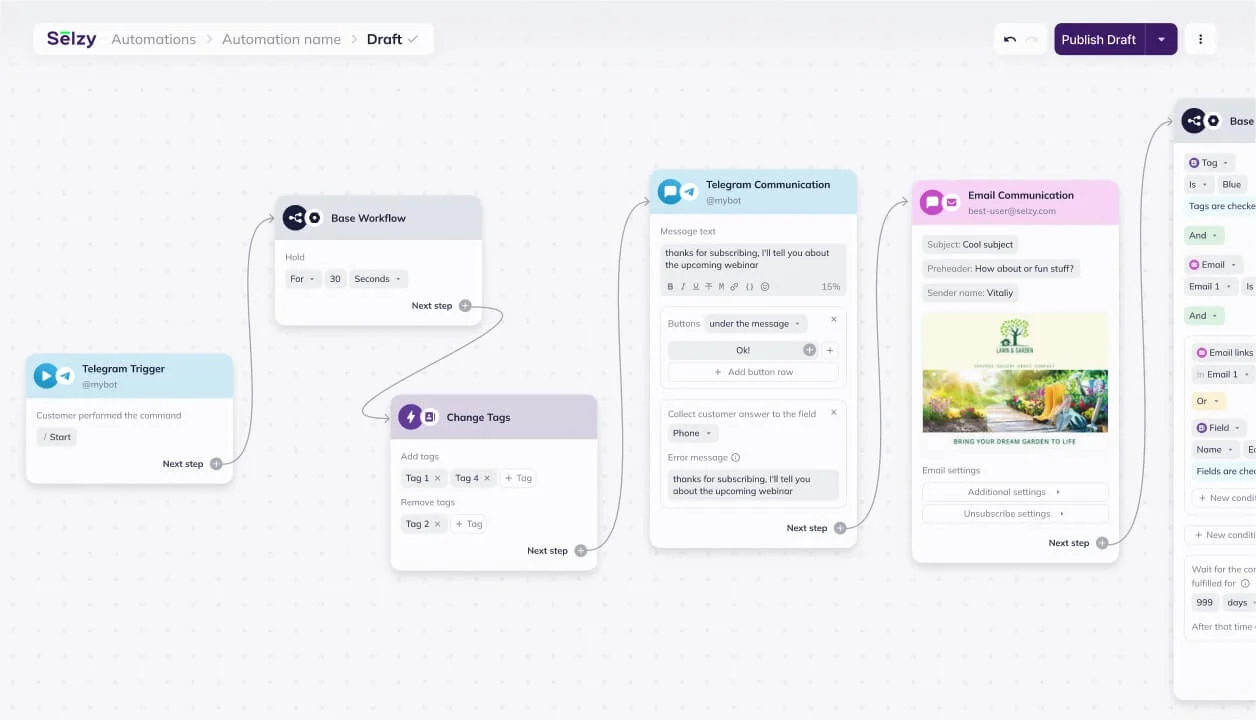
Free plan: Up to 1,000 emails and up to 100 contacts.
Pricing: Starts from $7.50 a month.
Automation: Available on the free plan. Welcome, reactivating new subscribers, event reminders, and other email templates available.
Other features: Bulk emails, personalization, send time optimization, and more.

Brevo
Best for: small businesses that want email, transactional messages, SMS, WhatsApp, CRM, and automation in one platform.
Choose it if: you prefer email-volume pricing and need a free plan for testing campaigns.
Skip it if: you need the deepest ecommerce-specific automation and analytics out of the box.
Brevo is a multichannel, as they themselves call it, “relationship marketing SaaS solution”. Its pricing model is a bit convoluted, and includes several packages that include a lot of stuff from CRM features to live chat. We’re mostly interested in Brevo’s Marketing Platform, since it contains all the email-related features.
Brevo’s email automation tool is available for free but with a catch: you can’t send more than 300 emails per day.
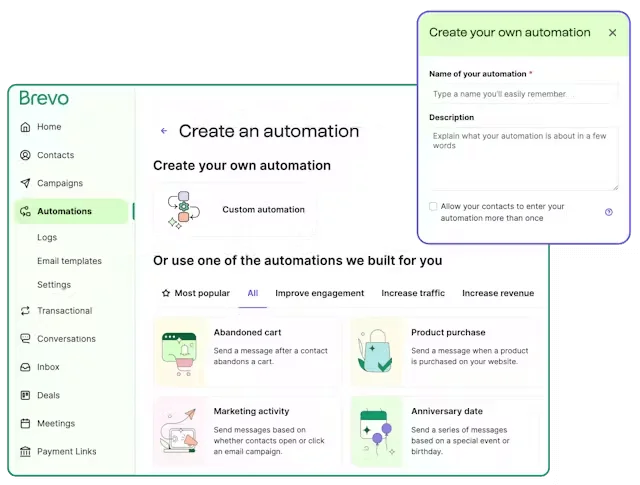
Free plan: Up to 2,000 contacts, workflow editor, page tracking.
Pricing: Paid plans start from $9 a month.
Automation: Automation for unlimited contacts available on Business and Enterprise paid plans. Abandoned cart, product purchase, anniversary date, and other email templates available.
Other features: A/B testing, drag & drop editor, personalization, and more.
Mailchimp
Best for: teams that want a familiar marketing platform with templates, integrations, AI content tools, and customer journeys.
Choose it if: you value design flexibility, broad integrations, and a large ecosystem.
Skip it if: you need advanced automation and CRM depth at the lowest possible price.
Mailchimp is a marketing and automation platform. Using Mailchimp’s email marketing automation features, you can choose pre-made chains with set timelines and triggers or create a custom email flow.
Mailchimp is one of the most popular marketing services these days. However, if you want to try some other Mailchimp alternatives, keep reading to find something new for your business.
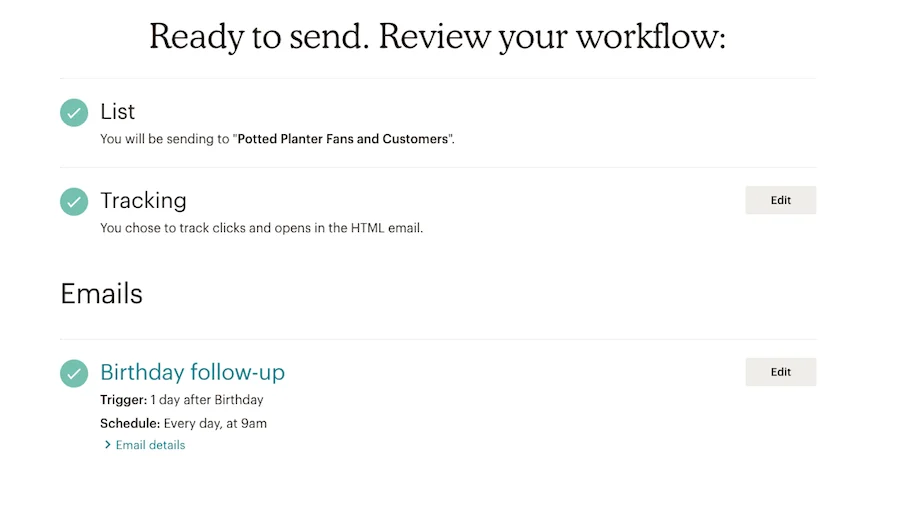
Free plan: 1,000 email sends per month and up to 500 contacts, 1 user, customer support via email for 30 days, single-step automation builder.
Pricing: Paid plans start from $13 a month.
Automation: Available for free. Welcome, abandoned cart, order notification, and other email templates available.
Other features: Landing pages, email scheduling, A/B testing, and more.
Constant Contact
Best for: beginners and small businesses that want guided email and social marketing with accessible support.
Choose it if: you want a straightforward email editor, templates, subject-line testing, and simple automation paths.
Skip it if: you need advanced branching workflows or ecommerce automation on a low-tier plan.
Constant Contact is an email marketing platform that also offers tools for SMS and social media marketing like content scheduling and other features. The platform is relatively affordable, which makes it a good choice for small and midsized businesses. Constant Contact also offers landing pages, easy integrations with other apps like Shopify, and an in-built AI assistant for quicker and easier email writing.
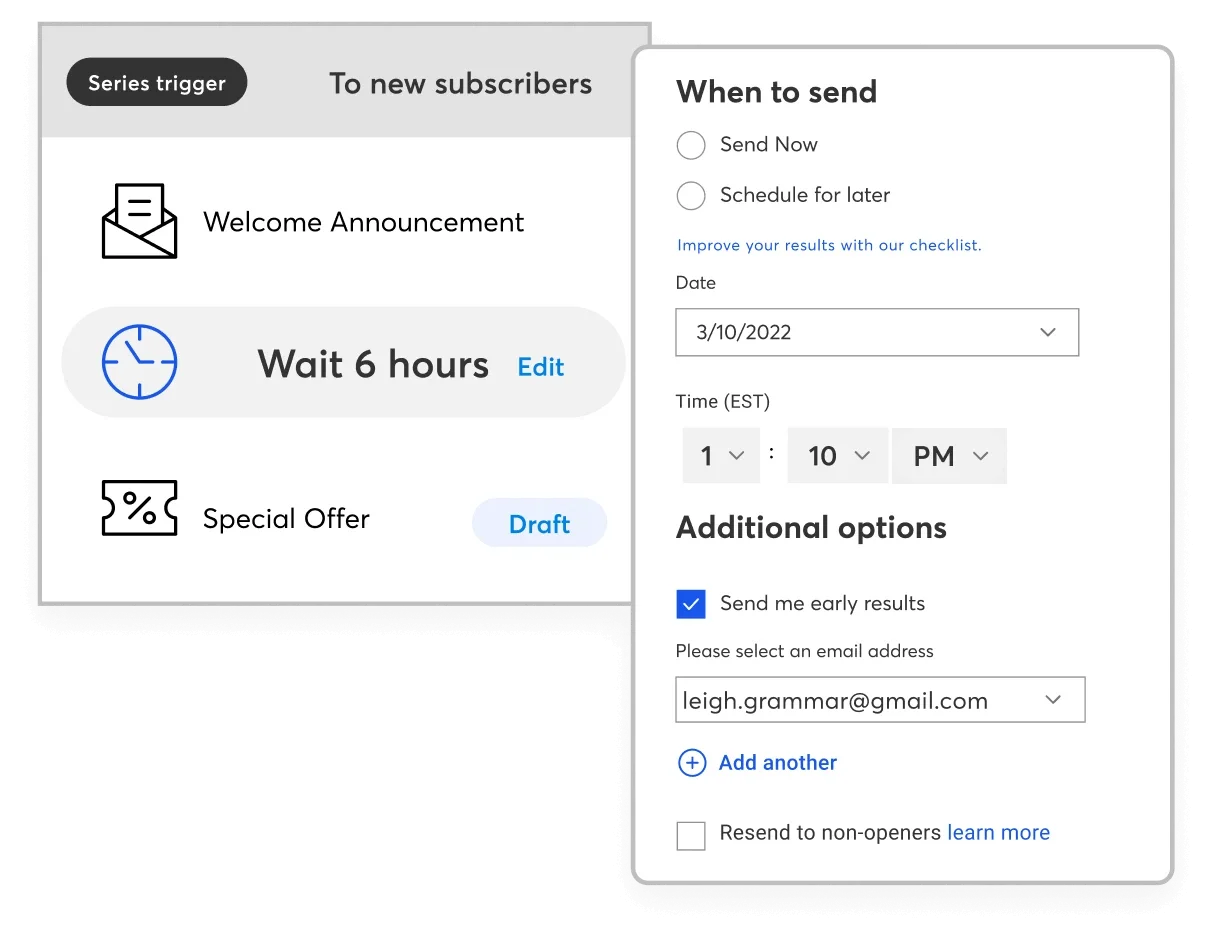
Free plan: 14-day free trial.
Pricing: Starts from $12 a month.
Automation: Automated welcome email available on Lite plan, resend to non-openers and automation path templates available on Standard plan, custom automation paths available on Premium plan.
Other features: Drag & drop email templates, subject line A/B testing, reach and engagement reporting, and more.
HubSpot
Best for: companies that want marketing automation connected to CRM, sales, service, content, and data tools.
Choose it if: your sales and marketing teams already use or plan to use HubSpot CRM.
Skip it if: you only need low-cost newsletter and simple drip automation.
HubSpot is a customer service, sales, and marketing platform. If you are looking for an all-in-one solution, HubSpot might be a good fit for you. You can build and manage several business processes on a single platform, which will improve both customer experience and your experience as a marketer. HubSpot is especially useful for e-commerce business owners and employees.
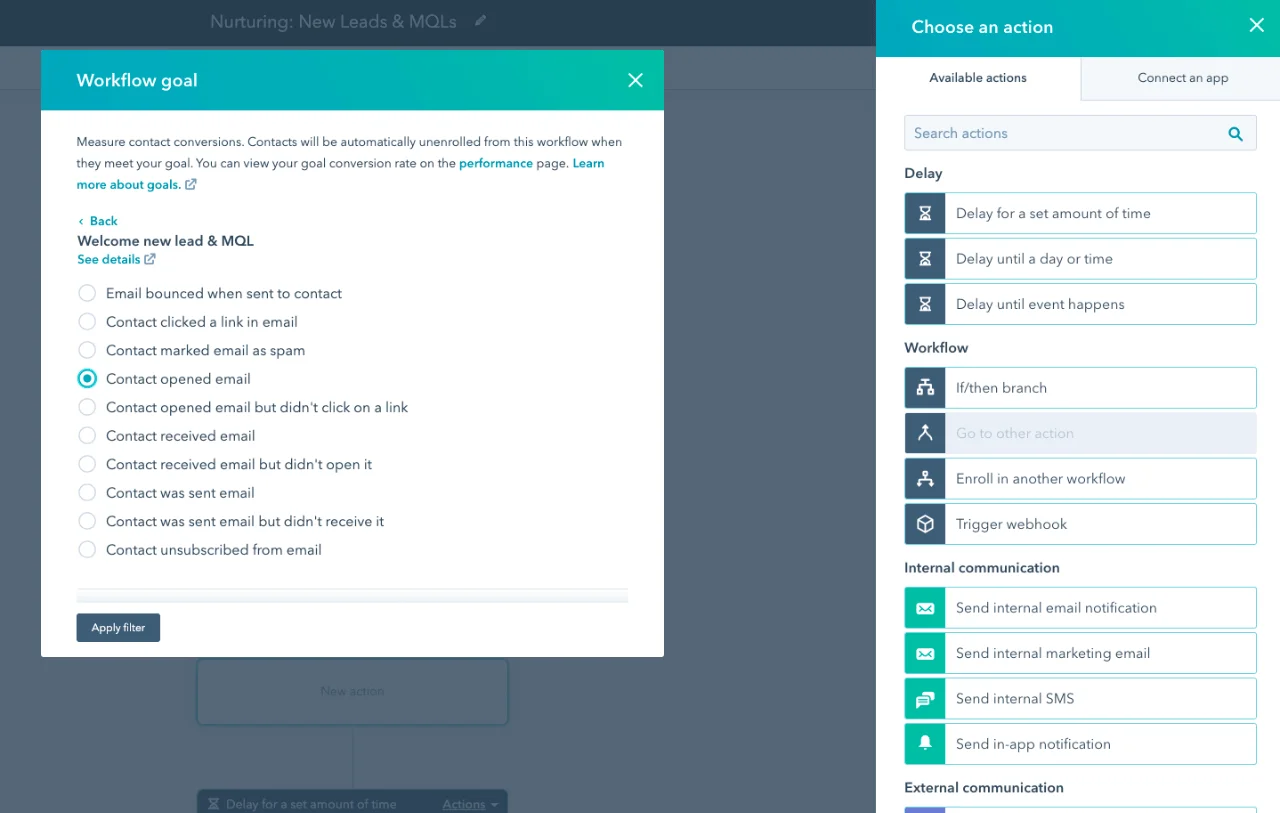
Free plan: 1 automated action available.
Pricing: Start from $15 a month per user.
Automation: Up to 10 automated actions available on Marketing Hub Starter, and more on other paid plans.
Other features: Email reply tracking, email health reporting, shared inbox, and more.
ActiveCampaign
Best for: experienced marketers who need advanced automation, AI-assisted campaign building, and ecommerce or CRM integrations.
Choose it if: you need multi-step journeys, goal tracking, segmentation, conditional content, ecommerce triggers, and a large integration ecosystem.
Skip it if: you want the simplest low-cost tool for a first newsletter or basic welcome sequence.
ActiveCampaign is a customer experience automation platform with email marketing, marketing automation, AI features, ecommerce integrations, and CRM-related add-ons. Its pricing depends on contact volume and selected channels, and the public pricing page uses a calculator, so check the current plan before comparing it with fixed-price tools.
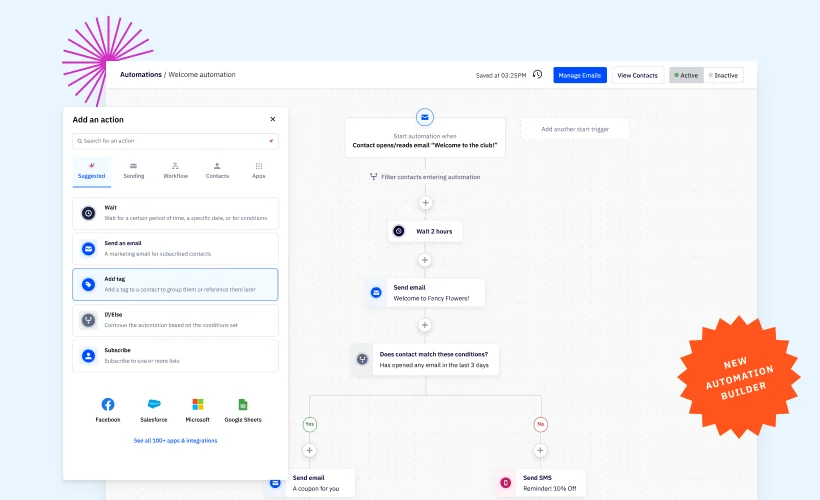
Free plan: Free trial.
Pricing: Contact-based; check current pricing.
Automation: Multi-step marketing automation, automation recipes, ecommerce automation, A/B testing, and AI-assisted campaign and automation building.
Other features: Email marketing, segmentation, landing pages, ecommerce integrations, CRM add-ons, SMS and WhatsApp add-ons, and 1,000+ integrations.
MailerLite
Best for: small teams, creators, and solopreneurs that want simple visual automation at a low price.
Choose it if: you need newsletters, visual automations, landing pages, websites, forms, and digital product tools without a complex CRM.
Skip it if: you need deep sales pipeline automation or highly advanced ecommerce flows.
MailerLite combines email campaigns, visual automations, landing pages, websites, forms, and digital product tools. It is a strong option when you want a cleaner, simpler alternative to heavier marketing suites.
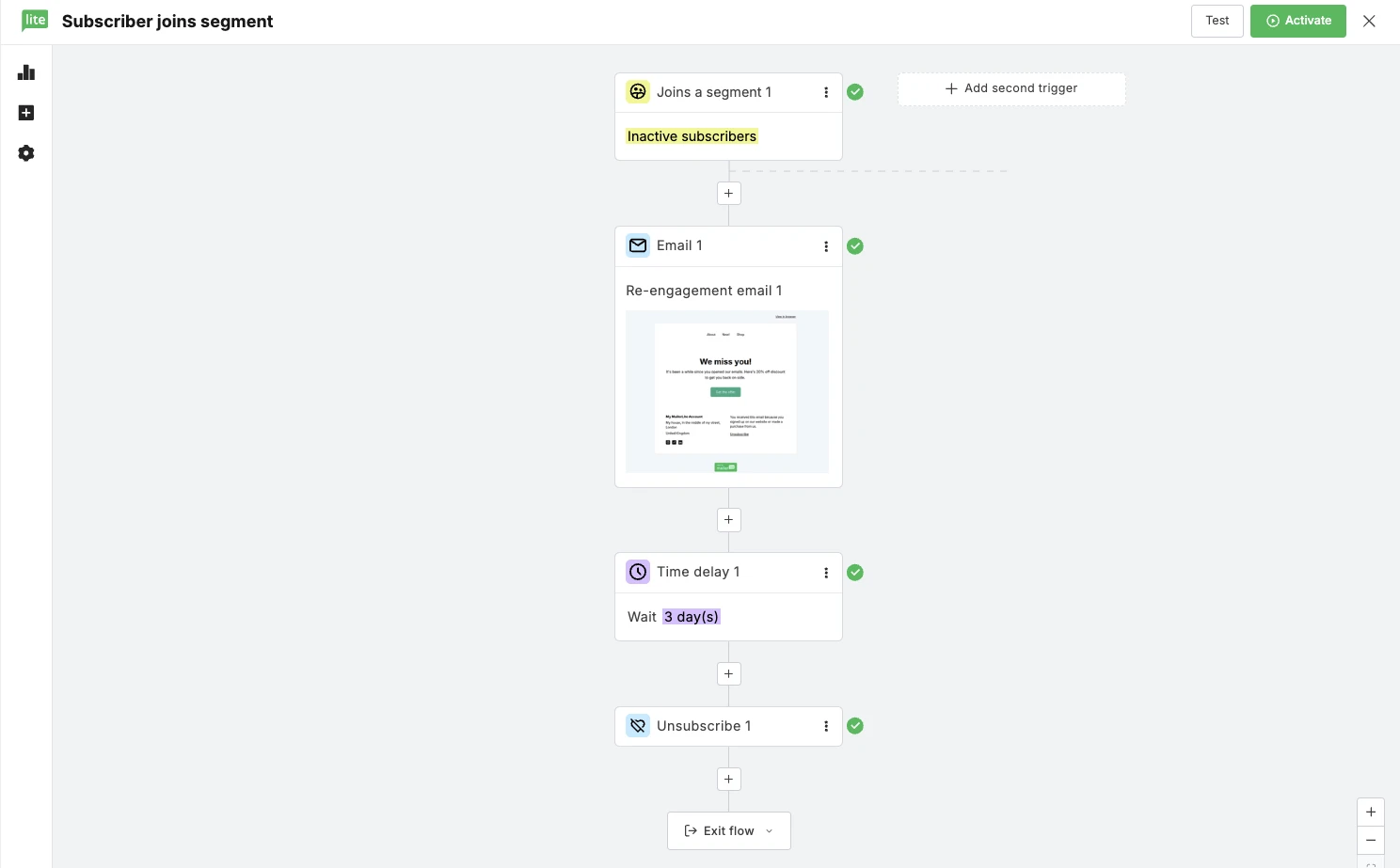
Free plan: Up to 250 subscribers and 2,500 monthly emails.
Pricing: Comfort plan starts at $12 a month.
Automation: Visual automation builder, automation templates, multiple triggers on higher plans, and ecommerce triggers.
Other features: Landing pages, websites, signup forms, AI writing assistant, smart sending, digital products, and integrations.
Omnisend
Best for: ecommerce stores that need email, SMS, push notifications, product recommendations, and abandoned-cart workflows.
Choose it if: your store runs on Shopify, WooCommerce, BigCommerce, Wix, or similar ecommerce platforms.
Skip it if: you need a general-purpose CRM-first platform rather than ecommerce-focused automation.
Omnisend is another marketing automation platform to use for email automation. On its website, you can also find information on the platform’s SMS marketing solution and the list of other helpful features that you can use for your business.
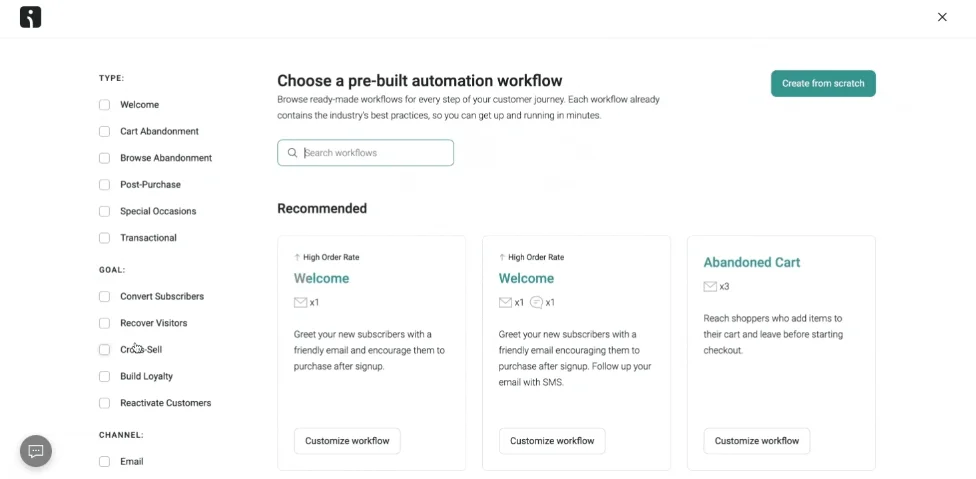
Free plan: 250 contacts, 500 web push notifications, and 500 email sends per month.
Pricing: Starts from $16 a month.
Automation: Available on the free plan. Welcome, abandoned cart, order confirmation, and other templates available.
Other features: SMS automation, A/B testing, segmentation, and more.
Klaviyo
Best for: ecommerce brands that need customer-data-driven email and SMS automation.
Choose it if: you want segmentation, automations, ecommerce integrations, SMS credits, and product/customer data in one marketing platform.
Skip it if: you are not an ecommerce brand and want a cheaper general-purpose newsletter platform.
Klaviyo is a marketing automation platform built around ecommerce customer data. Its free plan lets small brands test email and SMS automation, segmentation, and reports, while paid pricing scales with active profiles and sending needs.
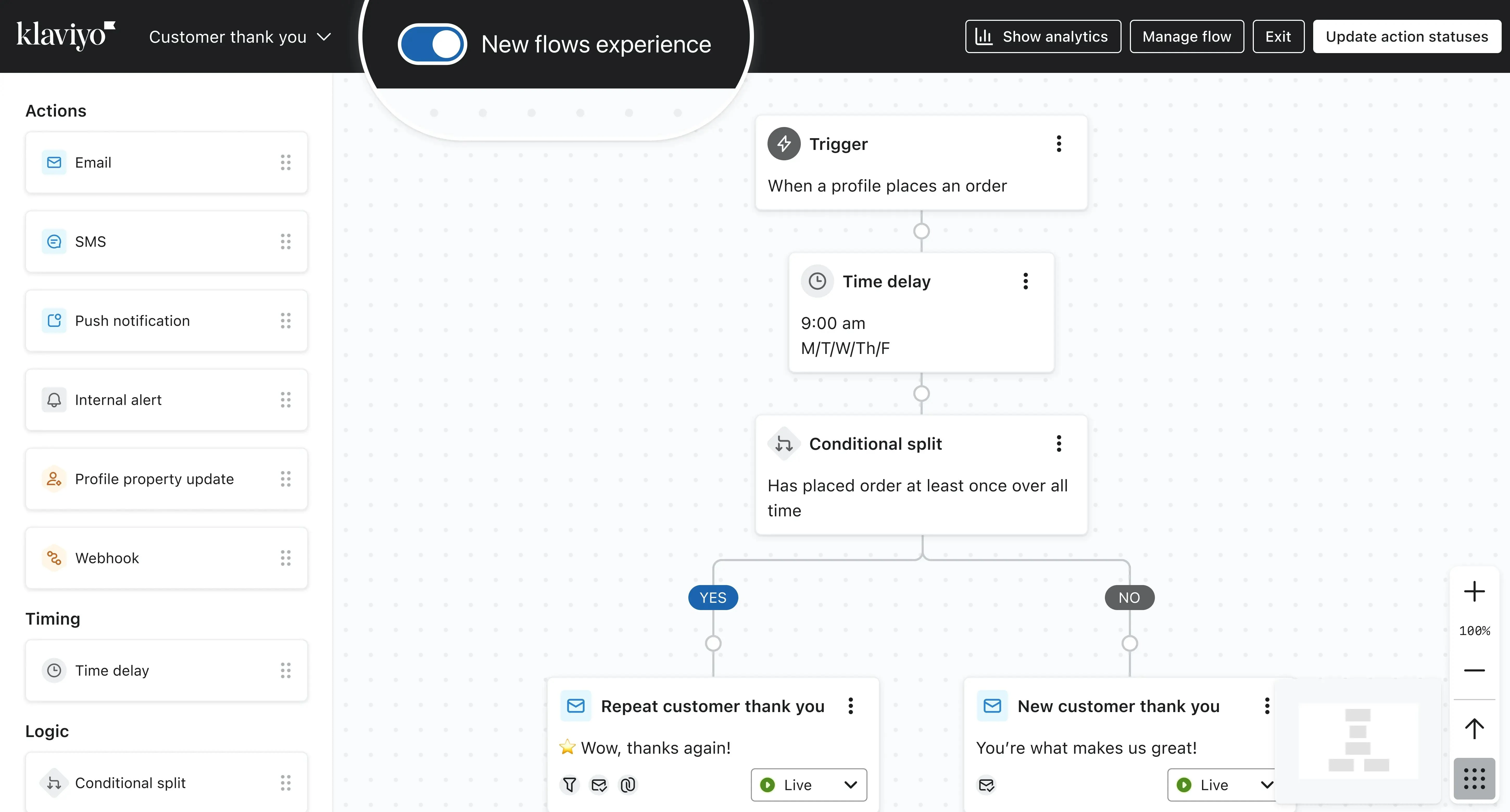
Free plan: Up to 250 active profiles, 500 email sends per month, and 150 SMS/MMS credits.
Pricing: Contact-based; check current pricing.
Automation: Ecommerce automations, segmentation, behavior-based flows, SMS/MMS, and reporting.
Other features: Ecommerce integrations, customer profiles, drag-and-drop editors, analytics, and self-service resources.
Keap
Best for: businesses that need CRM, sales pipeline, invoicing, ecommerce, and automation in one higher-priced suite.
Choose it if: you want sales and marketing automation tied closely to lead follow-up and client management.
Skip it if: you are looking for a lightweight or low-cost email-only tool.
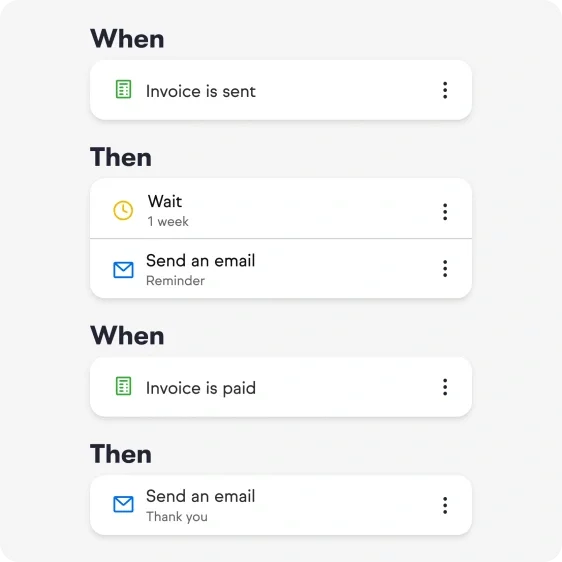
Keap is a platform that provides email marketing, CRM, and sales services. On its website, it is stated that the service strives to help businesses grow by offering its service.
Free plan: 14-day free trial.
Pricing: Starts from $299 a month.
Automation: Available on all plans. Easy automation available on Pro and Max Plans, advanced automation, marketing, sales pipeline, and workflow automations available on all plans.
Other features: Email marketing, e-commerce tools, sales and workflow automation, and more.
Kit
Best for: creators, newsletter writers, bloggers, podcasters, and educators selling digital products or subscriptions.
Choose it if: you need landing pages, forms, tags, sequences, and creator-friendly monetization tools.
Skip it if: you need deep ecommerce catalog automation or a traditional sales CRM.
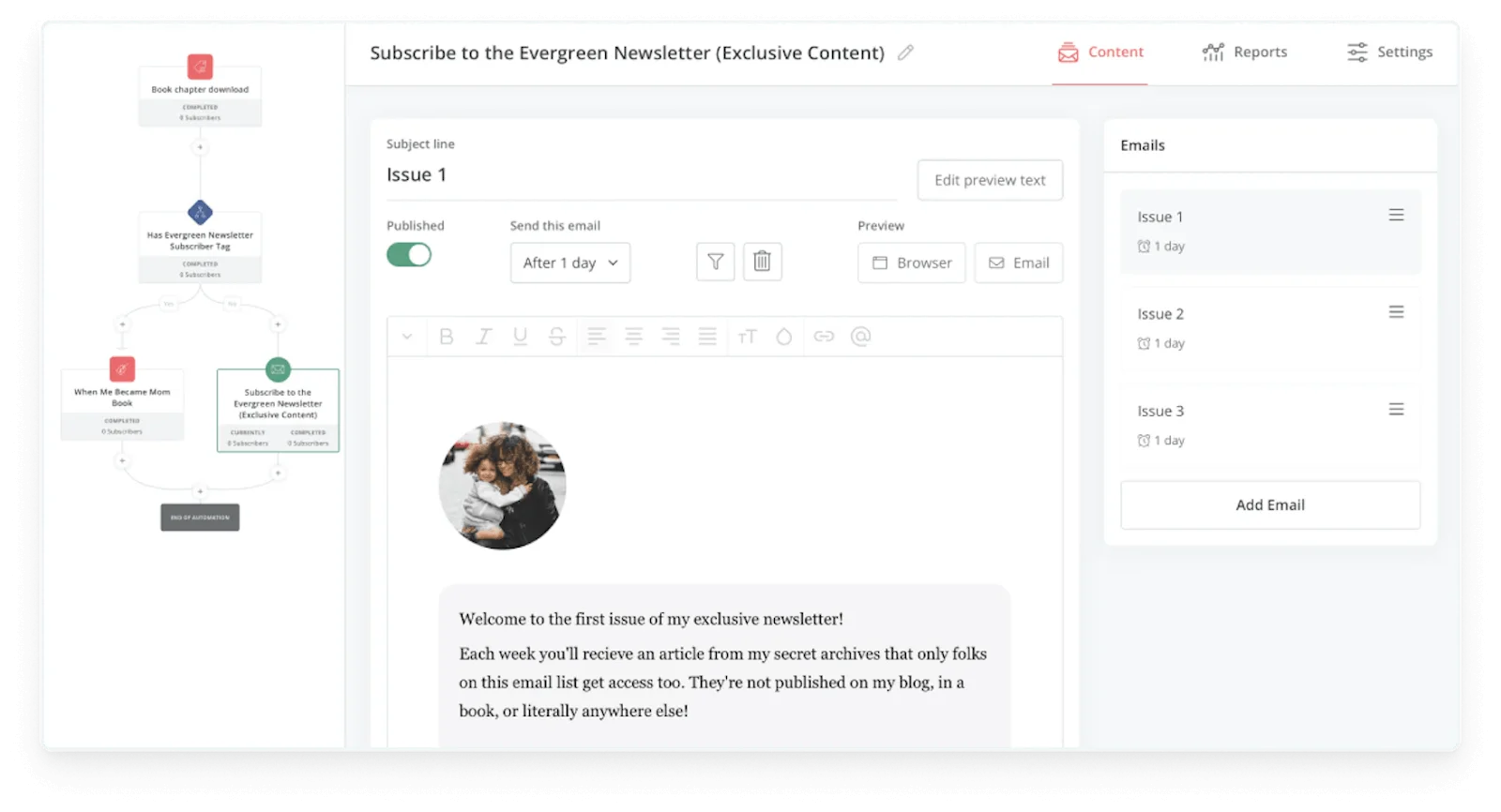
Kit is a marketing platform for creators. It provides an email automation service along with other marketing tools. On its website, the platform offers various plans including a free one. The tool has been built with musicians, podcasters, bloggers, writers, and other creative workers. However, its features are also suitable for more “classic” email marketing niches like e-commerce.
Free plan: Up to 10,000 subscribers.
Pricing: Starts from $29 a month.
Automation: Available on paid plans. Welcome, product launch, subscriber reactivation, and other email templates available.
Other features: Landing pages, segmentation, selling digital products, and more.
EmailOctopus
Best for: budget-conscious senders that want simple campaigns, landing pages, forms, and basic automation.
Choose it if: you want a generous free plan and straightforward pricing.
Skip it if: you need advanced workflow branching, CRM, SMS, or ecommerce automation depth.
EmailOctopus is an affordable platform for email marketing management. According to the website, the tool strives to make email marketing simpler. They’re quite good at fulfilling the premise — many Capterra reviews note how user-friendly and straightforward the platform is.
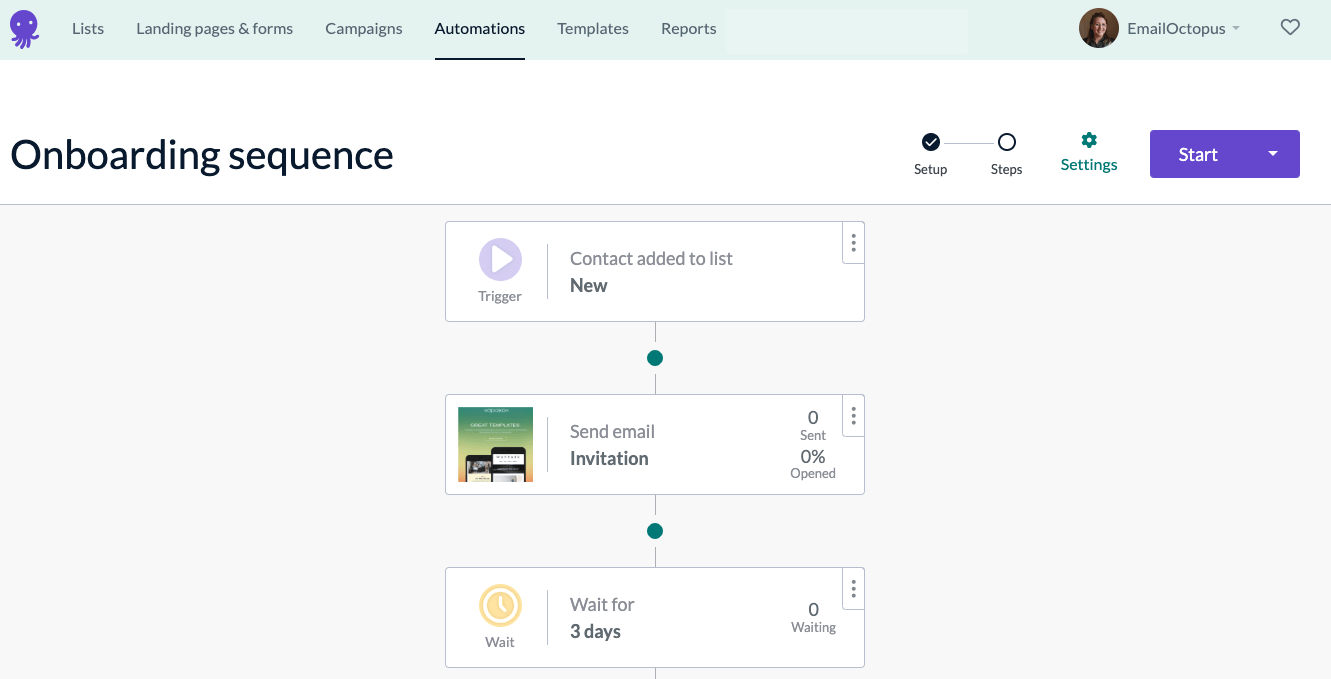
Free plan: 2,500 subscribers, 10000 email sends per month, up to 3 automations with max 5 steps, and more.
Pricing: Paid plans start from $40 a month.
Automation: Unlimited automations available on Pro Plan.
Other features: Email templates, drag and drop editor, landing pages, and more.
Ontraport
Best for: service businesses and ecommerce teams that need CRM, automation, payments, and campaign management together.
Choose it if: you want split testing inside automated flows and a broader business automation suite.
Skip it if: you only need basic newsletters and low-cost welcome sequences.
Ontraport is a sales and marketing platform with an in-built CRM system. It is another good solution for managing various ecommerce business processes in one place. The platform also offers an email automation feature with an in-built split testing different emails in the flow. For example, you can compare the efficiency of two welcome emails in no time.
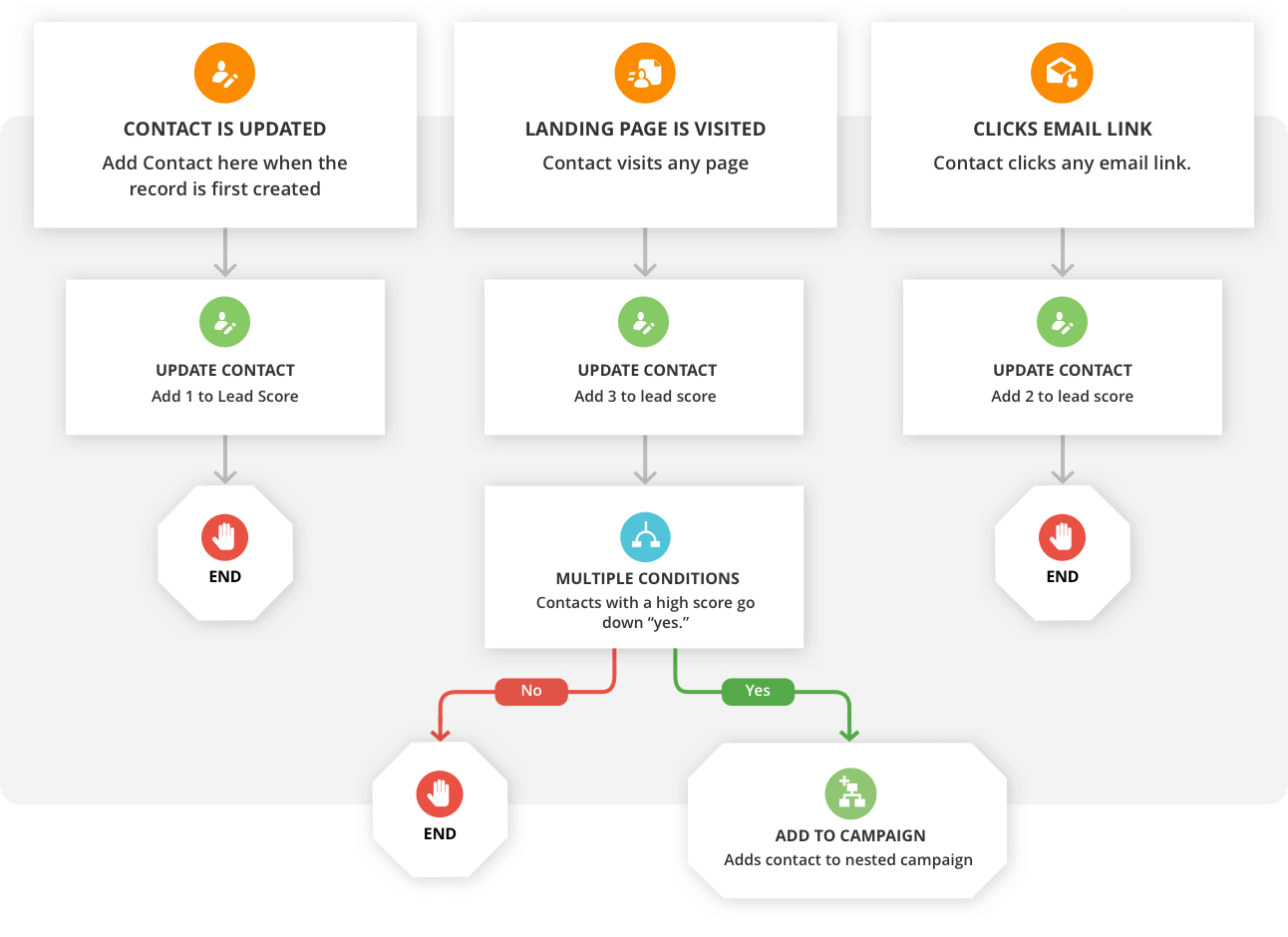
Free plan: 14-day free trial.
Pricing: Start from $24 a month.
Automation: Available on all plans. 75+ automation templates available.
Other features: Unlimited email sends and contacts, drag and drop automation, transactional emails, and more.
Final decision checklist
Before you choose a platform, shortlist two or three tools by use case, calculate the price for your current and next list size, verify automation features on the exact plan, check integrations with your store or CRM, test the workflow builder, confirm support access, and run one small automation before migrating everything.
FAQ about email marketing software
How do I choose email automation software for my business?
Check the tool’s sending limits, A/B testing options, segmentation and personalization features, price range, free plan, and user reviews. Match the plan to your list size and the level of automation you actually need. Reviews can also help you spot issues like poor deliverability or weak support.
What is the best email automation software for small businesses?
Based on the guide, Selzy is a strong fit for beginners and small businesses. It offers a free plan with 1,000 emails and 100 contacts, plus pre-made automation templates, a no-code builder, personalization, and bulk emails. Constant Contact is also positioned for small and midsized businesses.
Which is the best free email automation software?
The article highlights several free options, including Selzy, Brevo, and Mailchimp. Selzy’s free plan includes 1,000 emails and 100 contacts, Brevo offers 300 emails per day, and Mailchimp includes 500 contacts and 1,000 emails. The best choice depends on whether you need more sends, more contacts, or more advanced features.
What is the difference between email marketing software and email automation software?
Email marketing software is the broader category, while email automation software focuses on streamlining campaigns through automated workflows and targeted messaging. The content emphasizes automation as a way to create more relevant, personal emails, increase conversions, and engage subscribers. Many tools combine both capabilities in one platform.
How much does email automation software cost in 2026?
Prices in the guide start at $7.5 per month for Selzy, $9 per month for Brevo, $12 per month for Constant Contact, $13 per month for Mailchimp, and $15 per month per user for HubSpot. Some tools also offer free plans or free trials. Costs depend on your contact count, send volume, and the features included in the plan.
What is the best email automation software for ecommerce?
The guide suggests looking for personalization features such as dynamic product blocks, since they can help drive sales and engage potential customers. Selzy is listed as a strong option because it includes personalization and bulk emails, which can be useful for ecommerce campaigns. When choosing, prioritize tools that support segmentation and relevant product-based messaging.
 New and noteworthy on our blog