



Key takeaways
- Nonprofits use email for various purposes beyond newsletters, such as welcoming new supporters, thanking donors, promoting events, recruiting volunteers, running year-end appeals, and demonstrating the impact of donations.
- Choosing the right email marketing software for nonprofits involves considering factors like limited budgets, automation, templates, segmentation, reporting, and support.
- Features to look for in nonprofit email platforms include ease of use, flexibility for donor journeys, transparency for budgeting, and campaign mapping.
Nonprofits use email to do more than send newsletters. The right platform can help you welcome new supporters, thank donors, promote events, recruit volunteers, run year-end appeals, and show people how their donations make a difference.
The challenge is choosing software that fits a limited budget and still gives your team the automation, templates, segmentation, reporting, and support it needs. This guide compares email marketing tools for nonprofits, with current pricing notes, nonprofit discounts, and the trade-offs to check before you commit.
What to look for in email marketing software for nonprofits
A nonprofit email platform should be easy enough for volunteers to use, flexible enough for donor journeys, and transparent enough for annual budgeting. Before you compare feature lists, map the campaigns you actually send: newsletters, donation appeals, volunteer updates, event reminders, advocacy alerts, and re-engagement emails.
Transparent pricing and nonprofit discounts
Check whether the provider charges by contacts, monthly sends, or both. Also confirm whether unsubscribed contacts count toward your bill, whether the discount applies before or after annual prepay savings, and whether the discount needs to be approved before you upgrade.
Easy setup for small teams
Nonprofit teams often include part-time staff, board members, and volunteers. A clean editor, simple list import, reusable templates, and clear permission controls matter more than a huge menu of advanced settings that nobody has time to maintain.
Templates for nonprofit campaigns
Look for templates that can support donor newsletters, fundraising appeals, event invitations, volunteer recruitment, membership reminders, and post-donation thank-you emails. If the platform does not have nonprofit-specific templates, make sure it can import HTML templates or work with external builders.
Segmentation and automation
Good segmentation helps you send different messages to donors, volunteers, members, event attendees, lapsed supporters, and major-gift prospects. Automation is useful for welcome sequences, donation receipts and thank-yous, event reminders, birthday campaigns, and reactivation flows.
Integrations, deliverability, and reporting
Check integrations with your CRM, donation forms, event tools, landing pages, and analytics stack. Also review deliverability tools, authentication guidance, bounce handling, and reporting that connects campaign performance to donations, registrations, and volunteer signups.
Best email marketing software for nonprofits: quick comparison
| Tool | Best for | Free plan or trial | Paid from | Nonprofit discount |
| Selzy | Affordable nonprofit email marketing and support | 100 contacts, 1,000 emails/month; 14-day trial: 2,000 contacts and 10,000 emails | $7.5/month | 50% off eligible nonprofit accounts |
| Mailchimp | Teams already using Mailchimp | 250 contacts, 500 emails/month, no automation | $13/month | 15% off verified nonprofit accounts |
| Campaign Monitor | Polished email design | 30-day trial: 500 contacts and 500 emails | Lite plan: 2,500 emails for 500 contacts; price varies by currency/contact tier | 15% nonprofit savings |
| Benchmark Email | Simple email basics on a limited budget | 500 contacts, 2,500 emails/month | $19/month | 20% for qualifying nonprofits |
| Twilio SendGrid | Email marketing plus deliverability infrastructure | 100 emails/day | $19.95/month | No public nonprofit discount found |
| Brevo | Email plus SMS and lower-volume lists | 300 emails/day, unlimited contacts | $9/month | No public standard nonprofit discount found |
| AWeber | Small teams that want support and simple automation | Up to 500 subscribers, 3,000 emails/month | $15/month | 3 months free, then 25% off for qualifying 501(c)(3)s |
| ActiveCampaign | Complex donor journeys | 14-day trial | $15/month | 20% off eligible nonprofit accounts |
| GetResponse | Funnels, webinars, and advanced campaigns | 500 contacts, 2,500 emails/month | $19/month | 50% nonprofit discount, with logo placement requirement |
| Constant Contact | Events and local community campaigns | 60-day trial | $12/month | 20% off 6-month prepay or 30% off 12-month prepay |
10 best email marketing software tools for nonprofits
Below are ten options worth comparing. The best choice depends on your list size, team capacity, automation needs, and whether your nonprofit values the lowest monthly cost, the easiest editor, or deeper CRM-style workflows.
1. Selzy – Best for affordable nonprofit email marketing and support
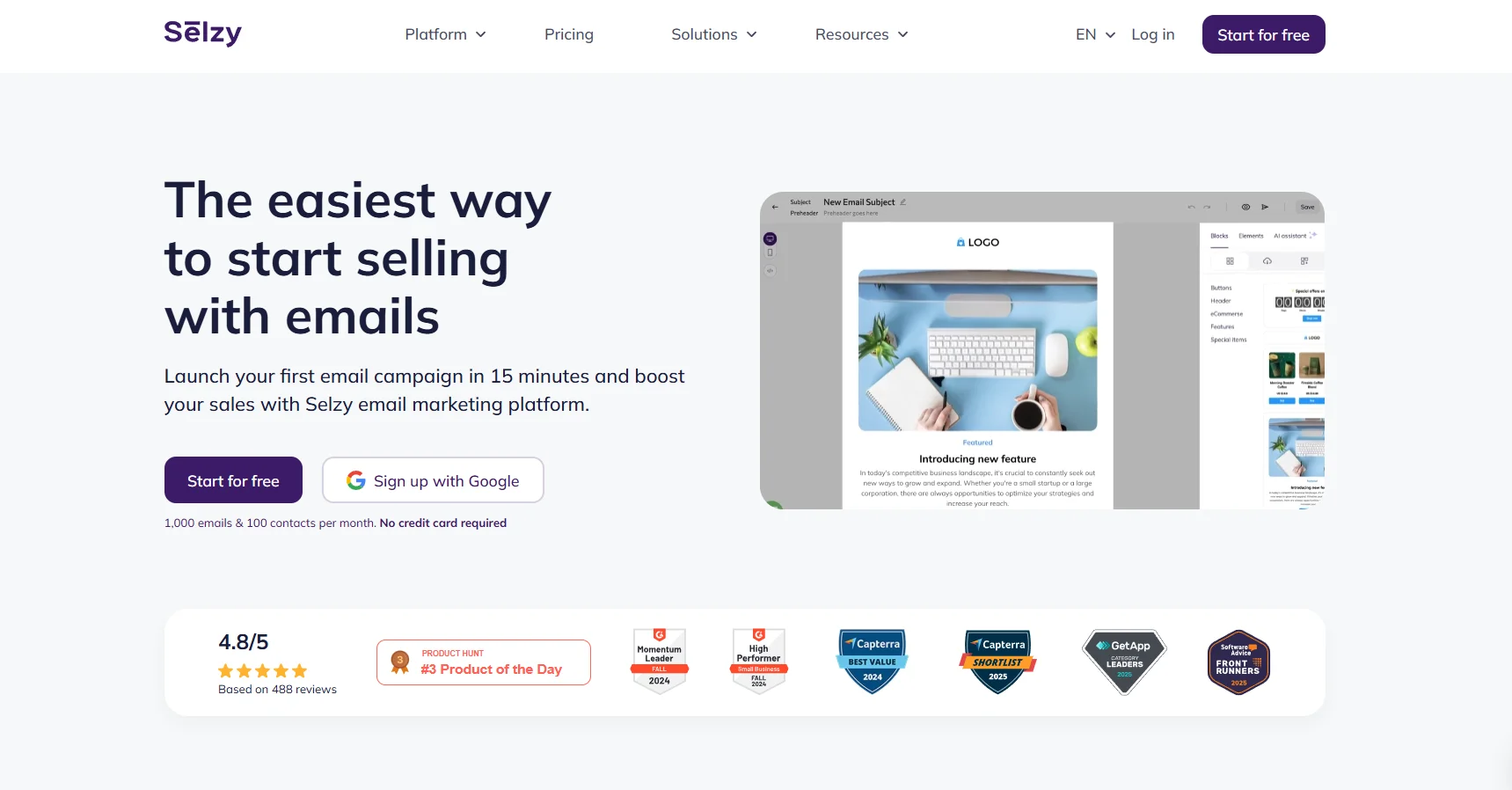
Selzy is a practical email marketing platform for nonprofits that want a simple editor, ready-made templates, automation, segmentation, analytics, integrations, and support without stitching several tools together.
Pricing: Selzy’s Free plan includes up to 100 contacts and 1,000 emails/month. New users can also use a 14-day trial with up to 2,000 contacts and 10,000 emails. Paid plans start at $7.5/month.
Nonprofit discount: Selzy offers a 50% discount on all pricing plans for eligible registered nonprofit organizations.
Features: Nonprofits can build newsletters, donor updates, event reminders, and fundraising emails, then segment supporters and automate follow-ups from one place.
Limitations: Teams that need a full donor CRM should connect Selzy to their CRM or donation platform rather than use it as the only source of donor records.
Key features of Selzy include:
- Free plan and nonprofit discount for eligible organizations
- Drag-and-drop email builder with templates
- Segmentation and automation for donor and volunteer journeys
- Analytics, integrations, and 24/7 support

2. Mailchimp – Best for teams already using Mailchimp
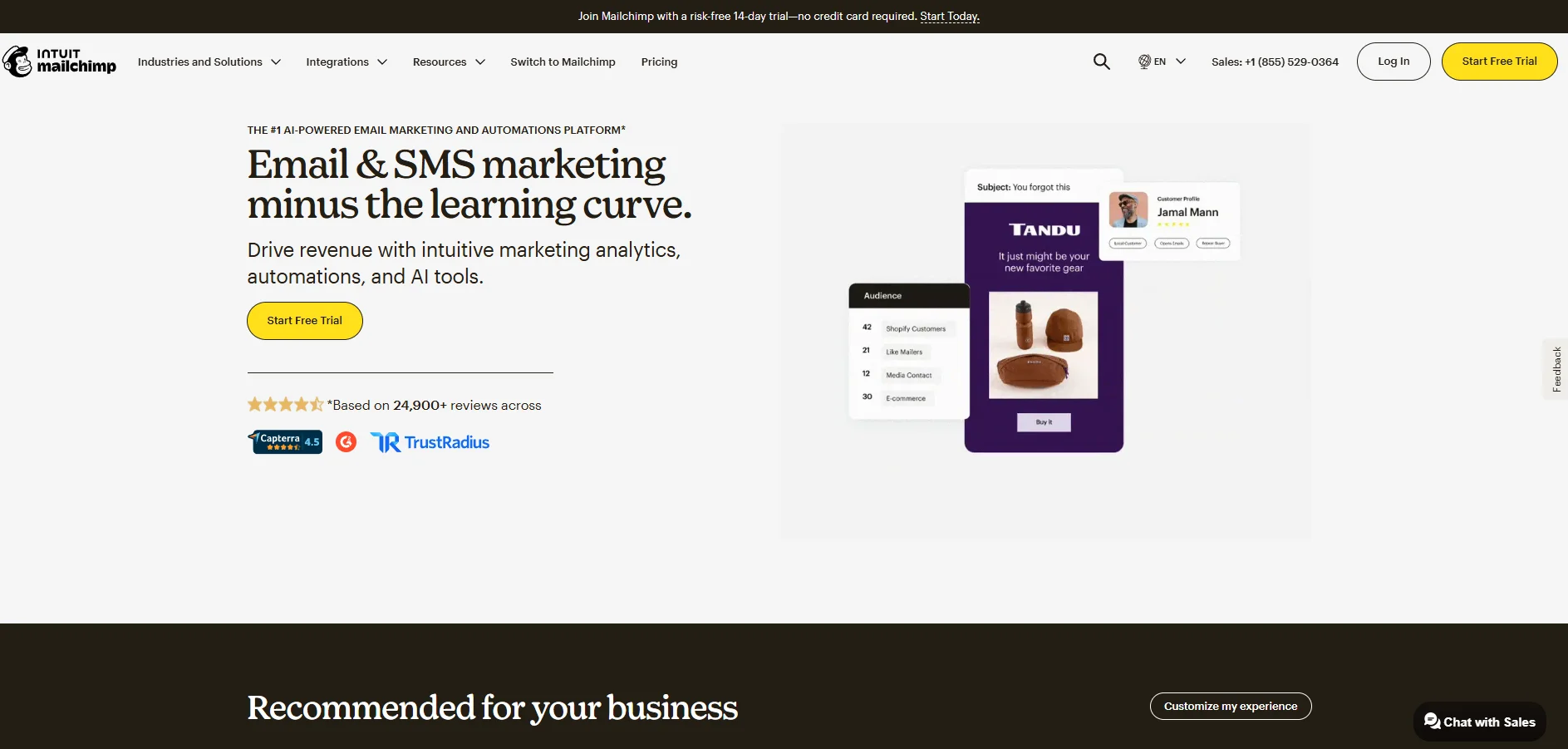
Mailchimp is one of the most recognizable email marketing tools, which can be helpful when volunteers or contractors already know the interface. It combines email campaigns, templates, forms, audience tools, and automation features.
Pricing: Mailchimp’s Free plan includes 250 contacts and 500 emails/month, with no automation. Paid plans start at $13/month.
Nonprofit discount: Verified nonprofits and charities can request a 15% discount.
Features: The platform is strong for teams that want a familiar builder, prebuilt journeys, audience management, integrations, and reporting.
Limitations: Costs can rise as lists grow, and some automation, segmentation, and support options depend on plan level.
Key features of Mailchimp include:
- Familiar email builder
- Audience management and signup forms
- Marketing automation
- Large integration ecosystem
3. Campaign Monitor – Best for polished email design
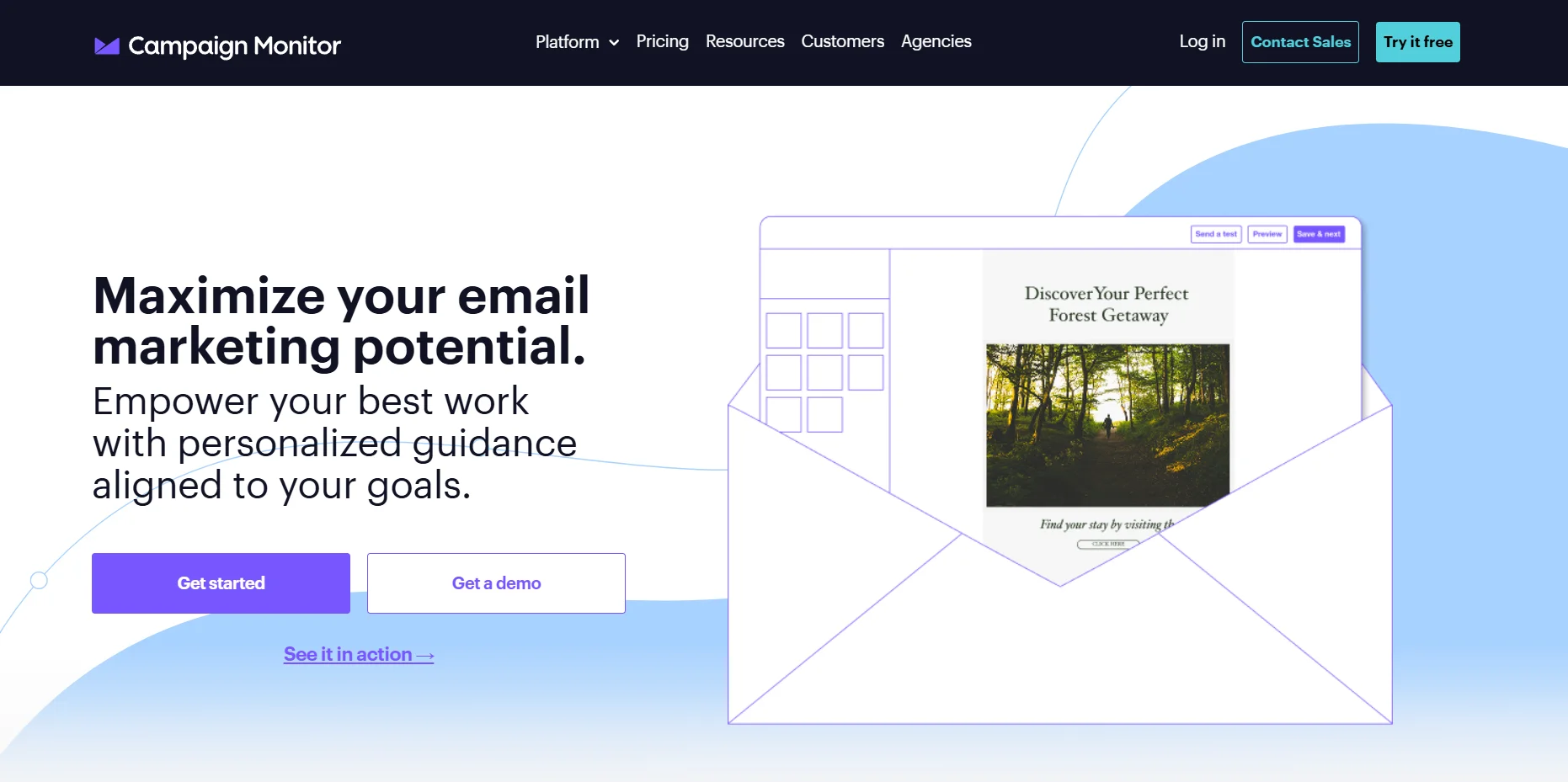
Campaign Monitor focuses on attractive campaigns, branded templates, and straightforward email sending. It is a good fit when your nonprofit cares about design consistency and wants volunteers to work from approved layouts.
Pricing: Campaign Monitor’s trial includes 500 contacts and a 500-email limit for 30 days. On the Lite plan, the 0-500 contact tier includes 2,500 emails/month; exact pricing varies by currency and contact tier.
Nonprofit discount: Campaign Monitor says nonprofits save 15% on every campaign they send.
Features: The builder, templates, segmentation, automated journeys, and reporting make it useful for newsletters, event announcements, and donor updates.
Limitations: It is less of an all-in-one donor management system, so teams with complex fundraising operations will still need CRM and donation integrations.
Key features of Campaign Monitor include:
- Polished templates
- Drag-and-drop email builder
- Segments and journeys
- Campaign reporting
4. Benchmark Email – Best for simple email basics on a limited budget
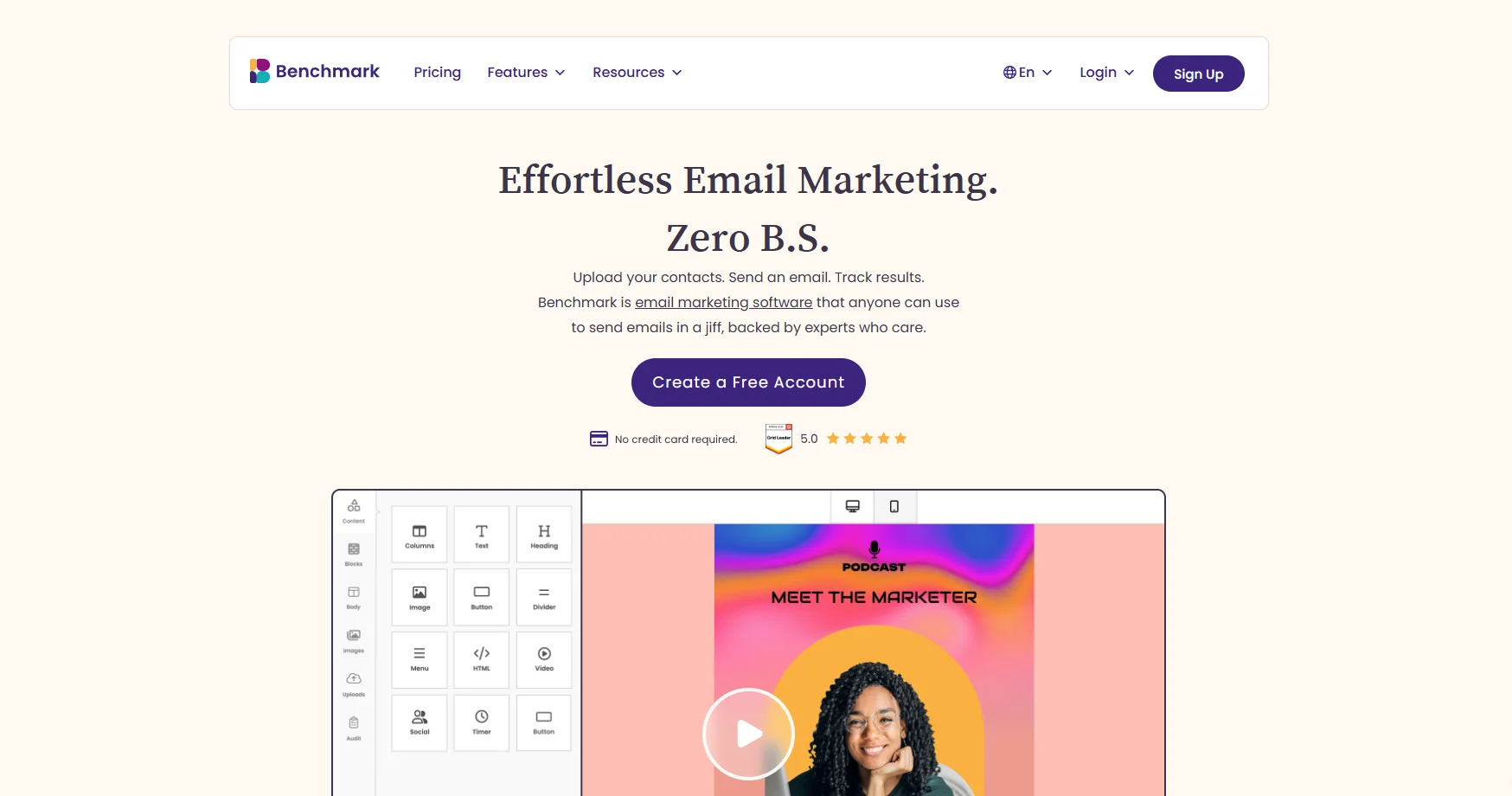
Benchmark Email is a straightforward email platform for teams that want to create and send campaigns without a long setup process. It is especially useful for newsletters, announcements, and basic supporter communication.
Pricing: Benchmark Email’s Free plan includes up to 500 contacts and 2,500 emails/month. Paid plans start at $19/month.
Nonprofit discount: Benchmark asks qualifying nonprofits to inquire about a 20% discount.
Features: The no-code editor, templates, engagement reporting, and simple list tools are helpful for smaller nonprofit teams.
Limitations: It may be too light for organizations that need advanced multi-step automation, deep CRM behavior, or complex donor scoring.
Key features of Benchmark Email include:
- Free plan
- No-code editor
- Templates
- Engagement reporting
5. Twilio SendGrid – Best for email marketing plus deliverability infrastructure
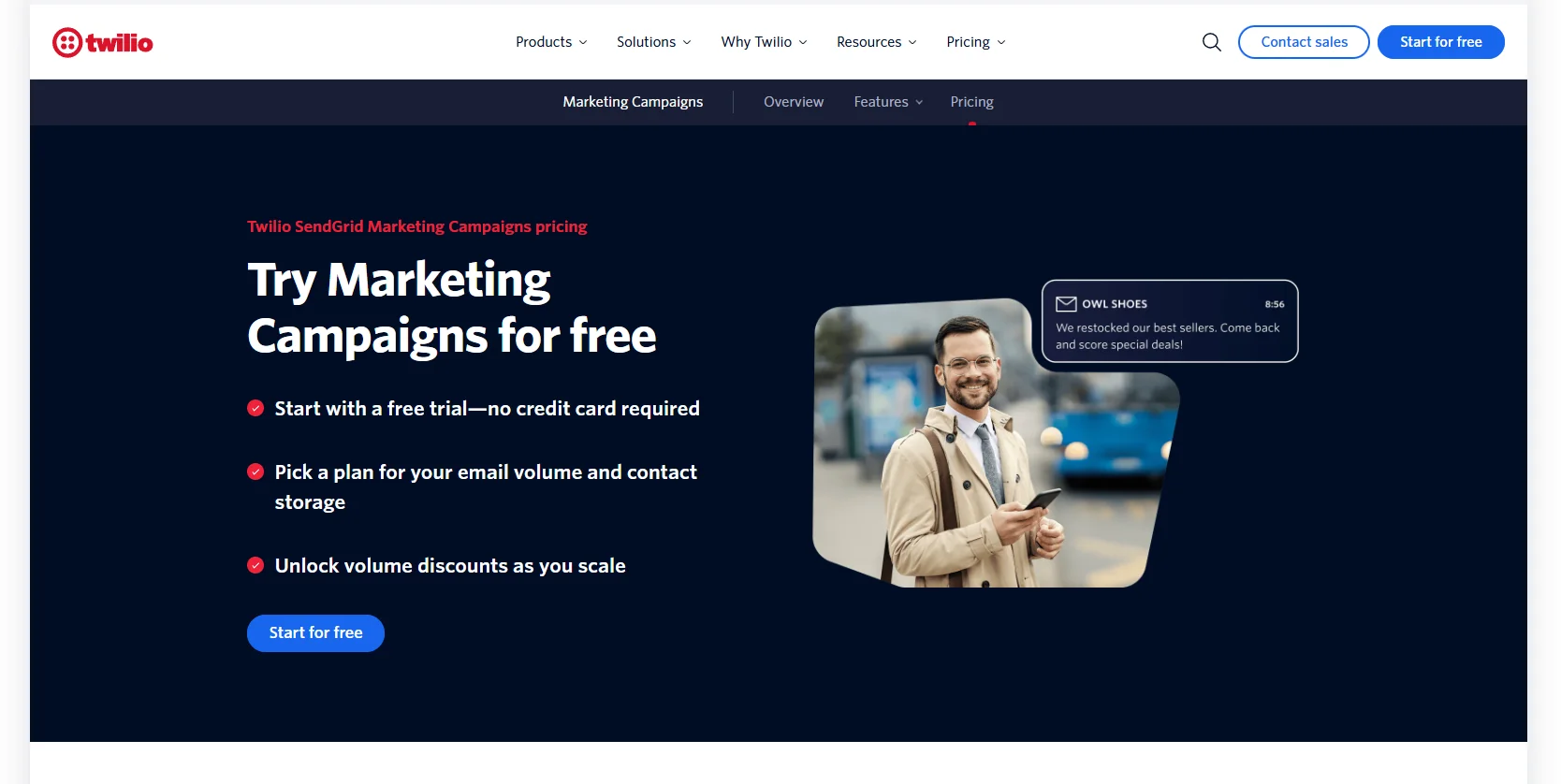
Twilio SendGrid is useful for nonprofits that need both marketing campaigns and developer-friendly email infrastructure. It fits teams that care about deliverability, API access, and technical control.
Pricing: Twilio SendGrid’s free entry point includes 100 emails/day. Paid plans start at $19.95/month.
Nonprofit discount: No standard public nonprofit discount was found in Twilio SendGrid’s current pricing information.
Features: The platform includes design and code editors, segmentation, A/B testing, analytics, automations, and deliverability tooling.
Limitations: It can feel technical for nonprofit teams that only need simple newsletters and donor updates.
Key features of Twilio SendGrid include:
- Marketing Campaigns builder
- Segmentation and A/B testing
- Deliverability tools
- API-friendly ecosystem
6. Brevo – Best for email plus SMS and lower-volume lists
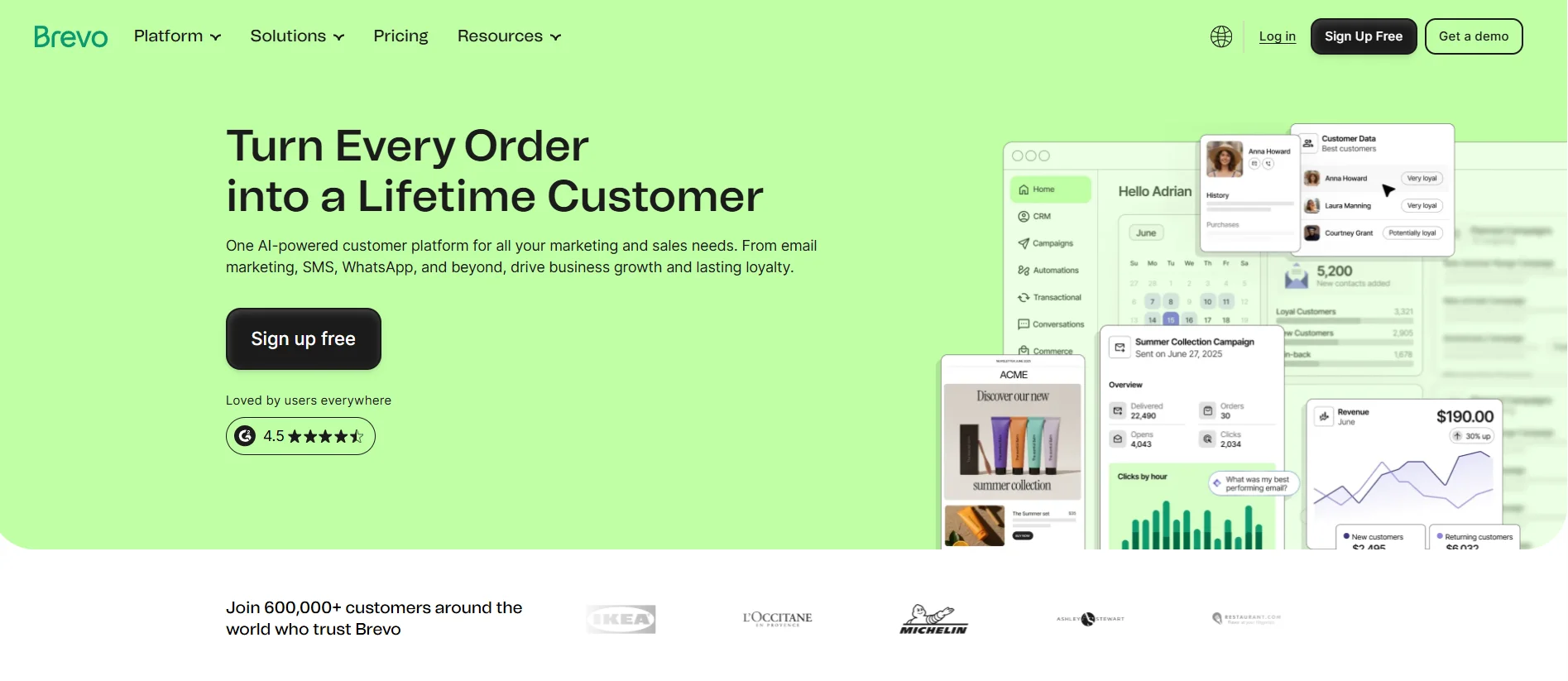
Brevo combines email campaigns with SMS, WhatsApp, transactional email, forms, CRM-style tools, and automation. It is worth considering if your nonprofit sends lower-volume campaigns but needs a large contact database.
Pricing: Brevo’s Free plan includes 300 email sends per day and unlimited contacts. Paid plans start at $9/month.
Nonprofit discount: No standard public nonprofit discount was found on Brevo’s current pricing pages.
Features: Brevo is helpful when a nonprofit wants email, SMS, transactional messages, signup forms, and simple CRM workflows in one account.
Limitations: The daily send cap on the Free plan can be restrictive for one-time appeals to larger lists.
Key features of Brevo include:
- 300 daily email sends on Free plan
- Email and SMS campaigns
- Transactional email
- Forms and automation
7. AWeber – Best for small teams that want support and simple automation
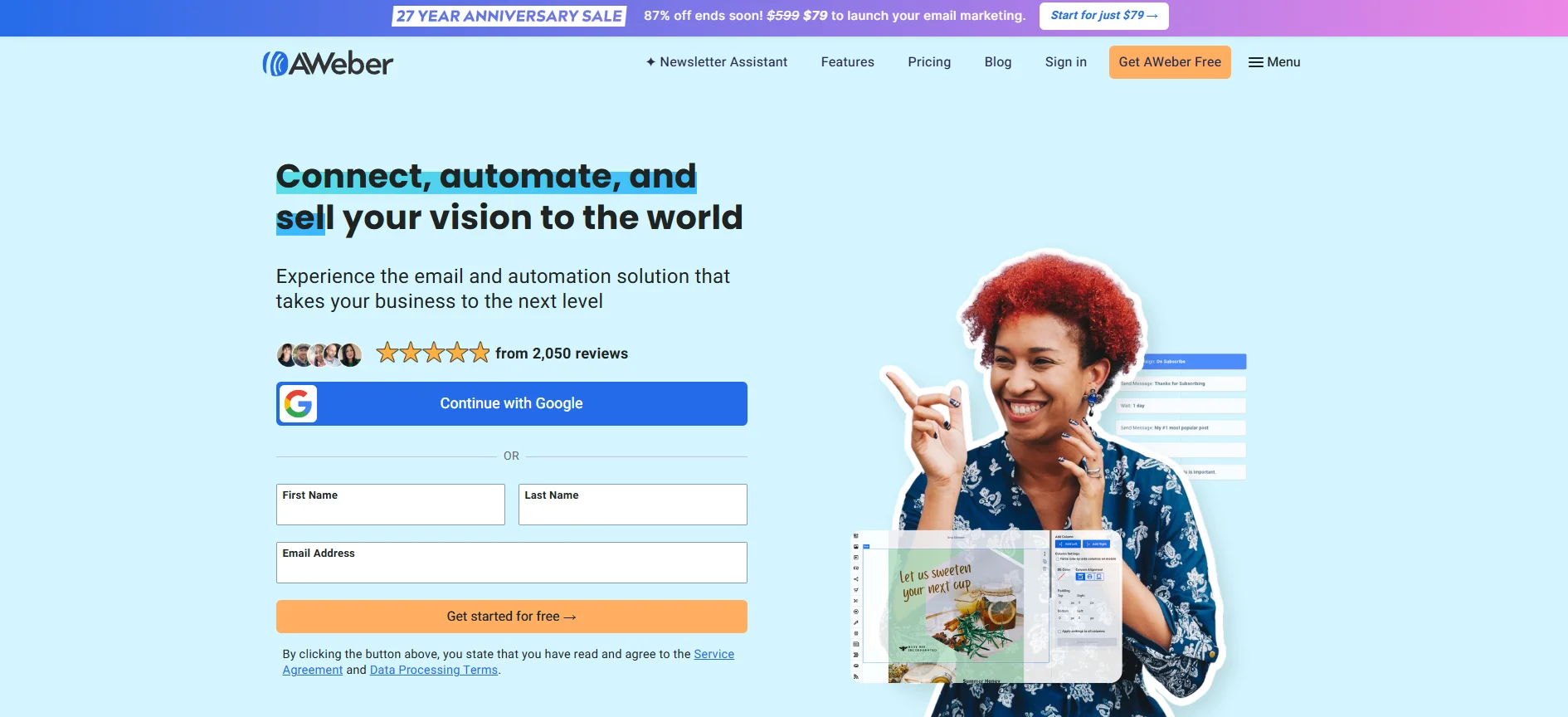
AWeber offers email newsletters, landing pages, sign-up forms, automation, and ecommerce-style tools in a beginner-friendly package. It is a solid choice for small nonprofit teams that value support and predictable workflows.
Pricing: AWeber’s Free plan includes up to 500 subscribers and 3,000 emails/month. Paid plans start at $15/month.
Nonprofit discount: Qualifying 501(c)(3) organizations can get 3 months of AWeber Plus or Lite for free and a 25% discount after that.
Features: The platform supports newsletters, templates, landing pages, automation, segmentation, and reporting.
Limitations: Larger nonprofits with complex donor journeys may outgrow the simpler automation model.
Key features of AWeber include:
- Newsletter and landing page tools
- Signup forms
- Automation
- Nonprofit discount for qualifying 501(c)(3)s
8. ActiveCampaign – Best for complex donor journeys
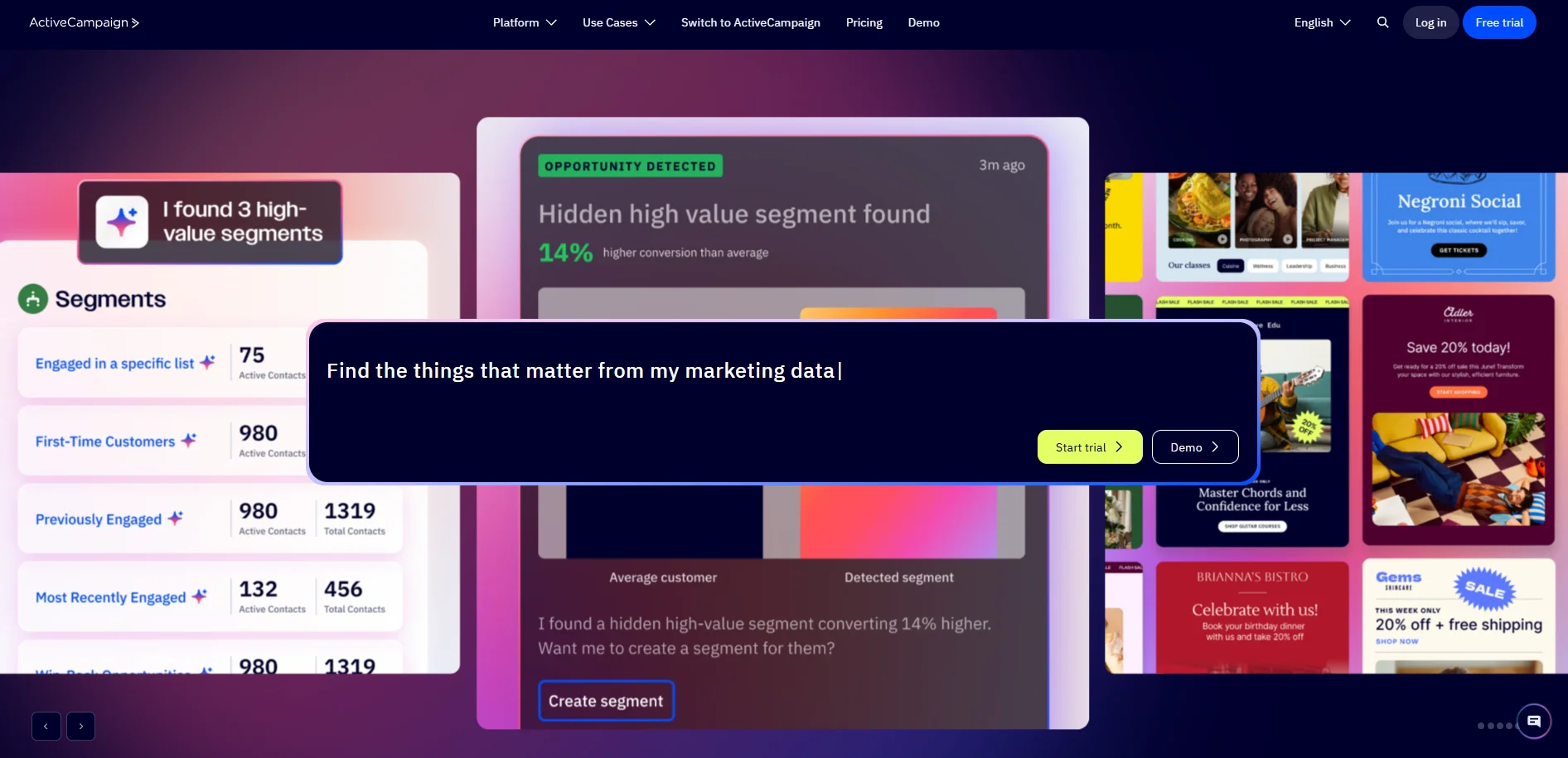
ActiveCampaign is a powerful automation platform for organizations that want to build detailed journeys around donor behavior, event engagement, membership status, and reactivation campaigns.
Pricing: ActiveCampaign offers a 14-day trial. Paid plans start at $15/month.
Nonprofit discount: ActiveCampaign offers nonprofits 20% off after proof of nonprofit status.
Features: It stands out for branching automations, segmentation, personalization, lead scoring-style workflows, and integrations.
Limitations: The depth is useful for experienced teams, but it can be more complex and expensive than a basic newsletter tool.
Key features of ActiveCampaign include:
- Advanced automation builder
- Detailed segmentation
- Personalization
- Integrations for donor and CRM workflows
9. GetResponse – Best for funnels, webinars, and advanced campaigns
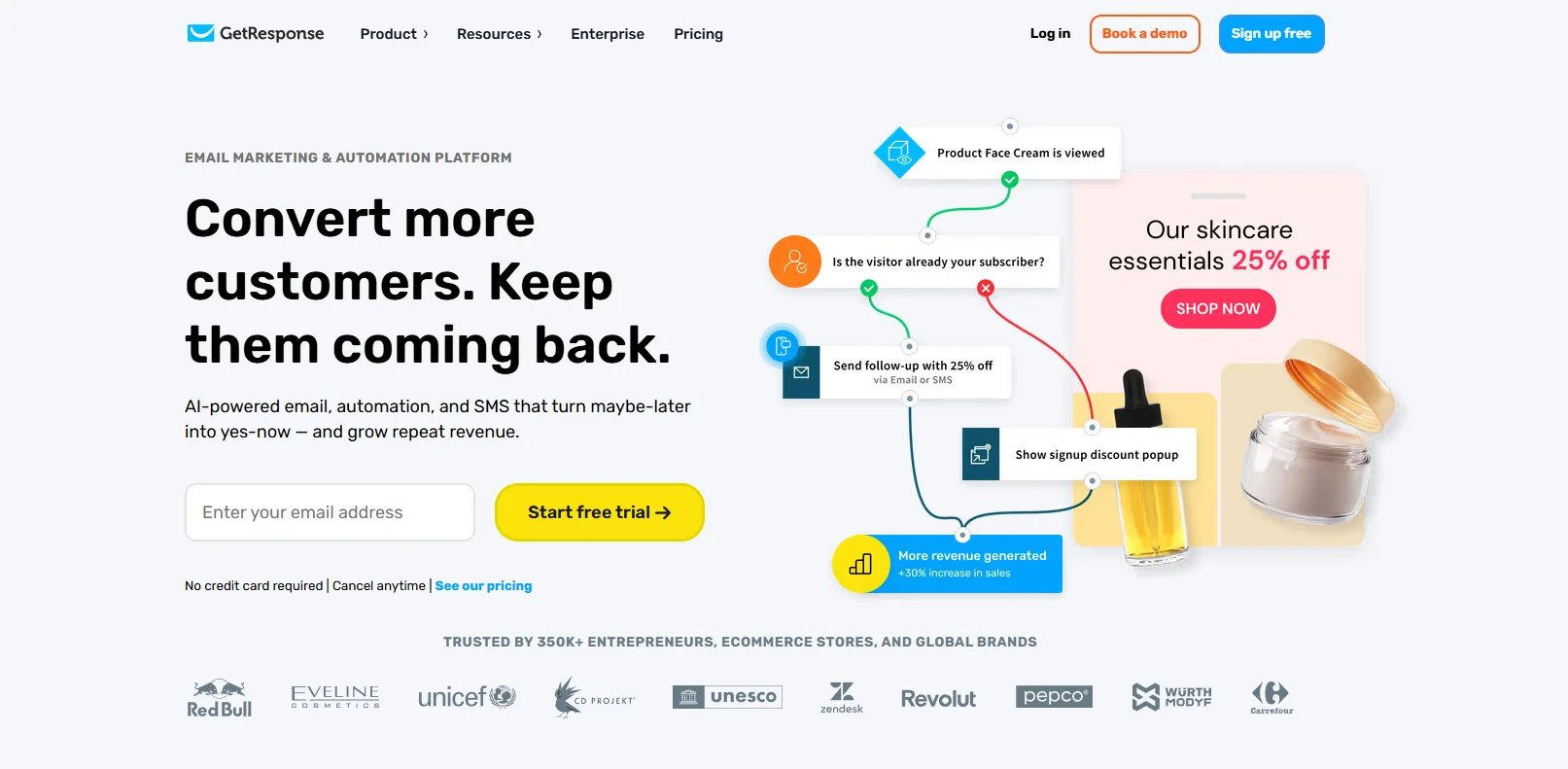
GetResponse combines email marketing with landing pages, automation, forms, webinars, and conversion funnels. It can work well for nonprofits that run events, online education, or advocacy campaigns.
Pricing: GetResponse’s Free plan includes 500 contacts and 2,500 emails/month. Paid plans start at $19/month.
Nonprofit discount: GetResponse offers nonprofit organizations 50% off; organizations choosing that option are asked to place the GetResponse logo on their website.
Features: The strongest fit is for teams that want email, landing pages, automation, webinars, and campaign funnels in one platform.
Limitations: Some advanced features depend on higher plans, so teams should check the exact plan requirements before migrating.
Key features of GetResponse include:
- Email marketing and automation
- Landing pages and forms
- Webinars
- Nonprofit discount
10. Constant Contact – Best for events and local community campaigns
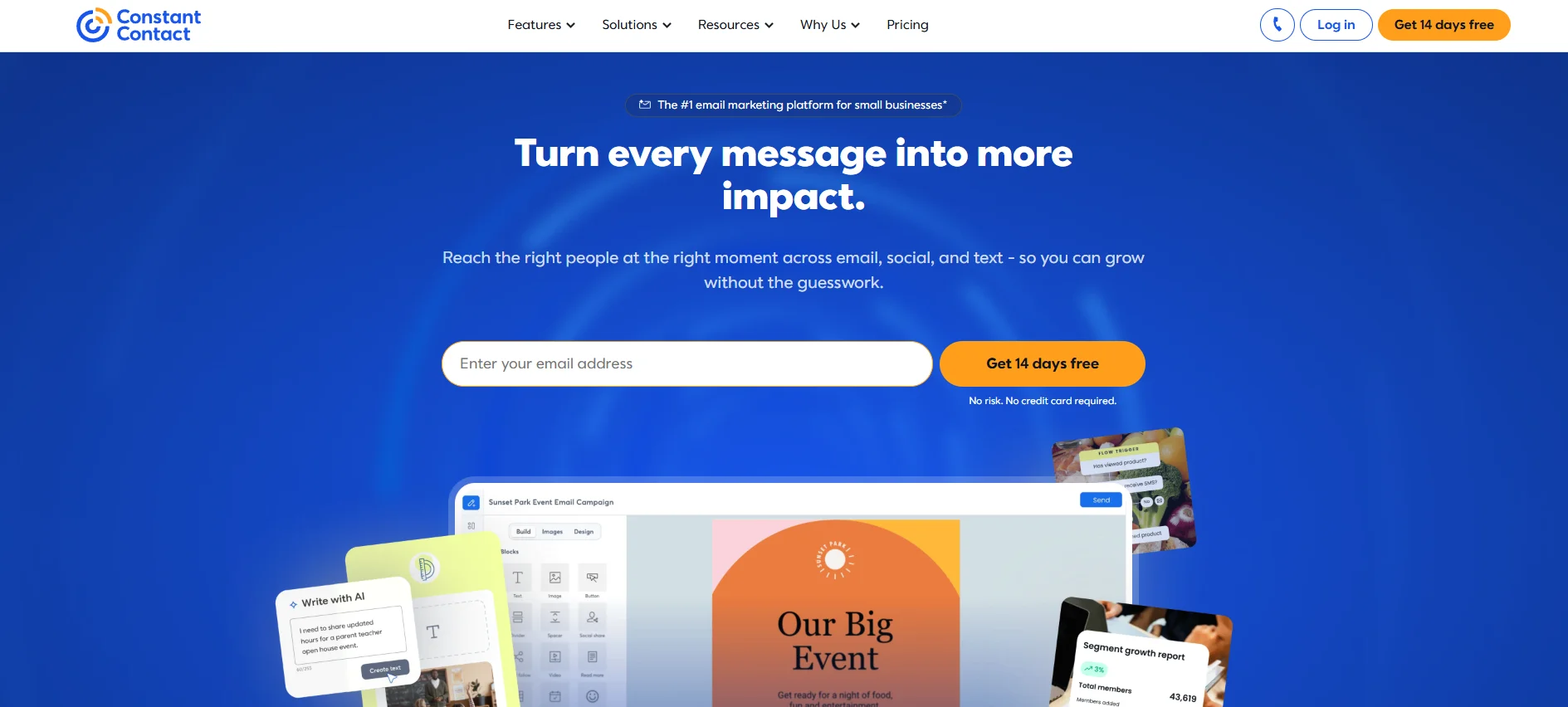
Constant Contact is built for small organizations that need email marketing, event promotion, social posting, templates, integrations, and hands-on support. It is a familiar option for community nonprofits, associations, and local chapters.
Pricing: Constant Contact offers a 60-day trial. Paid plans start at $12/month.
Nonprofit discount: Nonprofits can save 20% when they prepay for 6 months or 30% when they prepay for 12 months.
Features: The platform includes drag-and-drop templates, automation templates, event tools, integrations, AI content help, reporting, and live phone/chat support.
Limitations: There is no permanent public free plan, and deeper automation requires higher tiers.
Key features of Constant Contact include:
- Event tools
- Templates and AI writing assistance
- 300+ integrations
- Phone and chat support
How to choose an email marketing platform for your nonprofit
Start with your most important campaign types and the size of your active audience. A small community nonprofit may need an easy editor, a free or discounted plan, and reliable support. A larger fundraising team may need CRM integrations, donor segments, automation branches, and reporting that connects campaigns to revenue.
- List the campaigns you send every month and every season: newsletters, appeals, event invites, volunteer calls, renewals, and thank-you messages.
- Separate must-have features from nice-to-have features. Templates, segmentation, deliverability guidance, and support usually matter more than niche add-ons.
- Calculate the real cost using your current contact count, expected growth, send frequency, nonprofit discount, annual prepay terms, and any overage fees.
- Check integrations before you migrate. Your email platform should work with donation forms, CRM, events, website forms, and analytics.
- Run a pilot campaign. Import a test segment, build one email, set up one automation, and review how easy it is for your team to repeat the workflow.
FAQ: email marketing software for nonprofits
What is the best free email marketing software for nonprofits?
The best free option depends on list size and send volume. Selzy covers 100 contacts and 1,000 emails/month, Brevo offers 300 emails/day, Benchmark Email includes 500 contacts and 2,500 emails/month, Mailchimp includes 250 contacts and 500 emails/month with no automation, and AWeber includes up to 500 subscribers and 3,000 emails/month. Always check current limits before choosing a free plan for a real fundraising calendar.
Do nonprofits need marketing automation?
Most nonprofits benefit from at least simple automation. Welcome emails, donation thank-yous, event reminders, volunteer onboarding, and re-engagement flows save staff time and make supporter communication more consistent.
Should a nonprofit choose an email platform or a donor CRM?
Use a donor CRM as the source of truth for donor records if fundraising history, gift tracking, and stewardship notes are central to your work. Use an email platform for campaign creation, segmentation, automation, deliverability, and reporting. Many nonprofits need both connected together.
How often should nonprofits email supporters?
A common starting point is one regular newsletter per month plus timely campaign emails for fundraising, events, and volunteer needs. The right cadence depends on audience expectations, campaign urgency, and engagement metrics.
Final thoughts
The best email marketing software for nonprofits is the one your team can afford, maintain, and use consistently. Look for transparent pricing, nonprofit discounts, templates, segmentation, automation, integrations, deliverability guidance, analytics, and support.
Selzy is a strong starting point for nonprofits that want an affordable, approachable email platform with templates, automation, segmentation, analytics, integrations, support, and a nonprofit discount. If your organization needs deeper donor CRM workflows, pair your email platform with a dedicated fundraising database and keep both systems connected.

 New and noteworthy on our blog
