



Key takeaways
- An unsubscribe link allows recipients to stop receiving marketing emails from a sender.
- The unsubscribe link should be clearly visible in the email body and easy to use on mobile devices.
- Different laws and regulations govern unsubscribe links, such as CAN-SPAM in the US and GDPR in the EU and UK.
- Transactional messages should not be used to bypass marketing opt-outs.
- One-click unsubscribe is a feature that allows for quick opt-outs through mailbox providers.
An unsubscribe link lets recipients stop future marketing emails from a sender. A visible link in the email body is the control people click; one-click unsubscribe is a separate mailbox-provider feature powered by email headers. Marketing emails generally need a clear way to opt out, while the exact rules for transactional messages depend on their purpose and the recipient’s jurisdiction. Make the process easy, test it before sending, and apply the request to your suppression list promptly.
What is an unsubscribe link?
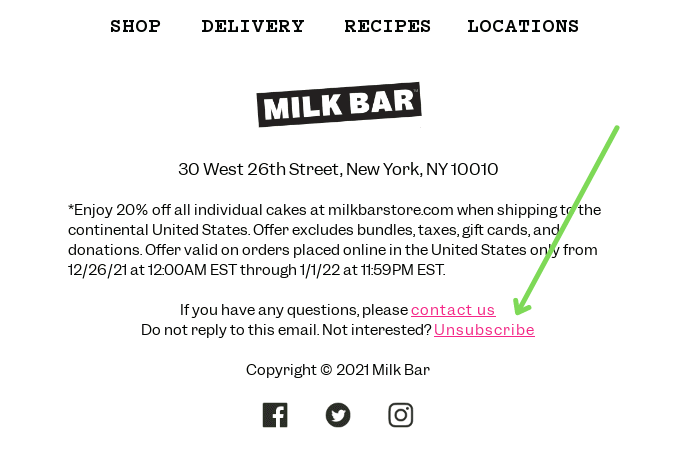
An unsubscribe link is a clearly labeled link or button that allows a recipient to stop receiving marketing messages. It usually appears in the footer, where subscribers expect to find it, but it must still be readable and easy to use on mobile devices.
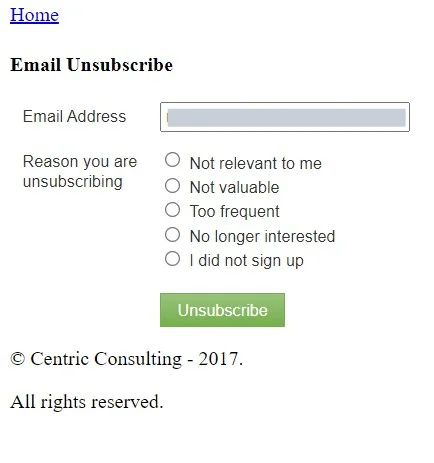
After a recipient clicks, they may see a confirmation page, a preference center, or an optional feedback survey. The important result happens behind the scenes: the email address is added to a suppression list so future marketing campaigns do not include it. Feedback can help improve your program, but answering a survey must never be required to complete the opt-out.
Laws and regulations about unsubscribe links
Unsubscribe requirements vary by country and by message type, so avoid the oversimplified claim that every email everywhere must contain the same link.
CAN-SPAM in the United States
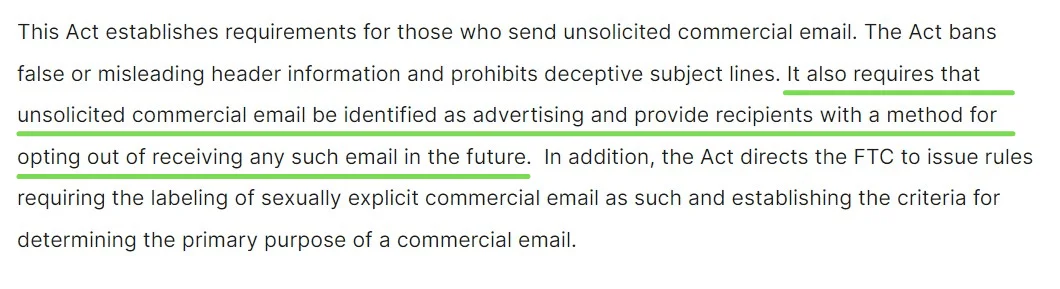
The FTC’s CAN-SPAM compliance guide requires commercial email to explain clearly how recipients can opt out. The mechanism must let people stop all commercial messages, remain available for at least 30 days after sending, and work without a fee or unnecessary personal information. Requests must be honored within 10 business days. A company remains responsible even when another vendor sends email on its behalf.
European and UK rules
In the EU and UK, GDPR rights interact with electronic-marketing rules such as the ePrivacy framework and PECR. Recipients may withdraw consent where consent is the lawful basis, and they have a right to object to direct marketing. The specific permission and opt-out requirements depend on the jurisdiction, relationship, and type of contact data. If you send internationally, obtain qualified legal advice for the markets you target.
Marketing and transactional messages
Order confirmations, password resets, security notices, and similar service messages have a different primary purpose from newsletters and promotions. Do not add promotional content merely to classify a campaign as transactional, and do not use a transactional stream to bypass a marketing opt-out.
What is one-click unsubscribe?
One-click unsubscribe allows a mailbox provider to display an unsubscribe control near the sender name. It is implemented with the List-Unsubscribe and List-Unsubscribe-Post headers defined for one-click processing in RFC 8058.
This feature does not replace the visible unsubscribe link in the email body. The body link serves the reader directly and may open a preference center; the header mechanism lets the inbox provider submit an opt-out request without sending the user through a landing page.
Google requires qualifying bulk senders to support one-click unsubscribe for marketing and subscribed messages and to include a clearly visible unsubscribe link in the body. Senders should process these requests within two days under Gmail’s sender guidelines. Your email service provider normally creates the required headers, but you should confirm that the feature is enabled and test how it appears in major inboxes.
Why add unsubscribe links to emails?
Subscribers’ interests and circumstances change. Letting disengaged contacts leave is healthier than making them search for another way out.
Reduce spam complaints
If people cannot find a legitimate exit, they are more likely to use the spam button. A visible unsubscribe option gives them a safer, clearer choice.
Protect the customer experience
An easy opt-out shows respect for the recipient’s decision. Dark patterns, login walls, or repeated confirmation screens create frustration and damage trust.
Keep the list focused
Removing contacts who no longer want the content helps you interpret engagement data more accurately. An unsubscribe link is not a shortcut to inbox placement, but it supports responsible list management and complaint reduction.
Collect optional feedback
An optional question can reveal problems with frequency, relevance, or expectations. Keep it short and complete the unsubscribe even when the person skips it.
Good and bad unsubscribe link examples
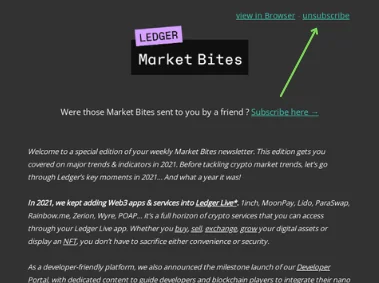
Good unsubscribe links use familiar wording, sufficient contrast, and a predictable location. They do not need to dominate the email, but recipients should be able to find them without hunting.
Good examples
- The link is visually separated from nearby legal copy and uses the direct label “Unsubscribe.”
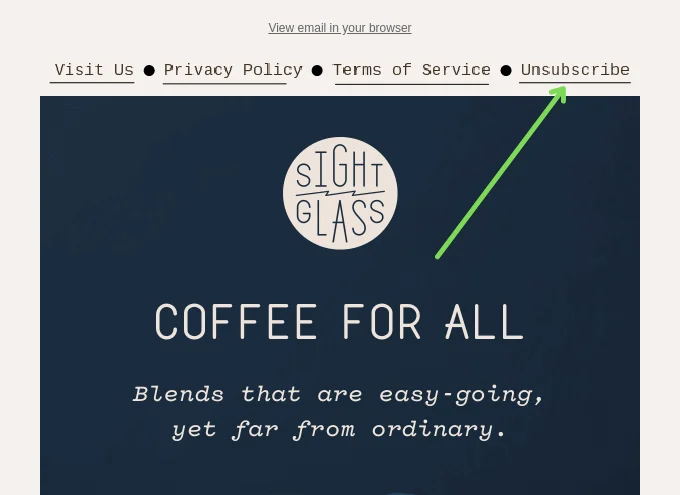
- The link uses readable contrast and remains easy to tap on a phone.
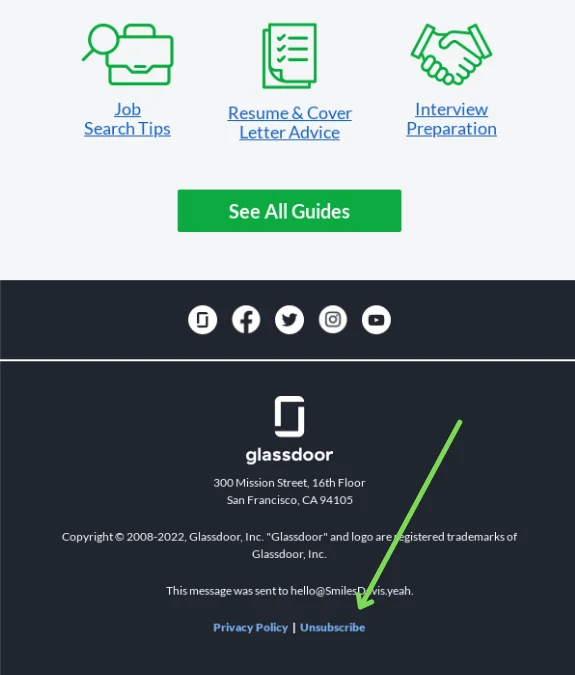
- A preference link is offered alongside a clear option to stop all marketing messages.
Not-so-great examples
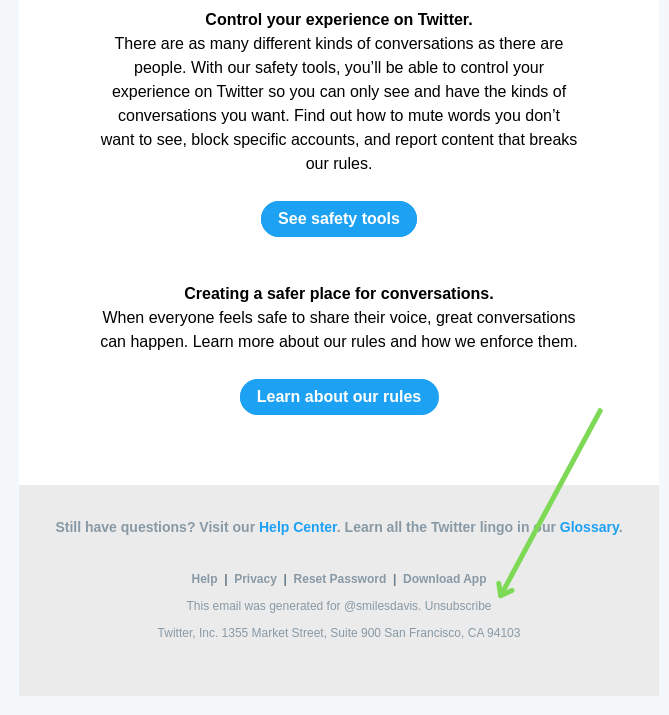
- The link is buried in a dense paragraph and rendered in very small type.
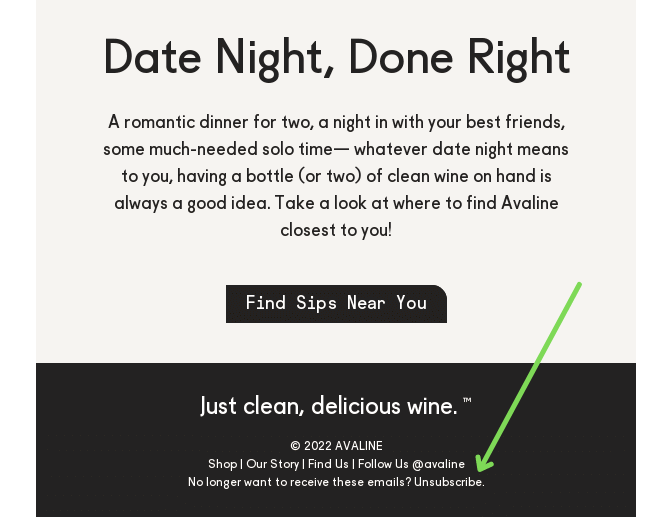
- The link looks like ordinary text, has weak contrast, or uses vague wording such as “click here.”
How to add an unsubscribe link in Selzy
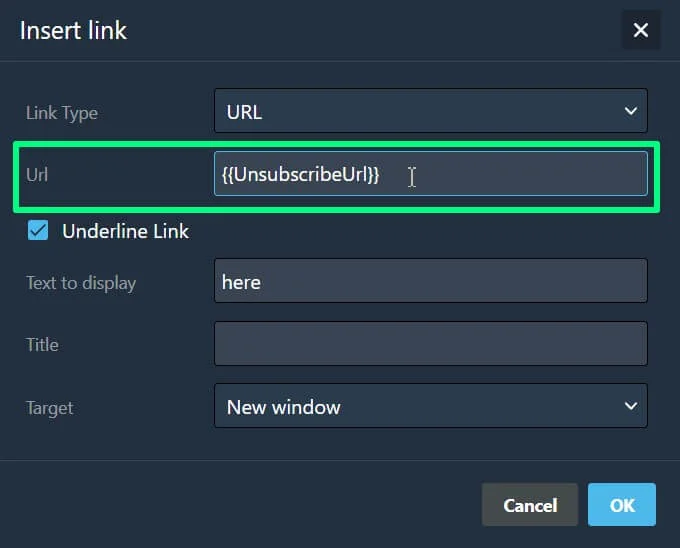
Selzy automatically adds an unsubscribe link to email campaigns. You can also place and customize a link in the message using the {{UnsubscribeUrl}} merge tag.
In the block editor
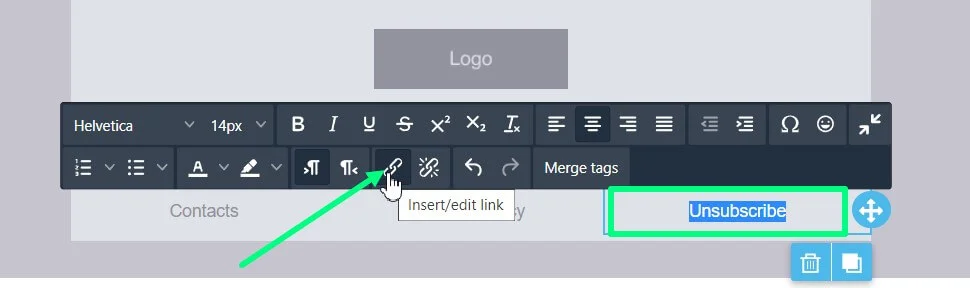
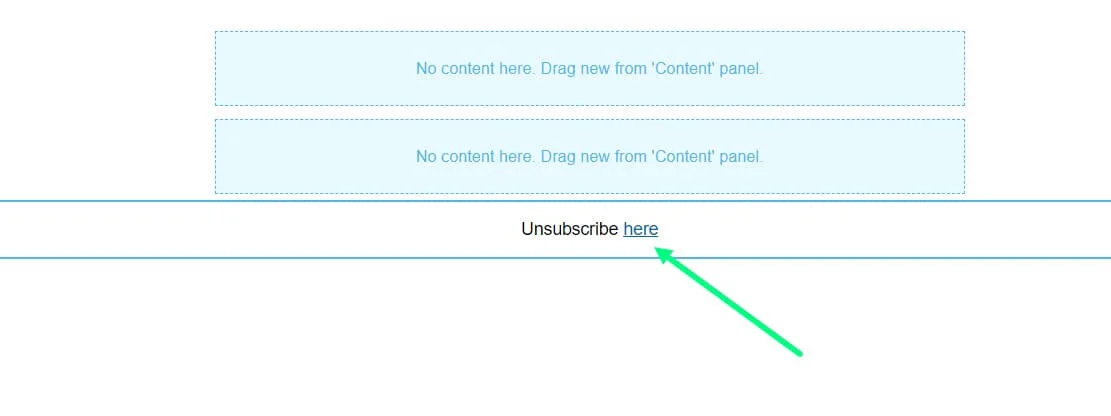
Highlight the words you want to turn into a link, choose Insert/Edit link, and enter {{UnsubscribeUrl}} in the URL field. You can also select Unsubscribe link from the Merge tags menu instead of typing the tag manually.
In the HTML editor or your own HTML
In Selzy’s HTML editor, select the link text, open the link dialog, choose the “Other” protocol, and insert {{UnsubscribeUrl}}. In custom HTML, use <a href="{{UnsubscribeUrl}}">Unsubscribe from emails</a>. Do not add other characters inside the href value.
The current step-by-step instructions are available in the Selzy Help Center.


Best practices for email unsubscribe links
- Use direct wording. “Unsubscribe” and “Stop receiving these emails” are clearer than creative labels.
- Use a familiar location. The footer is expected and works well when the link remains readable.
- Design for mobile. Provide adequate contrast, font size, spacing, and a tap target that does not compete with adjacent links.
- Offer a stop-all option. A preference center can reduce unnecessary opt-outs, but it must not hide the ability to stop all marketing.
- Avoid login walls and dark patterns. Do not require an account password, a fee, or unnecessary personal data.
- Keep feedback optional. Process the request before asking why the person is leaving.
- Test every route. Test the body link, preference page, confirmation message, one-click header, mobile rendering, and suppression update.
- Keep suppression records. Do not simply delete the address and risk importing it again. Suppress future marketing until the person knowingly subscribes again.
If a link is broken, requests a login, or continues sending marketing after the stated processing period, check the destination URL, campaign-to-list mapping, automation branches, integrations, and suppression synchronization.
How to unsubscribe when there is no link
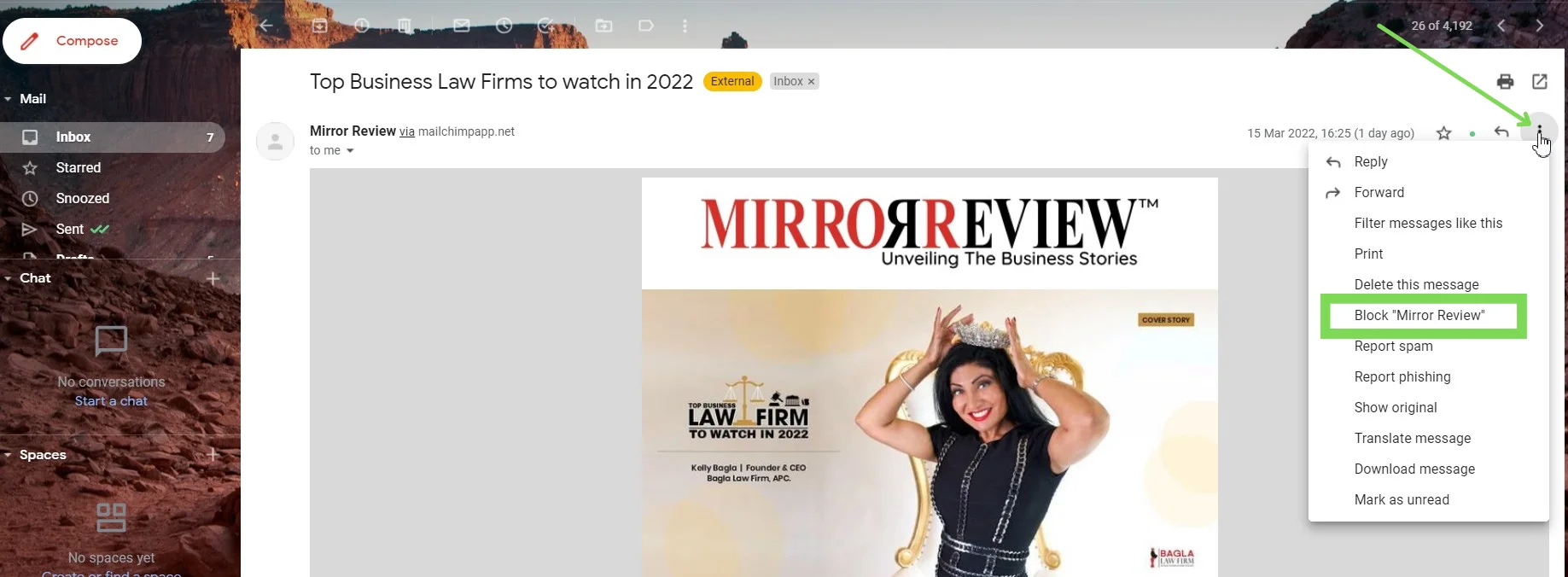
First, look for an unsubscribe control supplied by the mailbox provider near the sender name. You can also check the sender’s preference center or account notification settings.
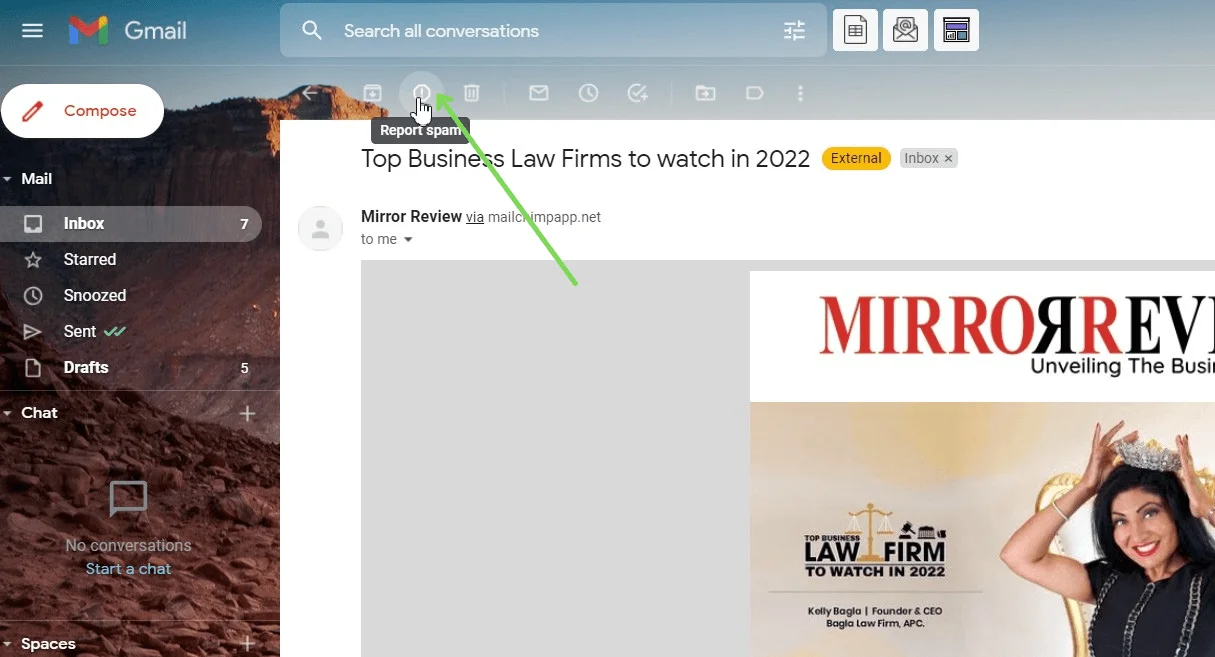
If the message is unwanted or suspicious and no legitimate option exists, mark it as spam. Blocking the sender can hide future messages in your inbox, but it does not necessarily remove your address from the sender’s list. Replying with an unsubscribe request may help with a known, legitimate sender, but it is a limited fallback rather than a substitute for a working opt-out mechanism.
Final checklist for senders
Before launching a marketing campaign, confirm that you have:
- classified the message correctly as marketing, transactional, or mixed-purpose;
- included a visible, descriptive unsubscribe link;
- enabled one-click unsubscribe headers where required;
- provided a clear way to stop all marketing, even if preferences are available;
- tested the destination, confirmation, and mobile experience;
- connected the request to every relevant list, automation, and suppression workflow;
- documented how quickly requests are processed in each jurisdiction.
Easy exits are part of a trustworthy email program. They respect subscribers, reduce avoidable complaints, and give your engaged audience more room to stand out.
FAQ
How do I create an unsubscribe link for marketing emails?
Use a clearly labeled link or button in the email body, usually in the footer, so recipients can easily find it. Make sure it is readable and works well on mobile, and test the full opt-out flow before sending. After a click, the address should be added to your suppression list promptly.
Is marketing email without an unsubscribe link illegal?
Not necessarily in every case and everywhere, because unsubscribe rules vary by country and by message type. In the U.S., commercial email must clearly explain how recipients can opt out, and in the EU and UK the requirements depend on the applicable marketing rules and lawful basis. The safe practice is to provide an easy opt-out for marketing messages and follow the rules for the markets you target.
What is one-click unsubscribe?
One-click unsubscribe is a mailbox-provider feature that lets recipients unsubscribe directly from the inbox, usually near the sender name. It uses the List-Unsubscribe and List-Unsubscribe-Post email headers for automated processing. It does not replace the visible unsubscribe link in the email body.
What is the difference between the body unsubscribe link and List-Unsubscribe headers?
The visible unsubscribe link in the email body is the control the recipient clicks inside the message. The List-Unsubscribe and List-Unsubscribe-Post headers power the mailbox-provider one-click experience in the inbox. Both can work together, and the body link may lead to a confirmation page, preference center, or optional survey.
How quickly should unsubscribe requests be processed?
Process opt-out requests promptly and apply them to your suppression list right away. Under CAN-SPAM, requests must be honored within 10 business days, and Gmail sender guidelines say one-click requests should be processed within two days. Faster is better to avoid sending more unwanted mail.
Can transactional emails include unsubscribe links or promotional content?
Transactional messages such as order confirmations, password resets, and security notices have a different primary purpose from marketing emails. Do not add promotional content just to label a campaign as transactional, and do not use a transactional stream to bypass marketing opt-outs. Whether an opt-out is required depends on the message purpose and jurisdiction.
 New and noteworthy on our blog