


Key takeaways
- An email marketing campaign is a planned message sent to achieve specific goals like welcoming new contacts, promoting offers, or recovering abandoned carts.
- Effective email ideas include welcome emails, newsletters, update emails, special offers, survey emails, milestone emails, and re-engagement emails.
- Key strategies for effective email campaigns include setting clear goals, segmenting the audience, personalizing content, writing catchy subject lines, A/B testing, being mobile-friendly, and providing clear CTAs.
Email marketing is a vital part of your business that you can’t afford to neglect. You know the importance and value it brings, but even with all this hard work there are still times when coming up with new ideas for emails seems challenging.
Whether you want to keep your business top-of-mind, promote high-value content, nurture leads, recover abandoned carts, or generate revenue, there is an email campaign idea for each goal. In this article, we’ll look at practical email marketing ideas, examples, and execution tips you can adapt for your next campaign.
What is an email marketing campaign?
An email marketing campaign is a planned message or sequence sent to a selected group of subscribers to achieve a specific goal. This could be welcoming new contacts, promoting an offer, recovering a cart, collecting feedback, signing people up for a webinar, or bringing inactive customers back.
An email marketing campaign works best when it connects four things: a clear goal, a specific audience segment, a relevant message, and one measurable action you want subscribers to take.
Before choosing an idea, decide what the campaign should do. Use this quick guide to match the idea to your goal:
| Goal | Best email idea | Good for | Metric to watch |
| Onboard new subscribers | Welcome or onboarding sequence | New leads, trial users, first-time buyers | Clicks, activation, first purchase |
| Keep people engaged | Newsletter or educational email | Content-led brands, SaaS, services | Clicks, replies, return visits |
| Drive sales | Special offer, product recommendation, last-chance reminder | Ecommerce, retail, digital products | Revenue, conversions, average order value |
| Recover lost intent | Abandoned cart, re-engagement, cancellation follow-up | Shops, subscriptions, apps | Recovered orders, reactivations, churn |
| Learn from customers | Survey or feedback email | Product teams, events, services | Response rate, qualitative feedback |
| Build loyalty | Milestone, referral, loyalty, post-purchase education | Brands with repeat customers | Repeat purchases, referrals, retention |
Great email marketing ideas for different email types
When you’re sending marketing emails on a regular basis, it can be tough to come up with fresh ideas that will capture your recipients’ attention and interest. To help you create email campaigns that are sure to engage your audience, we’ve put together a list of effective email examples and practical ways to use them.
Welcome emails
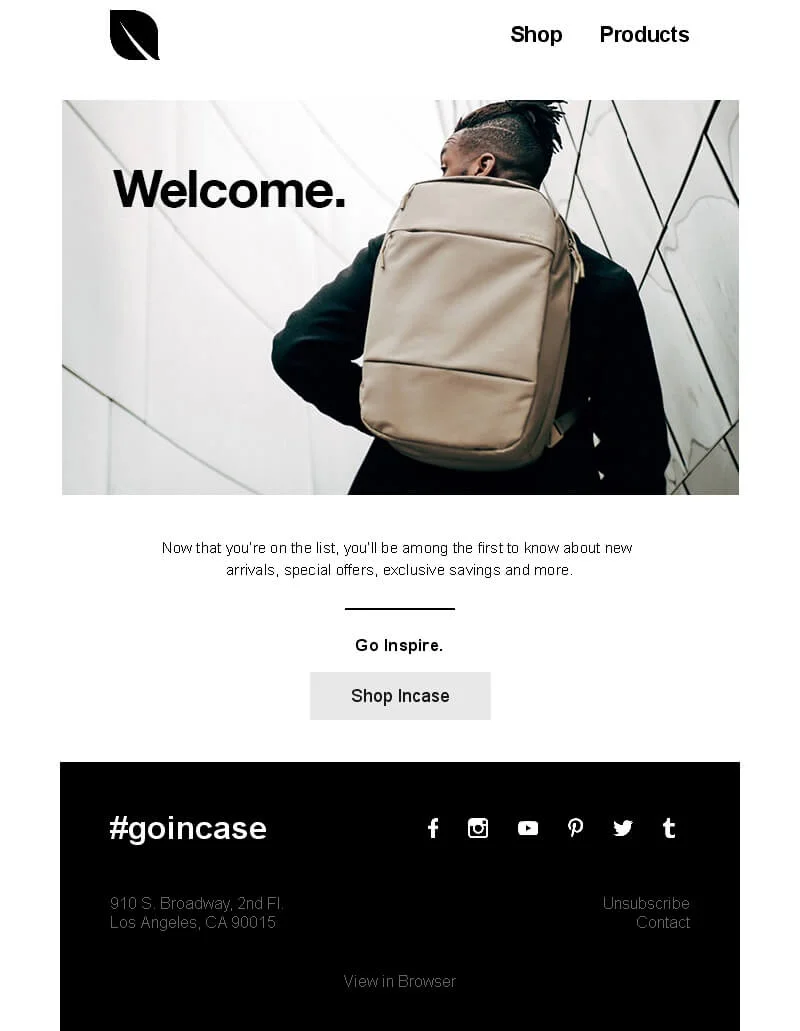
With each new subscriber, it is important to send a welcome email. It is a great way to tell who you are, what you do, and how you can help.
Use this email when someone joins your list, creates an account, or downloads a lead magnet. Introduce your brand, set expectations, and point subscribers to one useful next step. A simple angle is: “Here is what you can expect from us and where to start.” Track clicks to the first recommended resource or action.
In welcome emails, also include information on what kind of content will be in future messages and when subscribers can expect these updates from you next time.
Newsletters
Your company’s email newsletter is a great way to keep your customers and followers up-to-date on what’s new with your business. You can use it to share blog posts, upcoming events, product updates, or a behind-the-scenes look at your company.
Use newsletters when your goal is repeated engagement rather than an immediate sale. Pick one main story, add a few supporting links, and make the subject line promise a clear benefit. Watch click distribution to understand which topics your audience actually wants.
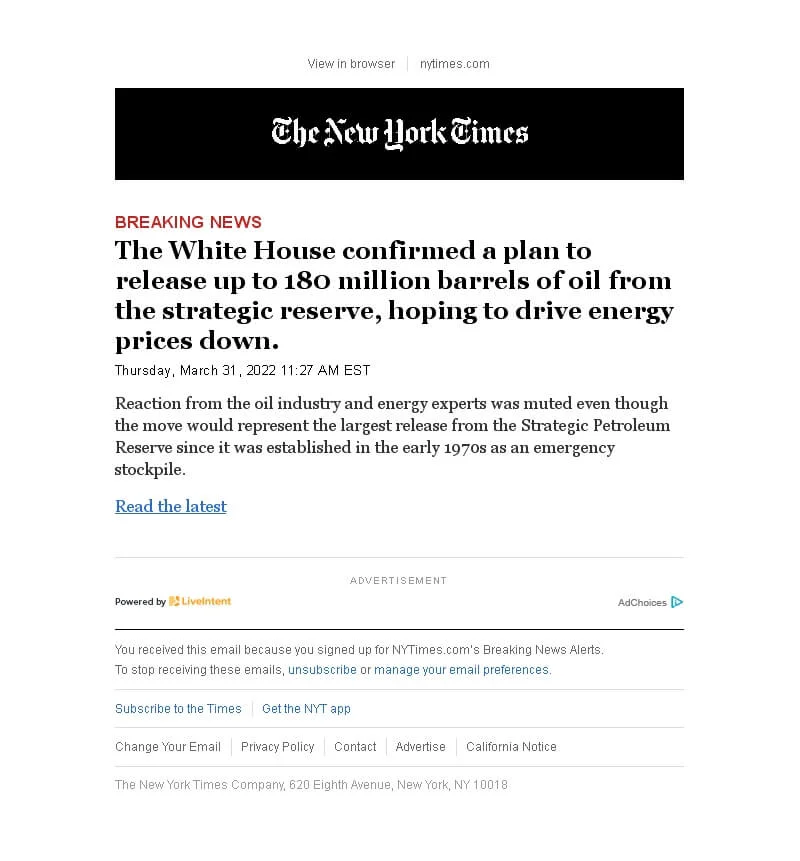
The New York Times periodically sends current and breaking news articles from the world of politics, art, and culture. In this way, the news itself comes to its readers.
Update emails
Your goal with these messages is not always to promote yourself, but to show subscribers that you are actively working to improve your product, service, policies, or customer experience. Bug fixes, new features, security notices, and updates to terms of service are common examples.
Make these emails easy to scan: explain what changed, who is affected, whether the reader needs to do anything, and where to learn more. Track clicks to release notes, help docs, or account settings.
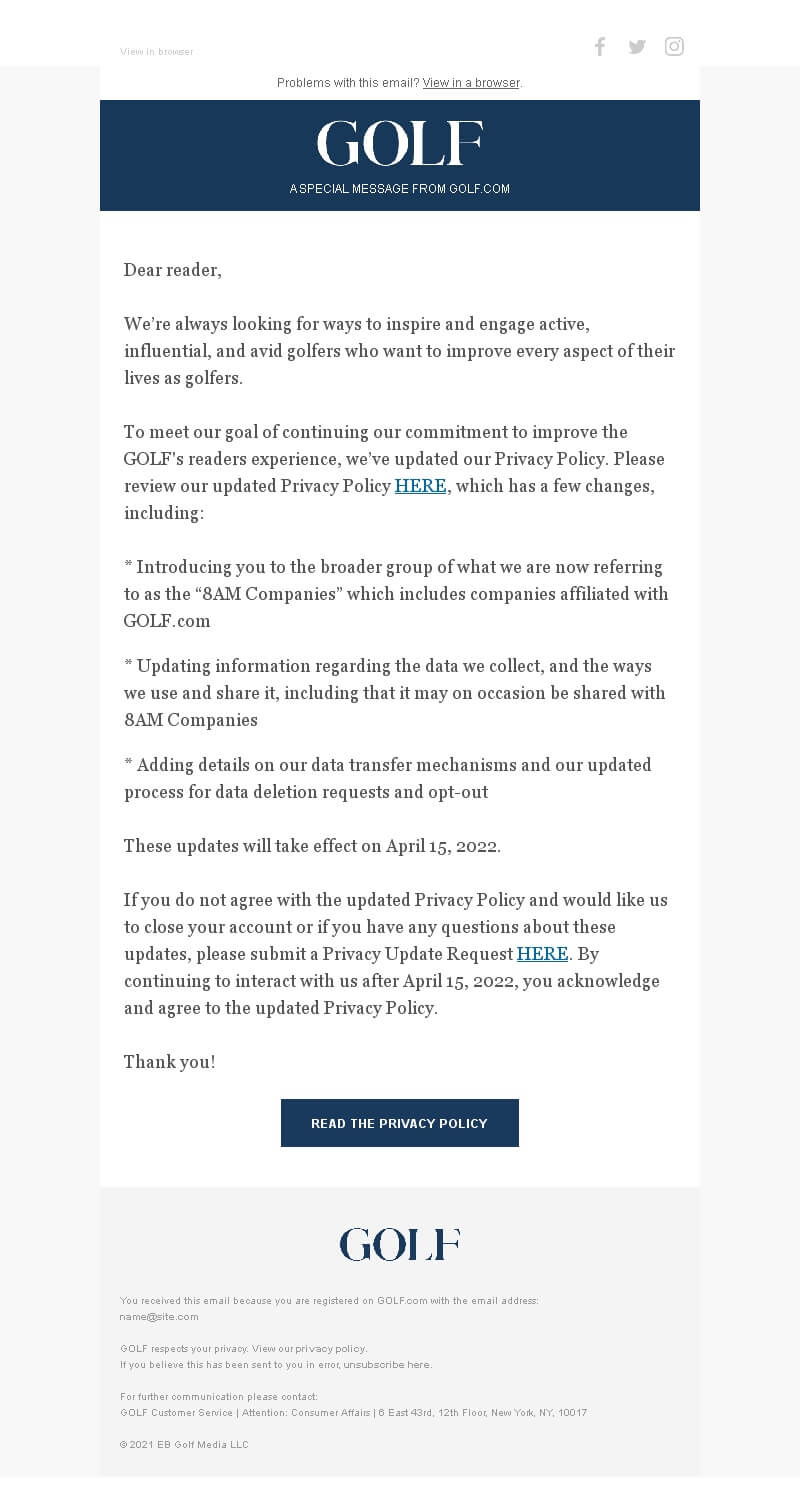
For example, when it comes to security, it is important to keep readers updated through email. This way, they can be aware of any potential threats and take the necessary precautions.
The GOLF community has taken care of its members and sent a notice of changes to their policy:
Special offer emails
A special offer email is sent to a specific group of people to promote a product, service, or limited-time deal. This type of email usually contains a discount, bonus, bundle, free gift, or other incentive to encourage recipients to take action.
Use this email when the offer is relevant to the segment. For example, send a first-order discount to new subscribers, a bundle to repeat buyers, or an upgrade offer to active users. The strongest versions connect the offer to the customer’s behavior instead of sending the same discount to everyone.
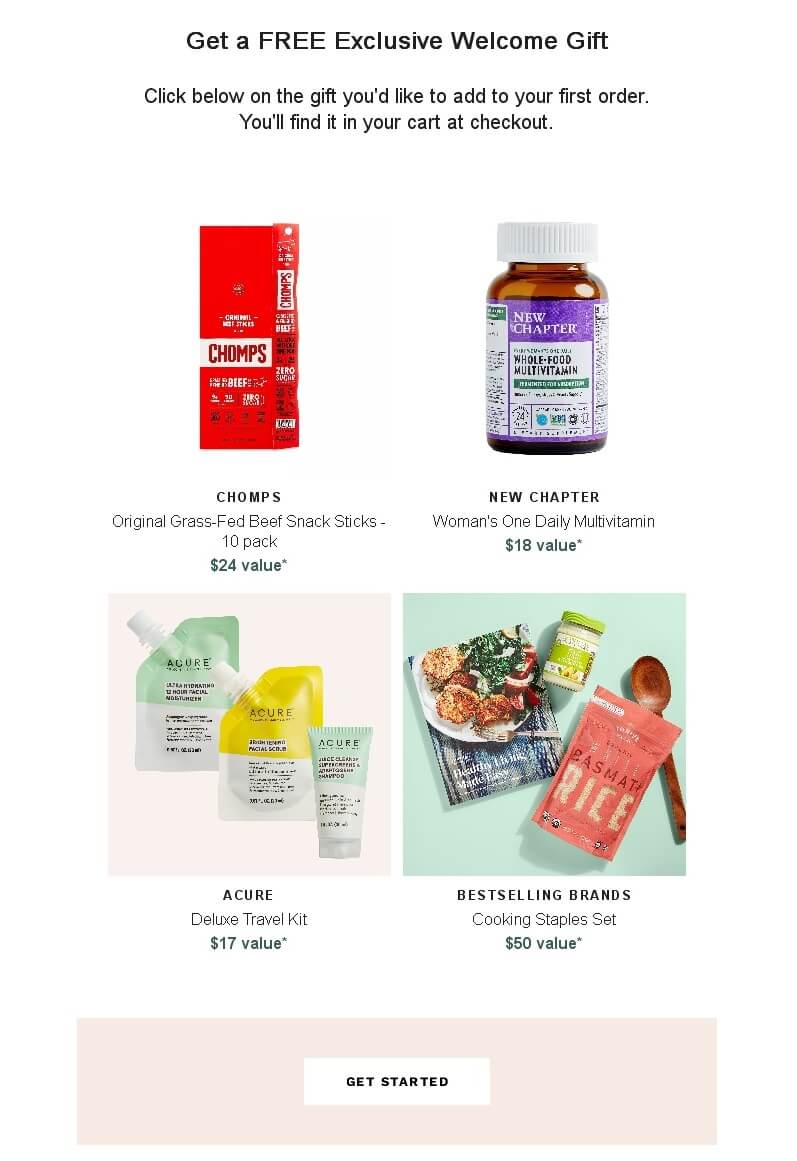
This email includes a special offer that stands out and grabs attention. The online store offers a free gift with the first order, which is a great way to show appreciation to the customer.
Survey emails
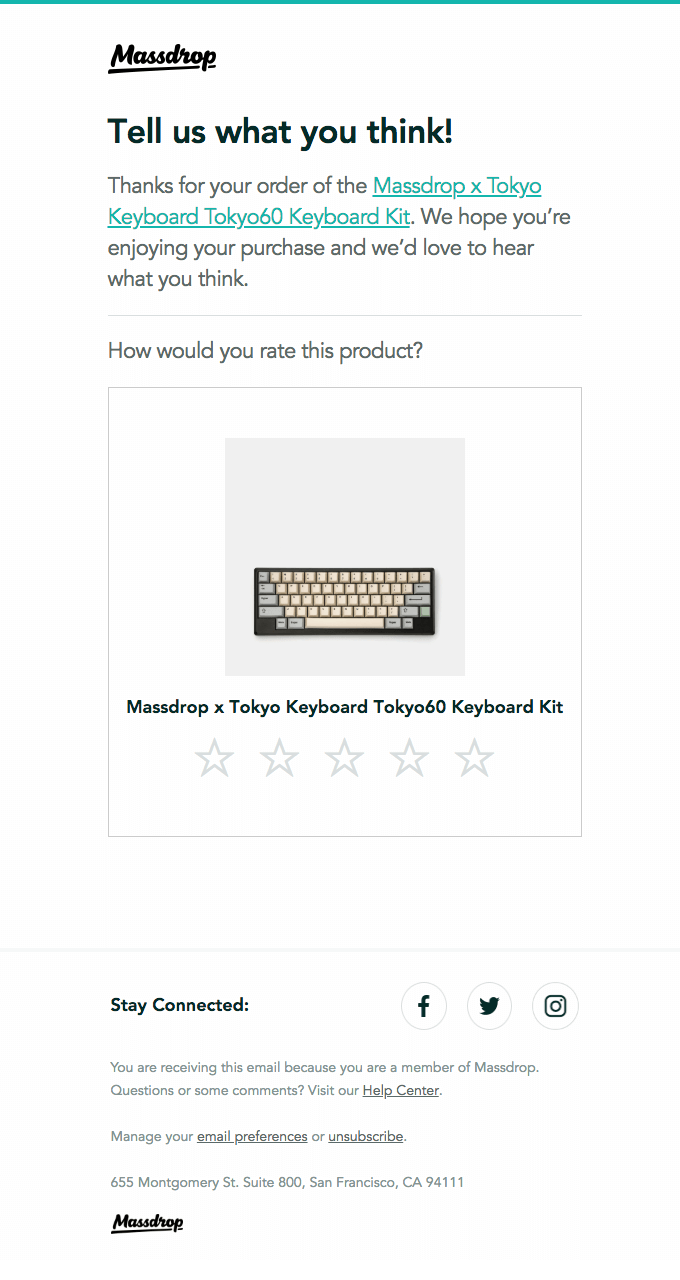
Customer feedback is essential for businesses to improve their products and services. Survey emails and feedback emails offer customers a chance to voice their opinions directly to the company.
Here are three ideas for how you can use survey emails:
- Measure customer satisfaction. Use surveys to find out how happy customers are with your brand and what you can do to improve.
- Ask for feedback after an event. Get attendees’ opinions on their experience at your webinars, workshops, or in-person events.
- Send post-purchase surveys. After a customer interaction, ask about the experience while it is still fresh.
Keep the survey short, explain how long it will take, and make the first question easy to answer. Track completion rate, not just opens.
Milestone emails
Many companies use milestone emails to celebrate their customer’s achievements or company successes. This could be a special event, such as a birthday or anniversary, or a more general accomplishment, like reaching a certain number of subscribers.
Some common milestone emails include:
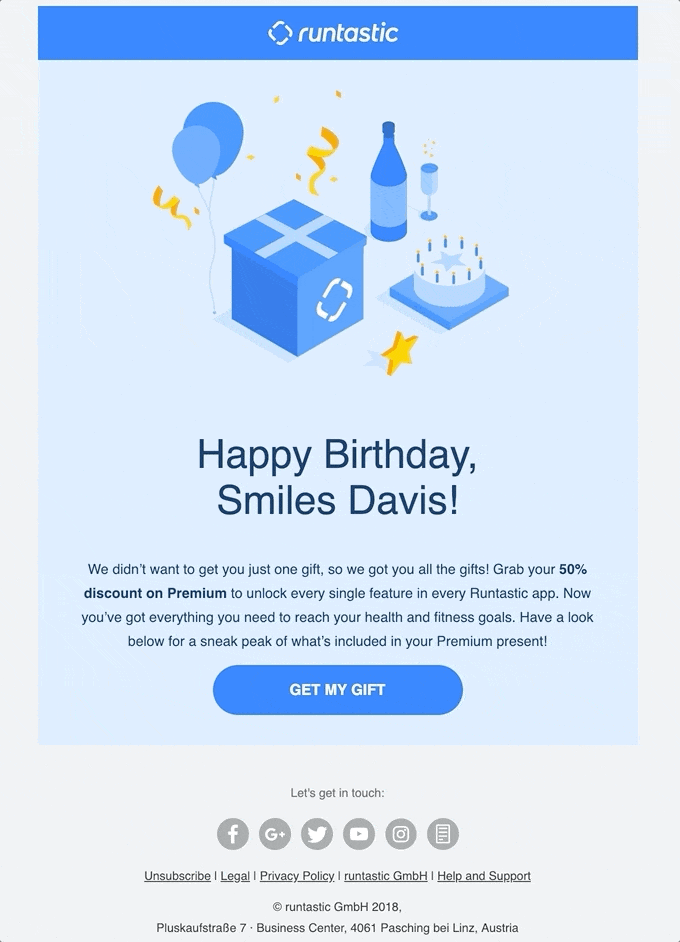
- Your clients’ birthday. These emails often contain promotions or discounts to encourage subscribers to celebrate their birthdays. For example, Runtastic gives a 50% discount on the premium package in honor of their subscriber’s birthday.
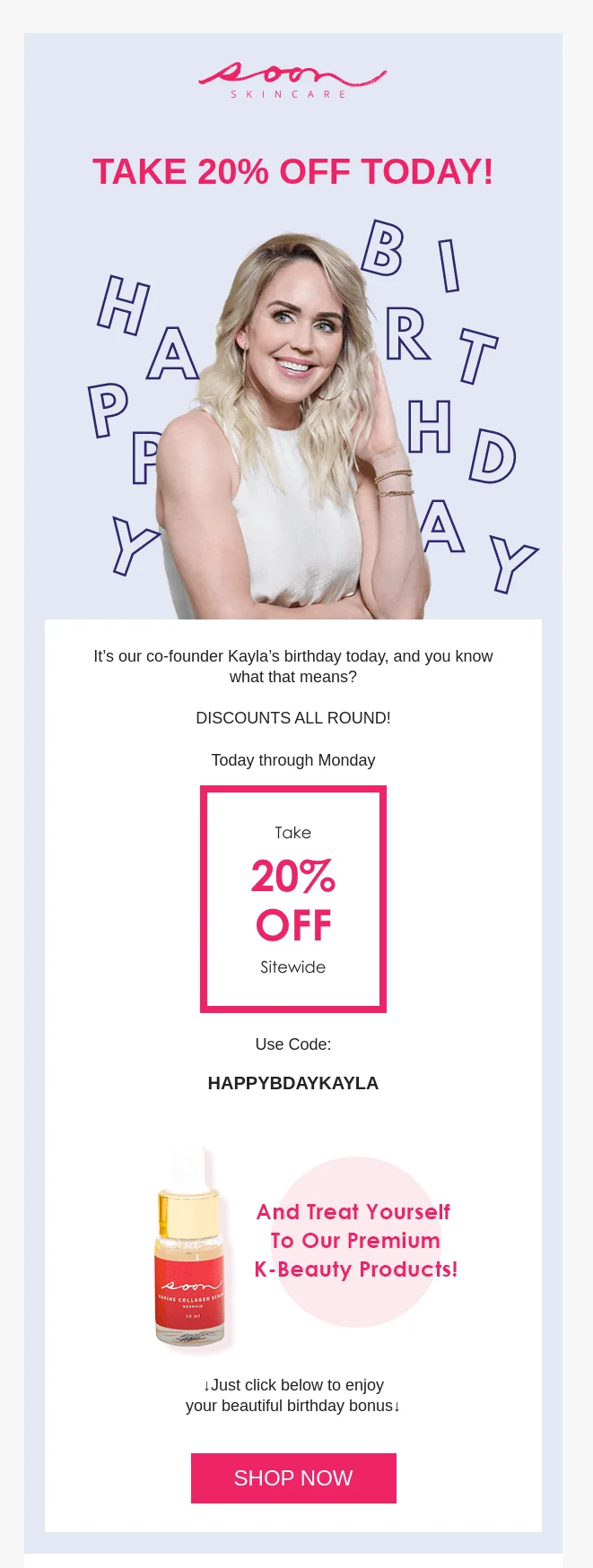
- A company milestone is something to celebrate. Just like people have birthdays, brands can celebrate their own company milestones. The co-founder of the Soon brand celebrates its founding by offering discounts on all products.
- Celebrate the anniversary of a client who has had business with your company for some time. User anniversary emails are a great way to show personalized data about past purchases or activity and encourage customers to keep it up. Grammarly celebrates customer anniversaries by offering a discounted upgrade to the premium package.
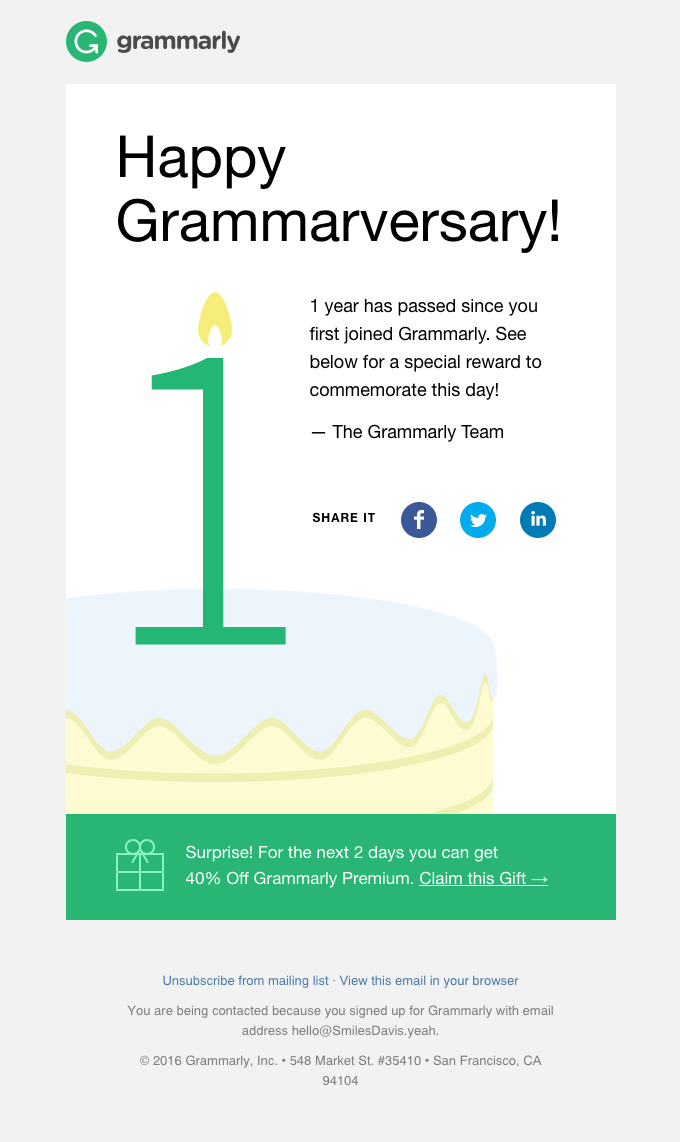
- Celebrate the anniversary of a product, a feature, or brand progress. This acknowledges how far the product or feature has come and marks its success.
Re-engagement emails
This type of email is used to re-engage customers or subscribers who have not interacted with you for a while.
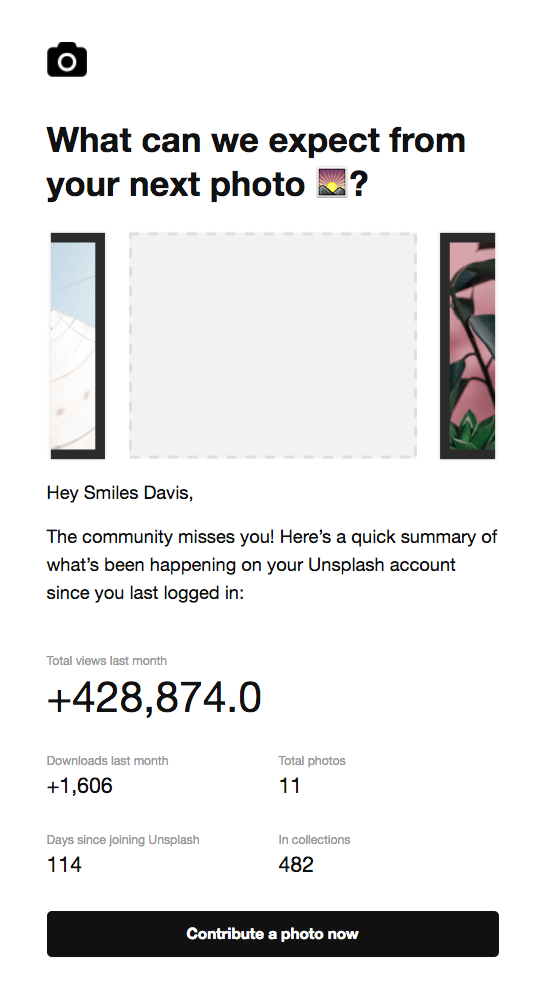
Your inactive subscribers may just need a specific reason to return. Remind them why they signed up, highlight what they have missed, and offer a useful incentive when it fits your margins. You can also ask whether they still want to hear from you, which helps clean your list.
An example of how you could use fear of missing out in your re-engagement campaigns is from Unsplash. They have a perfect capture of how re-engagement emails can be used to bring people back.
Confirmation emails
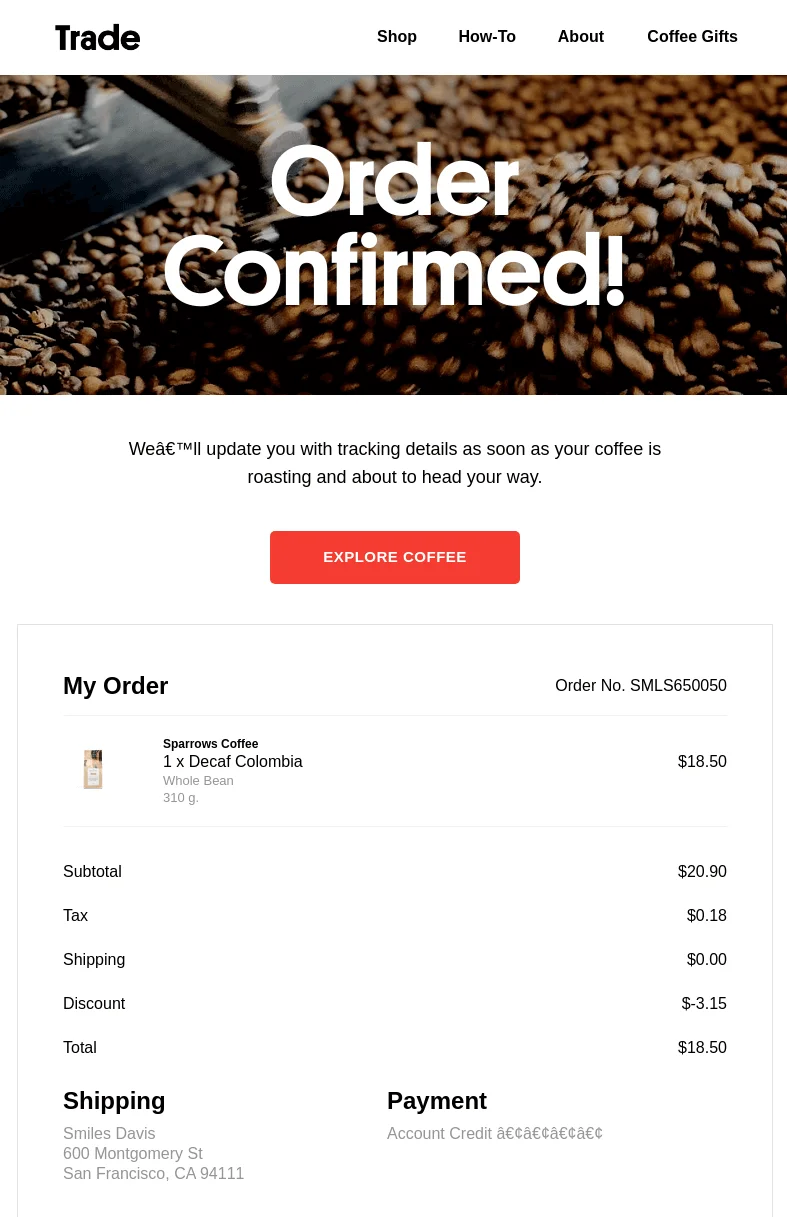
A confirmation email is a message sent to a customer after they have completed an action, such as placing an order, subscribing to a newsletter, or registering for a webinar. These emails reassure the customer that their action has been received and is being processed.
Use confirmation emails to build trust and reduce support questions. Include the key details, the next step, and a support link if something looks wrong. If the email is transactional, keep promotional content secondary.
This email from Trade Coffee company features the latest purchase in a clean and modern way:
Abandoned cart emails
If a customer has added items to their shopping cart but doesn’t complete the purchase, an abandoned cart email is sent as a reminder. This type of email usually includes information on what was left behind in the cart, as well as an incentive to encourage the customer to return and finish the purchase.
Other ways to customize these email types include adding product images, CTA buttons, trust cues, shipping reminders, and customer support options. Ultimately, the goal is to get people back to the checkout page so they can finish their purchase.
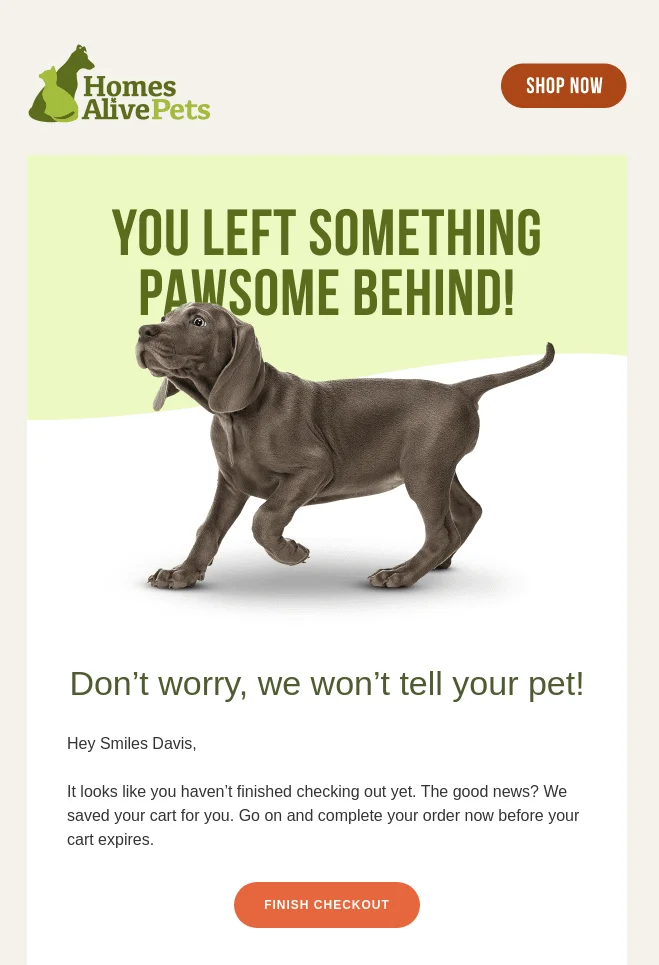
Homes Alive sends emails that are easy to read and understand, with buttons that make it easy for customers to finalize their purchase.
Last chance sales reminders
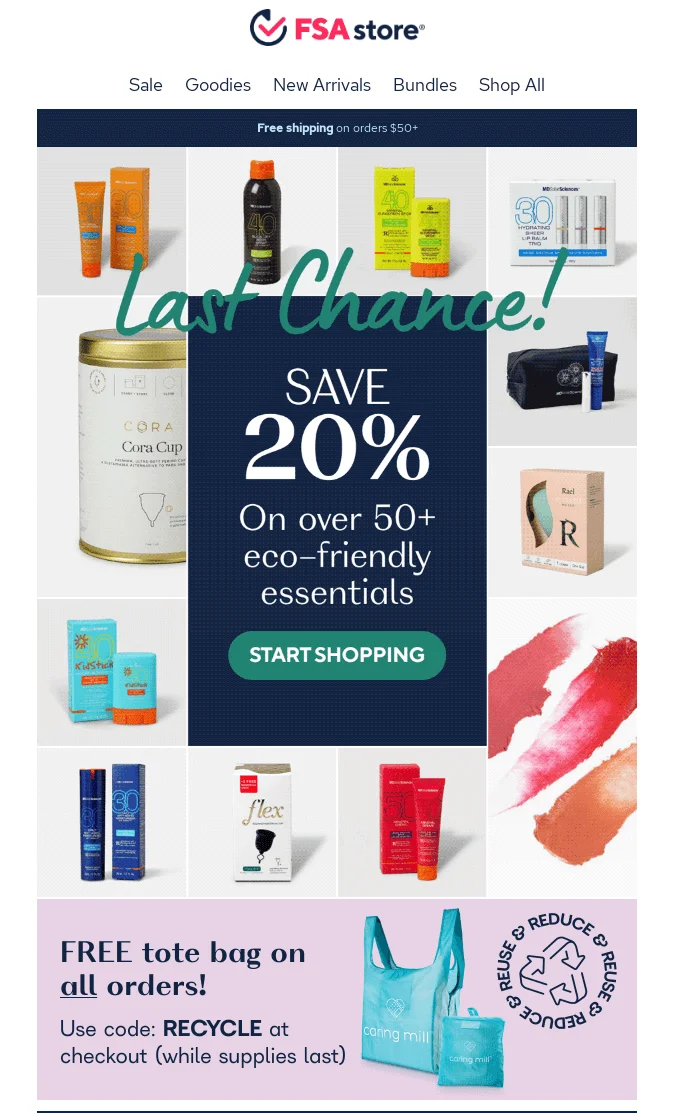
Last chance emails are sent when an offer is about to expire. This could be a short-time promotion, a discount on a limited selection of products, or a promo code with an expiration date.
Make the deadline clear, show what the customer will miss, and avoid sending too many urgency emails for the same offer. Track revenue, unsubscribe rate, and spam complaints together so urgency does not damage trust.
The message from FSA Store announcing a 20% discount for a limited time only would grab the attention of anyone looking to purchase eco-friendly products.
Product recommendations
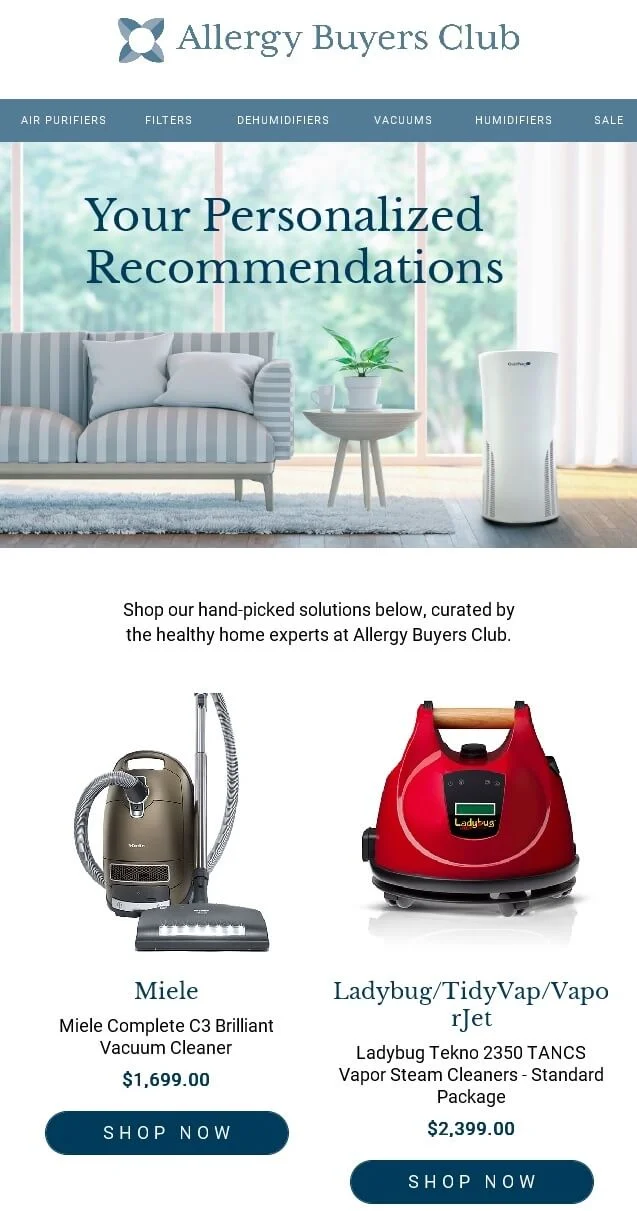
If a customer has already shopped with you, there is no need for them to wait until their next shopping session. You can prompt additional purchases by recommending similar products or complementary items based on what they have enjoyed in the past.
This idea works best when recommendations are based on real behavior: purchase history, browsing history, items left in the cart, or category preferences. Track clicks to recommended items and revenue per recipient.
Subscription cancellation email
If a customer decides to cancel their subscription, you have an opportunity to learn from the experience and make sure it does not affect future purchases.
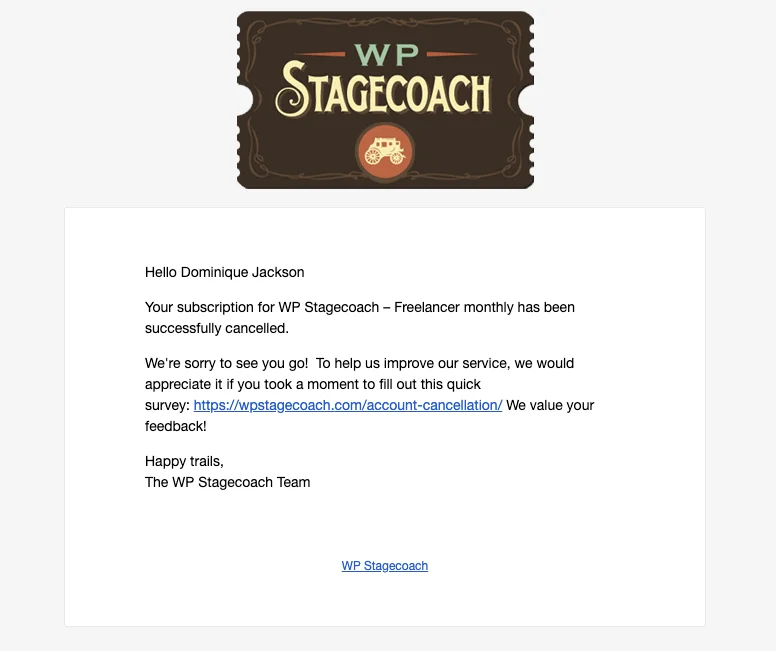
Subscription cancellation emails should be respectful of the customer’s decision and include options for feedback and coming back at a later time. Creating a clear path back to the subscription and offering something unexpected, such as free content or a discount, can help keep customers engaged.
For example, WP Stagecoach sends out a survey to canceled subscribers in order to learn more about why they decided to cancel their subscription.
Onboarding sequence
An onboarding sequence helps new users, subscribers, or customers get value from your product faster. Instead of sending one long welcome message, split the journey into a few focused emails: setup, first win, helpful feature, customer story, and next step.
Use this idea for SaaS products, apps, online courses, communities, and services with a learning curve. Watch activation rate, feature adoption, trial-to-paid conversion, and support questions.
Educational or how-to emails
Educational emails teach subscribers something useful before asking them to buy. You can share a checklist, short tutorial, mistake to avoid, template, comparison, or mini case study.
These emails are useful when your audience needs confidence before making a decision. They also work well as a nurture sequence for leads who are not ready for a sales offer yet.
Event or webinar invites
If you host webinars, launches, workshops, demos, or live Q&A sessions, email is one of the best channels for driving attendance. Send an invite that explains the topic, who should attend, what they will learn, and how long it will take.
Follow up with a reminder before the event and a replay or summary afterward. Track registrations, attendance, and post-event conversions.
Referral and loyalty emails
Referral emails ask happy customers to recommend your brand to someone else. Loyalty emails reward repeat buyers, active users, or long-time subscribers.
Make the reward easy to understand and explain who the offer is best for. This works better when the email feels like a thank-you, not a demand for promotion.
Social proof emails
Social proof emails use reviews, testimonials, user-generated content, customer numbers, awards, or case studies to reduce hesitation. They are useful before a sales email, during a launch, or after someone has shown buying intent.
Keep the proof specific. A quote with a clear result is stronger than a generic compliment.
Back-in-stock and waitlist emails
Back-in-stock emails work when people showed interest but could not buy because an item, plan, or event slot was unavailable. Waitlist emails can also build demand before a launch.
Make the CTA direct and show any deadline or stock limitation clearly. Track clicks and purchases from the first few hours after sending.
Post-purchase education
Post-purchase emails help customers get more value after they buy. Share setup tips, usage ideas, care instructions, onboarding resources, or complementary products.
This idea can reduce returns, increase satisfaction, and create a natural path to repeat purchases.
Replenishment or reorder reminders
If customers buy products that run out, send a replenishment reminder around the time they are likely to need more. This works for consumables, subscriptions, supplies, personal care, pet products, and food.
Use purchase timing or customer preference data when possible. Track repeat purchase rate and time between orders.
How to make your email marketing campaign ideas effective
The first step to getting your emails read is making them stand out. With so many emails coming in every day, getting noticed has never been so important. There are key strategies that can help you get recipients interested and take action.
Determine your goals
What do you want to achieve with your email campaign? Do you want to clean up your list, promote a new product, follow up on abandoned carts, or keep your audience top-of-mind? Knowing what you want to achieve will help you choose the right email idea and metric.
Segment your audience
Remember that you’re not just targeting an audience of people, but rather an individual. Segmenting your contact lists means breaking them down into smaller groups based on interests, behavior, lifecycle stage, or preferences so that the content you send resonates better.
Always personalize
When you personalize an email, it means sending content that is relevant and useful to the subscriber. Basic email personalization involves using a subscriber’s name in the subject line. More advanced tactics can involve changing the content based on purchase history, location, engagement, or plan type.
Write a catchy subject line
Your subject line is one of the most important aspects of your campaign. It’s what will convince people to open your email, so it needs to be specific and interesting. Spend time brainstorming different subject lines for the messages you send out.
Try out A/B testing
With A/B testing, you can learn what makes your audience click. Test one meaningful variable at a time, such as subject line, CTA, offer, send time, or layout. Automation can help manage distribution and track recipient behavior.
Be mobile-friendly
People often check email on mobile devices, so emails need to be easy to view and engage with on smaller screens.
- Keep your subject line short.
- Include preheader text.
- Write copy that is short and to the point.
- Consider how images will look on a mobile device.
- Make sure CTAs are prominent and easy to tap.
- Test emails on multiple devices before sending.
Speak your audience’s language
When you communicate with your customers, pay attention to tone and voice. Avoid jargon or buzzwords that your audience may not be familiar with. Focus on language they can understand and relate to.
Provide a clear call to action
The clearer your CTA, the more likely people are to act. Your addressees should know exactly how you want them to proceed after reading the message, whether it is clicking a link, signing up for a trial, registering for an event, or making a purchase.
Measure the right result
Do not judge every campaign by the same metric. A newsletter may be successful if it drives clicks to content. A cart email should be judged by recovered revenue. A survey email needs responses. A re-engagement email should show reactivations and list quality. Match the metric to the goal before you send.

Email marketing campaign ideas for different business types
Different businesses can use the same campaign idea in different ways. The key is to match the message to your sales cycle, product type, and customer relationship.
Product-based businesses
Coming up with email marketing campaign ideas for your product requires more than listing features. Focus on how the product solves problems and offers benefits that will interest potential buyers.
- Introduce a new product with a special offer.
- Send a “best of” message.
- Run a contest or giveaway.
- Educate customers on how to use your product more effectively.
- Share stories about how customers are using your product in unique ways.
- Show a behind-the-scenes look at your company.
- Provide customer testimonials.
- Answer frequently asked questions about your products.
- Report industry news that is relevant to your customers.
Ecommerce businesses
Ecommerce brands can combine lifecycle automation with merchandising. Useful campaigns include abandoned cart emails, product recommendations, back-in-stock alerts, last-chance sales, post-purchase education, review requests, replenishment reminders, and loyalty offers.
SaaS and app businesses
SaaS and app campaigns should help users reach value faster. Try onboarding sequences, feature adoption emails, usage-based tips, trial-ending reminders, upgrade offers, reactivation emails, and customer success stories.
Local and service businesses
Local and service businesses can use email to stay top-of-mind between purchases. Send appointment reminders, seasonal tips, before-and-after stories, local event updates, referral offers, and service package announcements.
Creators and newsletters
Creators can use email to deepen the relationship with their audience. Good ideas include personal notes, curated resources, launch announcements, paid content previews, community updates, and reader surveys.
Nonprofits and communities
Nonprofits can use email campaigns to show impact and encourage participation. Try volunteer updates, donor thank-you emails, campaign progress reports, event invites, and stories that connect donations to real outcomes.
Professional services business
When you are selling a service, there are still plenty of ways to keep your business top-of-mind while promoting yourself:
- Showcase your work with a portfolio email.
- Offer a free consultation or audit.
- Introduce a new service or package with an exclusive offer.
- Share industry insights and tips in a helpful resource list.
- Get personal with a behind-the-scenes look at your business.
- Host a contest or giveaway that is relevant to your services.
- Make an announcement about an upcoming event or webinar series.
- Highlight a cause or charity that you support as a company.
- Share customer testimonials and success stories.
Campaign planning checklist
Before you send your next campaign, run through this short checklist:
- Choose one campaign goal.
- Pick one audience segment.
- Choose the email idea that matches the goal.
- Write one clear value hook or offer.
- Use one primary CTA.
- Decide whether it is a one-off email or an automated sequence.
- Test one variable.
- Define the success metric before sending.
Conclusion
There are many types of email campaigns that businesses can send to boost sales, educate subscribers, recover lost intent, collect feedback, and encourage customers to make another purchase. Each type of email has its own role and should be crafted carefully.
However, if you want your email campaigns to be truly effective, you can’t just send a few messages every now and then. You need a plan that connects your idea to your audience, message, CTA, and metric:
- A/B testing can help you figure out which email campaigns are more effective with your audience.
- Make sure your email design is mobile-friendly to reach the widest audience possible.
- Pay attention to the language you use in your emails so that you can connect with your audience on their level.
- Use a clear call to action so people know what you want them to do.
- Make sure your subject line is catchy and specific.
- Adapt product-based, service-based, ecommerce, SaaS, local, creator, and nonprofit ideas to your own business model.
Email marketing is all about creating a connection with your audience. It’s how you promote sales and build a community around your brand. A successful email marketing campaign requires careful planning and optimization of every element, from the subject line to the content and call to action.
FAQ
What are good email marketing campaign ideas?
Useful campaign ideas include welcome or onboarding sequences, newsletters, special offers, product recommendations, abandoned cart emails, re-engagement emails, surveys, milestone emails, referral emails, and post-purchase education. The best idea depends on your goal, such as engagement, sales, recovery, feedback, or loyalty.
How do I come up with email marketing ideas for my business?
Start by deciding what the campaign should accomplish. Then match the idea to a specific audience segment, a relevant message, and one measurable action you want subscribers to take. A simple way to choose is to align the idea with your goal, such as onboarding, engagement, sales, recovery, customer learning, or loyalty.
Which types of marketing emails work best?
The best email type depends on the goal you want to achieve. Welcome emails work well for new subscribers, newsletters for ongoing engagement, special offers and product recommendations for sales, abandoned cart and re-engagement emails for recovery, and surveys or feedback emails for learning from customers. Milestone, referral, and loyalty emails are useful when you want to build repeat business.
What makes an email marketing idea effective?
An effective email marketing idea connects a clear goal, a specific audience segment, a relevant message, and one measurable action. It should also be tied to the right metric, such as clicks, conversions, recovered orders, response rate, or repeat purchases. The more directly it matches the subscriber’s situation, the more useful it is.
How can small businesses use these email campaign ideas?
Small businesses can use these ideas to stay top-of-mind, promote content, nurture leads, recover abandoned carts, generate revenue, and build loyalty. For example, a welcome email can introduce the brand, a newsletter can share updates, and a special offer can support sales. The key is to choose the campaign that matches the business goal and audience.
 New and noteworthy on our blog